Fit
Relaxed or straight legs suit boots and kneeling; slimmer fits suit brands selling to younger trades. Decide the fit block first, because every later denim product should follow it.
Workwear · Los Angeles factory
Denim workwear covers the hard-wearing cotton garments trades have relied on for over a century: work jeans, carpenter pants, chore coats and denim overalls. Custom Uniform Factory cuts and sews denim workwear from imported denim in its own Los Angeles factory for contractors, uniform programs and workwear brands, with your branding and a minimum of about 50 pieces per style.
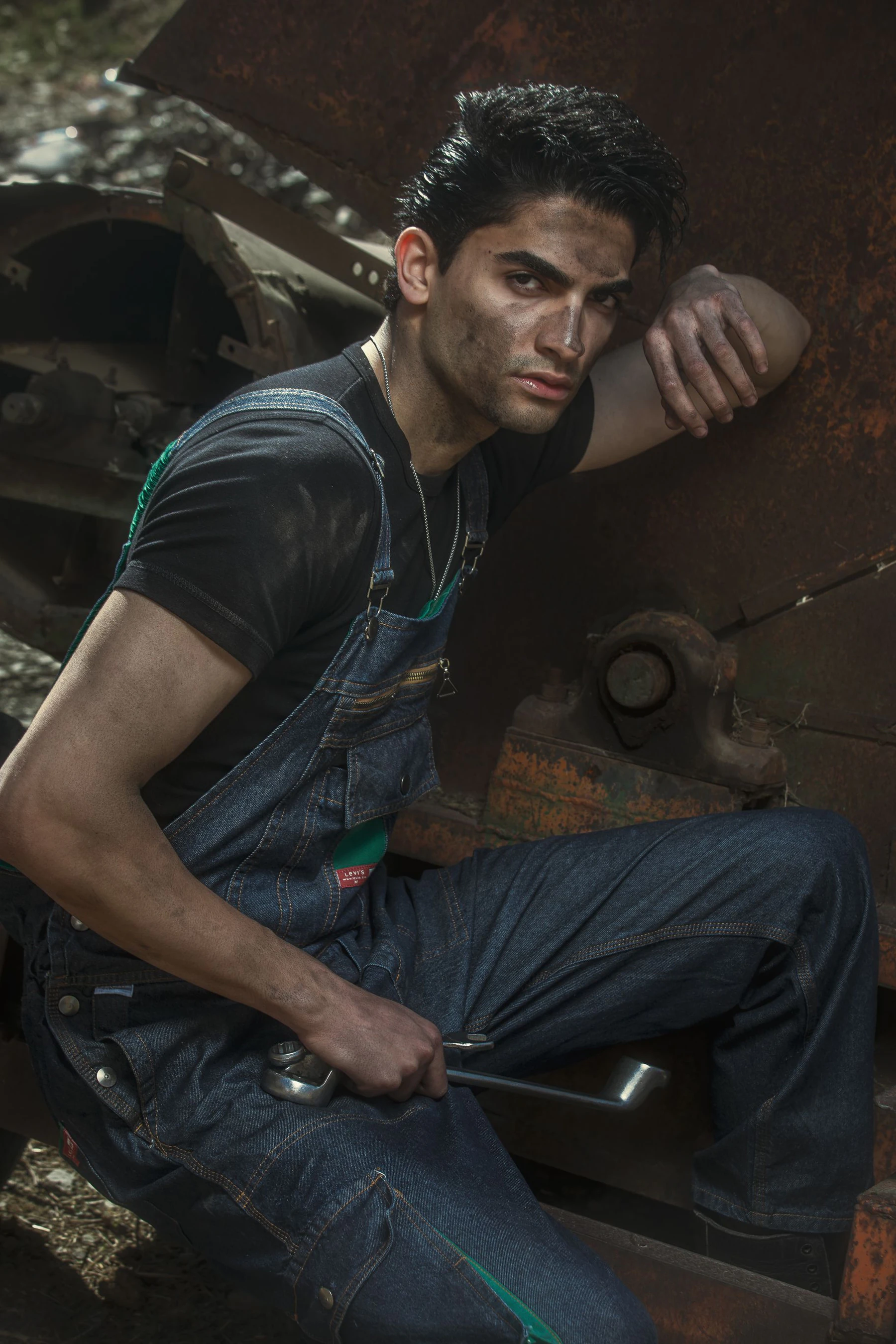
16 styles in 4 families · each made to order in your fabric, color and branding from 50 pieces.
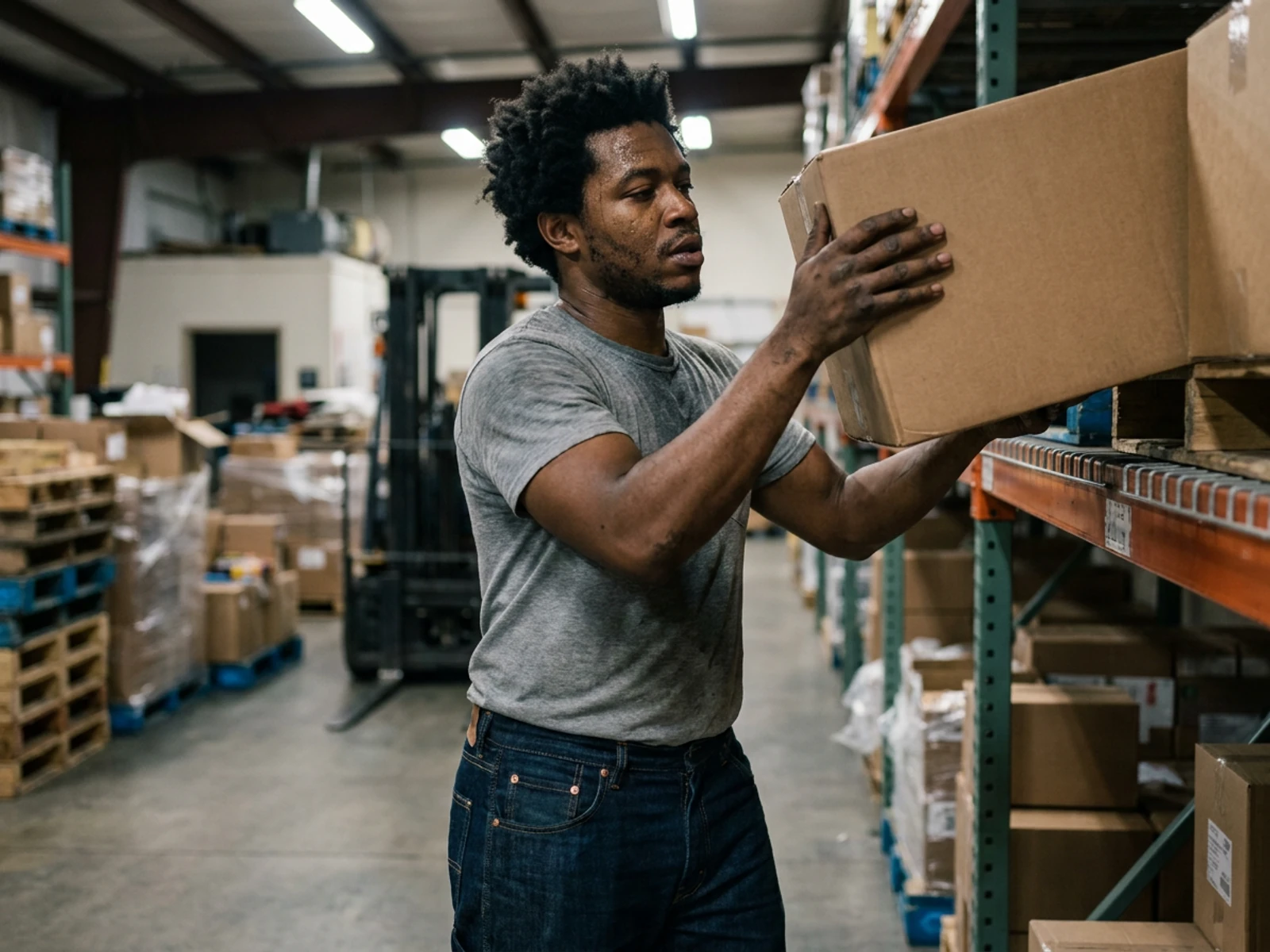
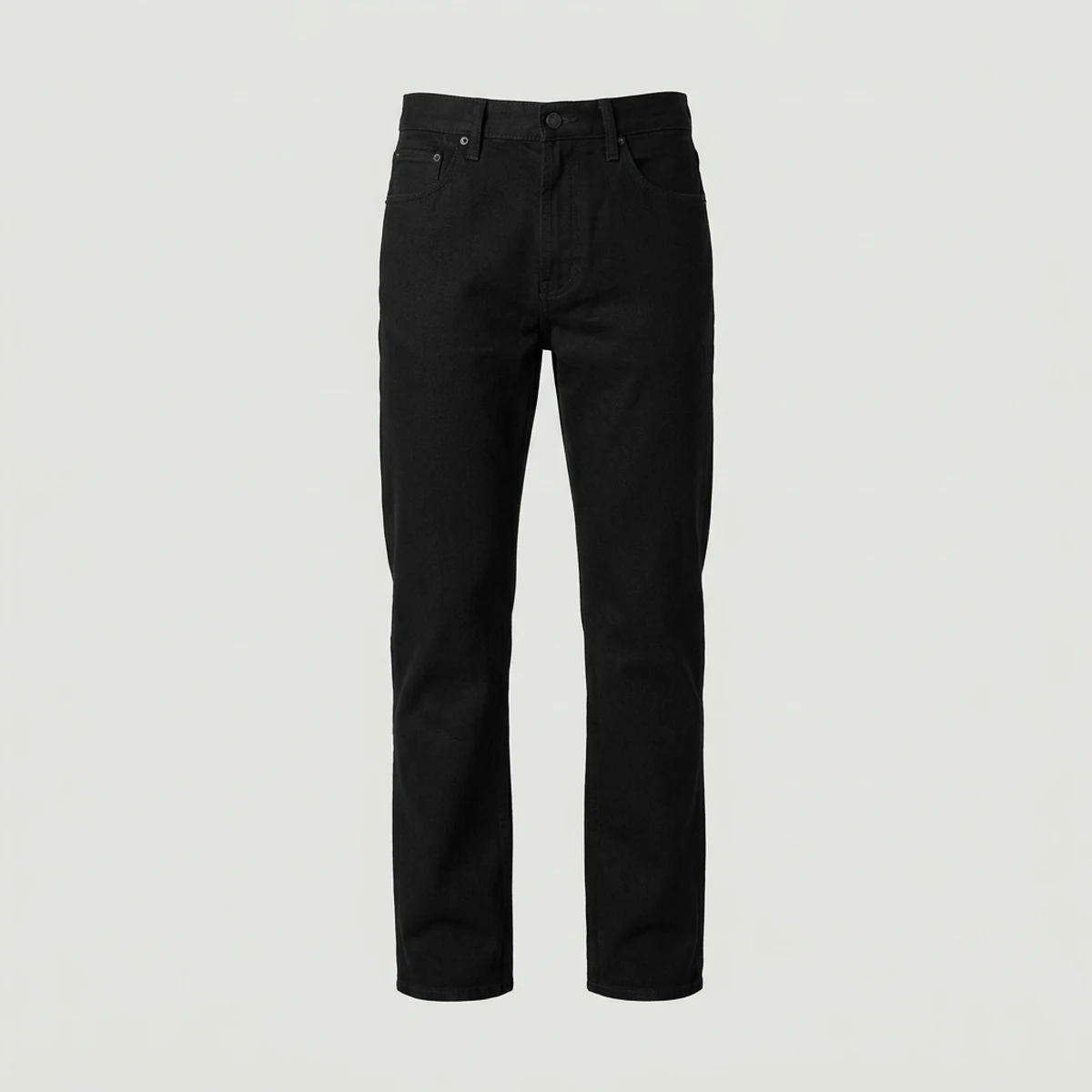
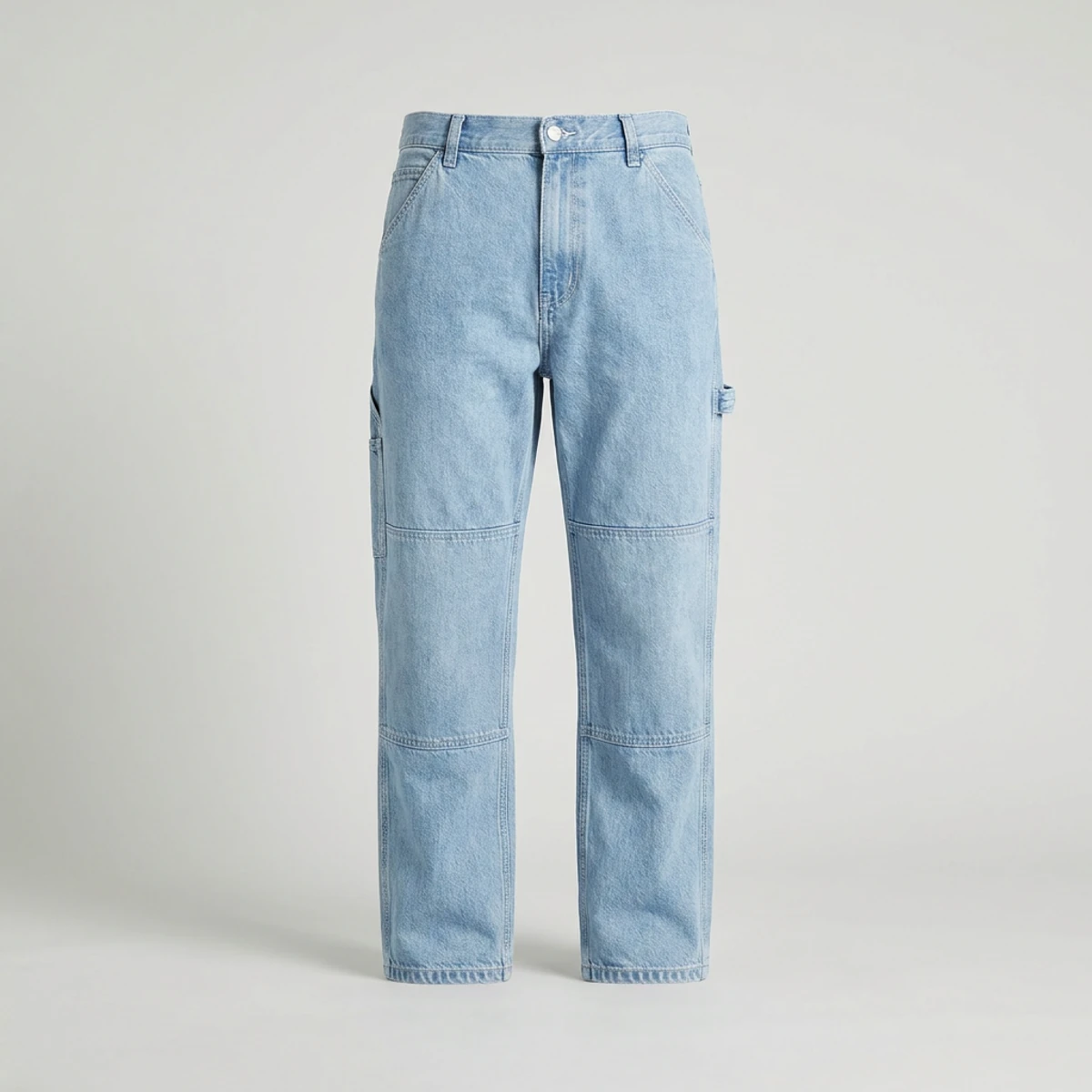
Five-pocket work jeans with rivets, a shank button and reinforced seat and inseam are the everyday choice for drivers, mechanics and warehouse crews. We cut and sew custom work jeans in Los Angeles in your wash, fit and trim; because the denim is imported, the label reads Made in USA of imported fabric.
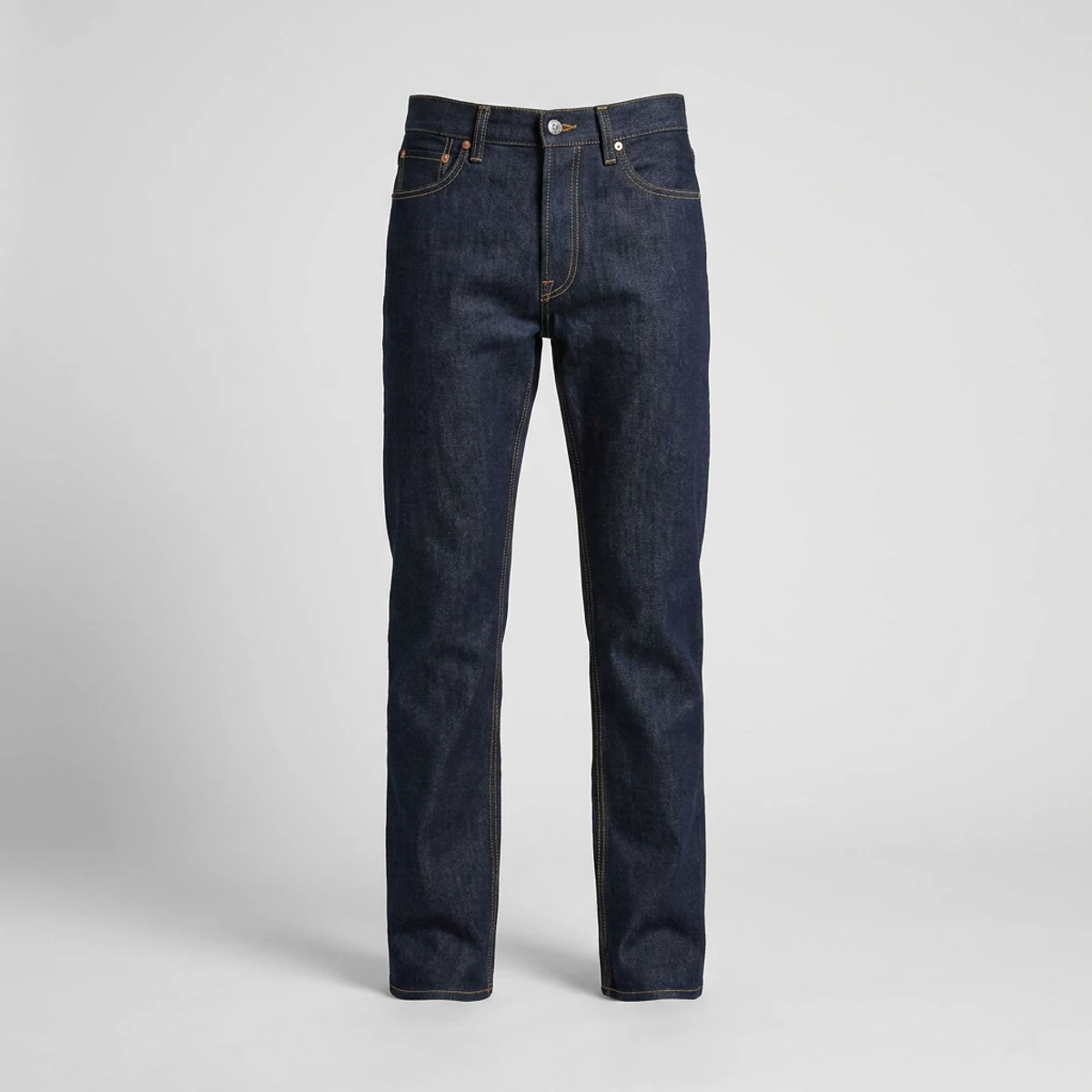
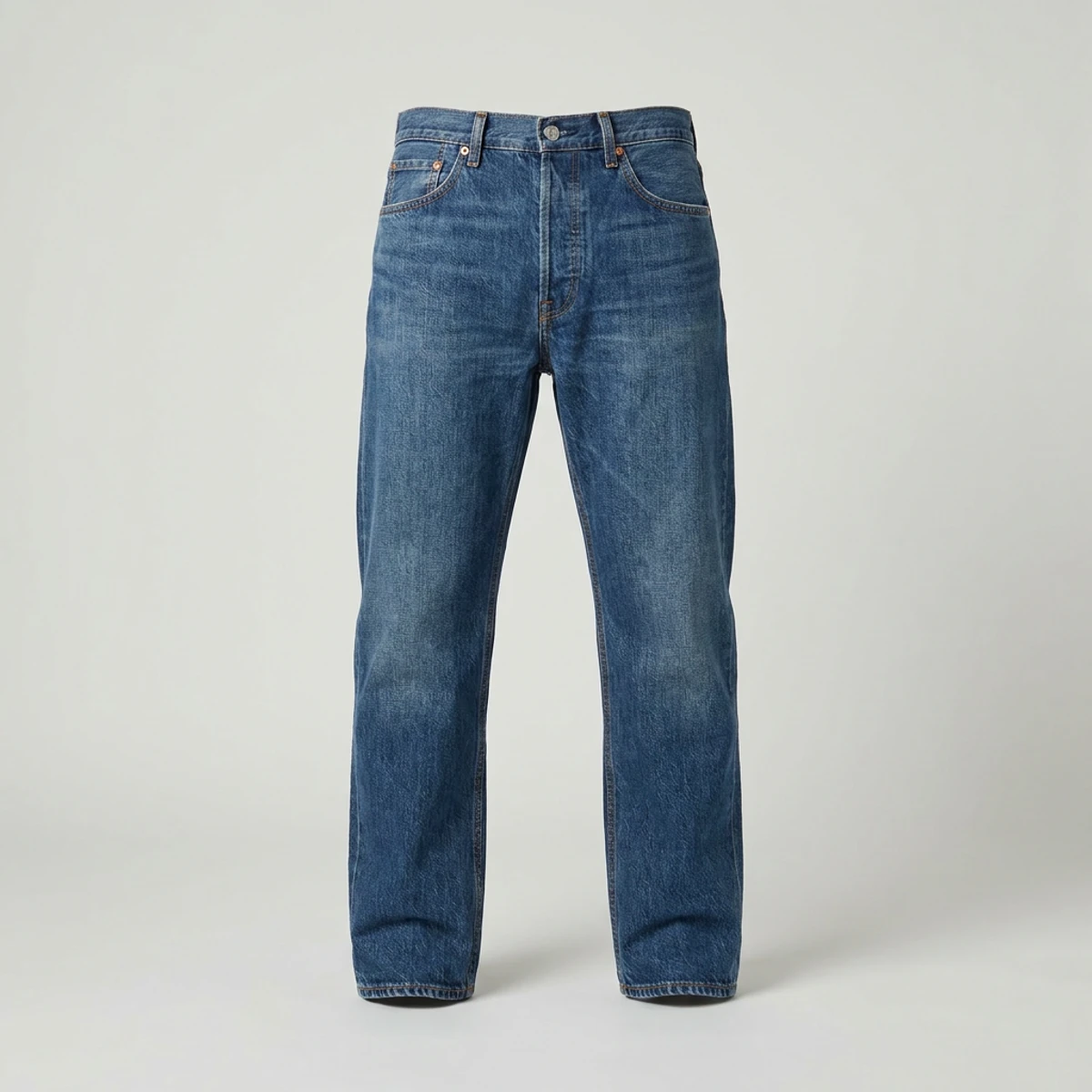
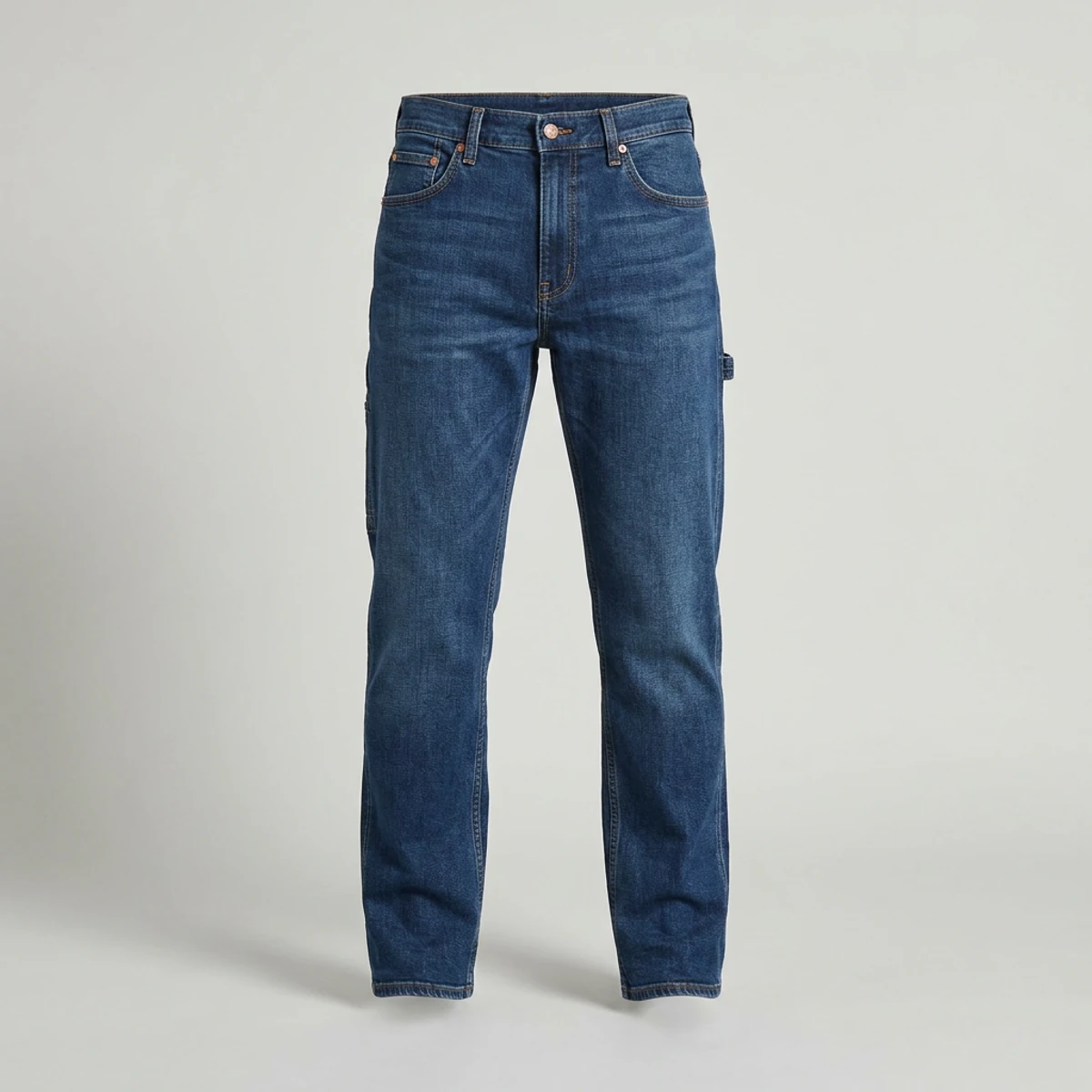
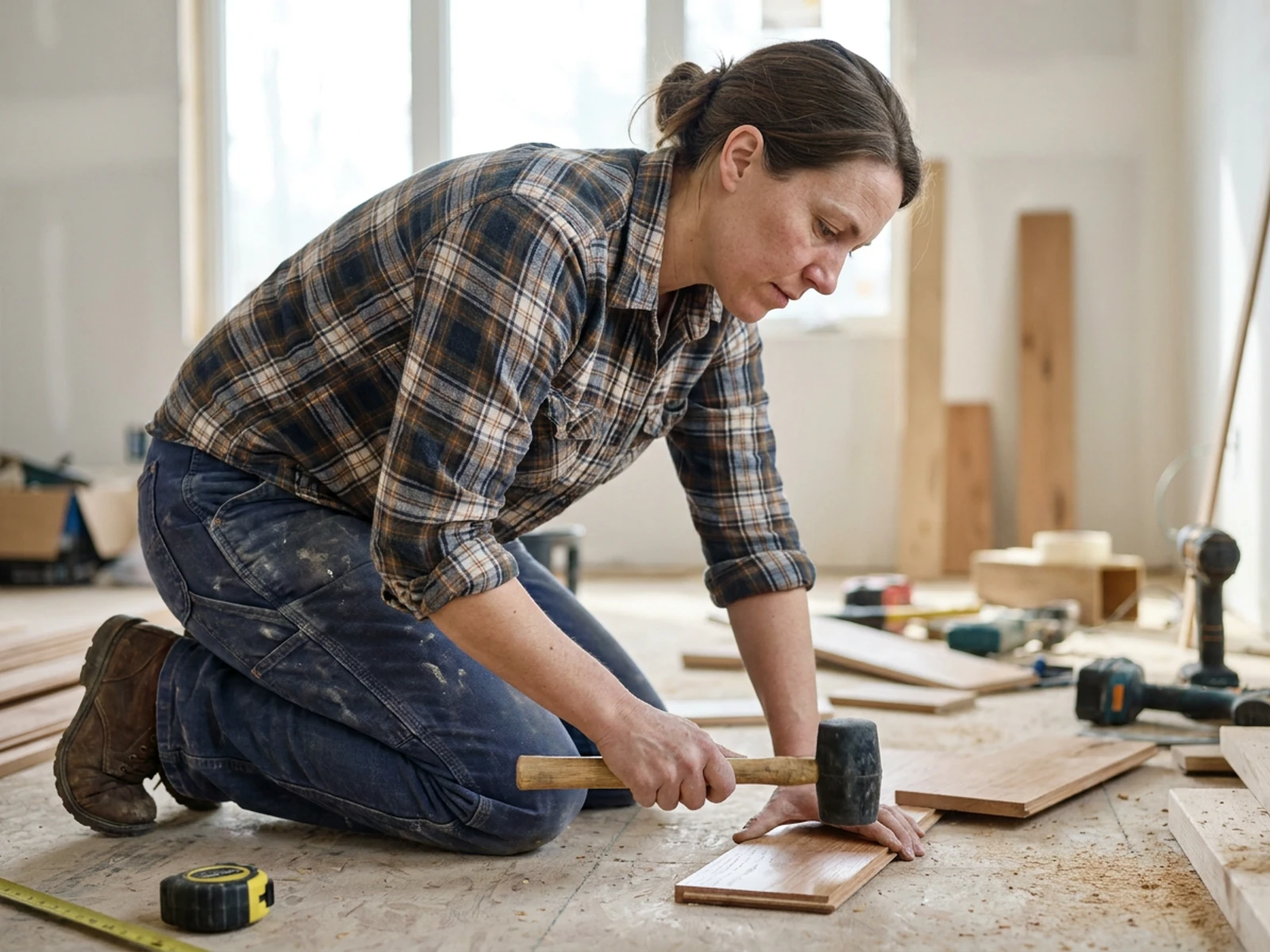
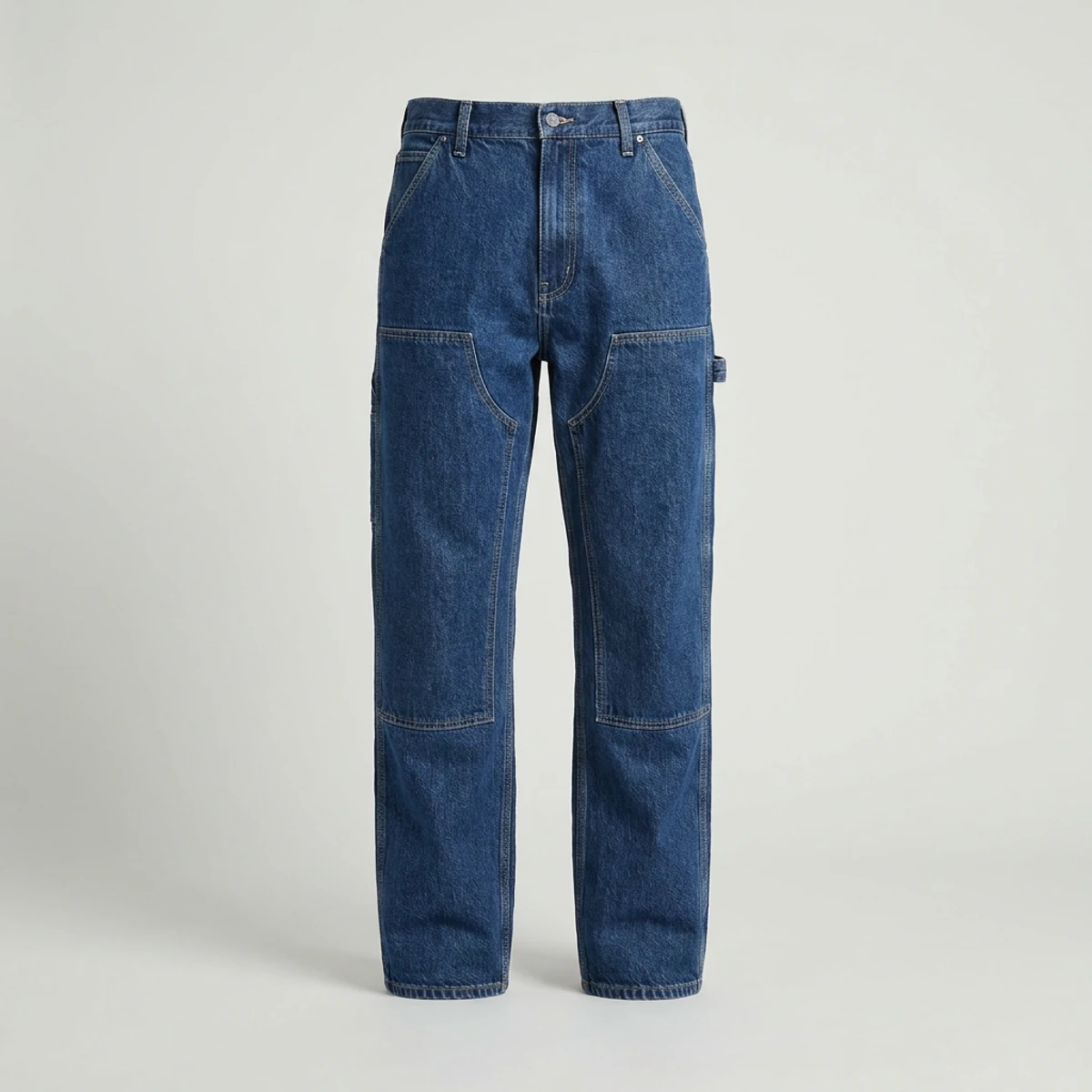
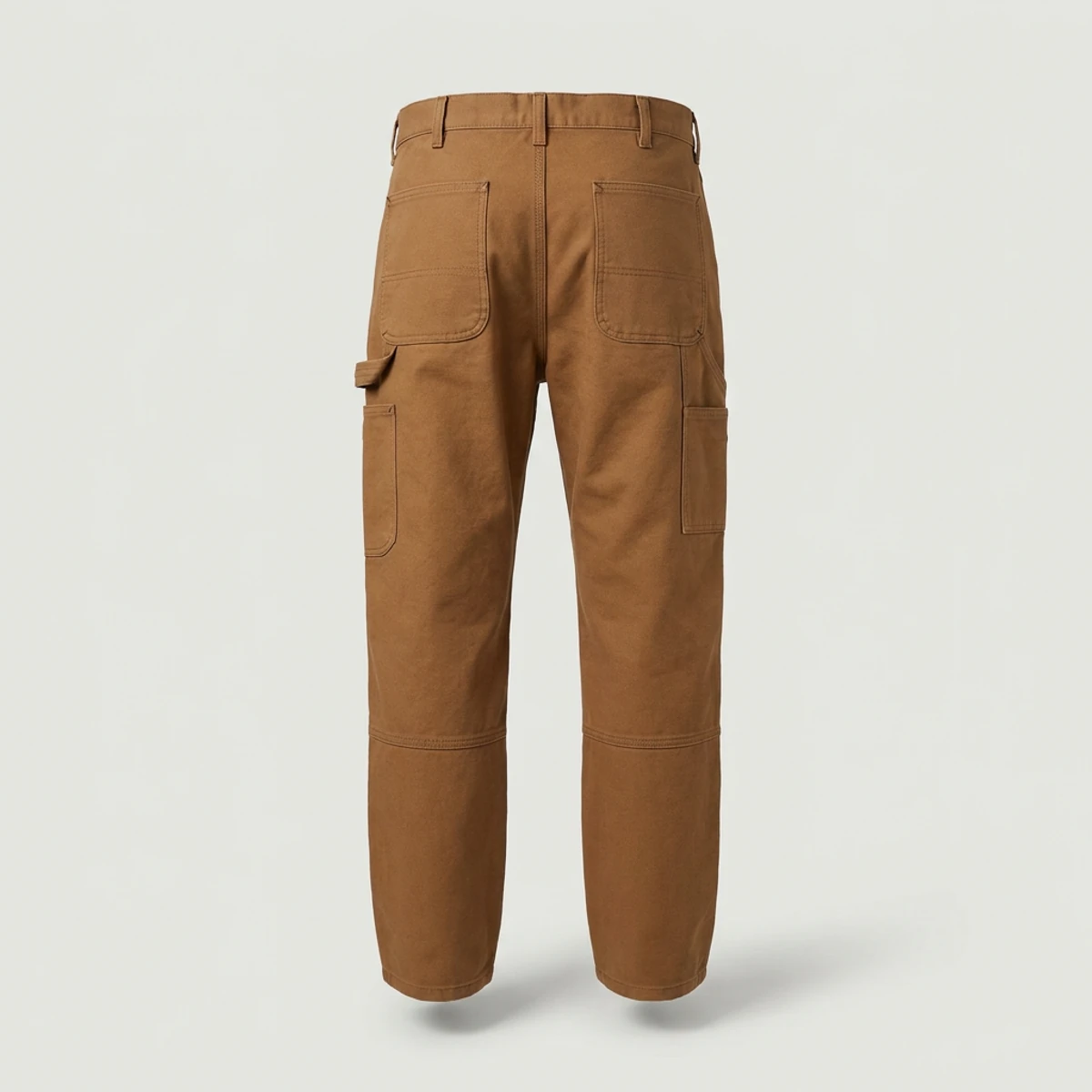
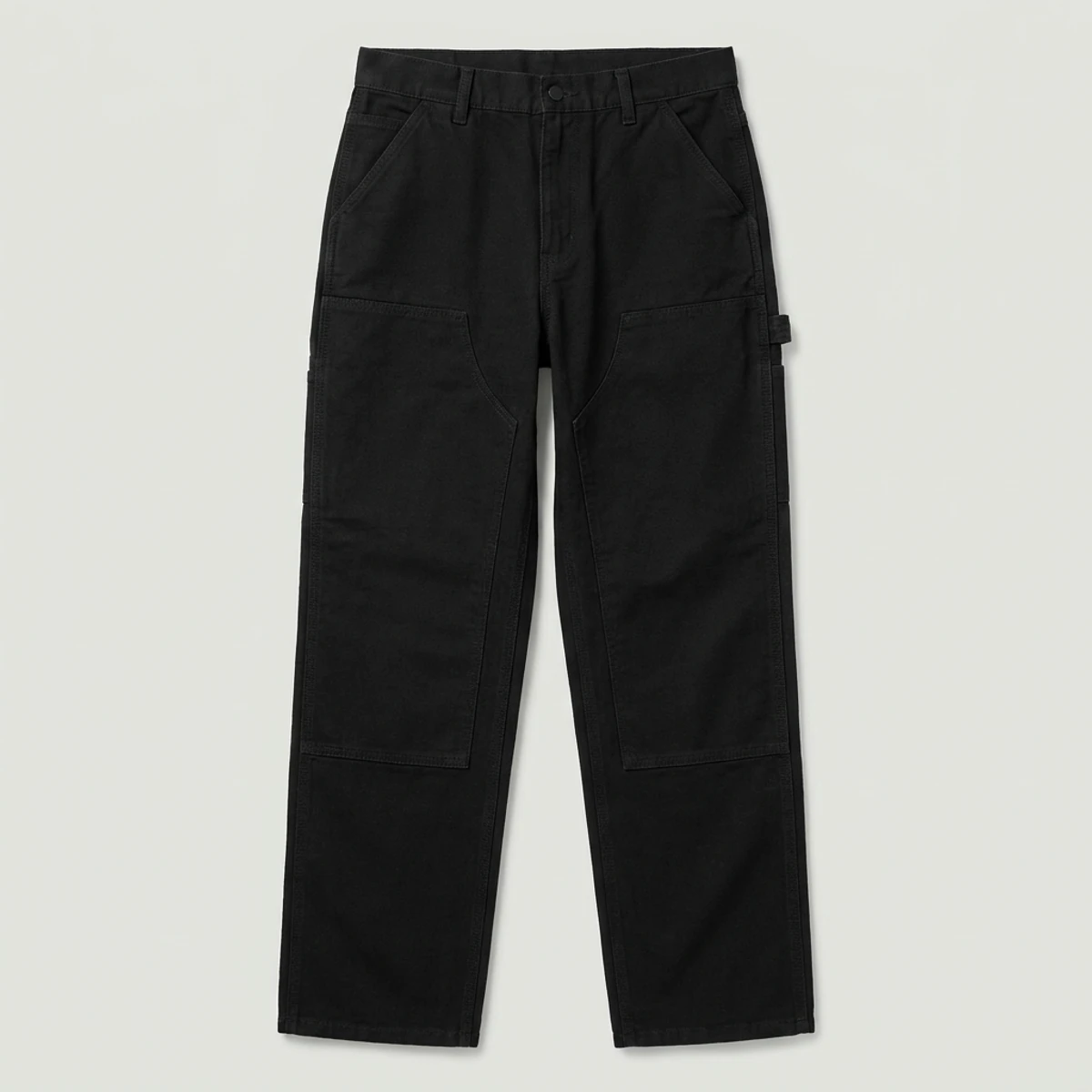
Carpenter pants add a hammer loop, rule pocket and a looser leg, with an optional double knee for floor and finish crews. We make them in rigid denim or duck canvas and bartack every pocket a loaded tool belt pulls on.
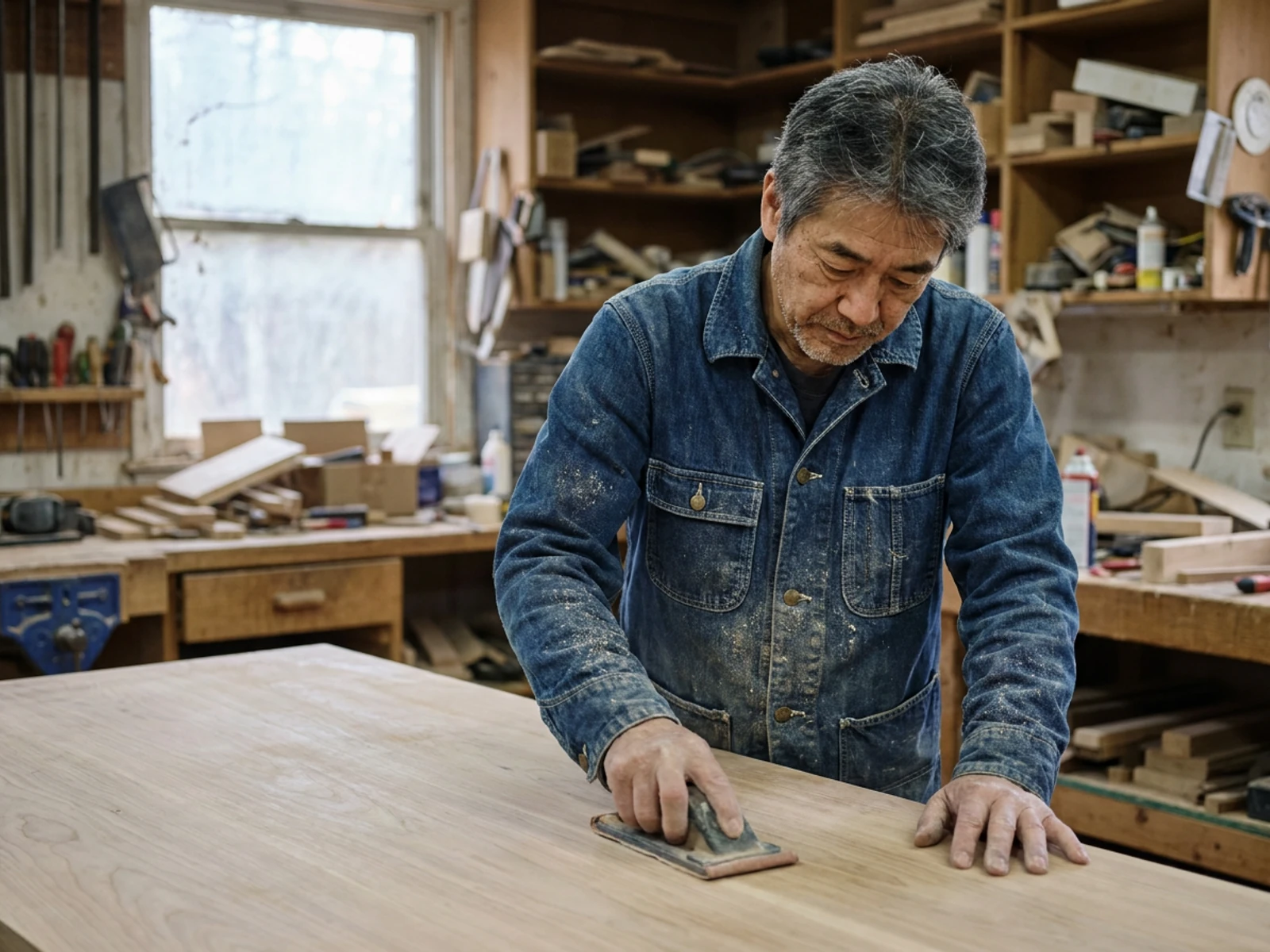
The chore coat is a boxy point-collar jacket with three or four patch pockets, worn as a site jacket, shop layer or branded crew outerwear. We cut it in denim or canvas with blanket or quilted lining as an option.
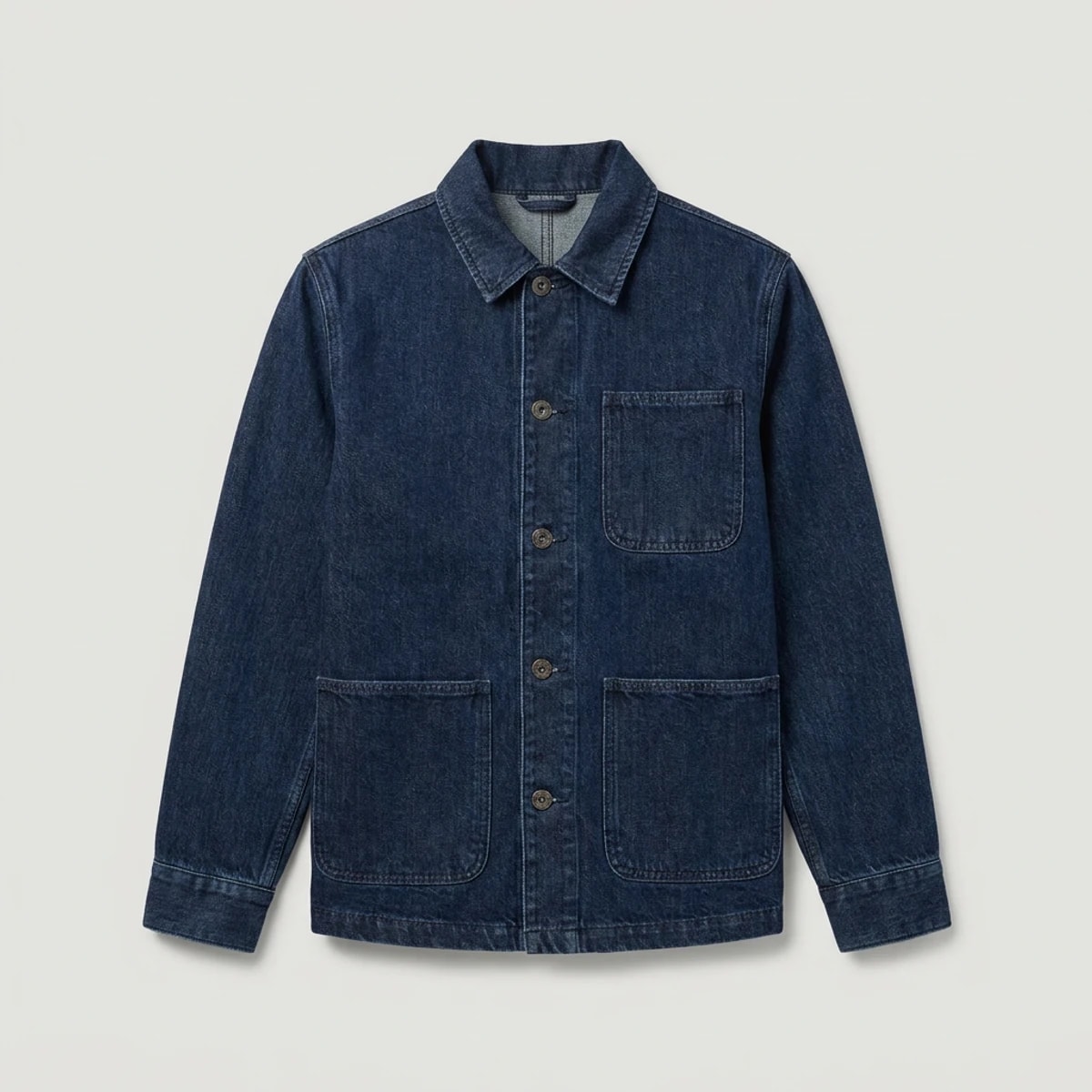
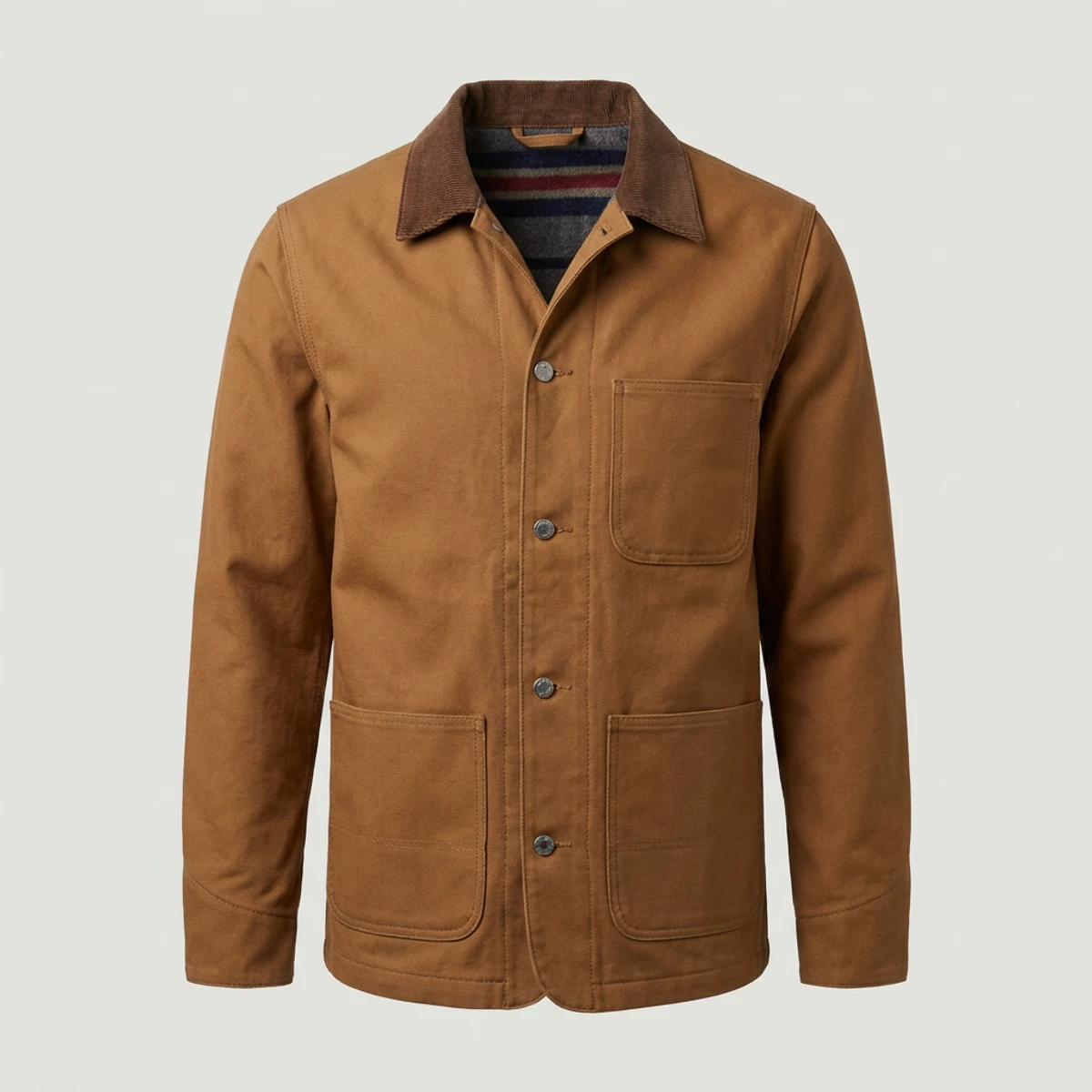
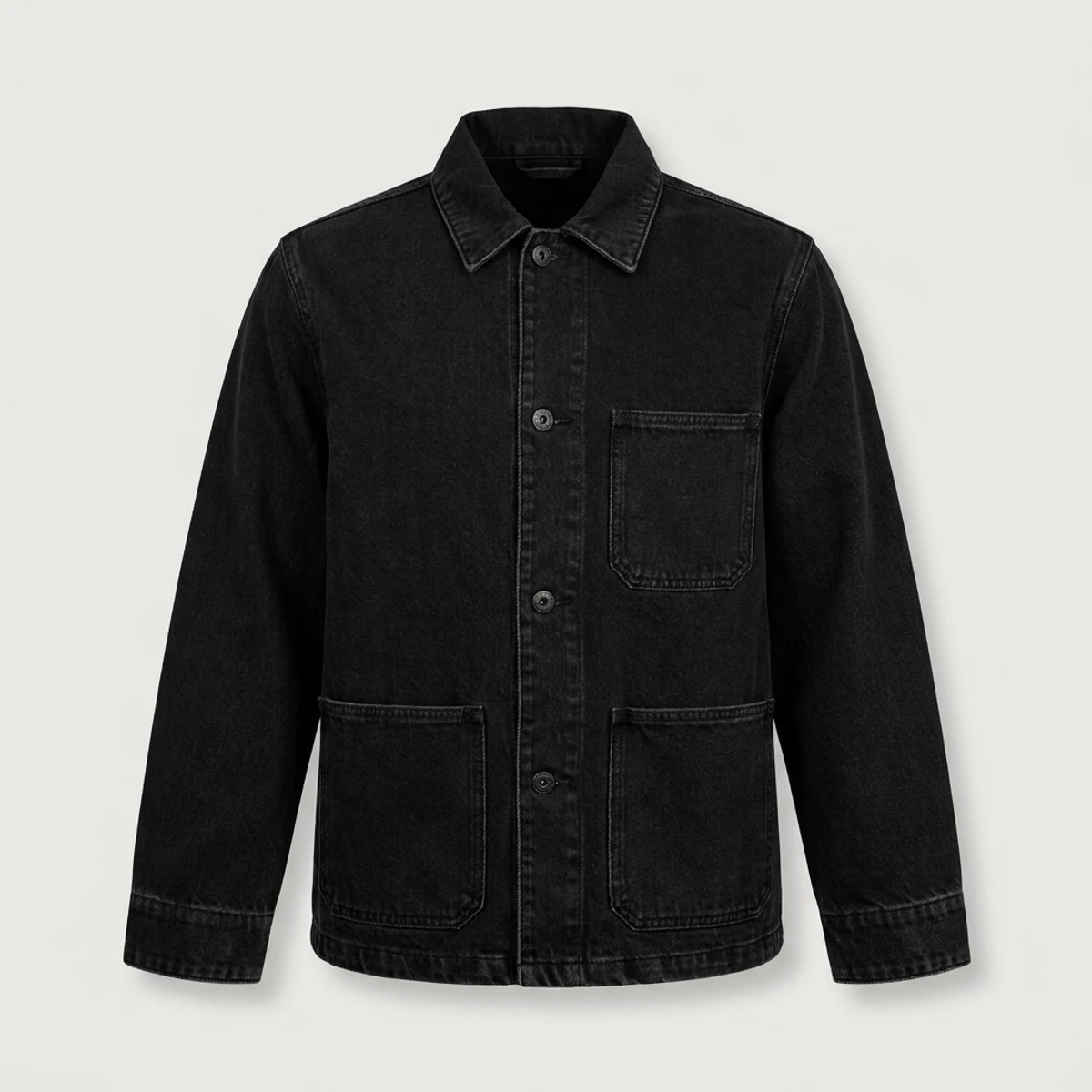
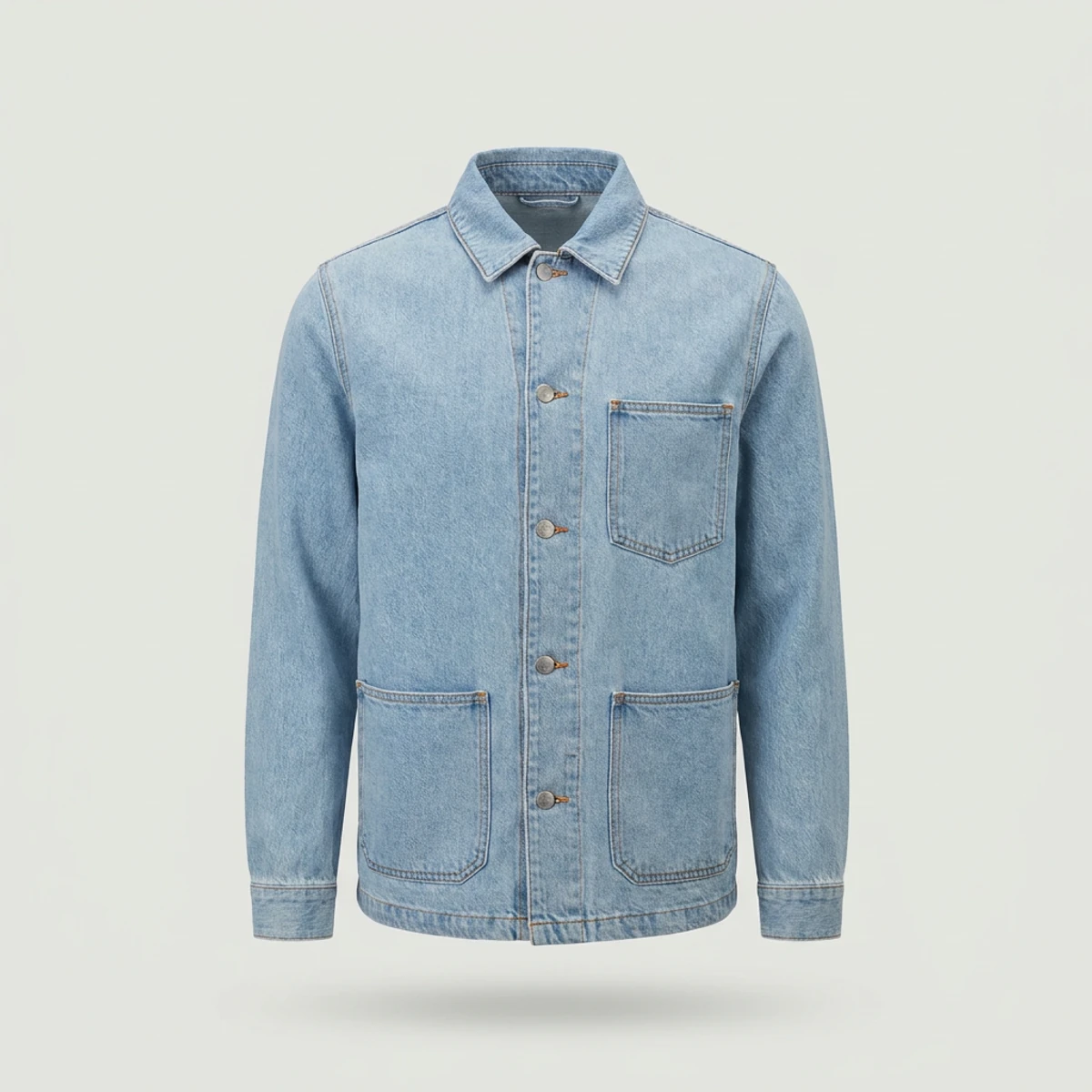
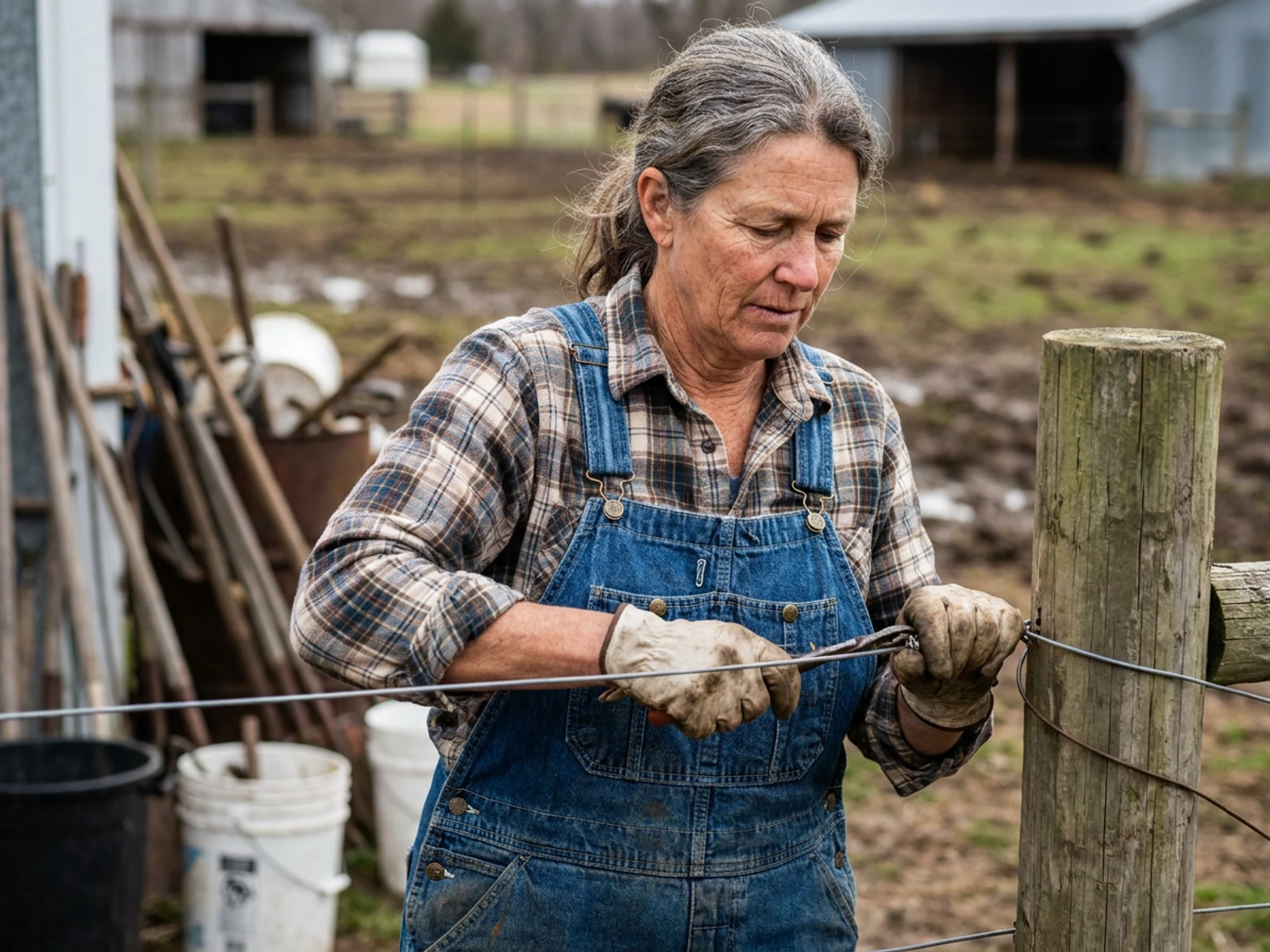
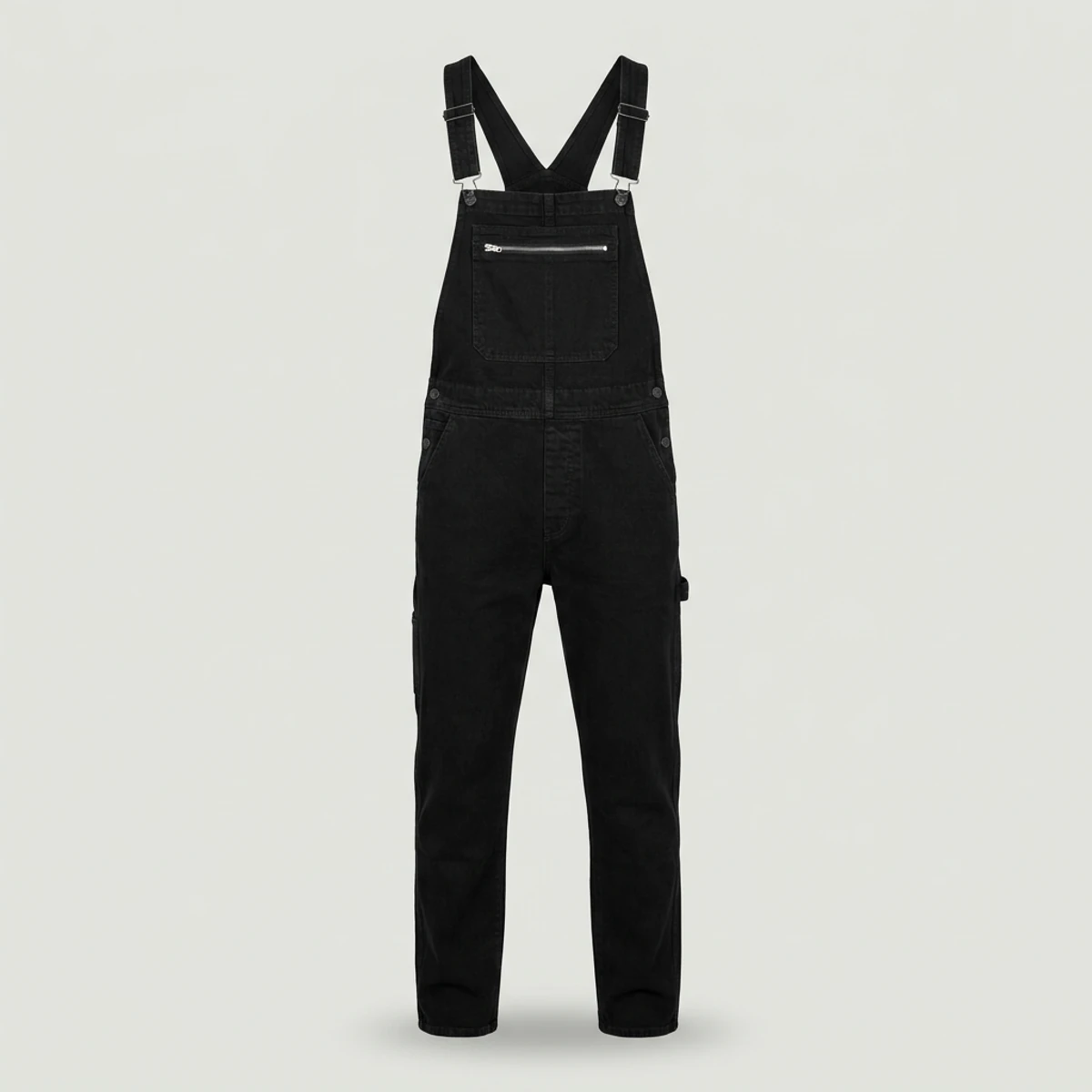
Denim overalls cover chest to ankle with a bib pocket, adjustable suspenders and side openings, which keeps tools close for carpenters, farmers and makers. We grade suspender length and torso carefully so the bib sits right across the size range.
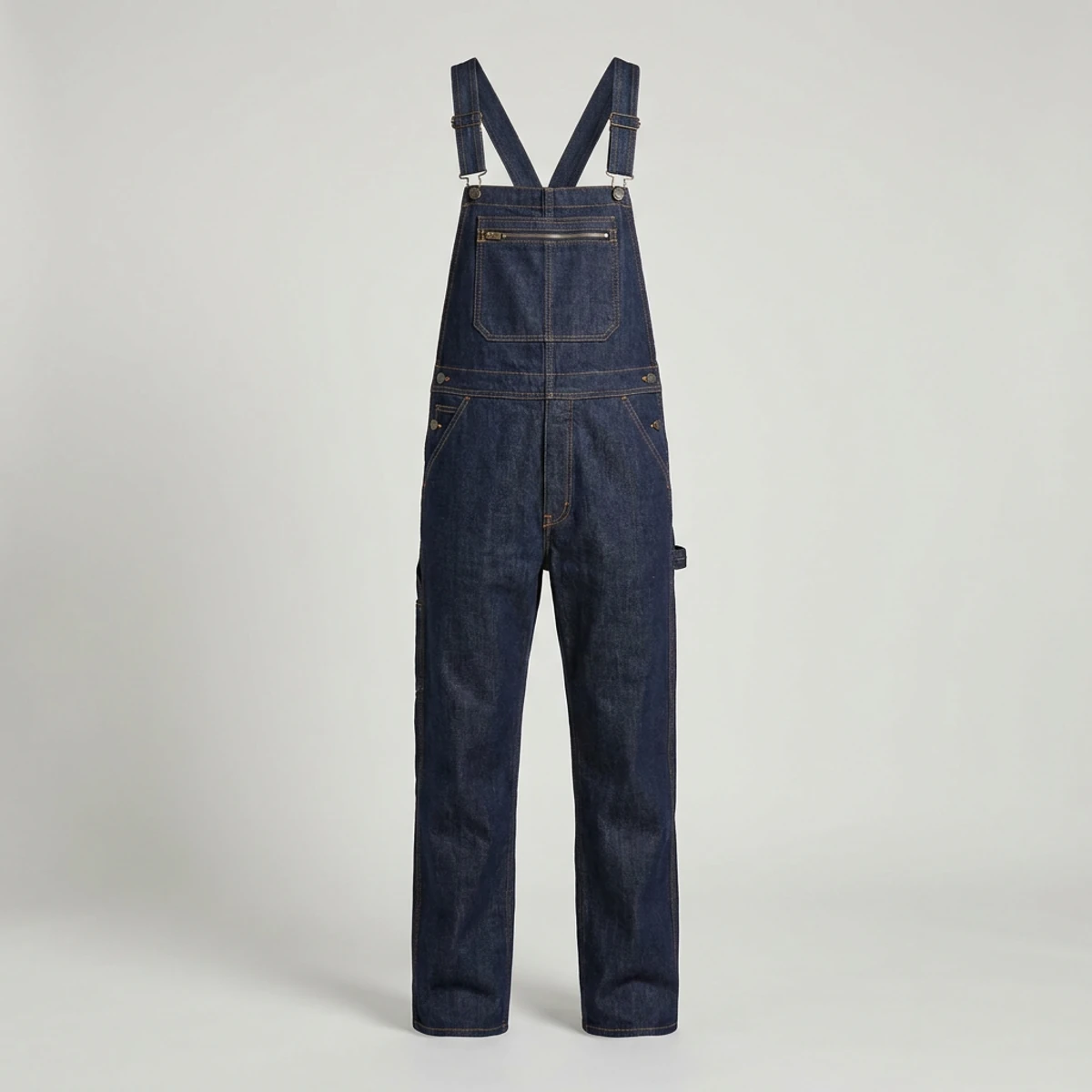
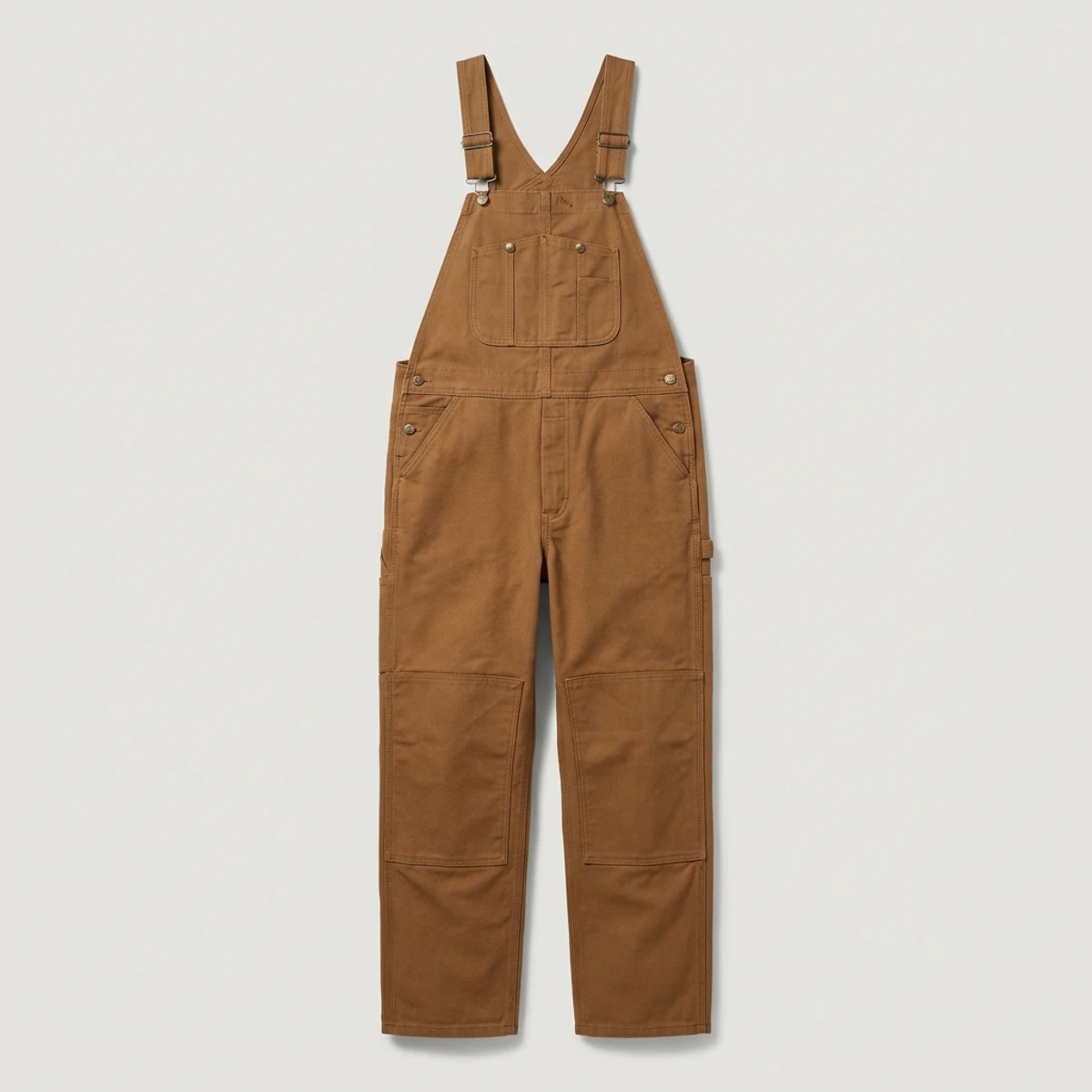
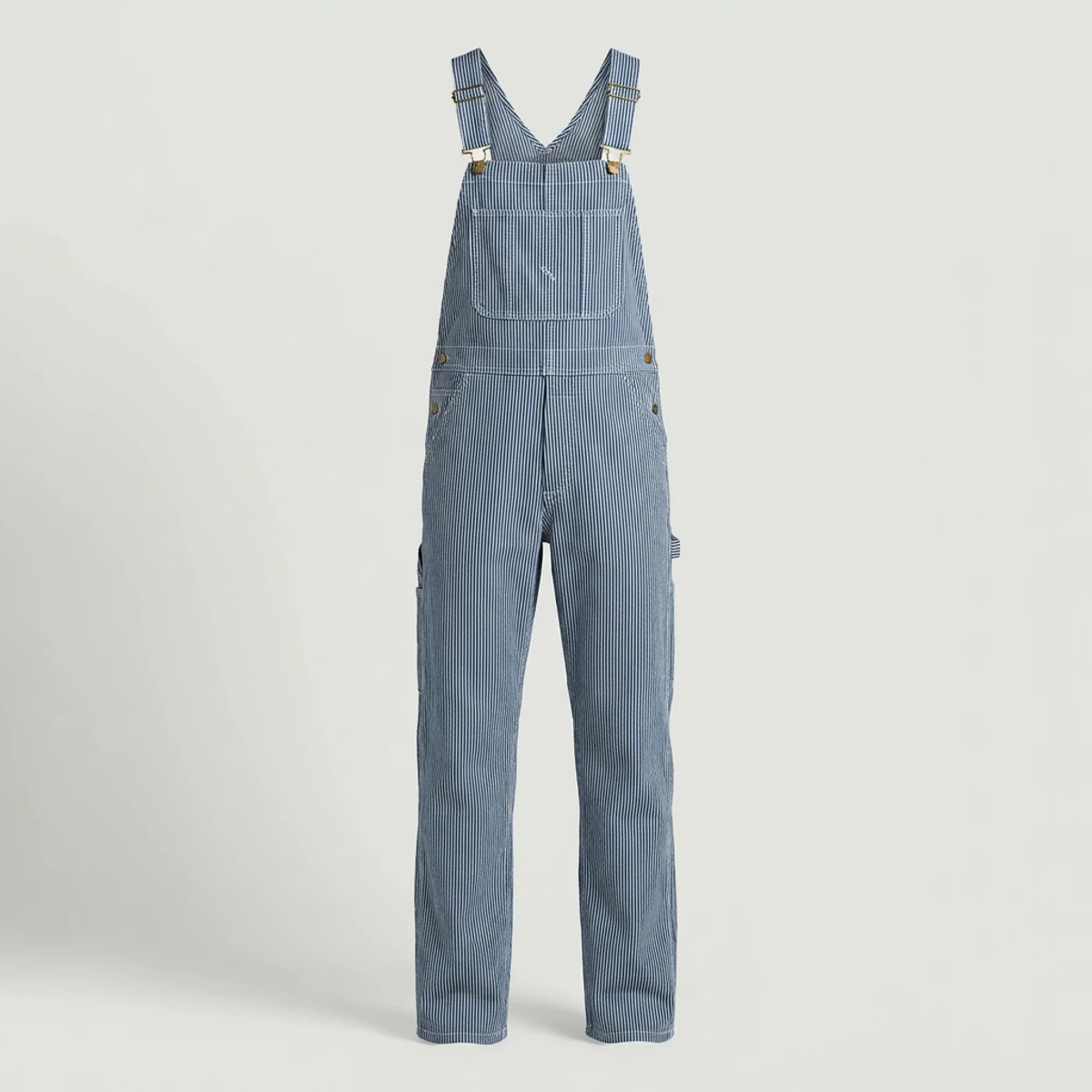
Pick the style, fabric and colors, add your logo and names, then attach the design to your quote. We cut and sew it in Los Angeles from 50 pieces per style.
Denim still works as workwear because its tight cotton twill weave resists abrasion, snags and tearing better than most fabrics of the same weight. Denim softens and molds to the wearer, hides dirt and takes repairs well, which is why miners, railroad crews, farmers and carpenters adopted it in the late 1800s.
Denim is a cotton twill woven with dyed warp yarns and undyed weft yarns. Work denim is usually heavier than fashion denim: rigid (non-stretch) denim wears longest, while denim with a small percentage of elastane gives crews more movement when kneeling and climbing. Denim weights, washes and mills for your order are confirmed at quote stage, with swatches available before sampling.
Denim workwear comes in four core garments: five-pocket work jeans, carpenter pants, chore coats and denim overalls. Jeans and carpenter pants cover the waist down, a chore coat is the layering jacket, and overalls protect from chest to ankle. Many crews combine two, such as carpenter pants with a chore coat.
| Garment | Coverage | Key features | Best for |
|---|---|---|---|
| Five-pocket work jeans | Waist down | Rivets, reinforced seat and inseam, shank button | Drivers, mechanics, warehouse, everyday crew wear |
| Carpenter pants | Waist down, looser leg | Hammer loop, rule pocket, optional double knee | Carpenters, framers, flooring and finish crews |
| Chore coat | Upper body, layering | Point collar, boxy cut, three or four patch pockets | Site jacket, shop wear, branded crew outerwear |
| Denim overalls | Chest to ankle | Bib pocket, adjustable suspenders, side openings | Carpenters, farmers, mechanics, makers |
Pre-shrunk rigid denim is the safest choice for work clothes: it wears longest and sizes stay true after washing. Raw denim suits heritage brands rather than crew programs, stretch denim moves from day one, and washed denim keeps color consistent across reorders.
| Denim type | Movement | Durability | Notes |
|---|---|---|---|
| Rigid, pre-shrunk | Breaks in over weeks | Highest | Classic work feel; sizes stay true after washing |
| Raw (unwashed) | Stiff at first | High | Can shrink in the first wash; better for heritage brands than crew programs |
| Stretch (small elastane content) | Moves from day one | Good | Comfortable for kneeling and climbing; may bag slightly over time |
| Washed or rinsed | Soft from the start | Good | Consistent color across reorders; less break-in for new hires |
Tip: For crew programs, choose a pre-shrunk or washed denim. Raw denim looks great in a brand’s lookbook but can shrink unevenly in a crew’s home laundry, and that turns into fit complaints.
Custom work jeans are specified in four areas: the fit, the waistband and fly, the pockets and rivets, and the length. Five-pocket jeans are the core of most denim programs, and the minimum of about 50 pieces per style lets a contractor outfit a crew or a brand launch a fit without a container-sized order.
Relaxed or straight legs suit boots and kneeling; slimmer fits suit brands selling to younger trades. Decide the fit block first, because every later denim product should follow it.
A metal shank button with a heavy brass zipper, or a button fly, takes years of daily wear. A leather or woven waistband patch carries the brand at the back.
Copper rivets at pocket corners, bartacks at the fly and belt loops, and a triple-stitched seat and inseam stop the most common failures. Embroidered back pockets add branding where it is seen.
Work jeans are ordered by waist and inseam. Hem length should sit on the boot without dragging, and extra inseam options are confirmed at quote stage.
Work jeans made in USA can use imported denim, but the label must say so. For textile products, the origin label looks one step back to the fabric, so jeans cut and sewn in the US from imported denim are labeled with a qualified claim such as “Made in USA of imported fabric”, not an unqualified “Made in USA”.
The Federal Trade Commission (FTC) treats an unqualified “Made in USA” claim as meaning all or virtually all of the product is made in the United States, as its business guide Complying with the Made in USA Standard explains. The textile origin labeling rule is in 16 CFR 303.33, and the FTC Made in USA Labeling Rule (16 CFR Part 323) applies to labels and online claims.
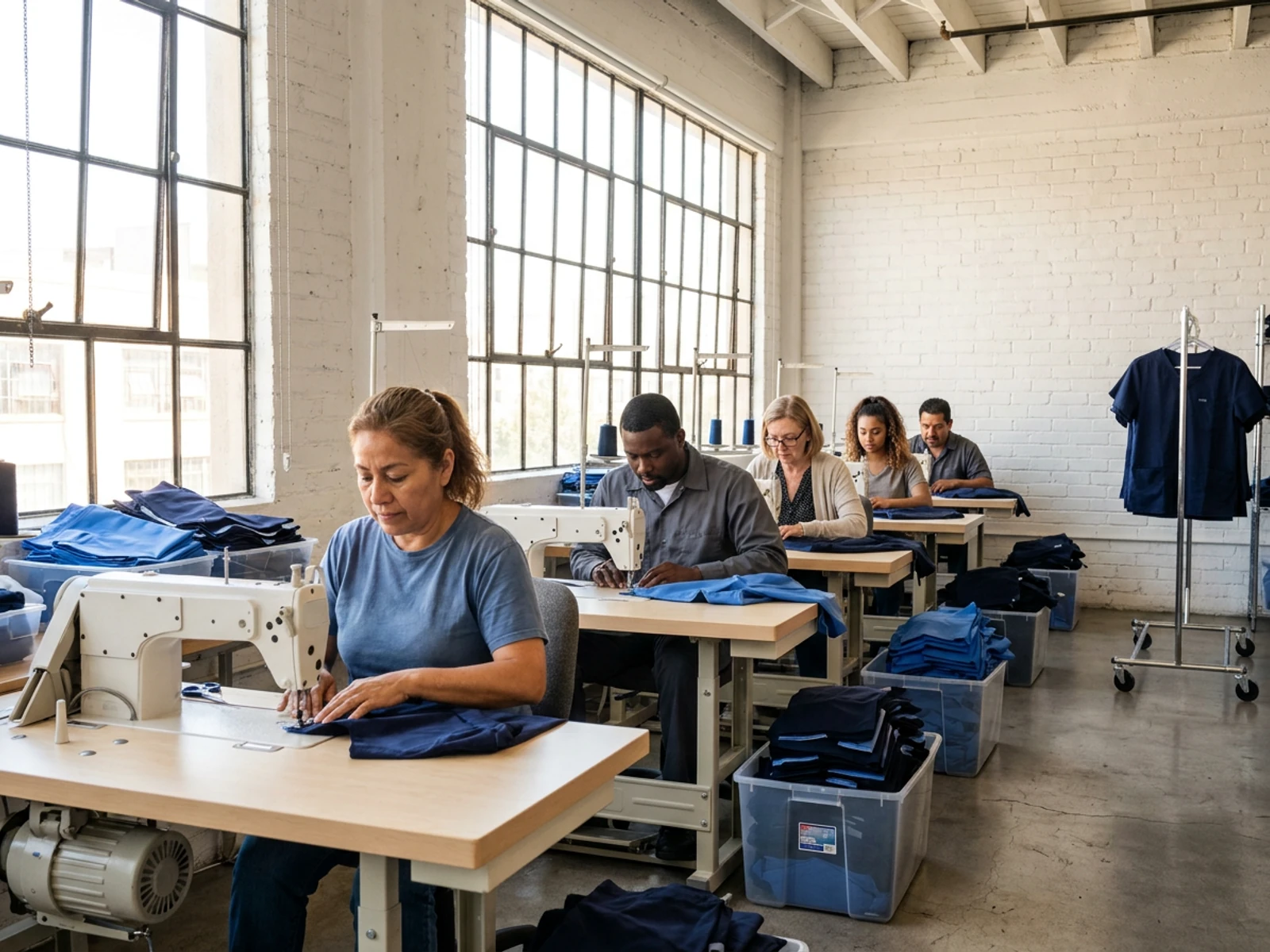
Every garment from our Los Angeles factory is cut and sewn here from imported fabric, and the fabric and key components are confirmed with you for each order. Our custom manufacturing page explains how we approach domestic production and origin claims.
Tip: If your denim is imported, “Cut and sewn in Los Angeles” is truthful, specific and still a strong selling point on hang tags and product pages.
Carpenter pants are the trade cousin of the five-pocket jean and a core style of denim workwear pants for the building trades. They have a looser seat and leg, a hammer loop, a narrow thigh pocket for a folding rule or pencils, and often a double knee that can take kneepad inserts.
Carpenter pants can be made in denim, duck canvas or twill. For non-denim pants in other fabrics, see our work pants range, and for the white, paint-ready version, see painter pants.
A chore coat is a simple work jacket with a point collar, a straight boxy body for layering and three or four large patch pockets. It began as the French “bleu de travail” and was adopted by American workwear makers in the early twentieth century; in denim it pairs with work jeans, in canvas it becomes a site jacket.
Chore coats take embroidery well on the chest and across the back, which makes them a strong branded item for crews and for retail. Decide early whether the coat is lined or unlined, with a corduroy or self-fabric collar, and with a button or snap front.
Denim overalls protect clothing from the chest down and keep tools close in a bib pocket, which makes them a staple for carpenters, farmers, mechanics and painters. Options built to spec include adjustable suspenders with metal hardware, side button openings, double knees, and hammer and rule pockets.
If you are deciding between bib overalls and full-body suits, our guide on coveralls vs overalls compares coverage, comfort and use cases, and our work coveralls page covers the one-piece option.
Denim workwear is branded with embroidery on chore coats, back pockets and overall bibs, leather or woven patches on jean waistbands, and custom rivets or buttons for subtle hardware branding. Printing works for linings, pocket bags and inside waistbands, but not on the outside of rigid denim.
| Method | Where it goes | Why choose it |
|---|---|---|
| Embroidery | Chest of chore coats, back pockets, bib of overalls | Durable, premium look on heavy denim |
| Leather or faux-leather patch | Rear waistband of jeans | Heritage branding, ideal for retail lines |
| Woven patch or label | Waistband, pocket, chest | Clean brand mark, survives washing |
| Custom rivets and buttons | Pocket corners, fly, waistband | Subtle branding on hardware, if sourced for your run |
| Printing | Lining, pocket bags, inside waistband | Hidden details for brands |
Our custom embroidery team advises on stitch size and placement on heavy denim, where small text needs more care than on a light shirt.
Denim workwear by role starts from the work: carpenters want double-knee carpenter pants and a chore coat, mechanics want jeans or overalls that hide grease, farm crews want rigid denim against abrasion, and retail lines want a distinctive fit under their own label.
| Role | Recommended denim kit | Why |
|---|---|---|
| Carpenters and framers | Carpenter pants with double knee, chore coat | Tool storage, kneeling, layering on cold mornings |
| Mechanics and fabricators | Five-pocket work jeans, denim overalls | Hides grease; bib protects shirts |
| Farm and ranch crews | Rigid jeans or overalls, canvas chore coat | Abrasion from fencing, hay and equipment |
| Makers, brewers and baristas | Work jeans, denim apron or chore coat | Durable and on-brand behind the counter |
| Retail lines | Your own cut of jean, carpenter pant or overall | Distinctive fit under your label |
Custom denim workwear is ordered by four kinds of buyer: contractors dressing crews, workwear and lifestyle brands producing under their own label, uniform programs for shops and hospitality teams, and retailers or distributors that want a house-brand work jean cut and sewn domestically.
The cost of custom denim workwear depends on the denim, the quantity per style, the garment’s construction, the hardware, decoration and any custom labels or packaging. Each run is quoted on its actual denim, trims and quantity, so no price list is published.
| Cost driver | How it moves the unit price | How to keep it in check |
|---|---|---|
| Denim | Heavier, specialty or stretch denims usually cost more than a standard rigid denim | Choose the denim for the work, not the lookbook |
| Quantity per style | Larger runs spread cutting, setup and sampling across more pieces | Start with one hero garment per program |
| Construction | Double knees, overall bibs and chore coat pockets add sewing time | Keep the features the wearers use |
| Hardware | Custom rivets, buttons and suspender hardware add sourcing | Use standard hardware for crew programs |
| Decoration | Patches and each embroidery location add handling per piece | One logo placement per garment |
| Labels and packaging | Custom woven labels, leather patches and hang tags add components | Use standard finishing for staff uniforms |
Ready to order
A complete denim quote needs the garments and quantity per style, a reference garment or tech pack, the denim preference, the size range, hardware choices, branding files and any origin wording you plan to use. A full brief makes pricing faster and shows what the sample must test.
A denim order runs in six stages: brief, denim and trims, sample, approval and size split, production and delivery. The sample is washed and worn on the job before approval, because shrinkage and color loss show up in the wash, not on the table.
Ask us for current lead times when you request a quote.
The most common denim workwear mistakes are skipping the wash test, mixing denims across garments meant to match, using fine embroidery on heavy denim and making unqualified origin claims. Each one is easy to catch on the sample and costly after production.
Denim workwear lasts longest when it is washed inside out in cold or warm water with similar colors, line dried or tumble dried on low, and repaired early. Indigo can bleed in the first few washes, so wash new denim separately and pre-treat grease with a degreasing detergent.
Denim takes patches and darning well, which is part of why it lasts. Repair small tears before they spread, and replace garments with failed rivets or zippers.
Need something not covered here? Ask our Los Angeles team and we’ll answer with options for your order.
Ask our Los Angeles teamOur work jeans are cut and sewn in our Los Angeles factory from imported denim. Under FTC textile rules, a garment made in the US from imported fabric must disclose that fabric on its origin label, for example 'Made in USA of imported fabric', rather than carry a plain 'Made in USA'. We confirm the fabric for your order at quote stage so your labels and marketing are accurate.
About 50 pieces per style. A style is one cut in one denim and wash. You can spread the 50 pieces across waist and inseam sizes, which suits a contractor outfitting a crew or a brand testing a new fit before a larger run.
Carpenter pants have a looser, straighter leg plus tool features: a hammer loop, a narrow side pocket for a folding rule or pencil, and often a double knee. Five-pocket work jeans are cleaner and closer fitting. Many crews wear carpenter pants on site and jeans for driving or client visits.
Yes. A chore coat can carry your embroidered logo on the chest or back, or a woven or leather patch, and can be matched to work jeans or denim overalls cut from the same denim so the shades agree. Send your logo file and we will advise on size and placement for heavy denim.
Yes. Brands send a tech pack or a reference garment, choose denim, hardware and trims, approve a sample, and we produce the run with their woven labels, hang tags and packaging. Our private label service page walks through each step.
Unwashed (raw) denim can shrink noticeably in the first wash, while sanforized or pre-washed denim is stabilized to shrink very little. For work programs we usually recommend pre-shrunk or washed denim so sizes stay true. We confirm the finish and expected shrinkage of your denim during sampling.
Durable, branded construction uniforms, from hi-vis layers for road and site work to work pants and denim, cut and sewn in Los Angeles from 50 pieces per style.
Launch or grow a scrubs or workwear brand with garments cut and sewn in our Los Angeles factory under your label, from about 50 pieces per style.
The practical difference between coveralls and bib overalls, how each works with FR and hi-vis requirements, and how to choose the right one for each trade.
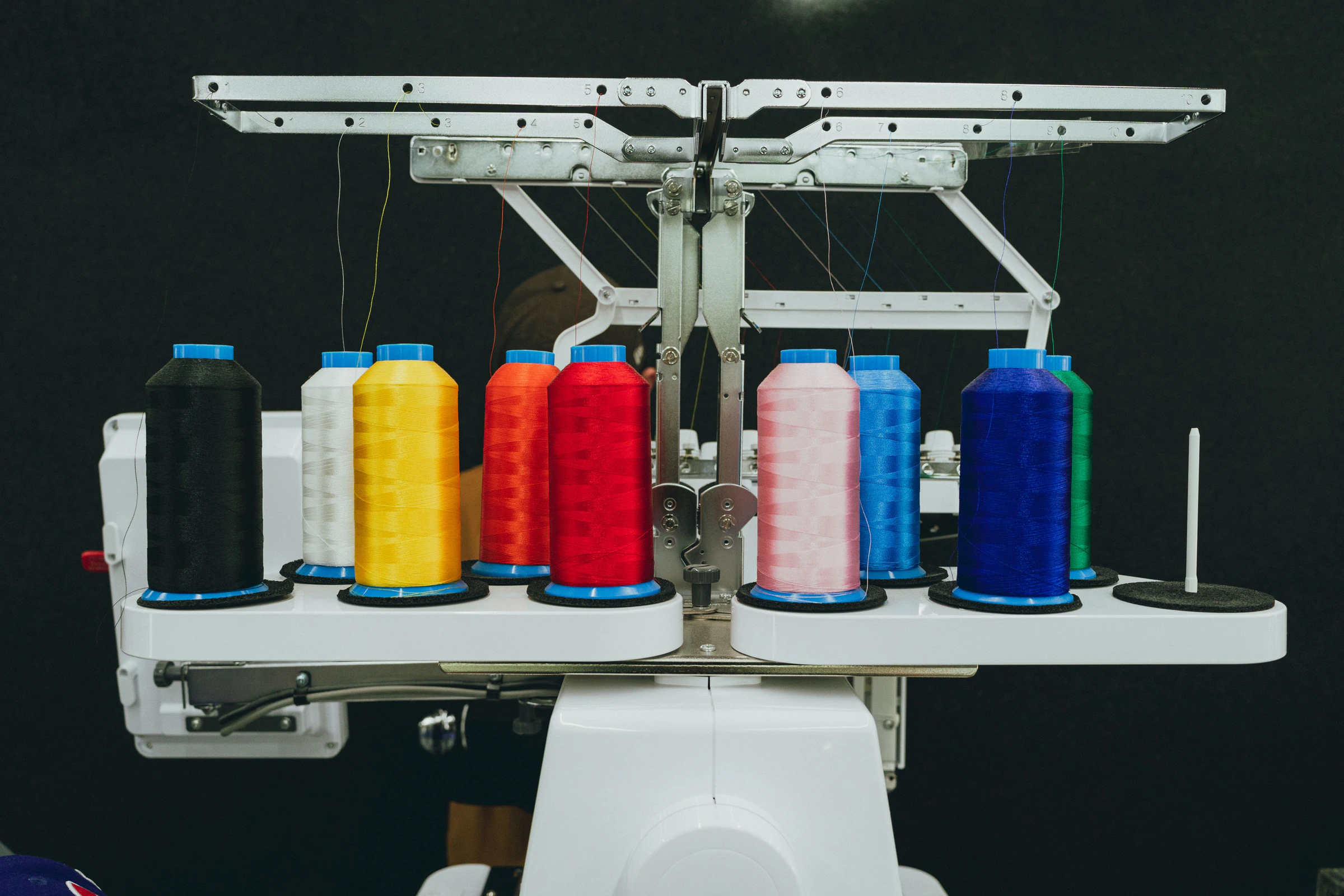
Logo embroidery, screen printing, transfers and patches across workwear, with advice on which method suits each garment, fabric and order size.
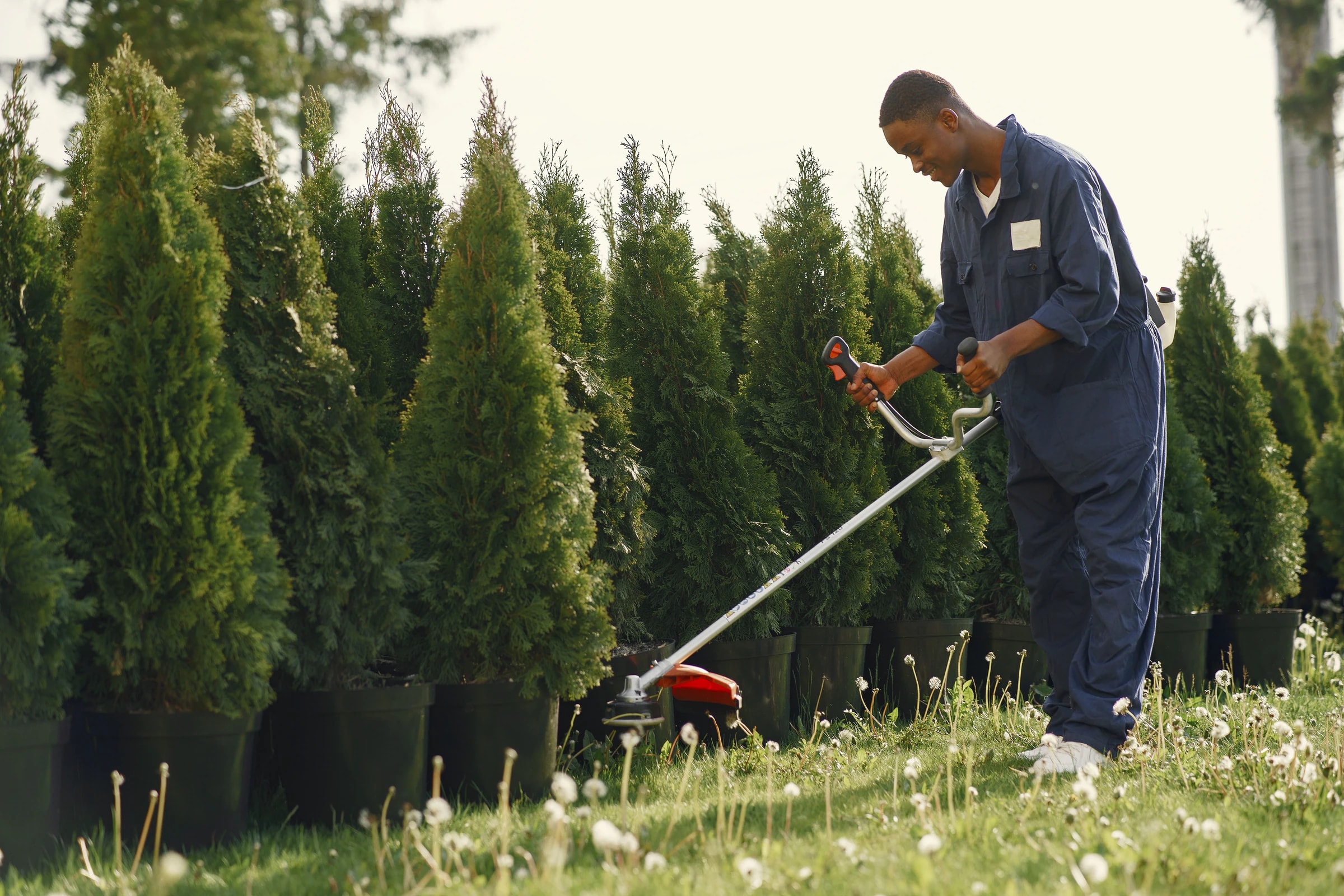
Branded shirts, pants, jackets and hi-vis layers for landscaping and lawn care crews, cut and sewn in Los Angeles from about 50 pieces per style.
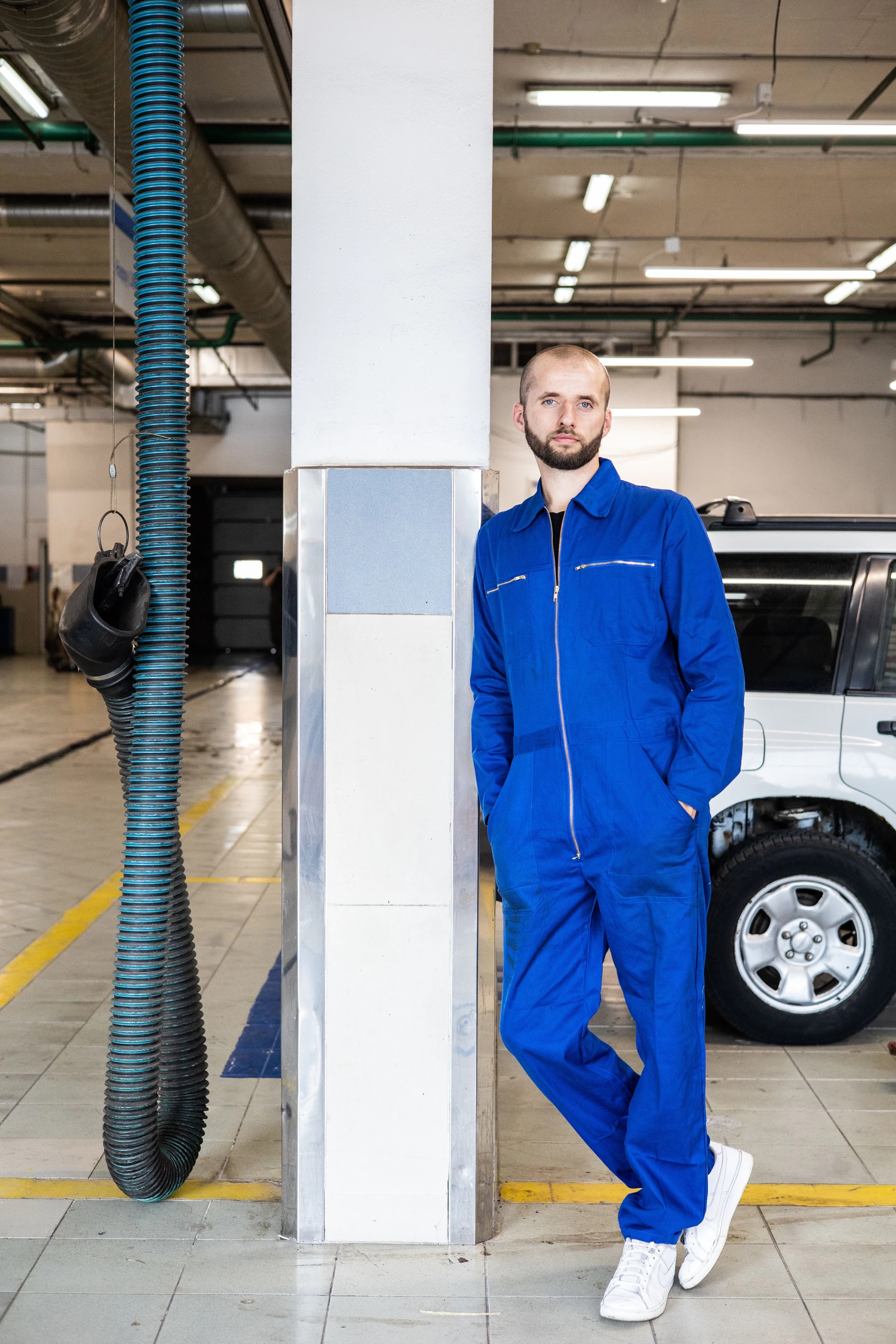
One-piece work coveralls with your logo, name and color, cut and sewn in Los Angeles for mechanics, plants and field crews from about 50 pieces per style.