
Services · Los Angeles factory

Custom Uniform Programs for Employers

A uniform program is a standing arrangement that keeps an employer's uniforms the same across every role, location and reorder: approved garments, colors, logo placements and sizes, supplied on a repeatable schedule instead of bought once. Custom Uniform Factory runs uniform programs direct from its Los Angeles factory, where scrubs and workwear are cut and sewn from imported fabric, so the approved patterns and logo files stay with the people who make the garments; each style starts at about 50 pieces.

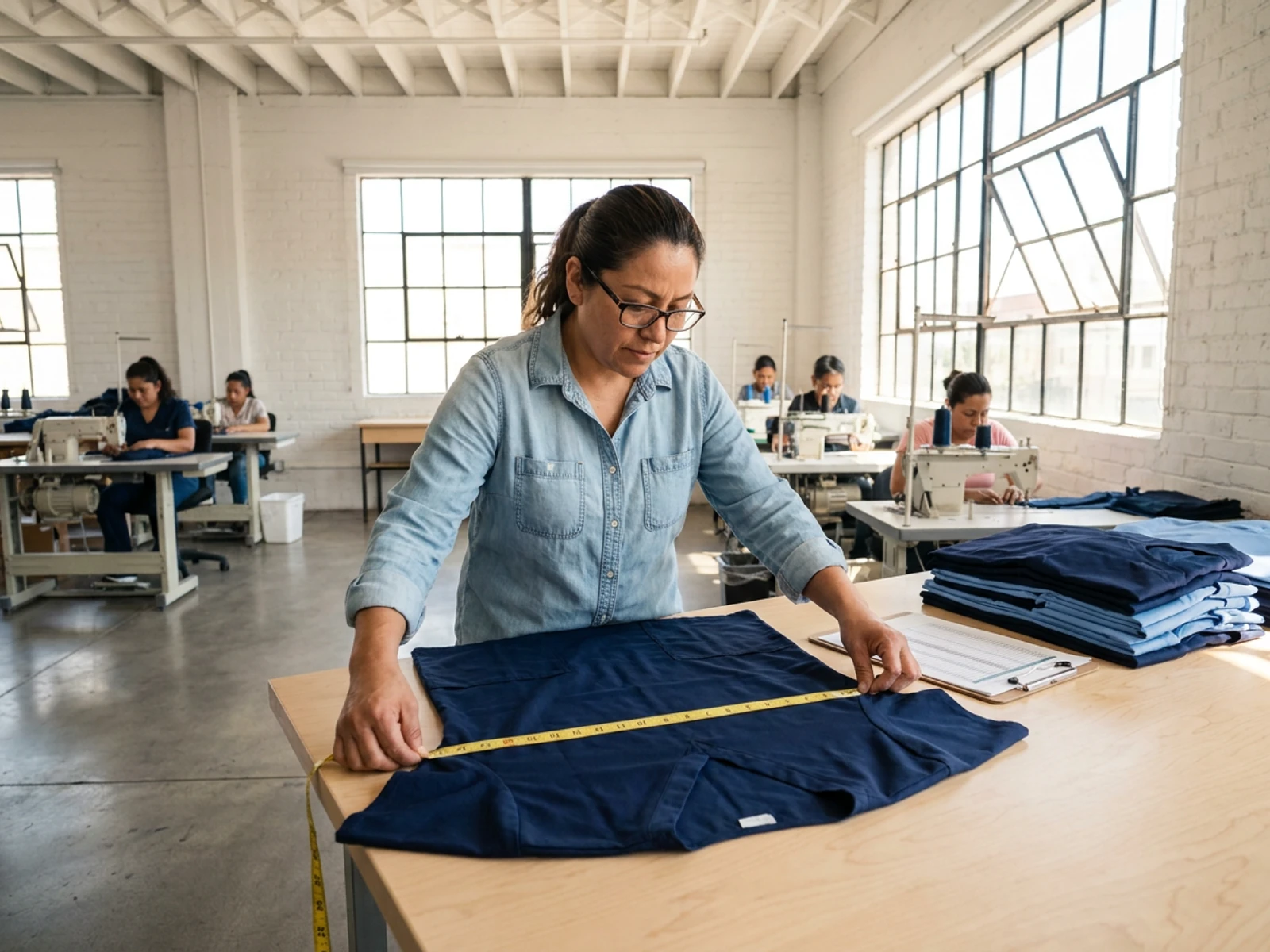
Inspector measuring the chest width of a finished navy scrub top against a spec sheet, with stacks of navy and ceil blue tops beside her
Minimum order
About 50 pieces per style
Production
Cut & sewn in Los Angeles, imported fabric
Program type
Purchase program: you own the garments
Garments
Scrubs, lab coats, work shirts, work pants, chef wear, outerwear

Uniform Programs by style

16 styles in 4 families · each made to order in your fabric, color and branding from 50 pieces.

Customize your uniformsYour fabric, colors, pockets and branding
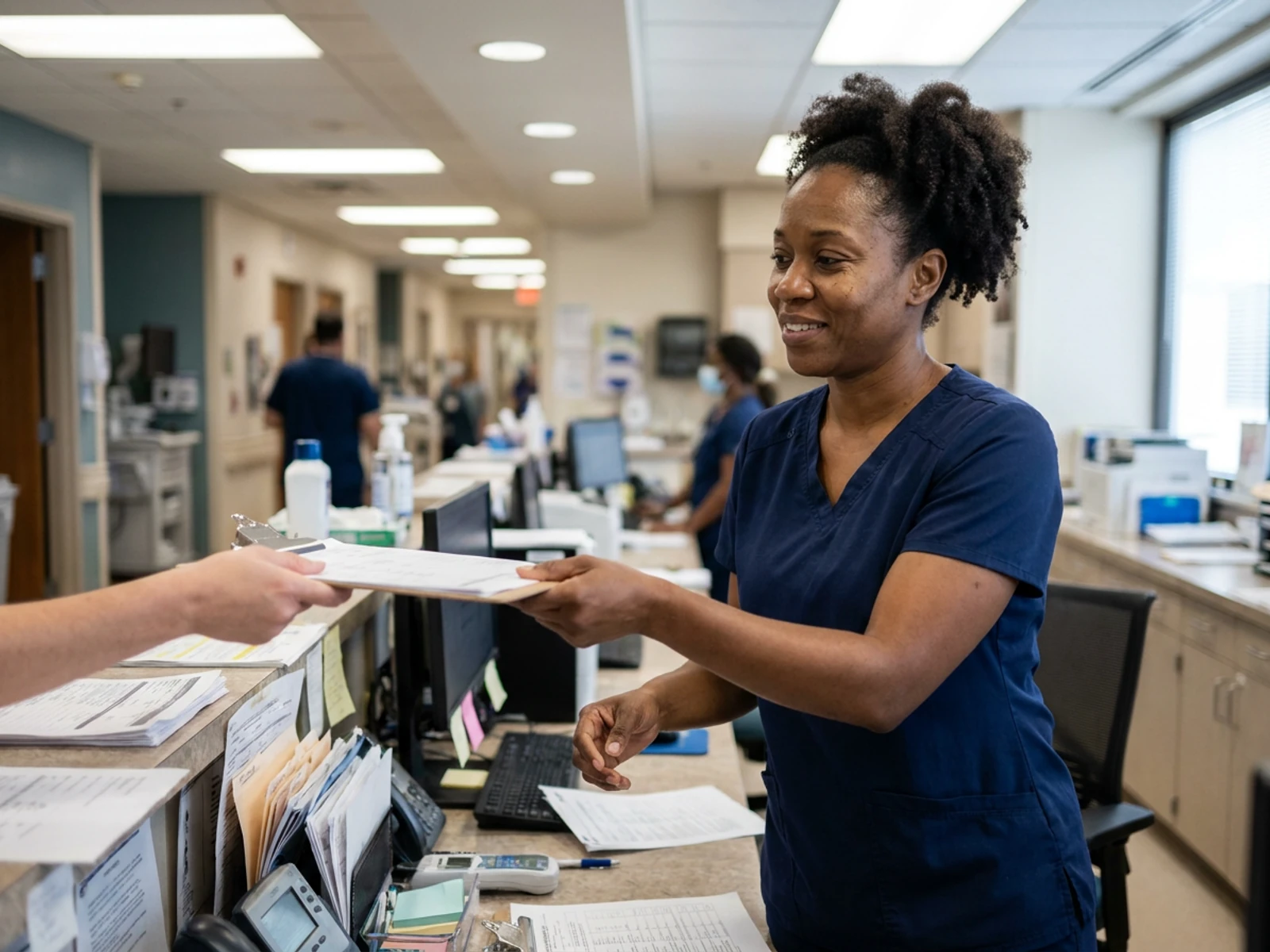
Nurse in a navy scrub set handing a chart to a colleague at a hospital desk

Role-coded scrub sets on one specification

Clinical teams in a program wear the same pattern and fabric in a color per role, so a nurse hired next year matches one hired today. Sets are cut and sewn in Los Angeles from imported fabric, from about 50 pieces per style.

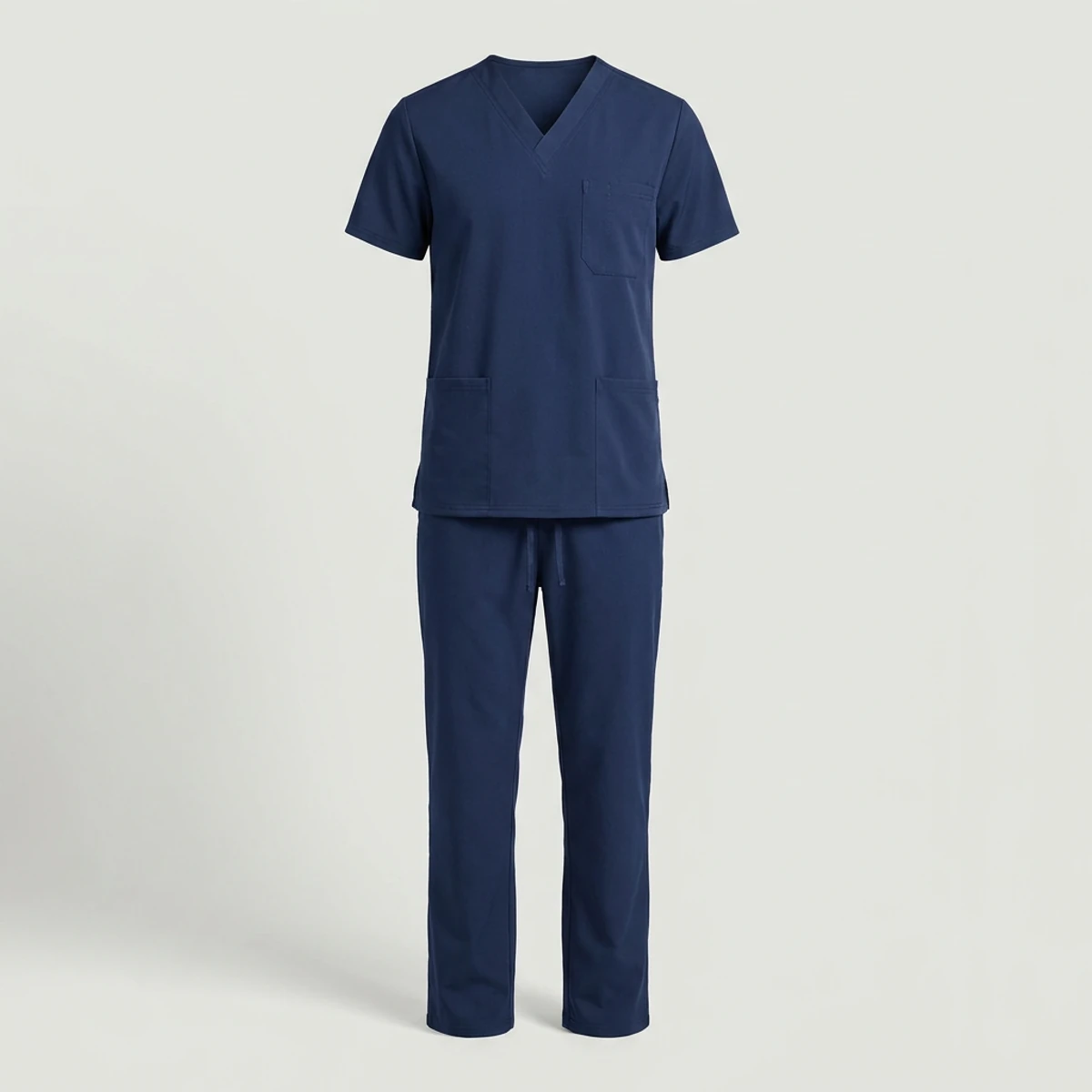
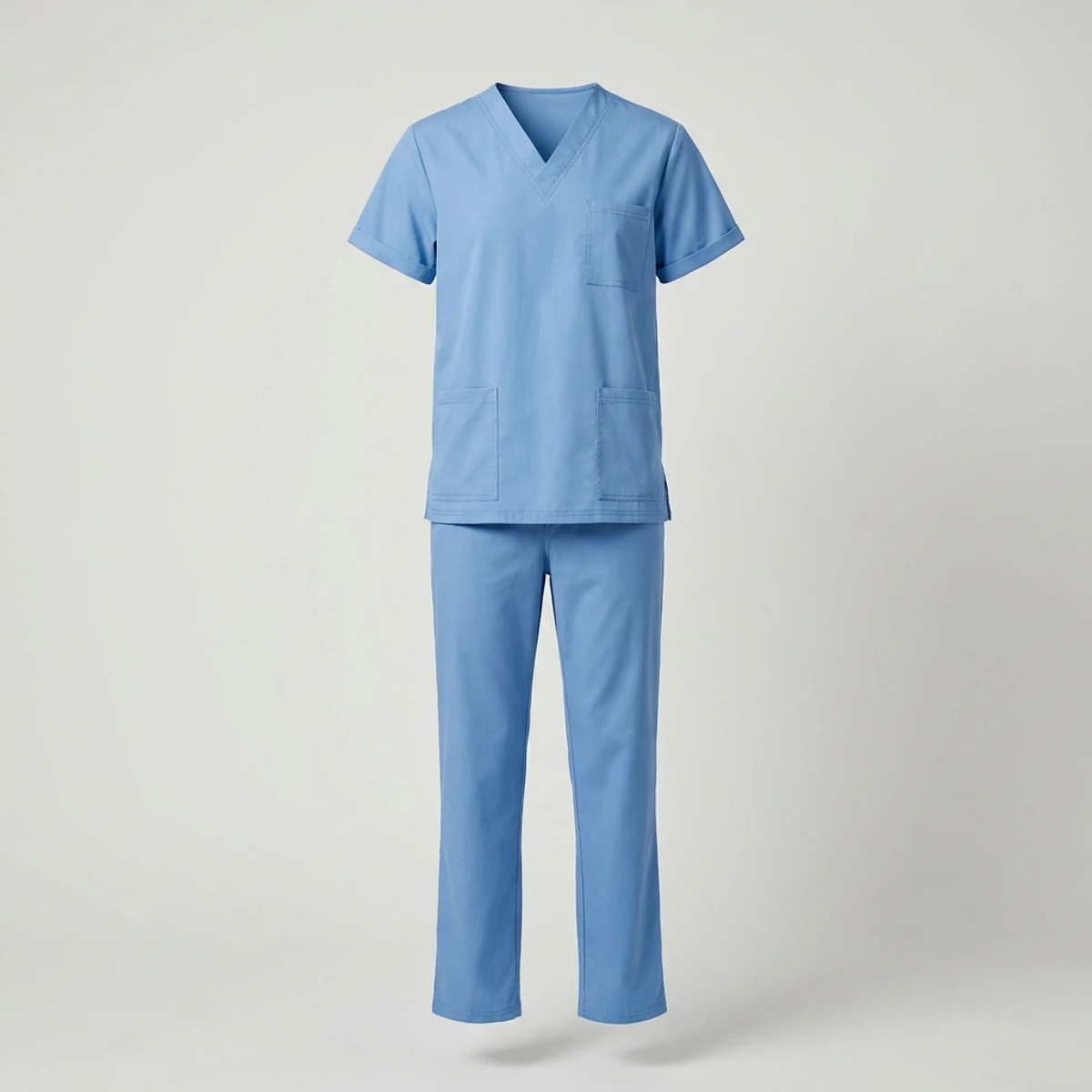
  • Navy V-neck scrub top and matching straight-leg pants as one uniform setNavy scrub set for nurses
  • Ceil blue scrub top and pants set used to code technician rolesCeil blue tech scrub set
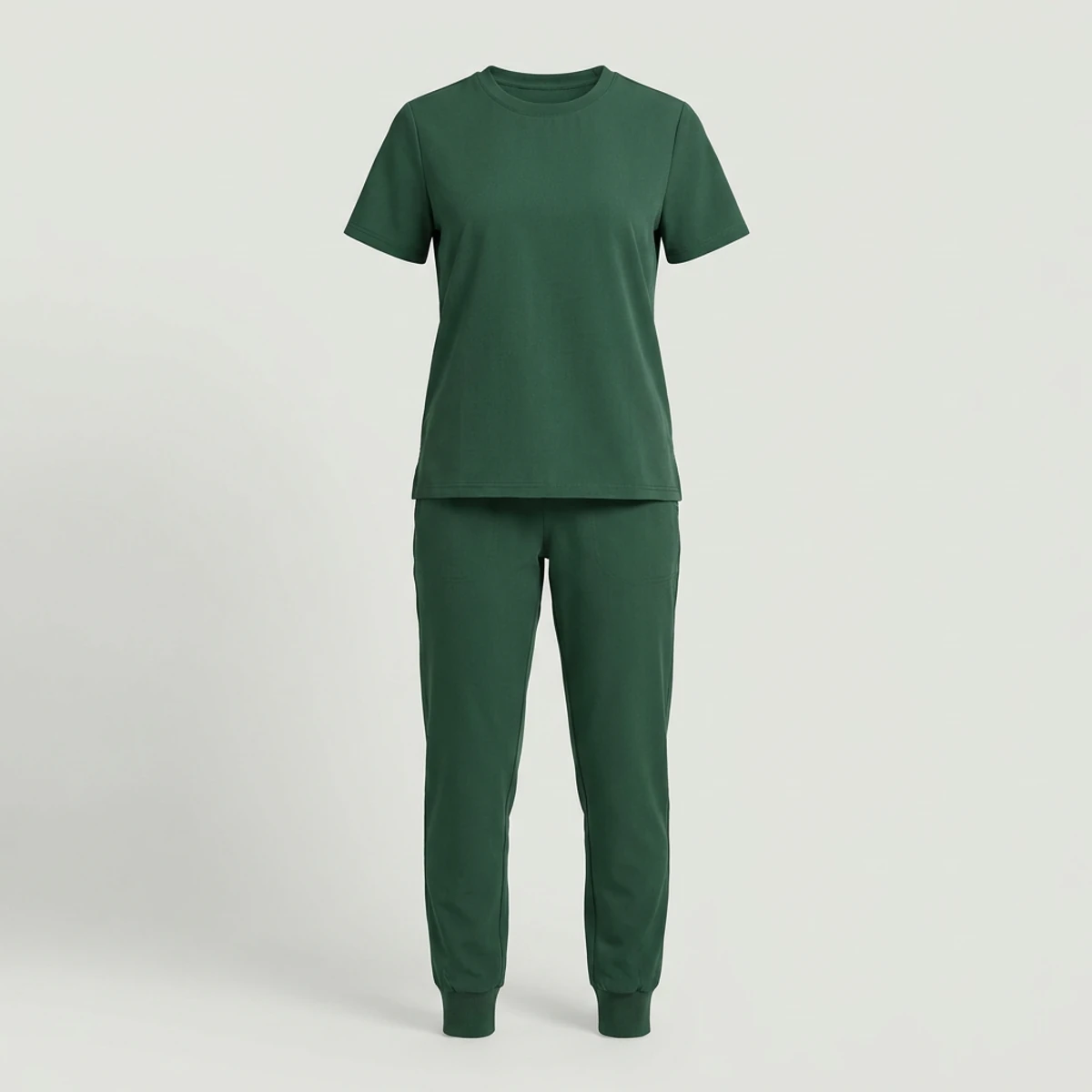
  • Hunter green scrub set with jogger pants for support staffHunter green support staff set
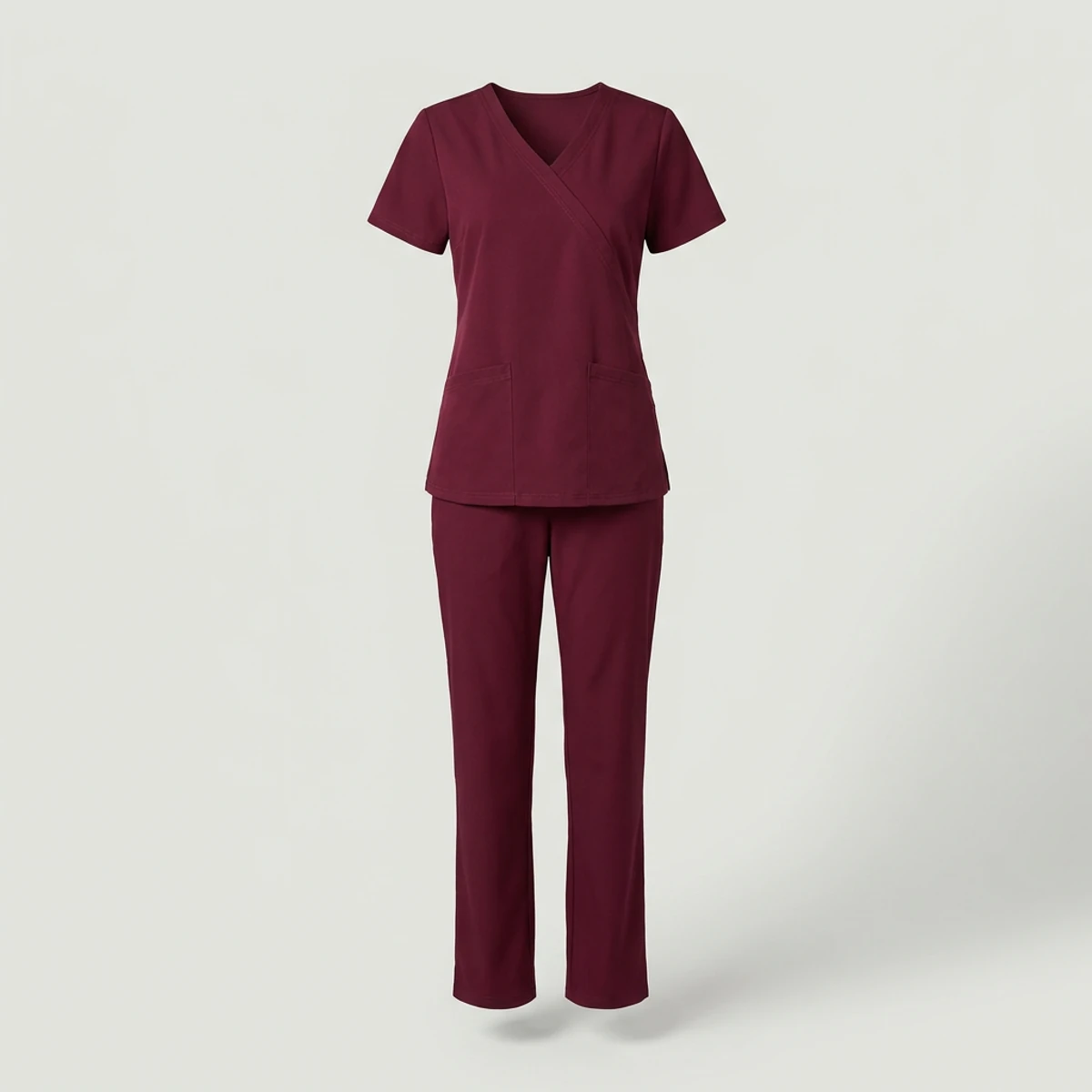
  • Wine colored scrub set with mock wrap top and straight pantsWine scrub set
Quote clinical kits
Clinic receptionist in a black mandarin-collar tunic checking in a patient

Coordinated tops for admin and reception

Front-desk and admin staff get their own garment in a neutral or brand color, carrying the same logo file and placement as the clinical kit, so every patient-facing role reads as one organization.

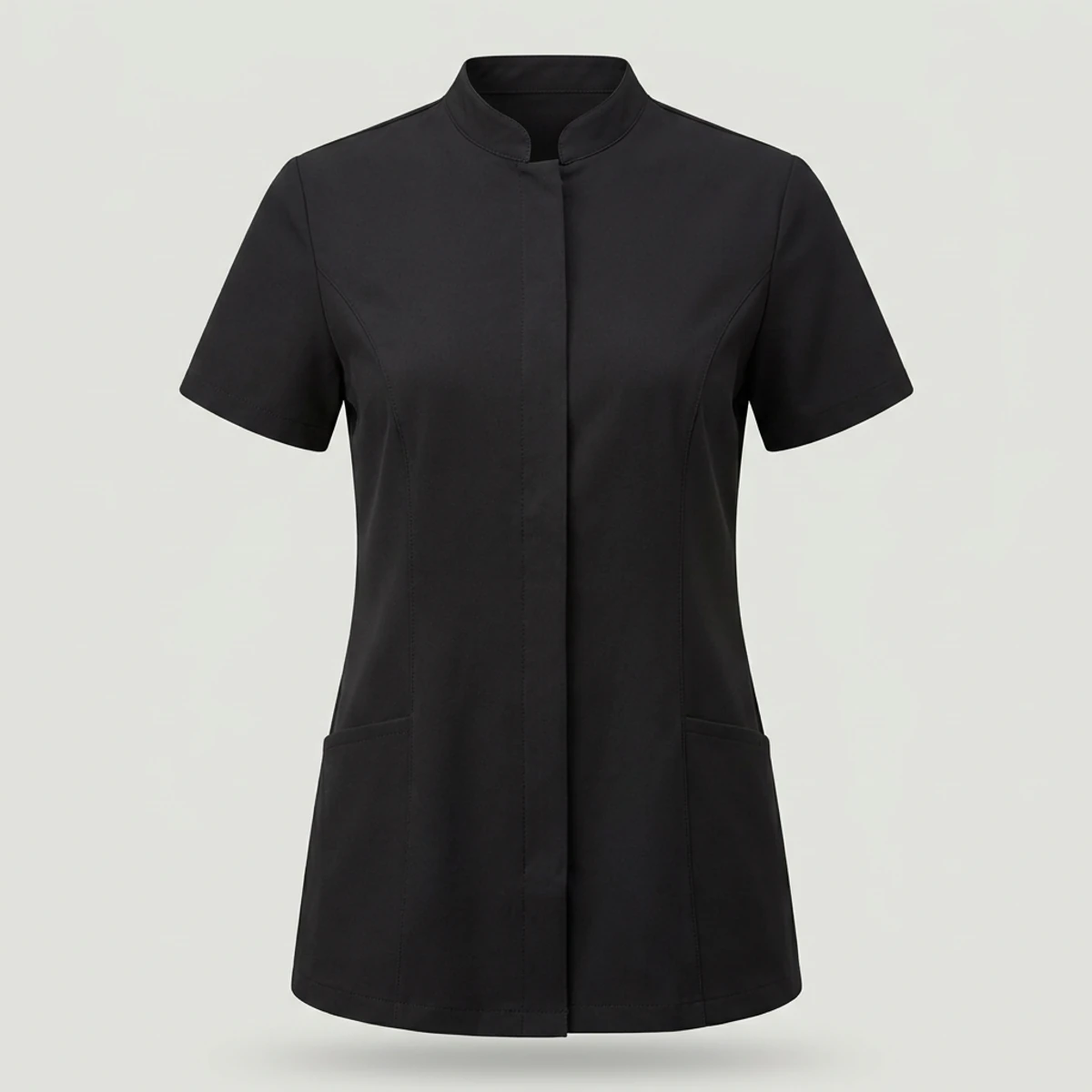
  • Black mandarin-collar tunic top with snap front for clinic front desk staffBlack mandarin-collar tunic
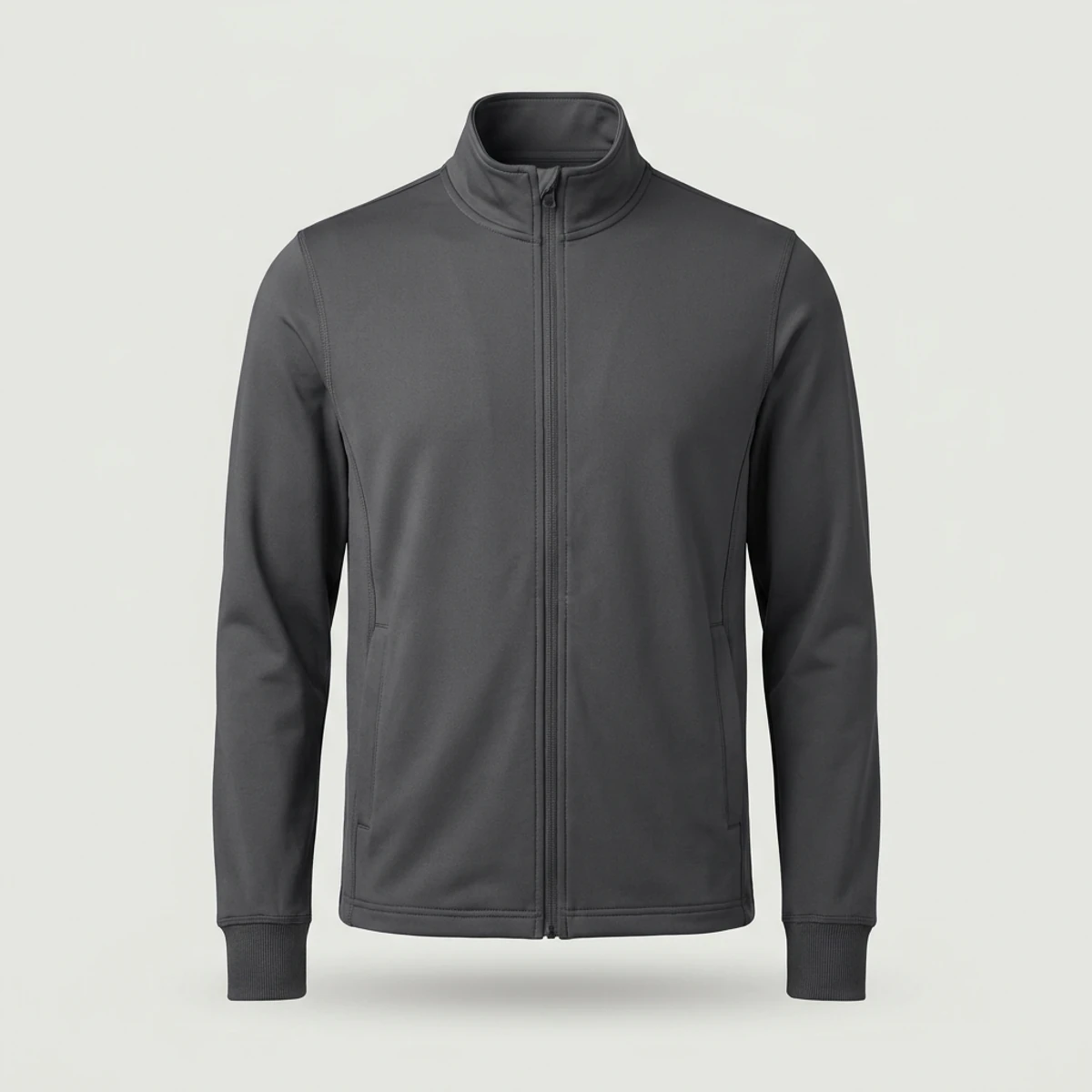
  • Charcoal grey zip warm-up jacket for clinic administrative staffCharcoal admin warm-up jacket
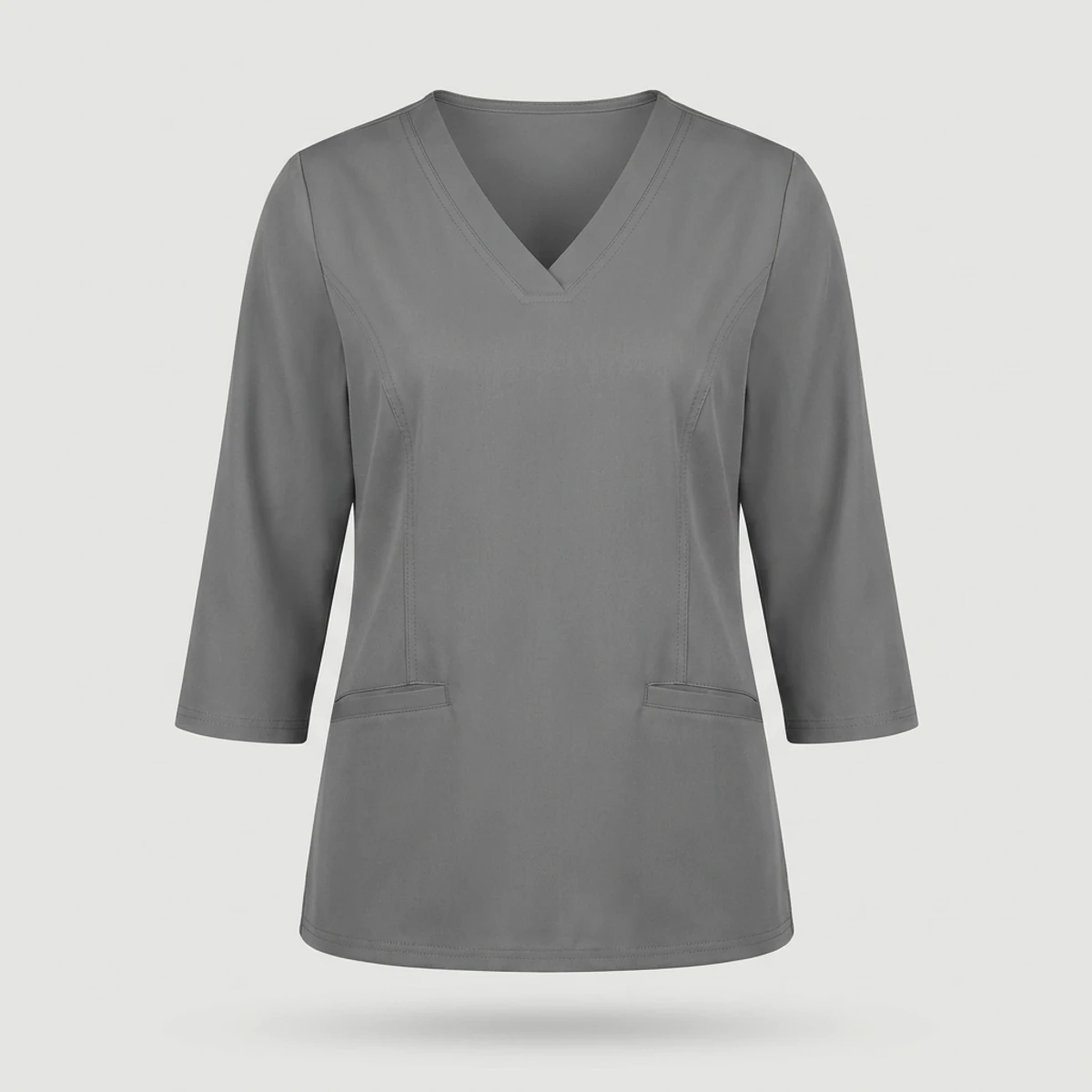
  • Pewter grey V-neck top with three-quarter sleeves for reception staffPewter front desk top
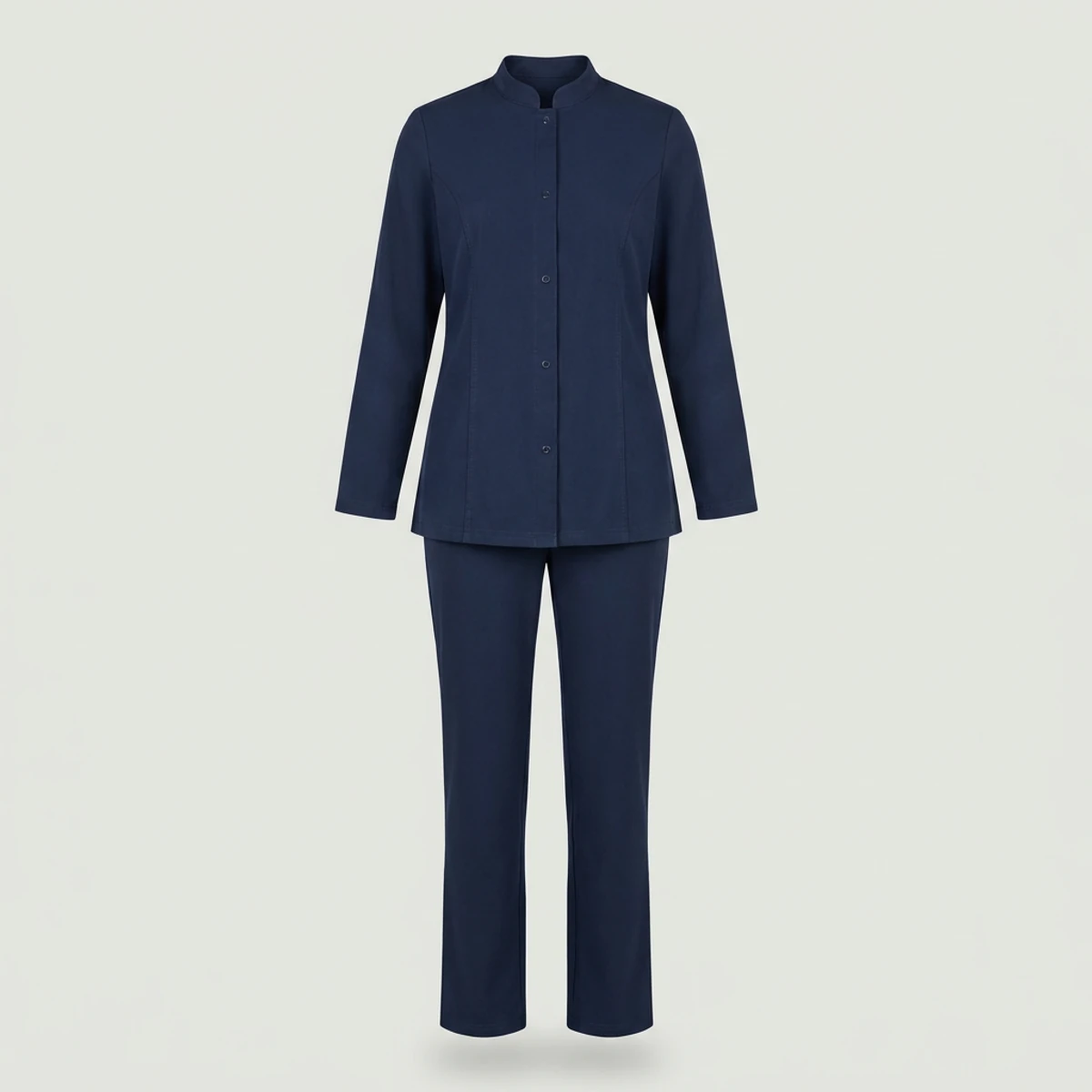
  • Navy tunic top with matching straight pants for front office staffNavy tunic and pant set
Quote front desk
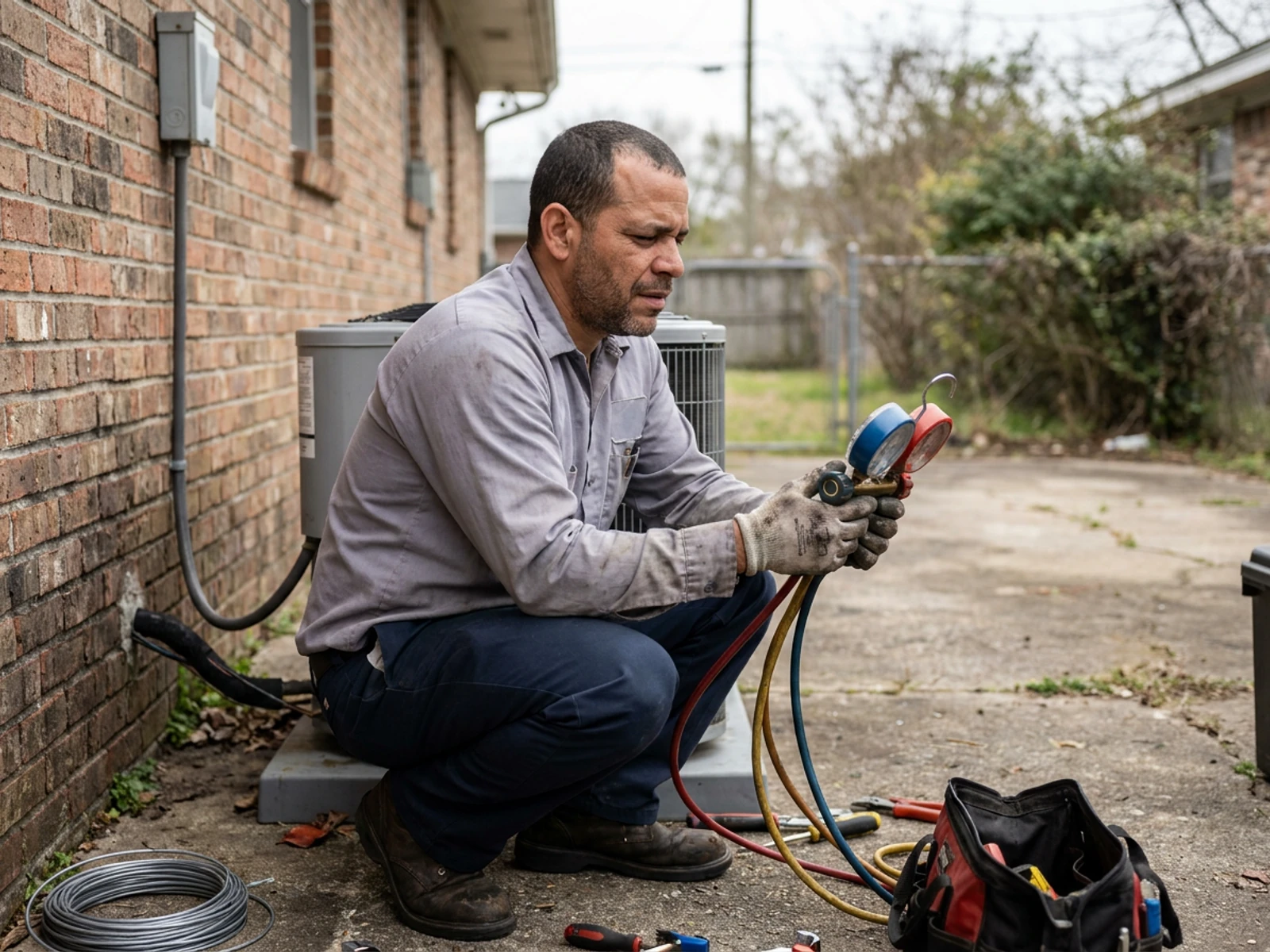
HVAC technician in navy work pants checking an outdoor air conditioning unit

Work pants for maintenance and engineering

Maintenance and engineering teams sit in the same program with durable work pants and a logo shirt. Each garment is its own style with its own run, but reorders, sizes and branding follow the one approved spec.

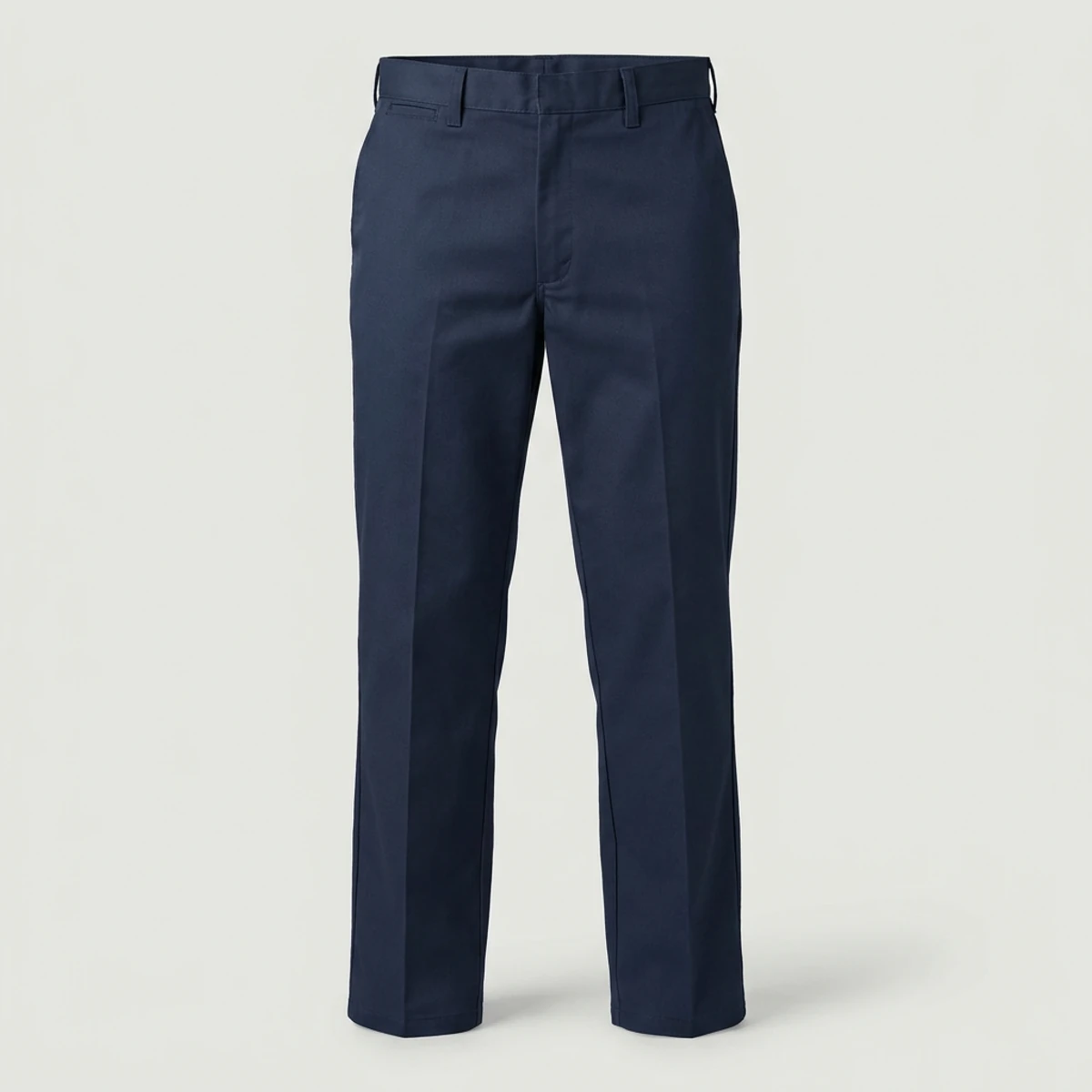
  • Navy flat-front industrial work pants with slant pockets and straight legNavy industrial work pants
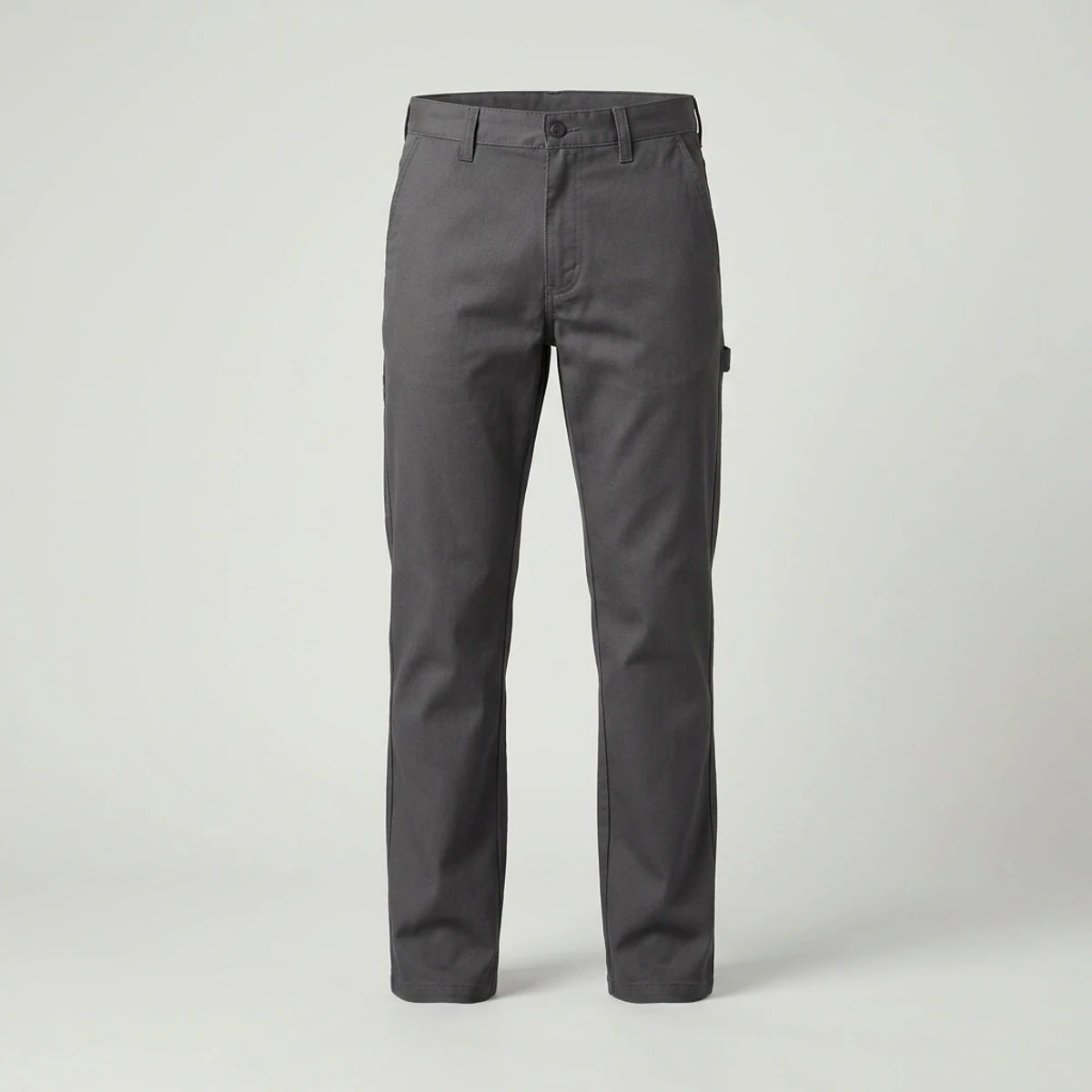
  • Charcoal grey flat-front work pants with cell phone pocketCharcoal industrial work pants
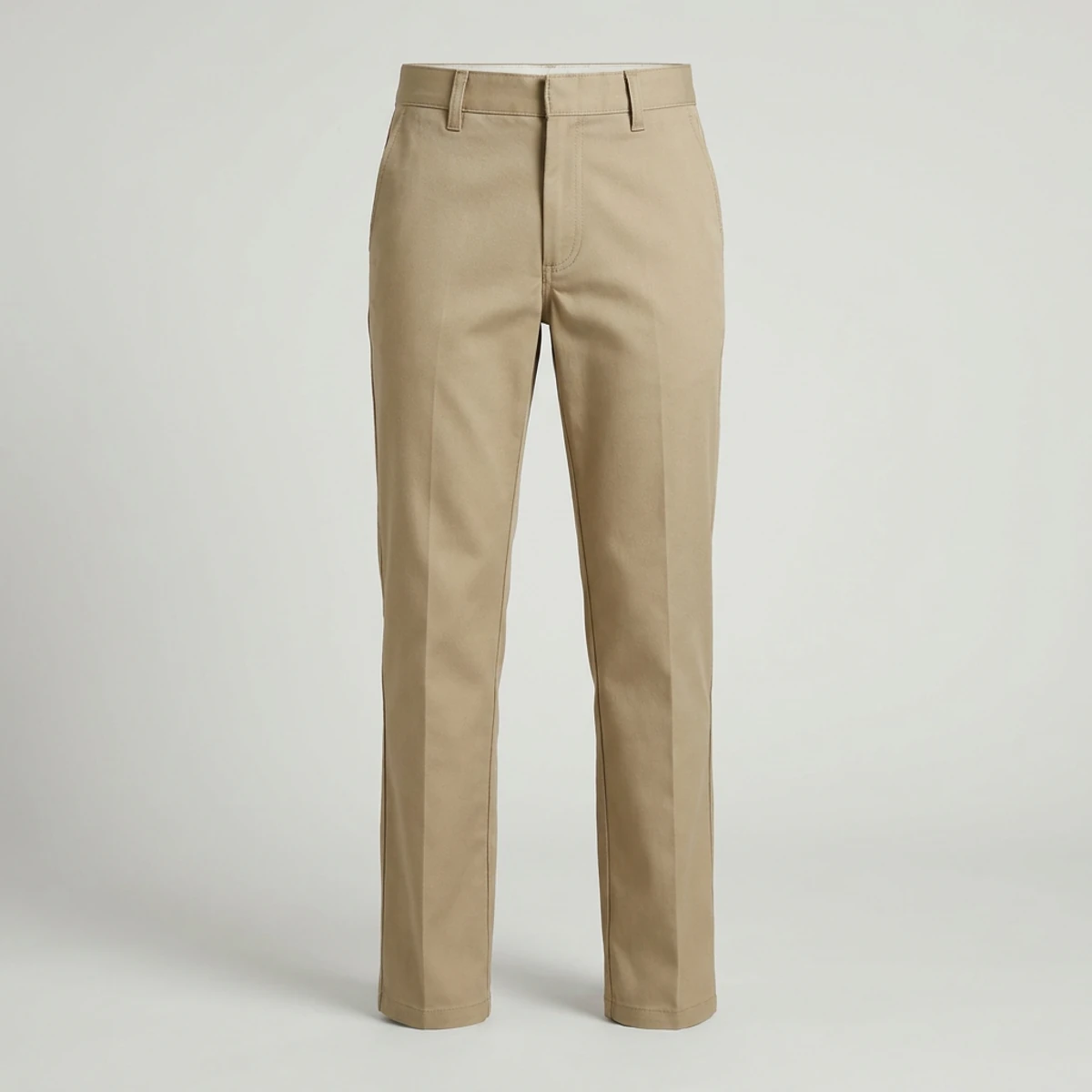
  • Khaki flat-front industrial work pants with hook-and-bar waist closureKhaki industrial work pants
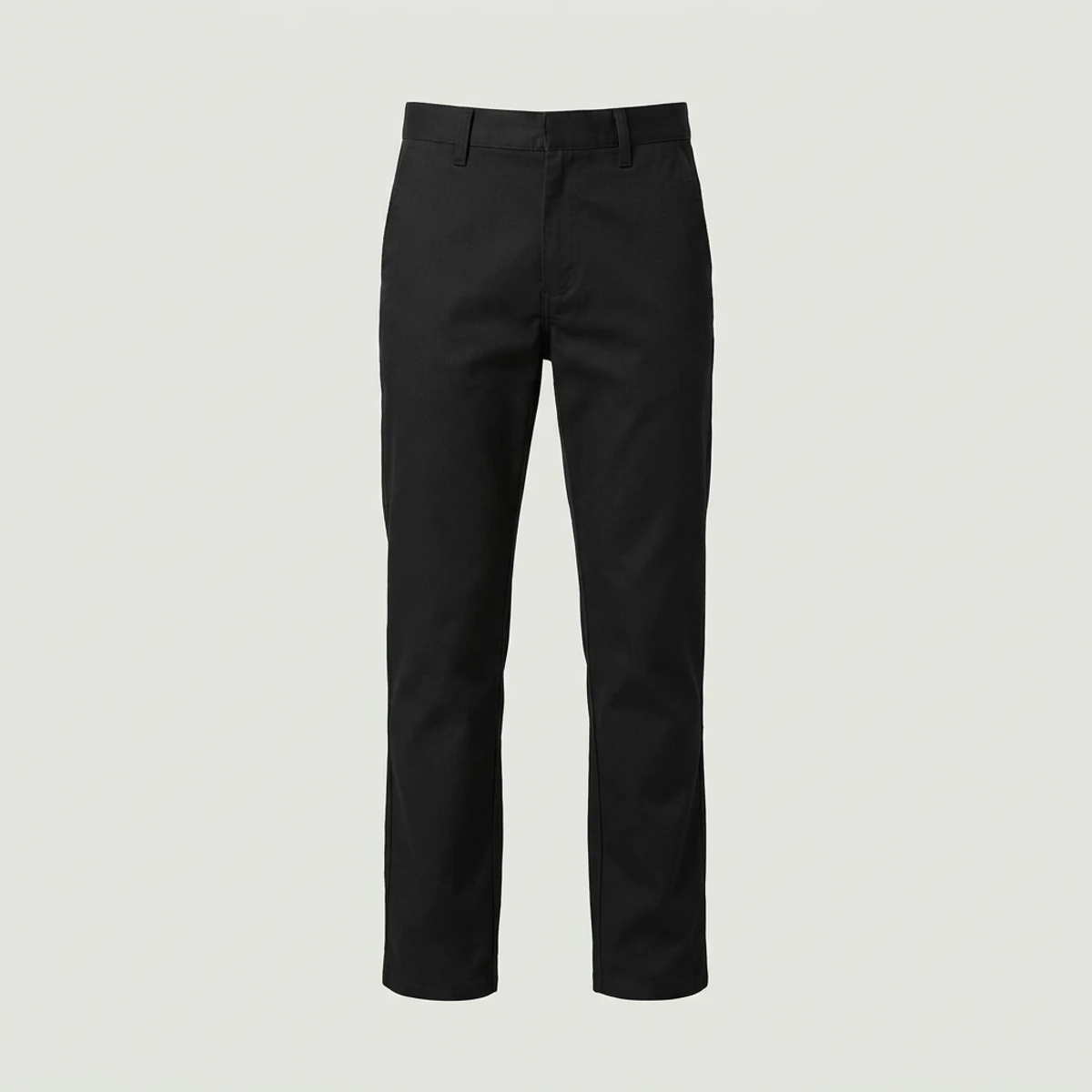
  • Black flat-front work pants with back welt pockets and straight legBlack industrial work pants
Quote facilities
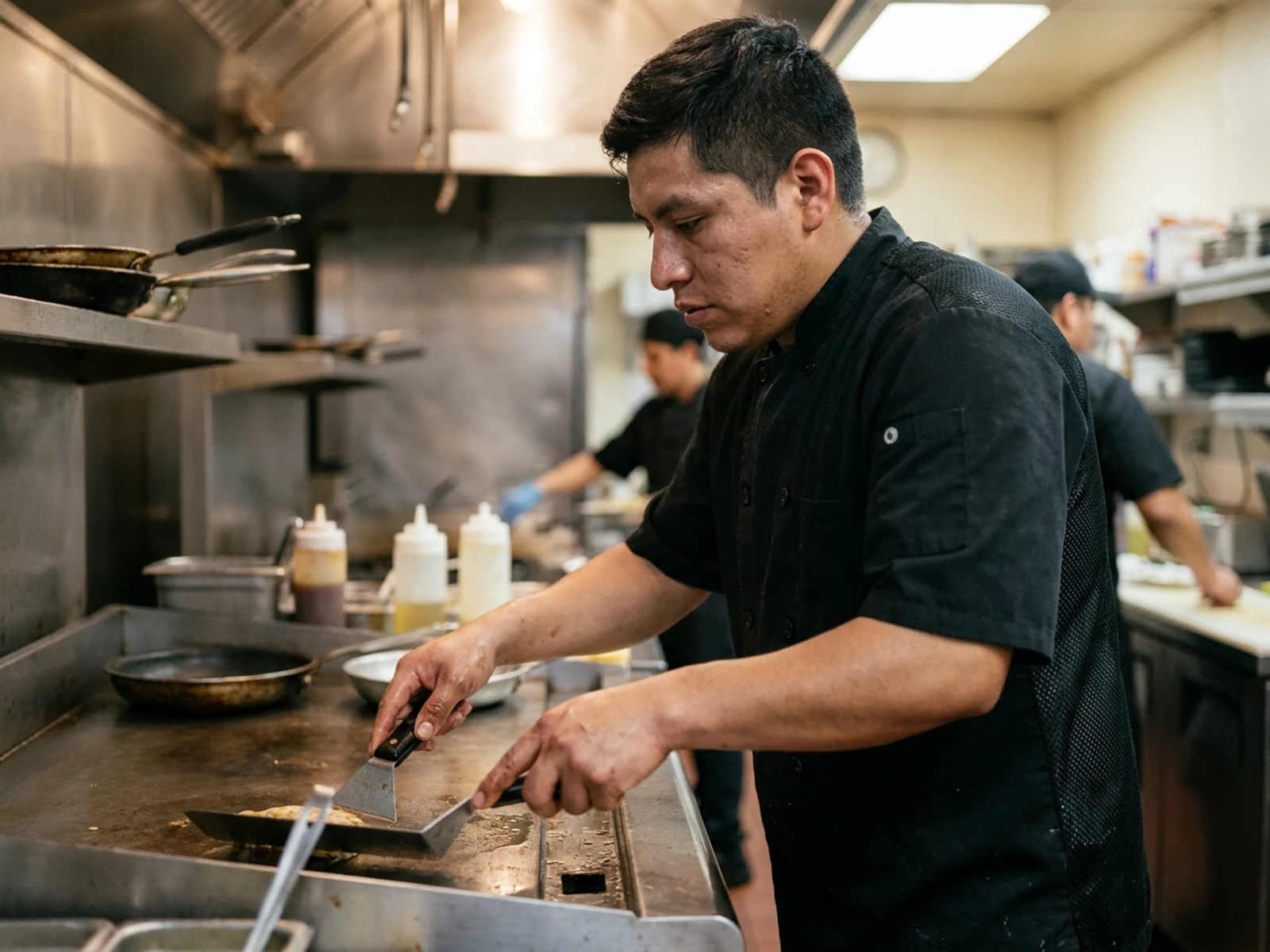
Line cook in a black short-sleeve chef coat flipping food on a grill during service

Kitchen coats under the same logo standard

Employers with cafeterias or restaurants add cook coats to the program, embroidered with the same mark as every other department, so new cooks get the same kit at the next reorder.

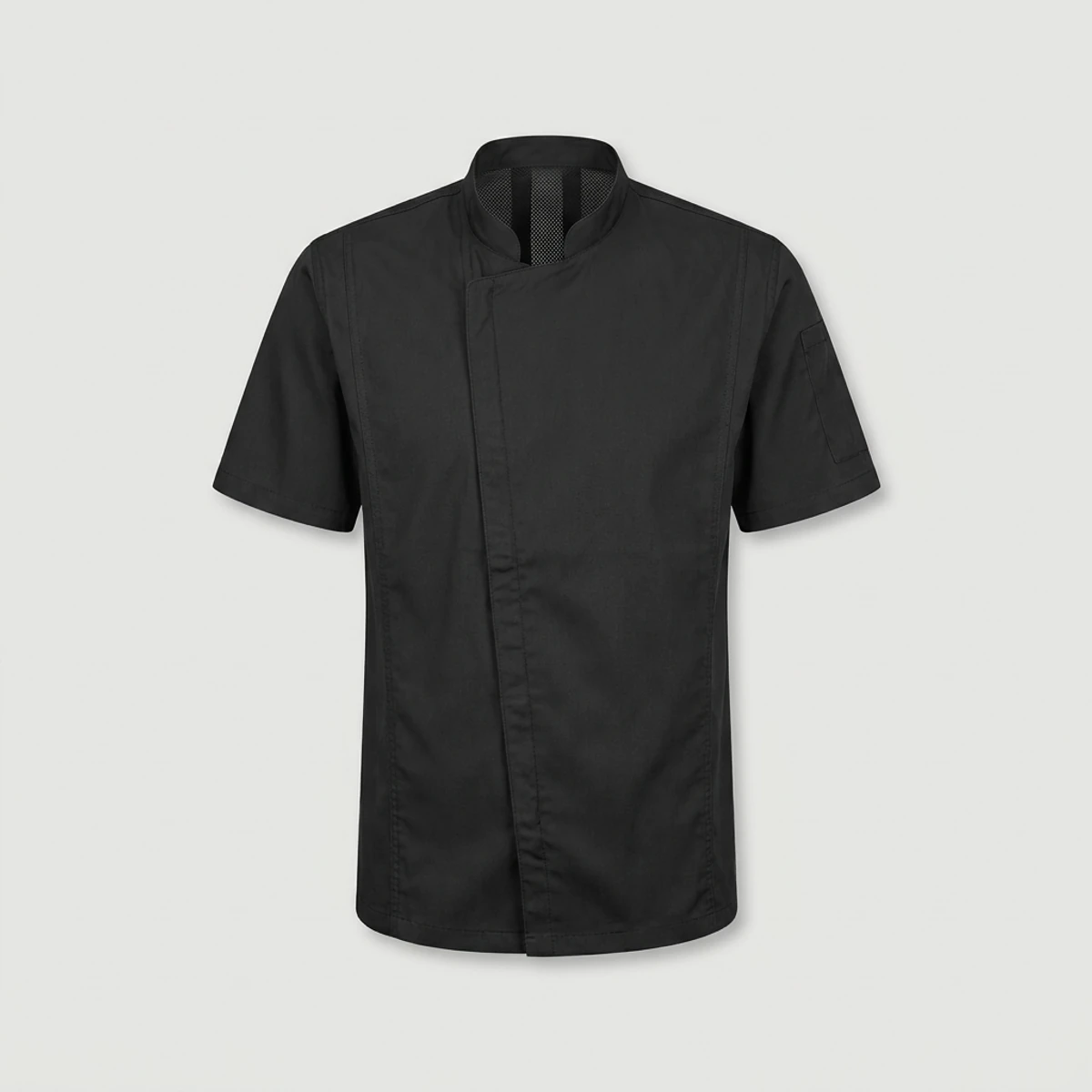
  • Black short-sleeve chef coat with mesh back vent and snap frontBlack short-sleeve chef coat
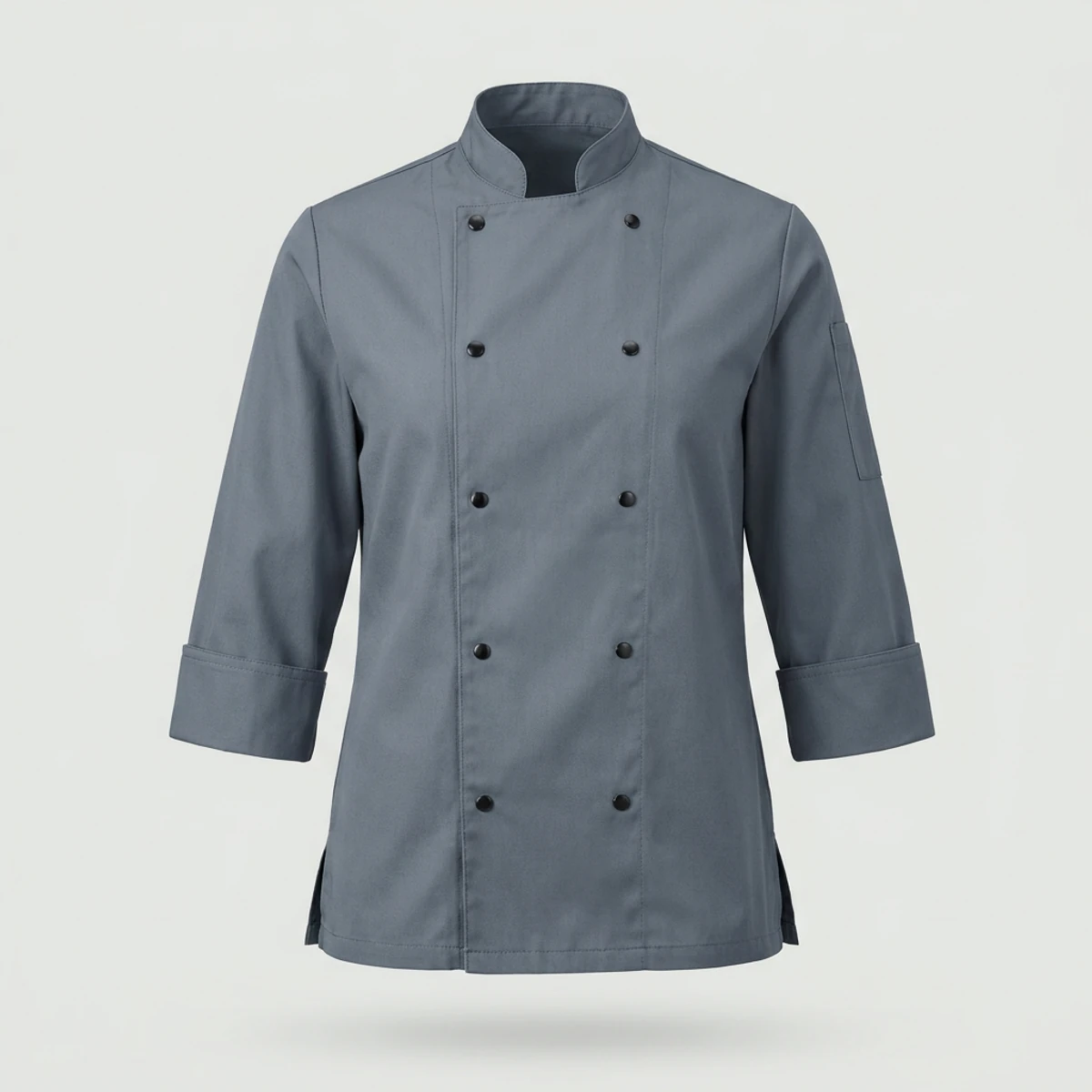
  • Grey three-quarter sleeve chef coat with double-breasted front and side ventsGrey three-quarter sleeve coat
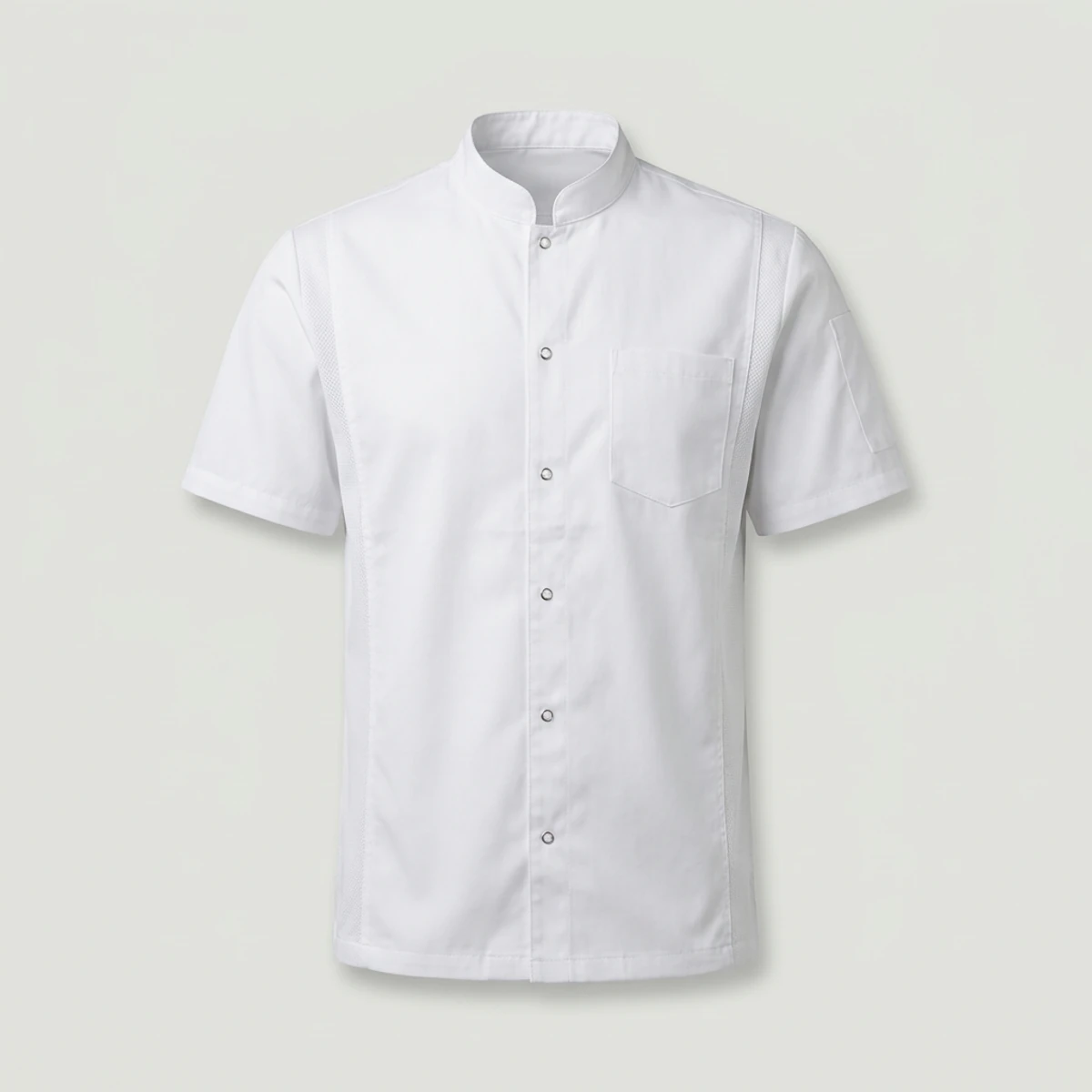
  • White short-sleeve cook shirt with mesh underarm panels and snap frontWhite vented cook shirt
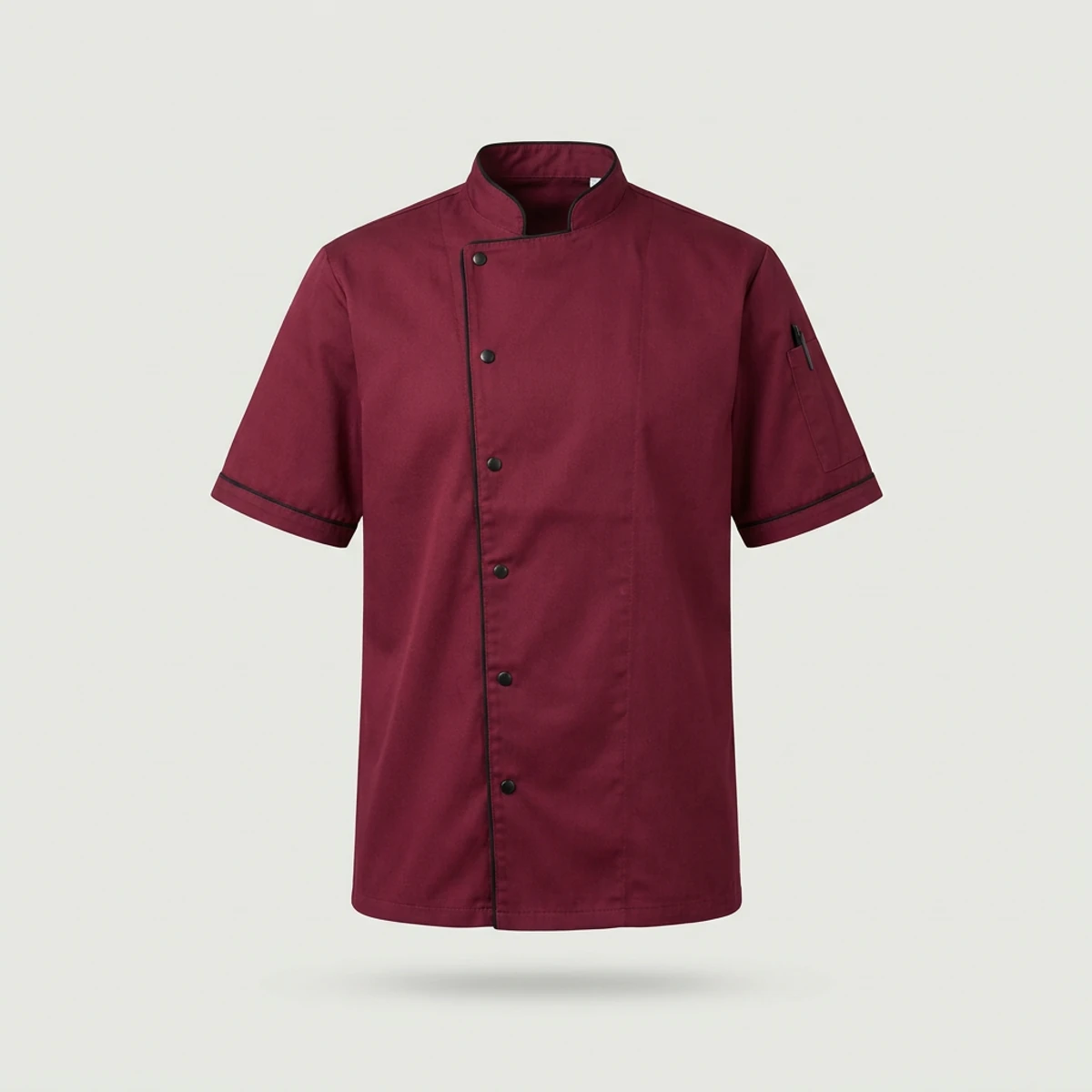
  • Burgundy short-sleeve chef coat with black piping and button frontBurgundy short-sleeve chef coat
Quote food service

Customize your work shirts

Pick the style, fabric and colors, add your logo and names, then attach the design to your quote. We cut and sew it in Los Angeles from 50 pieces per style.

Navy V-neck scrub top and matching straight-leg pants as one uniform set

What is a uniform program, and how is it different from buying uniforms once?

A uniform program is a documented, repeatable way of dressing a workforce: which garments each role wears, in which colors and fabrics, with which logo placement, in which sizes, and how new hires and replacements are supplied. A one-time purchase solves today’s order; a program makes the next twenty orders match the first.

The difference shows up within a year. One-off buying tends to drift: a slightly different navy on the second order, a logo that grew half an inch, a new location that found its own supplier. A program fixes those variables in an approved specification, so uniform program management becomes a matter of reordering against it, not re-sourcing.

Managed, purchase and rental uniform programs compared

A managed uniform program usually means an outside company handles supply, and in many cases laundering and repairs; a purchase program means the employer buys and owns the garments; a rental program leases garments and service together. Each suits a different employer, and the right choice depends on laundering, turnover and how custom the garments need to be.

Program typeHow it worksSuitsWatch-outs
Purchase, manufacturer directThe employer buys garments made to its own approved specification and owns themEmployers who want their own design, fabric, color and branding, with consistent reordersThe employer handles distribution and laundering, or contracts them separately
Purchase through a distributorCatalog garments bought from a reseller, often with logo decorationSmall teams that want stock styles quicklyStyles and shades can be discontinued; less control over fit and fabric
Rental or managed serviceA uniform service leases garments and often picks up, launders and repairs themIndustrial sites with heavy soiling and strict laundering needsChoice is limited to the service’s catalog; contract terms and charges for lost or damaged garments vary by provider
Allowance or reimbursementEmployees buy from an approved list with an allowanceDispersed teams with loose dress codesLittle control over consistency between people

Custom Uniform Factory runs the first type. It manufactures and sells uniforms; it does not rent garments or run a laundry, so a program built here pairs well with an in-house laundry or a linen service of your choice.

How does a uniform program work with a factory?

A uniform program with a factory runs in six stages: define the kit, sample, wear-test, approve the specification, roll out, then reorder against that specification. Sampling and approval happen once per garment; every order after that is produced from the same patterns, fabric and logo file.

  1. 01

    Define the kit

    List the roles, the garments each wears, colors, and any safety standard a garment must meet.
  2. 02

    Sample

    A sample of each garment is made in the chosen fabric and color, with the logo stitched or printed at its real size.
  3. 03

    Wear-test

    A few employees in each role wear the samples through real shifts and real laundering.
  4. 04

    Approve the specification

    Garment, fabric, color reference, logo file, placement, size range and labels are written down and signed off.
  5. 05

    Roll out

    Sizes are collected, the first run is cut and sewn in Los Angeles, and garments are branded in the same run.
  6. 06

    Reorder

    New hires, replacements and new locations are produced to the approved specification.

Ask for current lead times when you request a quote; they depend on fabric availability and order size.

What should a buyer define before starting a corporate uniform program?

A buyer should define the roles and garments, the brand standard, the size range, the laundering method, the safety requirements and who pays, before asking for samples. Corporate uniform programs that skip this step end up re-sampling, because the factory cannot guess which decisions are fixed and which are open.

DecisionWhat to defineWhy it matters
Roles and garmentsWhich garments each role wears, and how many of each per personSets the number of styles, and each style carries its own minimum
Brand standardLogo file, colors (with Pantone references), placement and size per garmentStops logos and shades drifting between orders and sites
SizesThe size range per garment and whether fitted cuts are offered alongside unisexDrives comfort, and whether people actually wear the uniform
LaunderingHome washing, in-house laundry or a contracted linen serviceDecides fabric, thread and color choices
Safety needsAny garment that must meet a standard, such as hi-vis or flame resistanceChanges fabric and trims; the standard is specified up front
Who paysCompany-paid, allowance or employee contributionHas legal limits; see the section below
Ordering and deliveryCentral buyer or each location, one delivery address or severalShapes how orders and packing are split

Garments that must meet a safety standard, such as ANSI/ISEA 107 (American National Standards Institute / International Safety Equipment Association) high-visibility apparel or NFPA 2112 (National Fire Protection Association) flame-resistant clothing, are built to the standard you specify, and certification is confirmed at quote. Our high-visibility clothing page explains the classes.

Building the program catalog: core styles, colors and sizes

A program catalog works best when it is small: a core of one or two garments per role, a short color palette, and a size range that covers everyone. Every added style needs its own run of about 50 pieces, so a tight catalog keeps reorders simple and stock usable.

A typical multi-role employer might settle on a catalog like this:

TeamCore garmentsBranding
Clinical staffScrub tops and pants in role colors, a shared jacketLogo left chest, name and credential right chest
Front desk and adminCoordinated top in a neutral or brand colorLogo plus name or title
Maintenance and facilitiesWork shirt and work pantsLogo on the chest, name tape optional
Kitchen and food serviceChef coats or cook shirts, apronsLogo and name on the chest
Field or yard staffHi-vis outer layer over the work shirtLogo positioned so reflective material is not covered

Scrub sizes run from XXS to 5XL; size ranges for other garments are confirmed at quote. Our scrub size chart explains how unisex and fitted cuts compare.

Tip: Choose colors that stay in production for years, not this season’s shade. A program color has to match on every reorder.

Black mandarin-collar tunic top with snap front for clinic front desk staff

Size management across a workforce

Size management decides whether a uniform program feels fair to employees. Collect sizes from samples, not guesses: a sizing day with a full sample run, or sample sets sent to each location, gives far fewer exchanges than a form asking people to pick a size.

Read more
  • Record top and bottom sizes separately, and note fitted or unisex preference.
  • Plan the size curve from the roster, not an even spread; extended sizes are often under-ordered.
  • Hold a small buffer of the most common sizes for new hires and exchanges.
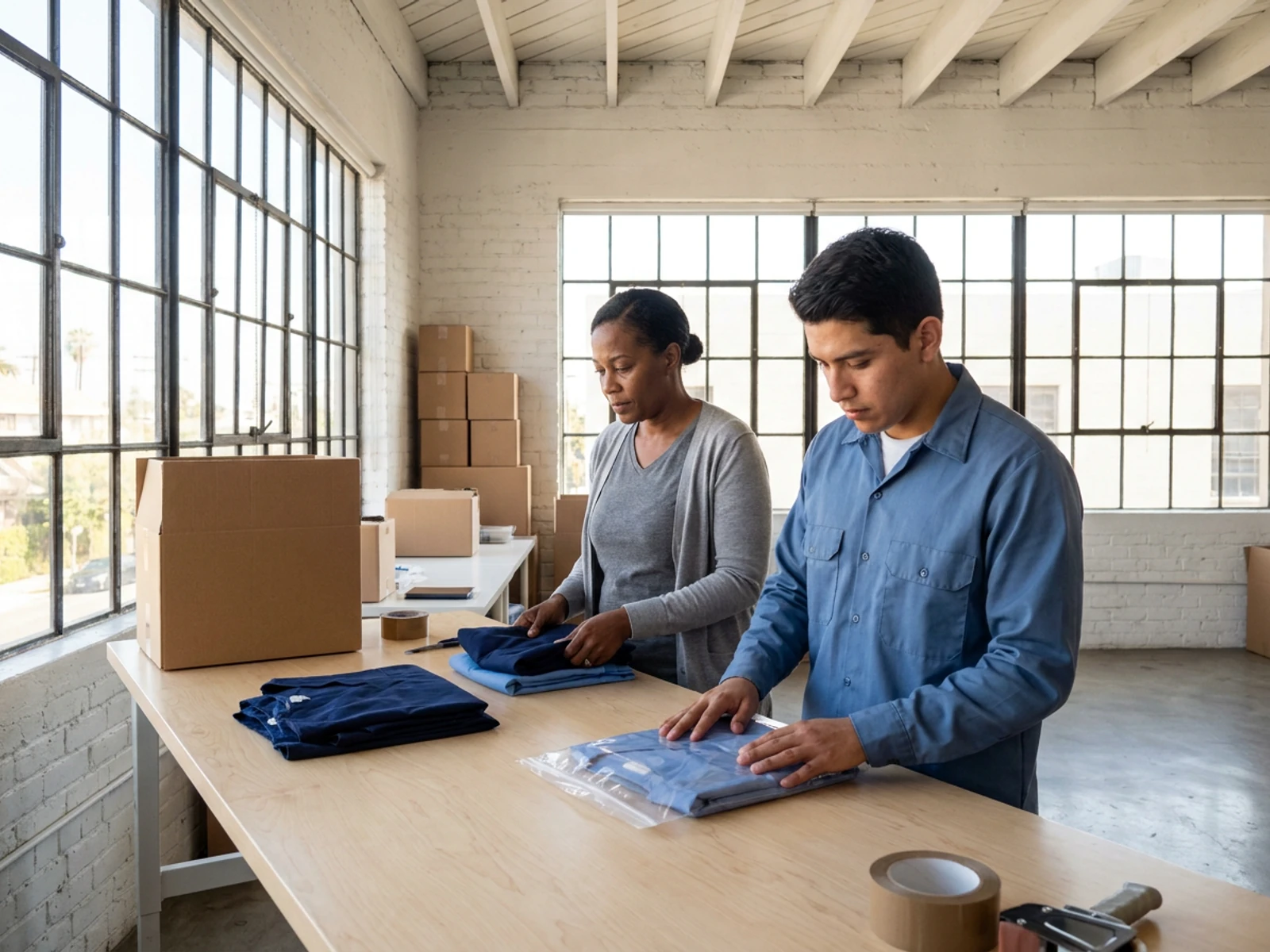
Workers folding finished scrub tops into clear poly bags for shipping

New-hire kits and reorders

A new-hire kit is the fixed set of garments each new employee receives on day one, such as three tops, two pants and one jacket. Defining the kit per role makes onboarding a lookup instead of a decision, and it tells you how much buffer stock each role needs.

Read more

Reorders are produced to the approved specification on file: same patterns, same fabric, same color reference, same logo file and placement. Batching replacements into regular reorders, rather than ordering one piece at a time, keeps each style at the minimum of about 50 pieces.

Navy flat-front industrial work pants with slant pockets and straight leg

Keeping every location consistent

Multi-location consistency comes from one written specification and one supplier making every garment against it. When each site sources its own uniforms, shades, fits and logo sizes drift within a year; when every order is produced from the same patterns and logo file, a new site matches the oldest one.

Read more

Two common examples: a home care agency issuing a fixed kit to every new aide, set out on our home health care uniforms page, and a nursing program that standardizes student scrubs, colors and patches across each cohort, covered under nursing school uniforms.

For employers in several industries at once, such as a hospital group with healthcare scrubs, kitchens and an engineering team, every garment can sit under one logo standard. See how requirements differ by sector on our company uniforms by industry hub, from hotel uniforms to restaurant uniforms.

Black short-sleeve chef coat with mesh back vent and snap front

Who pays for employee uniforms?

In an employee uniform program, the employer usually pays for required uniforms, and federal and state law limit what can be passed on to staff. Under the Fair Labor Standards Act, the US Department of Labor explains that a uniform deduction may not reduce an employee’s pay below the minimum wage (DOL Fact Sheet #16 on wage deductions).

Read more

Some states go further. California’s wage orders, published by the Industrial Welfare Commission, require employers to provide and maintain uniforms that are required as a condition of employment. Separately, OSHA’s (Occupational Safety and Health Administration) personal protective equipment rule, 29 CFR 1910.132, makes employers pay for required PPE but excludes ordinary clothing and uniforms from that payment rule. This is general information, not legal advice: confirm your obligations with an employment lawyer before setting an allowance or deduction policy.

Custom uniform programs and private label

A custom uniform program goes beyond choosing catalog garments: the employer’s own design, fit, fabric and details are developed and sampled, then held on file as the program standard. Large employers and franchise groups use it to make the uniform part of the brand.

Read more

Garments can also carry the employer’s own neck labels and care labels through our private label service, and entirely new garments are developed through custom manufacturing.

Which fabrics suit program garments?

Program fabrics should be chosen for how the garments are laundered first and how they feel second, because a program reorders the same fabric for years. The table compares common choices by garment.

GarmentTypical fabricTypical weight
Scrub tops and pantsPoly-cotton or polyester-rayon-spandexAbout 150–240 GSM
Work shirtsPoly-cotton poplin or twillAbout 120–200 GSM
Work pantsPoly-cotton or cotton twill, canvasAbout 230–340 GSM
Chef coatsPoly-cotton twillAbout 170–240 GSM

GSM means grams per square meter. Weights are typical; the exact weight is confirmed at quote. The scrub fabric guide compares scrub blends in more depth.

What does a uniform program cost?

The cost of a uniform program depends on the number of styles, the quantity per style, fabric, decoration, personalization and how orders are packed and split across locations. No prices are published, because each program is quoted on its actual garments, artwork and roster; the minimum is about 50 pieces per style.

Cost driverHow it moves the costHow to keep it in check
Number of stylesEach style is its own run with its own minimumShare garments across roles; separate roles by color or title
Quantity per styleLarger runs spread cutting, setup and sampling across more piecesBatch replacements into regular reorders
FabricPerformance and stretch blends usually cost more than standard poly-cottonPay for stretch where people move most
DecorationStitch count, thread colors and number of locations add time per pieceOne logo plus one name line
PersonalizationNames and titles add handling for every pieceSend one roster in one format
Packing and deliverySplitting by person or by location adds handlingAgree the split at quote stage

Embroidery and printing are added in the same production run through our custom embroidery and printing service, and plain stock for buffers is available as wholesale blanks.

What mistakes do companies make running a uniform program?

The most common uniform program mistakes are too many styles, no written specification, sizing by form instead of samples, no buffer for new hires and letting locations source on their own. Each is cheap to avoid while the program is being set up and expensive to fix after a full run.

  1. Too many styles

    Every style needs its own minimum, and slow styles tie up stock.
  2. No written specification

    Without a signed-off spec, every reorder is a new negotiation over shade and placement.
  3. Sizing from a form

    People guess their size; sample sets reduce exchanges.
  4. No new-hire buffer

    New staff wait weeks for a uniform, or wear their own clothes.
  5. Locations sourcing separately

    The look drifts and buying power is split.

Ready to order

What to send us to start a program

To start a uniform program, send the roles and headcount per location, the garments each role wears, your logo and colors, the size range, how garments are laundered and how you want ordering and delivery split. With that, a program can be priced and sampled in one round.

  • Roles, headcount and number of locations
  • Garments per role and pieces per person
  • Logo file (vector preferred), colors and placement
  • Name or title format, if garments are personalized
  • Laundering arrangement: home, in-house or linen service
  • Any safety standard a garment must meet
  • Ordering model: central buyer or each location

Questions about uniform programs

Need something not covered here? Ask our Los Angeles team and we’ll answer with options for your order.

Ask our Los Angeles team

Do you run rental or laundry uniform programs?

No. Custom Uniform Factory runs purchase programs: the employer owns the garments, and the factory keeps the approved patterns, fabrics, colors and logo files on record for every reorder. Programs that need laundering pair the uniforms with an in-house laundry or a contracted linen service of the employer's choice.

Can a small business have a uniform program?

Yes. A program does not need hundreds of employees. A team of 15 that orders four tops each already reaches the minimum of about 50 pieces for one style. The rest of a small program is the written specification, a size buffer for new hires and a reorder rhythm, which cost nothing extra to set up.

Can each location order its own uniforms under one program?

Each location can order against the same approved specification, or one central buyer can order for all sites. Either way the garments come from the same patterns, fabric and logo file, so a new site matches the old ones. Tell us at quote stage how you want ordering and delivery split.

Can a uniform program mix scrubs and workwear?

Yes. One employer may need scrubs for clinical staff, work shirts and pants for maintenance, and chef wear for a kitchen. Each garment is its own style with its own minimum of about 50 pieces, but all of them can share one logo standard, one color palette and one ordering process.

Can staffing agencies run a uniform program?

Staffing agencies that issue scrubs or work uniforms to placed workers use the same structure: a core style per role, a size buffer, and frequent small reorders as placements change. Blank garments, or garments with only the agency logo, keep stock usable for any client site.

Uniform ProgramsCut & sewn in Los Angeles · from 50 pieces per styleRequest samplesGet a quote