Industries · Los Angeles factory

Custom Restaurant Staff Uniforms

Restaurant uniforms are the coordinated garments your kitchen and dining room teams wear: chef coats, cook shirts and kitchen pants in the back, and server shirts, aprons and host wear in the front. Custom Uniform Factory cuts and sews them in its own Los Angeles factory from imported fabric, with your logo embroidered or printed, starting at about 50 pieces per style, so even a single location can run a branded program.

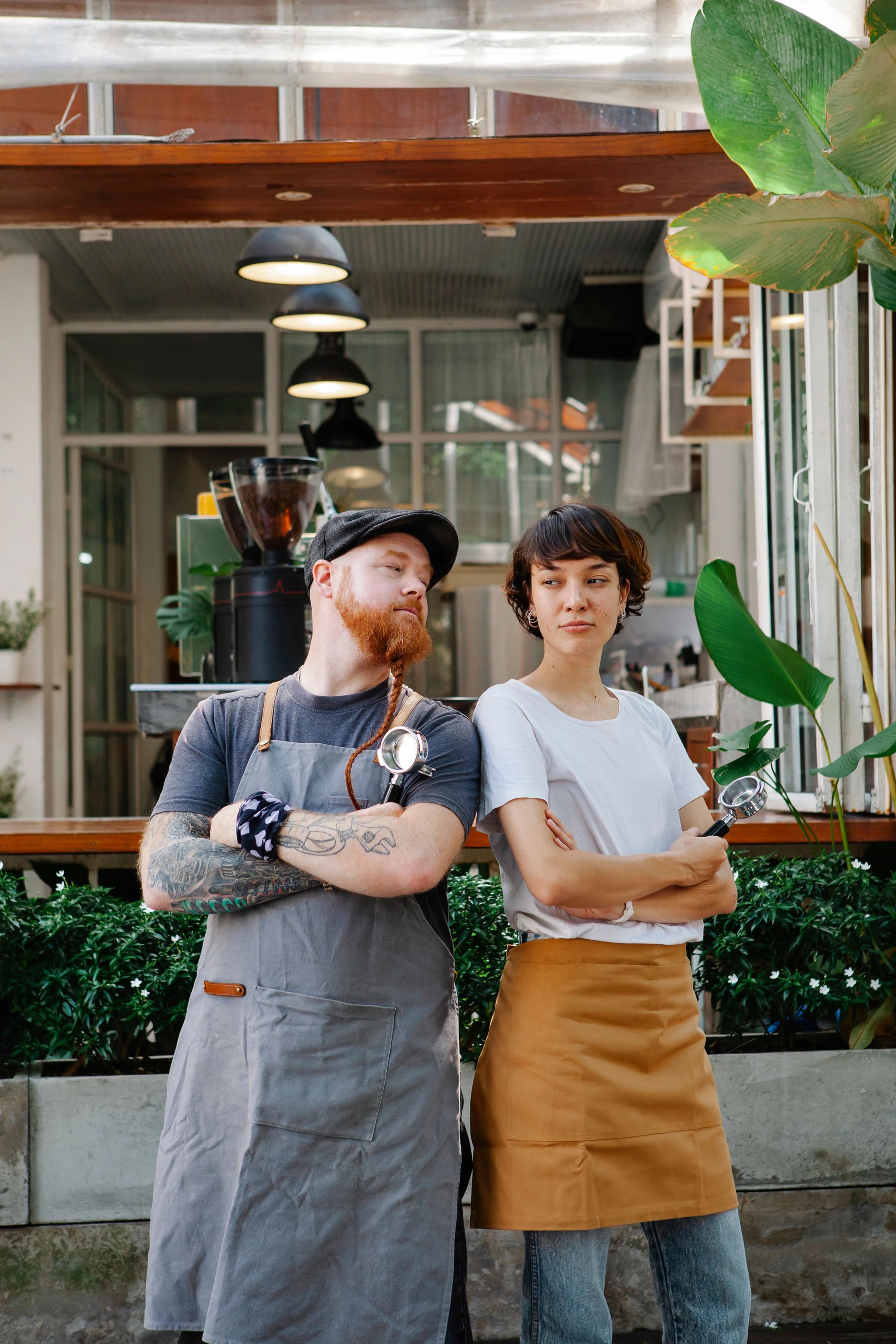
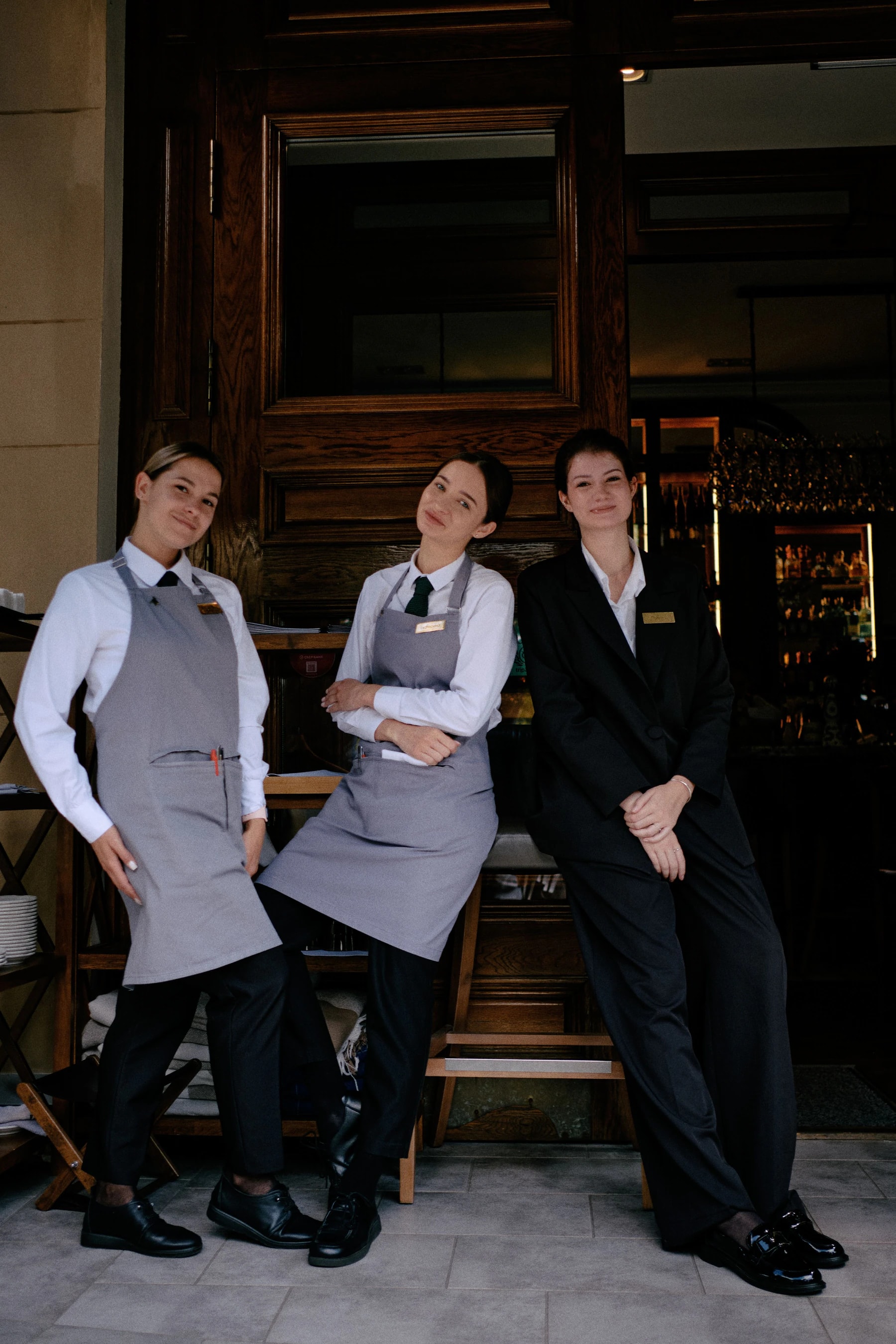
Three restaurant staff in white shirts, gray bib aprons and a black suit posing at a restaurant entrance
Minimum order
About 50 pieces per style
Production
Cut & sewn in Los Angeles, imported fabric
Typical garments
Chef wear, kitchen pants, aprons, server shirts
Logo options
Embroidery or printing, names and titles

Restaurants by style

16 styles in 4 families · each made to order in your fabric, color and branding from 50 pieces.

Customize your uniformsYour fabric, colors, pockets and branding
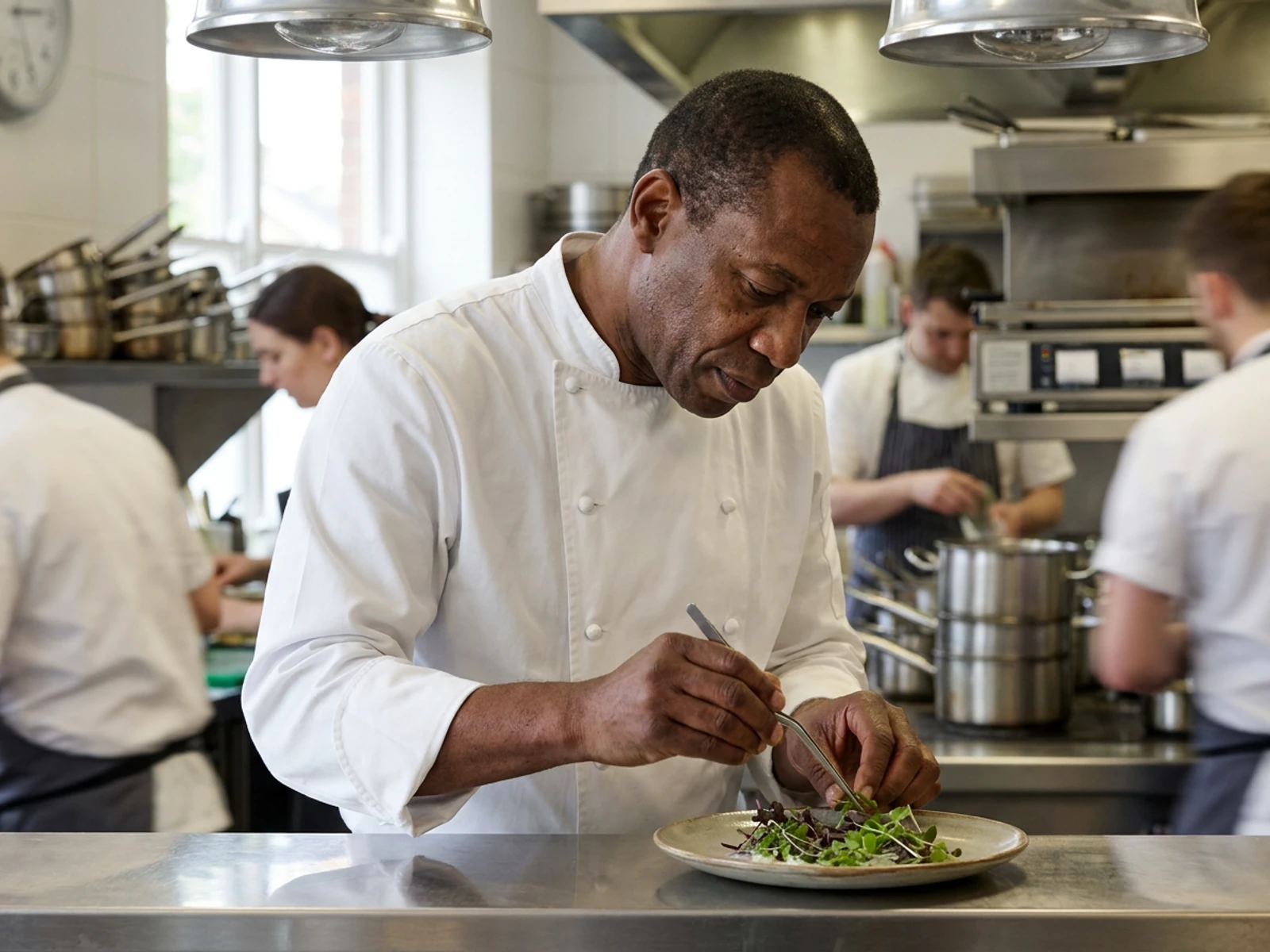
Executive chef in a white double-breasted chef coat plating a dish at a restaurant pass

Statement coats for the head of the kitchen

The chef plating at the pass is on view, so a double-breasted coat with the restaurant name sets the tone. We sew it in Los Angeles from imported fabric, from about 50 pieces per style.

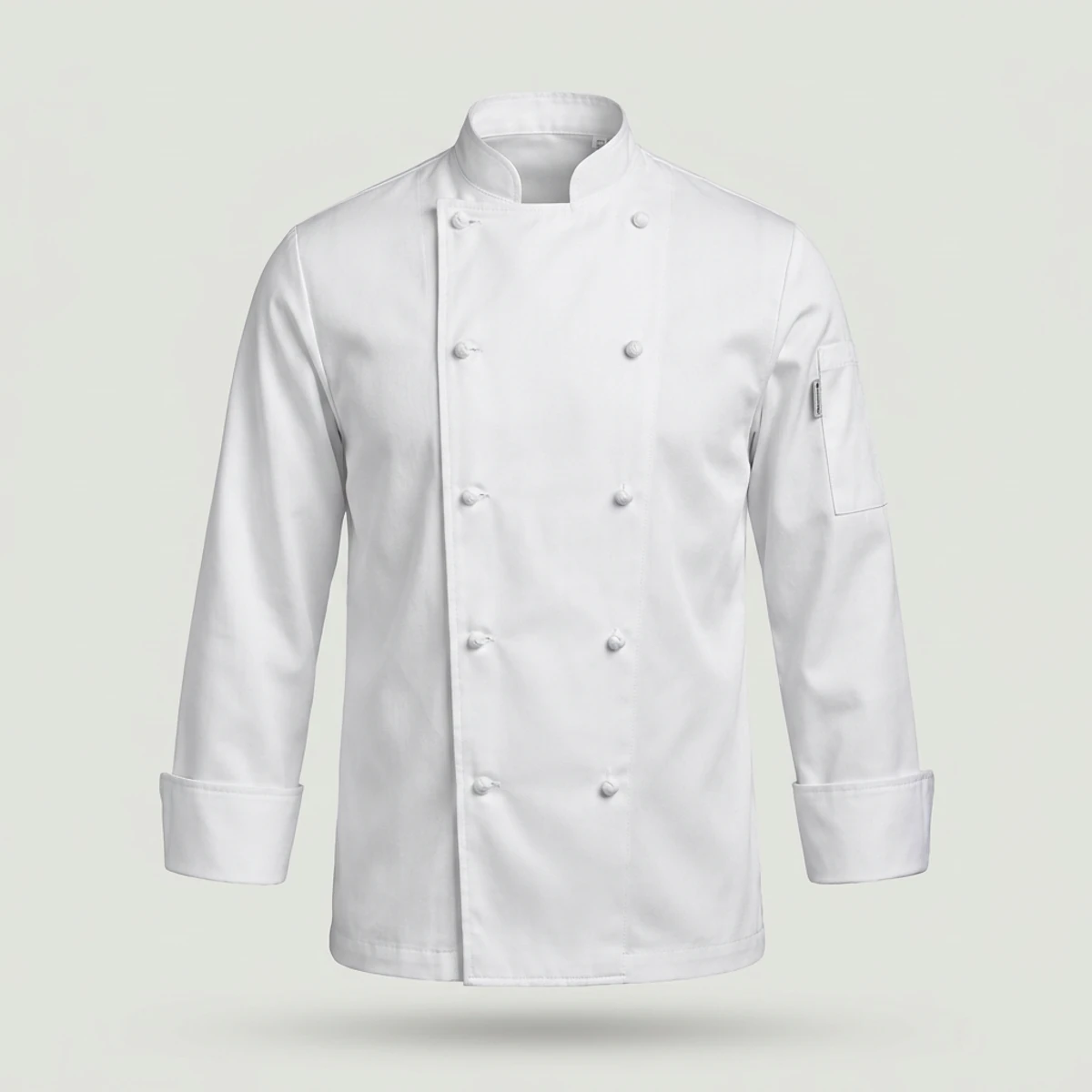
  • White double-breasted executive chef coat with cloth knot buttons and long sleevesWhite executive chef coat
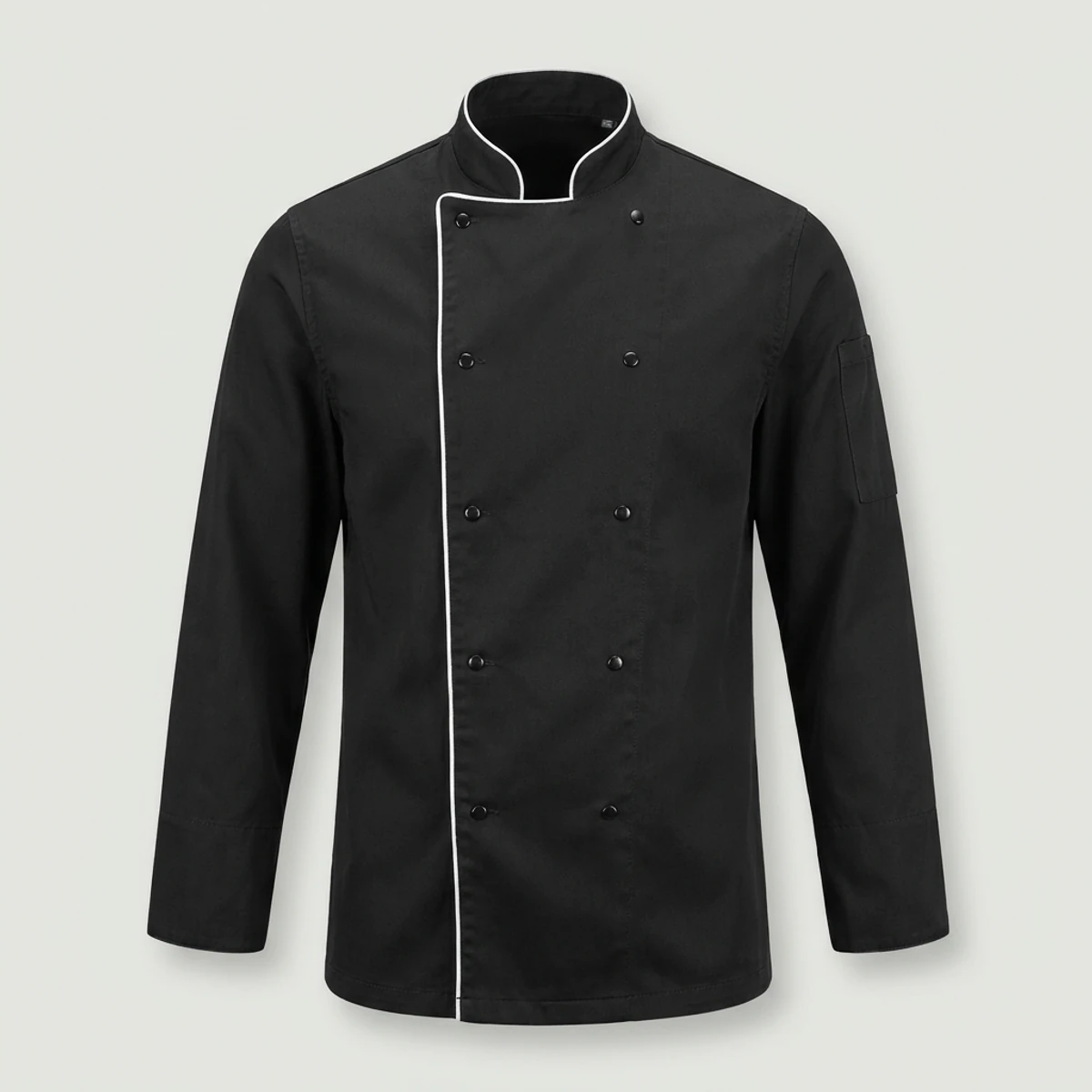
  • Black double-breasted chef coat with white piping on collar and placketBlack chef coat, white piping
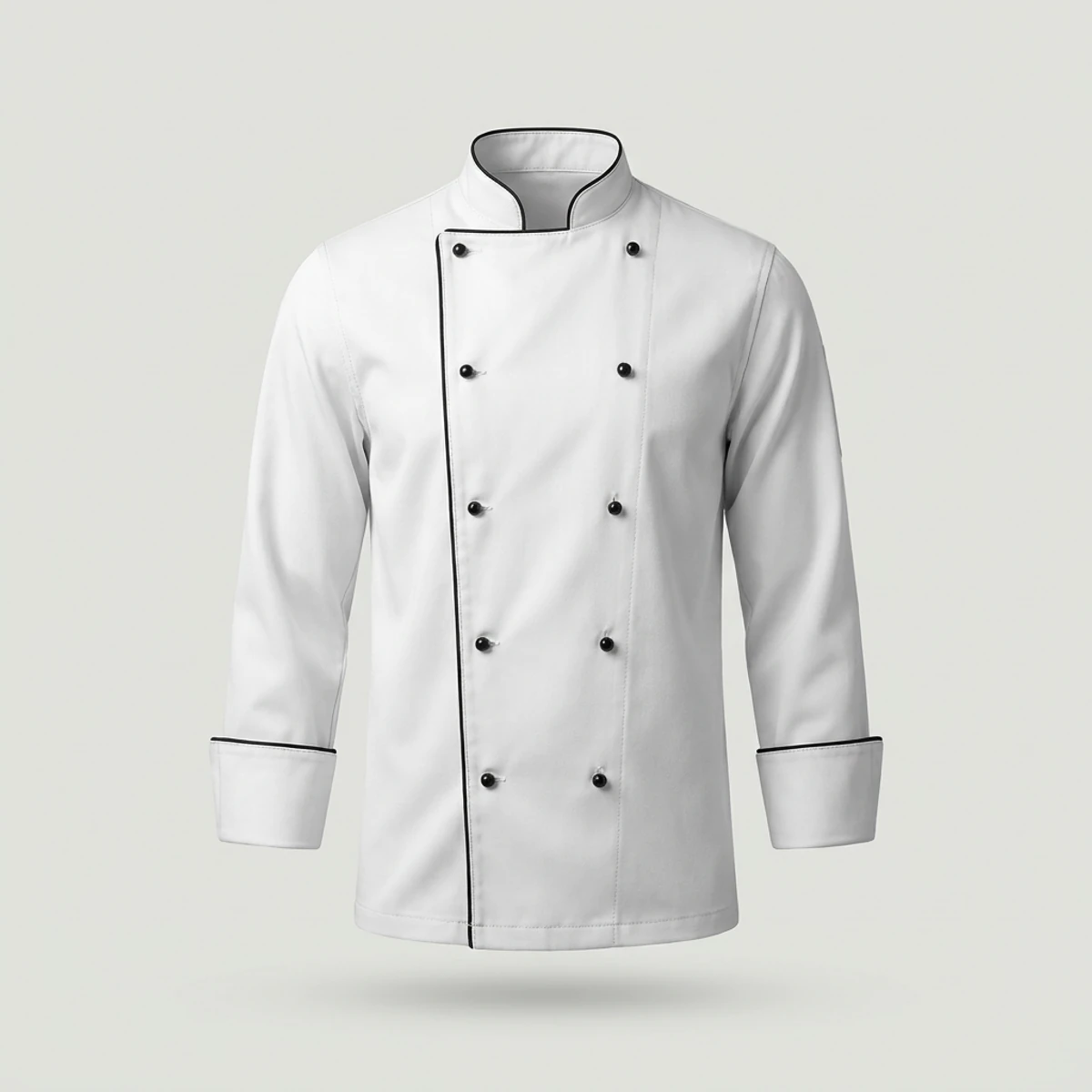
  • White double-breasted chef coat with black piping and black stud buttonsWhite chef coat, black piping
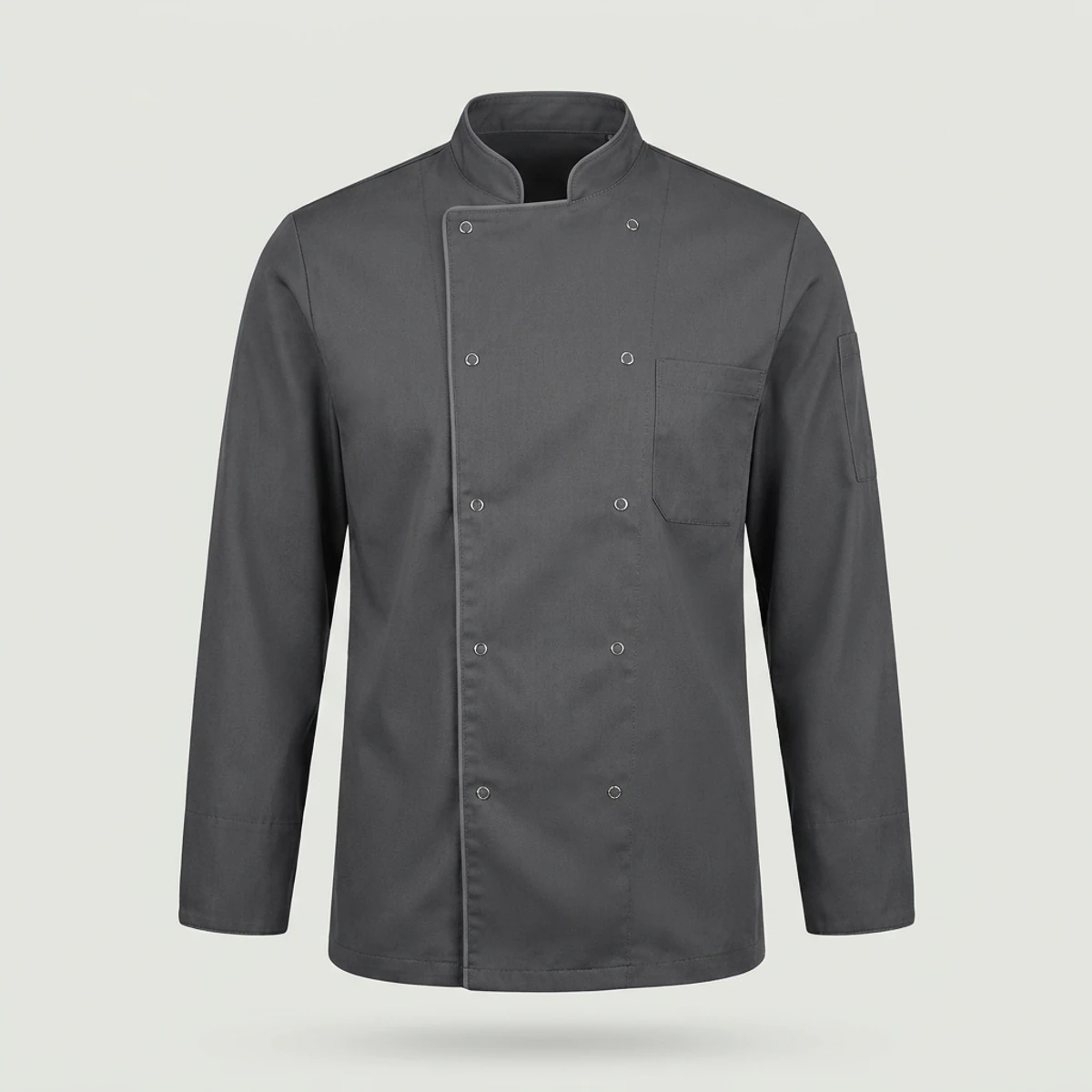
  • Charcoal grey double-breasted chef coat with tonal piping and snap closuresCharcoal executive chef coat
Quote head chef
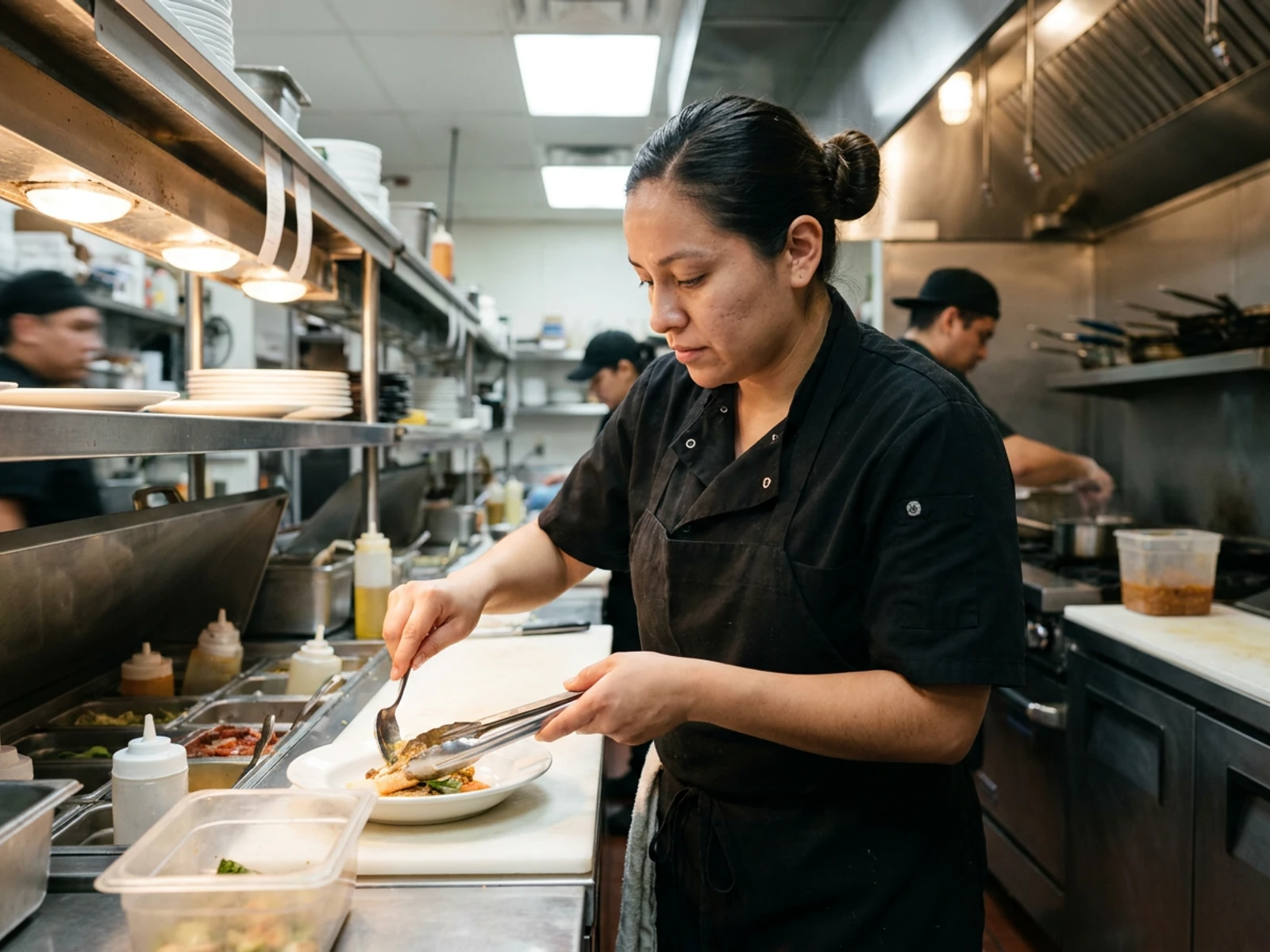
Line cook in a black short-sleeve snap-front chef shirt plating food at a busy restaurant pass

Snap shirts for cooks on the line

Snap closures come off in one pull if a cook gets splashed, and short sleeves stay clear of the grill. We make them in black or your house color from roughly 50 pieces of a style.

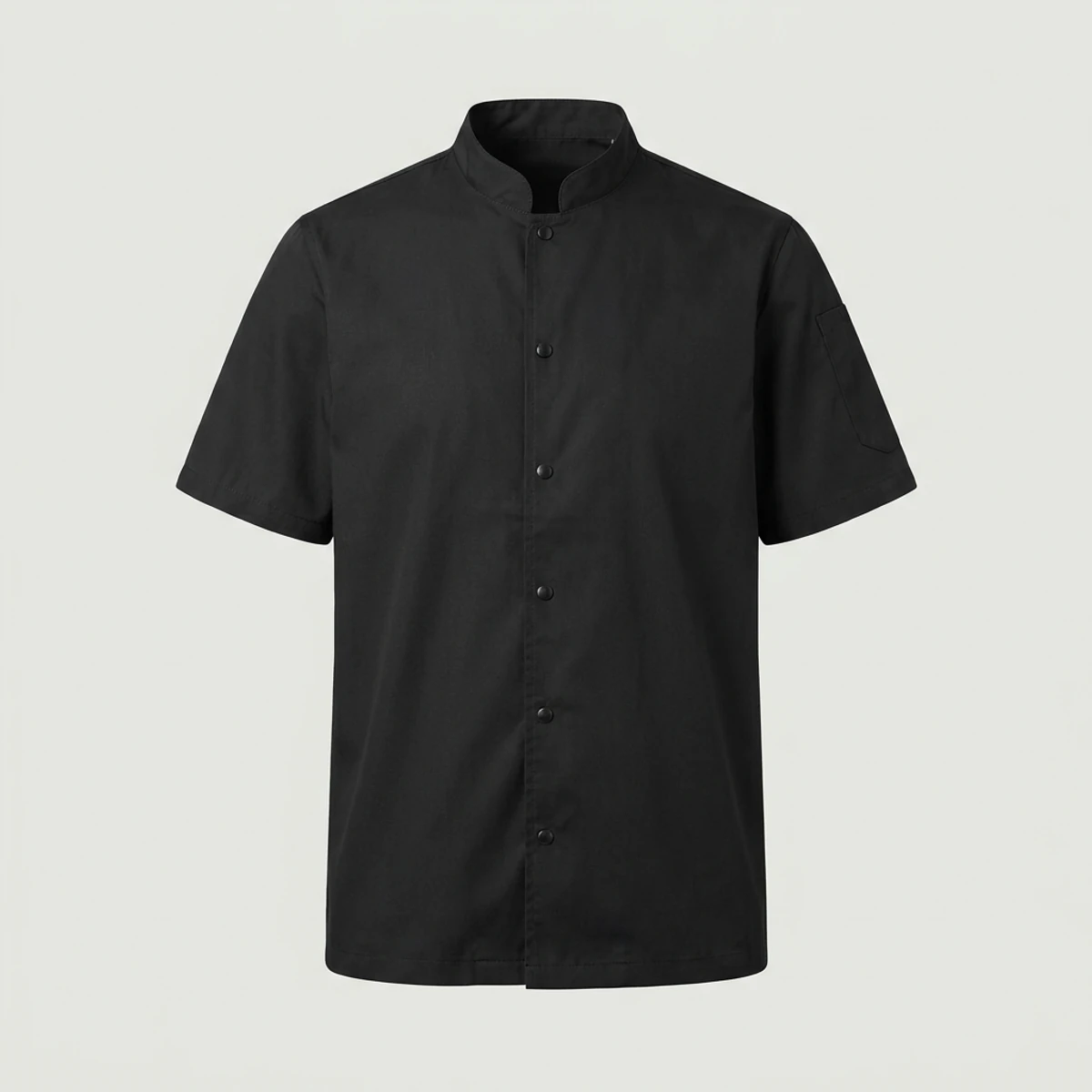
  • Black short-sleeve chef shirt with stand collar, snap front and sleeve pen pocketBlack snap-front chef shirt
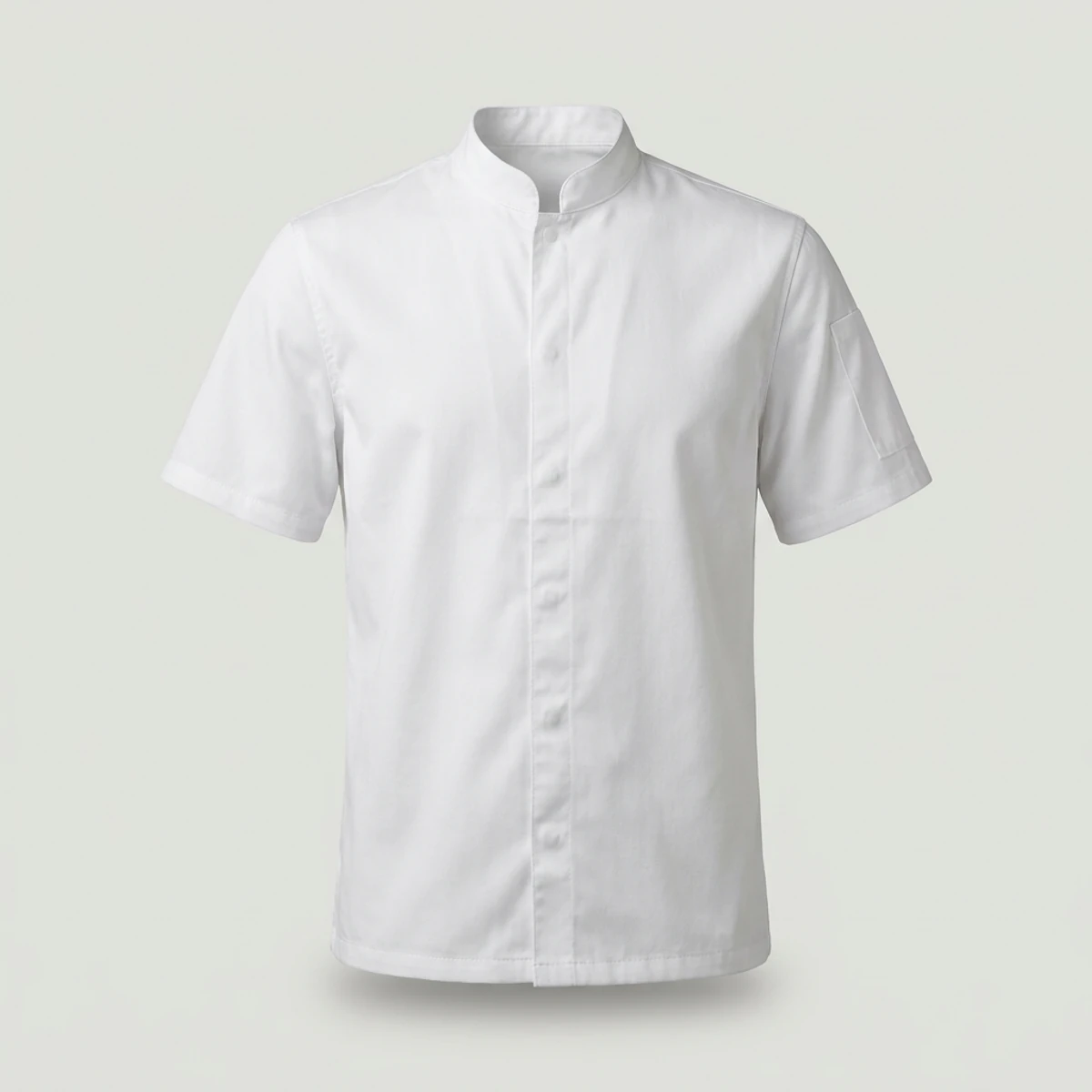
  • White short-sleeve chef shirt with stand collar and white snap frontWhite snap-front chef shirt
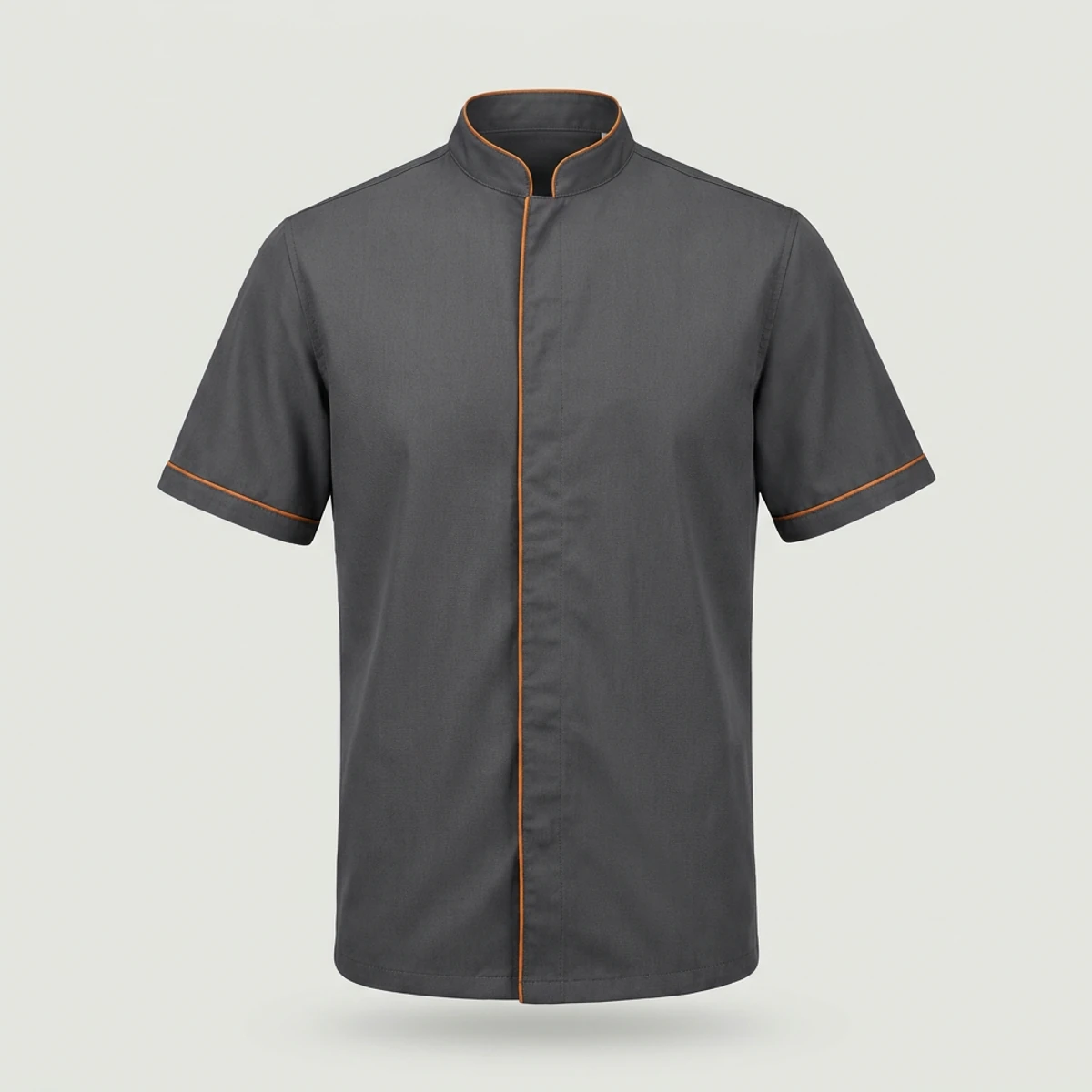
  • Charcoal short-sleeve chef shirt with orange contrast piping on collar and placketCharcoal shirt with contrast piping
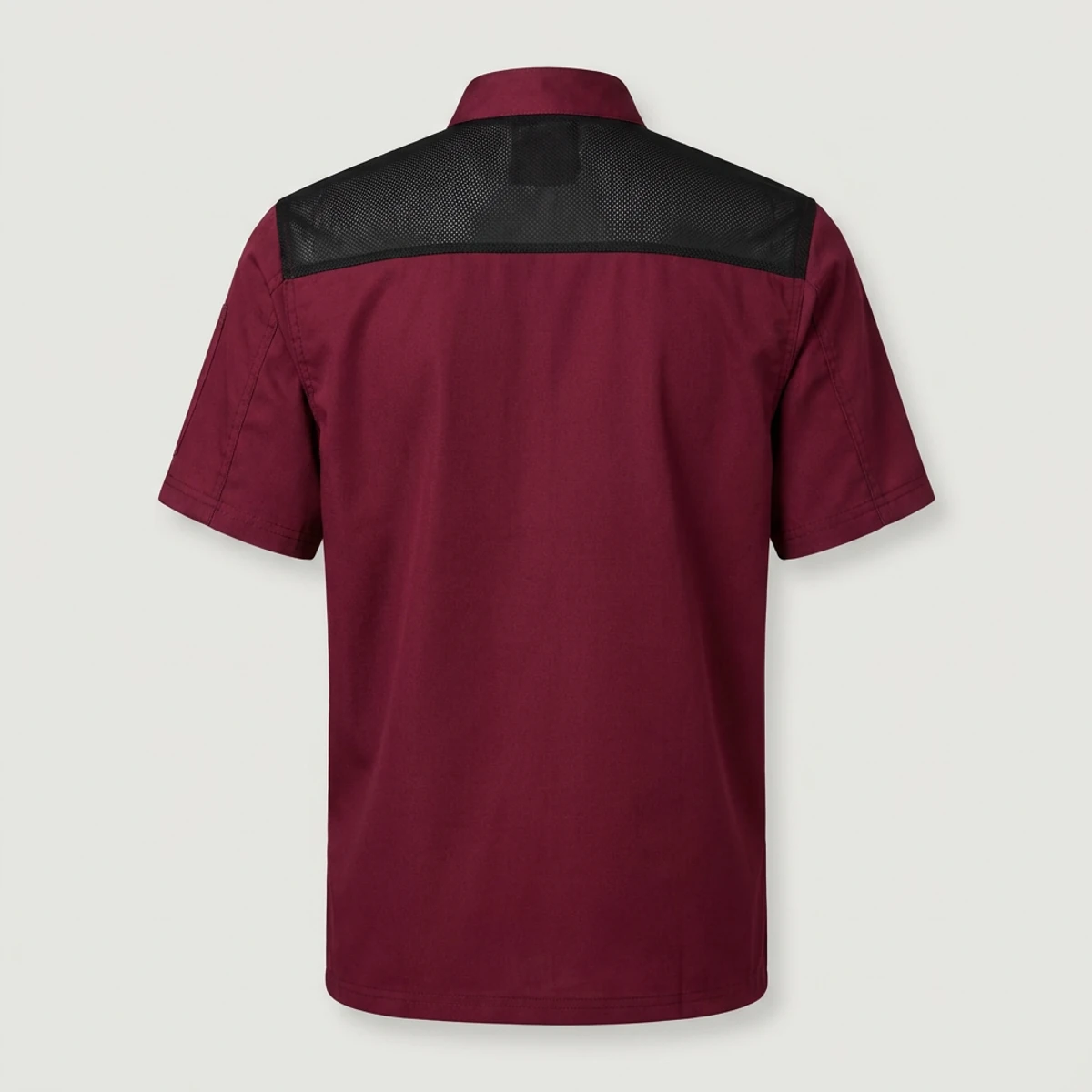
  • Burgundy short-sleeve chef shirt with a breathable black mesh back panelBurgundy shirt with mesh back
Quote line shirts
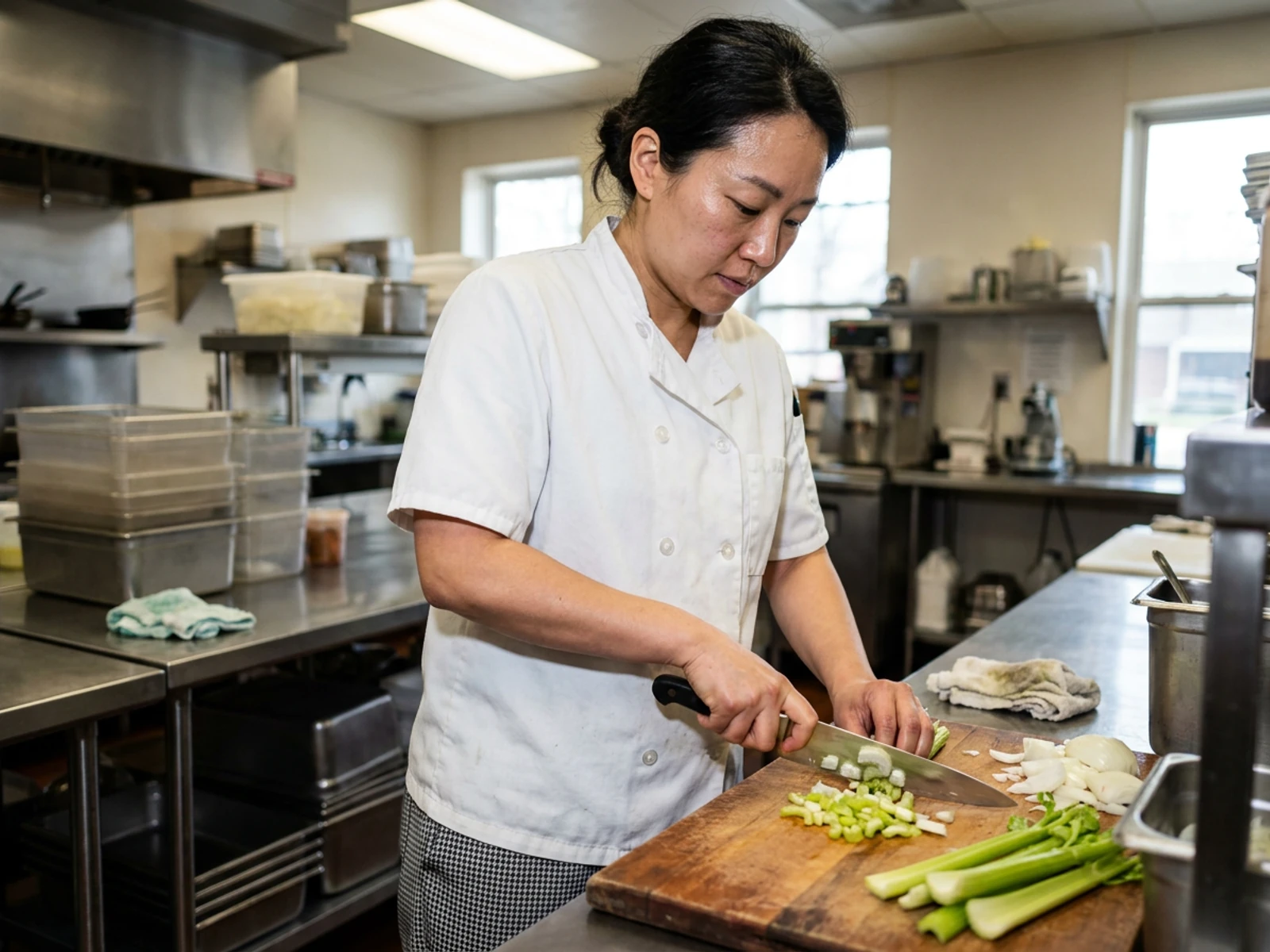
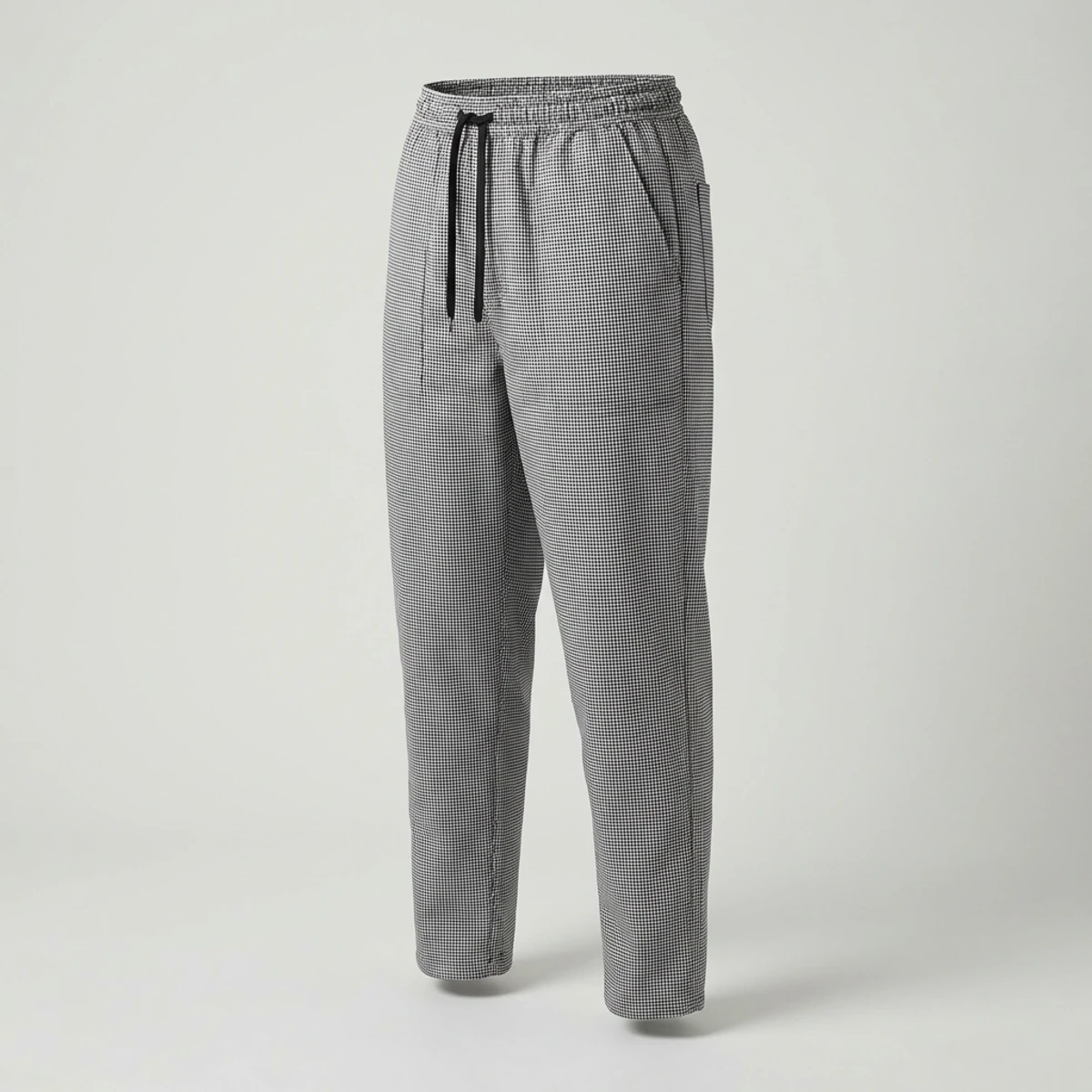
Prep cook in houndstooth chef pants chopping vegetables at a prep station

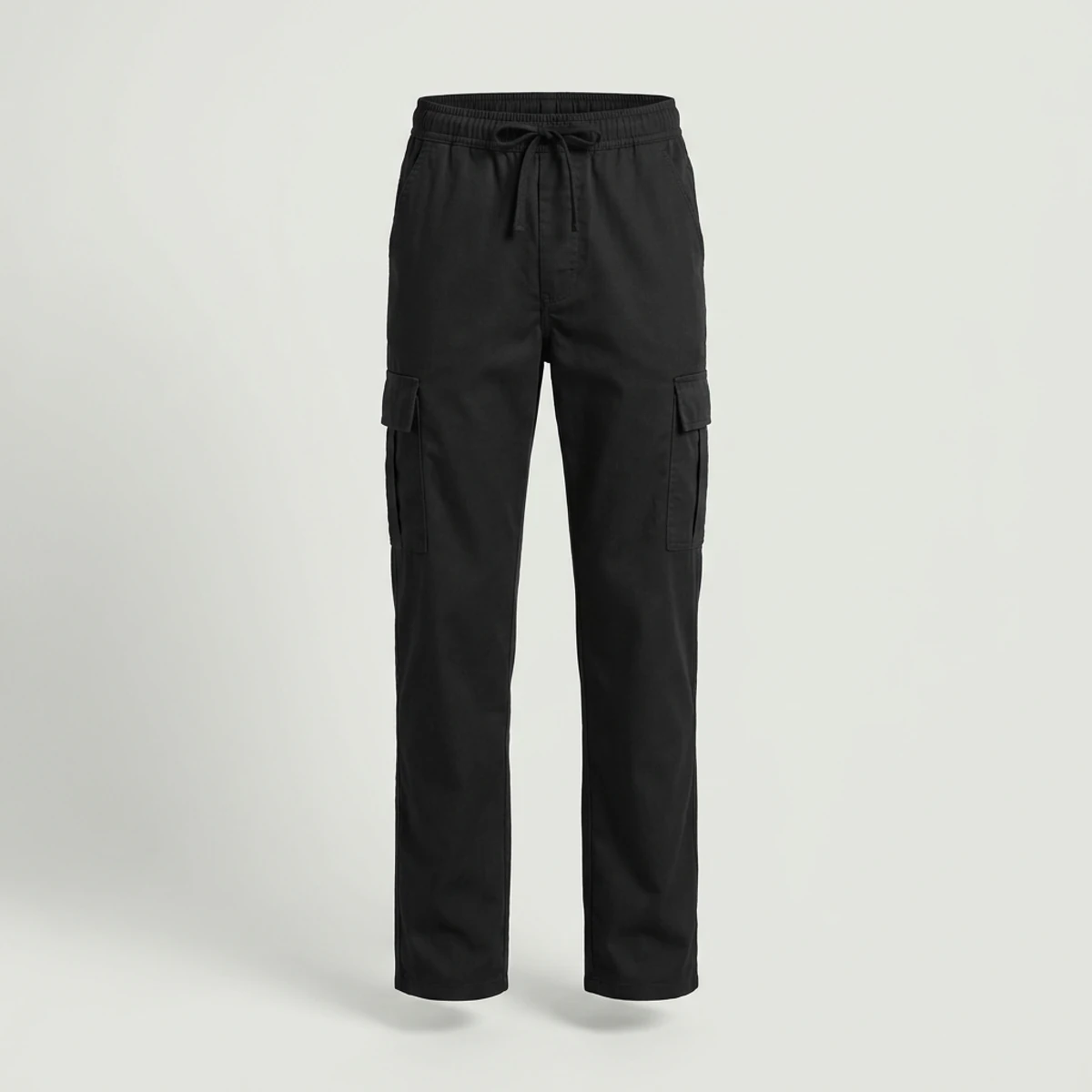
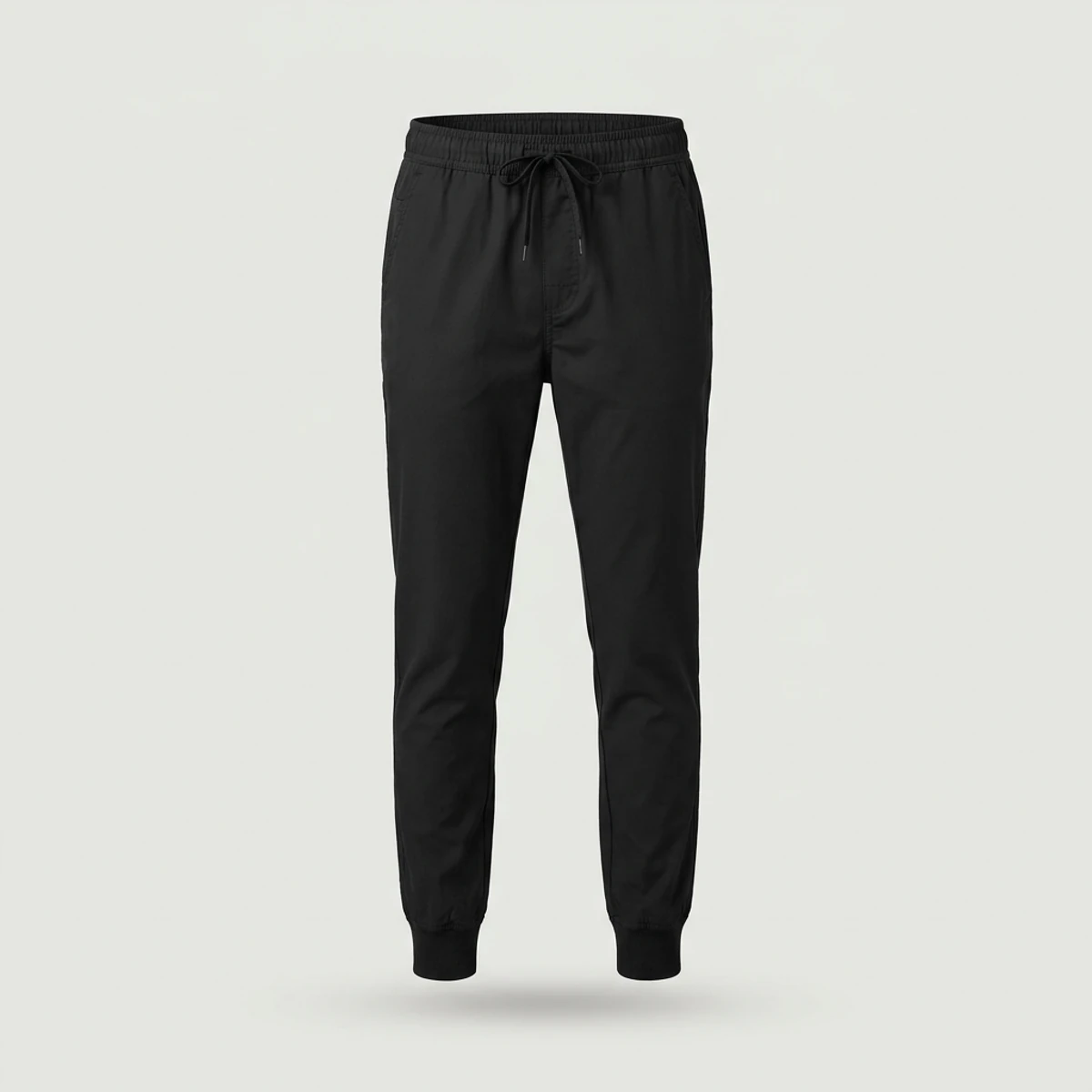
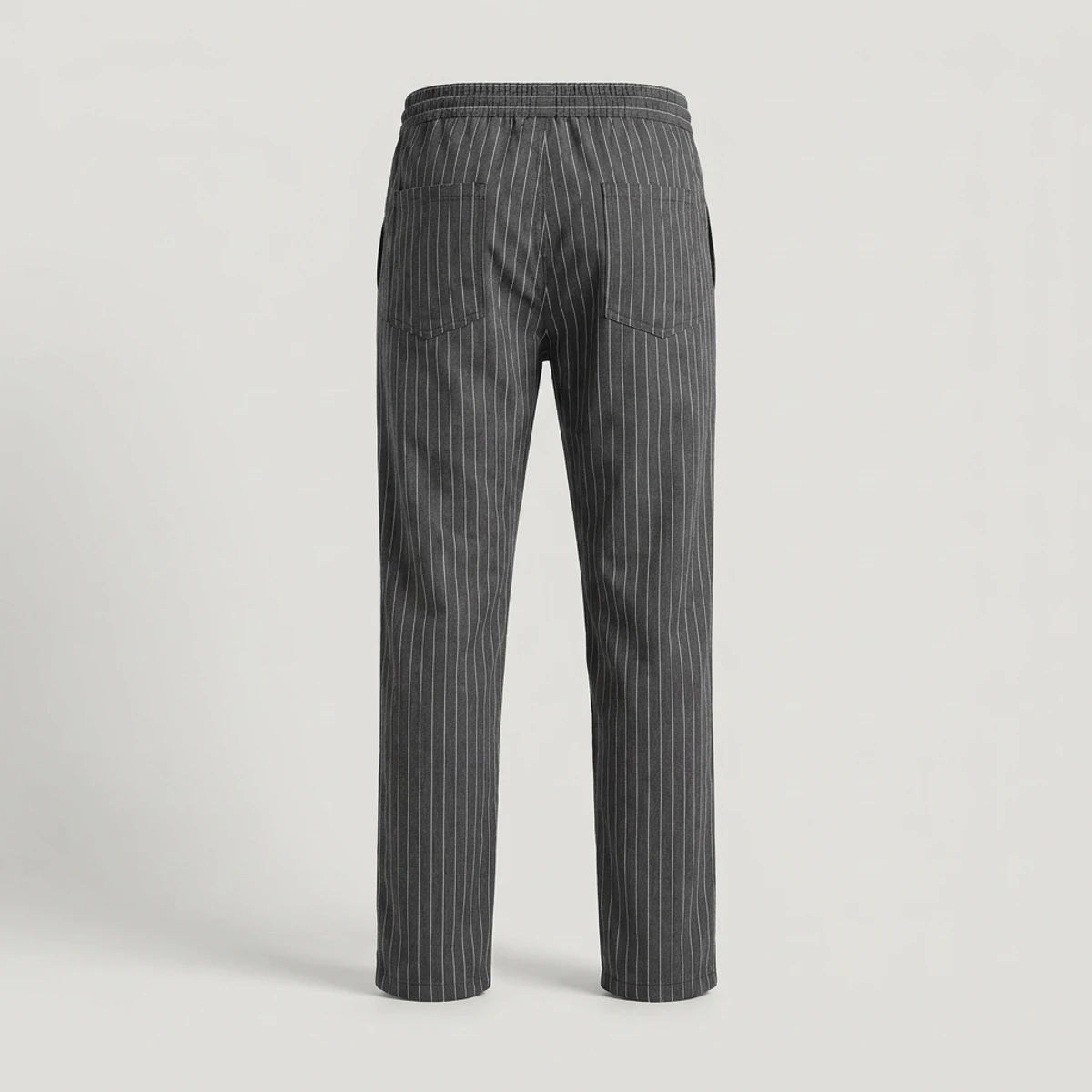
Prep pants for back-of-house crews

Prep cooks stand at boards for hours, so a pull-on chef pant with a soft waistband earns its keep. Classic houndstooth or a solid shade, each made to order once a style reaches about 50 pieces.

  • Black and white houndstooth chef pants with elastic drawstring waistHoundstooth chef pants
  • Black cargo chef pants with thigh pockets and elastic waistBlack cargo chef pants
  • Black jogger chef pants with knit ankle cuffs and side pocketsBlack jogger chef pants
  • Charcoal pinstripe chef pants with relaxed fit and drawstringPinstripe chef pants
Quote kitchen pants
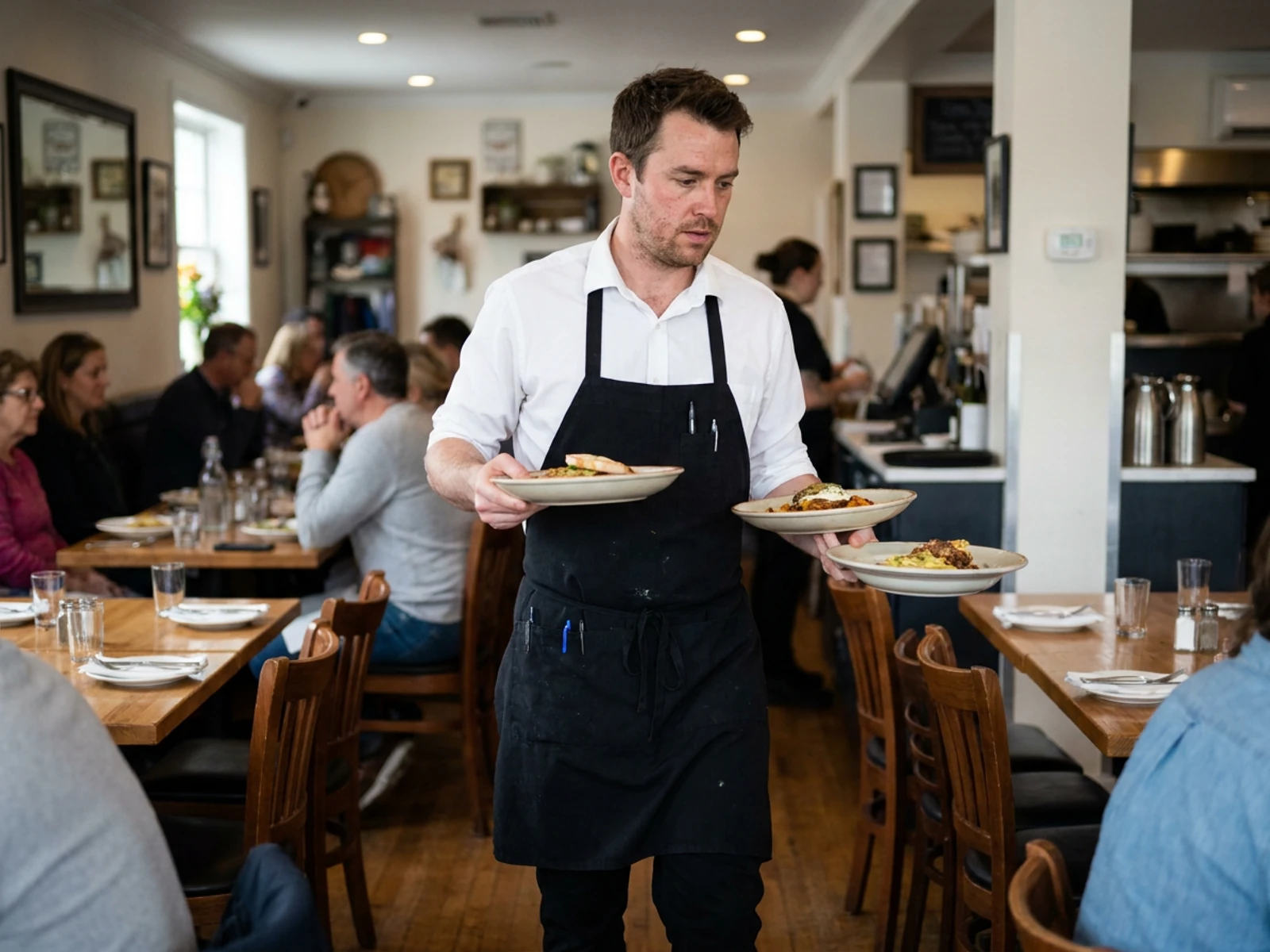
Server in a black short waist apron carrying plates through a restaurant dining room

Short aprons for the dining room

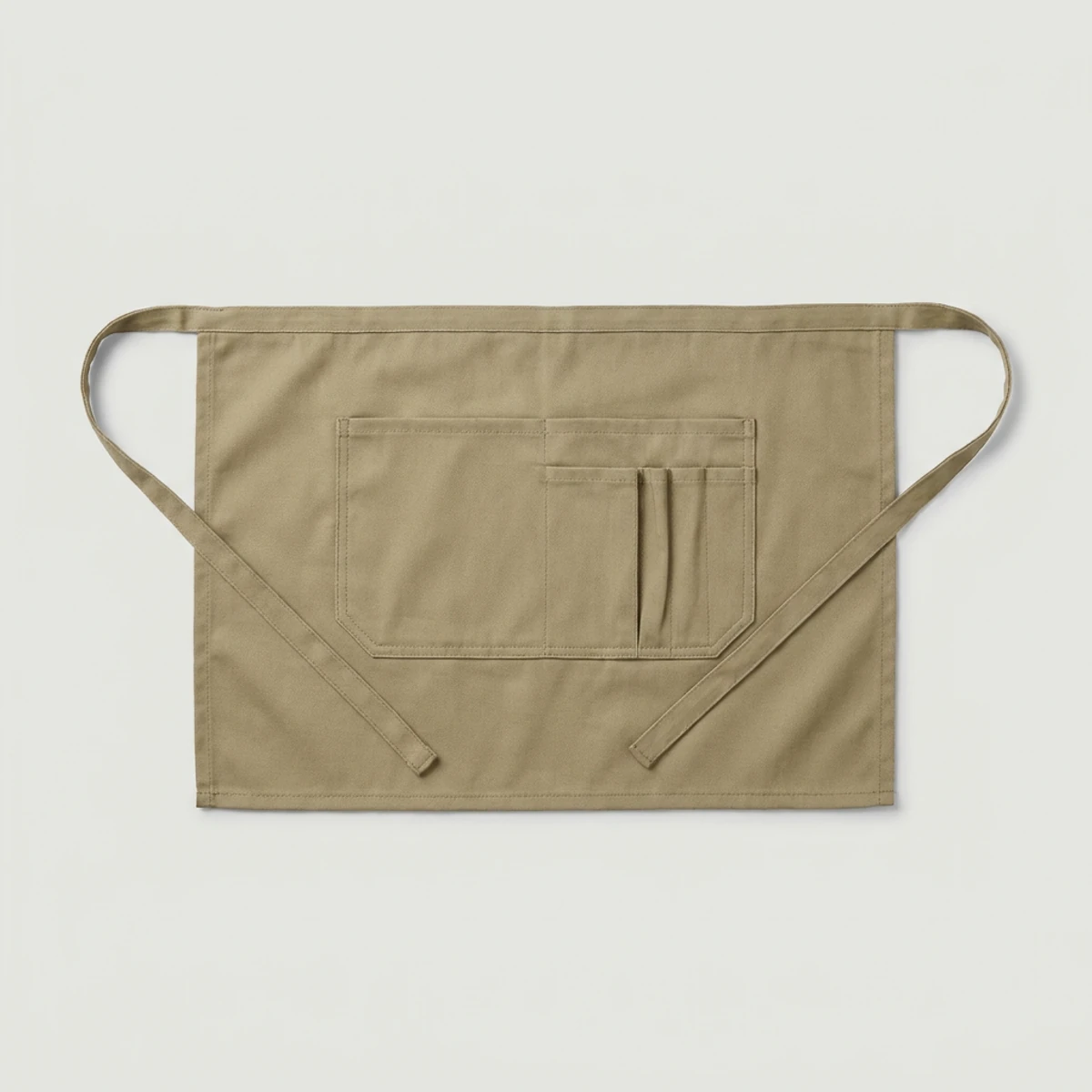
Servers need pockets for pads, pens and a card reader at the hip, not a full bib. We print or stitch the restaurant mark and produce the aprons in runs from around 50 pieces.

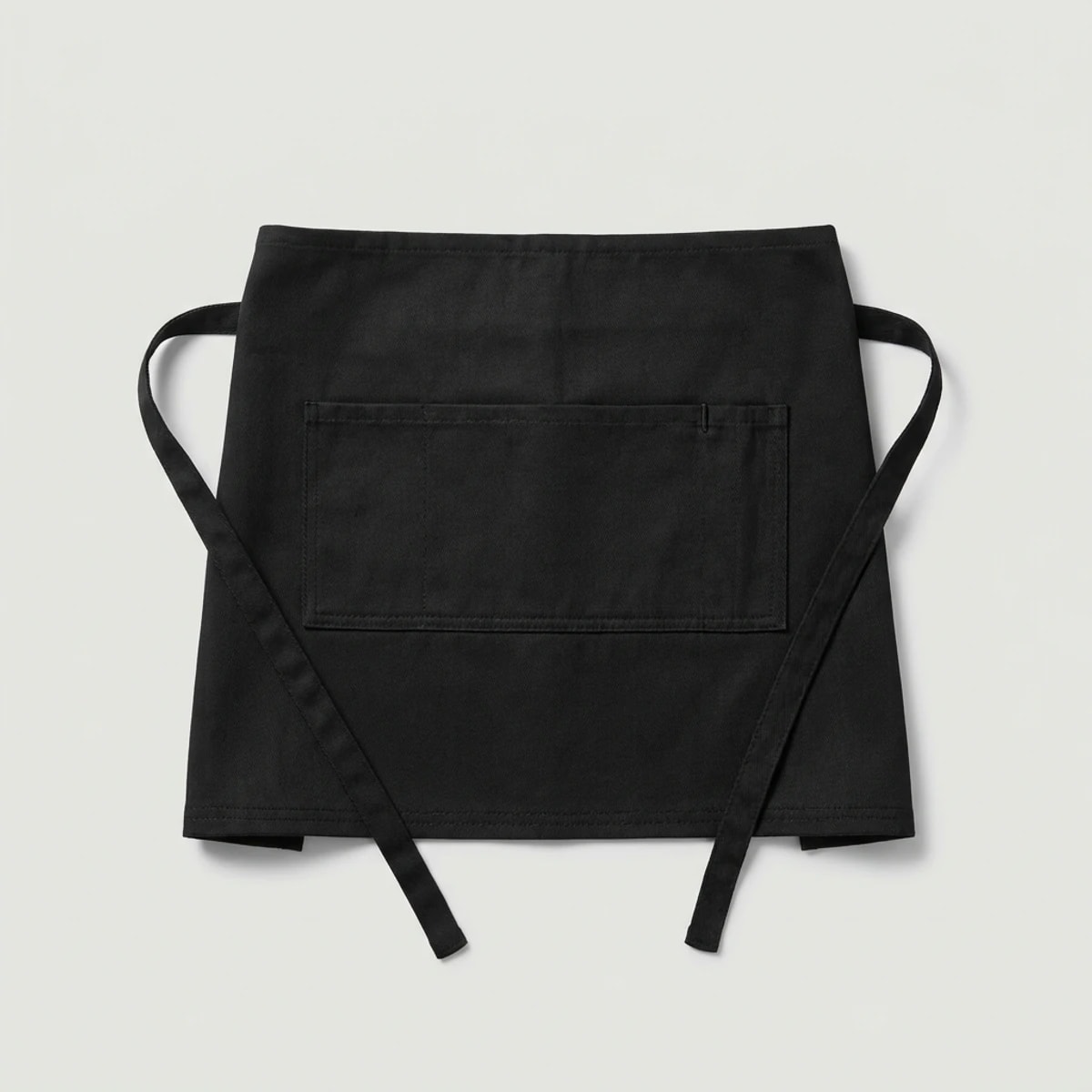
  • Black short waist apron with three-section front pocketBlack waist apron
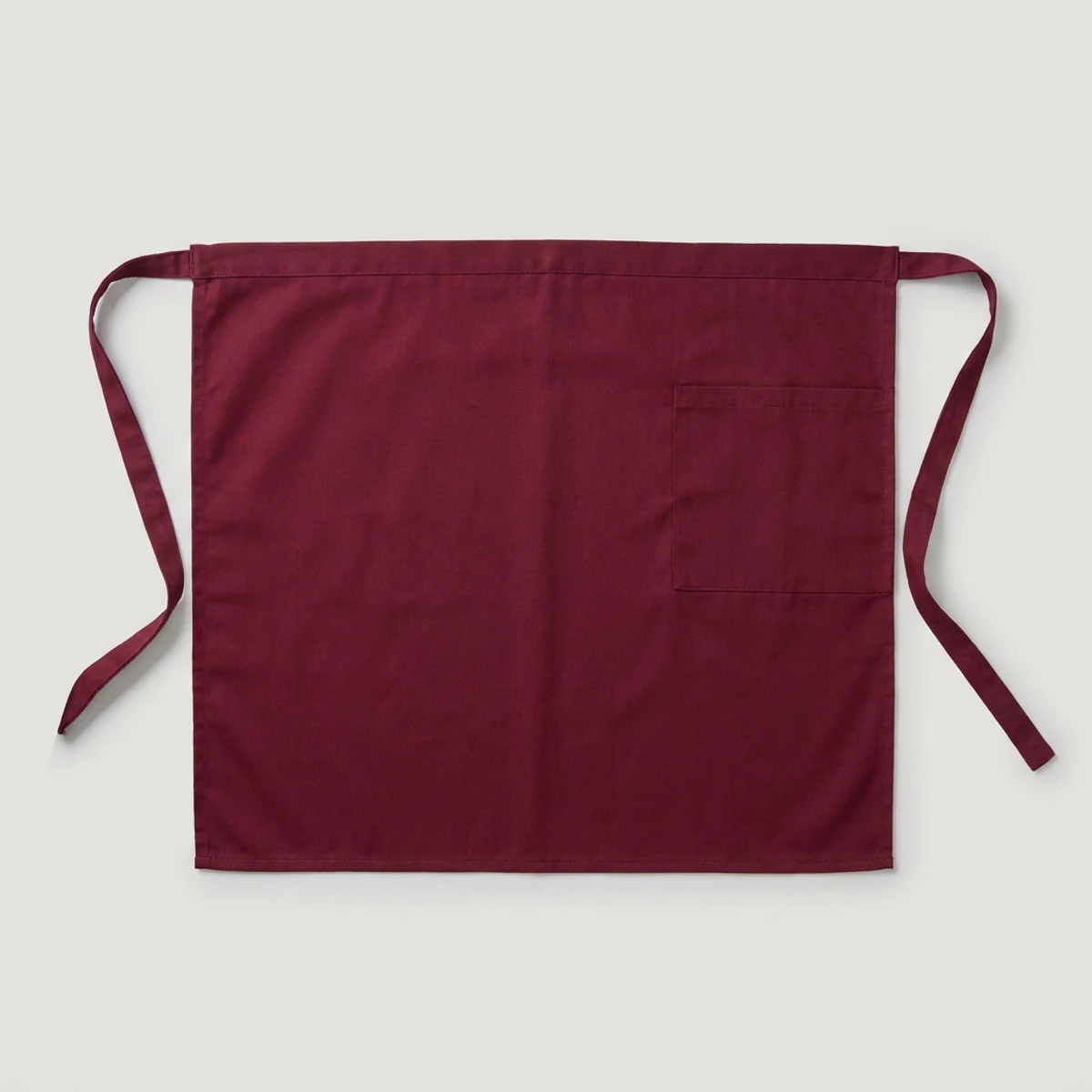
  • Burgundy long bistro apron reaching mid-calf with side pocketBurgundy bistro apron
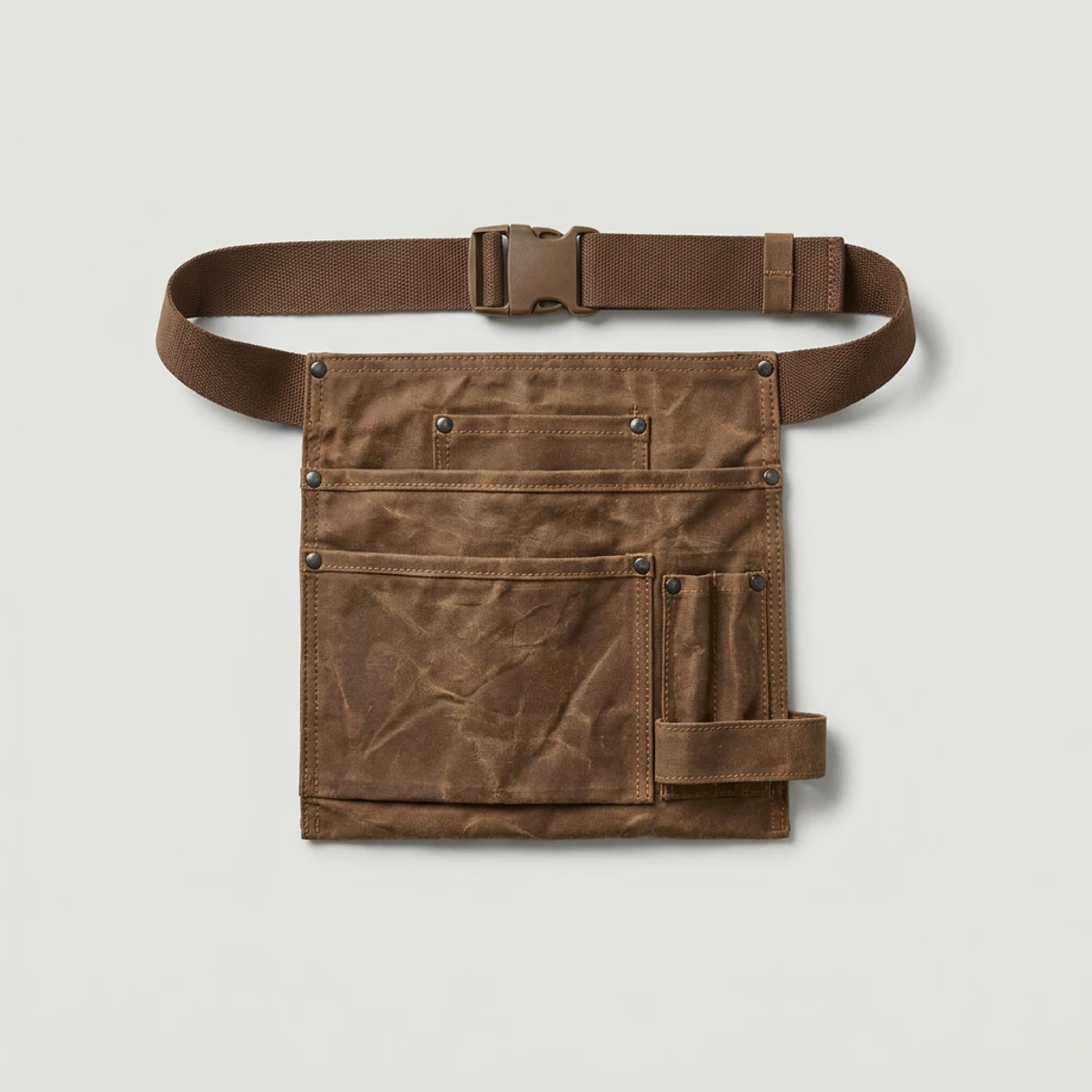
  • Brown waxed canvas tool apron with hammer loop and riveted pocketsBrown canvas tool apron
  • Khaki server waist apron with order-pad pocket and pen slotsKhaki server waist apron
Quote server aprons

Customize your chef coats

Pick the style, fabric and colors, add your logo and names, then attach the design to your quote. We cut and sew it in Los Angeles from 50 pieces per style.

White double-breasted executive chef coat with cloth knot buttons and long sleeves

What do restaurant uniforms cover?

Restaurant uniforms cover two programs under one brand: back-of-house garments built for flame, hot oil, steam and hard laundering, and front-of-house garments that look sharp from the start of a double shift to close. Planning each side separately, then tying them together with a logo, color or shared apron, gives garments that work and a consistent dining room.

The restaurant apparel for each side is built differently, so this page walks through each role, the food safety rules that shape the program, fabrics, branding, cost, ordering with a 50-piece minimum and the mistakes that come up most often.

What does the kitchen team wear?

The kitchen team wears chef coats or cook shirts, kitchen pants and aprons, chosen for breathability, movement and resistance to hot, frequent washing. Executive and sous chefs usually wear double-breasted coats with name embroidery, line cooks favor lighter cook shirts, and dish and prep stations rely on heavier bib aprons.

RoleTypical garmentsWhat matters
Executive and sous chefsChef coat, chef pants, apronDouble-breasted front, durable fabric, name and title embroidery
Line and prep cooksCook shirt or short-sleeve chef coat, kitchen pants, bib apronBreathability, easy movement, wash resistance
Dishwashers and portersShort-sleeve top, work pants, heavy apronWater and stain resistance, fast drying
Bakers and pastryLightweight coat or shirt, apron, hair restraintComfort near ovens, light colors that show cleanliness
Expo and kitchen managersChef coat or cook shirt in a contrast colorEasy to find at the pass during service

Chef coats and chef pants are planned for kitchen work: room through the shoulders, sleeves that roll and waistbands that stay comfortable through long shifts. The double-breasted coat can be re-buttoned to hide a stain before service, and its double front layer adds a little insulation from splashes. For lighter kitchen tops, see chef shirts; for dish and prep stations, custom aprons can be specified station by station, from full bib to short waist styles. Exact cuts and fabrics are confirmed at quote stage.
Server uniforms and host wear

Server uniforms carry the brand in front of guests: a button-front or knit shirt, a waist or bistro apron with pockets for pads, pens and a payment device, and dark pants. Hosts wear a dressier shirt, blouse or jacket, bartenders need spill protection and floor managers wear a contrast color guests can find.

RoleTypical garmentsWhat matters
ServersButton-front or knit shirt, waist or bistro apron, dark pantsPockets for pads, pens and a payment device; wrinkle resistance
BartendersShirt, bib apronSpill protection, bar tool and towel storage
HostsMore formal shirt, blouse or jacketFirst impression, guest-facing polish
Bussers and runnersServer shirt with a simpler apronIdentifiable as staff, easy movement
Floor managersContrast shirt or jacketObvious point of contact for guests

Pocket layout is the detail most often overlooked. Ask your floor team what they carry before you approve a sample; a phone-sized pocket and a pen slot on the apron can matter more than the fabric.

Tip: Run a sample apron through two real services before you approve it. Servers will tell you within a night whether the pocket depth, tie length and pen slot work.

Which food safety rules shape restaurant staff uniforms?

Restaurant staff uniforms are shaped by two rules in the FDA Food Code, which states adopt in their own versions: food employees must wear clean outer clothing (section 2-304.11) and effective hair restraints (section 2-402.11). The Code prescribes no design, but it drives how many sets each person needs.

  • Clean outer clothing. food employees must wear clean outer clothing to prevent contamination of food, equipment and utensils.
  • Hair restraints. hats, hair coverings or nets, and beard restraints. The Code exempts counter staff who only serve beverages and wrapped foods, hosts and wait staff if they present minimal risk of contaminating exposed food; a server who also plates desserts loses that exemption.
  • Closures. snap or knot-button fronts come off quickly if a coat catches hot liquid.
  • Sleeves and ties. long sleeves protect forearms from oven and fryer burns, while loose cuffs and long apron ties can catch on mixers and pan handles.

Rules vary by state and county, so confirm the version your health department enforces. Central kitchens that pack food for wholesale or retail sale are usually regulated as food manufacturers instead; see food processing uniforms. Slip-resistant footwear and hair restraints belong in the uniform standard too, even though they are bought separately.

Fabric choices for kitchen and dining room

Kitchen and dining room fabrics split by heat: 100% cotton breathes best near ovens, poly-cotton holds shape and color for cook shirts, server shirts and chef pants, polyester-rich fabrics resist wrinkles for front-of-house away from flame, and heavy twill, canvas or denim protects clothing as aprons.

Fabric typeStrengthsWatch-outsTypical use
100% cottonBreathable, absorbs sweat, comfortable near heatWrinkles, can shrink and fade with hot washingChef coats in hot kitchens
Poly-cotton blendHolds shape and color, wrinkles less, dries fasterSlightly warmer than cottonCook shirts, server shirts, chef pants
Polyester-rich fabricsWrinkle and fade resistant, easy careSynthetic fibers can melt on contact with flame or very hot surfacesFront-of-house shirts away from open flame
Heavy twill, canvas or denimDurable, protects clothing underneathHeavier, slower to dryBib aprons, bar and host aprons

Current fabric options, and how each holds up to commercial laundry, are confirmed at quote stage.

Black short-sleeve chef shirt with stand collar, snap front and sleeve pen pocket

Custom restaurant uniforms: branding and color

Custom restaurant uniforms get their identity from the logo and color plan: embroidery for chef coats and aprons washed constantly, printing for large graphics and event wear, and names and titles on chef coats. Color does practical work as well, with white signaling cleanliness and black, charcoal or dark denim hiding stains on the floor.

Read more

Custom embroidery and printing is done in the same Los Angeles factory that sews the garments, so placement is planned before cutting. A simple color code helps during service: one coat color for cooks, a contrast for the sous chef and expo, and one apron color for the whole floor. Restaurant groups building a house brand can add their own labels inside the garments through the private label program.

What determines the cost of custom restaurant uniforms?

The cost of custom restaurant uniforms depends on fabric, quantity per style, the number of styles and colors, garment complexity, decoration and personalization. Each program is quoted on its actual garments, artwork and quantities, so the table shows which choices move the cost and how operators keep it in check, without listing prices.

Cost driverHow it moves the costHow to keep it in check
FabricPerformance and stretch fabrics usually cost more than standard cotton or poly-cottonMatch fabric to station heat and laundering
Quantity per styleLarger runs spread cutting, setup and sampling across more piecesOne apron style for the whole floor
Number of styles and colorsEach style and color is its own run and reorderKeep a small core set for at least a year
Style complexityDouble-breasted fronts, piping and extra pockets add sewing timeReserve detail for chefs and managers
DecorationStitch count, thread colors and number of locations add time per pieceOne logo position per garment
PersonalizationNames and titles add handling per pieceNames on chef coats only

How do you roll out a restaurant uniform program?

Roll out a restaurant uniform program by listing roles and headcount, choosing a small core set, multiplying by sets per person and checking each style against the minimum of about 50 pieces. A style is one design in one fabric and color, with sizes agreed at quote stage. Worked example for 12 kitchen and 20 front-of-house staff:

  1. 01

    List roles and headcount

    12 cooks and chefs, 14 servers and bartenders, 6 hosts, bussers and managers.
  2. 02

    Choose a small core set

    One chef coat, one kitchen pant, one server shirt and one waist apron shared by the whole floor.
  3. 03

    Multiply by sets per person

    Three coats per cook is 36; round to 50 to cover new hires and stained pieces. Three server shirts for 20 people is 60, and three aprons each is 60. Kitchen pants at three per cook is 36, so round to 50 or share the style with dishwashers.
  4. 04

    Collect sizes

    from every employee rather than guessing a size curve.
  5. 05

    Approve a sample

    for fabric, fit, pocket layout and logo placement before production.
  6. 06

    Issue and record

    who received what, so replacements and departures are easy to track.

Smaller cafes can start with one or two styles, such as a branded apron over staff’s own black clothing, and add shirts later. Multi-unit groups share one set of styles across every location, often managed as a uniform program across every location.

Tip: Fix your styles for at least a year. Changing an apron color every season means each new color starts again at the 50-piece minimum.

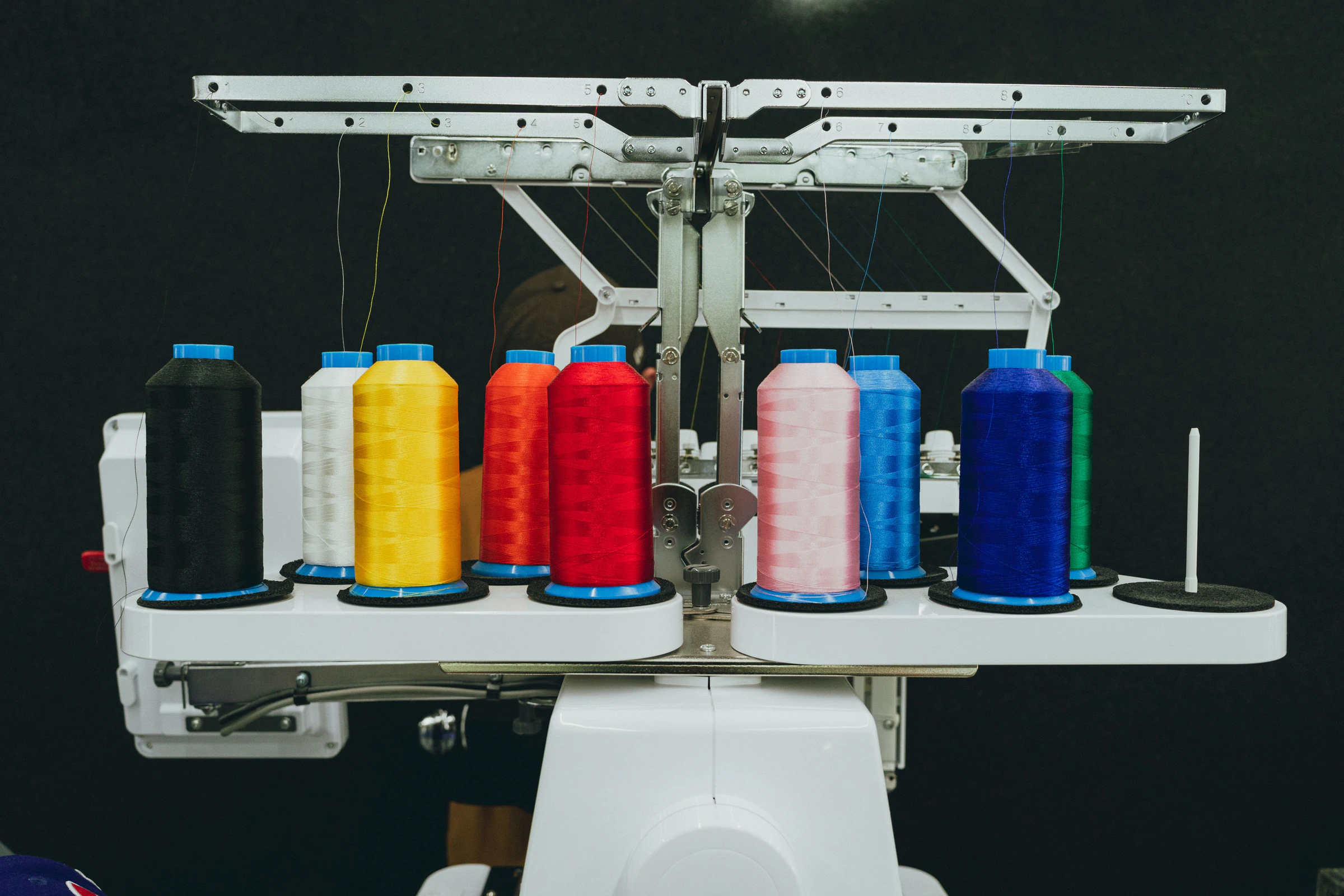
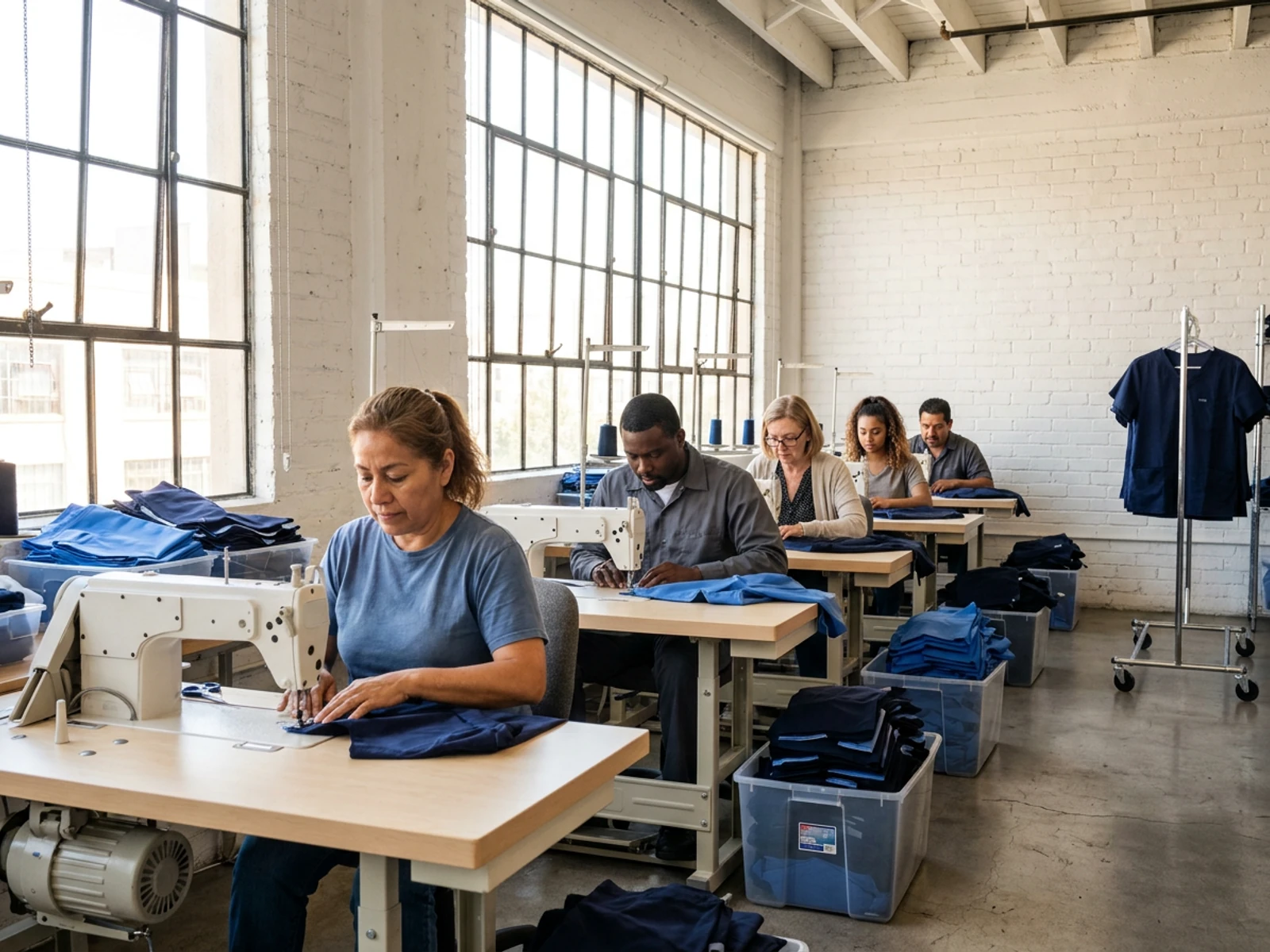
Operators sewing scrub tops on rows of industrial sewing machines

Reorders and new-hire planning

Reorders matter as much as the first order because restaurants hire constantly. Keep a shelf of common sizes in each core style and plan the next order when any size drops to a few pieces. Styles are fixed after sampling, so a reorder matches the garments already in use and a second location can open in the same uniform.

Some operators keep unbranded stock through the wholesale blanks program for trial shifts and brand garments once a hire is permanent.

How should restaurant uniforms be laundered?

Restaurant uniforms should be laundered with chef whites separated from dark aprons, grease pre-treated before washing, the care label followed for temperature and bleach, and garments dried at moderate heat and removed promptly. Aprons and coats with frayed ties, missing buttons or burn holes should be retired rather than patched.

  • Wash chef whites separately from dark aprons and floor garments to avoid color transfer.
  • Pre-treat grease and oil stains before washing; heat sets them.
  • Follow the care label for water temperature and bleach; chlorine bleach weakens stretch fibers and fades colored fabric.
  • Tumble dry at moderate heat and remove promptly to limit shrinkage and wrinkles.
  • Retire worn aprons and coats rather than patching them for service.

What mistakes do restaurants make with uniforms?

The most common restaurant uniform mistakes are too many styles, one set per person, ignoring pockets, light aprons on the floor and leaving hair restraints out of the standard. Each is easy to avoid while the program is planned and expensive to correct once a full run has been produced.

  1. Too many styles

    Five apron variants for five stations means five separate minimums.
  2. Ordering one set per person

    Staff then come in wearing yesterday’s coat, a health code and guest perception problem.
  3. Ignoring pockets

    Servers with nowhere to put a payment device carry it in their hand.
  4. Light aprons on the floor

    White bistro aprons look great on day one and gray by week three.
  5. Forgetting the hair restraint

    Caps, bandanas or wraps belong in the uniform standard.

Ready to order

What to send us for a quote

A complete quote for restaurant uniforms needs your logo and brand colors, the roles and headcount, the garments you use today, sets per person, name embroidery needs and whether you want your own labels inside. With that list, a core set can be proposed to meet the minimum and sampled.

  • Your logo as a vector file (AI, EPS, SVG or PDF), plus any brand colors.
  • Roles to dress and headcount for each.
  • Garments you use today, with photos if you are replacing them.
  • How many sets per person you plan to issue.
  • Name and title embroidery needs, with a name list if ready.
  • Whether you want your own labels inside the garments.
Black and white houndstooth chef pants with elastic drawstring waist

Restaurant uniforms for hotels and catering

Hotel restaurants, banquet teams and caterers often need kitchen and service garments that match a wider property uniform, so the logo and accent color run from the kitchen to the front desk. If your restaurant sits inside a hotel, the hotel uniforms page explains how department-specific programs are planned across housekeeping, front office and food and beverage.

Questions about restaurants

Need something not covered here? Ask our Los Angeles team and we’ll answer with options for your order.

Ask our Los Angeles team

What is the minimum order for restaurant uniforms?

Our minimum is about 50 pieces per style. A style is one garment design, so 50 aprons in one cut and color is one style, with the size breakdown agreed at quote stage. Most single restaurants reach it easily with one apron and one kitchen top, and groups can share styles across locations to keep reorders simple.

Should servers and cooks wear the same uniform?

Usually not. Cooks need heat-tolerant, launderable garments with coverage for splashes, while servers need a polished look and pockets for order pads and payment devices. Most restaurants keep one shared element, such as the logo, a brand color or matching aprons, so the two teams still read as one business.

Can you embroider our logo on aprons and chef coats?

Yes. We embroider or print logos, names and role titles in our Los Angeles factory. Embroidery suits chef coats and aprons that are washed often, while printing can suit large graphics on shirts. Send your logo file and we will advise on size, placement and the best method for each garment.

Do restaurant uniforms have to meet a health code?

Health codes based on the FDA Food Code expect food employees to wear clean outer clothing and effective hair restraints when handling exposed food. They do not prescribe a specific uniform. Plan enough sets for daily changes and check your local health department, since each state adopts its own version of the Code.

Can we buy blank uniforms and add branding later?

Yes. Our wholesale blanks service supplies unbranded garments, with quantities confirmed on inquiry, which suits restaurants with high turnover that want a stock of plain aprons or kitchen pants. You can add embroidery or printing on a later order once you know which items staff actually use.

How many uniform sets does each restaurant employee need?

Plan at least three sets per person: one worn, one in the wash and one spare. Cooks on doubles or in very hot kitchens often need four or five, since they may change mid-shift. Aprons wear out and get lost fastest, so order more aprons than shirts and keep a stock for new hires.

RestaurantsCut & sewn in Los Angeles · from 50 pieces per styleRequest samplesGet a quote