Workwear · Los Angeles factory

Custom Safety Vests with Your Logo

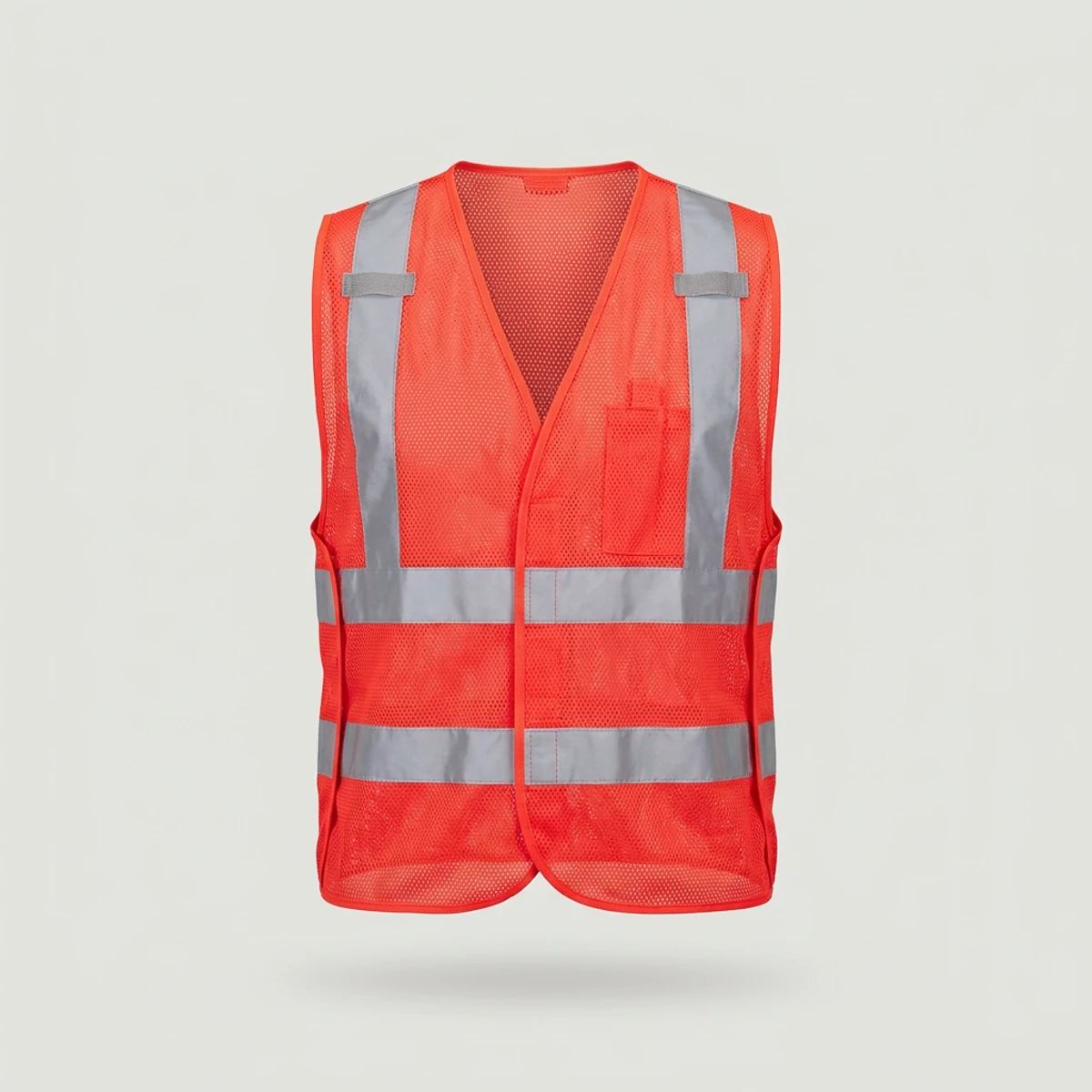
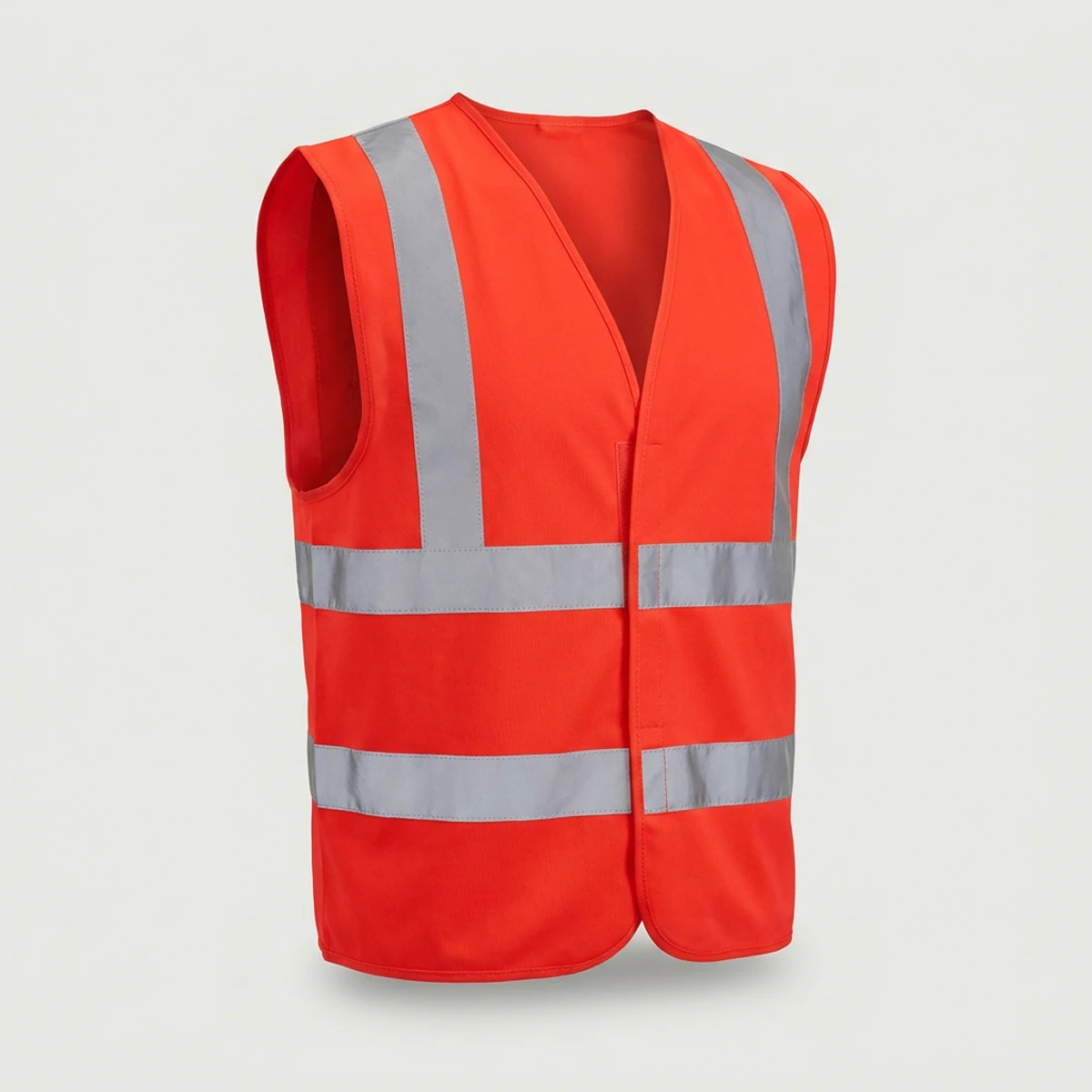
A custom safety vest is a high-visibility vest printed with your company name, logo, crew role or individual names, so workers are both seen and identified. Custom Uniform Factory cuts and sews custom safety vests in its Los Angeles factory from imported fabric, designed around the ANSI/ISEA 107 type and class your job requires and decorated so the logo does not eat into the required visible material, from about 50 pieces per style.

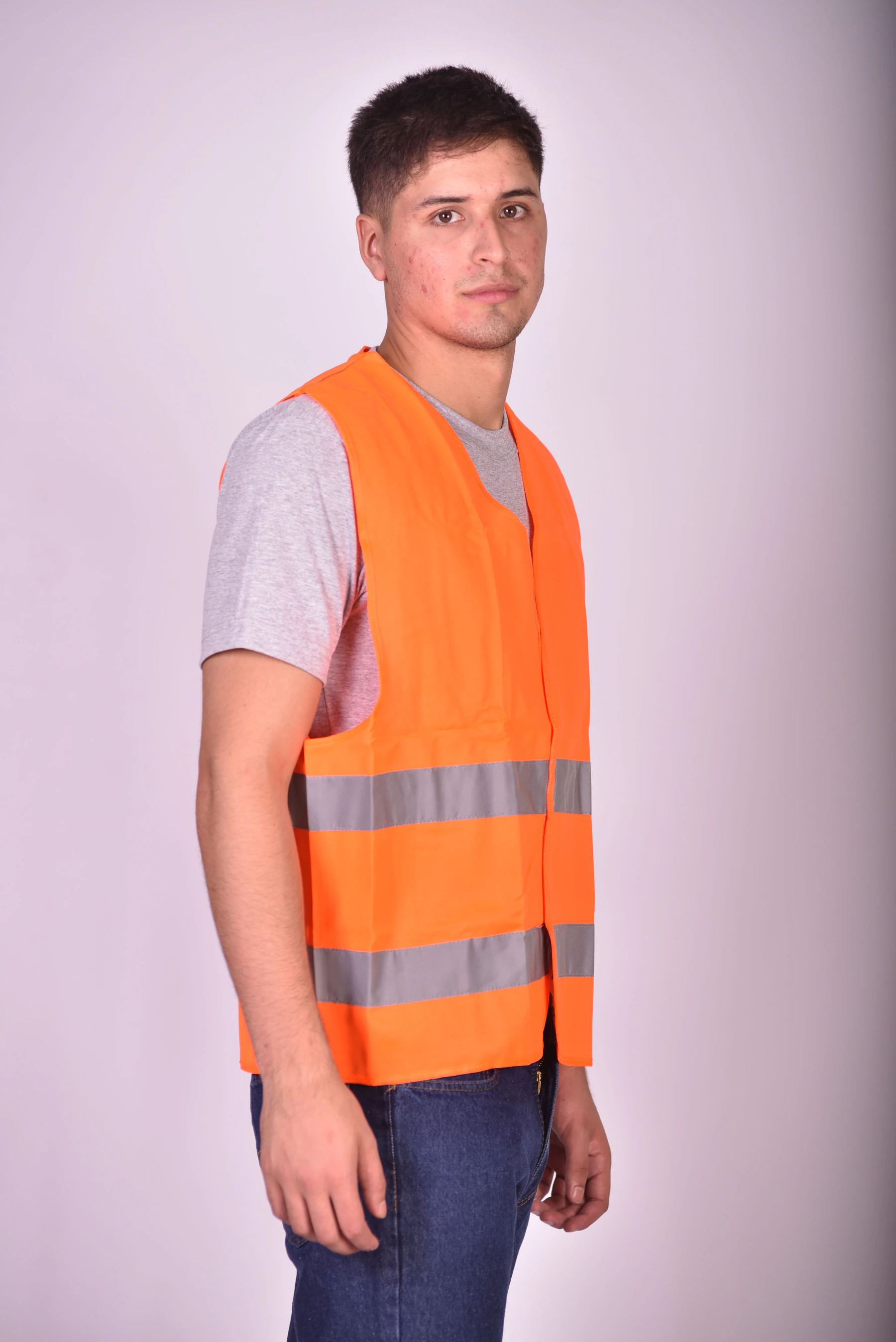
Young man wearing an orange safety vest with reflective silver stripes over a gray t-shirt
Minimum order
About 50 pieces per style
Production
Cut & sewn in Los Angeles, imported fabric
Design standard
ANSI/ISEA 107 Type O or R, Class 1 or 2 (confirmed per style)
Options
Mesh or solid fabric, zipper or hook-and-loop, pockets, breakaway

Custom Safety Vests by style

12 styles in 3 families · each made to order in your fabric, color and branding from 50 pieces.

Customize your workwearYour fabric, colors, pockets and branding
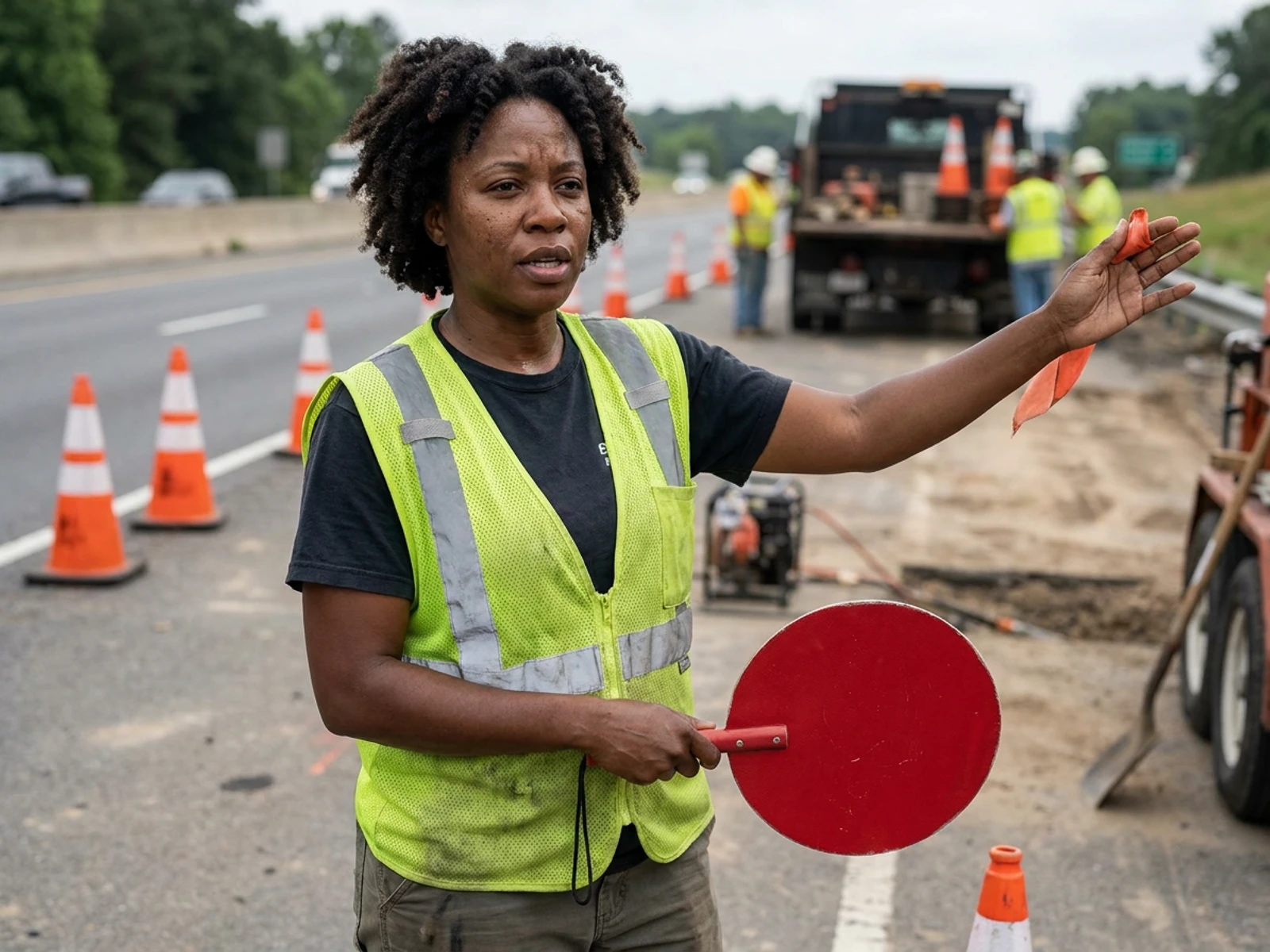
Road worker in a yellow-green safety vest directing traffic in a highway work zone

Solid-front printed safety vests

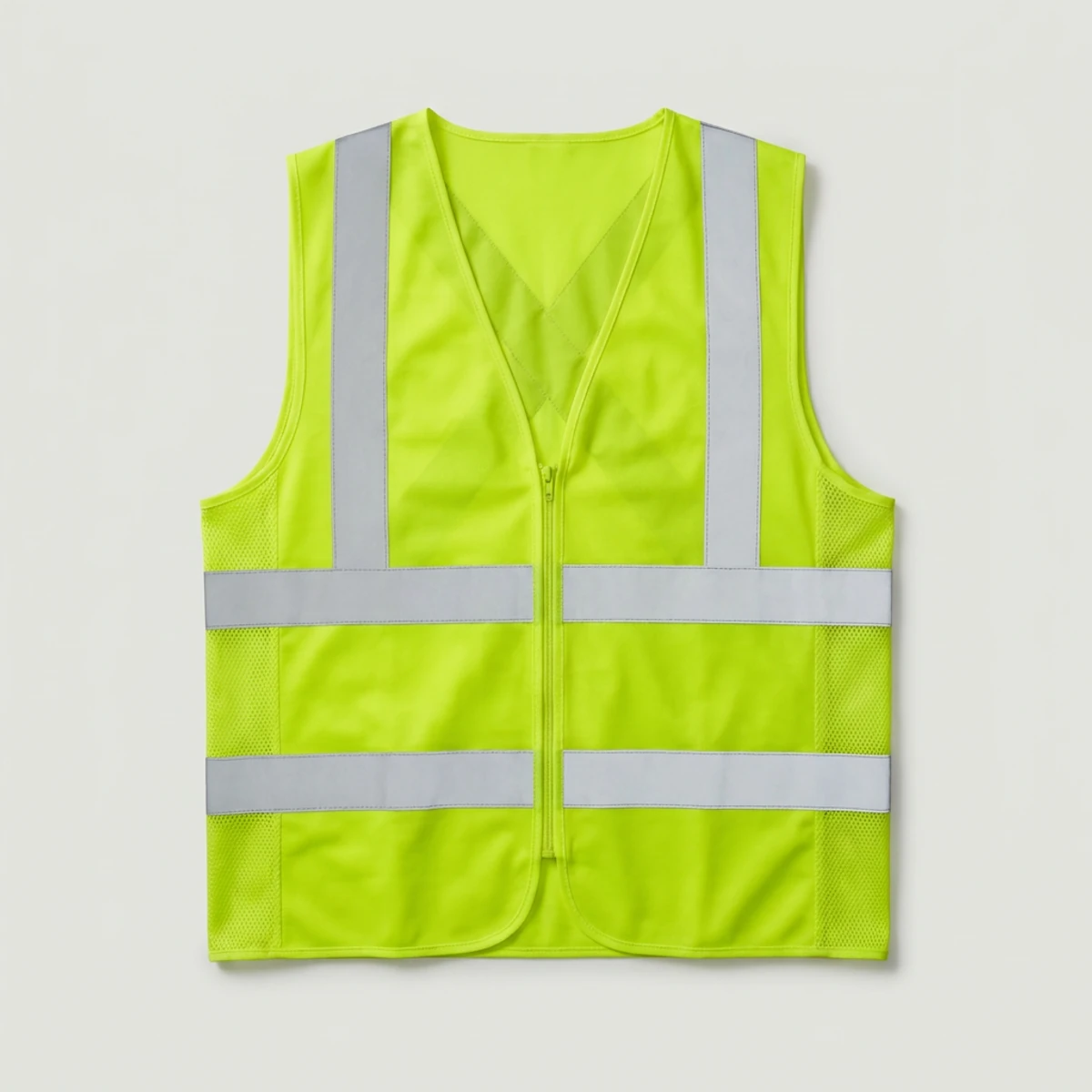
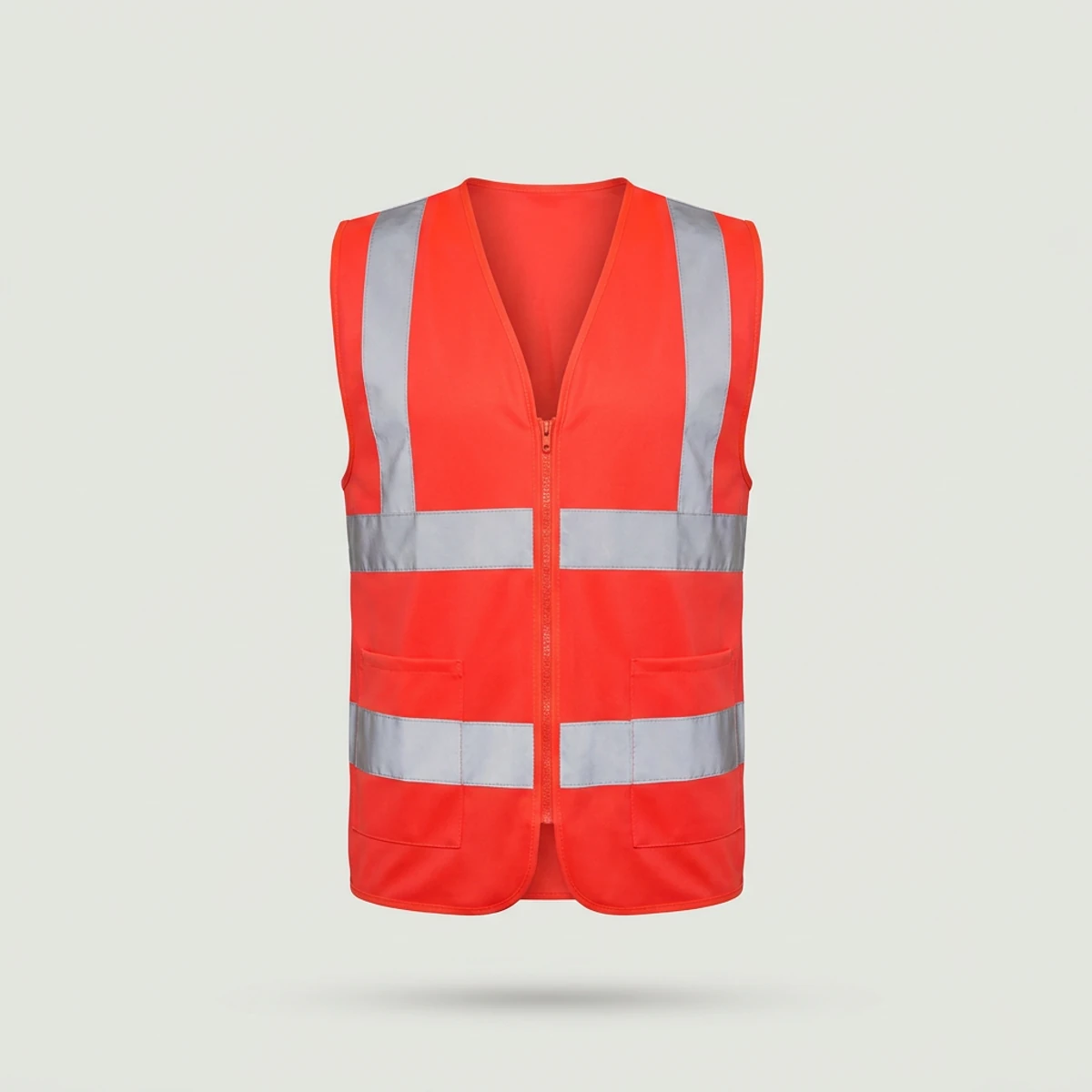
A solid polyester front and back gives the smoothest surface for printing, and mesh side panels keep the vest cool. Custom safety vests in this layout carry large logos well, and the ANSI class depends on the background material and tape we confirm at quote.

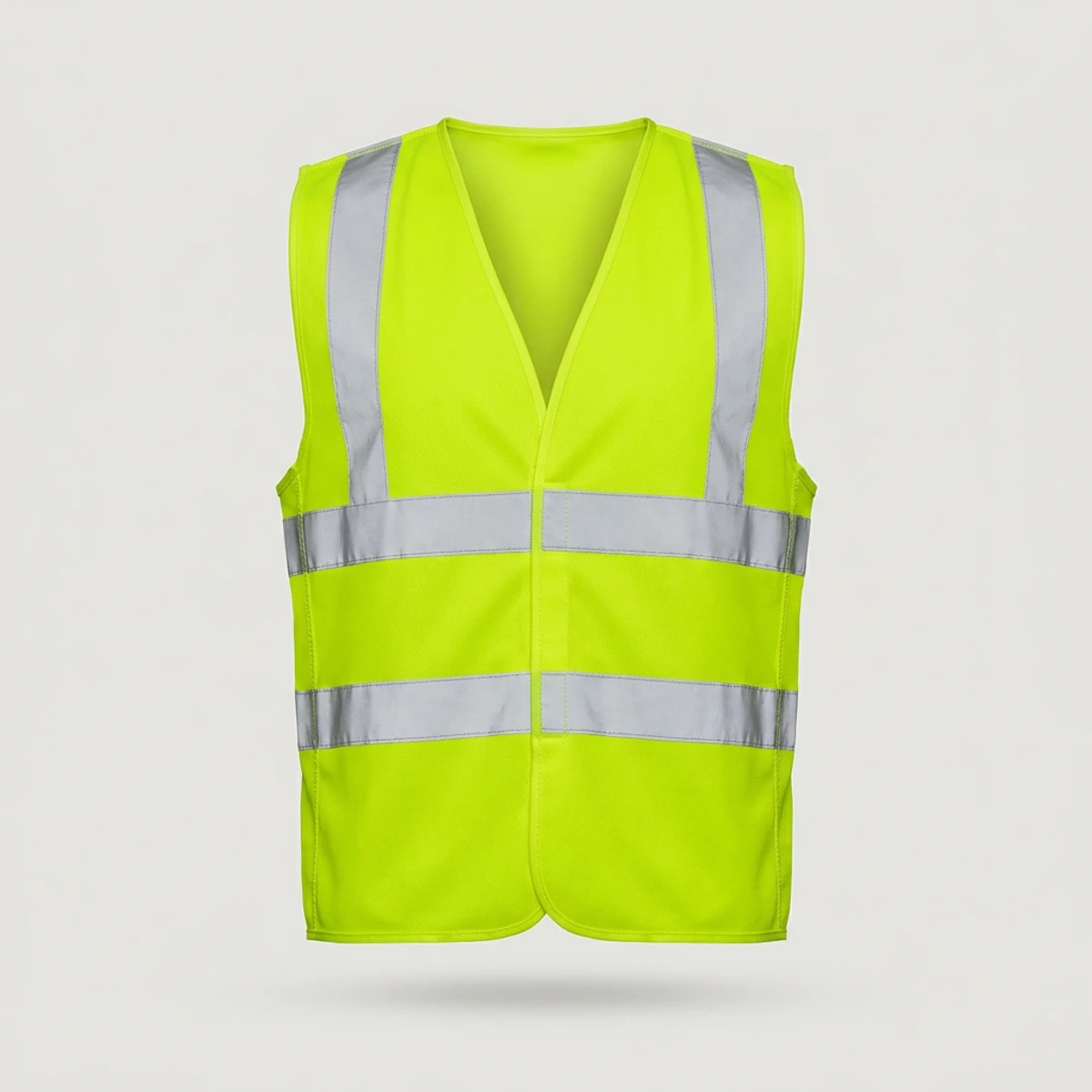
  • Fluorescent yellow-green solid safety vest with silver reflective tape and zipperYellow solid-front safety vest
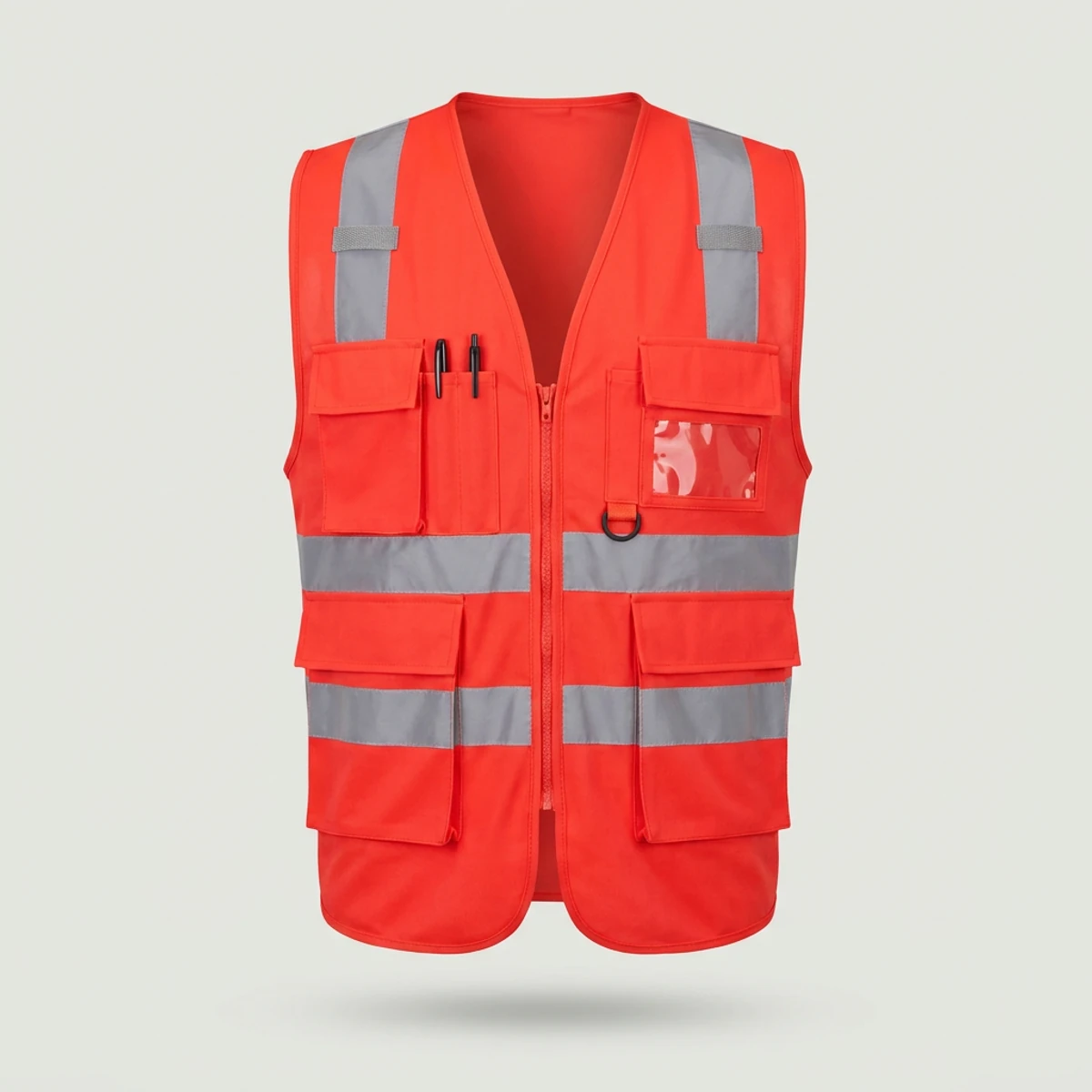
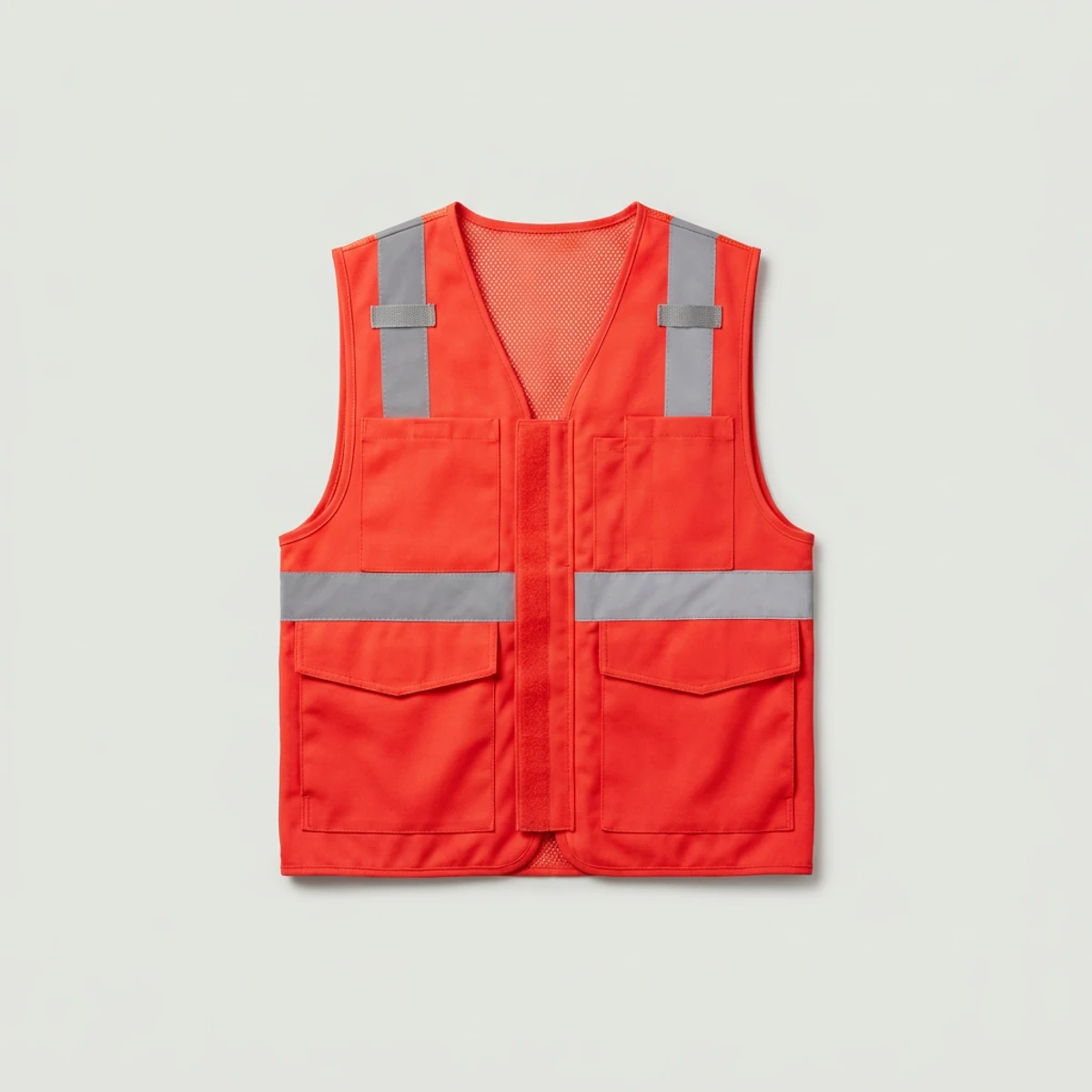
  • Fluorescent orange solid safety vest with silver reflective stripes and pocketsOrange solid-front safety vest
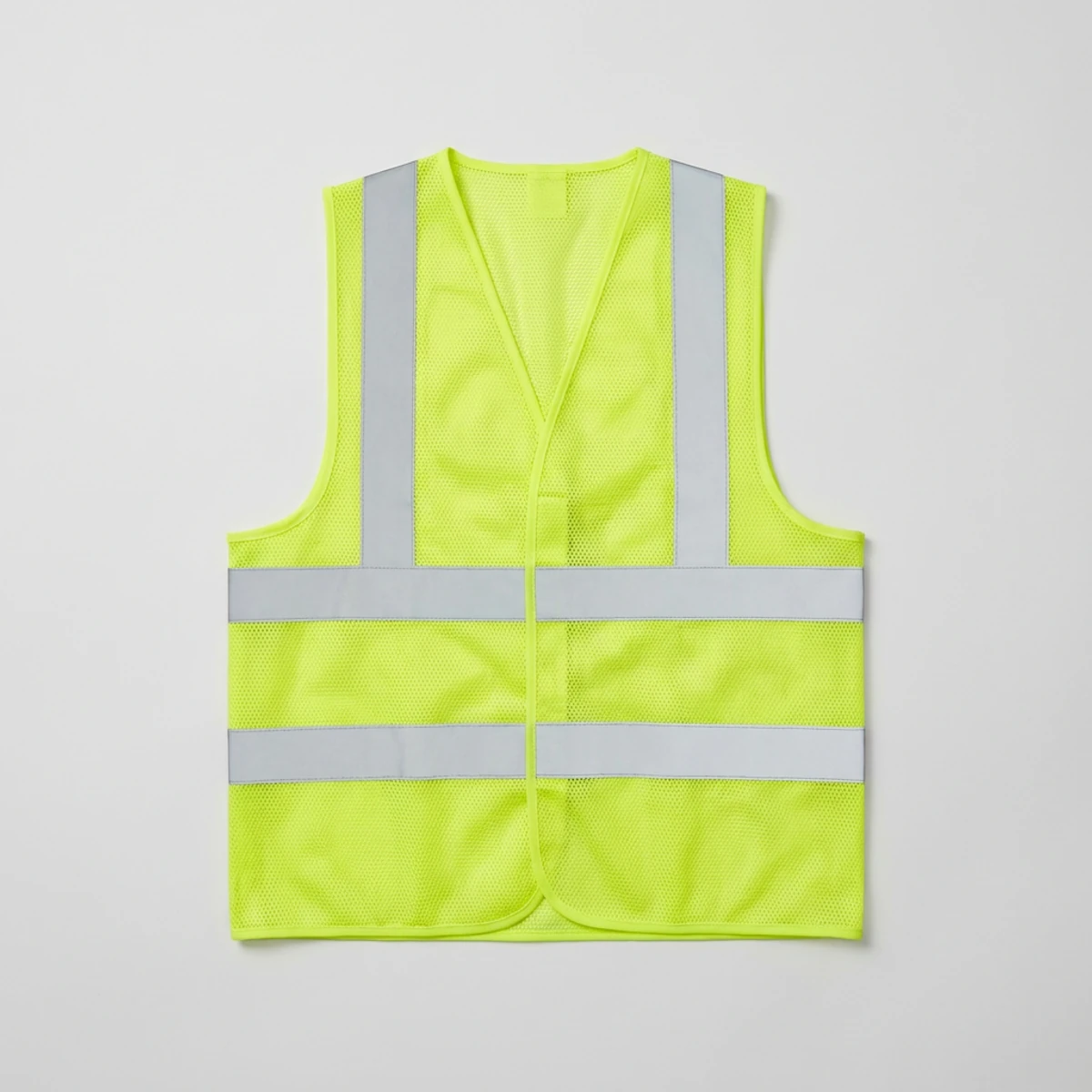
  • Fluorescent yellow-green mesh safety vest with hook-and-loop closureYellow mesh safety vest
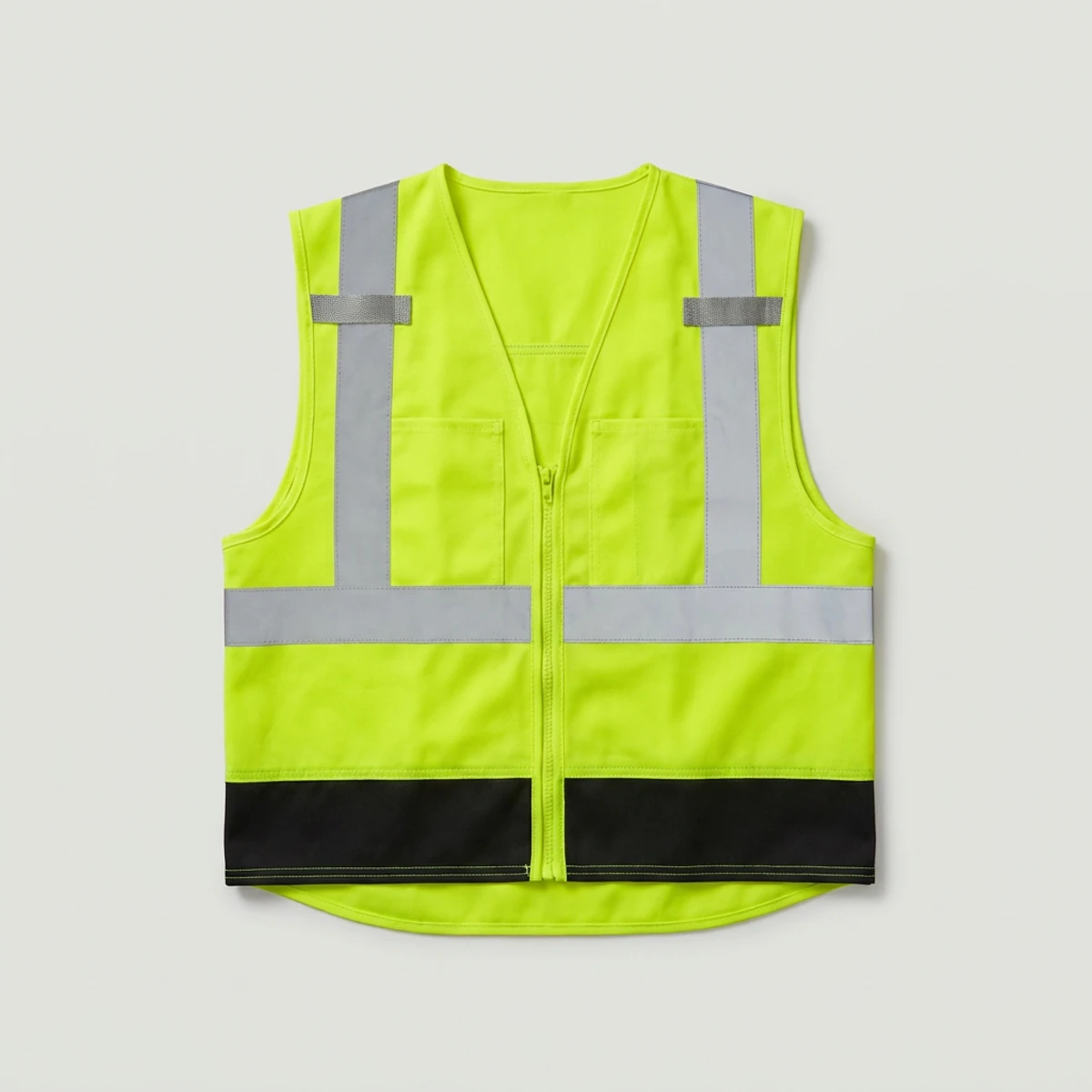
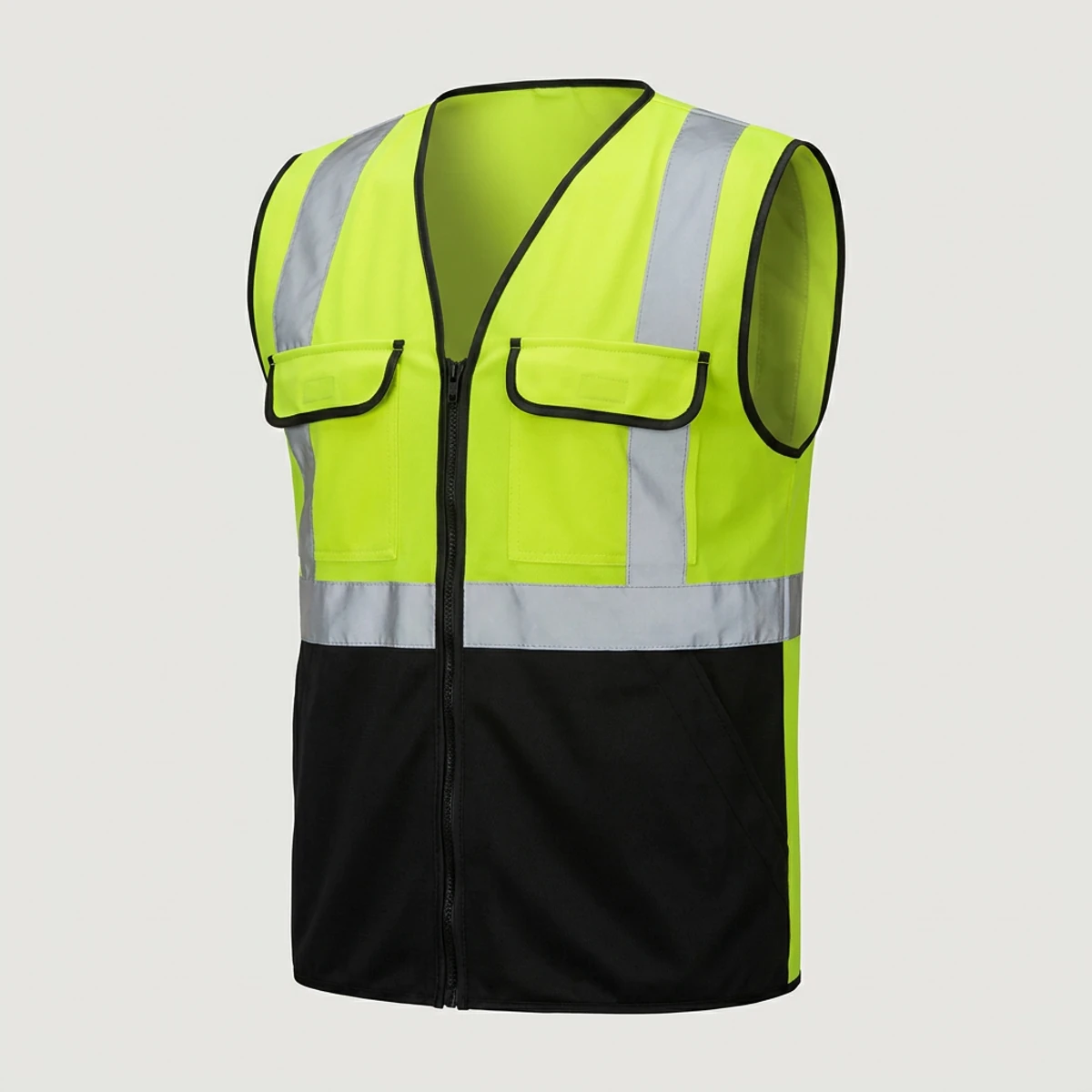
  • Yellow-green safety vest with contrast black bottom trim and reflective tapeTwo-tone safety vest
Quote solid-front vests
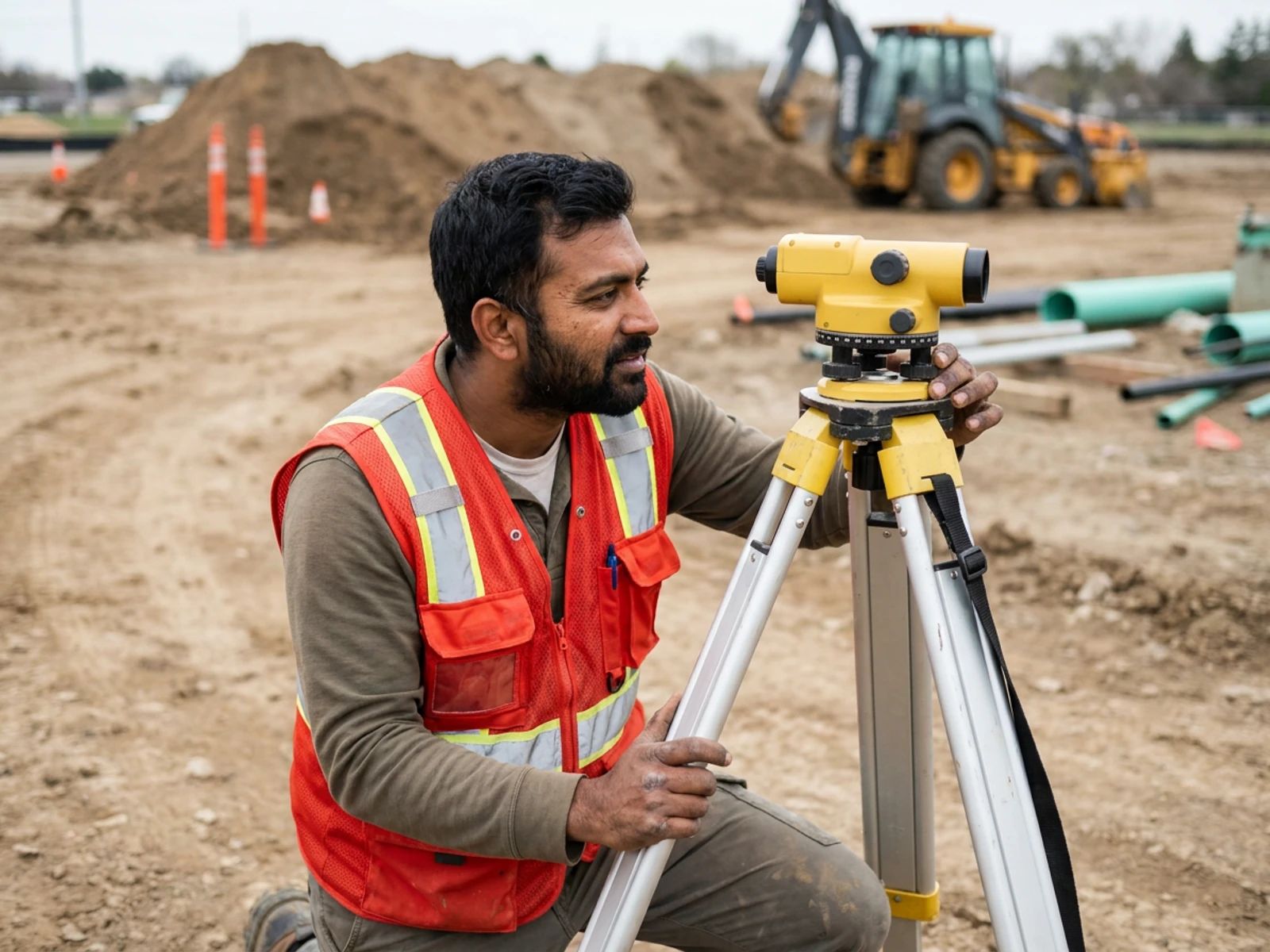
Land surveyor in an orange surveyor safety vest setting up a tripod at a construction site

Surveyor and supervisor vests

Surveyors, inspectors and site supervisors need a vest that works like a desk: radio loops, pen slots, an ID window and an inside tablet pocket. We build the pocket map to your crew's kit and add personalized safety vest details such as names or titles.

  • Fluorescent orange surveyor safety vest with many pockets and reflective tapeOrange surveyor vest
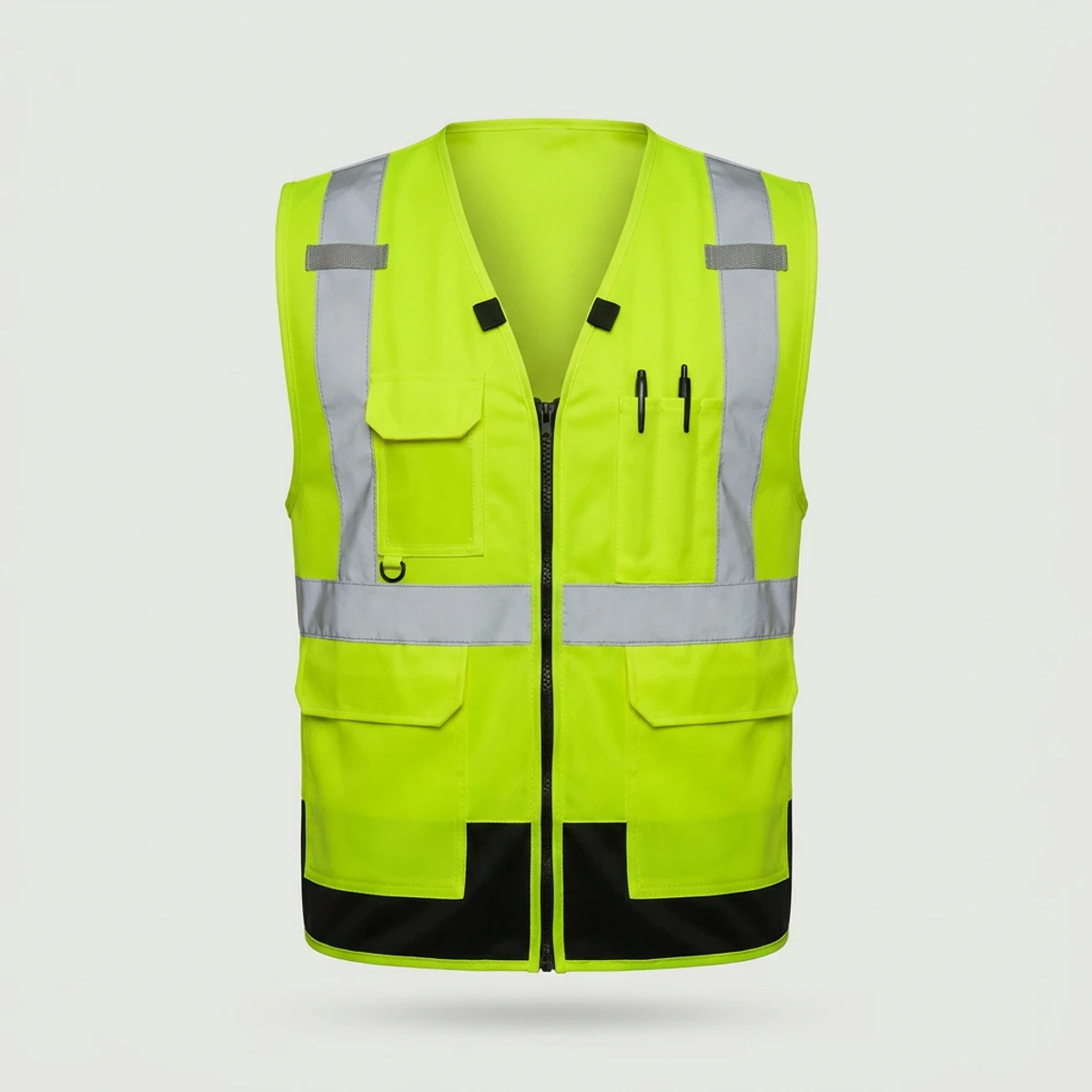
  • Fluorescent yellow-green surveyor vest with tablet pocket and mic tabsYellow surveyor vest
  • Black supervisor vest with yellow-green shoulder panels and reflective tapeBlack and yellow supervisor vest
  • Fluorescent orange mesh-back surveyor vest with solid front pocketsOrange mesh surveyor vest
Quote surveyor vests
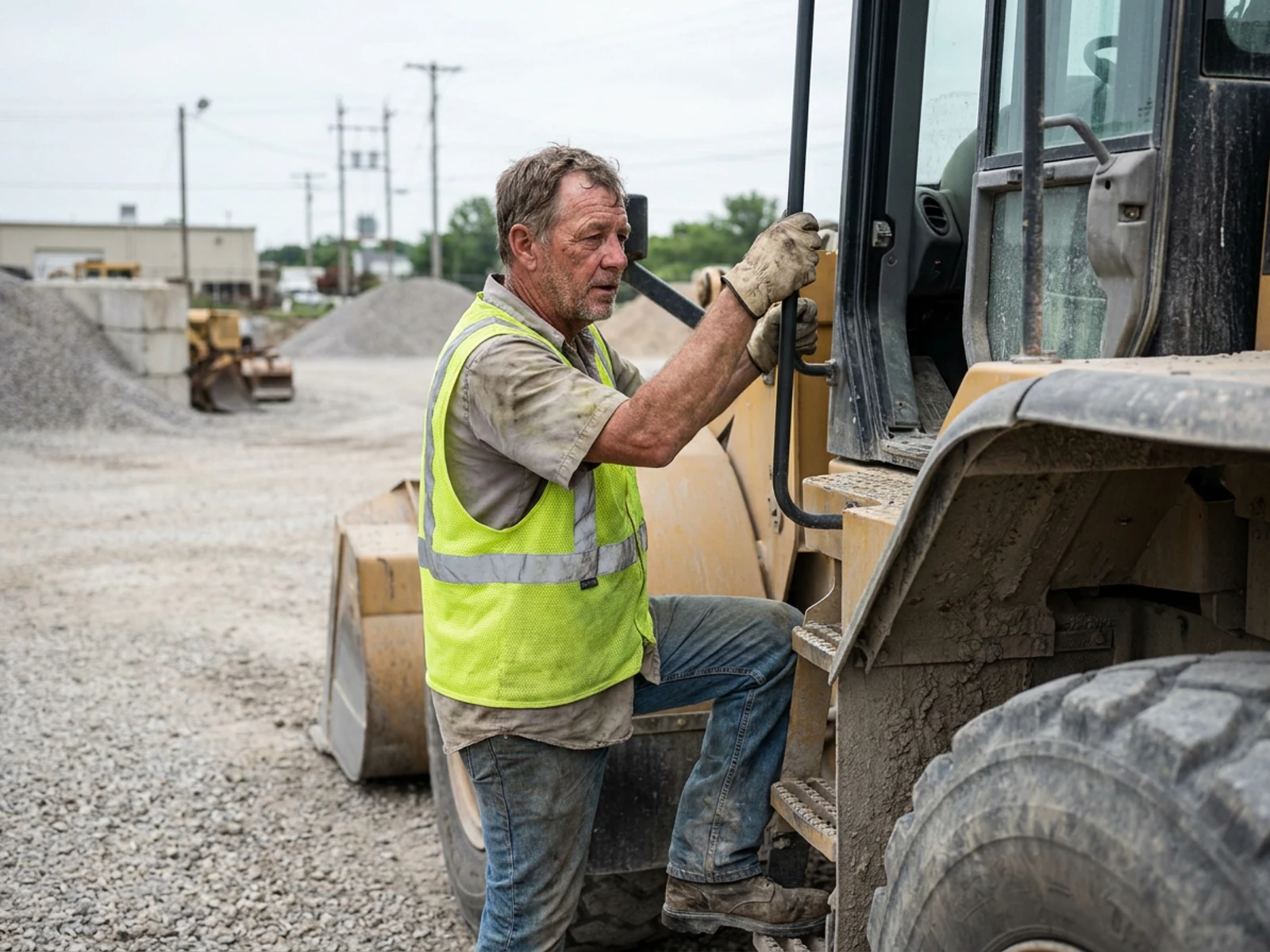
Equipment operator in a yellow-green breakaway vest climbing into a loader cab

Breakaway and public safety vests

Breakaway construction lets a vest tear away at the shoulders and sides if it snags on machinery or a mirror. Shorter public safety styles for police, fire and EMS sit above the duty belt, and hi vis vests custom built this way suit equipment operators too.

  • Fluorescent yellow-green breakaway safety vest with tear-away shoulders and sidesYellow breakaway vest
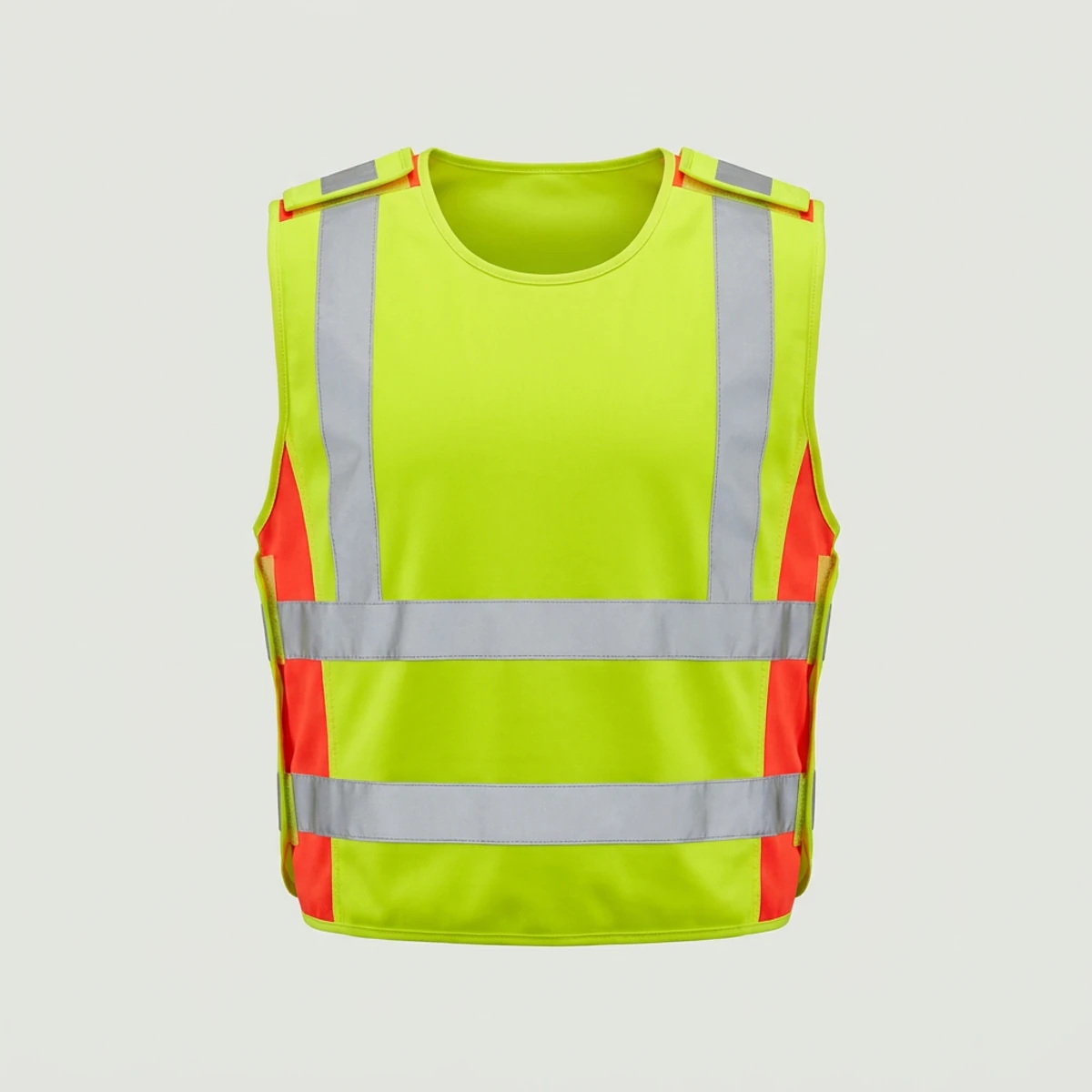
  • Short yellow-green public safety vest with orange side panels and breakaway seamsShort public safety vest
  • Fluorescent orange breakaway safety vest with mesh body and reflective tapeOrange breakaway vest
  • Fluorescent orange solid safety vest with segmented silver reflective tape and hook-and-loop frontOrange vest, segmented tape
Quote breakaway vests

Customize your safety vests

Pick the style, fabric and colors, add your logo and names, then attach the design to your quote. We cut and sew it in Los Angeles from 50 pieces per style.

Why do companies order personalized safety vests?

A personalized safety vest does two jobs at once: it makes a worker visible and tells drivers, inspectors, site managers and the public who that worker is. Companies order customized safety vests to identify the employer on shared sites, mark roles, name individuals, advertise on every job and keep track of who holds which vest.

  • Identify the employer

    on multi-contractor sites and roadways.
  • Mark roles

    such as flagger, supervisor, inspector, safety officer or first aid.
  • Name individuals

    so supervisors and visitors can address people directly.
  • Advertise

    on every jobsite, delivery route and parking lot.
  • Control issue

    by numbering vests per worker or crew.

Which ANSI class does a custom vest need?

A custom vest needs the ANSI (American National Standards Institute) type and class your hazard assessment sets: usually Type O Class 1 for off-road work or Type R Class 2 near traffic. A sleeveless vest cannot reach Class 3, because Class 3 requires sleeves. Branding never changes the class requirement; it has to fit around it.

ANSI/ISEA 107-2020, published by ANSI and the International Safety Equipment Association (ISEA), sets minimum areas of fluorescent background and retroreflective material by type and class:

Vest type and classMinimum background (sq in)Minimum retroreflective (sq in)Typical use
Type O, Class 1217155Warehouses, parking lots, off-road sites
Type R, Class 2775201Roadway and construction work near traffic
Type P, Class 2450201Police, fire and EMS (emergency medical services) at incident scenes
Type R or P, Class 31,240 (R) or 775 (P)310Sleeves required, so never a vest; a Class 2 vest plus Class E pants makes a Class 3 ensemble

Figures are from the 2020 edition, current at the time of writing; the standard allows smaller background minimums for the smallest size offered in some classes. On roadways, Section 6C.05 of the federal Manual on Uniform Traffic Control Devices (MUTCD), 11th edition requires workers in a temporary traffic control zone to wear Class 2 or 3 apparel in fluorescent orange-red, yellow-green or a combination of the two. Our ANSI 107 hi-vis classes guide explains each class, and our hi vis clothing range covers sleeved Class 3 shirts and jackets.

Custom hi vis vest options

Custom hi vis vests are built from four choices: the fabric, the closure, the pockets and whether the vest breaks away. Each choice affects comfort, how well the logo prints and how the vest behaves around traffic and machinery. Color comes on top: fluorescent yellow-green or orange-red for compliant vests, chosen to contrast with the work background.

Fabric

Open mesh moves air and suits hot climates, but its holes break up fine artwork, so it takes bold logos and large text best. Solid polyester resists snags on tools and rebar, blocks wind and gives the smoothest printing surface. Many companies choose a solid front and back for printing with mesh side panels for ventilation.
Closure

Zippers give a neat, closed fit for supervisors and client-facing staff. Hook-and-loop closures go on and off fastest, which suits visitors and drivers who wear the vest for minutes at a time. Snaps sit between the two.

Fluorescent yellow-green solid safety vest with silver reflective tape and zipper

Pockets

A surveyor-style vest adds chest pockets with pen slots, a radio loop or pocket, a clear ID window and an inside pocket for a tablet or plans. Pocket flaps cover part of the front, so the layout is planned together with logo placement and the class minimums.

Breakaway

A breakaway vest separates at the shoulders, sides and front when it snags on a mirror or a rotating part, so it comes off instead of pulling the wearer in. Type P vests for police, fire and EMS are often breakaway and cut shorter to clear a duty belt. Specify breakaway in your brief for equipment operators and road crews.

Custom safety vest printing and logo placement

Custom safety vest printing works when the decoration sits on areas the vest does not need to meet its class. ANSI/ISEA 107 counts only visible background and retroreflective material, so a large logo over fluorescent fabric can drop a vest below its minimums. The back panel between reflective bands carries most branding.

PlacementWhat usually goes thereNotes
Upper back panelCompany name, large logo, role such as “FLAGGER” or “SUPERVISOR”Largest area; most visible to drivers and site managers
Left chestSmall logoKeep clear of reflective bands
Right chest or pocketIndividual name or ID numberPersonalized per vest
Lower backPhone number, website, crew numberKeep text large enough to read at a distance

We size the vest so it still meets its class minimums with the decoration applied, and you approve placement on a printed sample before production.

Tip: Use short, bold text on the back. A role title or company name in large block letters reads from much farther away than a detailed logo, which matters more to a driver than branding does.

Fluorescent orange surveyor safety vest with many pockets and reflective tape

Should a safety vest logo be printed or embroidered?

A safety vest with logo decoration is almost always printed. Heat-applied transfers and printed logos sit flat on mesh and solid polyester, add little weight and do not puncture the fabric. Custom Uniform Factory does not stitch through reflective tape, because needle holes and thread tension can damage it.

Read more

Embroidery can work on a solid chest pocket or a sewn-on patch away from the tape, for supervisors who want a more permanent mark. Our custom embroidery and printing service covers artwork files, colors and methods across all your uniforms, so vests can match the logo on shirts and jackets.

Fluorescent yellow-green breakaway safety vest with tear-away shoulders and sides

How does a logo affect ANSI compliance?

A logo affects ANSI compliance only if it covers material the vest needs, but compliance itself depends on far more than color. The fluorescent fabric and retroreflective tape must be tested by an accredited laboratory, the finished design must meet the area and placement rules for its type and class, and the vest must carry a label stating them.

Custom Uniform Factory confirms, before you order, which certified materials are used in your vest style and what documentation comes with it. A vest is not described as compliant until that is in place.

Tip: Keep the declaration or test documentation for each vest style with your safety records. If an inspector or a general contractor asks whether your crew’s vests meet the required class, the label and the paperwork answer the question.

What determines the cost of custom safety vests?

The cost of custom safety vests depends on the vest construction, the class it is built to, the quantity per style, the decoration and the personalization. No prices appear on this page, because each order is quoted on its actual style, materials, artwork and quantity. The table shows which way each factor usually moves the unit price.

Cost driverHow it moves the unit priceHow to keep it in check
Fabric and constructionSolid fabric, two-tone panels and mesh-and-solid combinations take more material and sewing than a plain mesh vestUse solid panels only where the logo prints
Class and materialsA Class 2 vest carries more fluorescent fabric and tape than a Class 1 vestOrder the class your hazard assessment sets, not a higher one by default
FeaturesPockets, zippers, ID windows and breakaway closures add components and sewing timeGive the multi-pocket style to supervisors only
Quantity per styleLarger runs spread setup and sampling across more vests, so unit cost tends to fallStandardize on one or two vest styles
DecorationMore print locations and more colors add time per vestOne back print plus one chest mark
PersonalizationIndividual names or numbers add handling for every pieceSend one clean list with sizes

Custom reflective safety vests by industry

Custom reflective safety vests change by industry because the hazard, the class and the message on the back change. Road crews need Class 2 and role titles, warehouses often need Class 1 and color coding, and events need large graphics more than compliance. These are the common starting points.

  • Construction and road work

    Type R Class 2 vests with the company name on the back and role titles. See our construction uniforms.
  • Security and parking

    reflective vests with “SECURITY” or “PARKING” on the back. See our security uniforms.
  • Warehouses and logistics

    Type O Class 1 or Class 2 vests, often color-coded by shift or department. See our warehouse uniforms.
  • Landscaping

    orange-red vests stand out against green backgrounds and pair with branded landscaping uniforms for roadside crews.
  • Events and volunteers

    a vest in a non-ANSI color with large printed graphics for crowd identification.

Do electrical crews need arc-rated vests?

Electrical and utility crews who wear arc-rated clothing need an arc-rated vest. NFPA 70E, the National Fire Protection Association (NFPA) standard for electrical safety in the workplace, requires outer layers worn over arc-rated clothing to be arc-rated, because a standard polyester vest can melt and ignite in an arc flash.

Read more

If your crews work near energized equipment or in flash-fire areas, read our FR clothing page and the NFPA 70E guide before ordering, and include the required arc rating in your brief.

How should custom vests fit, and when should they be replaced?

Custom vests should close over the heaviest layer the crew wears and be replaced once the fluorescent fabric fades or the tape wears. A vest that is too large flaps open and hides its reflective bands; one that is too small will not close. Ask workers to try a sample over a winter jacket.

Read more

Fluorescent fabric fades in sunlight and reflective tape wears with washing and abrasion. Replace vests that look faded, dirty or torn, or whose tape is cracked or peeling, and follow any wash-cycle limit on the care label.

Ready to order

What to send us for a quote

A complete custom vest quote needs the type and class, the vest features, the artwork and the quantity per style. Send as much of this list as you can in the first message, and we can price the vests and confirm placement that keeps the class minimums.

  • Quantity and sizes. , including any oversized vests for winter layering.
  • Type and class. your safety program requires, or where the vests will be worn.
  • Color. fluorescent yellow-green or orange-red, or a non-ANSI color for events.
  • Vest features. mesh or solid, closure, pockets, breakaway.
  • Artwork. logo files in vector format, back-panel text, and a name or number list for personalization.
  • FR or arc-rating needs. , if crews work near flash fire or electrical hazards.
  • Deadline. , such as a project start or event date.

Common mistakes with custom safety vests

The most common custom safety vest mistakes are ordering a “Class 3 vest”, covering the vest with branding, using small text on the back, ignoring winter layers and buying black vests for roadway work. Each one is easy to fix at the brief stage and costly once a full run is printed.

  1. Ordering a “Class 3 vest”

    ANSI/ISEA 107 Class 3 requires sleeves, so a sleeveless vest tops out at Class 2. Choose a sleeved Class 3 garment, or pair the vest with Class E pants.
  2. Covering the vest with branding

    Large logos over the fluorescent fabric reduce the background area that counts toward compliance.
  3. Small text on the back

    Fine print cannot be read from a vehicle and wastes the most visible space on the vest.
  4. Ignoring layering

    A vest that fits over a T-shirt in summer may not close over a winter jacket.
  5. Black “safety” vests on roadways

    They can look professional, but they are not ANSI/ISEA 107 compliant and should not replace a hi-vis vest where one is required.

Ordering custom safety vests

Ordering custom safety vests takes four steps: brief, recommendation, printed sample and production. The sample matters most, because it shows the logo placement and fit on a real vest before the run. If your crew also needs plain vests, our safety vests can come from the same brief.

  1. 01

    Send your brief

    type and class required, quantity, sizes, colors, logo file and any names or numbers.
  2. 02

    Get a recommendation

    for the vest style and a logo placement that keeps the class minimums.
  3. 03

    Approve a printed sample

  4. 04

    Production

    in our Los Angeles factory from about 50 pieces per style, with individual names applied during production.

Ask us for current lead times when you request a quote.

Questions about custom safety vests

Need something not covered here? Ask our Los Angeles team and we’ll answer with options for your order.

Ask our Los Angeles team

What is the minimum order for custom safety vests?

The minimum is about 50 pieces per style. Personalization such as individual names or vest numbers is applied piece by piece during production. We confirm personalization options, and how sizes and the two fluorescent colors can be split within the minimum, when we quote.

Can a safety vest be Class 3?

No. ANSI/ISEA 107 Class 3 garments must have sleeves, so a sleeveless vest tops out at Class 2. To reach Class 3 with a vest, workers add Class E pants or shorts, which with a Class 2 vest make a Class 3 ensemble, or you switch to a sleeved Class 3 shirt or jacket.

What is a breakaway safety vest?

A breakaway vest is built to tear apart at the shoulders, sides and front when it catches on moving equipment or a vehicle mirror, so the vest comes off instead of pulling the worker in. It is common for road crews, equipment operators and public safety work.

Can you make black or blue safety vests with our logo?

Yes, for event staff, valets or security where visibility is a convenience rather than a safety requirement. A black or blue vest with reflective tape is not ANSI/ISEA 107 compliant, because the standard only recognizes fluorescent yellow-green, orange-red and red background.

Can each vest in one order carry a different name or number?

Yes. Send one list with each worker's name or vest number and size, spelled exactly as it should be printed. Every vest gets the same company logo and back text, with the individual line added during production. Check the list before you approve, because it is what we print from.

Custom Safety VestsCut & sewn in Los Angeles · from 50 pieces per styleRequest samplesGet a quote