Workwear · Los Angeles factory

Custom Chef Coats for Your Kitchen

A chef coat is the double- or single-breasted jacket cooks wear to shield their body from heat, splashes and spills while keeping a clean, professional look. Custom Uniform Factory makes custom chef coats, chef pants and complete chef uniforms in its Los Angeles factory from imported fabric, embroidered with your logo or produced under your own label, from about 50 pieces per style.

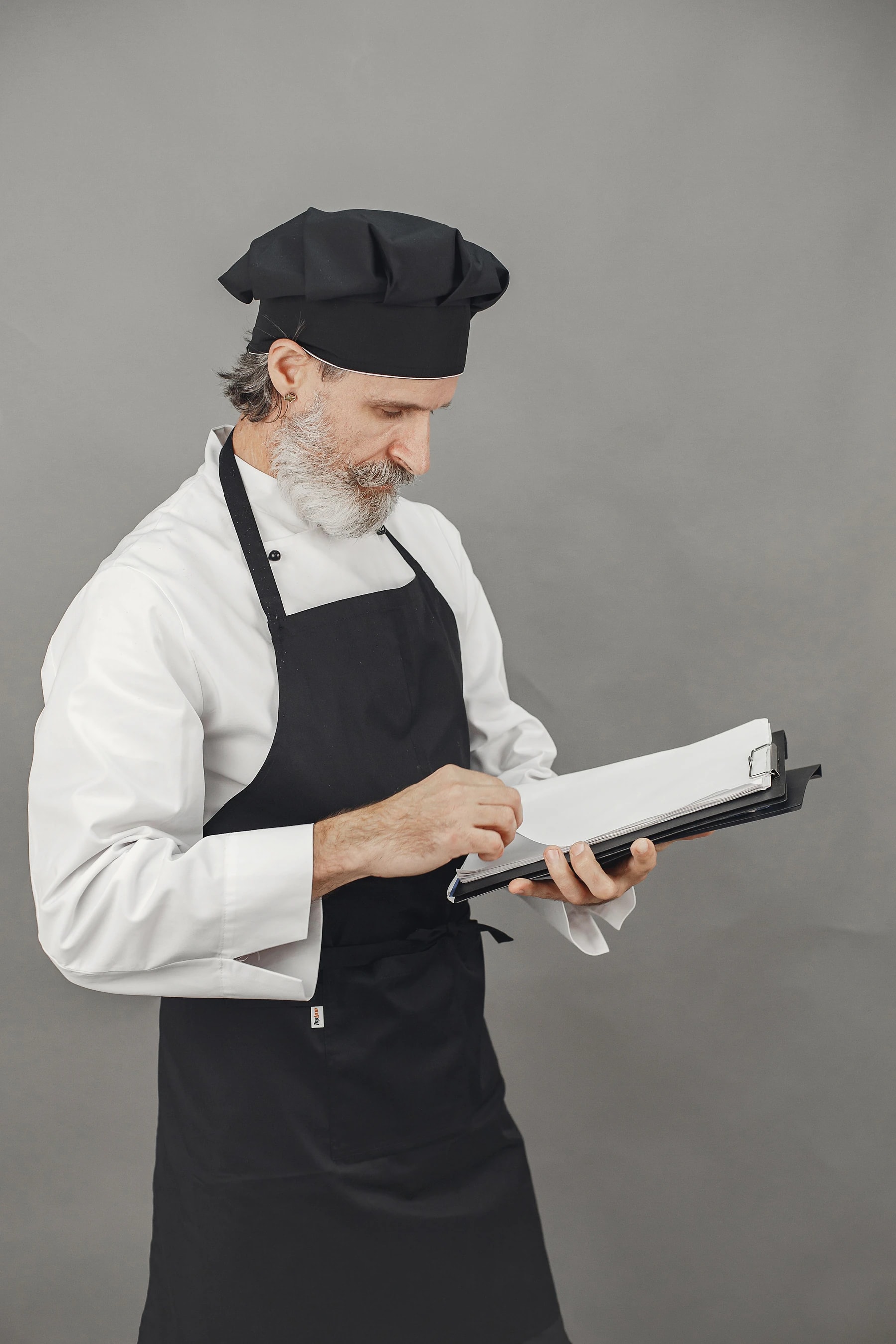
Senior chef wearing a white chef coat, black bib apron and black chef hat reading a clipboard
Minimum order
About 50 pieces per style
Production
Cut & sewn in Los Angeles, imported fabric
Garments
Chef coats, chef pants, aprons
Styles
Double- or single-breasted, short or long sleeve, custom on request

Chef Wear by style

16 styles in 4 families · each made to order in your fabric, color and branding from 50 pieces.

Customize your workwearYour fabric, colors, pockets and branding
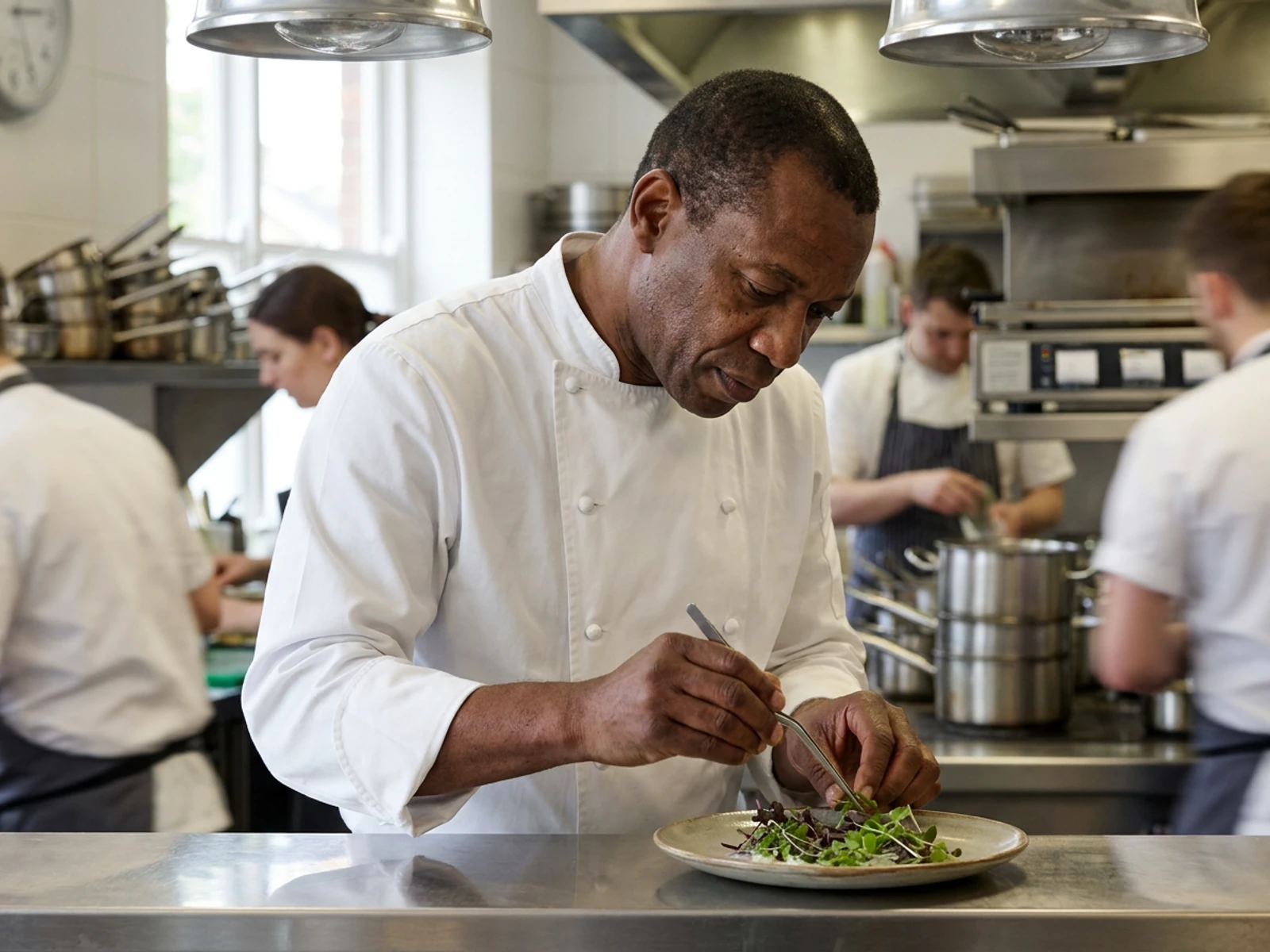
Executive chef in a white double-breasted chef coat plating a dish at a restaurant pass

Double-breasted executive chef coats

The double-breasted coat is still the signature of the head of a kitchen, and its reversible front hides spills during service. We tailor custom chef coats in this style with long sleeves, tonal or contrast piping and embroidered names, from about 50 pieces per style.

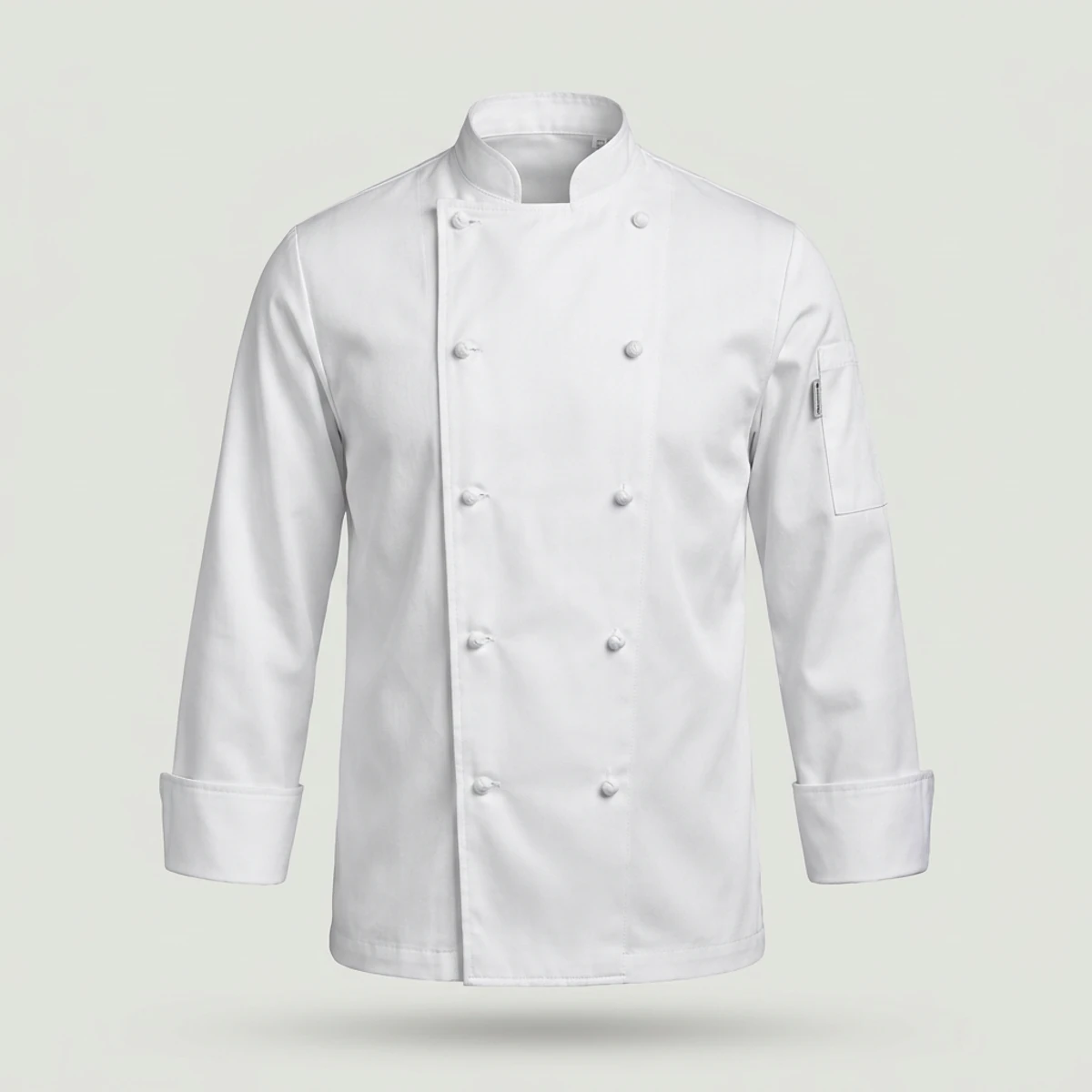
  • White double-breasted executive chef coat with cloth knot buttons and long sleevesWhite executive chef coat
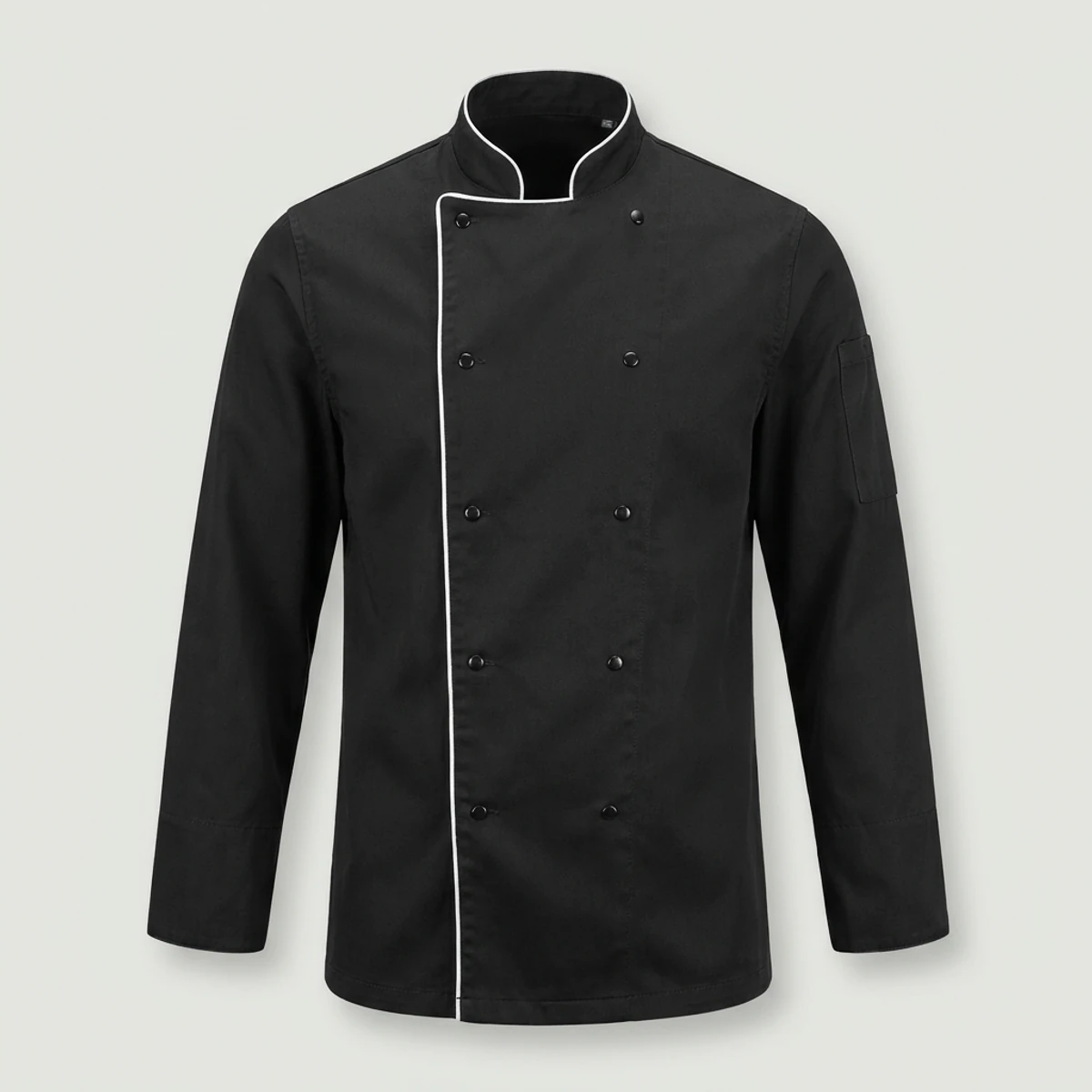
  • Black double-breasted chef coat with white piping on collar and placketBlack chef coat, white piping
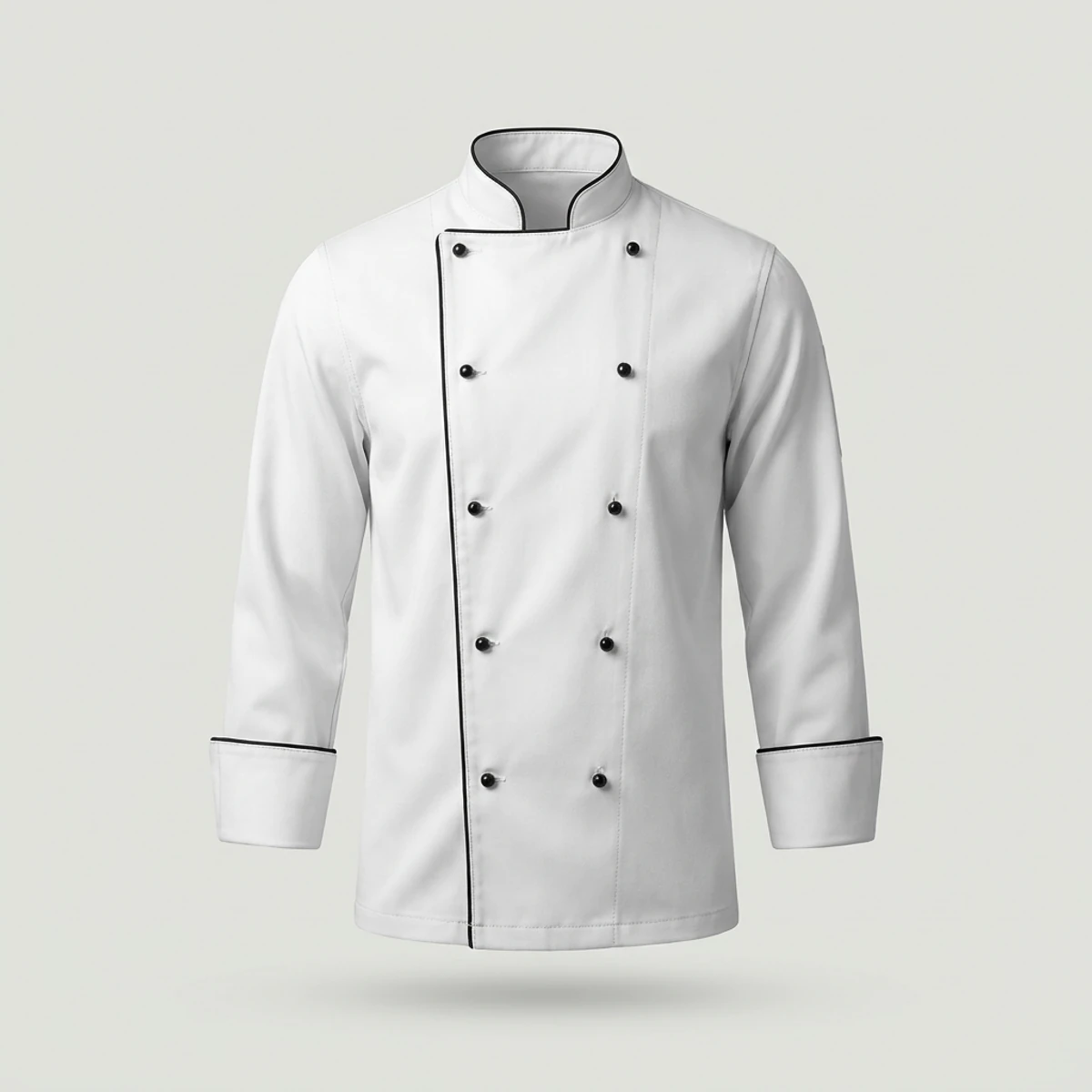
  • White double-breasted chef coat with black piping and black stud buttonsWhite chef coat, black piping
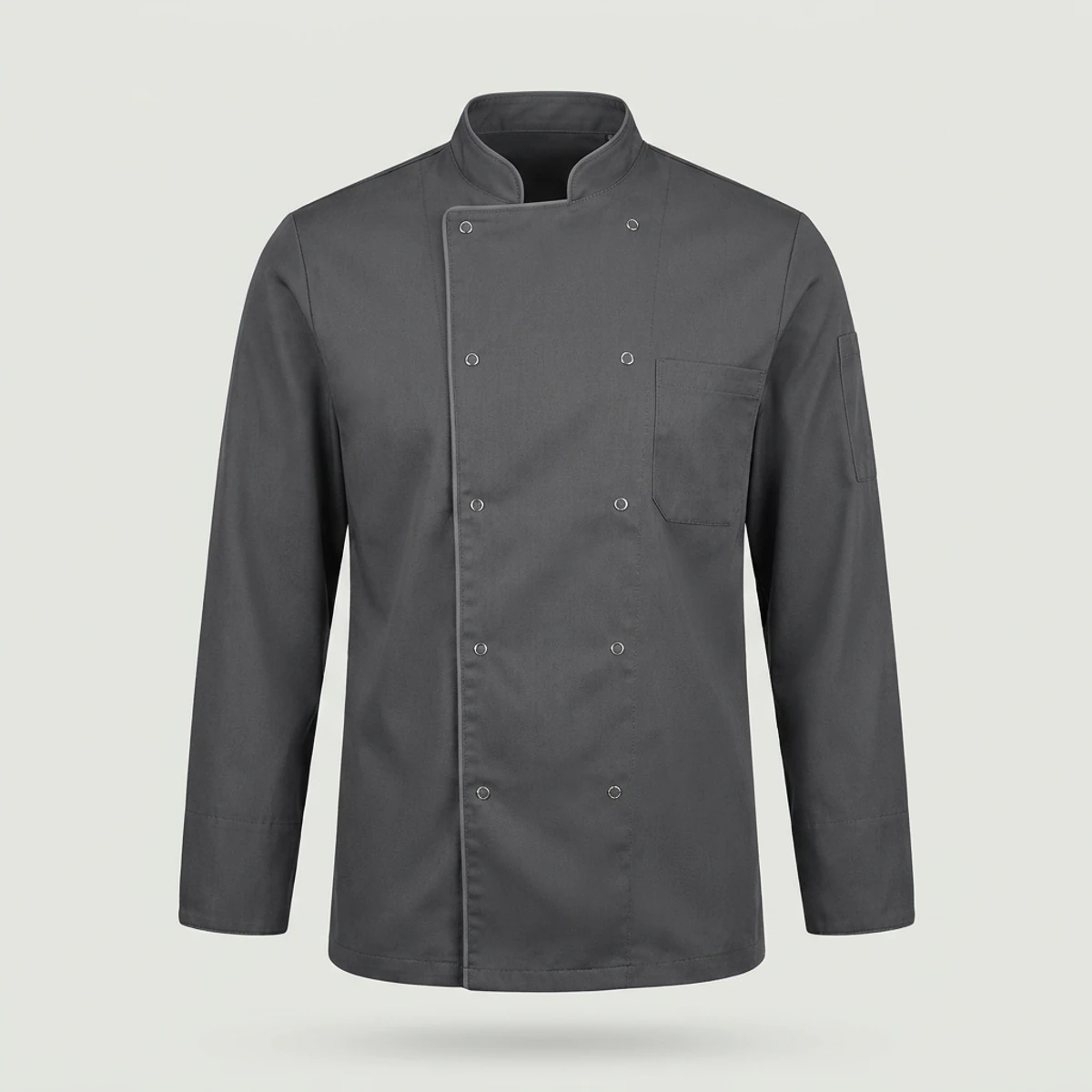
  • Charcoal grey double-breasted chef coat with tonal piping and snap closuresCharcoal executive chef coat
Quote executive chef coats
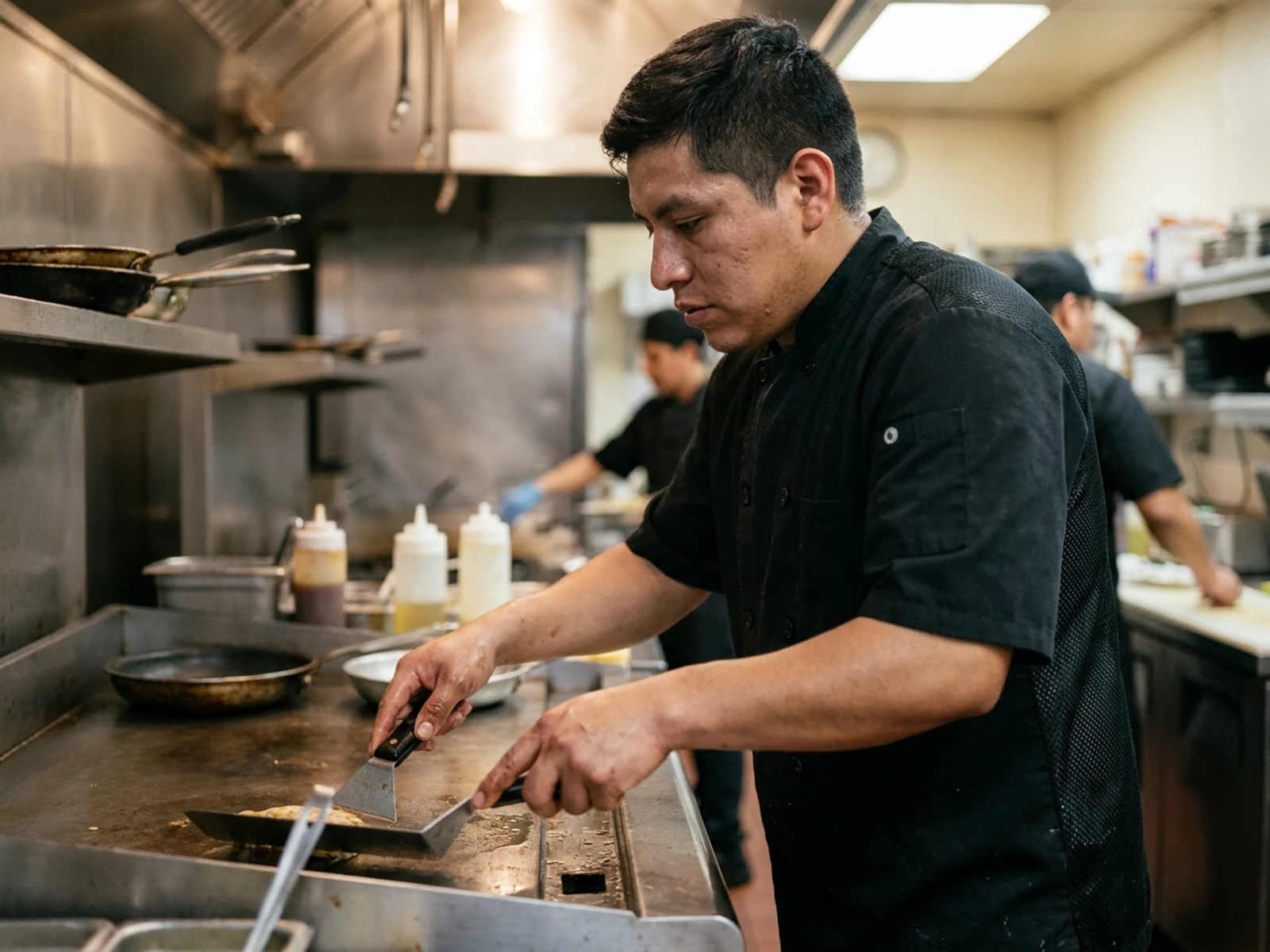
Line cook in a black short-sleeve chef coat flipping food on a grill during service

Short-sleeve line cook coats

On the line, heat matters more than formality, so cooks favor lighter coats with short or three-quarter sleeves and mesh venting. We build these in easy-care fabrics and darker colors that hide splashes between washes.

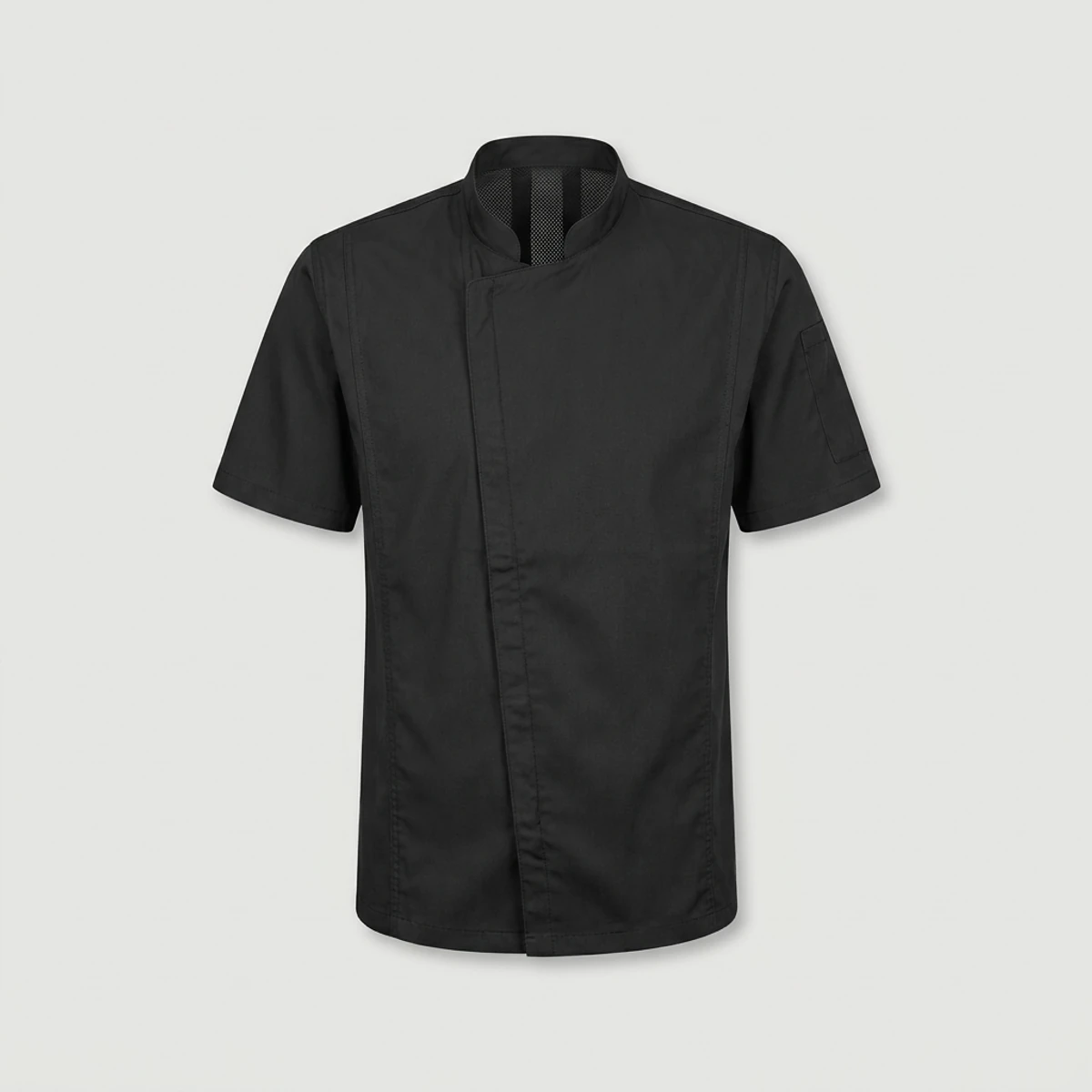
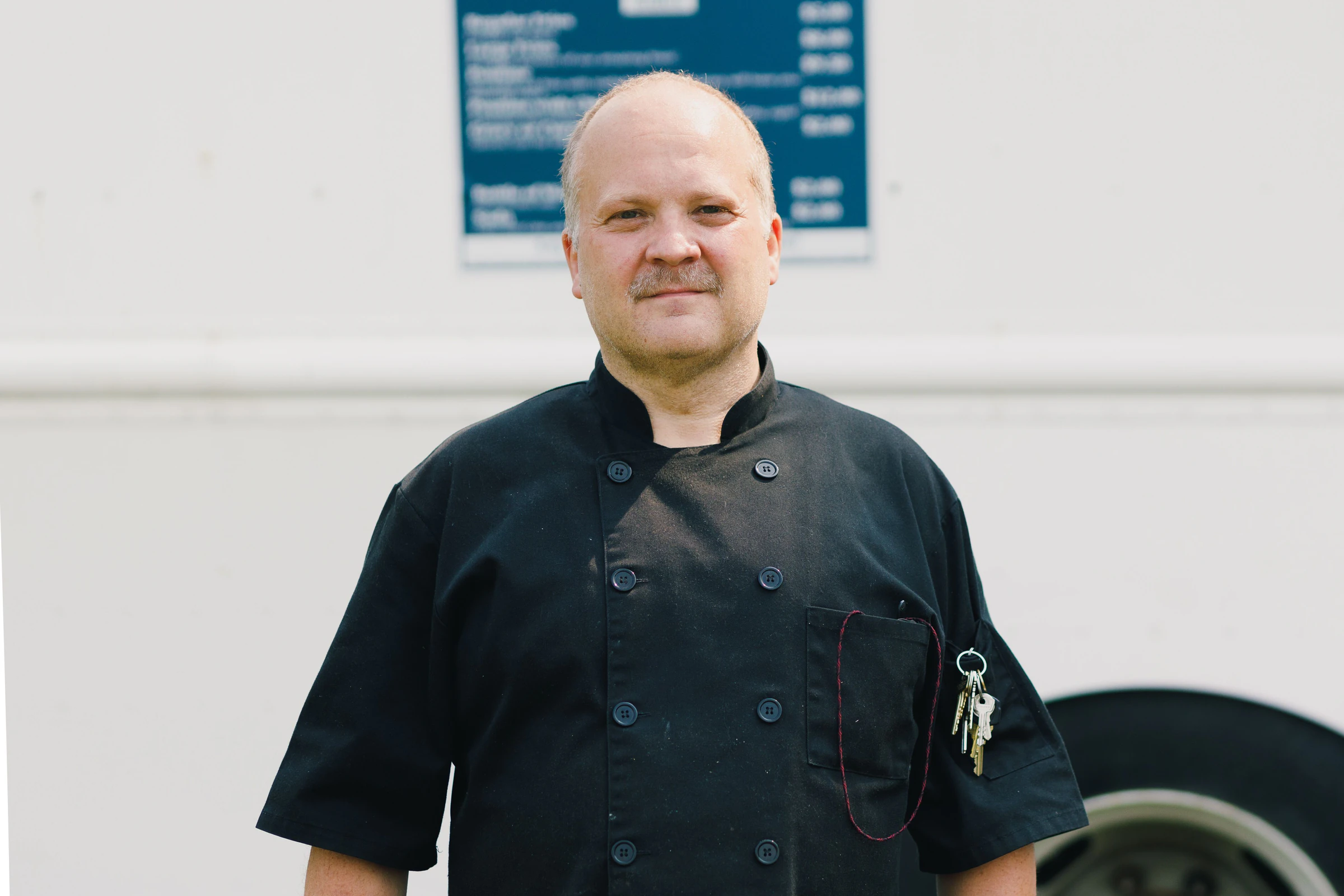
  • Black short-sleeve chef coat with mesh back vent and snap frontBlack short-sleeve chef coat
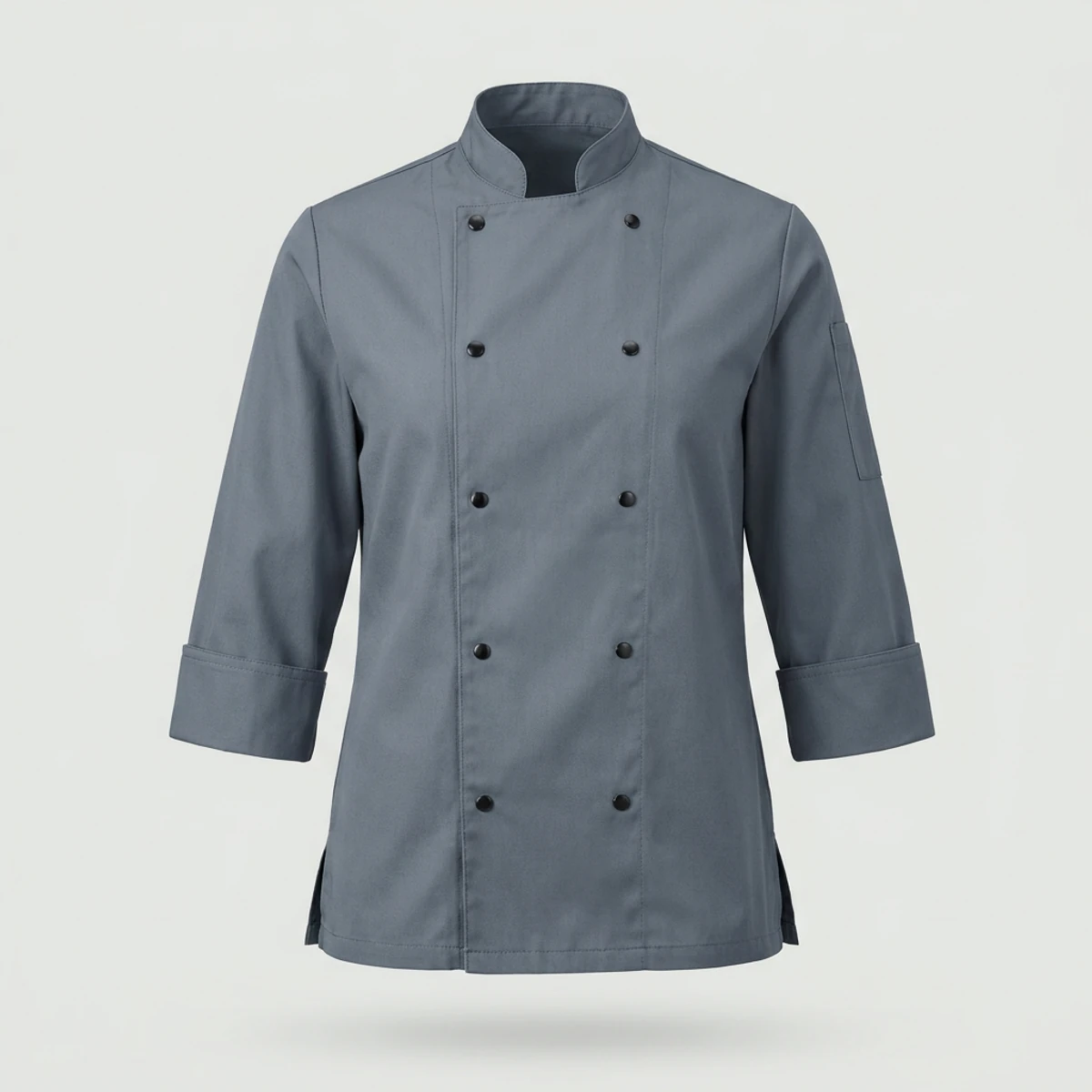
  • Grey three-quarter sleeve chef coat with double-breasted front and side ventsGrey three-quarter sleeve coat
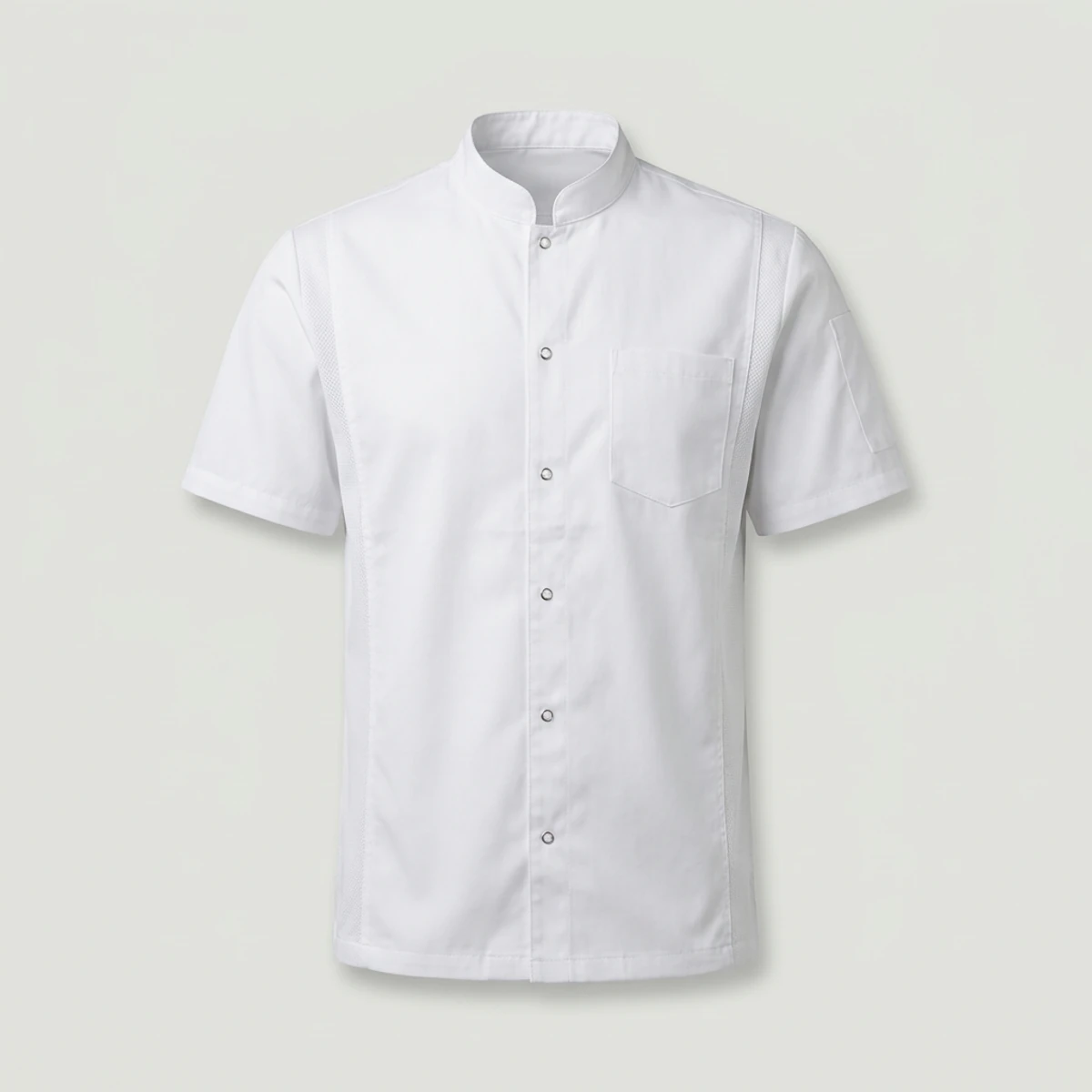
  • White short-sleeve cook shirt with mesh underarm panels and snap frontWhite vented cook shirt
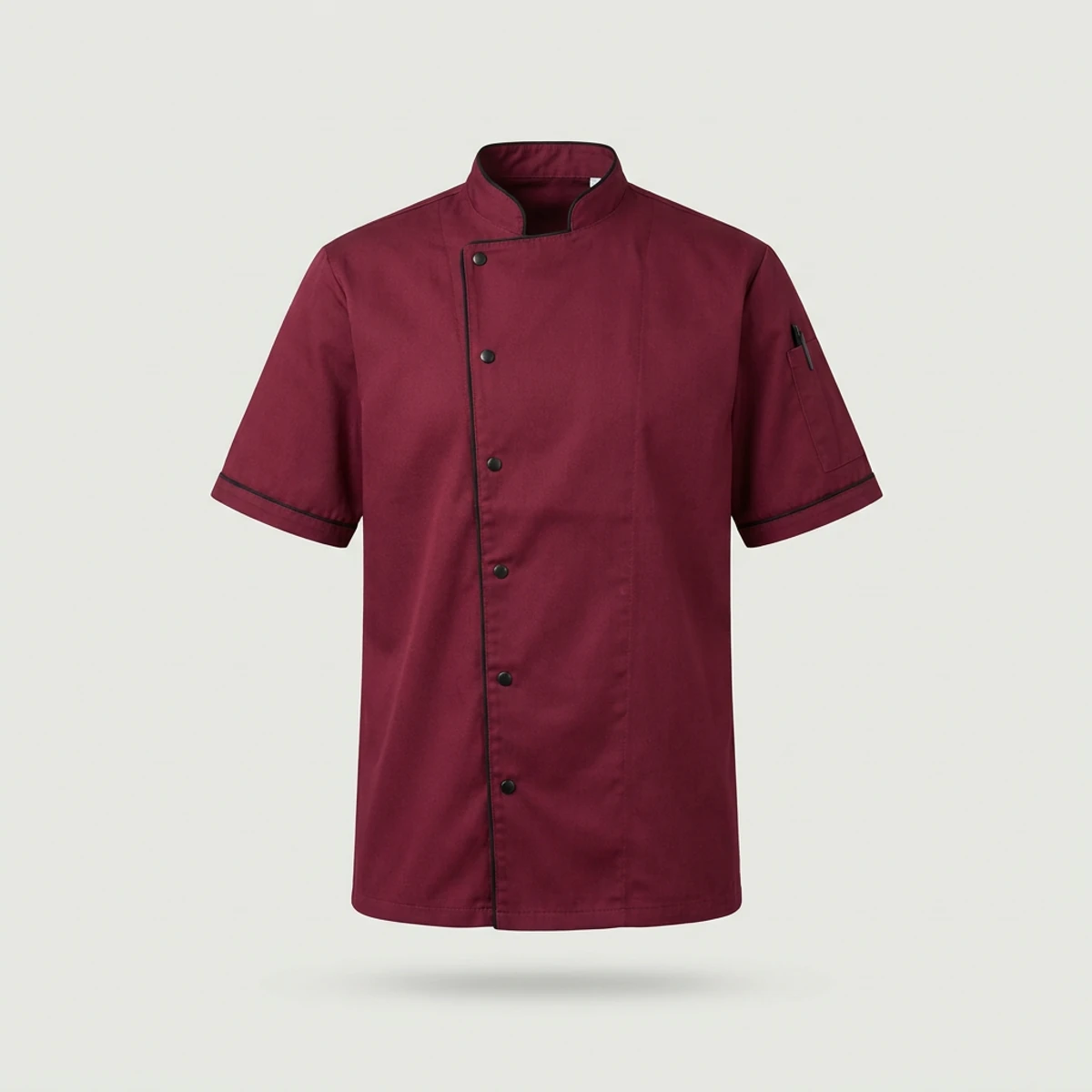
  • Burgundy short-sleeve chef coat with black piping and button frontBurgundy short-sleeve chef coat
Quote line cook coats
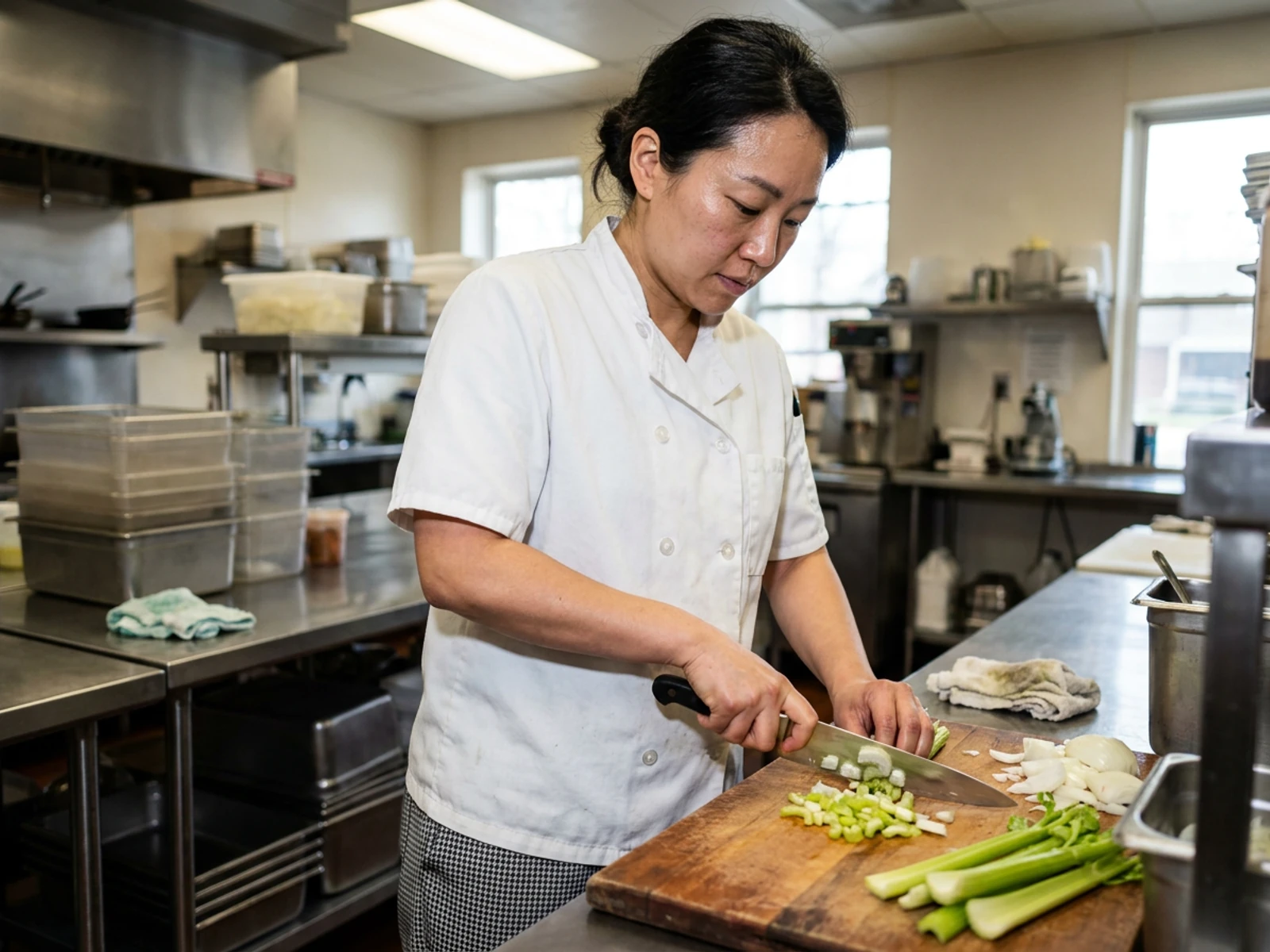
Prep cook in houndstooth chef pants chopping vegetables at a prep station

Custom chef pants

Chef pants have to survive bending, heat and constant washing through a long shift. We make baggy, cargo and jogger cuts with elastic or drawstring waists, in classic houndstooth, black or your own pattern.

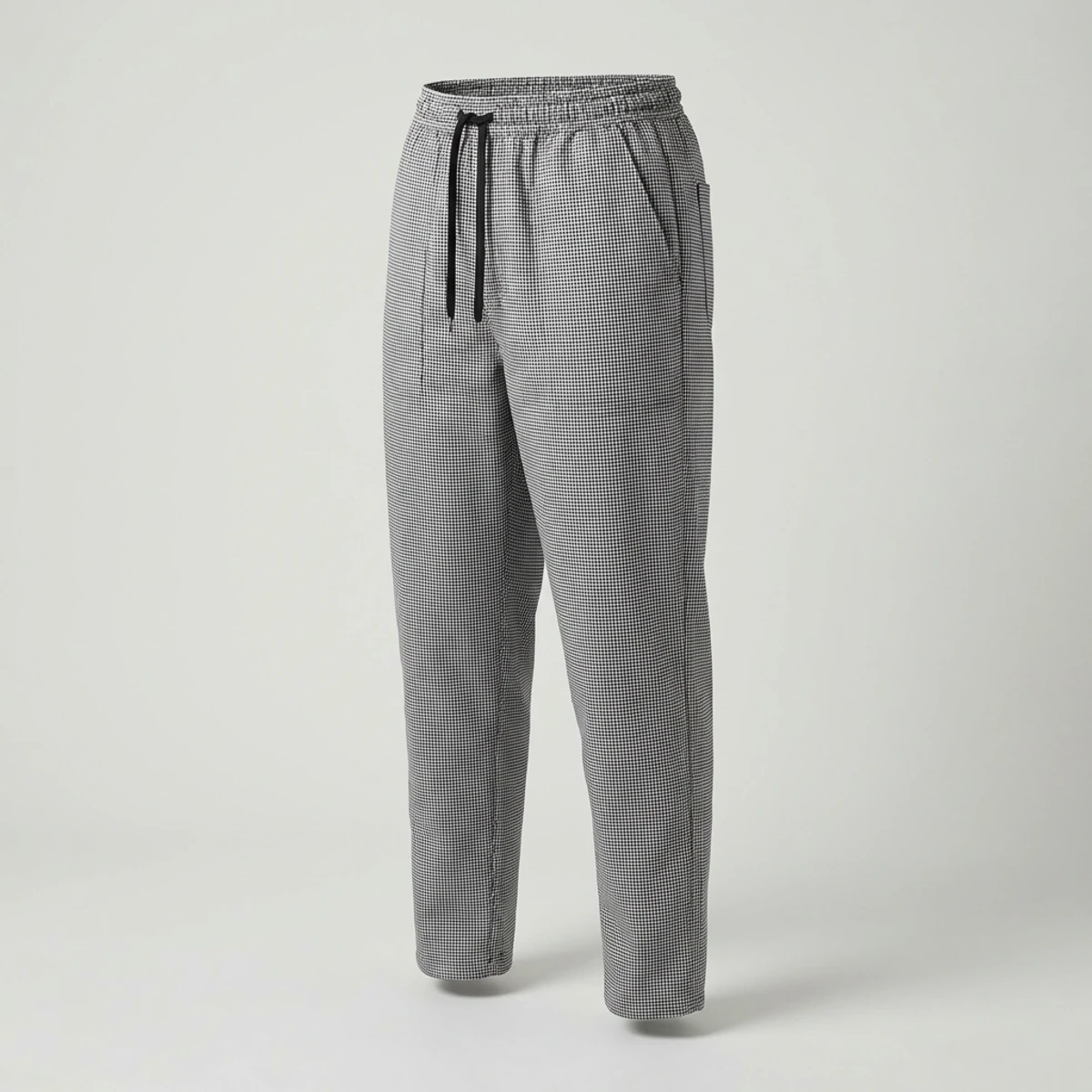
  • Black and white houndstooth chef pants with elastic drawstring waistHoundstooth chef pants
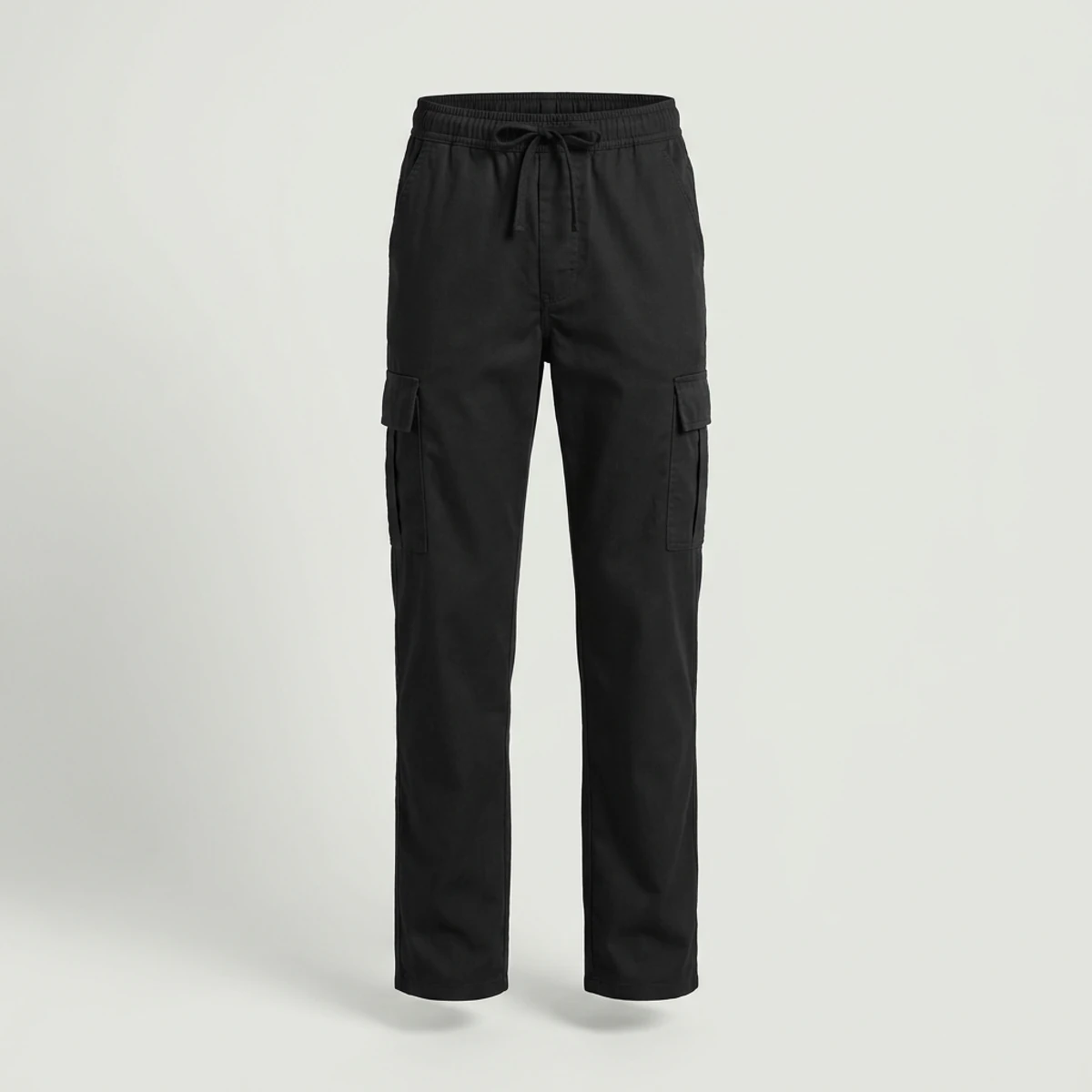
  • Black cargo chef pants with thigh pockets and elastic waistBlack cargo chef pants
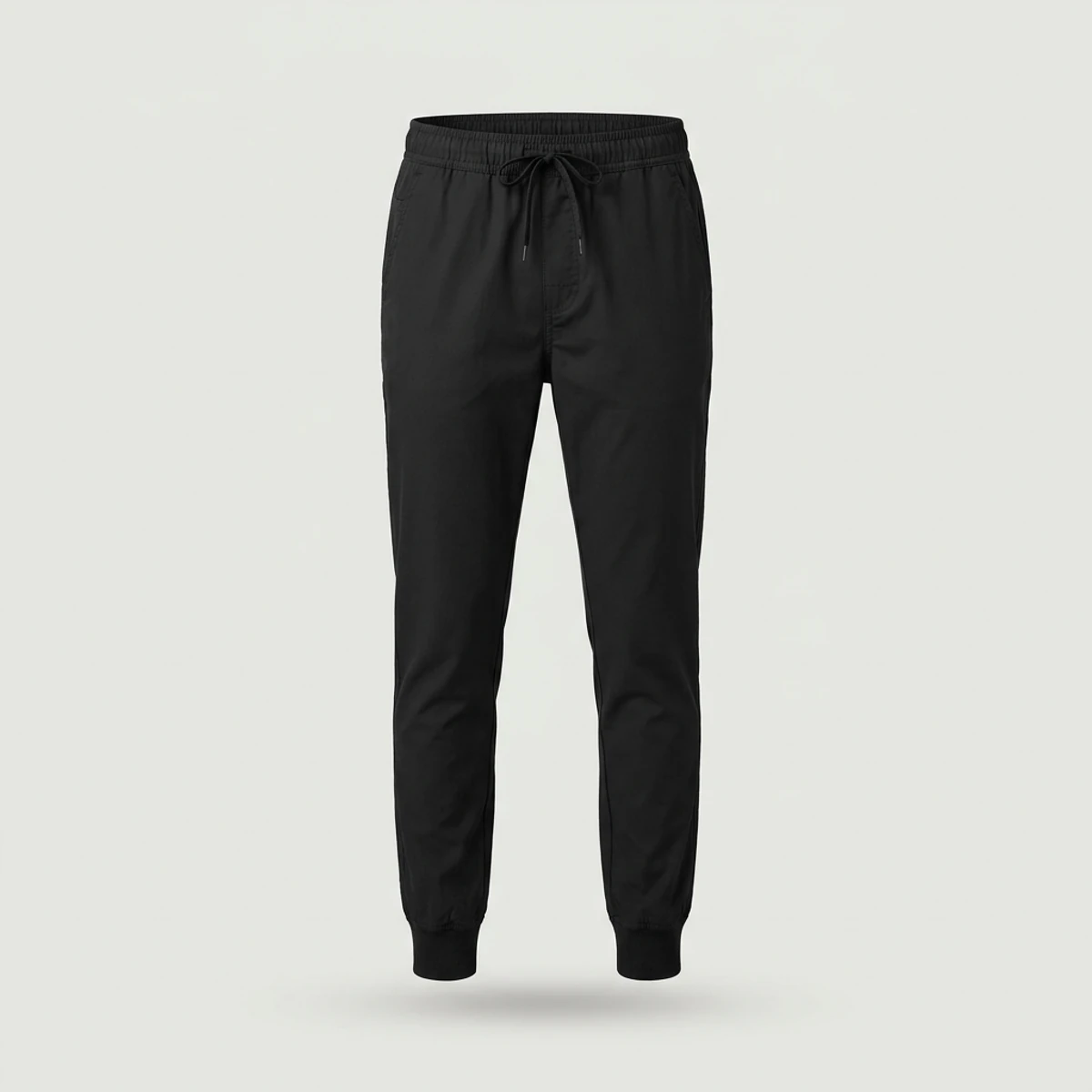
  • Black jogger chef pants with knit ankle cuffs and side pocketsBlack jogger chef pants
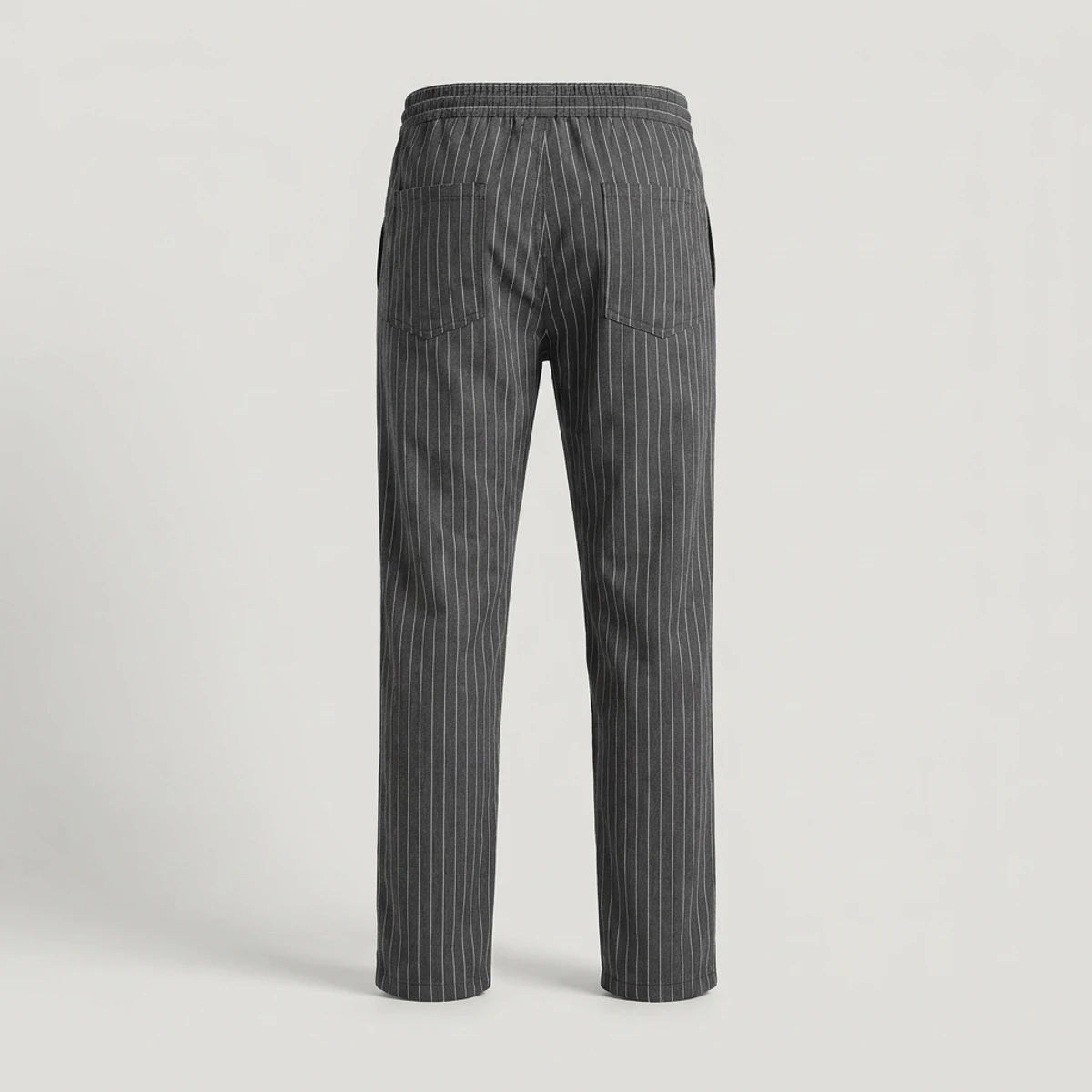
  • Charcoal pinstripe chef pants with relaxed fit and drawstringPinstripe chef pants
Quote chef pants
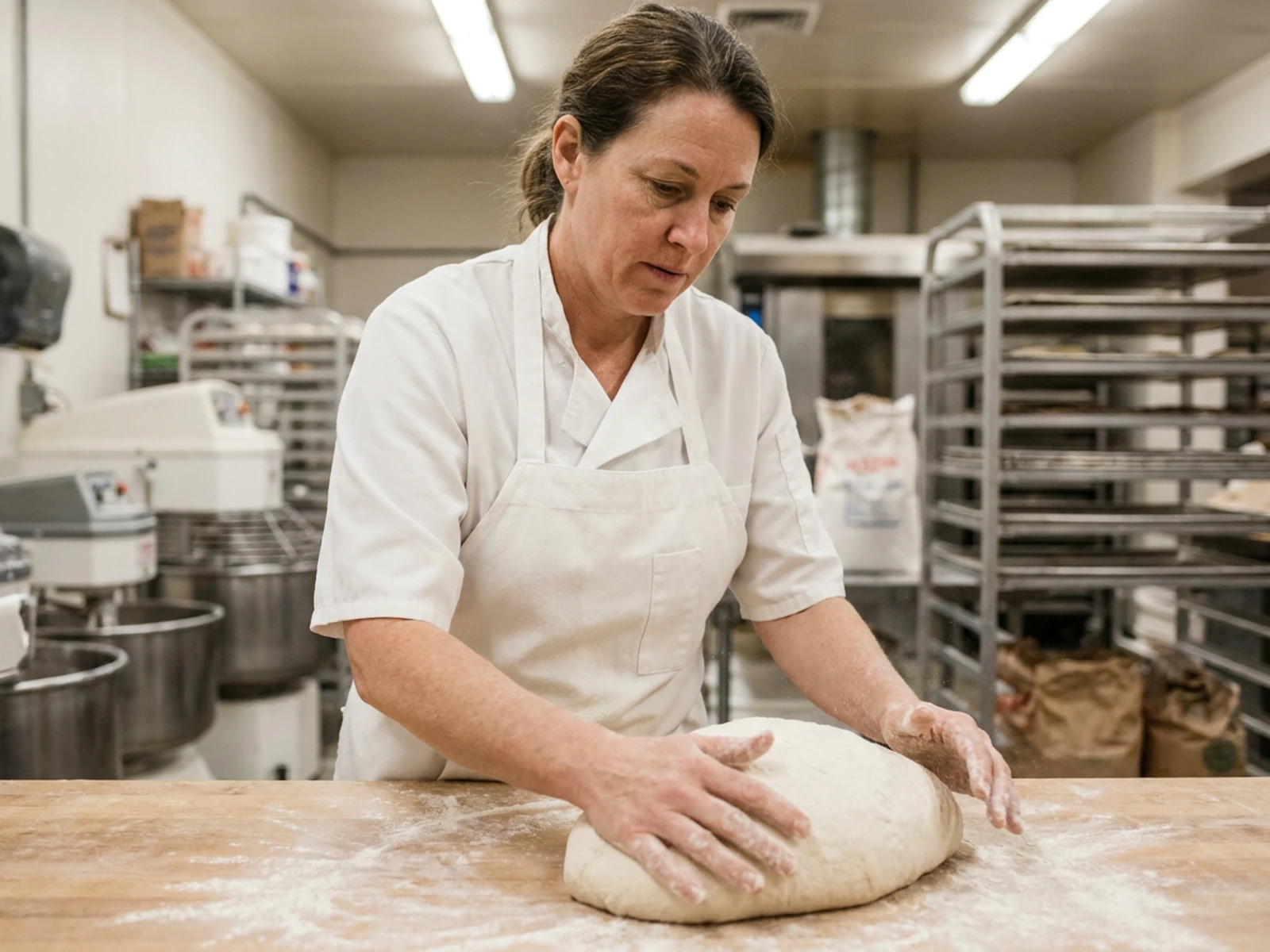
Baker in a white kitchen bib apron shaping dough at a bakery bench

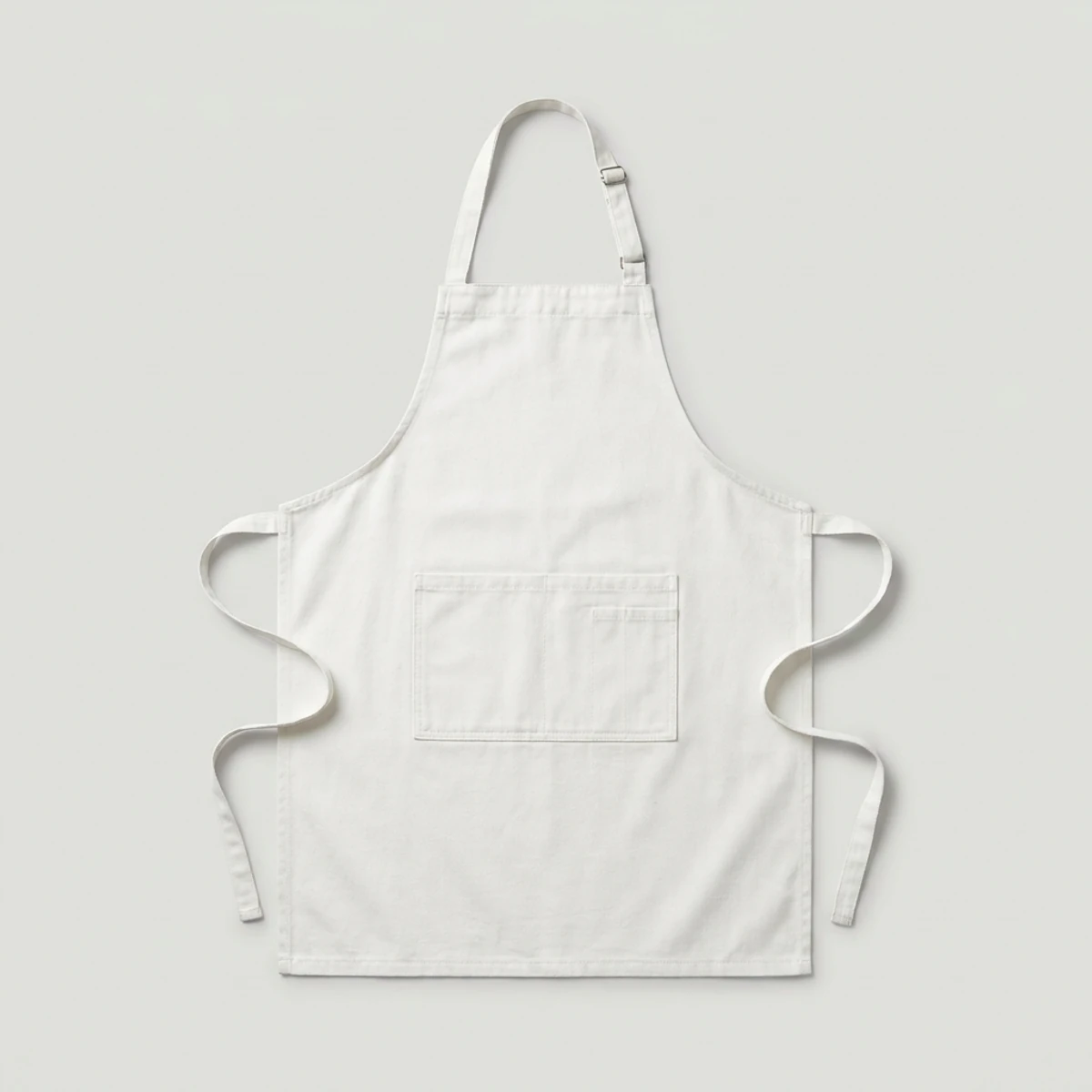
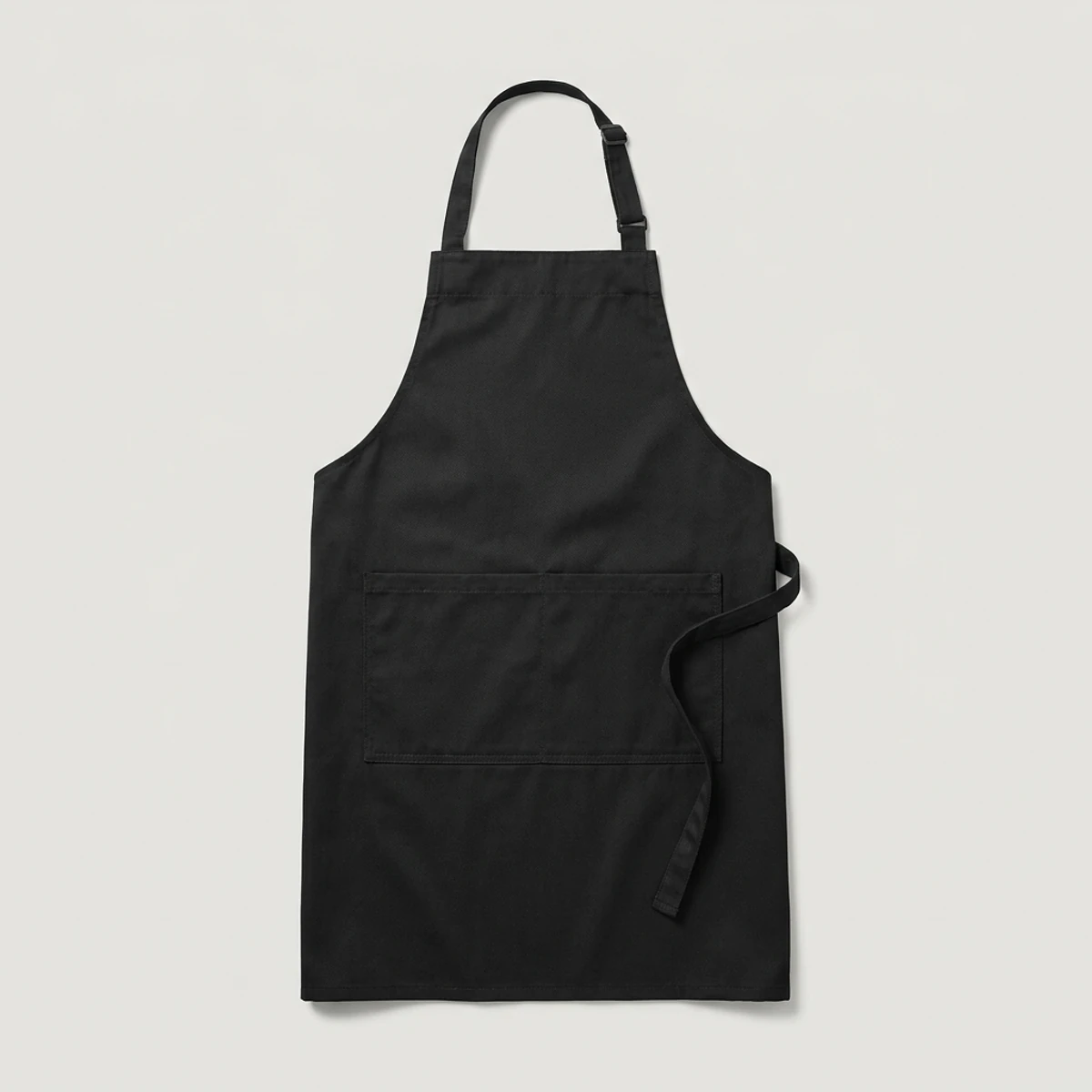
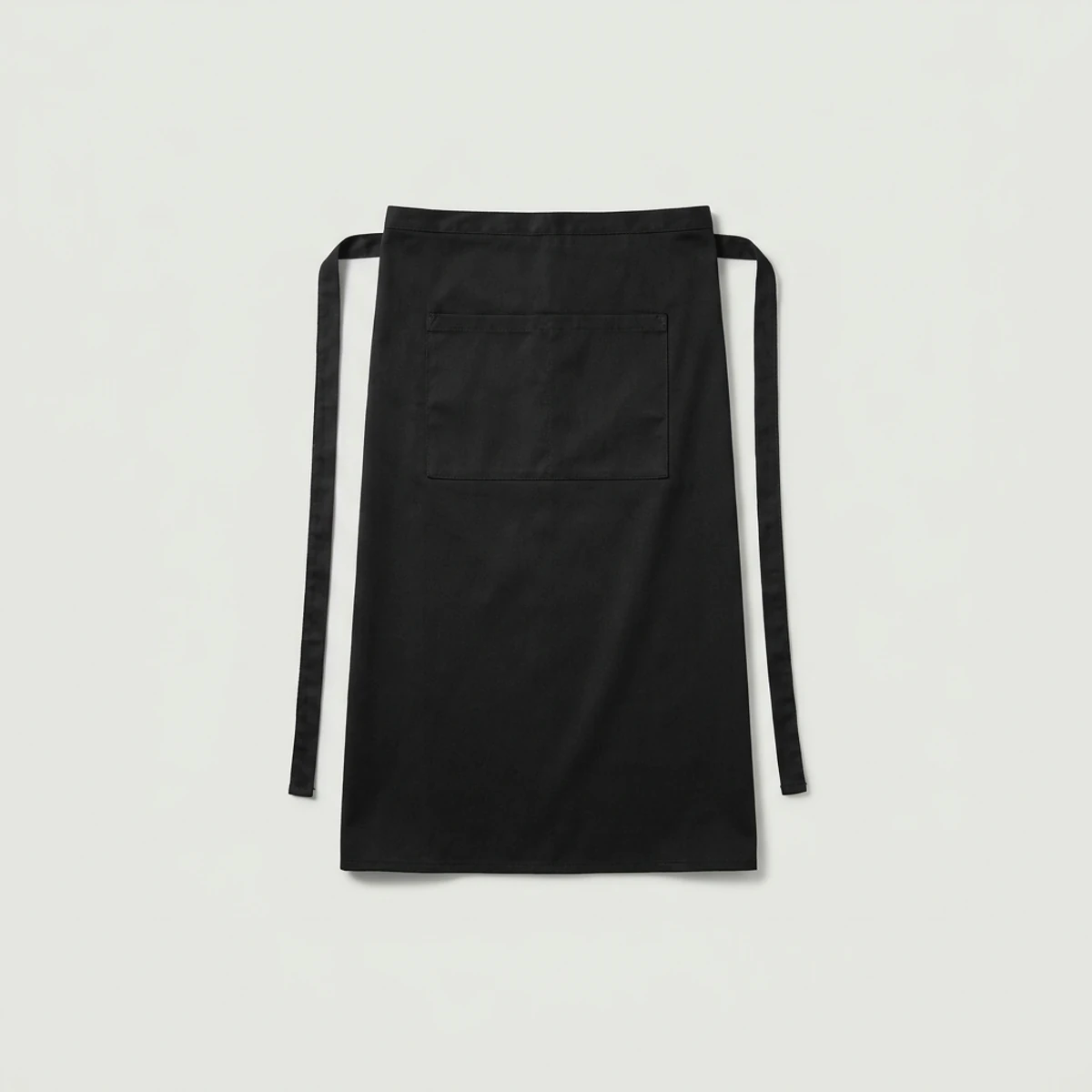
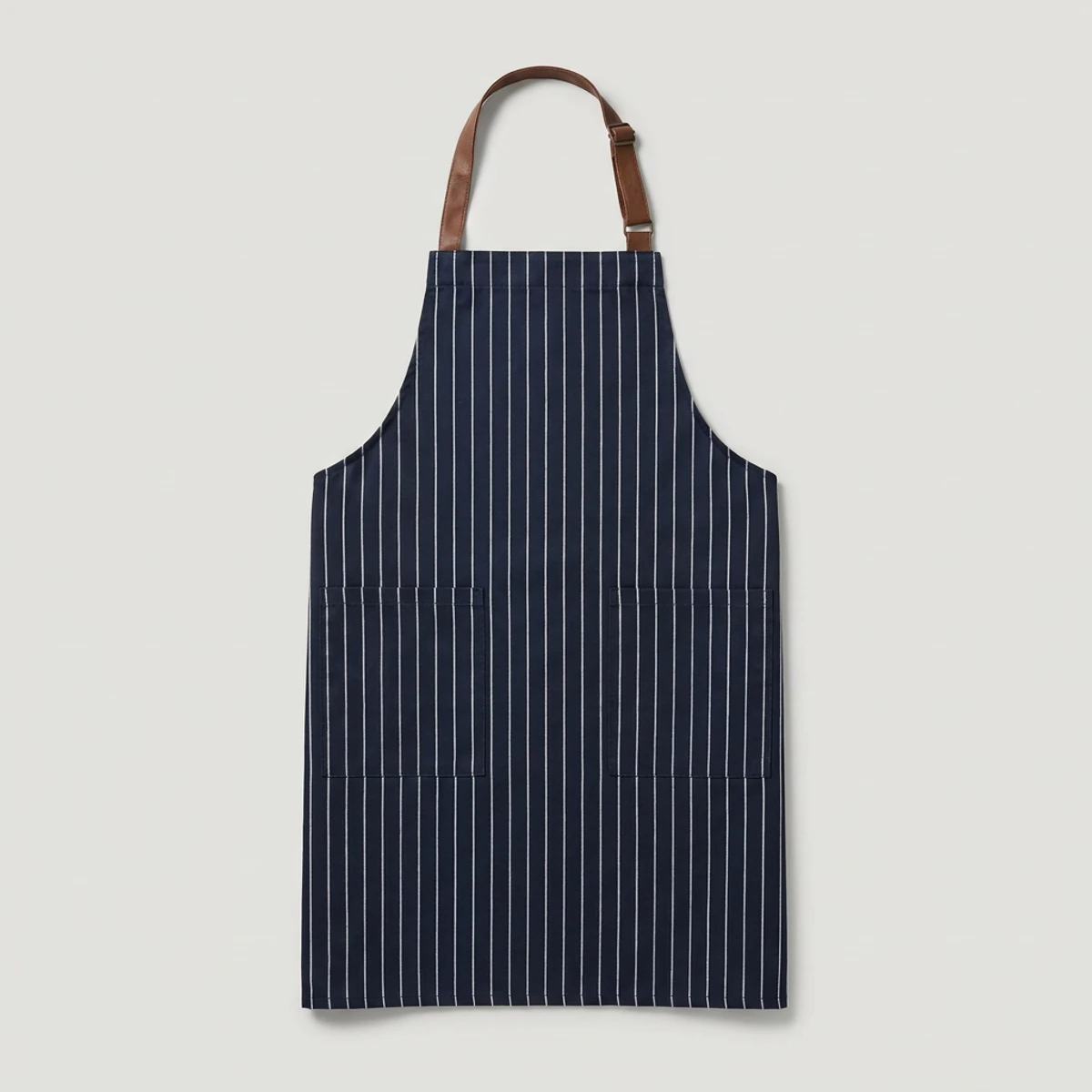
Kitchen aprons for chef teams

An apron finishes the chef uniform and takes the worst of the mess off the coat. We make bib and waist styles for kitchen teams in colors that coordinate with your coats and front-of-house look.

  • White kitchen bib apron with adjustable neck strap and center pocketWhite kitchen bib apron
  • Black chef bib apron with towel loop and double patch pocketsBlack kitchen bib apron
  • Black long bistro waist apron reaching the ankle with front pocketBlack long bistro apron
  • Navy pinstripe kitchen bib apron with leather-look neck strapNavy pinstripe bib apron
Quote kitchen aprons

Customize your chef coats

Pick the style, fabric and colors, add your logo and names, then attach the design to your quote. We cut and sew it in Los Angeles from 50 pieces per style.

What makes a good chef coat?

A good chef coat gets four details right for a hot, wet, fast kitchen: the closure, the collar and vents, the sleeves and the pockets. Fabric matters too, and custom chef coats let you choose each of these for the way your cooks actually work instead of accepting a catalog compromise.

Closure

Double-breasted coats give two layers of fabric over the chest for insulation and can be re-buttoned to hide a stain. Single-breasted or snap-front coats are lighter and quicker to put on. Cloth knot buttons survive hot washes, removable studs come off before laundering, and snaps are fastest of all.

Collar and vents

The mandarin (stand) collar is traditional and keeps sweat off the neck; collarless coats read more casual. Mesh back panels, underarm gussets or lighter side panels help on hot lines at the cost of a slightly less formal look.

White double-breasted executive chef coat with cloth knot buttons and long sleeves

Sleeves

Long sleeves protect forearms from splatter and burns. Short or three-quarter sleeves keep cuffs out of food and suit pastry and prep work. Turn-back cuffs let cooks shorten a long sleeve without bunching.

Pockets

A thermometer or pen pocket on the sleeve or chest is standard, and an inside phone pocket is a frequent request. Keep pockets clear of where an apron ties.

A standard kitchen coat is not flame-resistant protective equipment unless it is made from certified FR fabric. For kitchens with an open-flame hazard that your safety program has assessed, see our FR clothing page.

Chef coat fabrics compared

Fabrics for kitchen coats trade breathability against durability: cotton breathes best, poly-cotton survives frequent hot washing, stretch blends move with the body and mesh-paneled blends run coolest on hot lines. Choose by how the coats will be laundered first and by how hot the kitchen runs second.

FabricComfort near heatLaunderingLookGood fit for
100% cottonBreathable, absorbs sweatWrinkles; may shrink if dried hotClassic, matteFine dining, executive chefs
Poly-cotton blendGood, slightly less breathableWrinkle-resistant, holds up to frequent hot washesCrisp, consistent colorHigh-volume kitchens, hotels, caterers
Stretch blend (with spandex)Flexible, moves with the bodyDry at lower heat to protect stretchModern, tailoredOpen kitchens, chef-driven brands
Lightweight blend with mesh panelsCoolest option on hot linesMesh needs gentle handlingSportyLine cooks, pizza and grill stations

We confirm current fabric options and colors at quote stage and sew a sample so you can wear-test it on a real shift.

Tip: White coats look sharp in an open kitchen but show every mark. If your coats will be seen by guests mid-service, consider black or charcoal for line cooks and keep white for the executive chef.

Which chef coat suits each kitchen role?

Each kitchen role suits a different coat: executive chefs usually wear a tailored double-breasted coat, line cooks a lighter vented one, and pastry teams a short-sleeve coat in light fabric. Most kitchens settle on one or two coat styles and use embroidery to show names and titles rather than ordering a style per role.

RoleWhat usually works
Executive chefDouble-breasted, long sleeve, tailored fit, tonal or contrast embroidery
Line cooksLightweight or vented coat, short or three-quarter sleeve, easy-care fabric
Pastry and prepShort sleeve, light fabric, simple closure
Open kitchens and chef’s tablesBrand-color coats or contrast piping that match the dining room
Culinary studentsClassic white double-breasted coat, durable fabric, name embroidery

Each style has its own minimum of about 50 pieces. Cooks on the hottest stations who find any coat too heavy often switch to lightweight chef shirts in the same color.

Custom chef pants for long shifts

Custom chef pants need a comfortable waist, a leg that lets air move, a stain-hiding color and deep pockets, because cooks bend, squat, lift and stand for ten hours or more. Chef pants can match the coat fabric or contrast with it, and both carry your logo or private label.

  • Waist. Elastic or drawstring for comfort through a long shift; flat-front and belted for a sharper look.
  • Leg. A relaxed leg keeps fabric off hot surfaces; tapered and jogger cuts suit younger teams.
  • Pattern. Black, gray, small checks or houndstooth hide stains. We confirm fabric availability for your pattern.
  • Pockets. Deep side pockets and a back pocket for towels and tools.
Black short-sleeve chef coat with mesh back vent and snap front

Women’s chef coats and fit

A women’s chef coat has a shaped body, narrower shoulders and often a shorter sleeve, so it does not hang boxy on cooks who find men’s coats too wide. Kitchen teams range from slim pastry cooks to broad-shouldered butchers, so a single unisex cut rarely fits everyone well.

Read more

When we develop coats with you, we check shoulder and chest ease for reaching across a pass, body length that stays over the apron string when bending, and sleeves that roll without bunching. Women’s and men’s cuts can be matched in fabric and color; we confirm the size range for each style at quote stage.

Black and white houndstooth chef pants with elastic drawstring waist

Personalized chef coats

A personalized chef coat carries the cook’s name, and often a title such as executive chef or sous chef, stitched on the right chest opposite the restaurant logo. Embroidery is the standard for chef wear because thread survives hot, frequent laundering better than most prints.

Read more

Left chest logo, right chest name and a sleeve flag or restaurant name are the usual placements. Contrast piping, colored buttons or collar trim give a coat a signature look without extra stitching. Names can be added to reorders for new hires, and our custom embroidery service explains thread choices and sizing.

White kitchen bib apron with adjustable neck strap and center pocket

Bulk chef coats for restaurant groups and hotels

Bulk chef coats for restaurant groups, hotels and caterers work best as one program: one coat style and one pant style across every location, with outlet names embroidered on the sleeve. Complete chef uniforms usually combine a coat, pants and an apron, so colors and logos should match across all three.

Read more

Front-of-house teams often wear coordinated aprons with your logo in the same brand colors. Our restaurant uniforms page plans front and back of house together, and our hotel uniforms page covers banquet and room-service teams.

Do culinary schools and chef wear brands need different chef uniforms?

Culinary schools and chef wear brands need different chef uniforms from a restaurant. Schools want one classic, durable uniform repeated every term; brands want original designs that stand out under their own label. Both still start from the same 50-piece minimum per style.

Read more

Culinary schools usually choose a white double-breasted coat, check or black pants and sometimes an apron and neckerchief, with name embroidery for each student. Because enrollment repeats, keeping specs on file for reorders matters as much as the first order.

Chef wear brands need their own patterns, fabrics, color stories and trims. We develop the style through custom garment manufacturing, sample it, and produce it under your own labels and hang tags through our private label program.

How do you care for chef coats?

Kitchen coats last longest when stains are treated quickly, coats are washed at the temperature the care label allows, chlorine bleach is kept off colors and embroidery, and poly-cotton is dried at moderate heat. Clean coats are also a food-safety matter, not only a matter of looks.

Read more

The FDA Food Code, which state and local health departments adopt, expects food employees to wear clean outer clothing, so plan enough coats for a clean one each shift. We put care instructions on every label, including private label orders.

What determines the cost of custom chef coats?

The cost of custom chef coats depends on the fabric, the quantity per style, the coat’s construction, the decoration, any personalization and the labels and packaging. No prices are listed here, because every order is quoted on its actual fabric, artwork and quantity.

Cost driverHow it moves the unit priceHow to keep it in check
FabricStretch, mesh-paneled and premium cotton fabrics usually cost more than standard poly-cottonChoose fabric for your kitchen heat and laundering
Quantity per styleLarger runs spread cutting, setup and sampling across more coatsUse one or two coat styles for the whole kitchen
ConstructionDouble-breasted fronts, knot buttons, vents and extra pockets add sewing timeKeep the details your cooks use
DecorationStitch count, thread colors and number of locations add time per coatOne chest logo plus a sleeve mark at most
PersonalizationIndividual names and titles add handling per coatSend one clean name list with sizes
Labels and packagingCustom neck labels, hang tags and individual bagging add componentsStandard finishing for staff uniforms

How does a chef coat order work?

A chef coat order runs in five steps: brief, style and fabric choice, sample approval, production and reorder. The sample is stitched with your logo in place, so placement and thread colors are approved on a real coat before the full run is cut.

  1. 01

    Brief us

    on your team size, roles, kitchen conditions and brand colors, and send your logo.
  2. 02

    Choose styles and fabric

    We recommend cuts and confirm fabric options.
  3. 03

    Approve a sample

    with your embroidery placed and stitched.
  4. 04

    Production

    in our Los Angeles factory from about 50 pieces per style.
  5. 05

    Reorder

    for new hires using the specs we keep on file.

Ask us for current lead times when you request a quote, especially ahead of an opening date.

Ready to order

What to send us for a quote

A complete chef uniform quote needs roles and headcount, garments per role, style preferences, colors, logo files, laundering method and your opening date. The more of this list you send first, the faster we can price it and confirm whether a sample is needed.

  • Roles and headcount. executive chef, sous chefs, line, pastry, dishwashing, front of house.
  • Garments per role. coat, pants, apron, and how many changes each cook needs per week.
  • Style preferences. double- or single-breasted, sleeve length, closures, vents; photos of coats you like help.
  • Colors and patterns. brand colors, contrast piping, and pant patterns such as black, gray or checks.
  • Logo files. in vector format, plus a name and title list if you want personalization.
  • How you launder. in-house, a linen service, or staff take uniforms home.
  • Opening or launch date. , so we can tell you what timing is realistic.
What mistakes do kitchens make when ordering chef uniforms?

The most common chef uniform mistakes are choosing coats by look alone, ordering too few changes per cook, ignoring the linen service, oversizing embroidery and forgetting front of house. Each one is easy to avoid at the brief stage and costly after a full run.

  1. Choosing coats by look alone

    A heavy cotton coat that looks great at a photo shoot can be unbearable on a summer grill line. Wear-test the sample during service.
  2. Underestimating changes

    Cooks often need a clean coat every shift. Order enough per person, or coats are laundered harder and wear out sooner.
  3. Ignoring the linen service

    Industrial washing is hot and harsh. If a linen service will launder your coats, choose a fabric built for it.
  4. Oversized embroidery

    A large, dense logo on a lightweight coat can pucker and feel stiff.
  5. Forgetting front of house

    Matching aprons for servers and bartenders finish the brand look for little extra planning.

Questions about chef wear

Need something not covered here? Ask our Los Angeles team and we’ll answer with options for your order.

Ask our Los Angeles team

Why are chef coats double-breasted?

The double layer of fabric across the chest adds insulation against stove heat and splashes. It also lets a cook re-button the front on the other side to hide a stain before stepping into the dining room. Single-breasted coats are lighter and suit fast, hot lines where cooling matters more.

What is the best fabric for a chef coat?

Poly-cotton blends are the common choice for busy kitchens because they resist wrinkles and survive frequent hot washes. Cotton-rich fabric breathes well and feels softer near heat. Stretch blends suit cooks who want an athletic fit. We help you weigh comfort against laundering and confirm fabric options at quote.

Can chef coats be made in colors other than white?

Yes. Black and charcoal are popular for line cooks because they hide marks, and many restaurants choose a brand color or contrast piping so the kitchen matches the dining room. We confirm the fabric colors available for your style at quote stage and match reorders to the approved sample.

What is the minimum order for custom chef coats?

About 50 pieces per style. Bulk chef coats for a restaurant group usually means one coat style for the whole kitchen and a separate pant or apron style. We confirm how sizes and colors can be split within each style's minimum when we quote.

Do you make chef pants with elastic waists?

Yes, chef pants can be made with an elastic or drawstring waist, a relaxed leg for airflow and deep pockets. We can also make a flat-front, belted kitchen pant for a more tailored look. Tell us how your cooks work and we will recommend a cut.

Chef WearCut & sewn in Los Angeles · from 50 pieces per styleRequest samplesGet a quote