


Scrubs · Los Angeles factory

Custom Lab Coats for Clinics and Labs

A lab coat is a long, button- or snap-front professional coat worn over clothing or scrubs by physicians, pharmacists, researchers and lab staff. Custom Uniform Factory cuts and sews custom lab coats in its Los Angeles factory from imported fabric, in white or your colors and lengths from consultation to full length, with embroidered names, credentials and logos, from about 50 pieces per style.

Smiling female doctor in glasses wearing a white lab coat over teal scrubs on a white background
Minimum order
About 50 pieces per style
Production
Cut & sewn in Los Angeles, imported fabric
Lengths
Consultation, staff and full length
Sizes
Women's, men's and unisex fits; size range confirmed at quote stage

Lab Coats by style

16 styles in 4 families · each made to order in your fabric, color and branding from 50 pieces.

Customize your scrubsYour fabric, colors, pockets and branding
Physician in a white consultation lab coat talking with a colleague in an outpatient clinic

Consultation-length lab coats

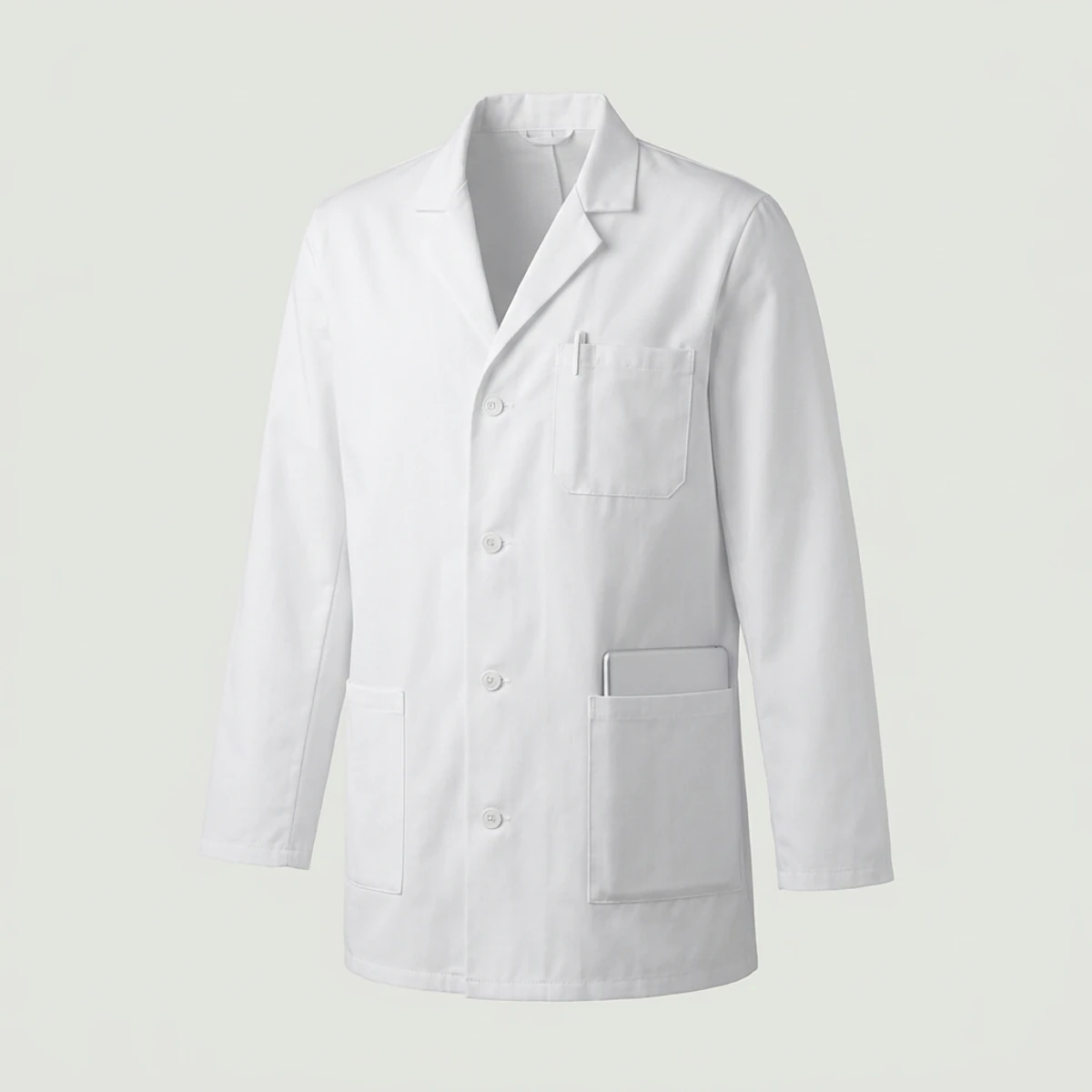
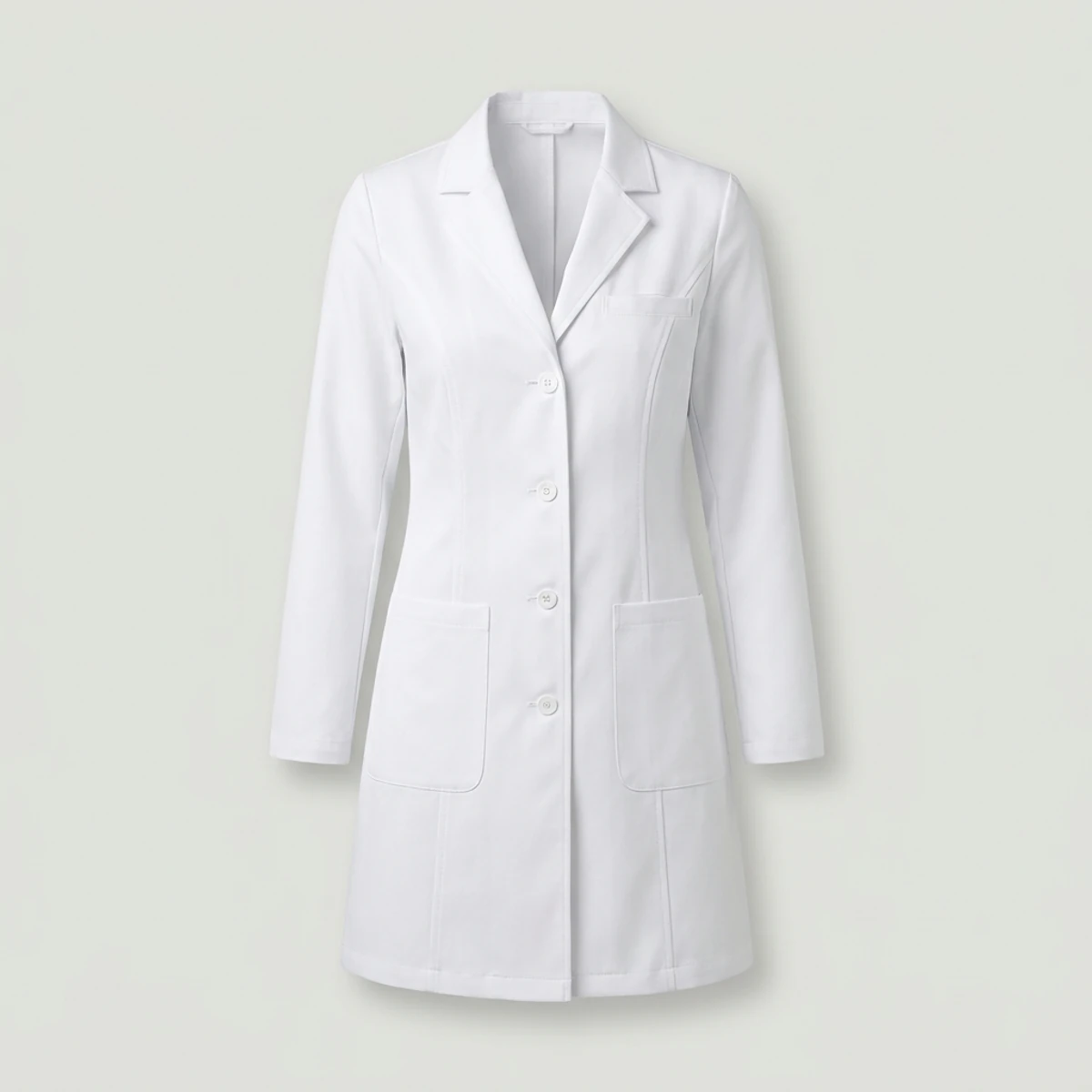
A hip-length coat is the practical choice for outpatient clinicians and students who move between exam rooms through a shift. We cut it with a notched lapel, button or snap front and the classic three-pocket layout, embroidered with names and titles from about 50 pieces.

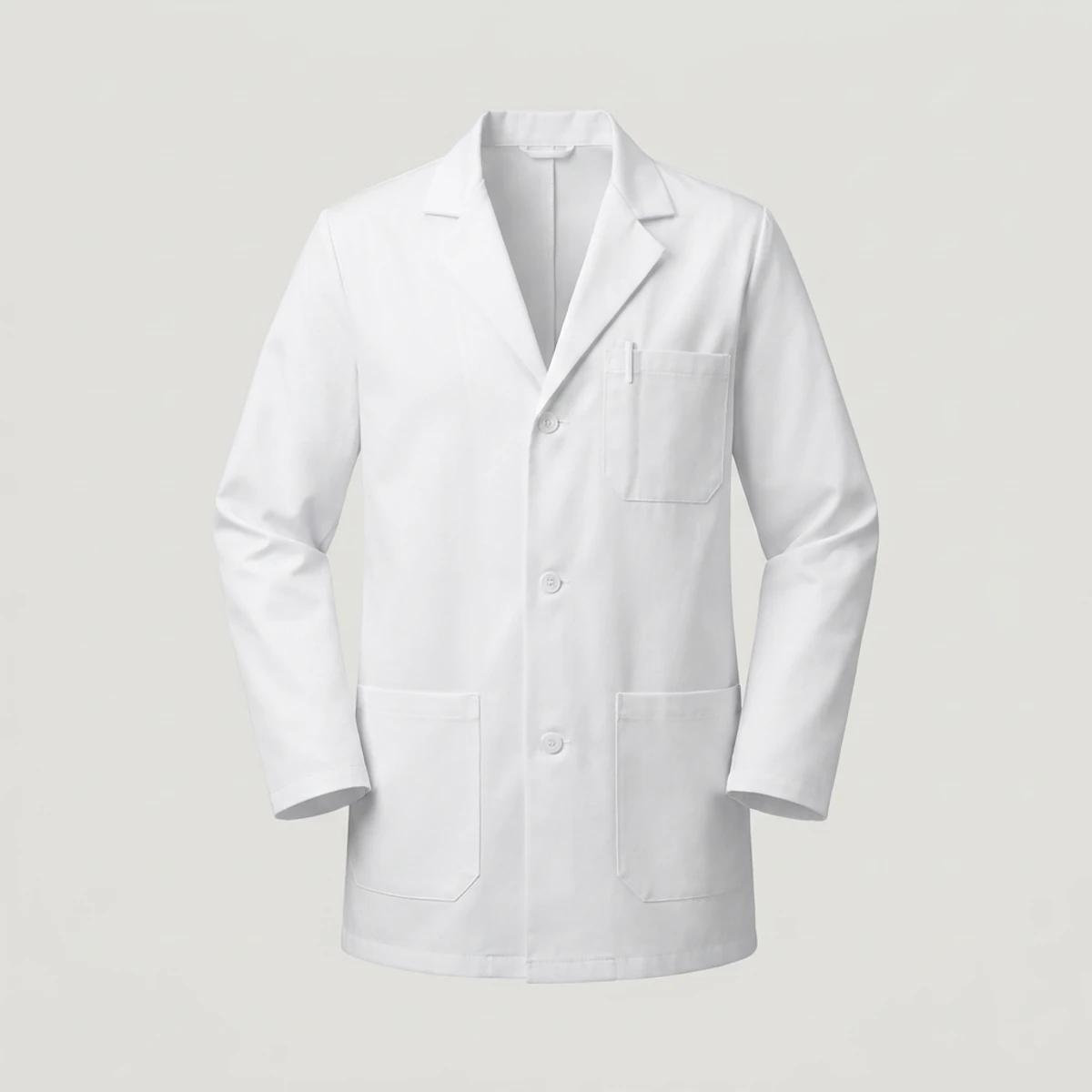
  • White hip-length consultation lab coat with notched lapel and three pocketsWhite consultation lab coat
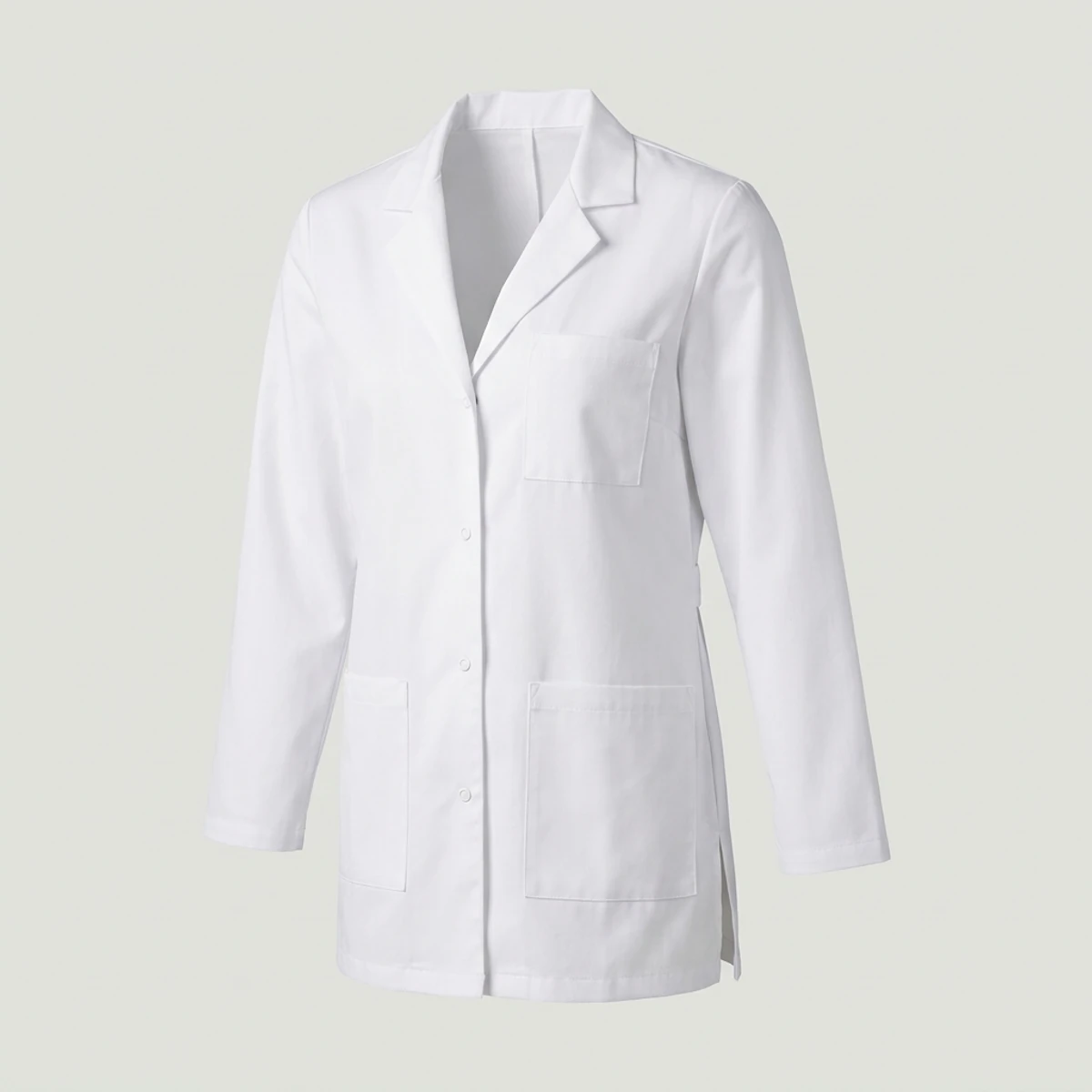
  • White snap-front consultation lab coat with side pass-through slitsWhite snap-front lab jacket
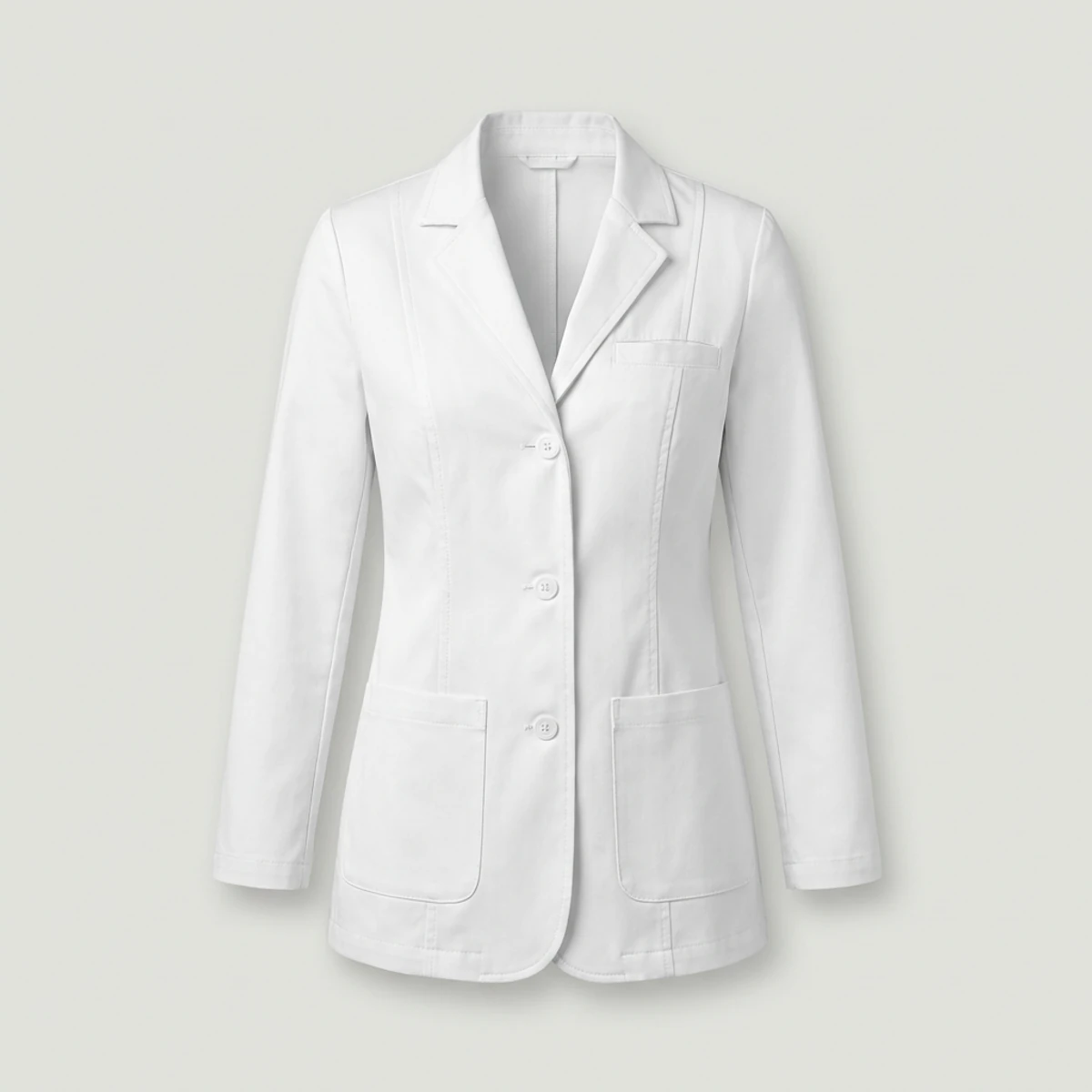
  • Women's fitted white consultation lab coat with princess seams and back dartsWomen's fitted consultation coat
  • Men's white consultation lab coat with enlarged lower pocket for a tabletMen's lab coat, tablet pocket
Quote consultation length
Pharmacist in a white mid-thigh staff lab coat checking medication on hospital pharmacy shelves

Mid-thigh staff lab coats

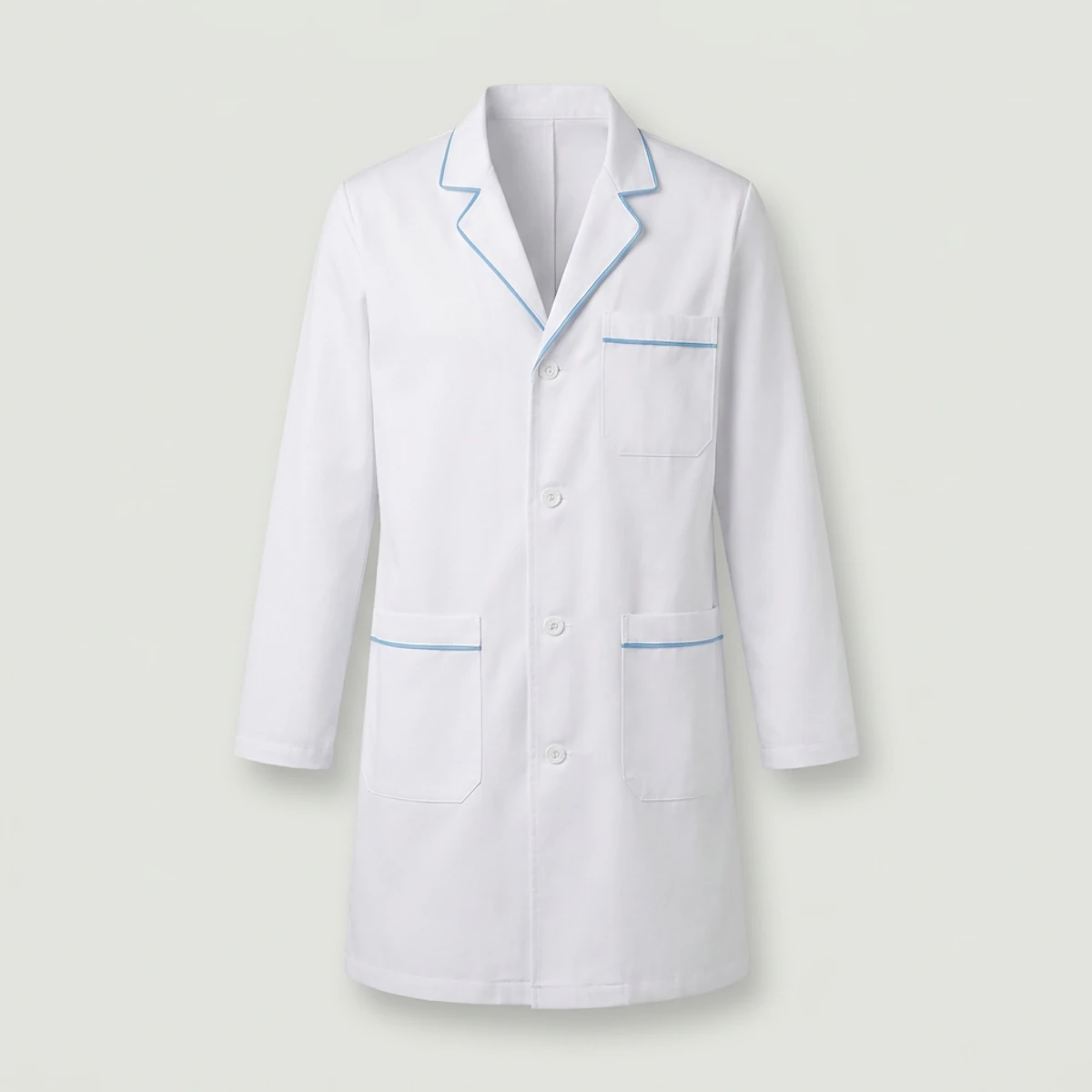
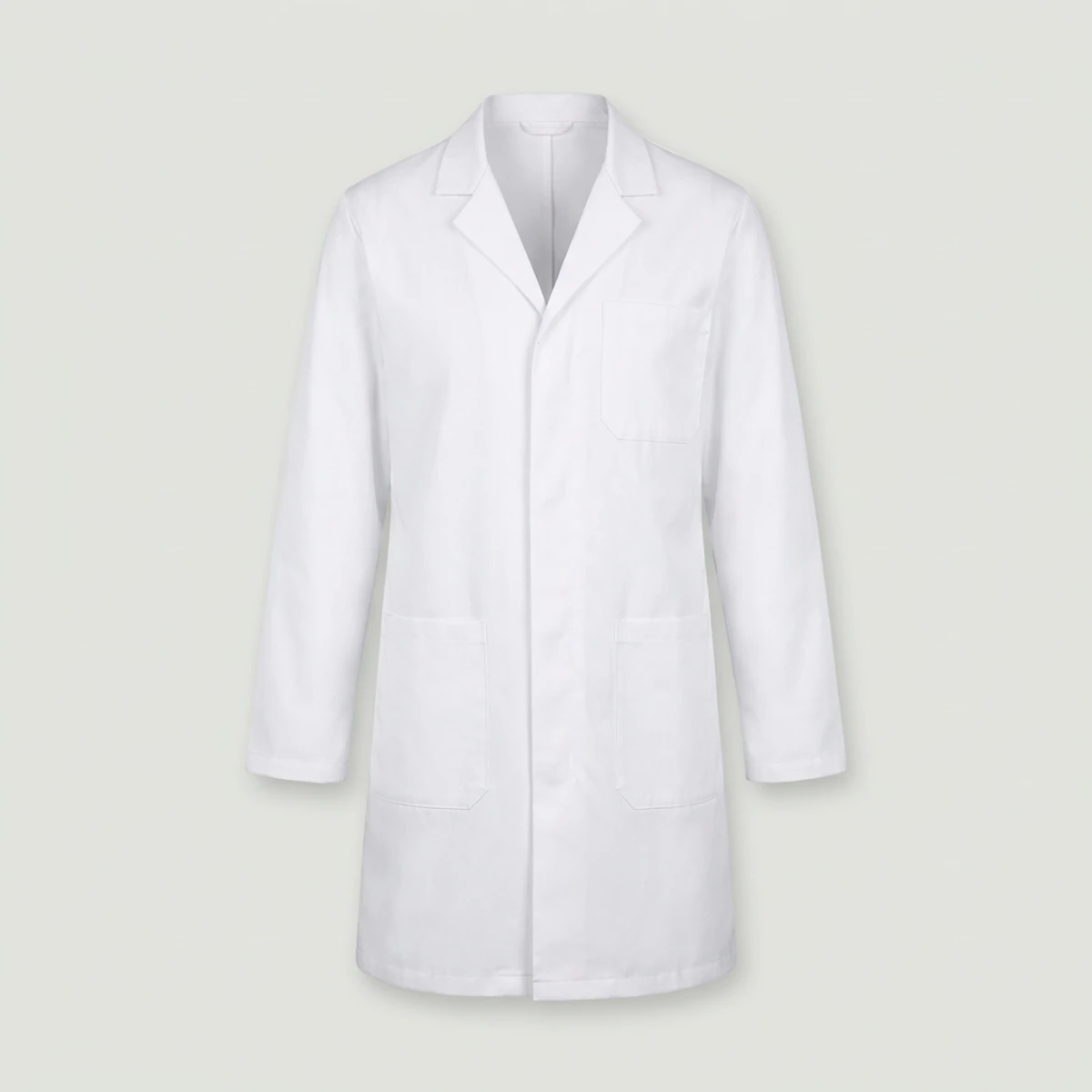
Mid-thigh is the length most hospital physicians and pharmacists expect. We add the details your clinicians ask for, such as an inside phone pocket, side slits to reach scrub pockets, and a back belt to shape the coat.

  • White mid-thigh staff lab coat with notched lapel and back half beltWhite staff lab coat
  • Women's mid-thigh white staff lab coat with princess seams and tailored waistWomen's staff lab coat
  • White mid-thigh lab coat with ceil blue piping on lapels and pocketsLab coat with ceil piping
  • White mid-thigh lab coat with concealed snap placket and chest pocketWhite snap-front staff coat
Quote staff length
Lab technologist in a white knee-length lab coat pipetting samples at a laboratory bench

Knee-length laboratory coats

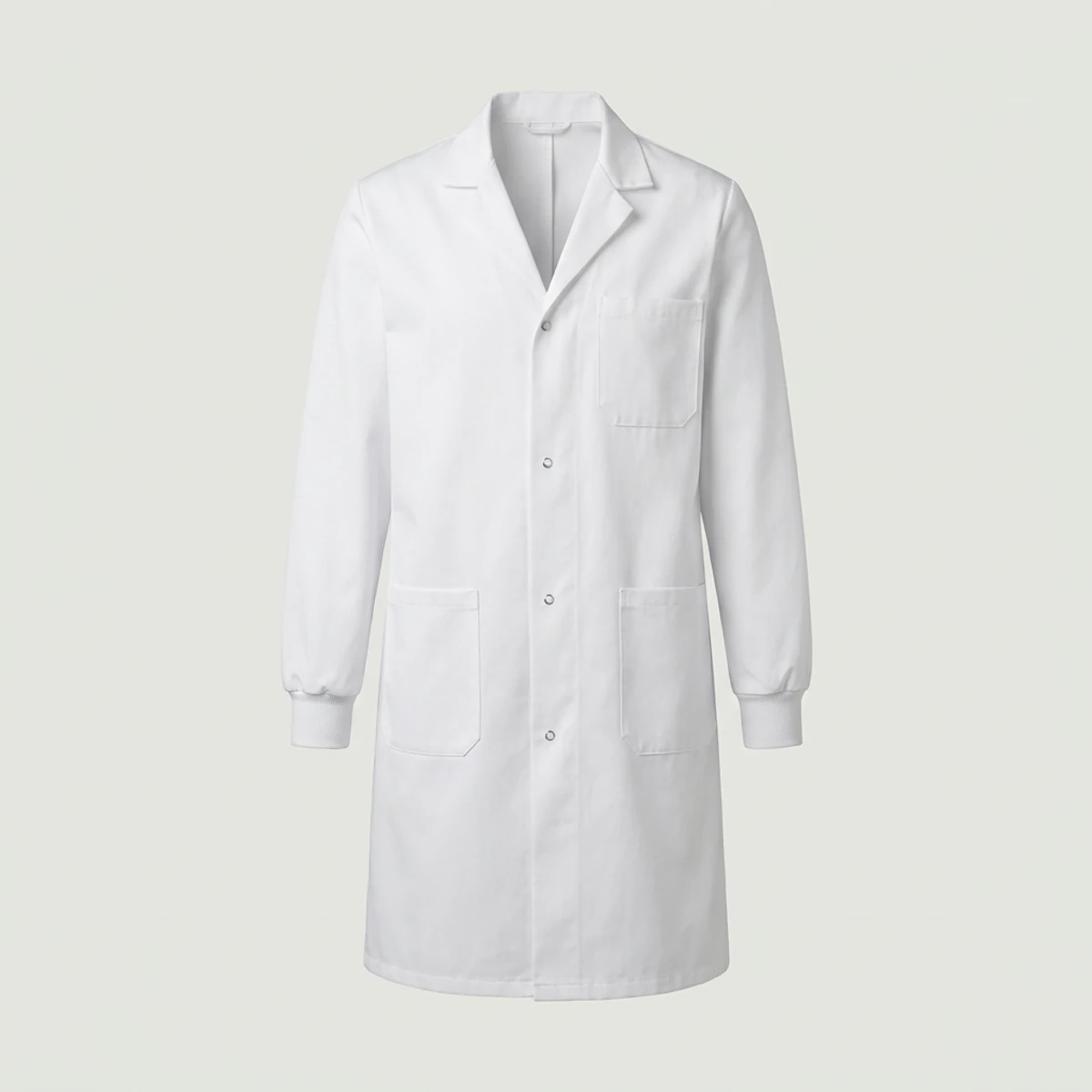
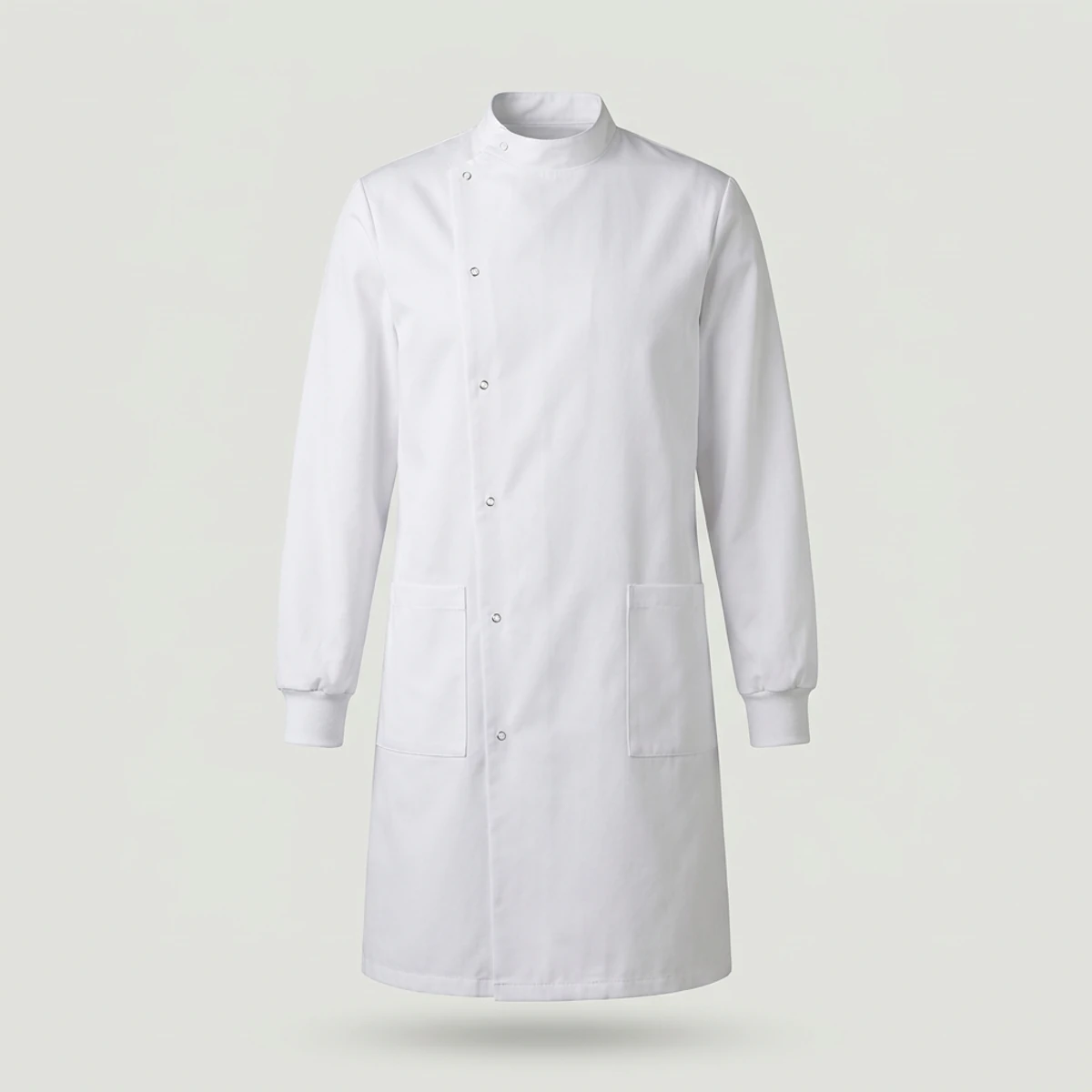
Laboratory staff and senior physicians often want full coverage to the knee. For bench work we can add knit cuffs that keep sleeves away from work surfaces and a higher closure at the neck.

  • White knee-length laboratory coat with knit cuffs and snap frontWhite knee-length lab coat
  • White knee-length lab coat with stand collar and side snap closureStand-collar lab coat
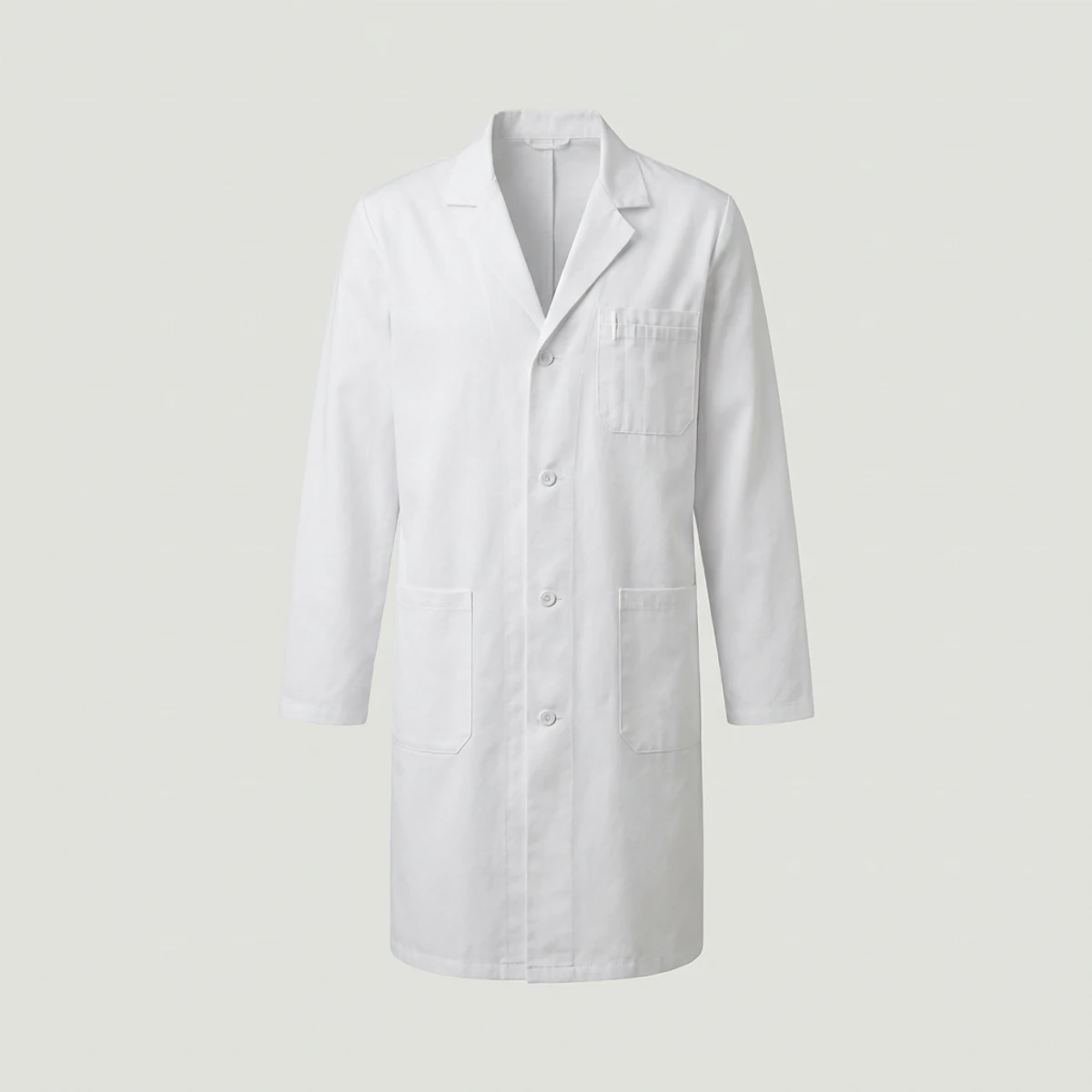
  • White knee-length lab coat with five-button front and back ventClassic button knee-length coat
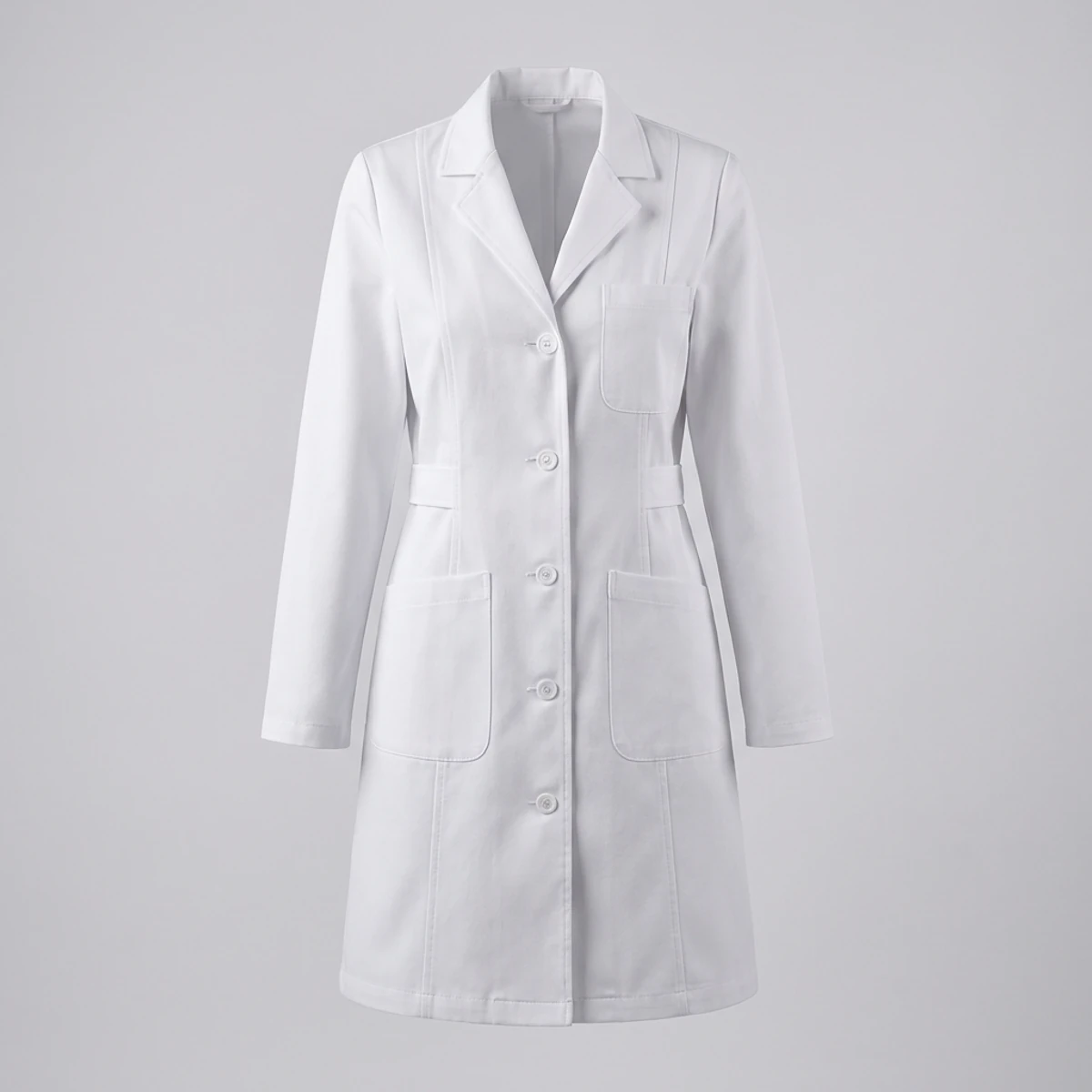
  • Women's fitted white knee-length lab coat with back belt and princess seamsWomen's knee-length lab coat
Quote full length
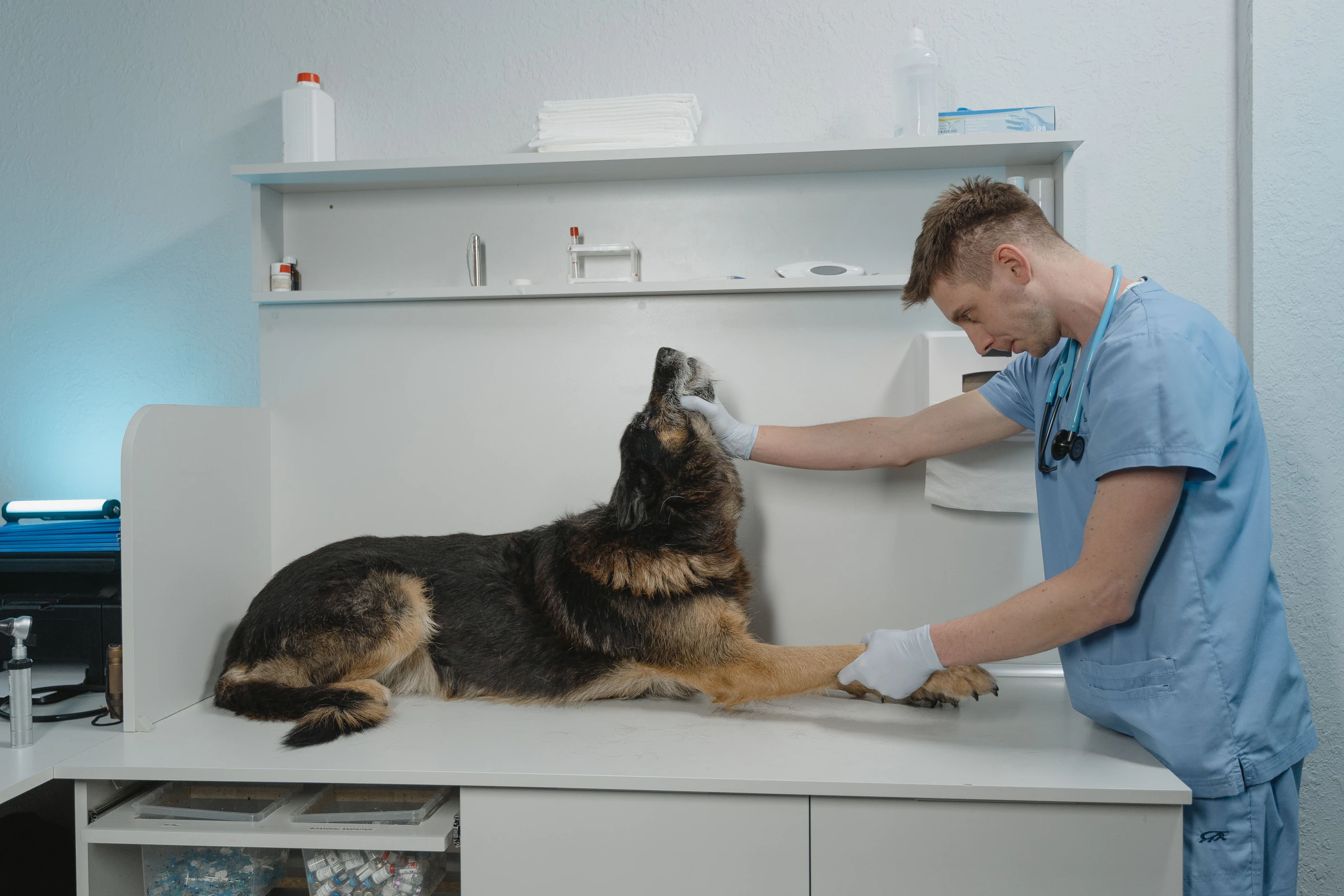
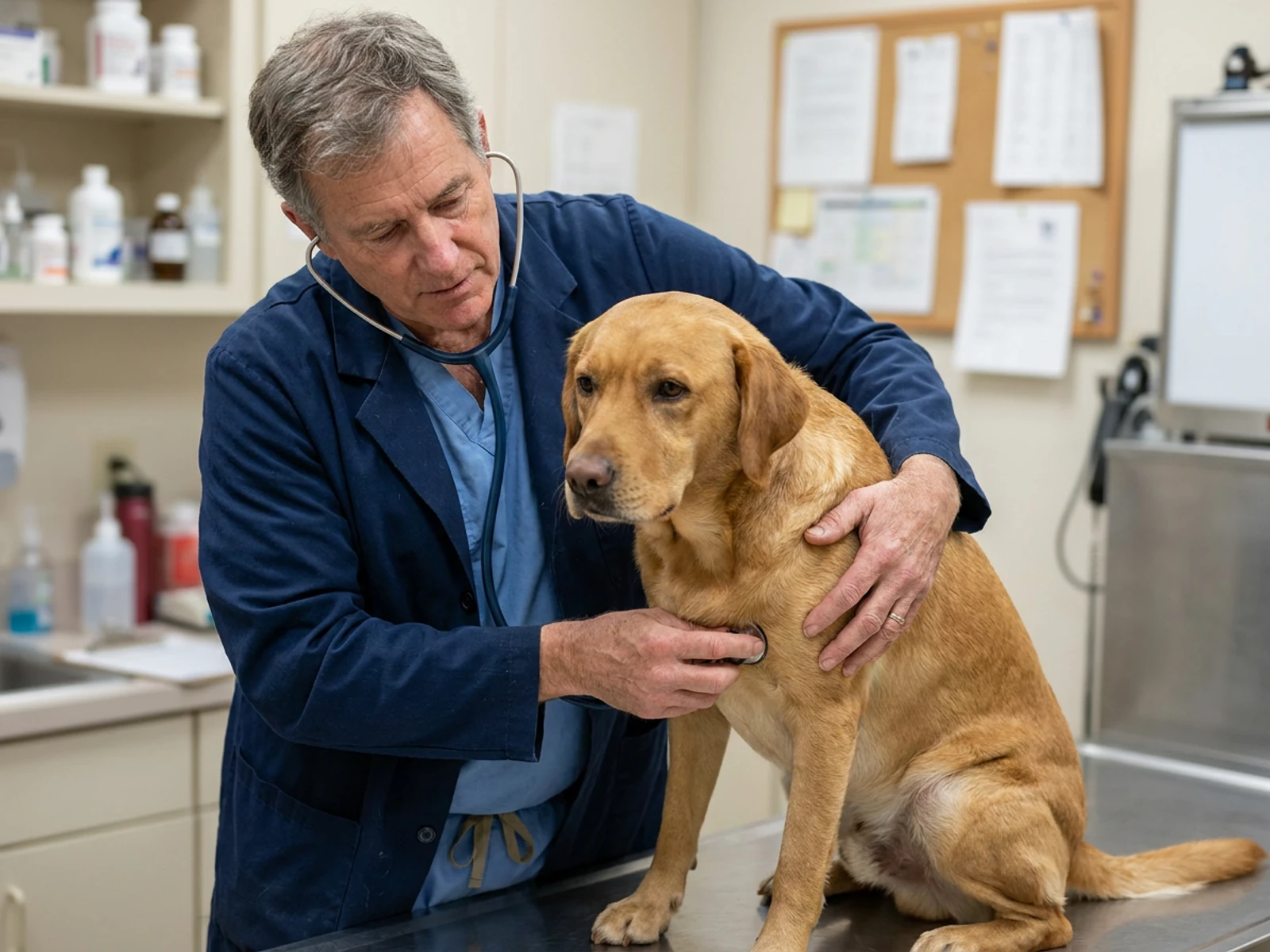
Veterinarian in a navy consultation lab coat examining a dog on an exam table

Colored and women's fit lab coats

Colored coats help separate roles, and they hide wear better in busy clinics and veterinary practices. We match the coat color to your scrubs or brand palette and offer women's cuts in the same fabric.

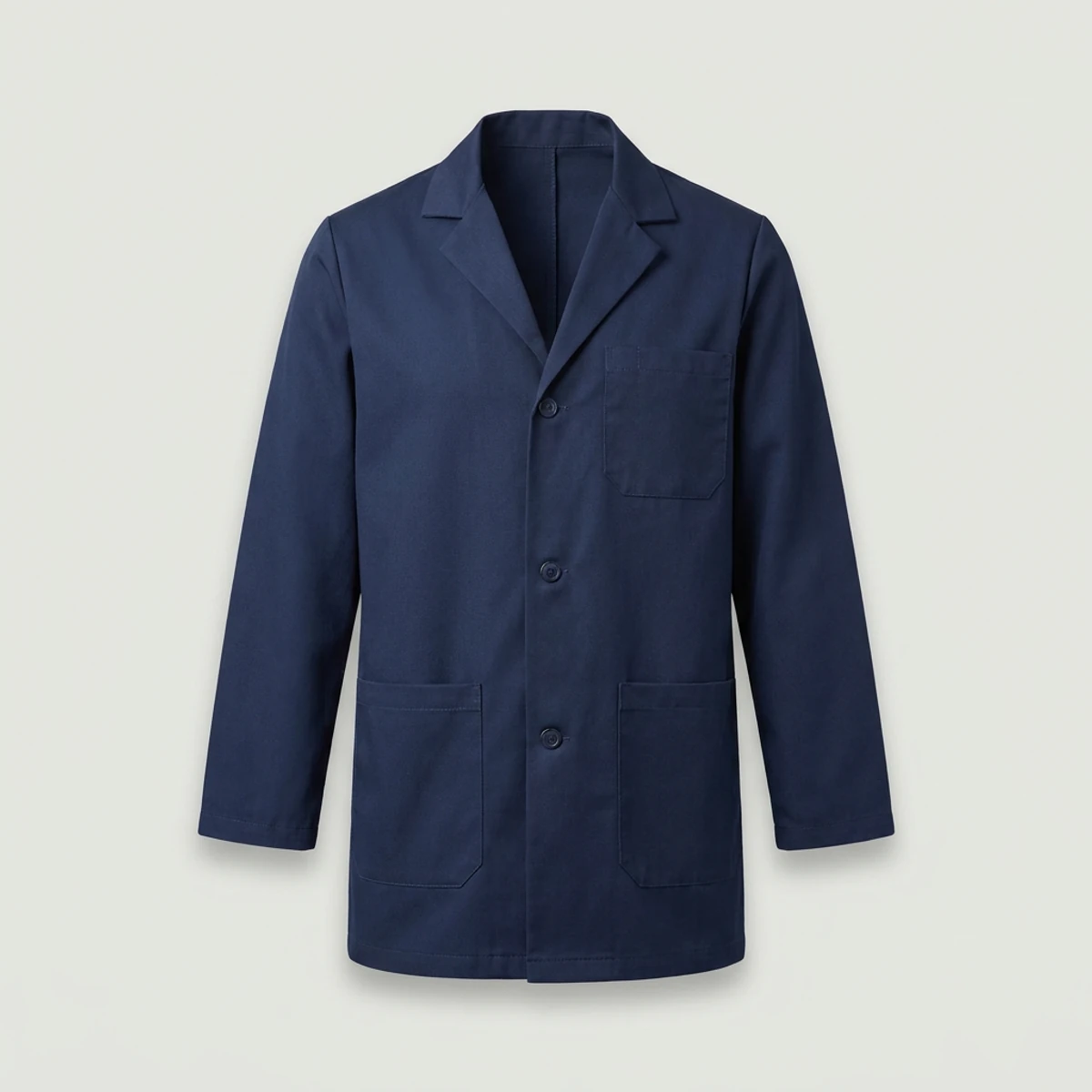
  • Navy blue consultation lab coat with notched lapel and three pocketsNavy consultation lab coat
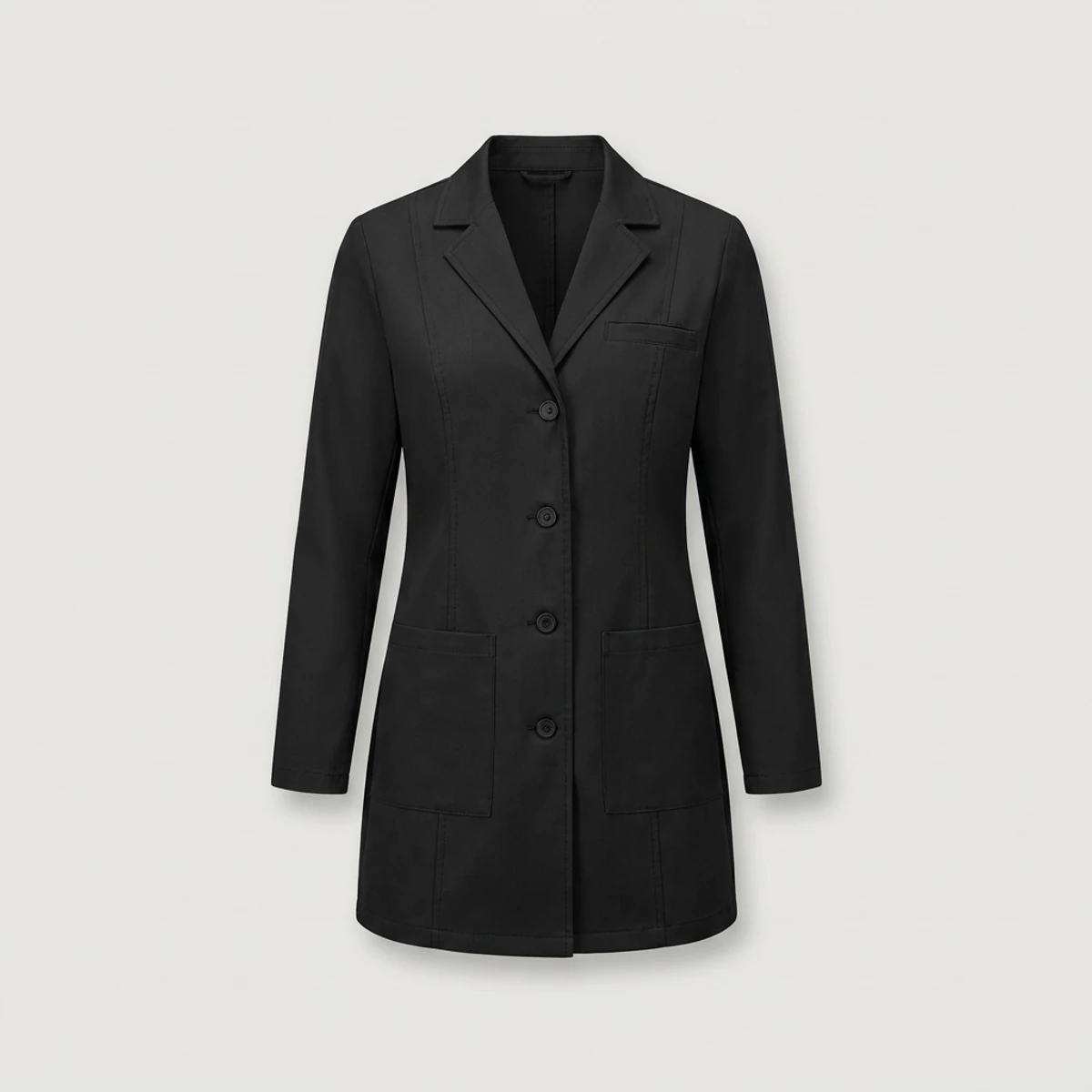
  • Black women's fitted lab coat with princess seams and mid-thigh lengthBlack women's lab coat
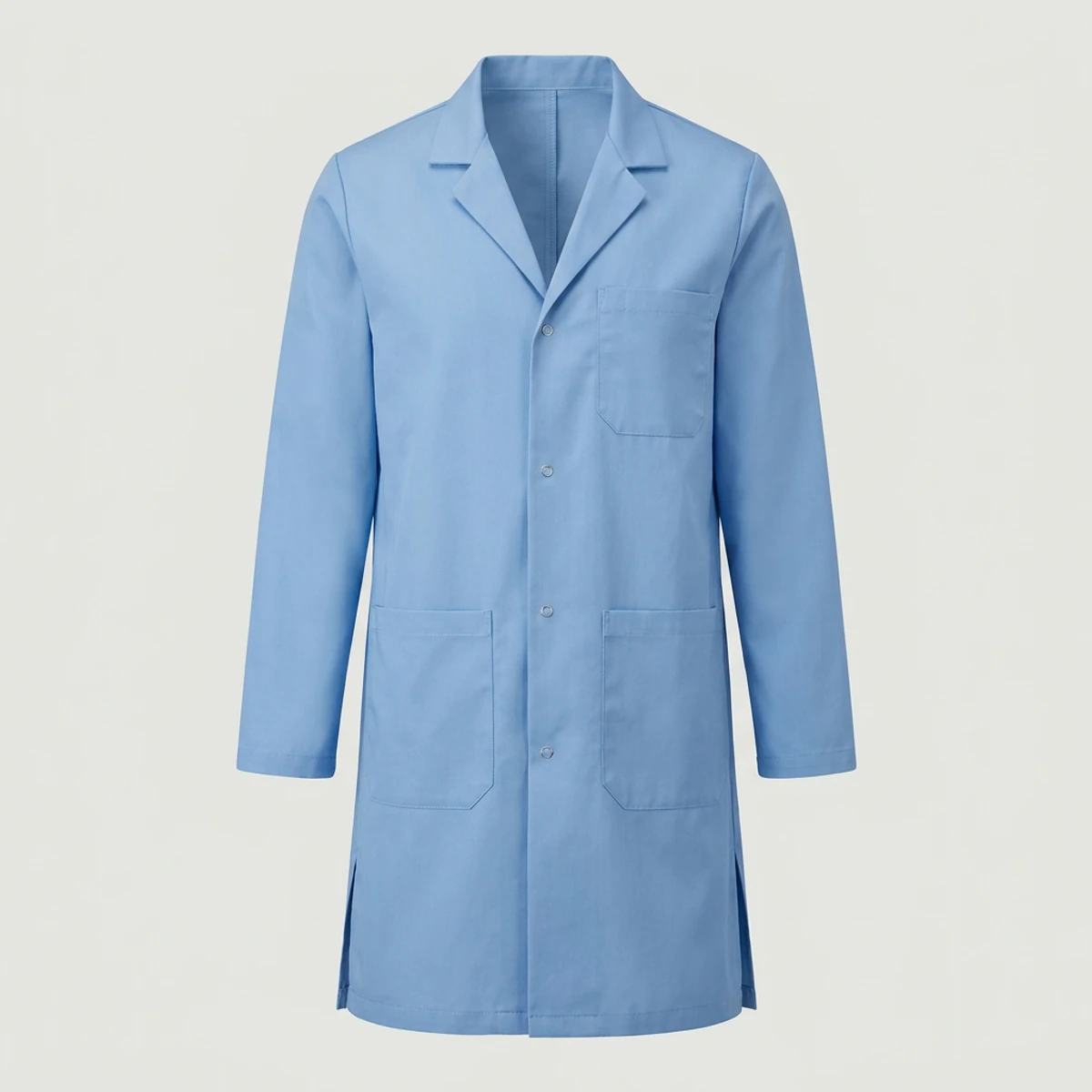
  • Ceil blue mid-thigh lab coat with snap front and side slitsCeil blue lab coat
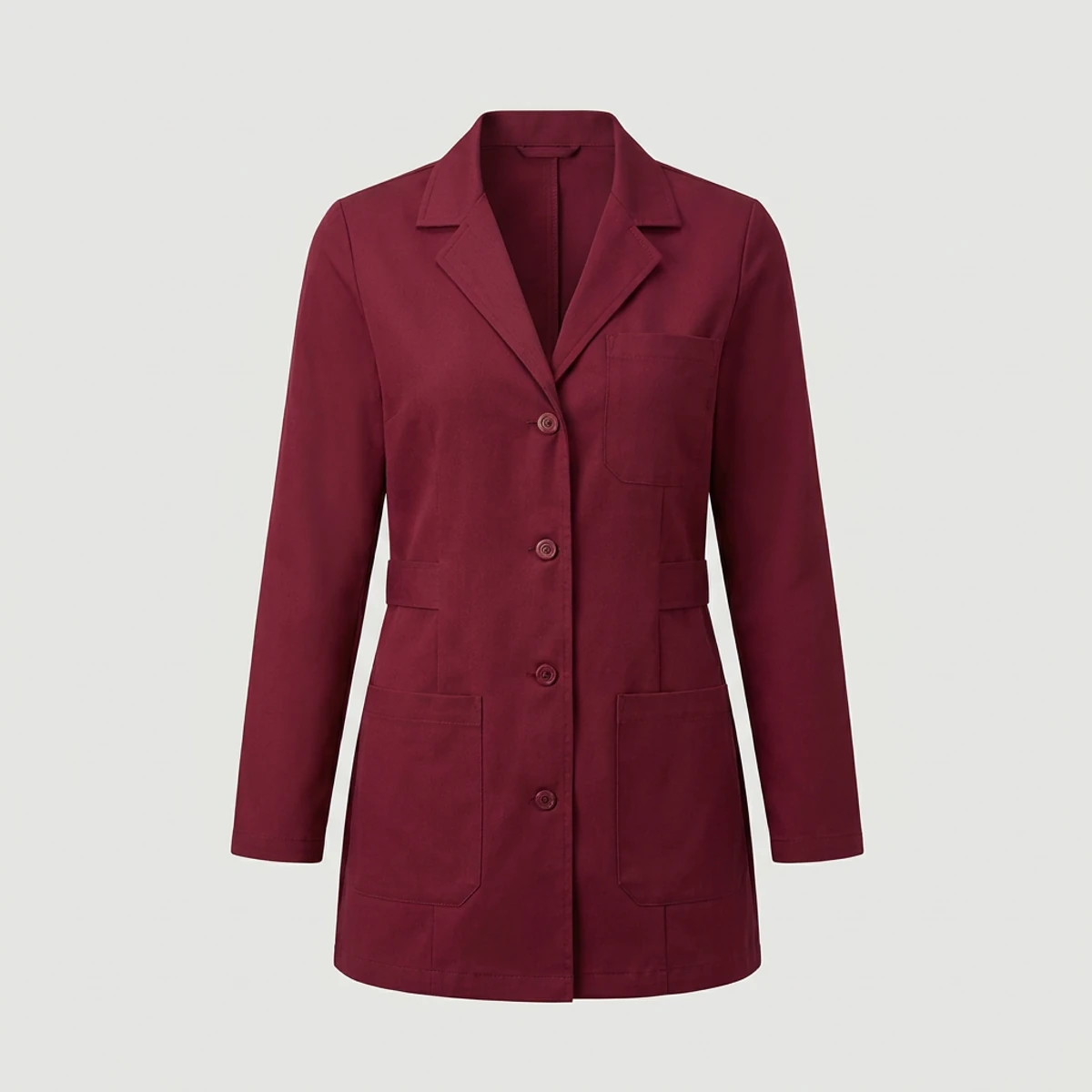
  • Wine colored women's consultation lab coat with back belt and patch pocketsWine women's lab coat
Quote colored coats

Customize your lab coats

Pick the style, fabric and colors, add your logo and names, then attach the design to your quote. We cut and sew it in Los Angeles from 50 pieces per style.

White mid-thigh staff lab coat with notched lapel and back half belt

Who wears lab coats, and why?

Physicians, pharmacists, nurse practitioners, researchers and laboratory staff wear a long professional coat for three practical reasons: identification, protection of the clothing underneath, and pocket storage. Hospitals, physician groups, pharmacies, labs, universities, medical schools, veterinary practices and med spas all buy them as part of a uniform program.

Read more
  • Identification. Patients can pick out physicians, pharmacists and advanced practitioners on a busy floor.
  • Protection. A coat keeps everyday splashes, stains and spills off the clothing underneath.
  • Storage. Large pockets hold notebooks, phones, pens and small instruments.
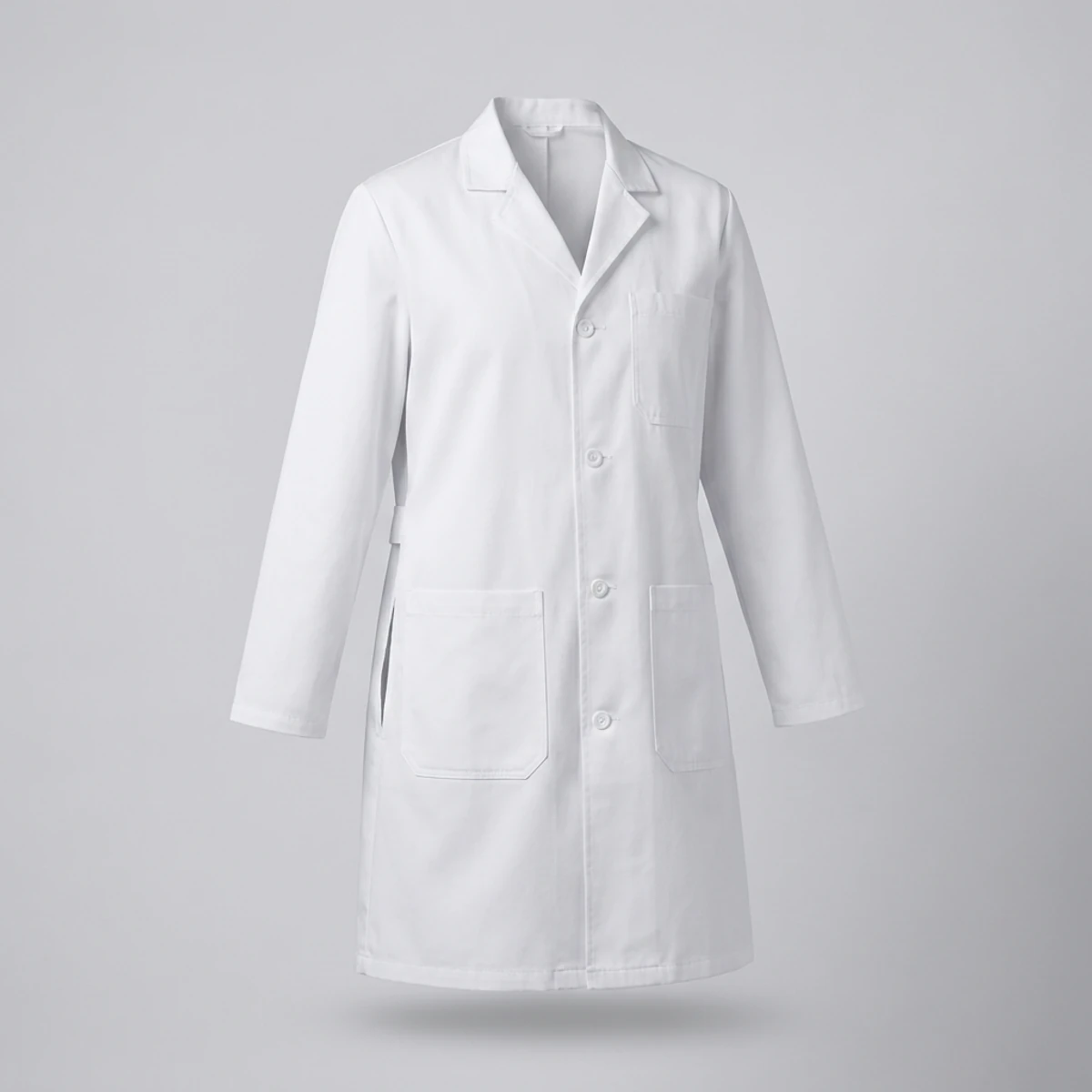
White knee-length laboratory coat with knit cuffs and snap front

White lab coat or colored: which should you choose?

The white lab coat remains the default for physicians and pharmacists and is the coat used in white coat ceremonies; colored coats in navy, gray, black or a brand color suit veterinary, dental and aesthetics settings. White shows soiling quickly, which is part of its purpose: staff change it when it is dirty.

Read more

Some organizations use coat color to distinguish roles, such as white for physicians and a brand color for clinical support staff. A softer colored coat also hides fur and everyday stains in animal hospitals. We confirm available colors at quote stage.

What should you specify on a custom lab coat?

Custom lab coats come down to four decisions: length, collar and closure, pocket layout and fit. Length signals role and sets coverage, the collar sets how formal the coat looks, pockets decide what staff can carry, and the fit decides whether the coat is worn or left on a hook.

Length

Consultation length ends around the hip, staff length reaches mid-thigh and full length reaches the knee. Outpatient clinicians and students usually wear consultation length; hospital physicians wear staff length; labs and senior physicians often choose full length for coverage.

Collar

A notched lapel collar with a button front is the classic physician look. Labs often prefer a closed collar or a front that fastens higher, so more clothing is covered at the bench.

White hip-length consultation lab coat with notched lapel and three pockets

Pockets

The standard layout is two lower pockets plus a chest pocket with pen slots. An inner pocket for a phone or tablet is a useful upgrade, and side pass-through slits let wearers reach the pockets of the scrubs underneath.

Fit

Unisex coats are cut straight. Women’s fits add princess seams or a shaped back, and a back belt or darts give a tailored line. Knit cuffs keep sleeves away from work surfaces in labs.

Which coat suits each role?

Each role needs a coat matched to its setting: hospital physicians wear staff-length white coats with name embroidery, outpatient clinicians prefer lighter consultation lengths, labs need full-length coats with knit cuffs, and veterinary and aesthetics teams favor colored coats. Use the table to plan a multi-role order.

Role or settingLengthColorFeatures to specify
Hospital physiciansStaff or full lengthWhiteNotched lapel, three pockets, name and department embroidery
Outpatient clinicians, NPs (nurse practitioners), PAs (physician assistants)ConsultationWhite or brand colorLighter fabric, stretch, phone pocket
Nursing faculty and NPsConsultation or staffWhiteA nursing lab coat with name, credentials (RN, NP) and school or hospital logo
PharmacistsConsultation or staffWhiteChest pocket with pen slots, name with PharmD or RPh, pharmacy logo
Research and clinical labsFull lengthWhite or light colorsKnit cuffs, snap front for fast removal, closed collar options; fabric chosen from the hazard assessment
Veterinary practicesConsultation or staffColoredDurable, easy-care fabric that hides fur and stains
Med spas and dermatologyConsultationWhite, black or brand colorFitted women’s cut, tonal embroidery
StudentsConsultationWhiteProgram logo, student name, extra unembroidered stock

A lab coat for laboratory work differs from a clinical coat in three ways: it is longer, it closes higher with snaps that come off in one pull, and its fabric is chosen from the lab’s hazard assessment rather than for looks. Laboratory lab coats used as protective equipment are also laundered by the employer. Lab managers planning coats alongside scrubs and phlebotomy sets can see laboratory uniforms, and pharmacies that pair a pharmacist consultation coat with technician scrubs can see pharmacy scrubs and coats.

Navy blue consultation lab coat with notched lapel and three pockets

Buttons or snaps: which closure should you choose?

Buttons give the classic tailored look and are the traditional choice for physicians; snaps open with one pull, so a contaminated coat can come off quickly without handling each button. That is why many laboratories specify snaps, while clinical and academic programs usually keep buttons.

Read more

If your coats will be worn at a lab bench, ask your safety officer which closure they prefer, and pair it with knit cuffs.

Which fabric works best for clinical coats?

Most clinical coats are made from poly-cotton twill, which holds a crisp white, resists wrinkles and survives hot and industrial washing. Stretch blends move better for clinicians on their feet all day, and cotton breathes well but wrinkles more. Flame-resistant fabric is a separate category specified from a lab’s hazard assessment.

FabricLookStrengthsConsiderations
Poly-cotton twillCrisp, structuredStays white, wrinkle resistant, durable in hot and industrial washingNot flame resistant; little stretch
100% cottonMatte, breathableComfortable, does not melt the way polyester canWrinkles and shrinks more; not flame resistant unless treated
Stretch blends with spandexSofter, tailoredFreedom of movement for cliniciansPrefers moderate dryer heat
Flame-resistant (FR) fabricsVariesRequired for some lab hazardsSpecified by the safety officer; availability confirmed on request

We confirm the fabrics available for your order at quote stage. For other FR garments, see our flame resistant clothing range.

Is a lab coat personal protective equipment?

A standard coat is a garment, not personal protective equipment (PPE), unless the employer selects it as PPE for a specific hazard. The Occupational Safety and Health Administration (OSHA) requires employers to assess workplace hazards and choose suitable protective clothing, so protective coats should be specified from that assessment.

Read more

Under the OSHA personal protective equipment standard (29 CFR 1910.132), the hazard assessment decides what protection is needed. Where coats serve as protection against blood or other potentially infectious materials, the OSHA Bloodborne Pathogens standard (29 CFR 1910.1030) makes the employer responsible for providing, cleaning and laundering them at no cost to staff. A standard poly-cotton coat is not flame resistant, and polyester-rich fabric can melt if it ignites, so labs with flammable solvents or open flames should specify FR coats.

How does a custom coat order work?

An order for custom coats runs in five stages: brief, sample, approval, production and reorder. The brief fixes length, collar, pockets, fabric and color; personalized orders add a name spreadsheet. New designs are sampled before the full run, and patterns and embroidery files stay on file for later orders.

  1. 01

    Brief

    Pick a length, collar and pocket layout, or send your own design, plus fabric, color and logo artwork.
  2. 02

    Sample and proof

    For a new design we make a sample and an embroidery proof showing names and logo placement.
  3. 03

    Approval

    You sign off on the sample, the proof and the size split by fit.
  4. 04

    Production

    Your coats are cut, sewn and embroidered in our Los Angeles factory.
  5. 05

    Reorder

    Patterns, logos and name layouts stay on file, so new hires get matching coats.

Ask us for current lead times when you request a quote, especially for ceremony dates.

What determines the cost of custom lab coats?

Pricing for custom coats depends mainly on the fabric, the quantity per style, the coat’s length and features, the embroidery and any custom labels or packaging. No prices are published here; each order is quoted on its actual fabric, artwork and quantity.

Cost driverHow it moves the unit priceHow to keep it in check
FabricStretch and FR fabrics usually cost more than standard poly-cotton twillChoose fabric for the setting and laundering
Quantity per styleLarger runs spread cutting, setup and sampling across more pieces, so unit cost tends to fallStandardize on fewer lengths and colors
Length and featuresLonger coats use more fabric; inner pockets, belts and knit cuffs add sewing timeKeep the features staff actually use
EmbroideryStitch count, thread colors and number of locations add time per coatOne logo plus a name block
PersonalizationIndividual names, credentials and departments add handling for every coatSend one checked name spreadsheet
Labels and packagingCustom labels and individual bagging add componentsUse standard finishing for staff coats

Embroidered lab coats

Embroidered lab coats turn a generic coat into part of your brand and help patients learn names. Lab coat embroidery usually puts the wearer’s name and credentials over the left chest pocket and the organization logo on the right chest or left sleeve, in navy or black thread on white.

Read more

Every lab coat with embroidery in a run of 50 or more can carry its own name, which is how physician groups order personalized lab coats for doctors. Women’s lab coats with embroidery look neatest when the name sits above the princess seam rather than across it. Our logo embroidery and printing service explains artwork formats and thread choices.

Where does embroidery go on a lab coat?

Coat embroidery goes above the left chest pocket for the name and credentials, with a department line below, and the organization logo on the right chest or left sleeve. Keep names to one or two lines in a clean font so they stay legible across a room.

PositionTypical contentNotes
Above left chest pocketName and credentials (MD, PharmD, NP)The most-read spot; keep the font simple
Second line, left chestDepartment or specialtySmaller lettering than the name
Right chestOrganization logoBalances the name on the opposite side
Left sleeve, below the shoulderLogo or institution patchCommon for academic medical centers
Pocket topSmall brand markPopular with med spas and private practices

Check the longest name on your list before approving the layout; a long name with credentials may need a smaller font or a second line.

White coat ceremony orders for schools

Medical, pharmacy, PA, nursing and dental schools mark the start of clinical training with a white coat ceremony, and the coats must arrive personalized and correct on a fixed date. Planning sizes, names and spare stock early is what keeps a ceremony order on time.

  • Collect sizes early with a fitting set or a clear size chart; coats are sized by chest and sleeve, and swapping after embroidery is not possible.
  • Send names in a spreadsheet exactly as they should appear, with credentials or “Student” lines confirmed by the program.
  • Order a few extra unembroidered coats in common sizes for late enrollments. Nursing programs that also outfit students in program scrubs can plan both together with uniforms for nursing schools.
  • Choose consultation length for students, keeping longer coats for later in a career where that tradition exists.

How do you keep white lab coats white?

White lab coats stay white longest when stains are treated promptly, whites are washed separately, and oxygen-based whitener is used instead of chlorine bleach, which can yellow polyester and weaken spandex. Hang coats to limit wrinkles and replace them once stains no longer lift.

Giving each wearer at least two coats makes regular laundering realistic. Where coats are worn as PPE, follow your facility’s laundering policy rather than home washing.

Ready to order

What to send us for a lab coat quote

A complete quote needs the length, collar and closure, fit split, fabric, color, logo artwork, any name list and the quantity per style. Sending the full list in the first message lets us price the order quickly and confirm whether a sample is needed.

  • Length, collar and closure (buttons or snaps)
  • Fit split: women’s, men’s and unisex quantities
  • Fabric preference and how the coats will be laundered
  • Color, plus any role-based color scheme
  • Logo artwork and placement
  • For personalized coats: a spreadsheet of names, credentials, departments and sizes
  • Quantity per style (about 50 pieces minimum) and the date you need them, especially for ceremonies

What mistakes do buyers make when ordering lab coats?

The most common coat ordering mistakes are late or unchecked name lists, one length for everyone, treating any white coat as PPE and ordering too few coats per person. Each is easy to avoid at the brief stage and costly to fix after embroidery.

  1. Late name lists

    Embroidery cannot be changed once stitched, so spelling and credential errors are expensive.
  2. One length for everyone

    A full-length coat on a student looks borrowed. Offer lengths that suit the role.
  3. Treating any white coat as PPE

    A standard coat is not chemical or flame protection. Specify protective coats from a hazard assessment.
  4. Too few coats per person

    With one coat each, staff wear it soiled between washes. Two or more per person is a sensible baseline.

Complete the uniform

Most practices wear coats over scrubs, so coats are often ordered alongside tops, pants and outer layers in one brief. Each garment is its own style with a 50-piece minimum, and a single logo file can be used across all of them.

Physician groups can see our approach to scrubs for doctors, and teams that wear coats over custom scrub tops often add embroidered scrubs to the same order. For animal hospitals, colored coats pair well with veterinary apparel, and nursing staff who want a shorter layer can choose a scrub jacket instead.

Questions about lab coats

Need something not covered here? Ask our Los Angeles team and we’ll answer with options for your order.

Ask our Los Angeles team

What coat length should we order?

Consultation-length coats end around the hip and suit clinicians who move between rooms and sit with patients. Staff-length coats reach mid-thigh and are the common hospital choice. Full-length coats reach the knee and give the most coverage in laboratories. Many programs order a shorter coat for students and residents and a longer coat for attending physicians.

Are your coats flame resistant?

Standard poly-cotton and cotton lab coats are not flame resistant. If your lab handles flammable solvents or pyrophoric materials, your safety officer should specify a flame-resistant coat based on a hazard assessment. Contact us with the requirement and we will tell you whether we can meet it.

Can each coat in an order carry a different name?

Yes. Every coat in a run of about 50 pieces per style can carry its own name, credentials and department under the same logo. Send one spreadsheet with each wearer's name, credentials, department and size, spelled exactly as it should be stitched, and check it before approval, because embroidery cannot be changed once sewn.

Can we order coats for a white coat ceremony?

Yes. Medical, pharmacy, nursing and PA schools can order matching white lab coats embroidered with each student's name and the program logo. With a minimum of about 50 pieces per style, most incoming classes qualify. Send your class list early so names can be checked before embroidery.

All scrubs →
Lab CoatsCut & sewn in Los Angeles · from 50 pieces per styleRequest samplesGet a quote