Guide · 10 min read
Scrub Sizes: Size Chart, How to Measure and How Scrubs Should Fit
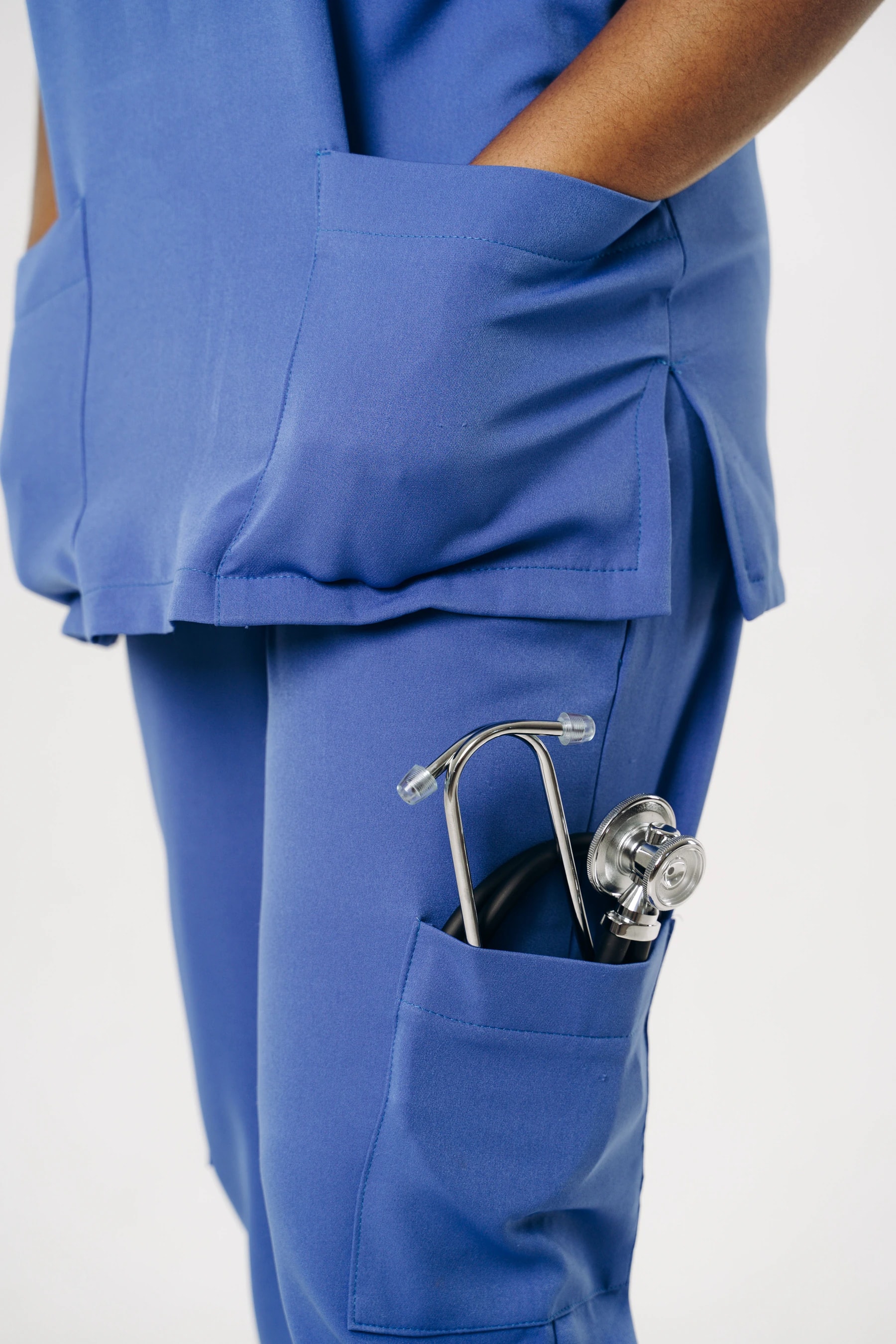
Scrub sizes are usually letter sizes, XS to 3XL or beyond, based on four body measurements: chest (or bust), waist, hips and inseam, with pants often offered in petite, regular and tall lengths. Unisex scrubs are cut on a straighter, men's-style pattern, while women's scrubs are shaped through the bust, waist and hips, so the same letter size can fit very differently. Exact measurements vary by style and manufacturer, so always check the size chart for the specific garment; we supply ours, along with samples, with every quote.
How scrub sizes work
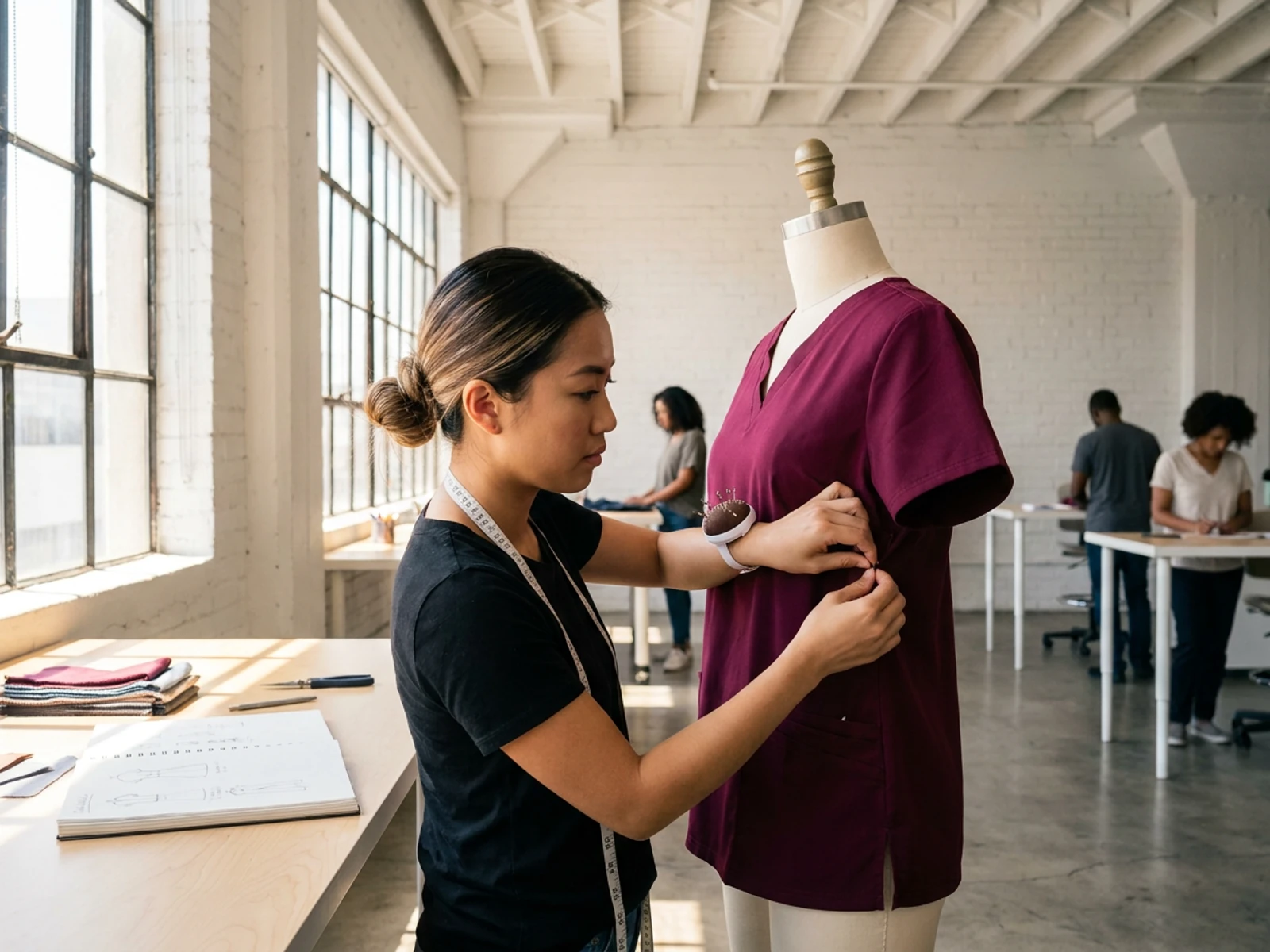
Most scrubs in the United States use letter sizes rather than numeric dress or suit sizes. A typical range runs from XS to 3XL, with some styles extending smaller (XXS) or larger (4XL and 5XL). Each letter size covers a span of body measurements, usually a few inches wide, so two people with different numbers can share a size.
Scrubs are sized from the body, not from the garment. A manufacturer starts from a set of body measurements for each size, then adds “ease”, extra room so the wearer can move. That is why a size Medium scrub top measures larger than a Medium wearer’s chest when laid flat.
In the U.S., apparel makers often base their size tables on ASTM International body measurement standards, such as ASTM D5585 for women’s misses sizes and ASTM D6240 for adult men. These standards give average body dimensions for each size; each brand then applies its own ease, style lines and grading, which is why sizing varies from one brand to another.
How to measure for scrubs
Use a soft tape measure, wear light clothing, stand straight and keep the tape level and snug but not tight. Measure in inches.
| Measurement | Where to measure | Used for |
|---|---|---|
| Chest / bust | Around the fullest part of the chest or bust, under the arms and across the shoulder blades | Tops, jackets, lab coats |
| Waist | Around your natural waist, the narrowest part of the torso, usually just above the belly button | Pants, fitted tops |
| Hips | Around the fullest part of the hips and seat, feet together | Pants, women’s tops |
| Inseam | From the crotch seam straight down the inside leg to where you want the hem, ideally measured on a pair of pants that fit well | Pant length |
| Height (optional) | Standing straight without shoes | Choosing petite, regular or tall |
If you fall between sizes, choose the larger size for the measurement that matters most for that garment: chest for tops, hips or waist for pants. Elastic and drawstring waistbands make the waist the most forgiving measurement.
Tip: Measure twice, and have someone else hold the tape if possible. Measuring your own chest and hips alone tends to tilt the tape and understate the number.
Body measurements vs garment measurements
Size charts come in two kinds, and mixing them up is a common source of wrong orders.
| Chart type | What the numbers mean | How to use it |
|---|---|---|
| Body measurement chart | The body each size is designed to fit | Compare against your own tape measurements |
| Garment (finished) measurement chart | The flat or circumference measurements of the actual garment, including ease | Compare against a scrub you already own that fits well |
If a chart lists a Medium chest as larger than your body measurement by several inches, it is almost certainly a garment chart. In that case, lay your best-fitting scrub top flat, measure across the chest one inch below the armholes and double it, then compare.
Typical scrub size chart (women’s cut)
Scrub sizes for women are usually based on bust, waist and hips. The table below shows typical body measurement ranges for women’s-cut scrubs in inches. It is a general guide drawn from common U.S. sizing practice, not our production chart. Exact measurements vary by style; always check the chart for the specific garment.
| Size | Bust (in) | Waist (in) | Hips (in) | Approx. numeric size |
|---|---|---|---|---|
| XS | 31–33 | 24–26 | 34–36 | 0–2 |
| S | 34–36 | 27–29 | 37–39 | 4–6 |
| M | 37–39 | 30–32 | 40–42 | 8–10 |
| L | 40–42 | 33–35 | 43–45 | 12–14 |
| XL | 43–45 | 36–38 | 46–48 | 16–18 |
| 2XL | 46–48 | 39–41 | 49–51 | 20–22 |
| 3XL | 49–51 | 42–44 | 52–54 | 24–26 |
Typical scrub size chart (unisex and men’s cut)
Unisex scrubs are normally graded on a men’s body block. Again, these are typical ranges in inches, not a specific product chart.
| Size | Chest (in) | Waist (in) | Hips (in) |
|---|---|---|---|
| XS | 32–34 | 26–27 | 32–34 |
| S | 35–37 | 28–30 | 35–37 |
| M | 38–40 | 31–33 | 38–40 |
| L | 41–43 | 34–36 | 41–43 |
| XL | 44–46 | 37–39 | 44–46 |
| 2XL | 47–49 | 40–42 | 47–49 |
| 3XL | 50–52 | 43–45 | 50–52 |
A practical rule: women wearing unisex scrubs often go down one size from their women’s size, but check the shoulder width and hip measurement before relying on it.
Worked example: reading the typical chart
Say a nurse measures 38 inches at the bust, 31 inches at the waist and 43 inches at the hips, and is 5’5” tall.
- Top: a 38-inch bust falls in the women’s Medium range (37–39), so a Medium top is the starting point.
- Pants: the 31-inch waist is a Medium, but the 43-inch hips fall in Large (43–45). Hips matter more than waist for scrub pants because the waistband is adjustable, so a Large pant is the better choice.
- Length: at 5’5”, a regular inseam is the likely fit.
- Check: try a Medium top and a Large regular pant from a size run, do the squat and reach tests below, and confirm against the actual style’s chart.
This is why tops and pants are usually sized separately, and why mixed sizes are normal on a size roster.
Scrub pant sizes and inseam: petite, regular and tall
Scrub pants are often sold in up to three lengths. The names are consistent across the industry; the exact inseam is not.
| Length | Typical inseam range | Usually suits |
|---|---|---|
| Petite / short | About 27–29 in | Wearers around 5’3” and under |
| Regular | About 30–32 in | Average height |
| Tall | About 33–35 in | Wearers around 5’9” (women) or 6’1” (men) and over |
These are typical ranges only. Jogger-style pants with an elastic cuff are more forgiving on length, while straight and wide-leg pants should be hemmed to clear the floor in work shoes. See our scrub pants page for the main leg styles.
Unisex vs women’s scrubs: what changes
The letter size is only part of fit. The pattern, or “block”, the garment is built on matters just as much.
| Feature | Unisex cut | Women’s cut |
|---|---|---|
| Shoulders | Broader | Narrower |
| Body shape | Straight, boxy | Shaped with darts, princess seams or side shaping |
| Bust and hip room | Less difference between chest, waist and hip | More room at bust and hips relative to the waist |
| Top length | Usually longer | Often shorter, sometimes with side vents |
| Pant rise | Higher, straighter seat | Shaped seat, often a lower or contoured rise |
Many uniform programs offer both cuts in the same color and fabric so staff can choose the fit they prefer. If you are standardizing scrub tops across a department, plan for both from the start.
How should scrubs fit?
Scrubs should fit loosely enough to move freely and closely enough not to snag or flap. Before you approve a size, check these points while wearing the sample:
- Shoulders: the shoulder seam sits at the edge of your shoulder, not halfway down your arm.
- Chest and neckline: no pulling across the bust or back; the V-neck should not gape when you lean forward.
- Reach test: raise both arms overhead. The top should not ride up far enough to expose your midriff.
- Squat test: squat as if picking something up from the floor. The pants should not pull at the seat or slide down at the back.
- Sleeves: short sleeves should not bind your upper arm; long sleeves should end at the wrist bone.
- Pant length: hems should touch the top of your shoe and clear the floor so they do not drag through spills.
- Pockets: loaded pockets should not drag the garment out of shape.
Remember shrinkage. Cotton and rayon blends can shrink after hot washing, so ask whether the fabric is pre-shrunk and how the scrubs will be laundered. Our scrub fabric guide explains which fibers shrink and why.
Sizing scrubs for a team or uniform program
Ordering for a clinic or department is where sizing goes wrong most often. A simple process avoids most exchanges:
- Choose the styles first, including both unisex and women’s cuts if needed.
- Order a size run (one of each size) or ask for samples so staff can try the actual garment.
- Build a size roster listing each person, style, size and length.
- Add a buffer of a few pieces in the most common sizes for new hires and exchanges.
- Check the chart for each style. A Medium top and a Medium jacket may not be cut the same.
A simple size roster looks like this:
| Name | Department | Top style | Top size | Pant style | Pant size | Length | Embroidery name |
|---|---|---|---|---|---|---|---|
| Staff member 1 | Nursing | Women’s V-neck | M | Jogger | L | Regular | First name, RN |
| Staff member 2 | Nursing | Unisex V-neck | XL | Straight leg | XL | Tall | First name, RN |
| Staff member 3 | Front desk | Women’s mock-wrap | S | Straight leg | S | Petite | First name |
Tip: Add the embroidery text to the same roster. Names, credentials and sizes then travel together, which avoids mismatches when garments are personalized.
Common scrub sizing mistakes
- Assuming one size fits top and bottom. Many people need different sizes for tops and pants.
- Using a retail size from another brand. Every brand grades differently; use the chart for the style you are ordering.
- Ignoring length. Pants that drag on the floor wear out at the hem and pick up spills.
- Forgetting shrinkage. Cotton-rich fabrics can shrink after the first hot washes.
- Ordering only unisex. Women on a unisex-only program often end up in tops that are too broad at the shoulder or too tight at the hip.
- No spares. A small buffer of common sizes covers new hires and exchanges without a reorder.
As a manufacturer with our own factory in Los Angeles, we can produce your size mix within a minimum of about 50 pieces per style for custom and private label orders. If you buy plain stock garments, our wholesale scrubs service covers bulk blanks across the size range, with quantities confirmed on inquiry.
Sizing for your own scrub brand
If you are launching a scrub line, your size chart becomes part of your product. You decide the base size, the grade rules (how much each measurement changes between sizes), the size range and the lengths you offer. These go into your tech pack so every production run matches.
| Sizing decision | What it means | Why it matters for a brand |
|---|---|---|
| Base size | The size the pattern is first made and fitted in, often a Medium or Small | Every other size is graded from it, so the fit model matters |
| Grade rules | How much each point of measure changes from size to size | Inconsistent grading is why some brands fit well in one size and poorly in others |
| Size range | The smallest and largest sizes you make | Extended sizes reach underserved customers |
| Lengths | Petite, regular and tall options for pants (and sometimes tops) | Shorter and taller wearers often struggle to find pants that fit, so lengths can set you apart |
| Tolerances | The acceptable measurement variation in production | Lets you check bulk garments against the spec |
Our size chart and samples
Every style we make has its own size chart, and we provide it with each quote together with sample garments so you can check fit before bulk production. Use the typical tables above to get oriented, then rely on the chart for the specific style you order.
Key takeaways
- Scrub sizes are letter sizes based on chest, waist, hips and inseam.
- Unisex scrubs are cut straighter and usually run larger than women’s cuts.
- Pants often come in petite, regular and tall lengths; exact inseams vary.
- The tables here are typical ranges only; always use the chart for the specific style.
- For teams, order a size run, build a roster and keep a small buffer of common sizes.
Frequently asked questions
Do scrubs run big or small?
Scrubs are cut with more ease than everyday clothes, so many people find unisex scrubs run large, especially women wearing unisex sizes. Women's and fitted styles run closer to regular clothing sizes. Because every style is different, compare your measurements against the chart for that specific garment rather than relying on your usual size.
How should scrubs fit?
Scrubs should let you squat, reach overhead and bend without the top riding up, the neckline gaping or the pants pulling at the seat. The shoulder seam should sit at your shoulder, sleeves should not restrict your arms, and pant hems should clear the floor in your work shoes. A little ease is normal; excess fabric can snag or get in the way.
What is the difference between unisex and women's scrubs?
Unisex scrubs use a straighter pattern with broader shoulders, a boxier body and a lower hip-to-waist difference. Women's scrubs are shaped with darts or princess seams, a narrower shoulder and more room at the hips. Women who prefer a relaxed look sometimes choose unisex; for a tailored fit, a women's cut usually works better.
What inseam lengths do scrub pants come in?
Many scrub pants come in three lengths: petite (short), regular and tall. The exact inseam for each depends on the style and brand, so check the size chart. If you are between lengths, consider your shoes and whether the style has a jogger cuff, which hides extra length.
How do we size scrubs for a whole team?
Collect each person's measurements or have them try a sample size set, then record sizes on a size roster before ordering. For new styles, order a size run first so staff can try on the actual garment. Buying a few extra pieces in the most common sizes covers new hires and fit exchanges.
Need garments made?
Custom Uniform Factory cuts and sews scrubs and workwear in Los Angeles from 50 pieces per style, with your logo or label. Get a quote or request samples.