Guide · 9 min read
ANSI 107 Hi-Vis Classes: Types, Class Requirements and How to Choose
ANSI 107 (ANSI/ISEA 107) is the American National Standard for high-visibility safety apparel: it sorts garments into three types by work environment (O, R and P) and into performance classes 1, 2 and 3 by how much fluorescent background and retroreflective material they carry. Class 2 is the minimum for most roadway work, and Class 3 adds sleeves and more material for higher-risk exposure. This guide sets out the class requirements, colors and a practical way to choose.
What ANSI 107 is
ANSI/ISEA 107, American National Standard for High-Visibility Safety Apparel, is written by the International Safety Equipment Association (ISEA) and approved by ANSI. First published in 1999, it specifies the minimum amount, placement and performance of fluorescent background material (for daytime conspicuity) and retroreflective material (for night and low light, when headlights hit it) on garments worn by people who need to be seen by drivers and equipment operators.
Current edition
The current published edition is ANSI/ISEA 107-2020. Compared with 2015, it removed the separate category for high-visibility accessories, added criteria for single-use (disposable) coveralls, and updated test methods. In March 2026 ISEA opened a public review of a proposed sixth revision with updated sizing requirements, revised test methods and optional testing of overall luminous intensity; until a new edition is approved and published, 107-2020 remains current.
| Edition | Change that matters to buyers |
|---|---|
| 2004 / 2010 | Class 1, 2, 3 and E structure used in many federal and state rules |
| 2015 | Merged the public safety vest standard (ANSI/ISEA 207) into 107 and introduced garment types O, R and P |
| 2020 (current) | Removed accessories category; added single-use coverall criteria; updated test methods |
Who must follow ANSI 107
ANSI 107 is a voluntary consensus standard. It becomes mandatory through rules that reference it:
- Highway work zones. Section 6C.05 of the Manual on Uniform Traffic Control Devices (MUTCD), 11th edition requires workers within the right-of-way in a temporary traffic control zone to wear ANSI/ISEA 107 Performance Class 2 or 3 apparel. This requirement used to sit in the federal rule 23 CFR Part 634, which no longer appears in the current Code of Federal Regulations.
- Work zones and flaggers. OSHA’s construction rule 1926.201 requires flaggers’ warning garments to conform to the Manual on Uniform Traffic Control Devices (MUTCD), and the MUTCD requires workers exposed to traffic to wear Class 2 or 3 apparel. J.J. Keller’s summary notes that the 2023 MUTCD references ANSI/ISEA 107-2015.
- General industry. OSHA has not adopted ANSI 107, but employers must assess hazards and provide suitable PPE under 29 CFR 1910.132. Where workers are exposed to moving vehicles or equipment (warehouses, yards, airports, ports), ANSI 107 is the recognized benchmark for “visible enough.”
- State rules and owner specifications. Many state DOTs, utilities and general contractors require Class 2 or Class 3 in contracts, sometimes with stricter rules than the federal minimum.
ANSI 107 garment types: O, R and P
| Type | Environment | Classes available | Typical users |
|---|---|---|---|
| Type O (off-road) | Workers not exposed to roadway traffic but near moving vehicles or equipment | Class 1 | Parking attendants, warehouse and yard workers, shopping cart retrievers |
| Type R (roadway) | Workers exposed to traffic on public roads or temporary traffic control zones | Class 2 or 3 | Road crews, flaggers, utility and survey crews, tow operators |
| Type P (public safety) | Emergency and incident responders and law enforcement | Class 2 or 3 | Police, fire and EMS working on roadways |
Type P garments allow designs suited to responders, such as breakaway features and access to equipment belts, with somewhat lower background minimums than Type R.
Hi-vis class requirements: minimum areas
The class sets the minimum surface area of each material. The figures below are from the 2020 edition’s requirements as published in industry summaries such as Skanwear’s ANSI/ISEA 107 overview and PIP’s ANSI/ISEA 107 update.
| Type / Class | Minimum fluorescent background | Minimum retroreflective material | Minimum reflective band width |
|---|---|---|---|
| Type O, Class 1 | 217 sq in (0.14 m²) | 155 sq in (0.10 m²) | 1 in (25 mm) |
| Type R, Class 2 | 775 sq in (0.50 m²) | 201 sq in (0.13 m²) | 1.38 in (35 mm) |
| Type R, Class 3 | 1,240 sq in (0.80 m²) | 310 sq in (0.20 m²) | 2 in (50 mm) |
| Type P, Class 2 | 450 sq in (0.29 m²) | 201 sq in (0.13 m²) | See standard (split-trim designs permitted) |
| Type P, Class 3 | 775 sq in (0.50 m²) | 310 sq in (0.20 m²) | See standard (split-trim designs permitted) |
| Class E (bottoms) | 465 sq in (0.30 m²) | 109 sq in (0.07 m²) | Not compliant alone; see below |
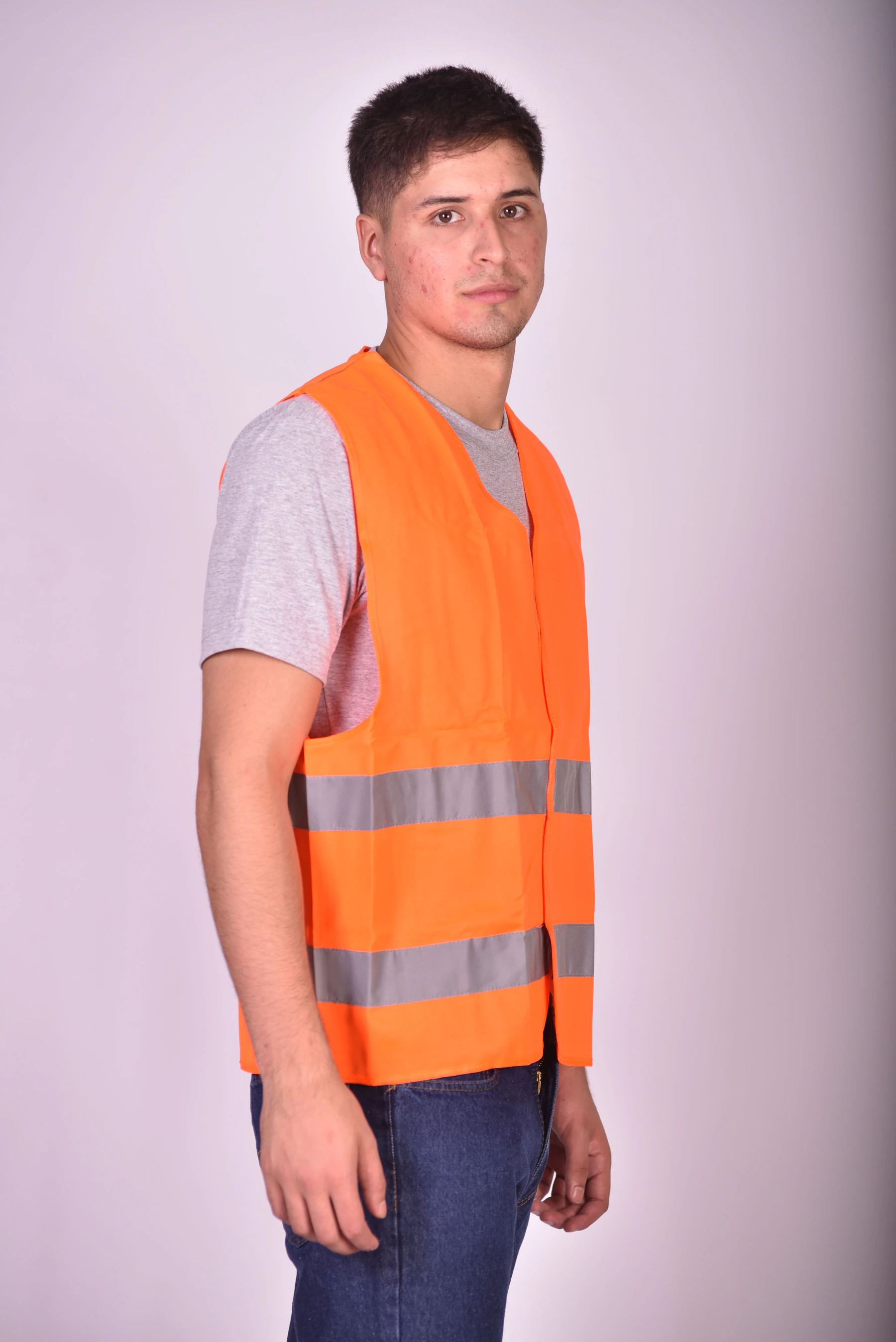
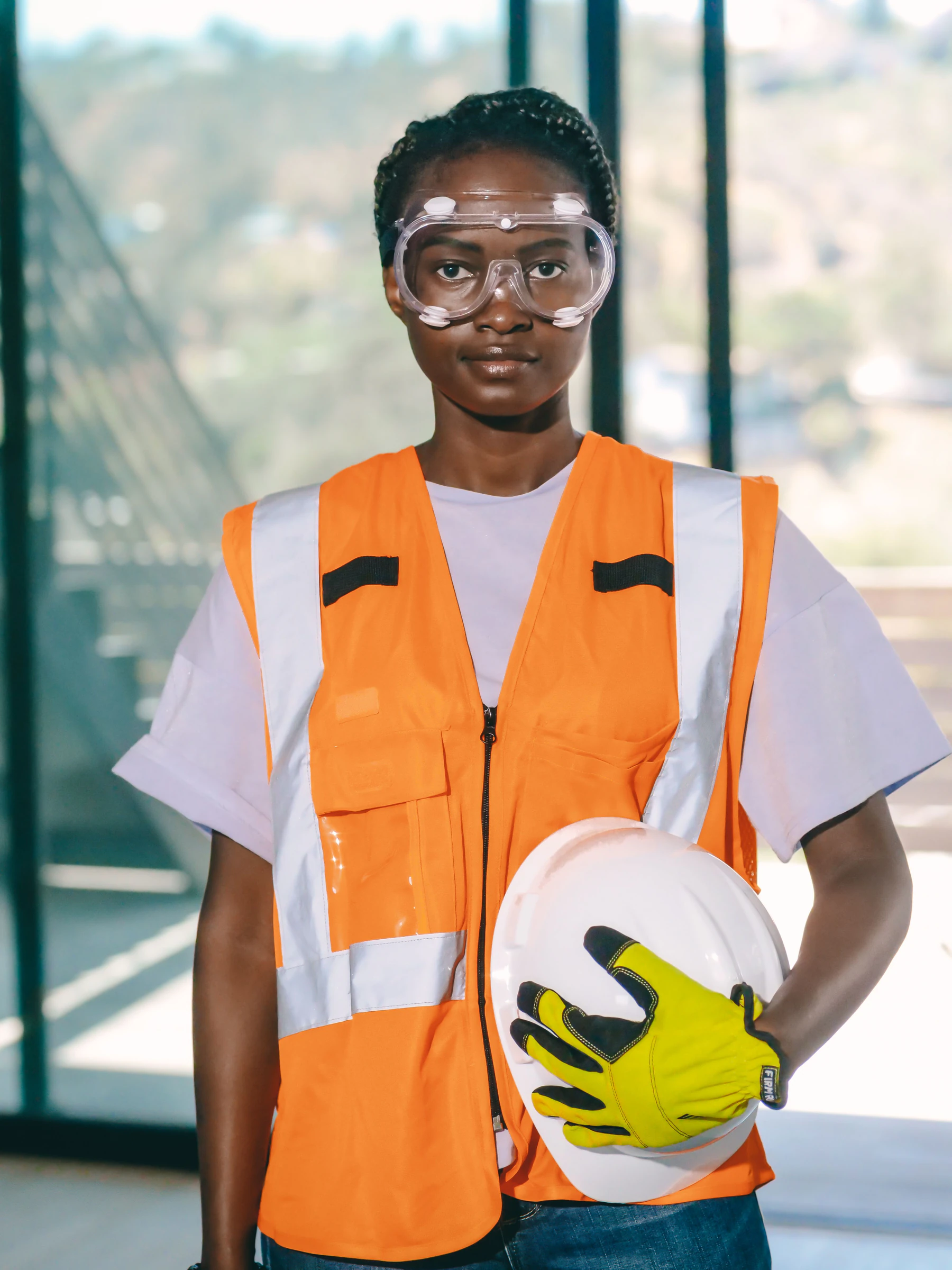
Beyond the areas, the standard governs placement. Class 2 and Class 3 garments must have retroreflective bands encircling the torso so the wearer is visible from all sides (360°), and Class 3 garments must have sleeves with retroreflective banding so the wearer’s arms and outline are visible. Sleeveless vests and garments are never Class 3 on their own.
Class E and ensembles
Class E covers pants, bib overalls and shorts. A Class E item is not compliant by itself, but worn with a Class 2 top it makes a Class 3 ensemble. The arithmetic shows why: 775 + 465 = 1,240 sq in of background, and 201 + 109 = 310 sq in of reflective, exactly the Class 3 minimums.
Tip: For night roadway work, a Class 2 shirt plus Class E pants is often more comfortable than a Class 3 jacket in warm weather, and the reflective bands on the legs show motion, which helps drivers recognize a person.
Hi-vis colors
ANSI 107 allows three fluorescent background colors:
| Color | Where it tends to contrast best |
|---|---|
| Fluorescent yellow-green | Urban settings, snow, dark backgrounds; the most common choice |
| Fluorescent orange-red | Green foliage, rural roads, forestry and landscaping |
| Fluorescent red | Specific applications and responder use |
Color is tested for chromaticity and luminance, so “neon” fabric from a general supplier is not automatically compliant. Retroreflective material is usually silver, and combined-performance material (fluorescent and reflective in one) can count toward the reflective area but not toward background.
ANSI Class 2 vs Class 3: how to choose
ANSI 107 tells you what each class contains; your hazard assessment tells you which you need. Factors that push toward Class 3:
- Traffic speed. ANSI 107 does not set speed thresholds, but many employers and agencies use roughly 50 mph as the point where Class 3 is expected.
- Night work, rain, fog or other low light.
- Complex backgrounds (lights, signs, equipment) where a worker can disappear visually.
- Workers on foot whose attention is on the task, not on traffic, such as flaggers and surveyors.
- Distance: drivers need to see and recognize the worker early enough to react.
| Class 2 | Class 3 | |
|---|---|---|
| Background (Type R) | 775 sq in | 1,240 sq in |
| Reflective (Type R) | 201 sq in | 310 sq in |
| Sleeves required | No | Yes, with reflective banding |
| Garment forms | Vests, T-shirts, polos, jackets | Sleeved shirts, jackets, coveralls; or Class 2 top plus Class E bottom |
| Typical use | Roadway work below highway speeds, utility crews, airport ramps, school crossing guards | Highway work, night work, flaggers in poor visibility, emergency roadway response |
Worked example: choosing a class for a job site
A paving contractor has three crews:
- Daytime resurfacing on a 35 mph city street. Workers are exposed to traffic, so Type R applies. Class 2 vests or T-shirts meet the minimum for most such contracts.
- Night work on a 65 mph interstate. Federal-aid right-of-way, high speed, darkness: specify Class 3 jackets or sleeved shirts, or Class 2 tops with Class E pants.
- Equipment yard and material plant. No public traffic but constant loader and truck movement: Type O Class 1 is the minimum, though many contractors simply issue the same Class 2 garment to everyone to simplify purchasing.
Tip: Standardizing on one Class 2 garment for all field staff and adding Class 3 outer layers for high-risk shifts is often simpler to manage than three separate garments.
Labels and proof of compliance
An ANSI 107 garment is identified by its label, which states the standard and edition, the garment type and performance class, and care information. Behind the label, the manufacturer is expected to hold test reports for the background and retroreflective materials from an ISO/IEC 17025 accredited laboratory, as testing lab ArcWear explains, and to issue a declaration of compliance for the garment. Unlike NFPA 2112, ANSI 107 does not require third-party product certification, so the paperwork is what you check.
When you buy, ask for:
- The garment’s declaration of compliance naming the type and class.
- Material test reports for the fluorescent fabric and the reflective tape, from an accredited lab.
- Confirmation that the decorated garment (with your logo) still meets the class minimums.
- Care instructions, including any wash-cycle limits for the reflective material.
Tip: Keep a copy of each declaration in your PPE file. If an inspector or a general contractor questions a garment on site, the label plus the declaration answers the question quickly.
Hi-vis and flame resistance
High-visibility polyester can melt and ignite. Where workers also face flash fire or arc flash, they need garments that meet both ANSI 107 and the relevant FR standard: NFPA 2112 for flash fire, or an arc rating under NFPA 70E for electrical work. Never put a standard polyester vest over FR clothing.
Inspection and replacement
Hi-vis garments lose performance through fading, soiling and abrasion. Retire or replace a garment when:
- The fluorescent color has faded or is permanently stained, especially across the shoulders and back.
- Reflective bands are cracked, peeling, abraded or no longer bright when lit by a flashlight at night.
- The garment is torn or no longer closes and fits as designed.
- Logos or additions have been applied over background or reflective areas after purchase.
Follow the maker’s care label; frequent hot washing and drying accelerates reflective tape wear.
Common mistakes
- Buying “hi-vis” without a class. A bright shirt without ANSI 107 labeling and a stated type and class is not compliant apparel.
- Calling a vest Class 3. Without sleeves, it is not.
- Oversized logos. Large dark prints reduce background area below the class minimum.
- Wearing hi-vis under a jacket. An unrated coat over a Class 2 vest removes the protection.
- Ignoring fit. A vest that hangs open or rides up hides reflective bands.
Ordering custom hi-vis apparel
For a branded program, decide type and class per role first, then garment style, color, sizes and logo size and placement. Our hi-vis clothing and custom safety vests pages explain options for construction and service crews. Custom Uniform Factory sews workwear in our Los Angeles factory with a minimum of about 50 pieces per style, and we confirm material and compliance documentation at quote stage so you can match it to your specification.
This guide summarizes ANSI/ISEA 107 for buyers and program managers; consult the standard and your contract or agency requirements for project decisions.
Frequently asked questions
What is the difference between ANSI Class 2 and Class 3?
Class 3 requires more material: at least 1,240 sq in of fluorescent background and 310 sq in of retroreflective material for Type R, against 775 and 201 for Class 2. Class 3 garments must also have sleeves with reflective banding, so a sleeveless vest cannot be Class 3 on its own. Class 3 suits higher speeds, complex backgrounds and poor light.
Is ANSI 107 required by OSHA?
OSHA has not adopted ANSI/ISEA 107 directly. Requirements reach employers through other rules: OSHA's construction flagger rule points to the MUTCD, the MUTCD requires Class 2 or 3 apparel for workers exposed to traffic, including workers in temporary traffic control zones on highway right-of-way. OSHA also expects hazard-based PPE selection under its general PPE rules.
What colors are allowed under ANSI 107?
Three fluorescent background colors: fluorescent yellow-green, fluorescent orange-red and fluorescent red. Choose the one that contrasts best with the work environment, for example orange-red against green foliage or yellow-green against urban and snowy backgrounds. Dark trim and logos do not count toward the fluorescent background area.
Can you make a Class 3 outfit from a Class 2 vest?
Yes, by adding Class E pants, bib overalls or shorts. ANSI 107 Class E items are not compliant on their own, but a Class E bottom worn with a Class 2 top forms a Class 3 ensemble. This is common for night roadway work, where full-body outline matters.
Can I add my company logo to an ANSI 107 garment?
Yes, but logos and lettering cover fluorescent background, so the garment must still meet its class minimum after decoration, and printing must not cover the reflective bands. Plan logo size and placement before ordering and ask the maker to confirm the decorated garment still meets its class.
Which edition of ANSI/ISEA 107 is current?
ANSI/ISEA 107-2020 is the current published edition. ISEA ran a public review of a proposed revision in spring 2026. Federal and MUTCD rules still cite older editions (2004 and 2015), but Class 2 and Class 3 minimums are consistent across them, so a current-edition Class 2 or 3 garment satisfies those references.
Need garments made?
Custom Uniform Factory cuts and sews scrubs and workwear in Los Angeles from 50 pieces per style, with your logo or label. Get a quote or request samples.