Industries · Los Angeles factory

Custom Salon and Barber Uniforms

Salon uniforms have to look as polished as the space your clients walk into while standing up to hair color, bleach and constant washing. Custom Uniform Factory makes custom salon and barber uniforms, including tunics, smocks and aprons with your logo, cut and sewn in its Los Angeles factory from imported fabric, with a minimum order of about 50 pieces per style.

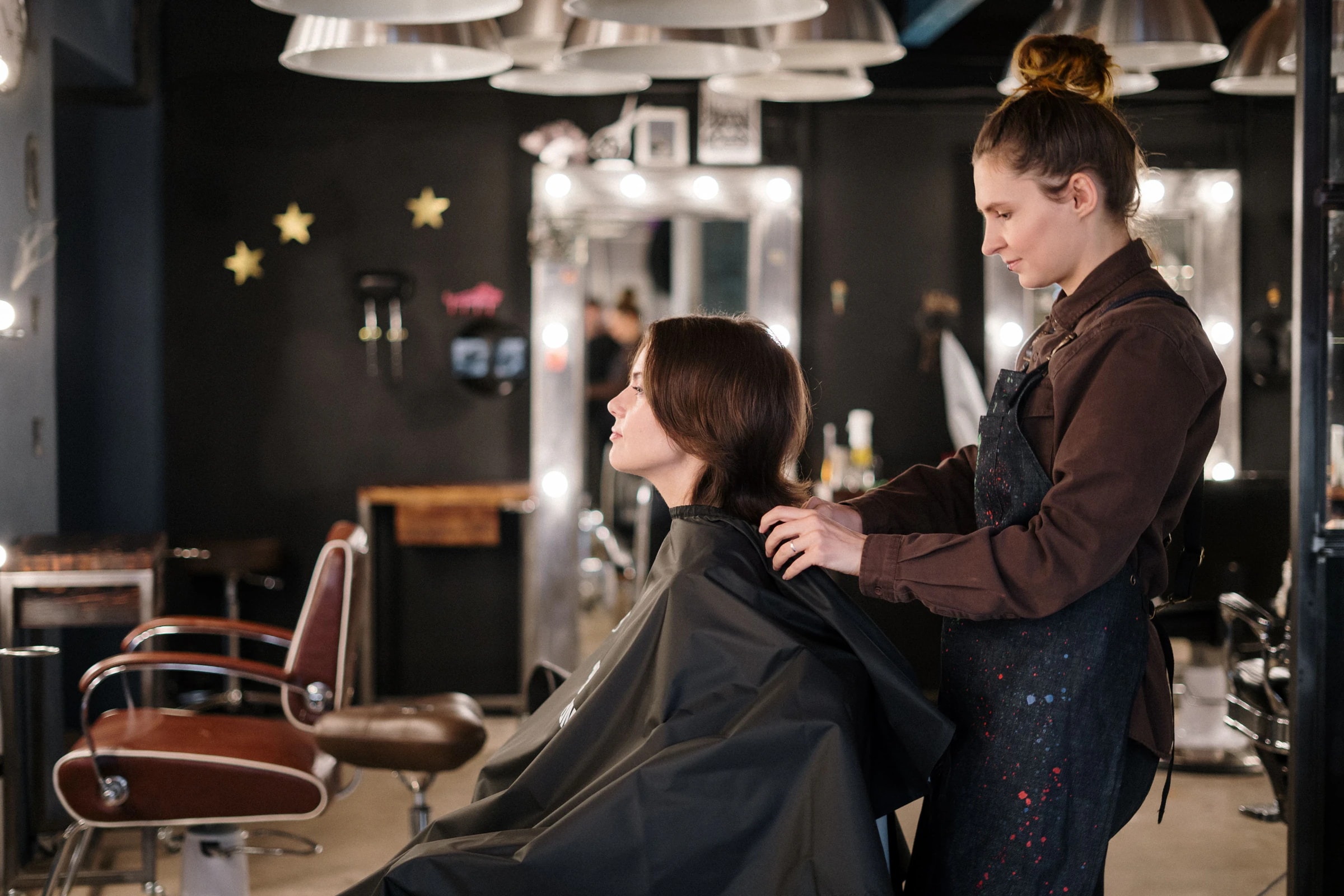
Hair stylist in a dark apron preparing a client draped in a cape at a modern salon station
Minimum order
About 50 pieces per style
Production
Cut & sewn in Los Angeles, imported fabric
Garments
Tunics, smocks, aprons, scrub-style tops and pants
Branding
Embroidery, printing, woven labels

Salons & Barbershops by style

12 styles in 3 families · each made to order in your fabric, color and branding from 50 pieces.

Customize your uniformsYour fabric, colors, pockets and branding
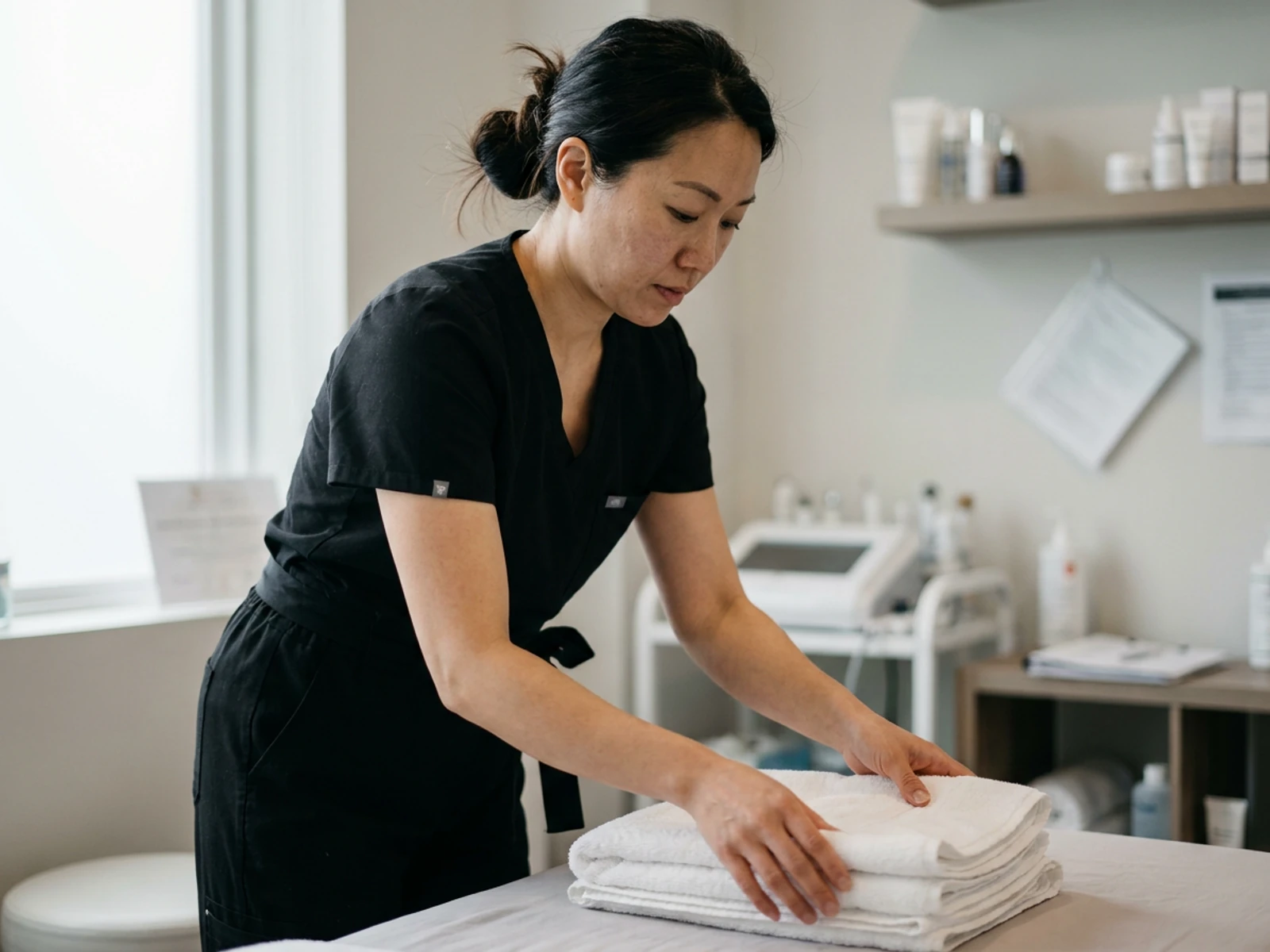
Med spa nurse in a black belted scrub jumpsuit preparing a treatment room

Belted one-pieces for stylists and barbers

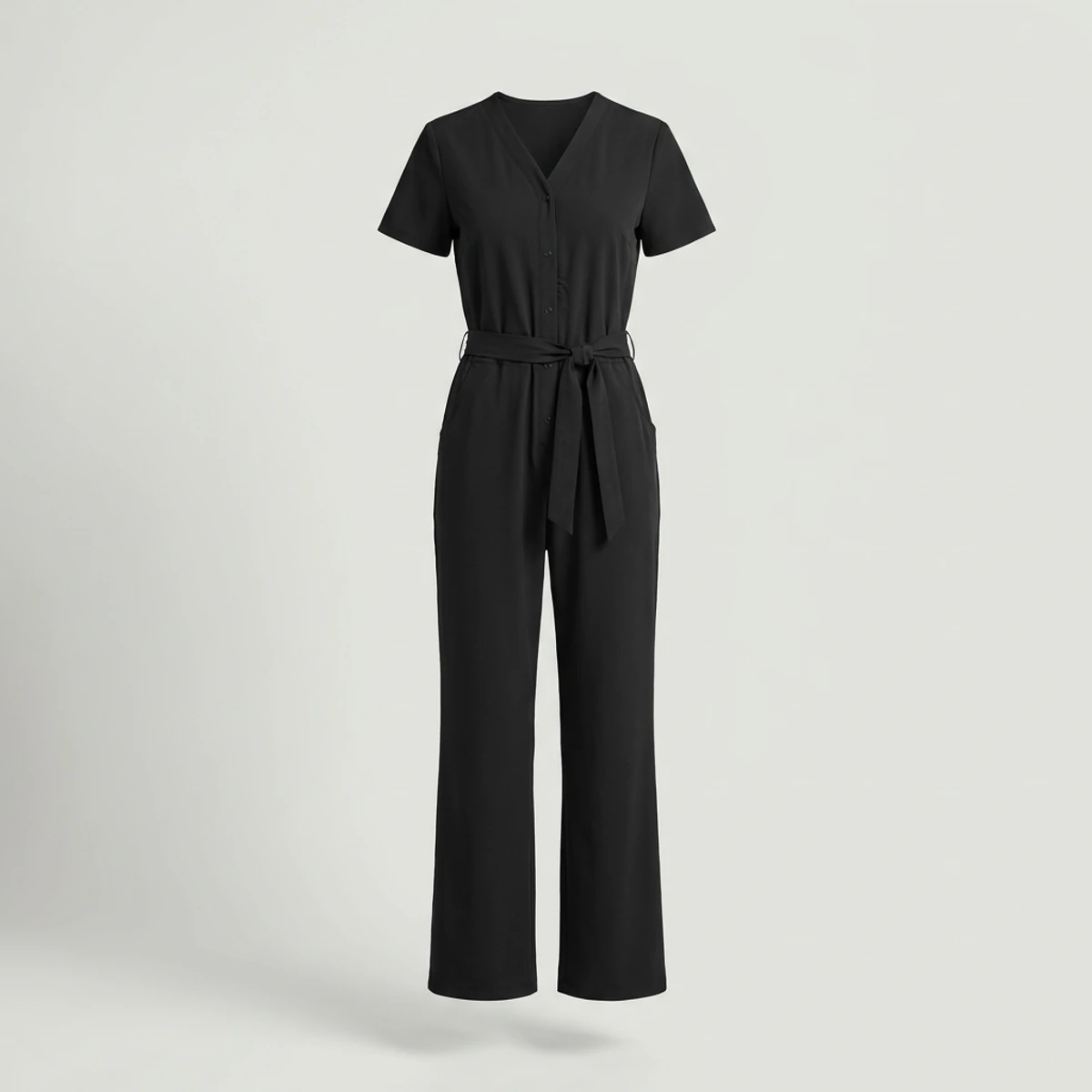
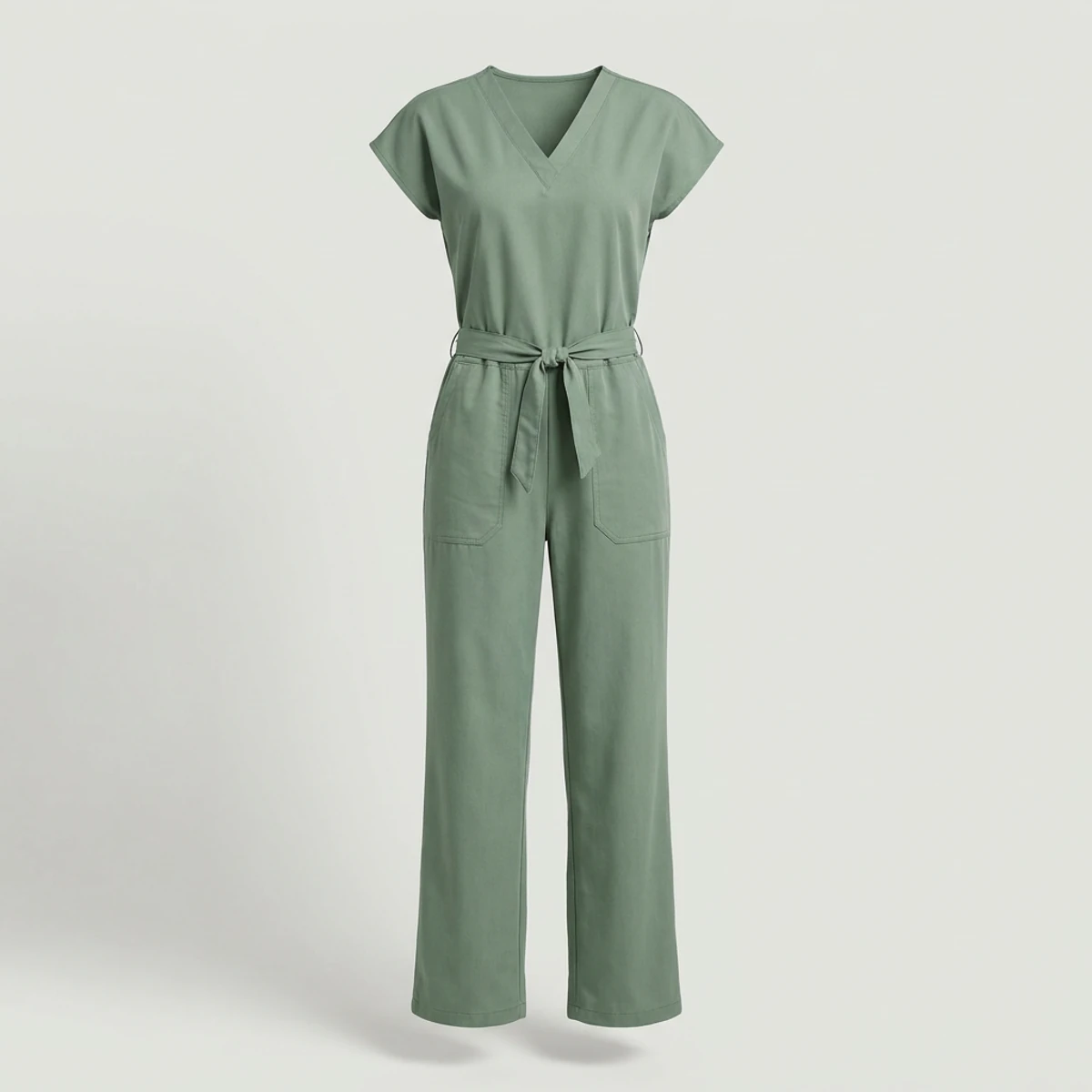
A black belted jumpsuit gives stylists and barbers a sharp, all-in-one look behind the chair, with no top to tuck between clients. We sew it in Los Angeles in your salon color from about 50 pieces per style.

  • Black women's scrub jumpsuit with tie belt, V-neck and wide legsBlack belted wide-leg jumpsuit
  • Sage green belted scrub jumpsuit with wide legs and patch pocketsSage belted jumpsuit
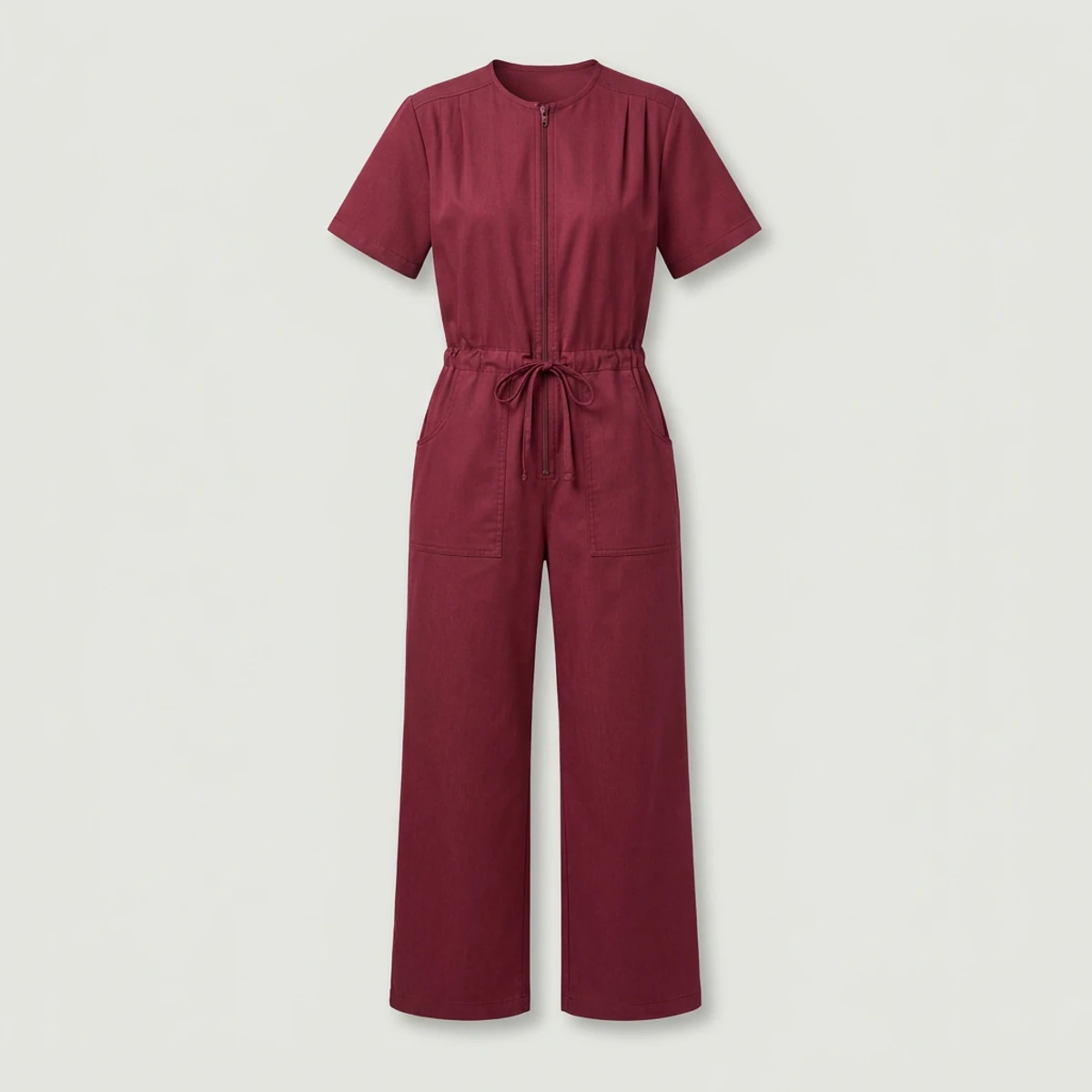
  • Wine colored wide-leg scrub jumpsuit with drawstring waist and pleated backWine wide-leg jumpsuit
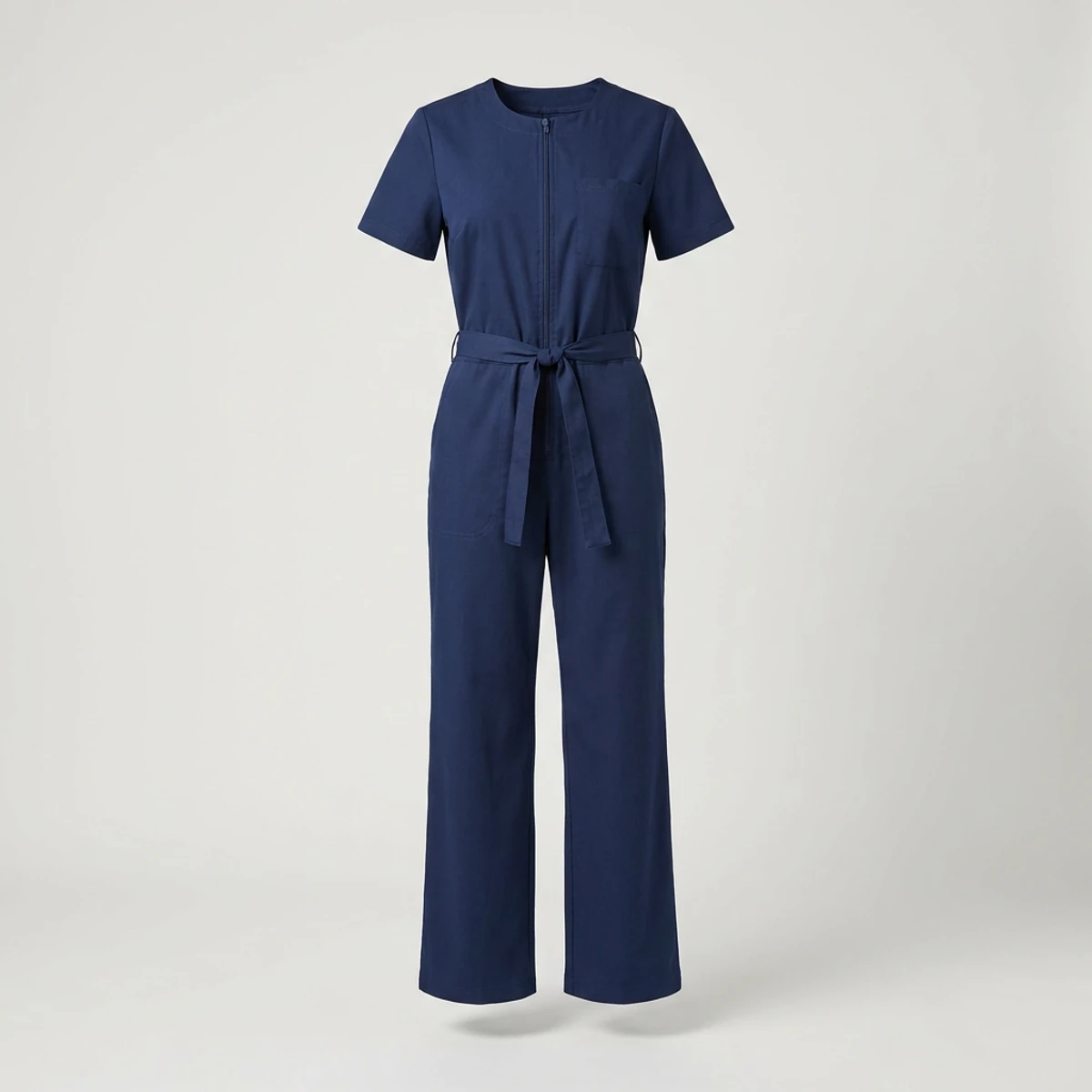
  • Navy wide-leg scrub jumpsuit with tie belt and chest pocketNavy wide-leg jumpsuit
Quote salon jumpsuits
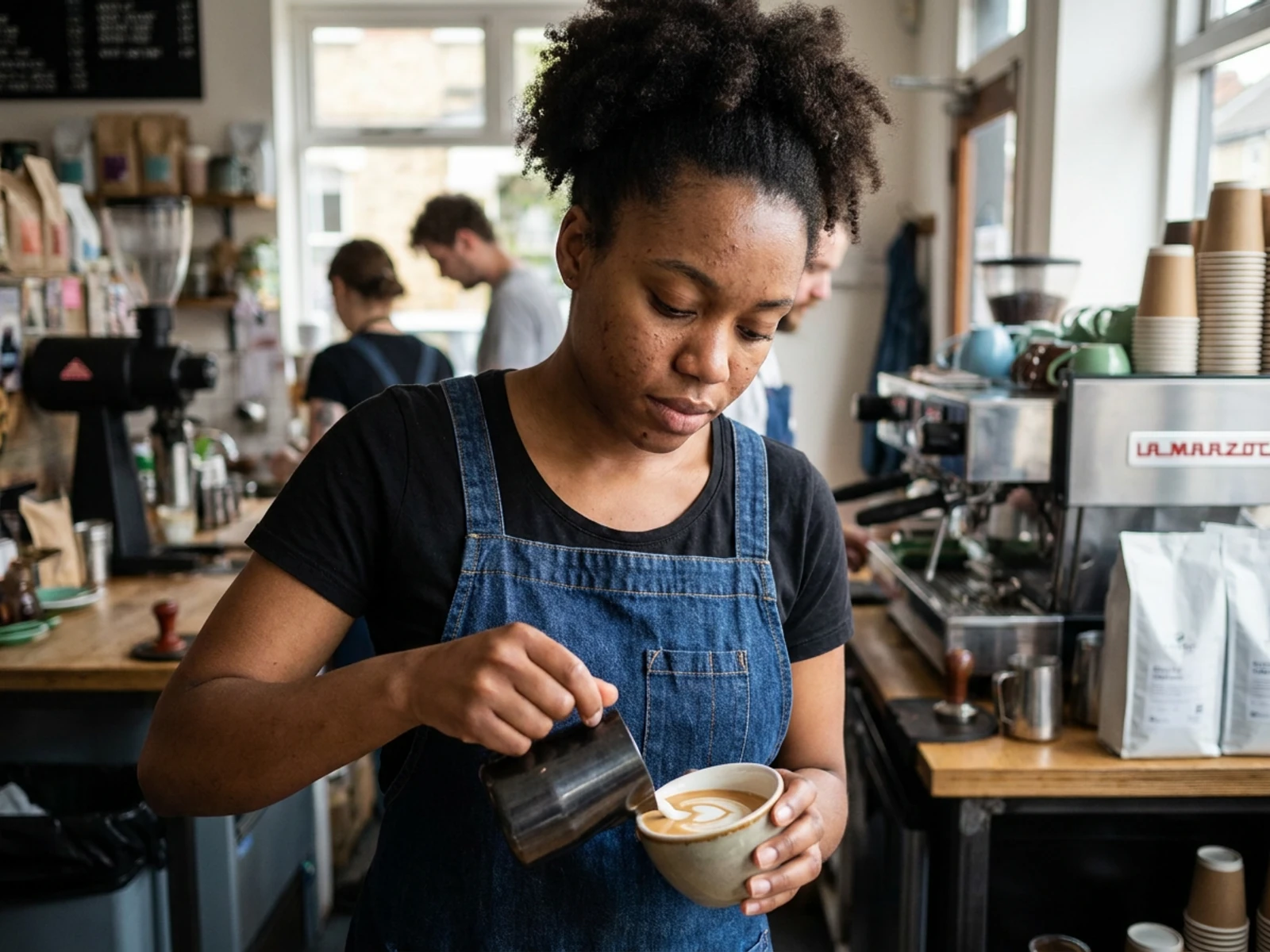
Barista in an indigo denim cross-back apron pouring latte art at a coffee bar

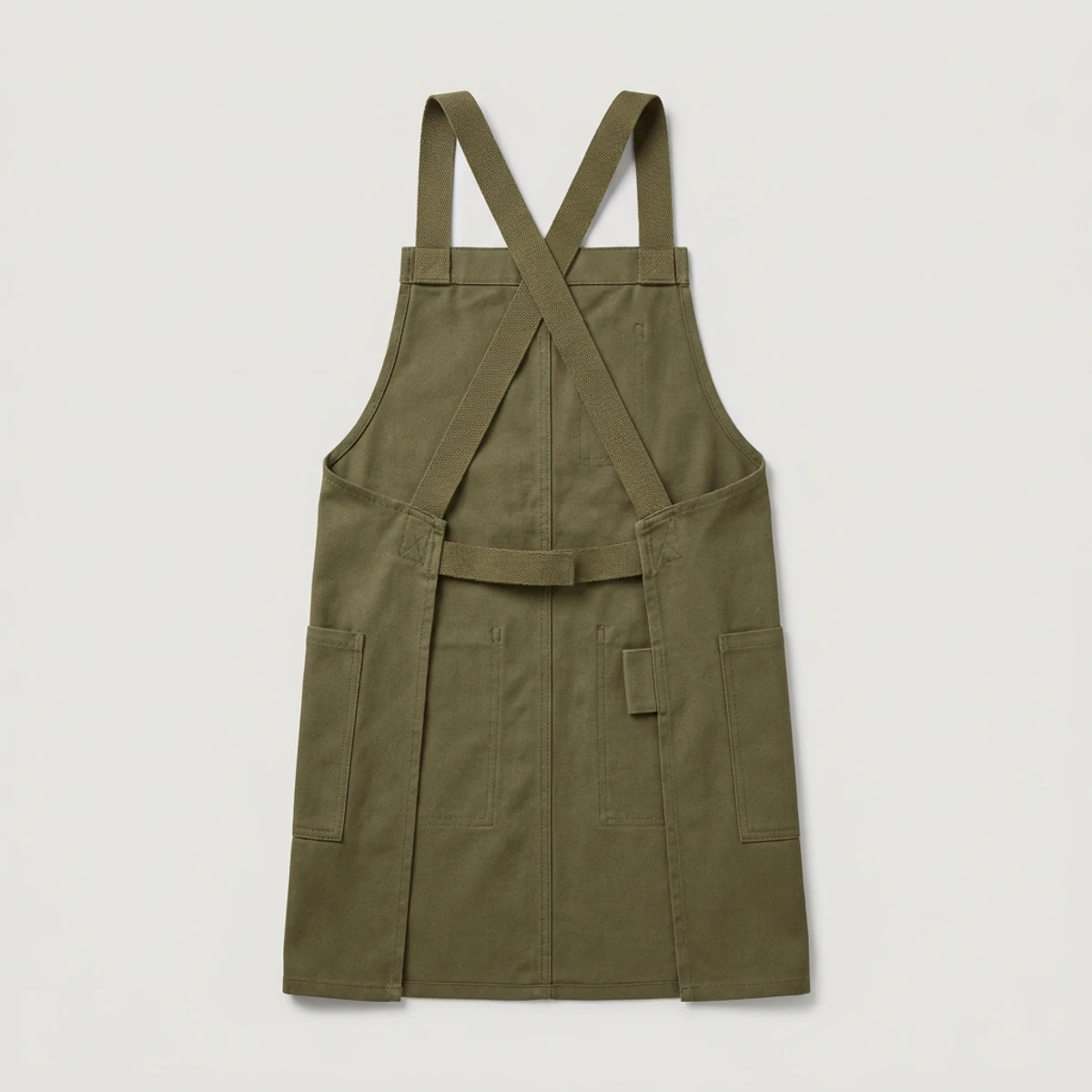
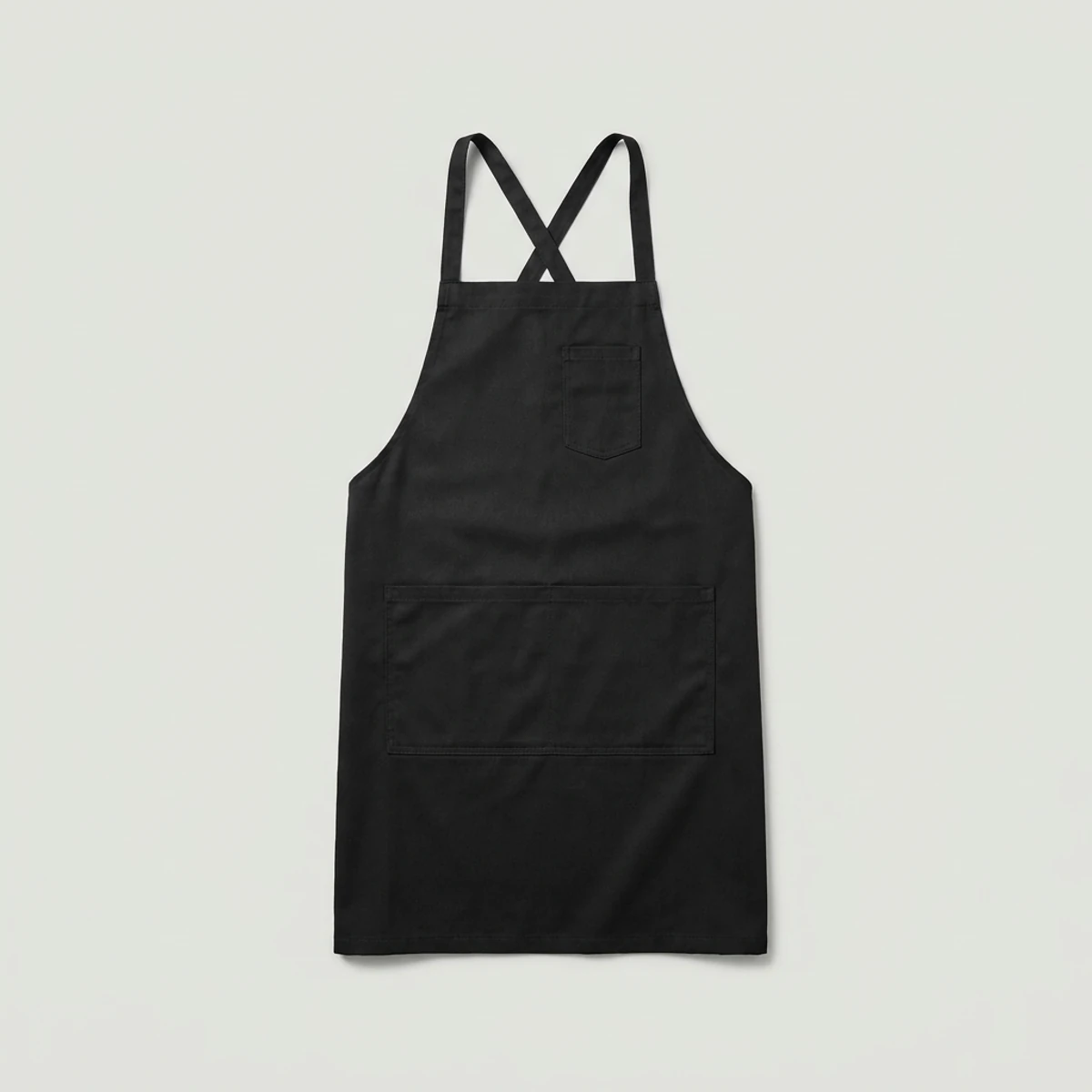
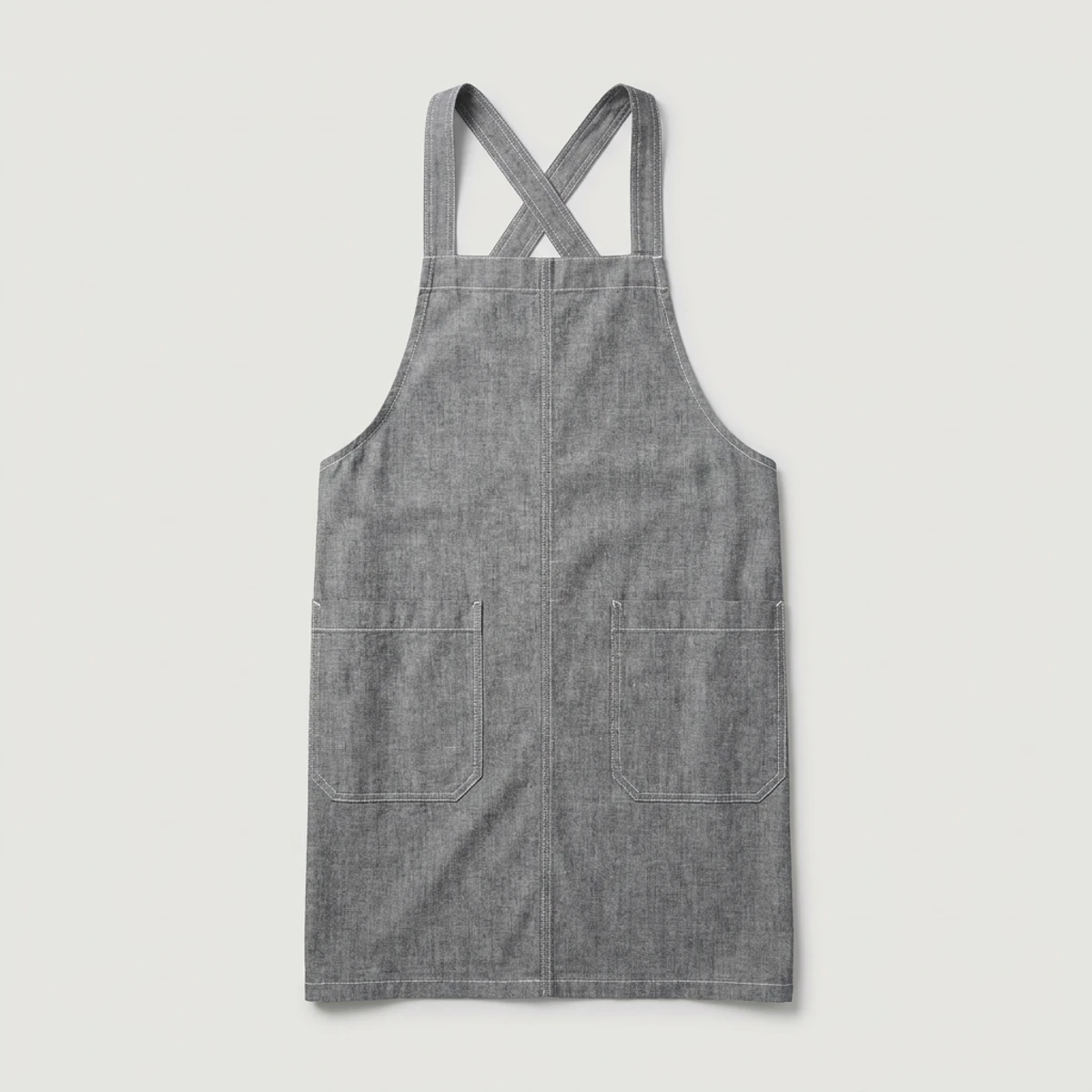
Cross-back aprons for stylists and colorists

Cross-back straps take weight off the neck during long days at the chair, and a coated fabric keeps color off clothes. We add the salon name and make them from roughly 50 pieces of a style.

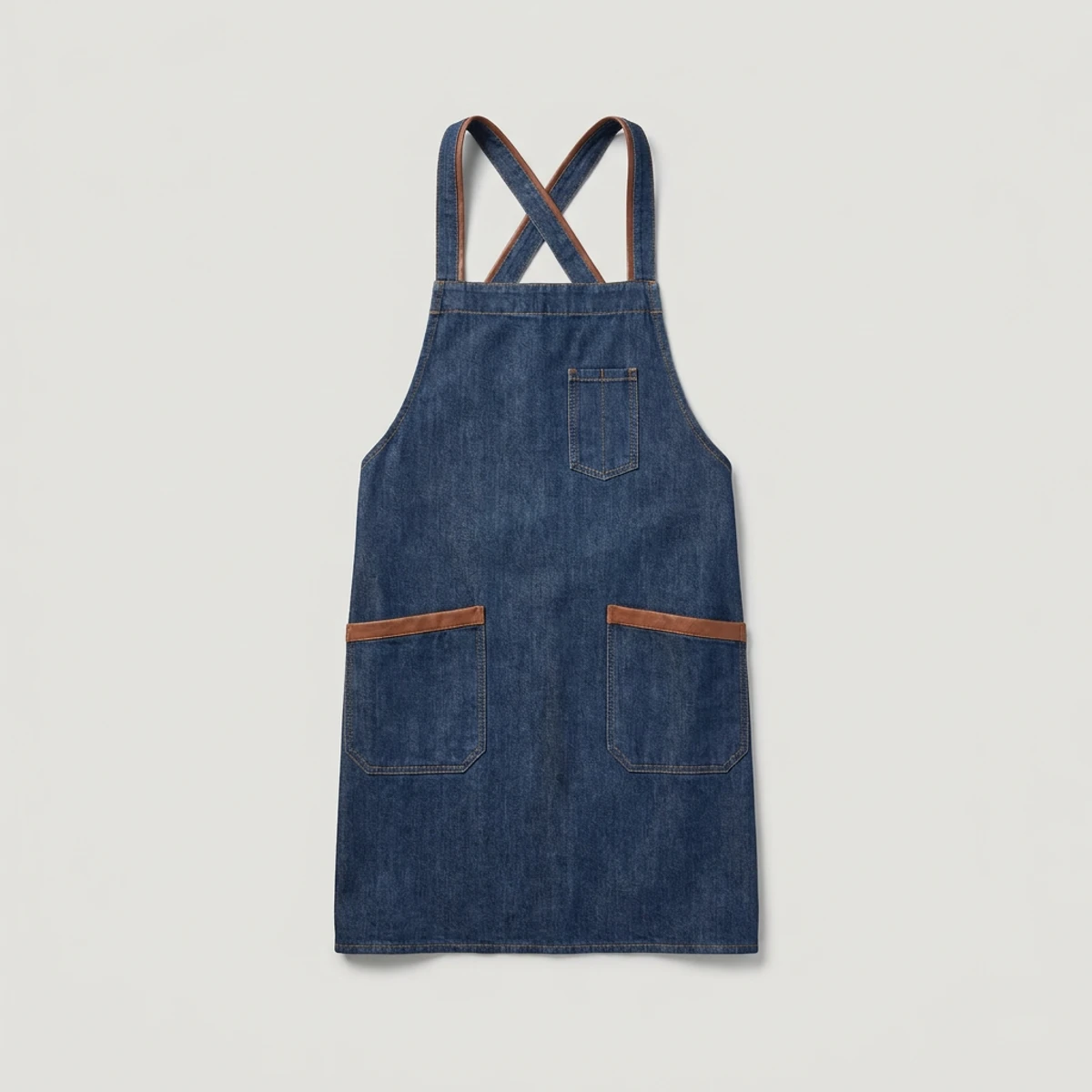
  • Indigo denim cross-back apron with leather-look straps and tool pocketsDenim cross-back apron
  • Olive canvas cross-back apron with webbing straps and towel loopOlive canvas cross-back apron
  • Black cross-back apron with split lower pocket and slim strapsBlack cross-back apron
  • Grey chambray cross-back apron with contrast stitching and pocketsGrey chambray cross-back apron
Quote stylist aprons
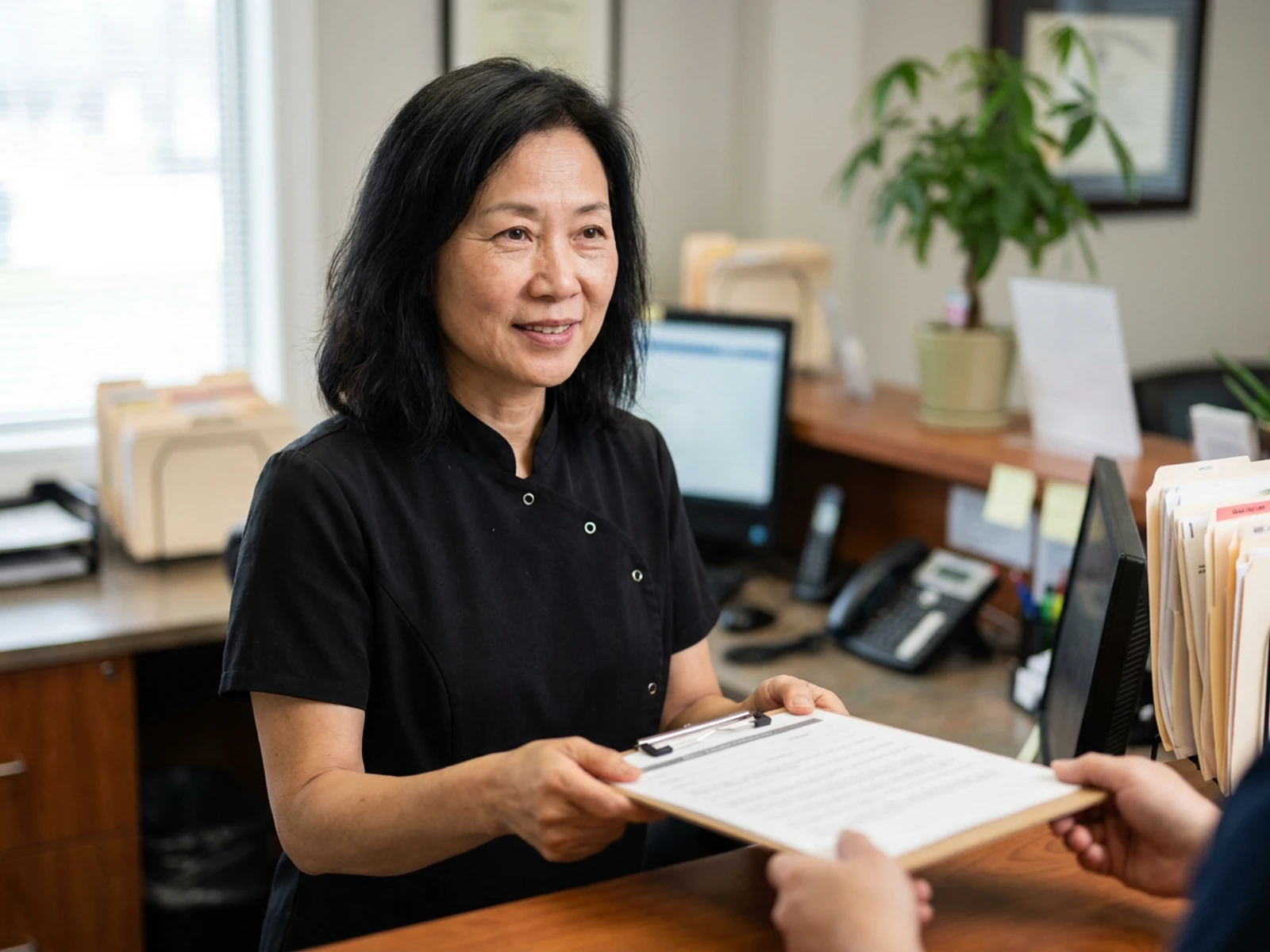
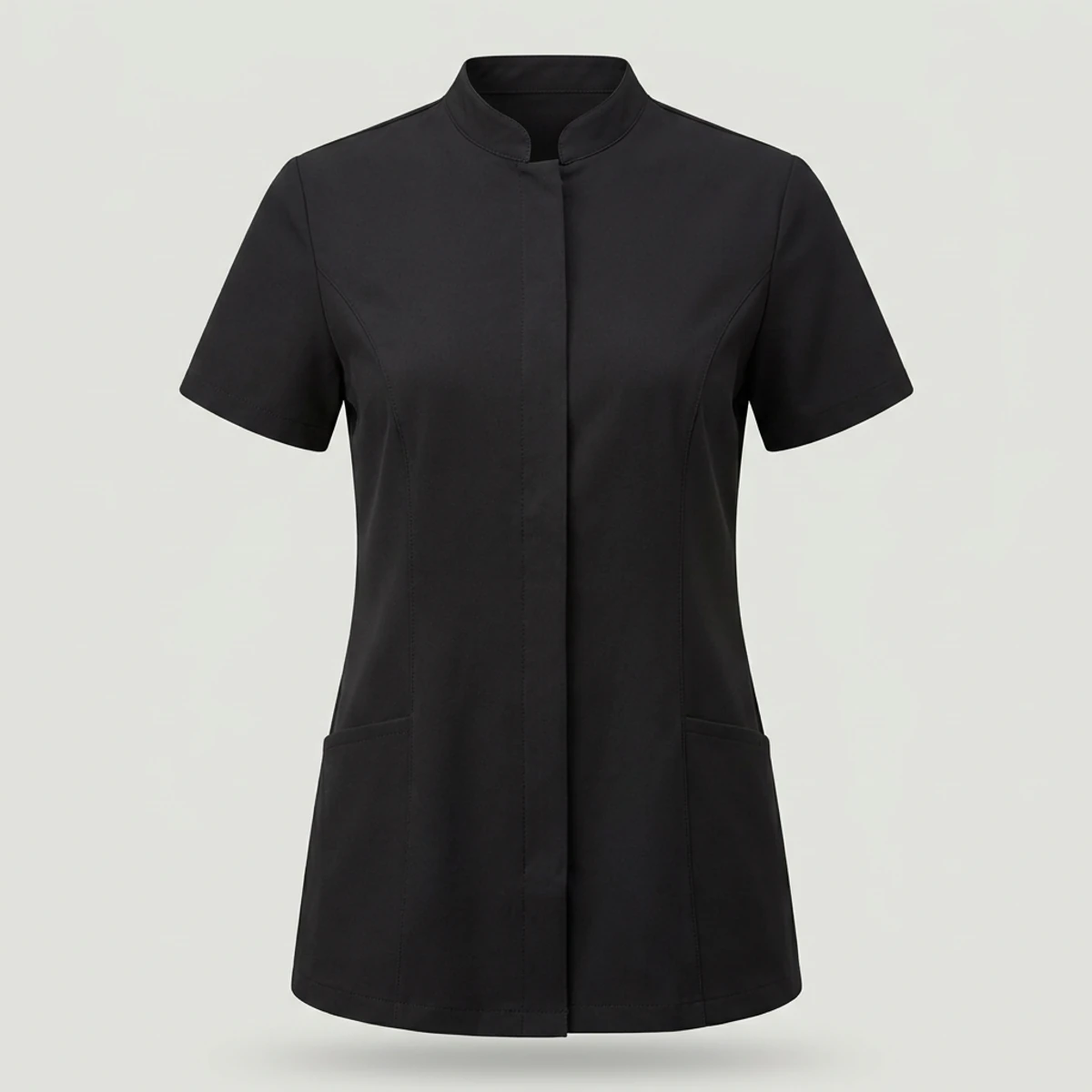
Clinic receptionist in a black mandarin-collar tunic checking in a patient

Mandarin tunics for reception

The person at the front desk sets the salon's style before any service starts. A mandarin-collar tunic in black or your brand color is made to order with a minimum near 50 pieces.

  • Black mandarin-collar tunic top with snap front for clinic front desk staffBlack mandarin-collar tunic
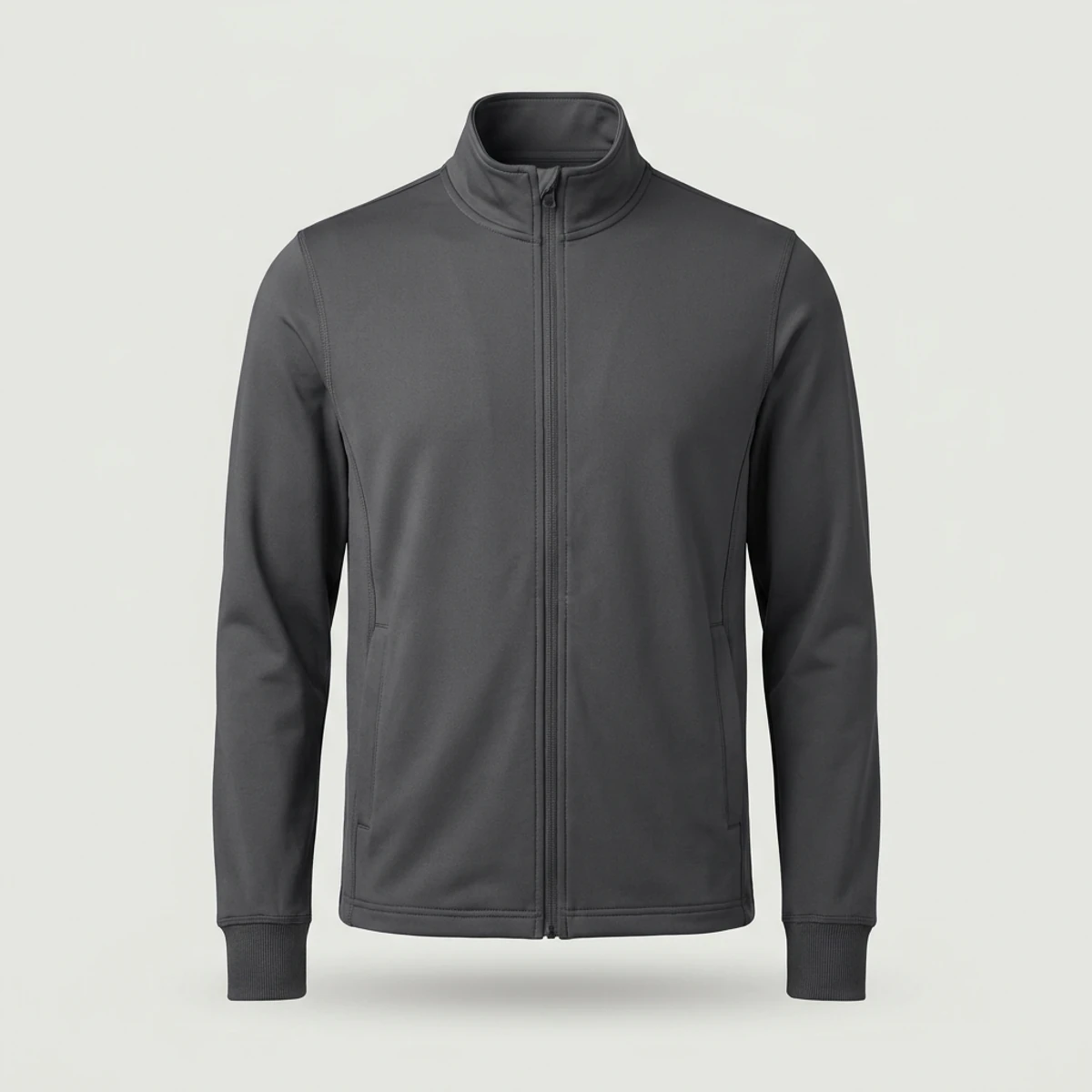
  • Charcoal grey zip warm-up jacket for clinic administrative staffCharcoal admin warm-up jacket
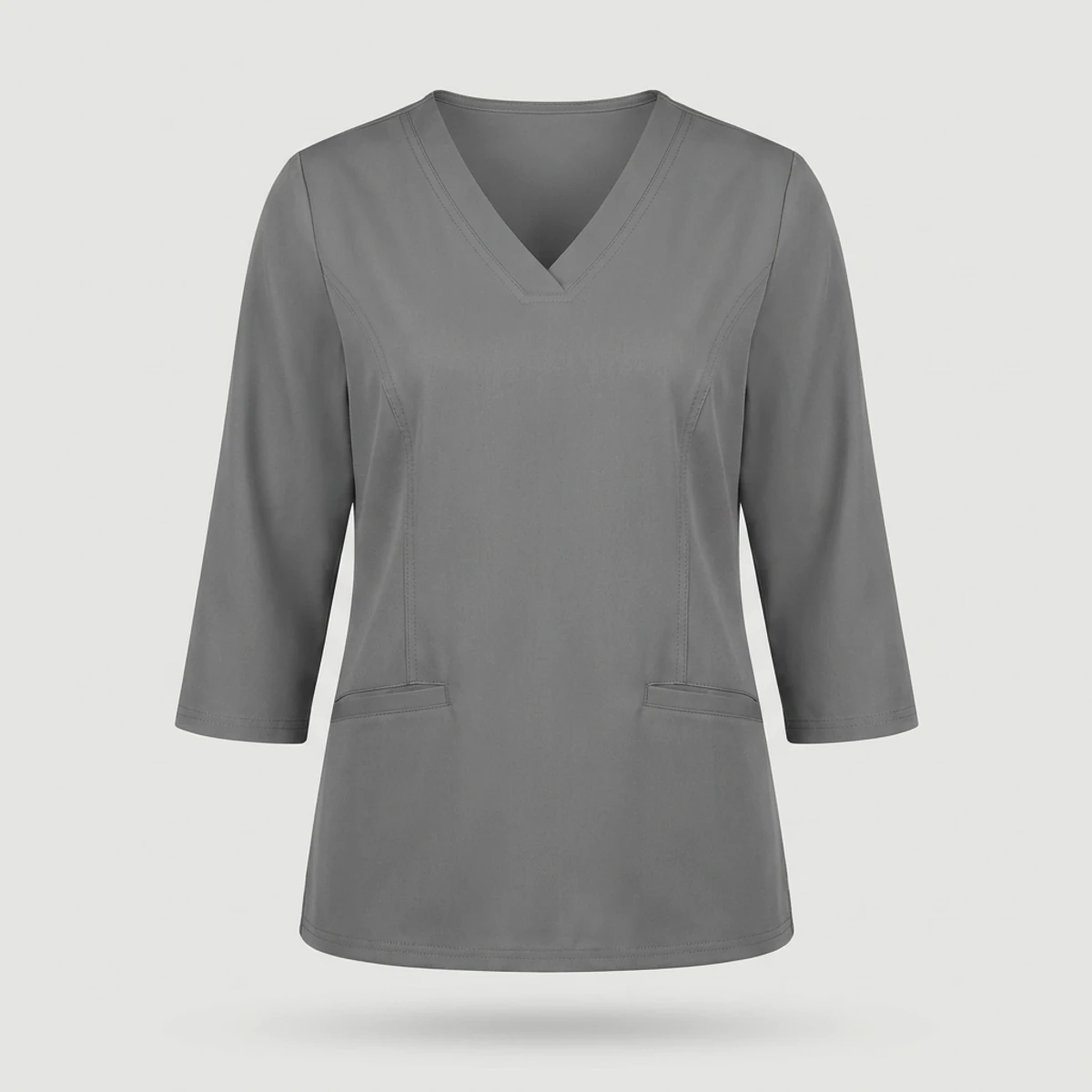
  • Pewter grey V-neck top with three-quarter sleeves for reception staffPewter front desk top
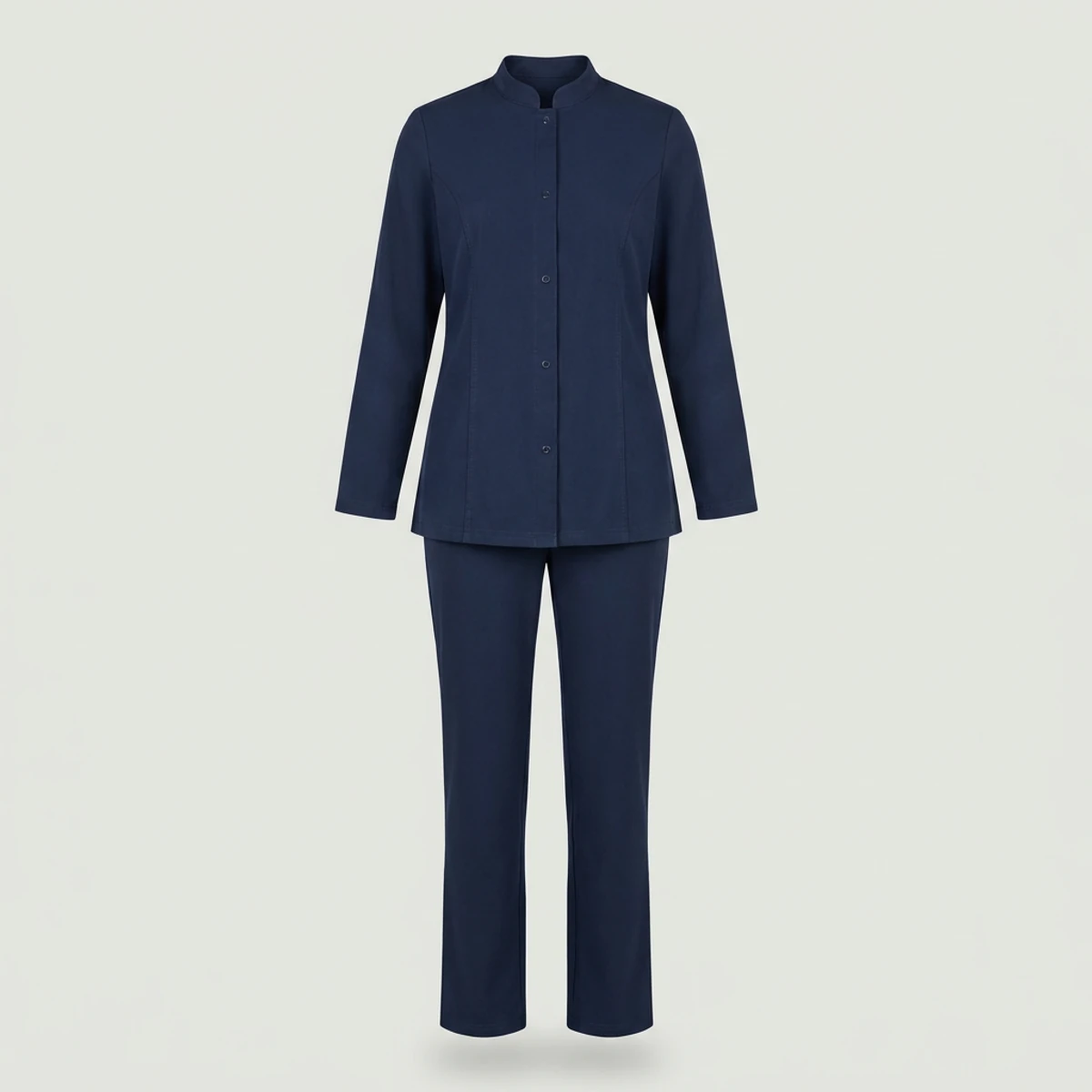
  • Navy tunic top with matching straight pants for front office staffNavy tunic and pant set
Quote front desk

Customize your aprons

Pick the style, fabric and colors, add your logo and names, then attach the design to your quote. We cut and sew it in Los Angeles from 50 pieces per style.

Black women's scrub jumpsuit with tie belt, V-neck and wide legs

What do salon uniforms need to do?

Salon uniforms need to fit the brand, manage color and chemical splashes and stay comfortable through long days standing. A salon uniform is part of the interior design as much as the chairs and lighting, yet color, toner, bleach, oils and hot tools all end up on the fabric, and the garments are washed constantly.

A good salon uniform program balances three things:

  • A look that fits the brand. Minimal black for an editorial color studio, soft neutrals for a wellness spa, classic smocks for a traditional barbershop.
  • Stain and splash management. Colors and fabrics that hide or shed dye, plus an outer layer for the messiest services.
  • Comfort for long days standing. Stretch, breathable fabric and sleeves that stay out of the way.

Which salon hazards affect uniforms?

The hazards that affect salon uniforms are hair color and toner, bleach and lightener, oils and massage products, hot tools and hair clippings. Salon uniforms are not protective equipment, so gloves and a water-resistant apron handle chemical work, while the uniform is chosen to resist stains and clean up well.

The Occupational Safety and Health Administration (OSHA) Hazard Communication standard applies to salons that use hazardous chemicals, which means keeping safety data sheets and training staff on the products they handle; those sheets say which gloves and protection each product needs. OSHA has also published guidance on formaldehyde in hair smoothing products. State cosmetology and barbering boards set their own sanitation and dress rules, so check yours.

HazardWhat happensWhat helps
Hair color and tonerDye transfers and stains, especially on light colorsDark colors, tighter weaves, an apron for color services
Bleach and lightenerRemoves color from many dyed fabrics, leaving pale or orange spotsFabric chosen for color retention, a coated apron at the backbar
Oils and massage productsLeave dark marks and build up in the fabricFabrics that release oils in the wash, regular hot washing
Hot toolsIrons and dryers can scorch or glaze some synthetic fabricsAvoid fabrics that glaze easily on sleeves and fronts
Hair clippingsWork into knits and textured fabricsSmooth, tightly woven fabric; minimal collar folds

Tip: Run a bleach spot test on a sample with your own lightener before you approve a black uniform. A fabric that holds its color against lightener will look new for far longer.

Salon tunics, smocks and aprons

Salon tunics, smocks and aprons are the core of most salon uniform programs: quick-change smocks between color and cut appointments, longer tunics that cover the hips at the shampoo bowl, band collars that keep clippings out, three-quarter sleeves and hidden pockets for clips and combs, with an apron over the top for chemical work.

  • Wrap or side-snap smocks. that go on and off quickly between appointments.
  • Tunics with a longer hem. to cover the hips when bending over the bowl.
  • Mandarin or band collars. that look sharp and keep clippings from collecting in a fold.
  • Three-quarter sleeves. that stay clear of the bowl and the client’s hair.
  • Hidden or zipped pockets. so clips and combs do not fall out when leaning over.
  • Water-resistant bib aprons. for the backbar, made as custom aprons in the same color scheme.

For teams that prefer a modern, athletic look, a fitted scrub-style top in black or a deep neutral is a popular alternative to a smock, especially in med-adjacent spas and lash or brow studios.
Salon and barber uniforms by role

Salon and barber uniforms vary by role: colorists wear a dark tunic with a full-length water-resistant apron, stylists wear the house tunic, barbers favor band-collar jackets or branded shirts with aprons, and estheticians and massage therapists need stretch tunics and soft pants. Front desk staff wear a dressier top in the same colors.

RoleTypical uniform
ColoristDark tunic or smock, full-length water-resistant apron at the backbar
StylistTunic or smock in the house color, optional waist apron
Shampoo assistantShort-sleeve tunic, water-resistant apron
BarberBarber jacket or smock with band collar, or branded shirt with a waist or bib apron
Nail technicianTunic or scrub-style top; protection per product safety data sheets
Esthetician or massage therapistStretch tunic and soft pants, short or three-quarter sleeves
Front desk and managersDressier top in the same colors

Fabric options for salon uniforms

Fabric options for salon uniforms trade color retention against comfort: polyester-rich wovens hold color and shed hair, poly-cotton balances comfort and durability, stretch wovens suit therapists who move constantly, and coated or water-resistant fabrics are reserved for aprons. Available fabrics and finishes are confirmed at quote stage.

OptionBest forTrade-off
Polyester-rich wovenColor retention, quick drying, smooth surface that sheds hairCan glaze under hot tools; less breathable
Poly-cotton blendBalance of comfort and durabilityCotton content can show bleach spots
Stretch woven (with spandex)Spa therapists and stylists who move constantlyCheck recovery after repeated hot washes
Coated or water-resistant fabricAprons for color and shampoo workToo warm for a full uniform
Indigo denim cross-back apron with leather-look straps and tool pockets

Barber uniforms

Barber uniforms tend toward a classic look: a smock or barber jacket with a band collar, or a branded shirt with a canvas or leather-look apron. Snap closures that do not trap clippings, a breast pocket for combs and fabric that brushes clean of hair matter more than any trend.

Read more

A shorter waist apron with pockets suits barbers who want clippers and combs close. Many shops embroider the shop name on one side of the chest and the barber’s name on the other.

Black mandarin-collar tunic top with snap front for clinic front desk staff

Do salons with treatment rooms need different uniforms?

Salons with treatment rooms usually keep the house tunic for stylists and give estheticians and massage therapists a softer, stretchier version in the same palette, because treatment work needs more arm movement and short sleeves that stay clear of oils. Standalone day spas and med spas plan a full role-by-role program, covered on the spa uniforms page, and estheticians who prefer fitted sets can see esthetician scrubs.

How should a salon brand its uniforms?

A salon should brand its uniforms with a small embroidered chest logo, which survives frequent washing and looks refined, and repeat it on the apron or move it to the sleeve so it stays visible at the chair. Printing suits bolder designs, and a woven label at the hem or neck is a quiet option for luxury brands.

Read more

Custom embroidery and printing covers logos, names and location marks; names work best opposite the logo, at a size clients can read in the mirror. Salon groups, franchises and founders launching a salon wear label can sell uniforms under their own name, with their labels and tags, through the private label program.

Tip: Photograph a stylist in the sample tunic and apron at the chair, from the client’s seat. That is the view your clients actually see.

What determines the cost of custom salon uniforms?

The cost of custom salon uniforms depends on fabric, quantity per style, the number of styles across stylists, therapists and barbers, garment complexity, decoration and custom labels. Every program is quoted on its actual fabric, artwork and quantities, so the table shows which choices move the cost rather than listing prices.

Cost driverHow it moves the costHow to keep it in check
FabricColor-retention, stretch and coated fabrics usually cost more than standard poly-cottonPay for color retention where chemicals are used
Quantity per styleLarger runs spread cutting, setup and sampling across more piecesOne core tunic across roles where possible
Number of stylesSmocks, tunics, aprons and barber jackets are each their own runSeparate roles with aprons, not new tunics
Style complexityWrap fronts, snaps, hidden zips and band collars add sewing timeKeep the details clients notice
DecorationStitch count and number of locations add time per pieceOne small chest or sleeve logo
Labels and packagingWoven labels, hang tags and packaging add componentsUse them for retail or private label lines

How do you roll out a salon uniform program?

Roll out a salon uniform program by defining the look, mapping which roles share a garment, setting the issue per person, counting by style against the minimum of about 50 pieces, testing samples with your own color, lightener and oils, and collecting sizes and names before production. The size breakdown is agreed at quote stage.

  1. 01

    Define the look

    Photos or a mood board, house colors and the feel you want clients to notice.
  2. 02

    Map roles

    Decide which roles share a garment and which need their own.
  3. 03

    Set the issue per person

    Plan enough tunics that nobody works in a stained one.
  4. 04

    Count by style

    against the minimum of about 50 pieces.
  5. 05

    Test samples

    with your own color, lightener and oils.
  6. 06

    Collect sizes and names,

    then issue with care instructions.

Worked example. A salon and spa group with three locations has 22 stylists and colorists, 6 shampoo assistants, 8 spa therapists and 5 front desk staff.

  • Black stylist tunic: 28 people × 3 = 84 pieces, above the minimum.
  • Water-resistant color apron: 20 colorists and assistants × 2 = 40 pieces, below the minimum, so the group orders 50 and keeps spares at each location.
  • Spa tunic in a soft neutral: 8 × 3 = 24 pieces. The group can order 50 to cover two years of replacements, or dress therapists in the black stylist tunic, which keeps one style across the group.
  • Front desk: 5 × 3 = 15 more black tunics with names embroidered, bringing that run to 99 pieces.
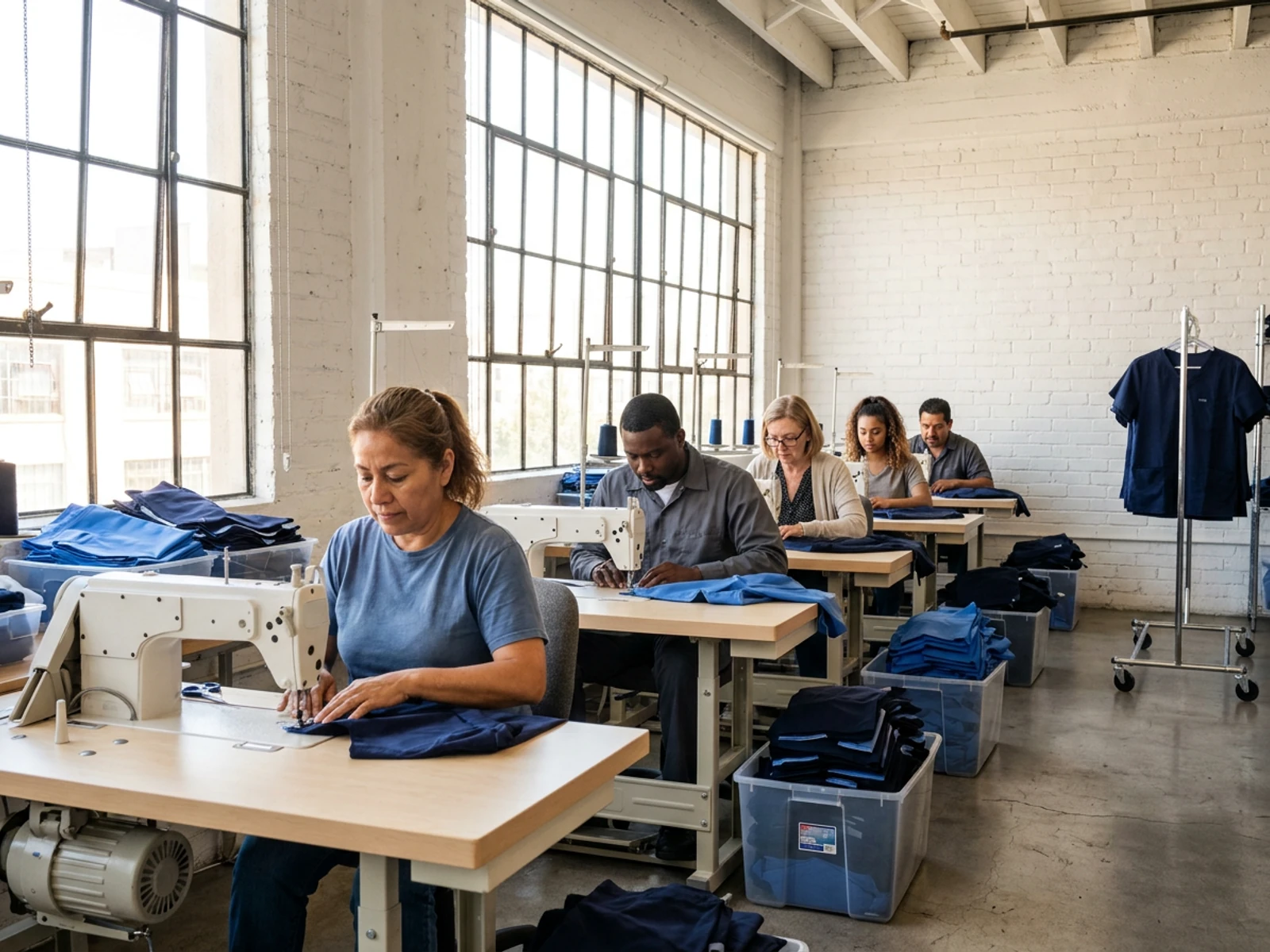
Operators sewing scrub tops on rows of industrial sewing machines

Reorders and new-hire planning

Reorders keep a salon uniform consistent as stylists come and go, because the approved style stays on file and every run matches the color already in use. Keep a small stock of the core tunic in common sizes so a new hire can wear it on day one.

Ask for current lead times before a reorder or a new location opening. Salons that want plain stock for trial hires can buy unbranded garments through the wholesale program.

How should salon uniforms be laundered?

Salon uniforms should be rinsed of color and lightener splashes quickly, kept away from chlorine bleach, washed inside out at the temperature the care label allows and kept out of the towel load. Oil-soaked treatment-room uniforms should be washed promptly and on their own, because oils build up and carry odor.

  • Rinse color and lightener splashes as soon as possible; they set with time and heat.
  • Avoid chlorine bleach on dyed uniforms, which causes the pale spots you are trying to prevent.
  • Wash dark uniforms inside out to protect color.
  • Wash oil-soaked treatment-room uniforms promptly and on their own.
  • Keep uniforms out of the towel load, where chemical residue concentrates.

What mistakes do salons make with uniforms?

The most common salon uniform mistakes are a light house color in a color-heavy salon, expecting the tunic to protect against chemicals, one style for stylists and spa therapists who move differently, and skipping a product test on the sample. Each is easy to avoid before the full run is cut.

  1. Choosing a light house color for a color-heavy salon.
  2. Expecting the tunic to protect against chemicals instead of using an apron and gloves.
  3. Ordering one style for stylists and spa therapists who need different movement.
  4. Skipping a product test on the sample.

Ready to order

What to send us for a quote

A complete quote for salon uniforms needs your look and house colors, logo files and preferred decoration, headcount by role and location, your service mix, sizes and names, and any private label needs. With that in hand, styles can be proposed to meet the minimum and sampled for a product test.

  • Your look: photos, mood board, house colors.
  • Logo files and preferred decoration.
  • Headcount by role and location.
  • Service mix: color, chemical, barbering, spa.
  • Sizes and names per person.
  • Private label needs: labels, tags, packaging.

Questions about salons & barbershops

Need something not covered here? Ask our Los Angeles team and we’ll answer with options for your order.

Ask our Los Angeles team

What color salon uniform hides hair dye best?

Black and very dark shades hide most dye and toner splashes, which is why black is the default in many color salons. The trade-off is that bleach and lightener can leave orange or pale spots on dark fabric. Fabric choice matters as much as color, so we discuss your services before recommending a fabric.

Are your salon smocks waterproof or chemical-proof?

Everyday salon tunics and smocks are not chemical protective clothing. They are chosen to resist staining and to clean up well. For backbar work with color, bleach or chemical services, a coated or water-resistant apron over the uniform is the better barrier. We confirm available fabrics and finishes at quote stage.

Can a salon order fewer than 50 uniforms?

Our minimum is about 50 pieces per style, with the size breakdown agreed at quote stage. Smaller salons often meet it by choosing one versatile style for the whole team, or by ordering a year's supply including spares for new hires. Salon groups and franchise brands usually order across locations.

What should nail technicians wear in a salon?

Nail technicians usually wear the house tunic or a scrub-style top with a smooth, tightly woven surface that sheds filing dust. Acetone and some nail products can mark or soften certain synthetic finishes, so test a sample with your own products. Gloves, masks or other protection follow each product's safety data sheet, not the uniform.

Can we sell a salon uniform line under our own brand?

Yes. If you are launching a salon wear or barber apparel label, our private label service covers your labels, hang tags and packaging on garments we design, sample and sew in our Los Angeles factory, with a minimum of about 50 pieces per style.

Salons & BarbershopsCut & sewn in Los Angeles · from 50 pieces per styleRequest samplesGet a quote