Industries · Los Angeles factory

Custom Uniforms for Food Plants

Food processing uniforms are the frocks, coats, aprons and work pants that plant workers wear over or instead of street clothes so that hair, lint, loose objects and allergens stay out of the product. Custom Uniform Factory cuts and sews them in its Los Angeles factory from imported fabric, built to your plant's good manufacturing practice (GMP) and HACCP rules: no pockets above the waist, snap closures, color-coded by zone and branded with your logo, from about 50 pieces per style.

Minimum order
About 50 pieces per style
Production
Cut & sewn in Los Angeles, imported fabric
Garments
Frocks, smocks, coats, aprons, work pants, coveralls
Design rules
Built to your GMP and HACCP spec: no above-waist pockets, snaps, secured trims

Food Processing by style

16 styles in 4 families · each made to order in your fabric, color and branding from 50 pieces.

Customize your uniformsYour fabric, colors, pockets and branding
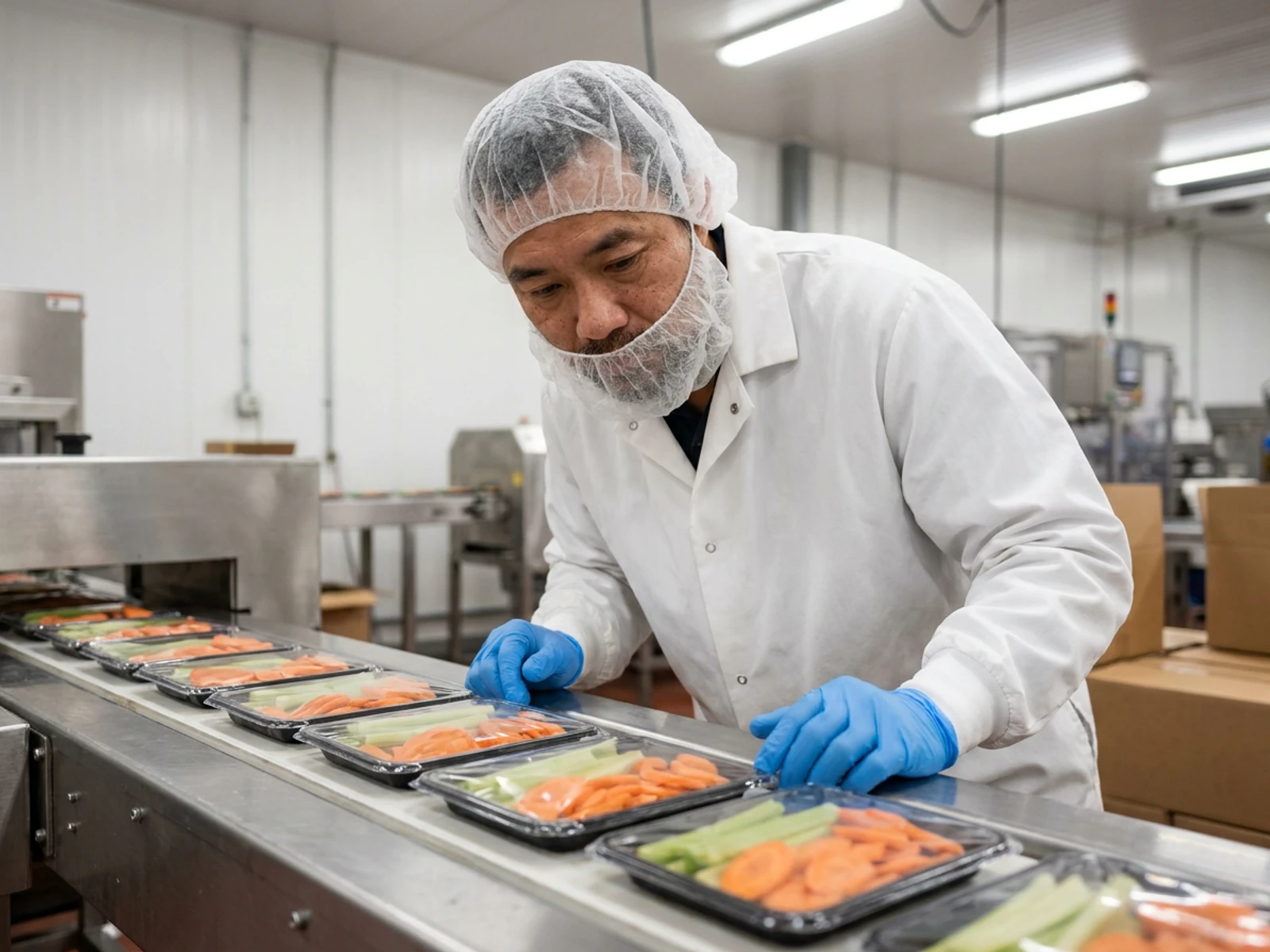
Food processing worker in a white snap-front frock, hairnet and beard cover inspecting packaged vegetables on a stainless steel line

Snap-front frocks for production lines

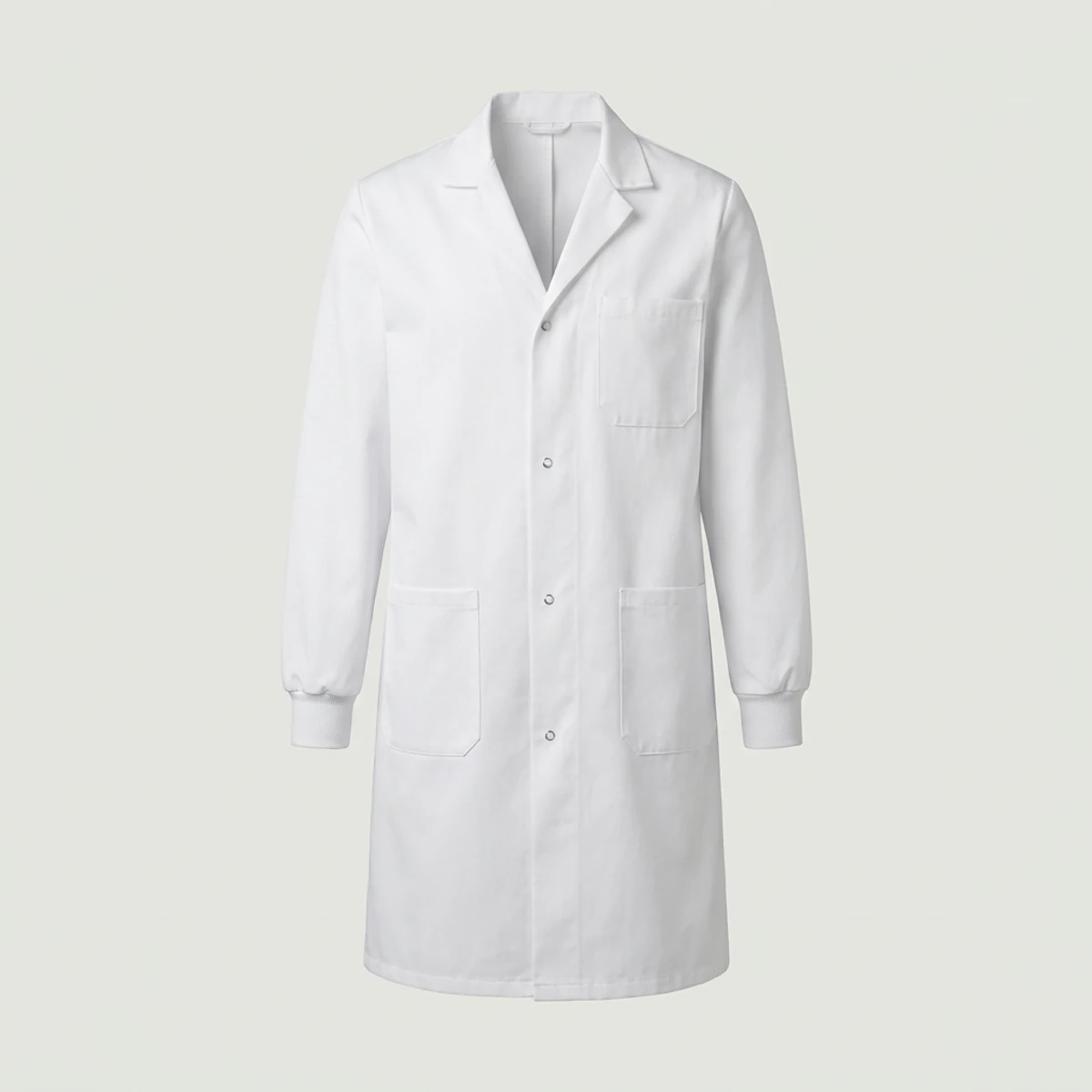
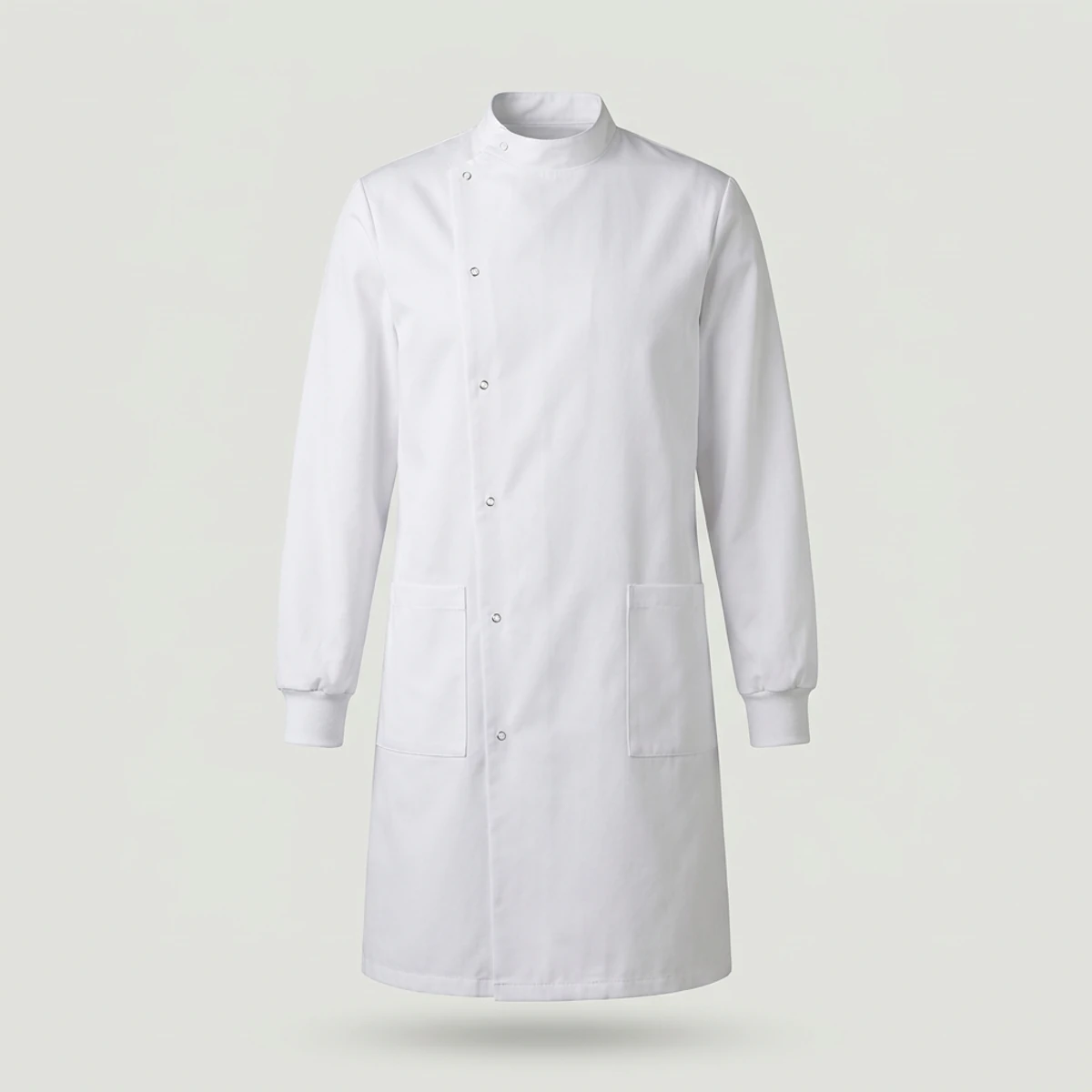
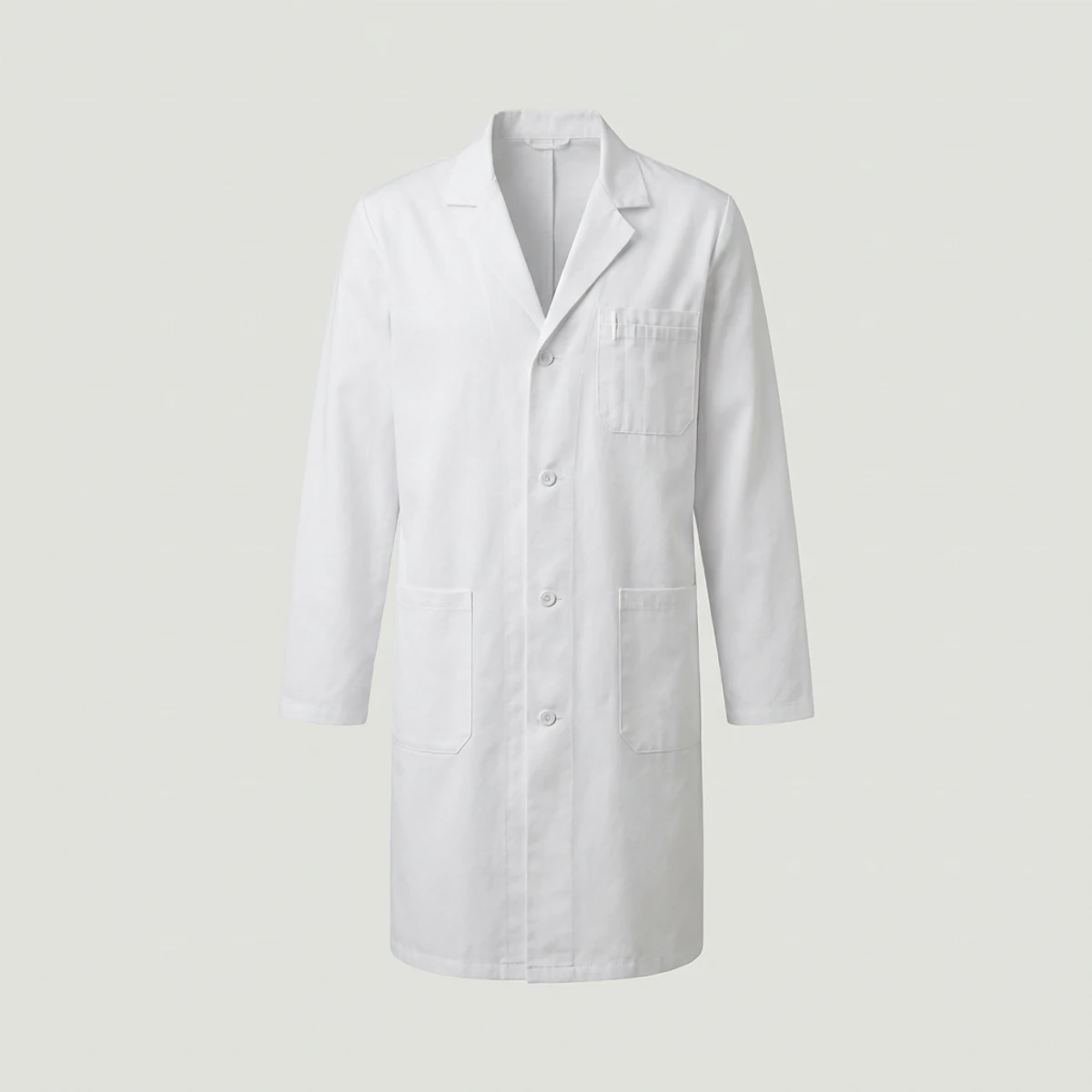
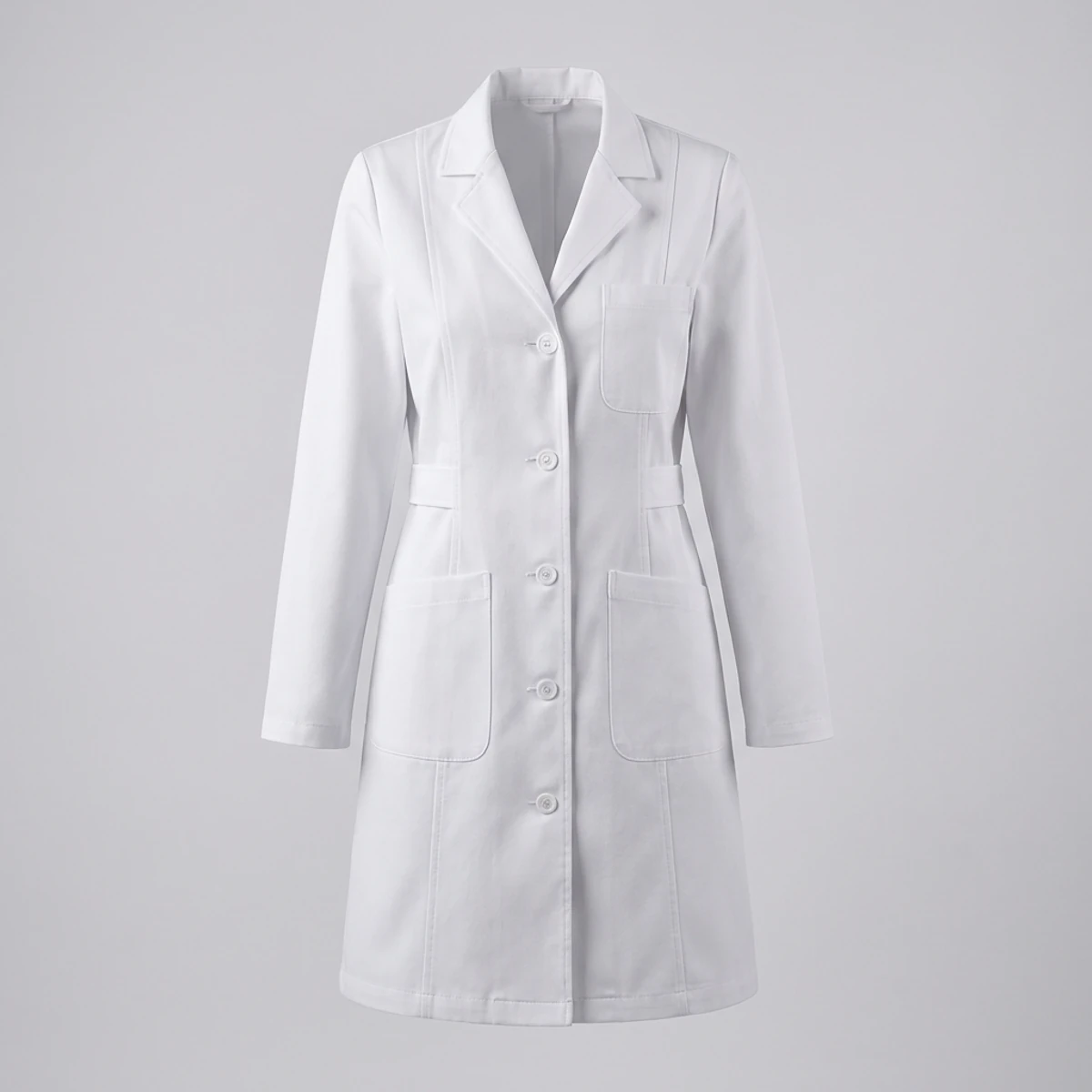
A knee-length frock with gripper snaps, closed cuffs and no outside pockets above the waist covers street clothes from collar to knee and comes off in seconds at the zone exit. We cut and sew them in poly-cotton for daily industrial washing, from about 50 pieces per style.

  • White knee-length laboratory coat with knit cuffs and snap frontWhite knee-length lab coat
  • White knee-length lab coat with stand collar and side snap closureStand-collar lab coat
  • White knee-length lab coat with five-button front and back ventClassic button knee-length coat
  • Women's fitted white knee-length lab coat with back belt and princess seamsWomen's knee-length lab coat
Quote plant frocks
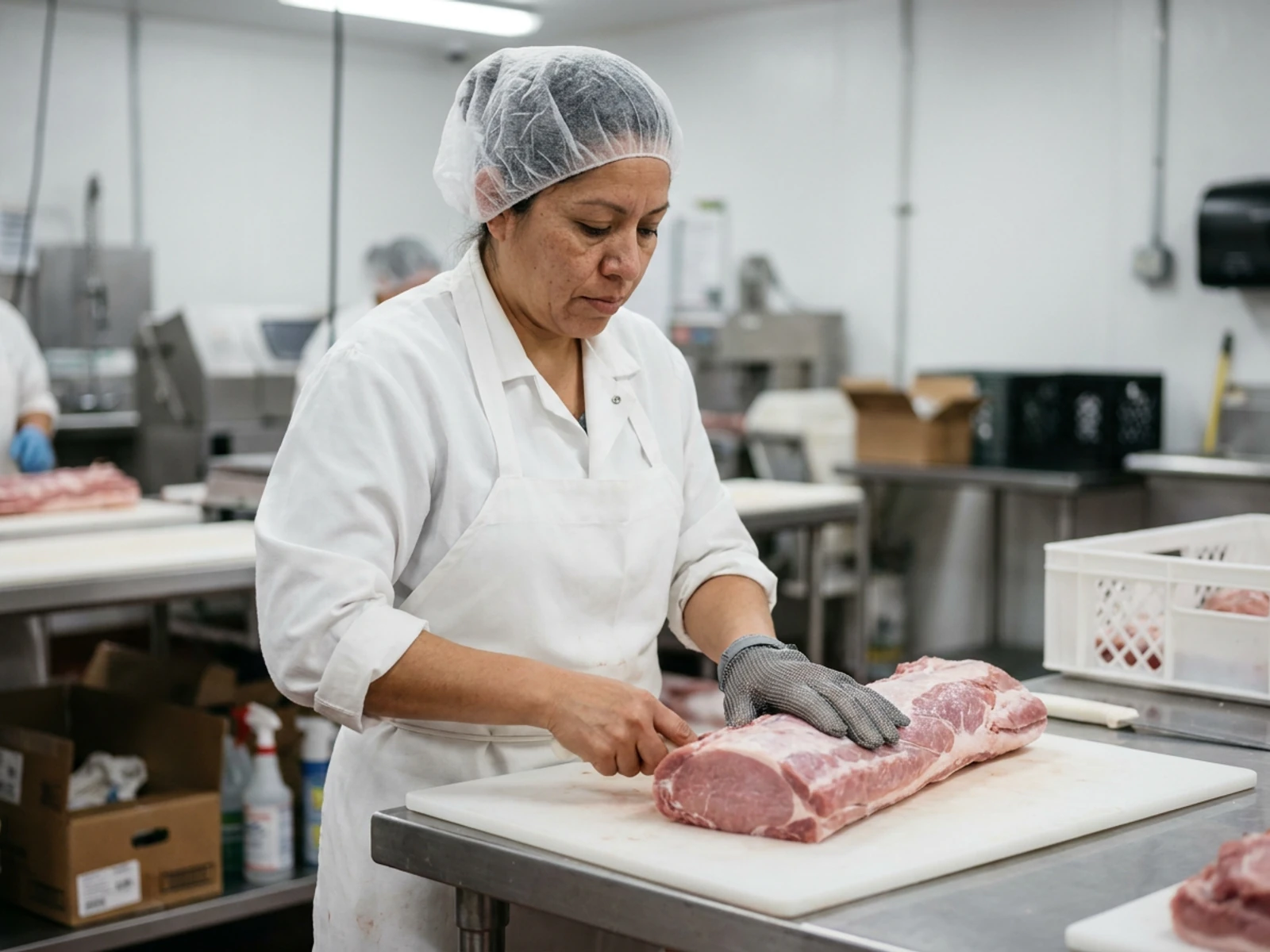
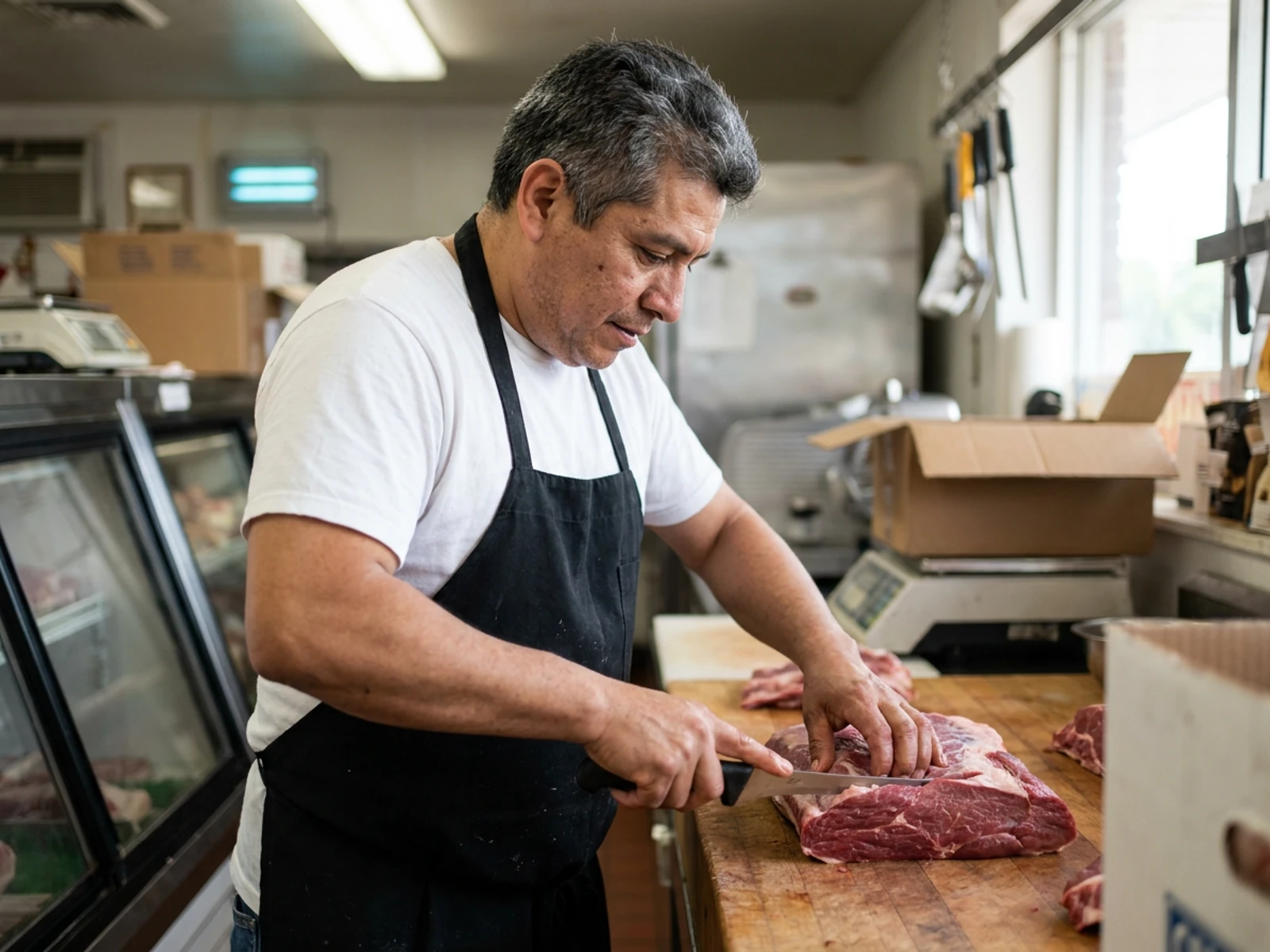
Meat cutter in a white butcher frock, bib apron and hairnet trimming a pork loin at a stainless steel cutting table

Long butcher coats for meat and poultry rooms

Meat and poultry plants under USDA rules need outer clothing that is readily cleaned and worn clean every day. A longer white butcher frock under a bib apron handles splash on the cutting line and leaves room for thermal layers in cold rooms.

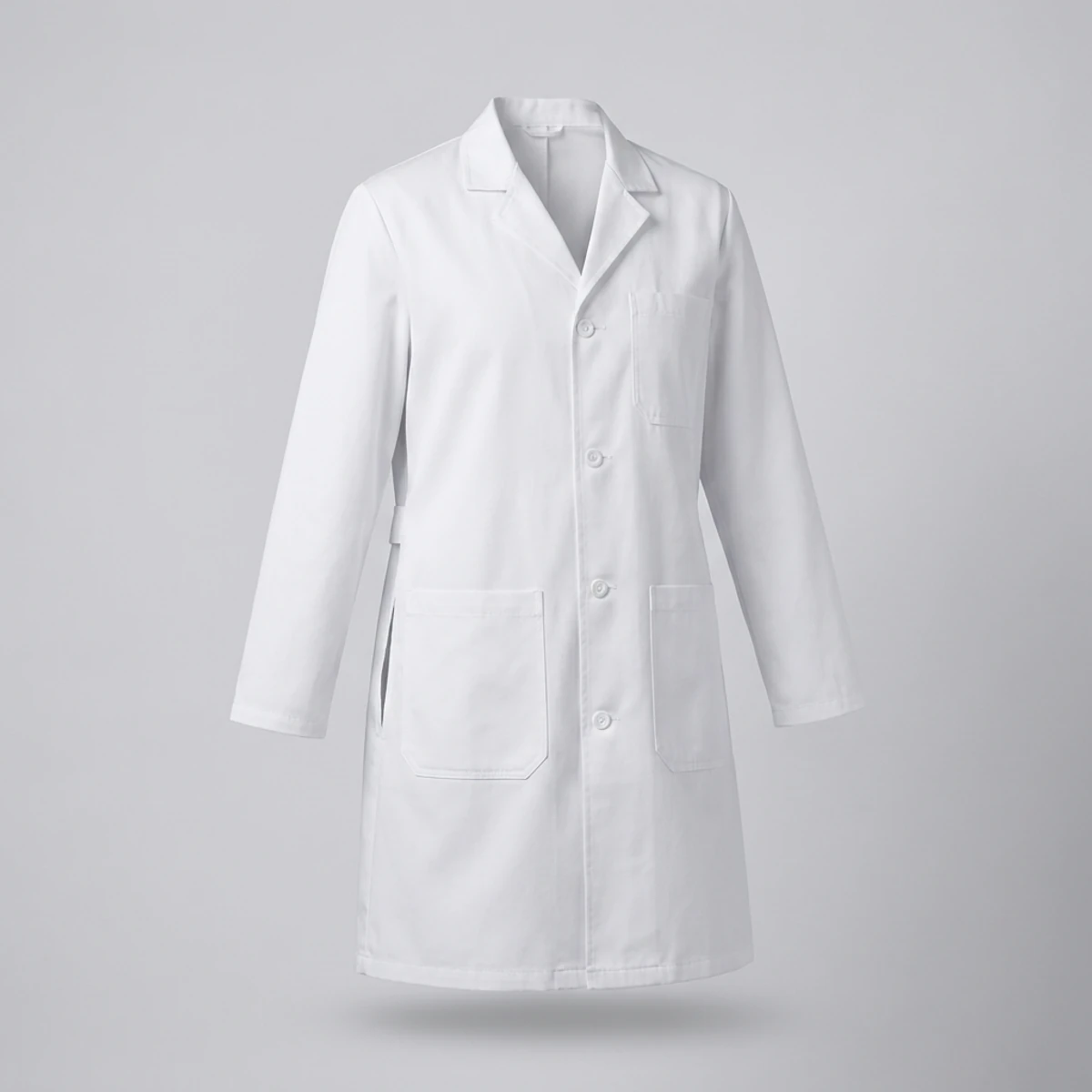
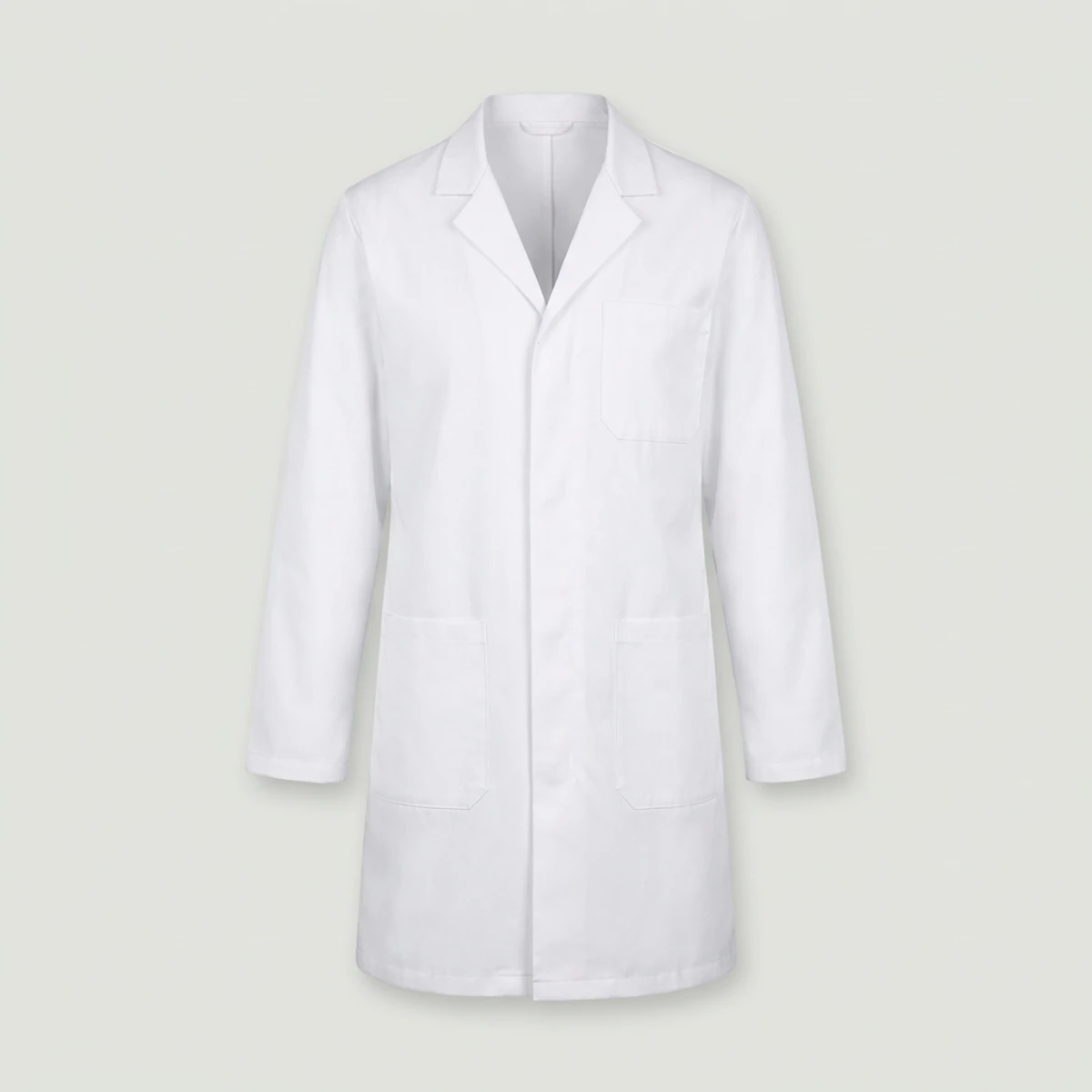
  • White mid-thigh staff lab coat with notched lapel and back half beltWhite staff lab coat
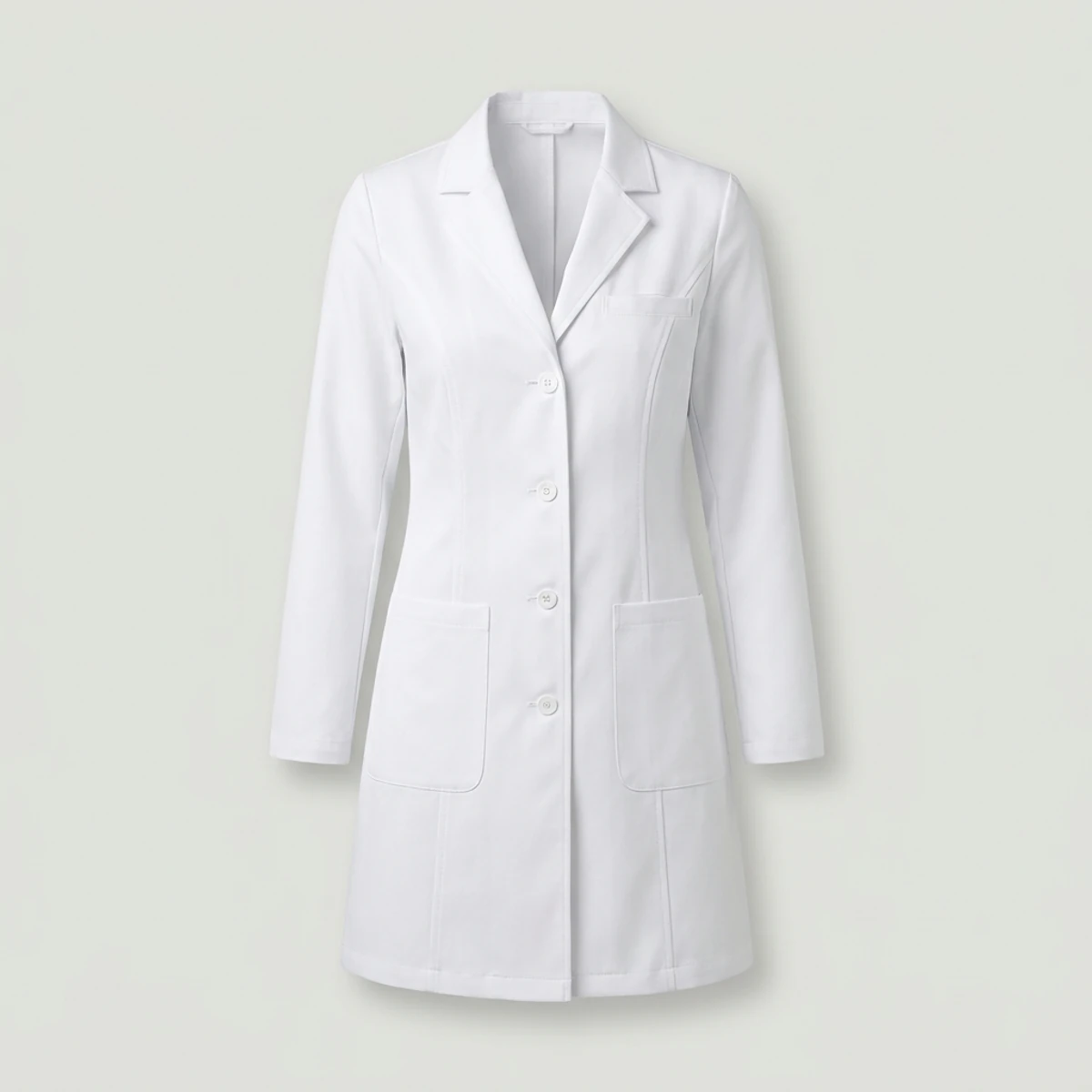
  • Women's mid-thigh white staff lab coat with princess seams and tailored waistWomen's staff lab coat
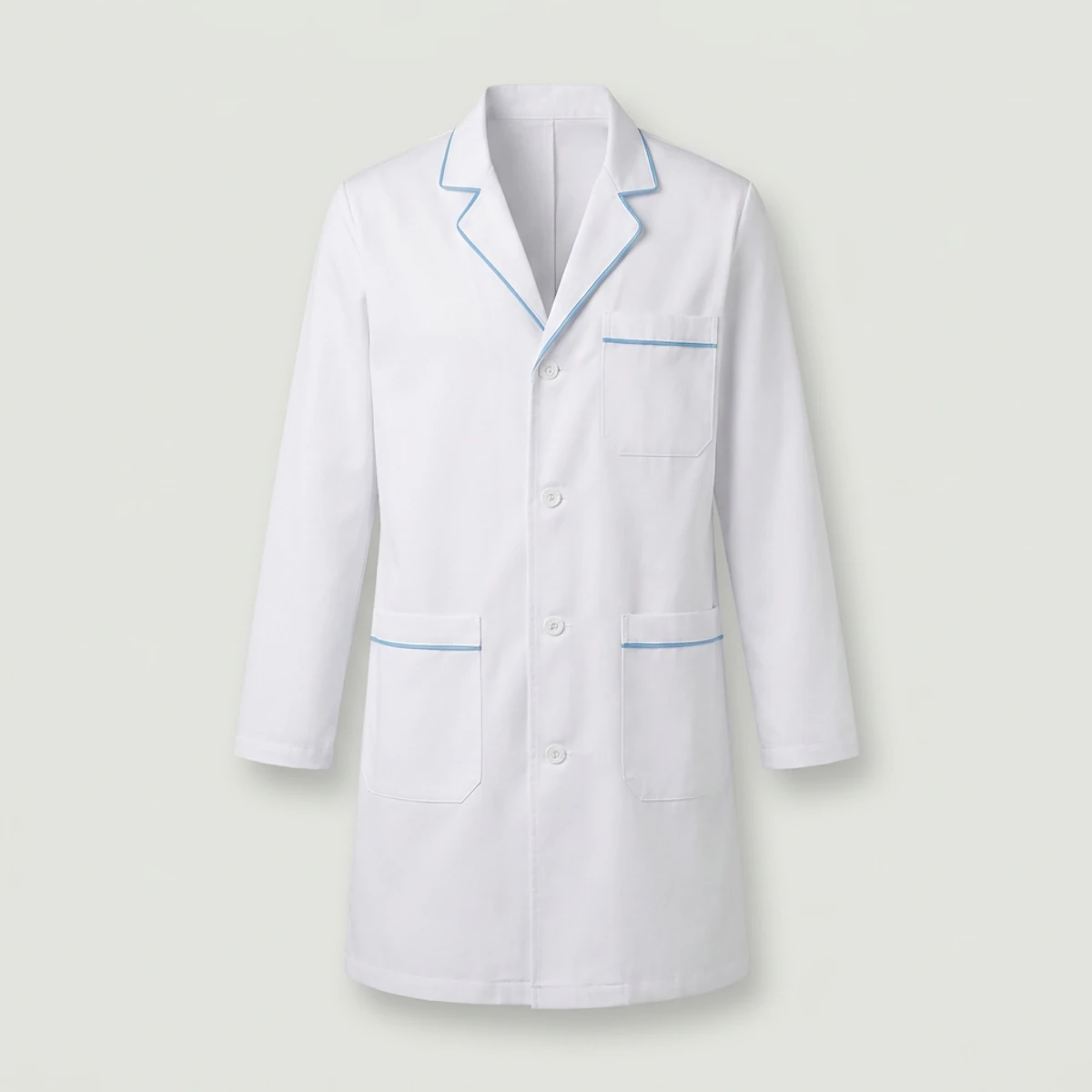
  • White mid-thigh lab coat with ceil blue piping on lapels and pocketsLab coat with ceil piping
  • White mid-thigh lab coat with concealed snap placket and chest pocketWhite snap-front staff coat
Quote butcher frocks
Butcher in a black bib apron trimming meat at a butcher shop counter

Bib aprons for cutting and wash-down areas

Heavy bib aprons layer over frocks where product, water and brine hit the front of the body. Adjustable neck straps fit every worker on the shift, and each zone can have its own apron color.

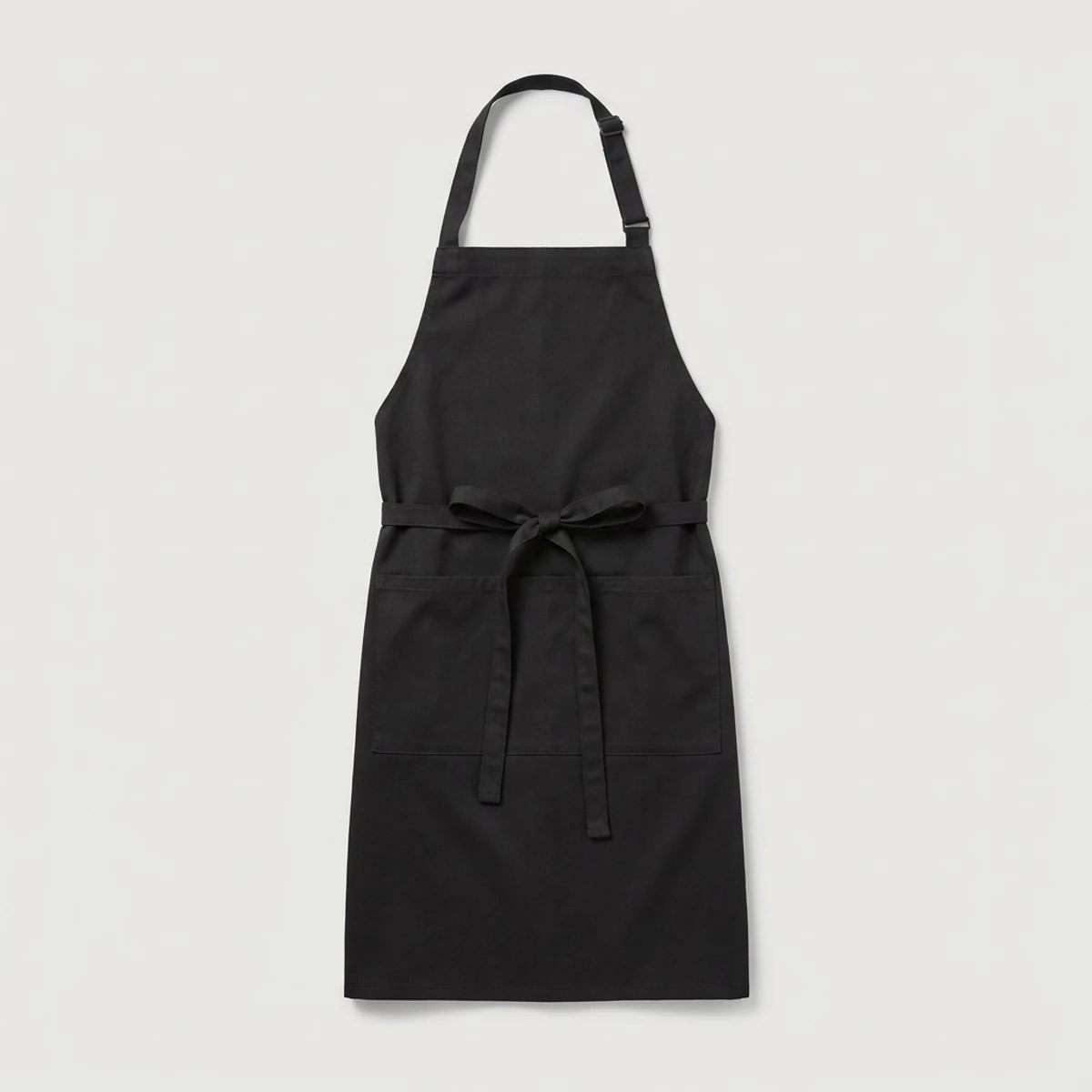
  • Black bib apron with adjustable neck strap, long ties and split pocketBlack adjustable bib apron
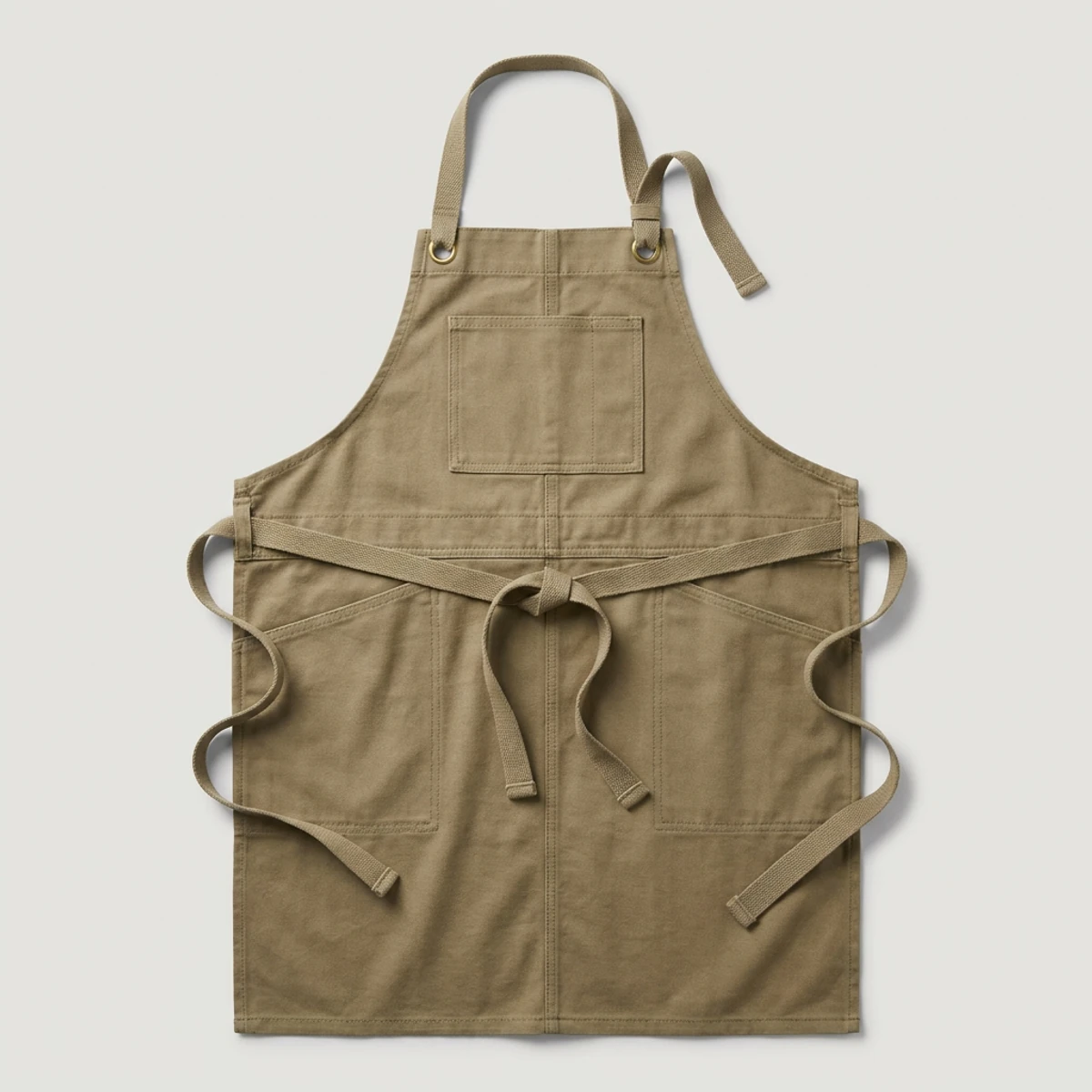
  • Khaki canvas bib apron with brass grommets and chest pocketKhaki canvas bib apron
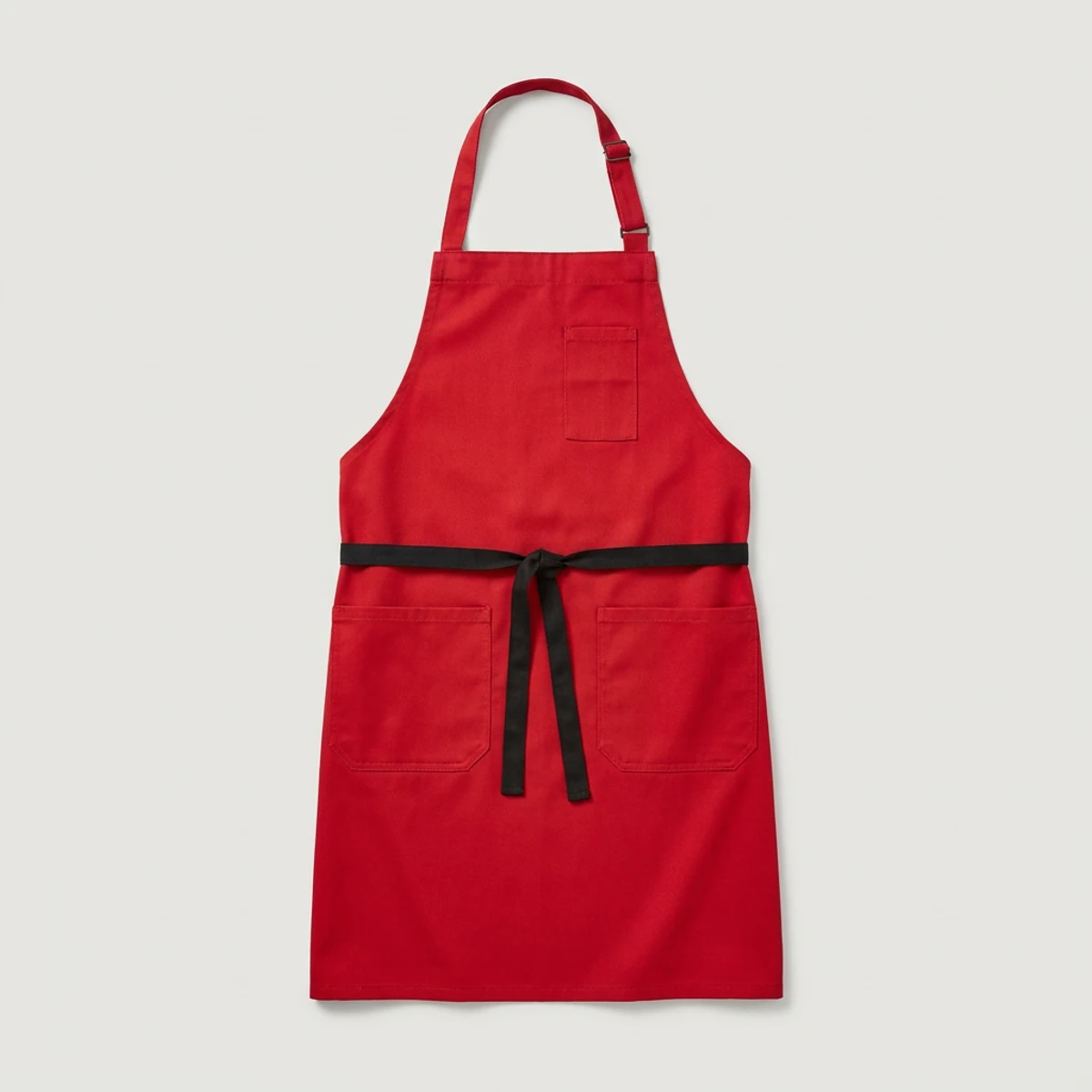
  • Red bib apron with pen pocket and contrast black tiesRed bib apron
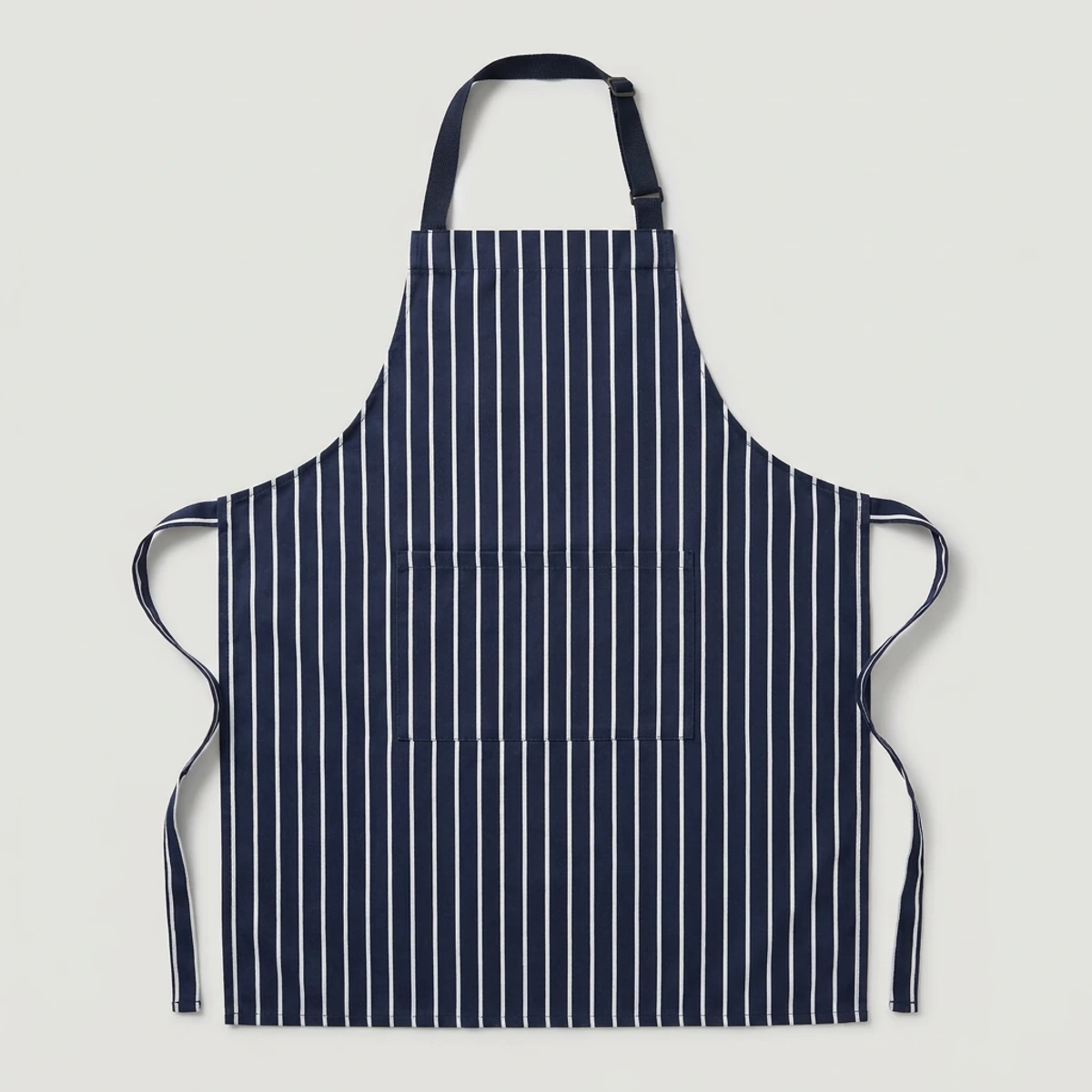
  • Navy and white butcher-stripe bib apron with single front pocketNavy butcher-stripe apron
Quote wet-area aprons
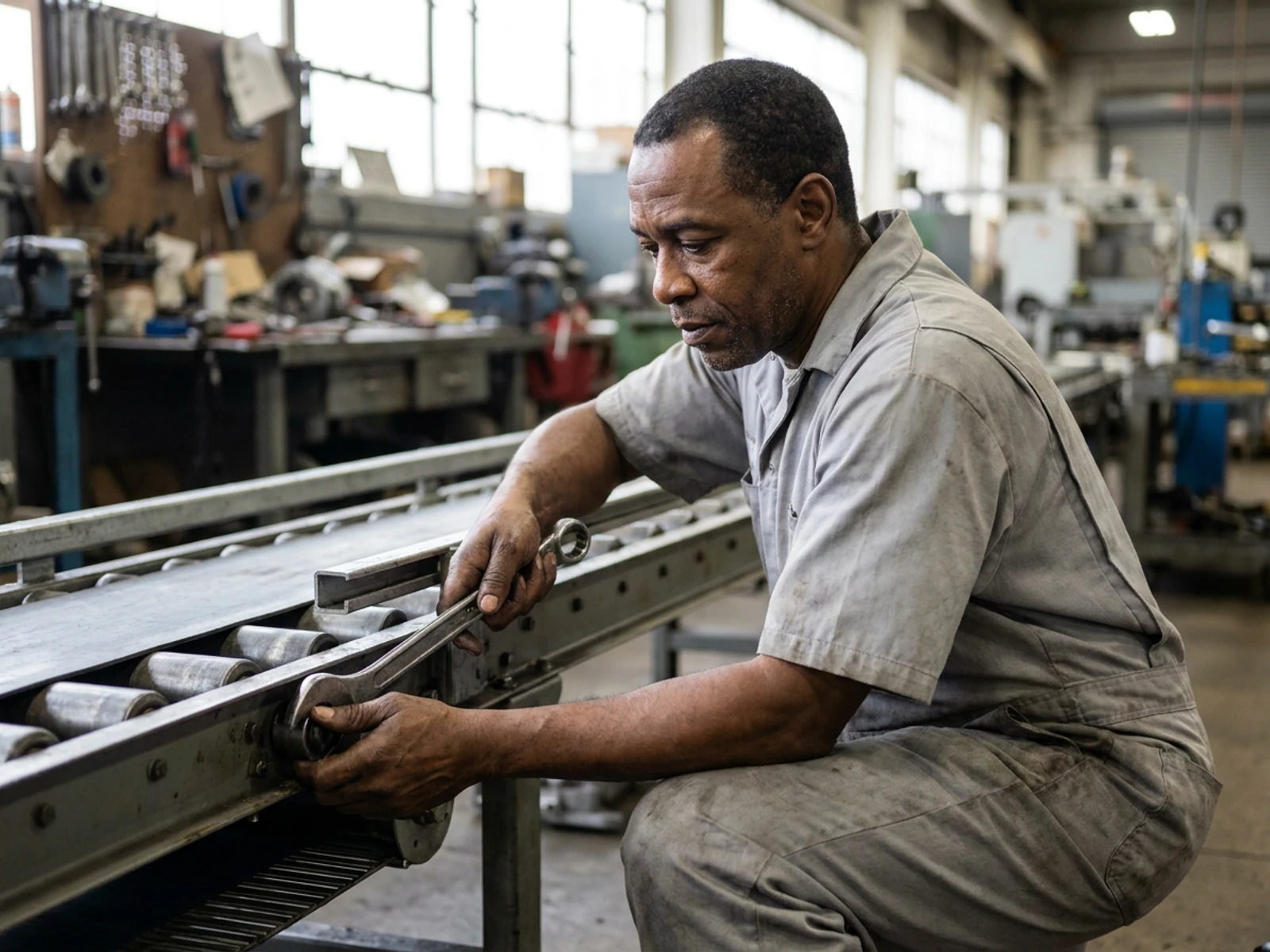
Plant mechanic in a grey short-sleeve coverall servicing a conveyor in a factory

Coveralls in a maintenance color

Mechanics and sanitation crews move between zones with tools and grease, so many plants give them coveralls in a color production staff never wear. White food-plant coveralls are available as a style too.

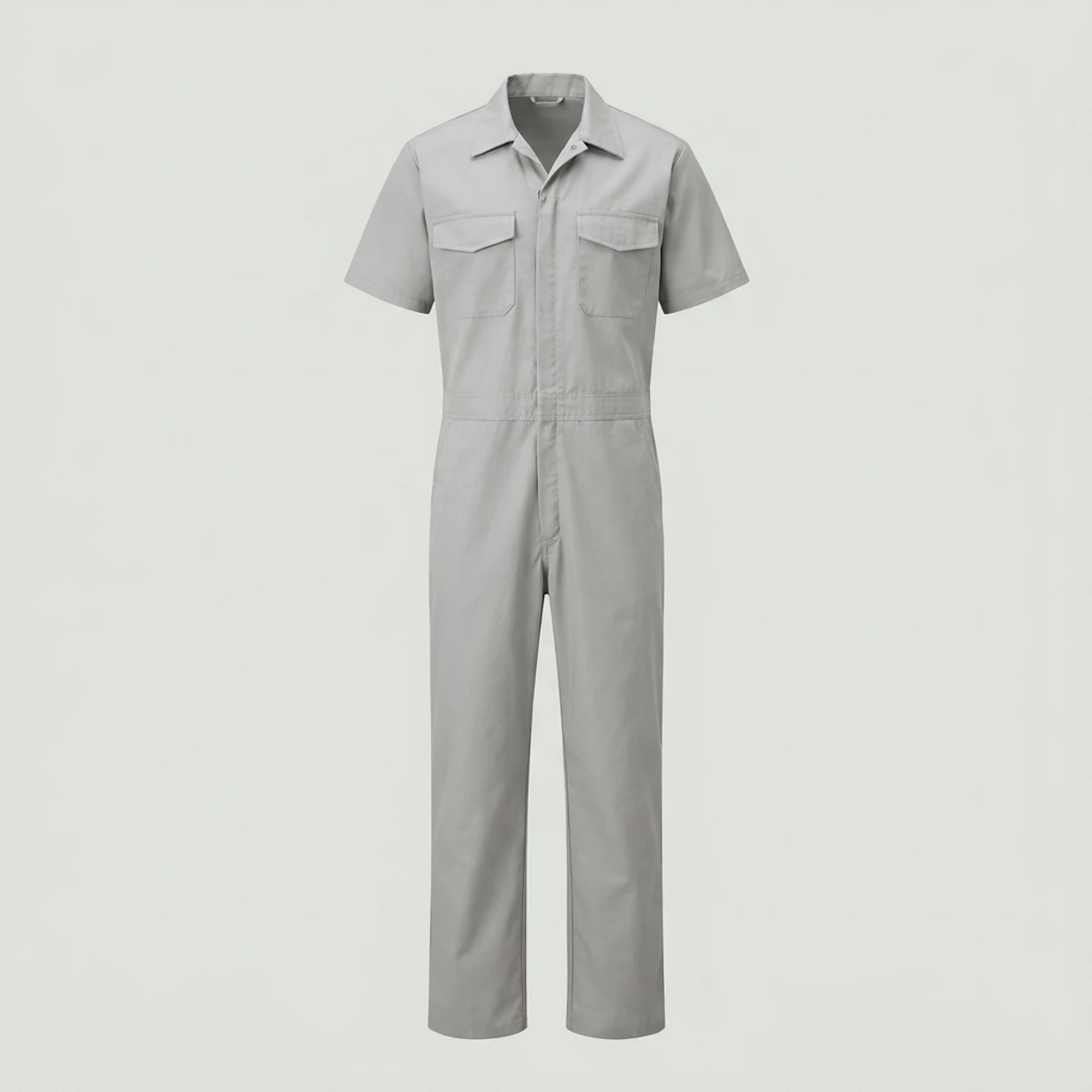
  • Grey short-sleeve coverall with vented back and front zipperGrey short-sleeve coverall
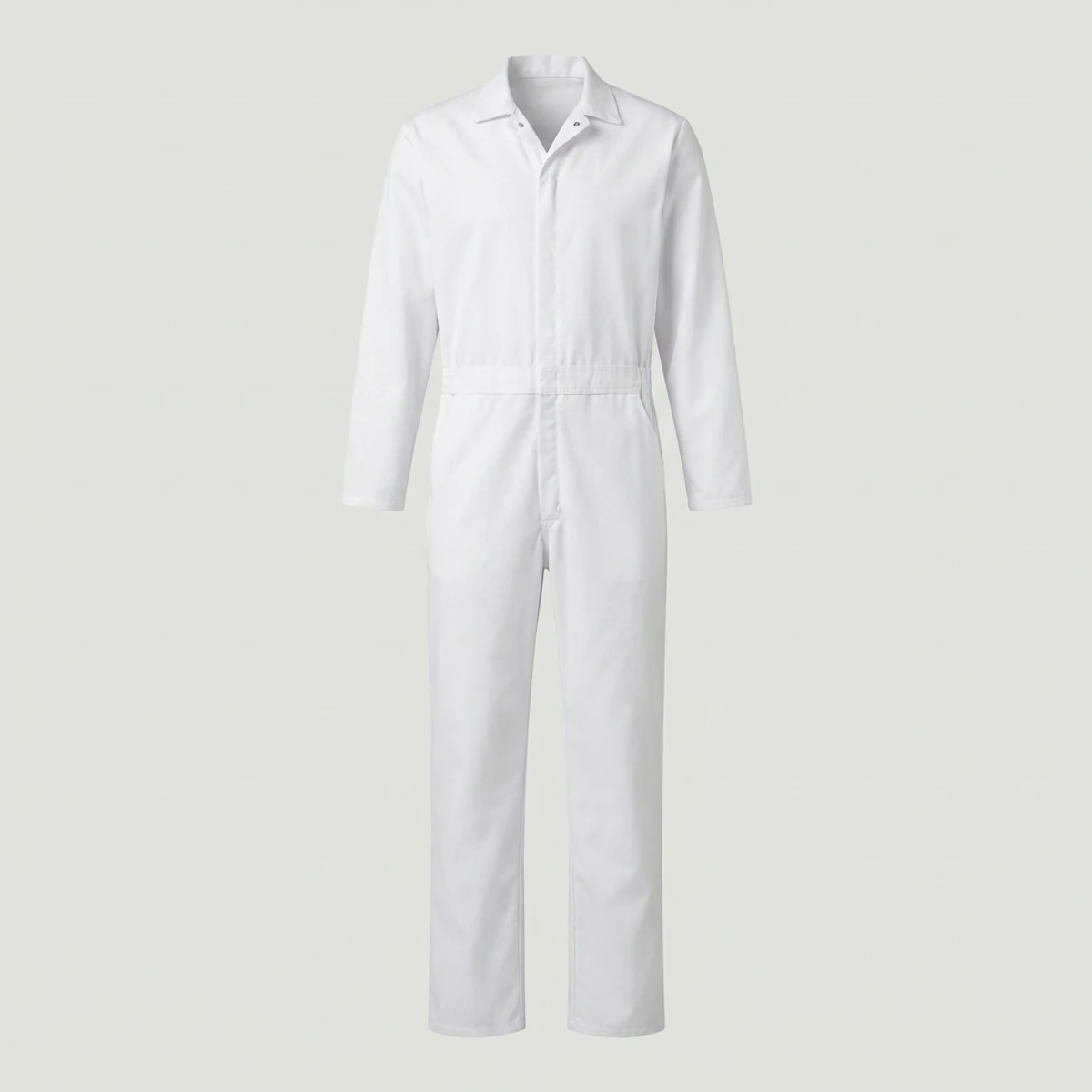
  • White coverall with elastic cuffs and minimal pockets for spray workWhite painter coverall
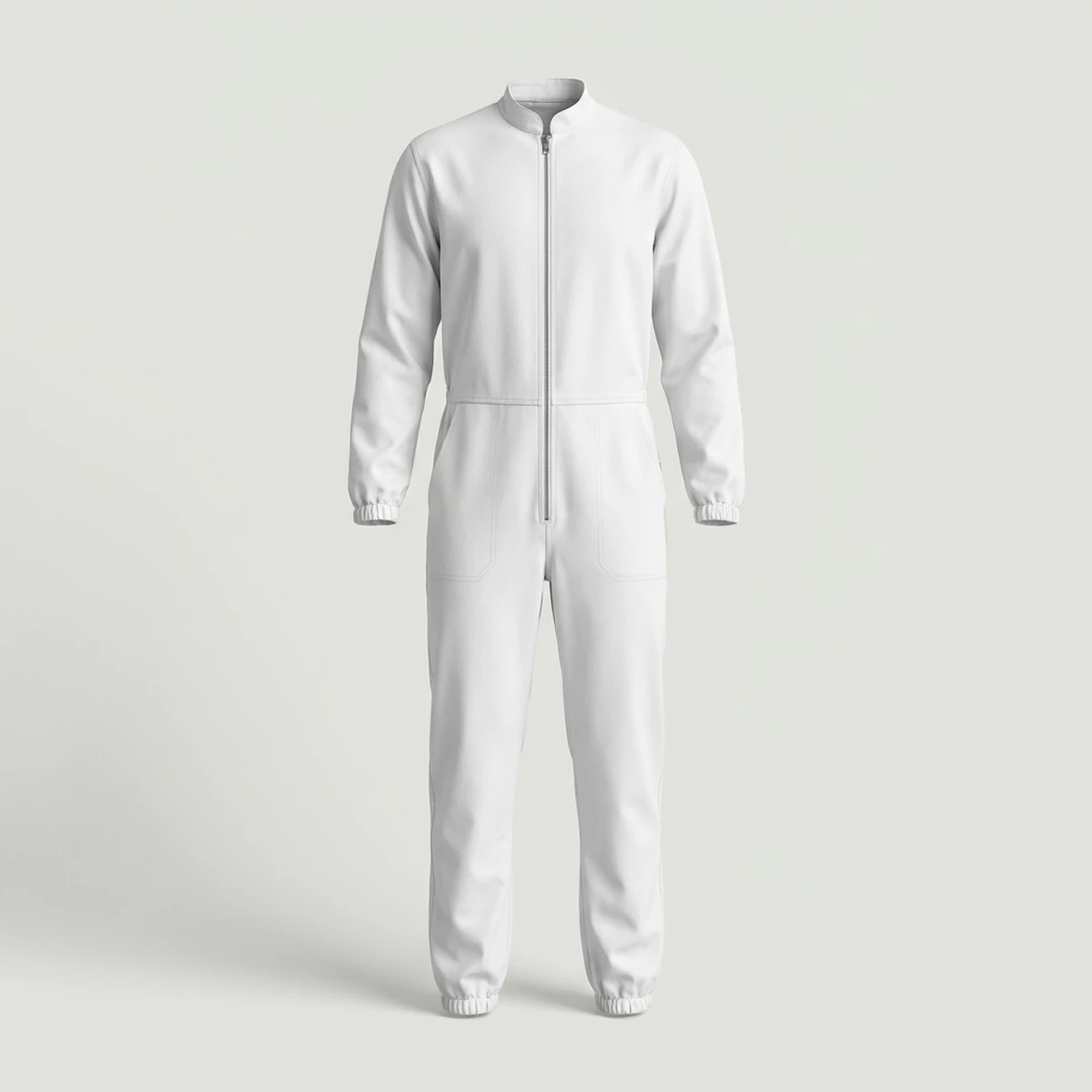
  • White snap-front coverall without external chest pockets for food plantsWhite snap-front coverall
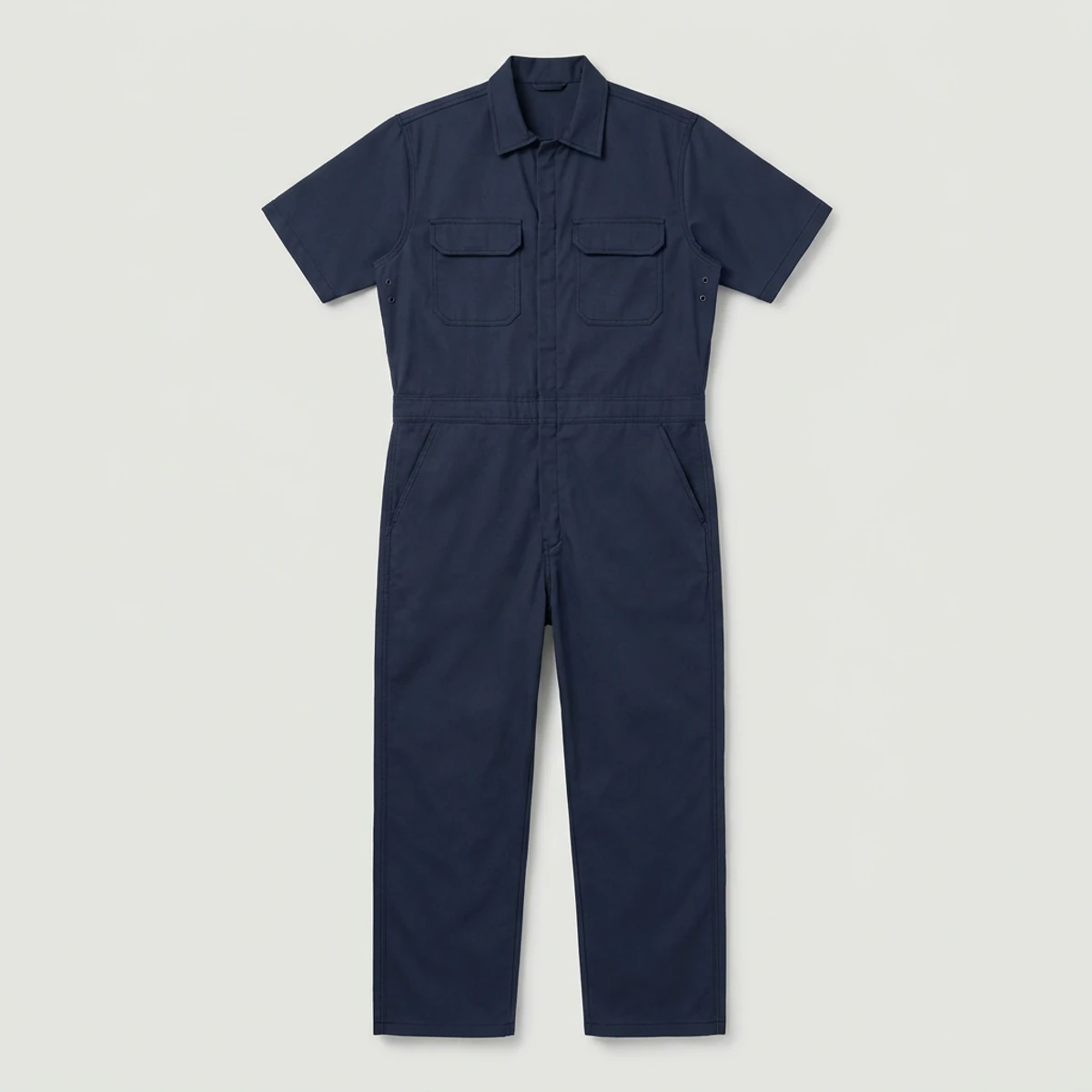
  • Navy short-sleeve work coverall with underarm eyelets and pocketsNavy short-sleeve coverall
Quote maintenance coveralls

Customize your lab coats

Pick the style, fabric and colors, add your logo and names, then attach the design to your quote. We cut and sew it in Los Angeles from 50 pieces per style.

What do FDA and USDA require from food processing uniforms?

Food processing uniforms must be clean outer garments suitable to the operation, worn so they keep the product, food-contact surfaces and packaging free of contamination and allergen cross-contact. Food safety uniforms follow whichever rule applies to the facility: FDA for most food plants, USDA FSIS for meat, poultry and egg products, and the FDA Food Code for retail and foodservice.

FacilityRegulator and ruleWhat it says about clothing
Food and beverage plants (bakeries, produce, dairy, snacks, beverages)FDA, 21 CFR 117.10 personnel hygieneOuter garments suitable to the operation; remove unsecured jewelry and objects that might fall into food; effective hair restraints; store clothing away from exposed food
Meat, poultry and egg product plantsUSDA Food Safety and Inspection Service (FSIS), 9 CFR 416.5 employee hygieneAprons, frocks and other outer clothing of disposable or readily cleaned material; clean garments at the start of each working day, changed as often as needed
Restaurants, delis, commissaries and retail foodFDA Food Code, as adopted by each stateClean outer clothing (section 2-304.11) and hair restraints (section 2-402.11)

None of these rules names a fabric, a color or a garment style. They set an outcome, and the plant’s food safety plan and GMP policy turn it into a specification. That specification is what food manufacturing uniforms are built to, which is why the first thing to send is your current uniform policy.

What makes a uniform HACCP-friendly?

A HACCP-friendly uniform is one designed so nothing on it can fall, shed or snag into the product: no pockets above the waist, snaps instead of buttons, secured trims and threads, and cuffs that stay closed. HACCP (Hazard Analysis and Critical Control Points) is a food safety system, so HACCP uniforms are garments built to support a plant’s plan, not certified items.

Pockets

No outside pockets above the waist, because pens, phones and glasses fall forward when a worker leans over a line. That design follows directly from the 21 CFR 117.10(b)(4) rule on objects that might fall into food. Plants that allow pockets put them inside the frock or below the waist.

Closures

Gripper snaps replace sewn buttons, which can loosen and drop into product. Snaps also let a worker remove the frock in seconds at the zone exit. Some plants require metal snaps so a lost one shows up at the metal detector.

White knee-length laboratory coat with knit cuffs and snap front

Trims and seams

Bartacks and seam finishes are chosen so threads do not unravel, and decorative trims, loose belts and buttoned tabs are left off. Labels sit inside, sewn flat.

Cuffs

Snap or knit cuffs keep sleeves tight at the wrist so they do not drag across product or tuck into glove gaps. Short sleeves suit some hot areas where the plant allows bare forearms with gloves.

Tip: Walk the line with your food safety lead before you approve a sample. Ask where a worker would put a pen, a thermometer or a phone, then make sure the garment gives them a safe place below the waist or nowhere at all.

Frocks, smocks, coats or shirt-and-pant sets: which fits each area?

Frocks fit most food production areas because they cover street clothes from collar to knee and come off at the zone exit; shirt-and-pant sets suit plants that issue full uniforms; coveralls suit maintenance; aprons layer over everything in wet work. Food industry uniforms are usually a mix chosen area by area.

Area or roleTypical garmentWhy
Ready-to-eat and high-risk packingWhite snap-front frock, knee length, no outside pocketsCovers street clothes fully, removed before leaving the zone
Raw meat, poultry and fishLong butcher frock or coat, plus a bib apronLonger body for splash, apron for wet work
Bakery and dry goodsFrock or smock, or shirt and pant setFlour and dust stay on the garment, not street clothes
Sanitation crewsWork pants and shirt or coverall, with waterproof outer gearChemicals and water; garments laundered separately
Maintenance and engineeringWork coveralls in a maintenance colorTools and grease; color shows they are not production staff
Quality assurance and supervisorsFrock or lab coat in a distinct colorVisible authority on the floor, moves between zones
Visitors and contractorsFrock in a visitor colorIdentifies people unfamiliar with plant rules

Food production uniforms that use shirt-and-pant sets usually follow the same rules: no chest pockets, snaps, and pants with secure pockets below the waist; our custom work pants can be built that way.

White mid-thigh staff lab coat with notched lapel and back half belt

Color-coding raw, cooked and allergen zones

Color-coding raw, cooked and allergen zones means giving each area its own garment color so a person crossing from raw to ready-to-eat is visible at a glance. Plants commonly keep high-risk areas in white and use blue, green, red or grey for raw, allergen, maintenance and visitor groups, set by the plant’s own plan.

Read more

Every color of the same frock pattern is a separate color in the quote, approved on a sample and matched on reorders, because a shade that drifts between runs undoes the system. Collar or cuff trims in a zone color are an alternative where one body color is preferred.

Black bib apron with adjustable neck strap, long ties and split pocket

Butcher coats and frocks for meat and poultry plants

A butcher coat or butcher frock is a long, snap-front outer garment, usually white, that reaches to or below the knee, worn over clothing in meat cutting and poultry rooms and often under a bib apron. It is cut much like a long laboratory coat, so it can be developed as a custom style and sampled.

Read more

Under 9 CFR 416.5 the frock must be readily cleaned and worn clean at the start of each day, so the usual choice is a poly-cotton twill that takes hot, frequent washing. Cold rooms add a reason to size up: workers wear thermal layers underneath. Pair frocks with heavy custom aprons for the cutting line, and confirm butcher coat options and fabrics at quote stage.

Which fabrics hold up in wet, cold and high-wash areas?

Fabrics for food processing hold up when they survive daily industrial washing, shed little lint and stay opaque: polyester-cotton twill and poplin are the usual choice, with heavier twill for raw and cold rooms. Typical weights are below; exact weights are confirmed at quote.

FabricTypical weightWhere it works
Poly-cotton poplinAbout 130–170 GSMWarm packing rooms, bakeries, QA coats
Poly-cotton twillAbout 170–240 GSMMost production frocks; daily industrial washing
Cotton twillAbout 200–260 GSMWhere staff prefer natural fiber; shrinks and wrinkles more
Stretch blendsAbout 150–200 GSMSupervisors and QA who move between areas

GSM (grams per square meter) figures are typical industry ranges, not a published spec; we confirm the exact weight with your quote. Higher polyester content usually sheds less lint and dries faster.

Grey short-sleeve coverall with vented back and front zipper

What must the garment survive in the laundry?

Food plant garments must survive daily hot washing, industrial dryers and pressing, because most plants launder issued garments centrally rather than letting workers take them home. That rules out delicate trims, prints that crack and fabrics that shrink badly.

Read more

Plants use either an in-plant laundry or a contracted industrial laundry. Either way, tell us the wash temperature and chemistry, so fabric, thread and snaps are chosen to survive it. Plan enough garments per person to cover a full laundry cycle plus mid-shift changes.

Branding food plant uniforms

Branding food plant uniforms usually means a small embroidered logo on the upper sleeve or chest, flat and tightly stitched, with no patches or loose edges that could lift into product. Pooled garments carry no names, and department or zone identification comes from color rather than lettering.

Our custom embroidery and printing team sizes and places the logo on the sample. For front-of-house and retail teams in the same company, the restaurant uniforms page covers chef coats, aprons and server wear.

What determines the cost of custom food processing uniforms?

The cost of custom food processing uniforms depends on fabric, quantity per style, the number of zone colors, garment complexity, decoration and any custom labels. Each order is quoted on its actual fabric, colors, quantities and artwork, so the table below shows what moves the price rather than listing prices.

Cost driverHow it moves the costHow to keep it in check
FabricHeavier twill and stretch blends usually cost more than poplinChoose by area and laundry, not by one plant-wide default
Quantity per styleLarger runs spread cutting, setup and sampling across more piecesOne frock pattern for most areas
Zone colorsEach color needs its own fabric and matchingTrim colors instead of full body colors where the plan allows
ConstructionSnaps, internal pockets and knit cuffs add components and sewing timeKeep only features the plan requires
DecorationEach logo location adds handlingOne small sleeve logo
Labels and packagingSize-coded labels and per-person bagging add componentsStandard labels for pooled garments

How does ordering work with a 50-piece minimum?

A food plant uniform order runs in five steps: share the policy, agree a sample, approve, produce and reorder. The minimum is about 50 pieces per style, where one style is one garment in one fabric; size and zone color breakdowns are agreed at quote stage.

  1. 01

    Share your uniform policy

    and the areas and headcount per area.
  2. 02

    Sample

    the frock or coat in the chosen fabric, with snaps, cuffs and logo placed.
  3. 03

    Approve

    fit and construction with your food safety team.
  4. 04

    Production

    in the Los Angeles factory.
  5. 05

    Reorder

    against the approved spec as headcount and laundry losses require.

Ask us for current lead times; they depend on fabric availability and quantity.

Ready to order

What to send us for a quote

A complete quote for food processing uniforms needs your uniform policy, the areas and headcounts, garments per area, zone colors, laundry details and logo artwork. Sending them together lets the garments, fabric and colors be matched to the plan in one round.

  • Your GMP or uniform policy, or a list of the design rules (pockets, closures, cuffs)
  • Areas, zone colors and headcount per area
  • Garments per area: frocks, coats, aprons, pants, coveralls
  • Laundry arrangement: in-plant or contracted, wash temperature if known
  • Logo file and preferred placement
  • Sizes needed, with spare stock for new hires and laundry rotation
Questions about food processing

Need something not covered here? Ask our Los Angeles team and we’ll answer with options for your order.

Ask our Los Angeles team

Are your uniforms HACCP certified?

No uniform is HACCP certified, because HACCP (Hazard Analysis and Critical Control Points) certifies a food safety system, not a garment. What a manufacturer can do is build garments to the rules in your plan: no outside pockets above the waist, snap closures, secured trims and zone colors. Your food safety team decides whether the design fits your plan.

Do food processing workers need to wear uniforms?

FDA rules for food plants (21 CFR 117.10) require outer garments suitable to the operation that protect against contamination and allergen cross-contact, and USDA rules for meat and poultry plants (9 CFR 416.5) require readily cleaned outer clothing worn clean at the start of each day. Most plants meet both through issued, plant-laundered frocks or uniforms.

Should frocks have snaps or buttons?

Most plants specify snaps, usually metal gripper snaps, because a sewn button can work loose and fall into product. Snaps also let workers take a frock off quickly at the zone exit. Tell us your plant's rule, including whether components must be visible to your metal detector, and the closure is built to it.

Can we order different colors for raw and cooked areas?

Yes. Each color of the same frock pattern is quoted with the pattern, and the shade is approved on a sample and matched on reorders. Plants commonly keep high-risk areas in white and give raw, maintenance and visitor garments distinct colors, so a person in the wrong zone is visible at a glance.

Can we put our logo on food plant garments?

Logos are usually embroidered on the upper sleeve or the left chest area, kept flat and small, with no loose threads or patches that could lift. Embroidery survives industrial laundering better than most prints. Name lines are usually left off issued, pooled garments that move through a laundry.

Food ProcessingCut & sewn in Los Angeles · from 50 pieces per styleRequest samplesGet a quote