


Industries · Los Angeles factory

Custom Doctor Scrubs and Lab Coats

Doctor scrubs are the tops, pants and coats physicians and advanced practice providers wear in clinic, on rounds and on call, usually cut a little more tailored than standard scrubs and paired with a lab coat. Custom Uniform Factory makes them for physician groups, practices and medical schools, cut and sewn in its Los Angeles factory from imported fabric and embroidered with each provider's name, degree and specialty, from about 50 pieces per style.

Male doctor in blue scrubs, scrub cap and stethoscope standing beside a female colleague in light blue scrubs
Minimum order
About 50 pieces per style
Production
Cut & sewn in Los Angeles, imported fabric
Scrub sizes
XXS to 5XL
Garments
Scrub tops and pants, lab coats, jackets, underscrubs

Doctors & Physicians by style

16 styles in 4 families · each made to order in your fabric, color and branding from 50 pieces.

Customize your uniformsYour fabric, colors, pockets and branding
Physician in a white consultation lab coat talking with a colleague in an outpatient clinic

Consult coats for outpatient providers

A consultation-length coat sits at the hip, so it reads as professional without getting in the way during exams. We embroider name and specialty and make it to order in Los Angeles from about 50 pieces per style.

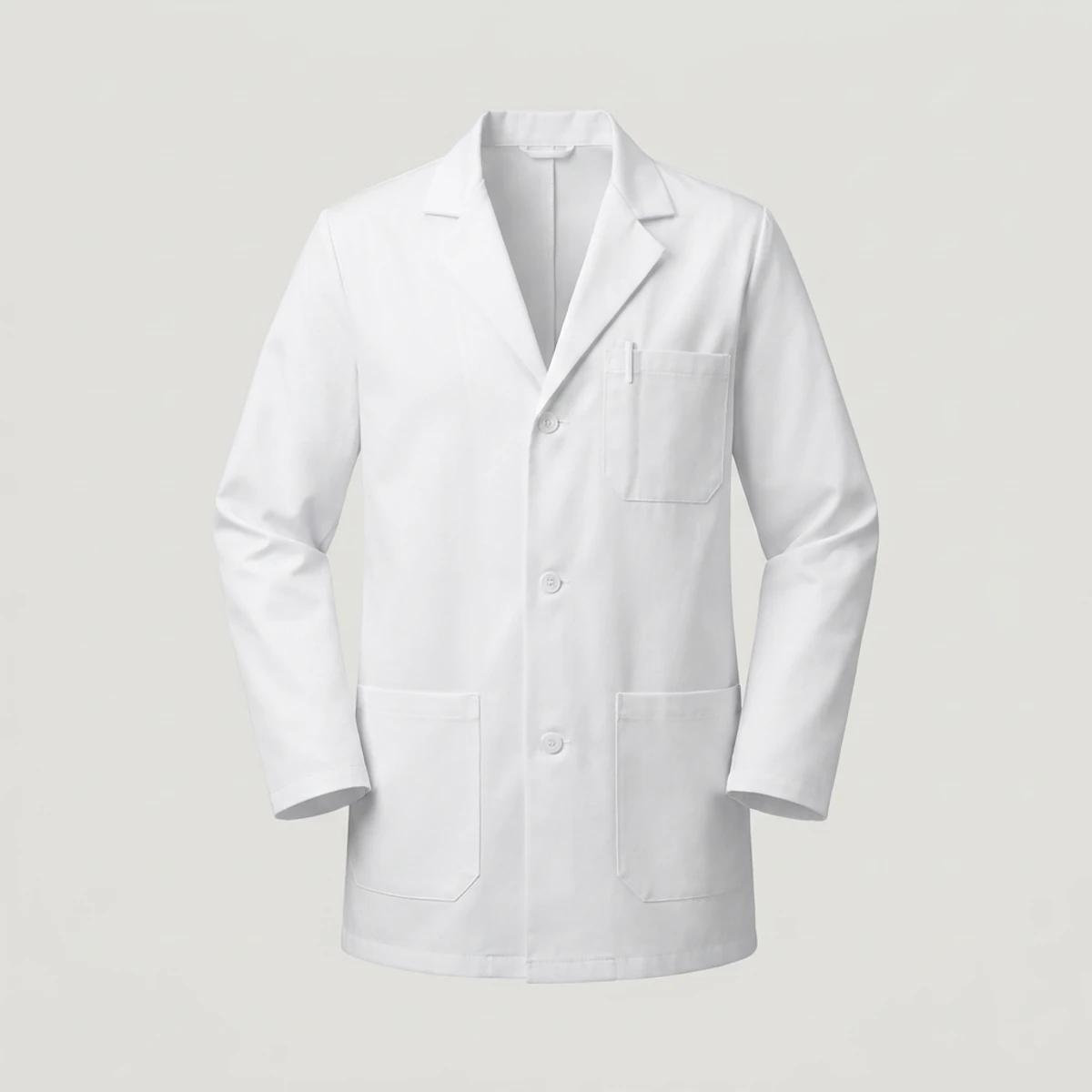
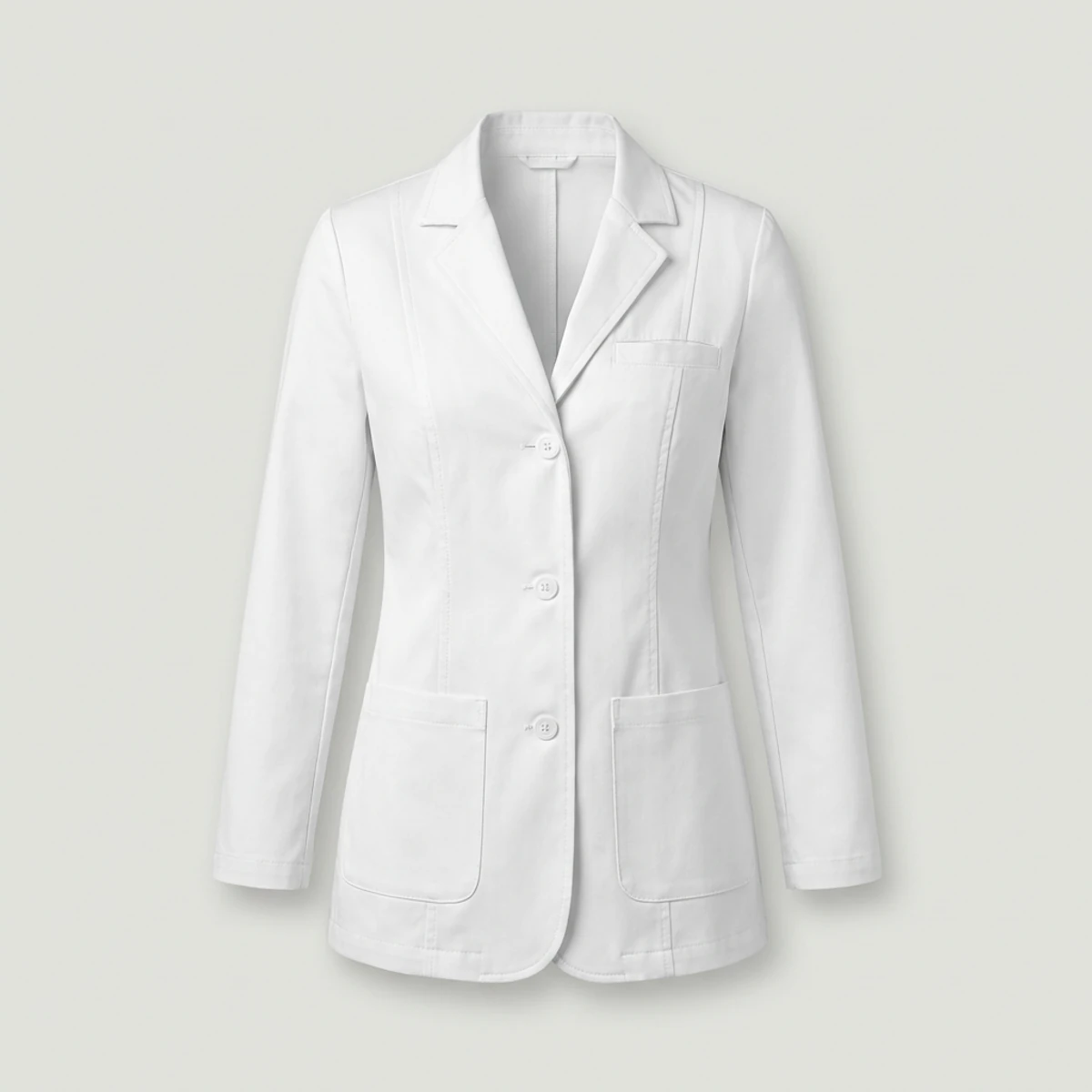
  • White hip-length consultation lab coat with notched lapel and three pocketsWhite consultation lab coat
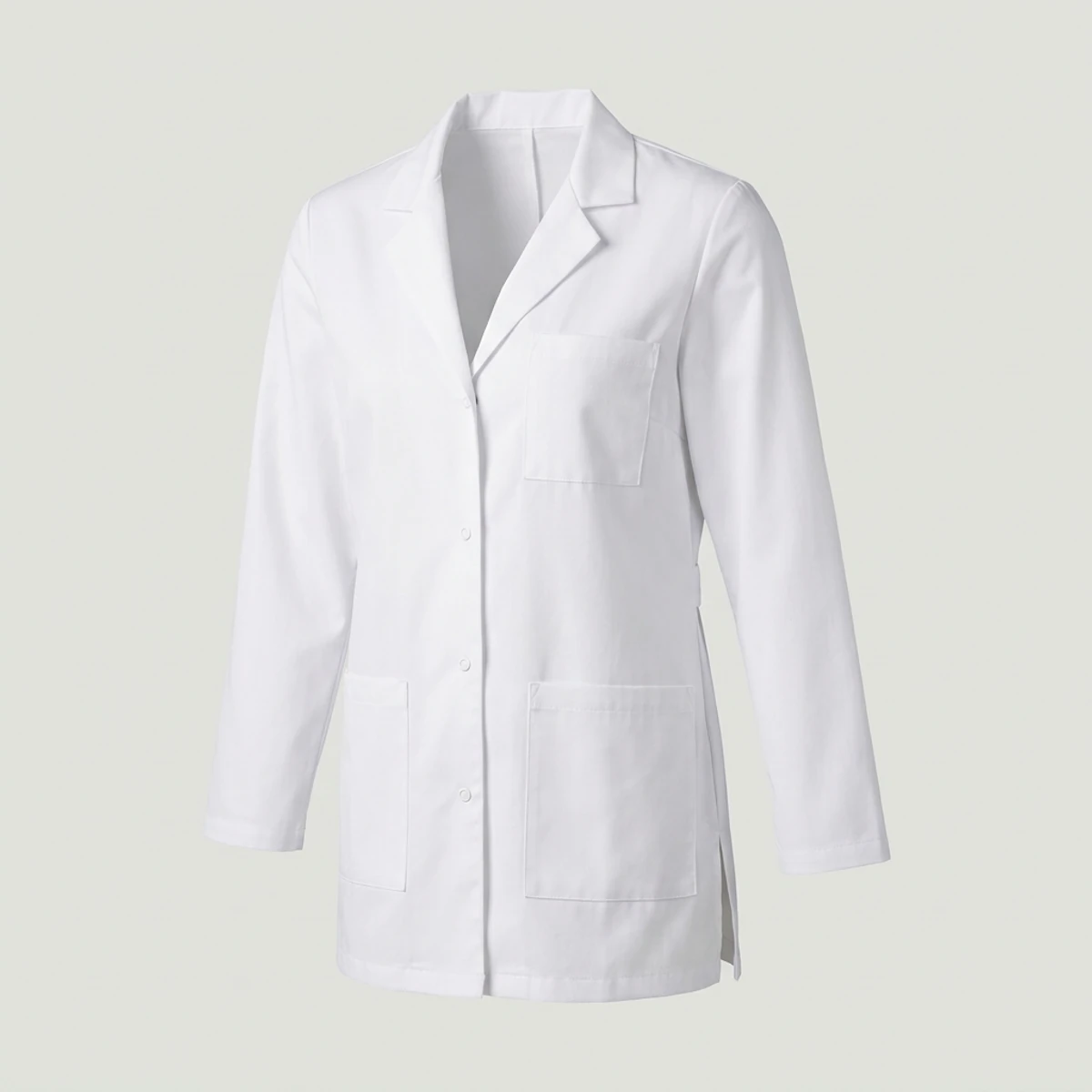
  • White snap-front consultation lab coat with side pass-through slitsWhite snap-front lab jacket
  • Women's fitted white consultation lab coat with princess seams and back dartsWomen's fitted consultation coat
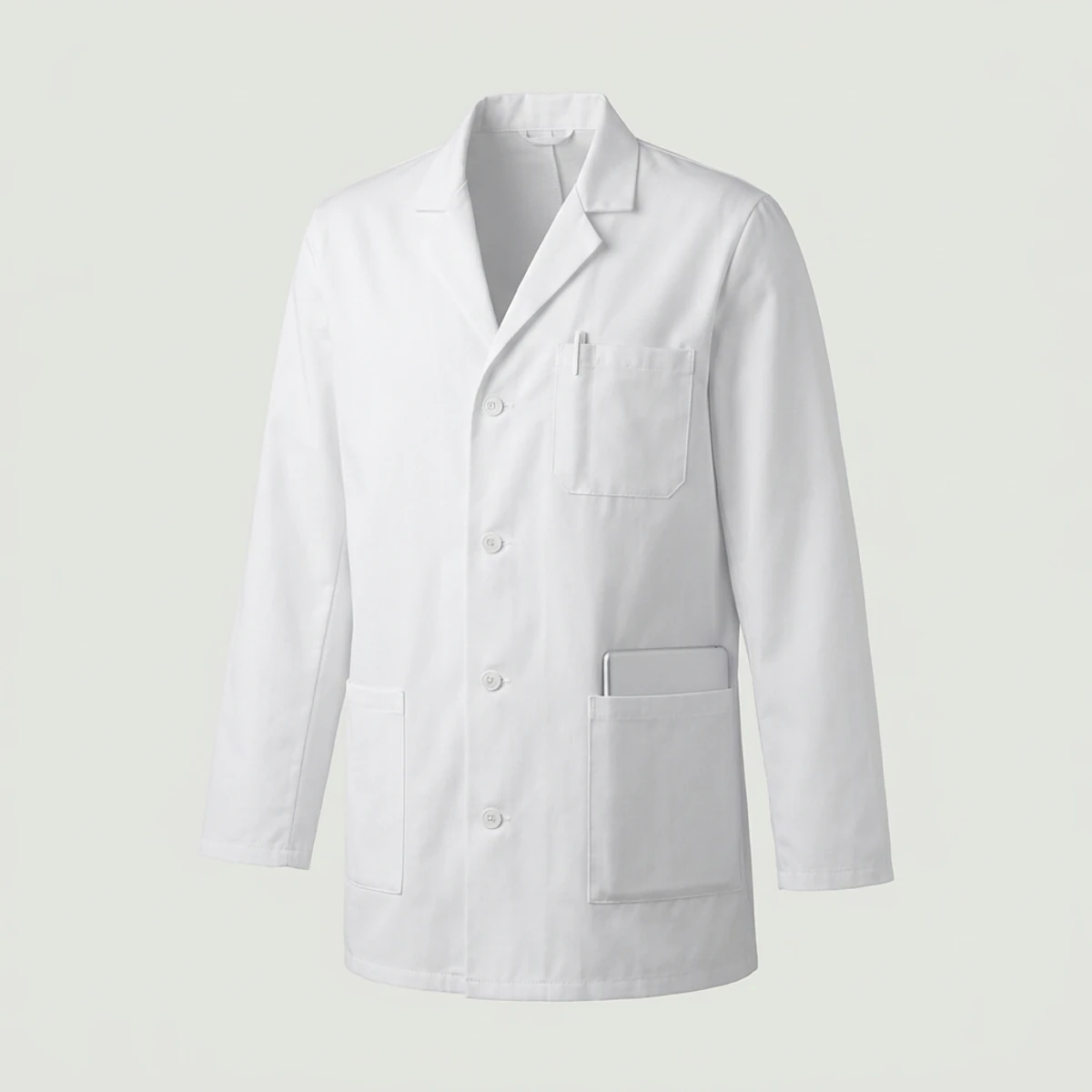
  • Men's white consultation lab coat with enlarged lower pocket for a tabletMen's lab coat, tablet pocket
Quote white coats
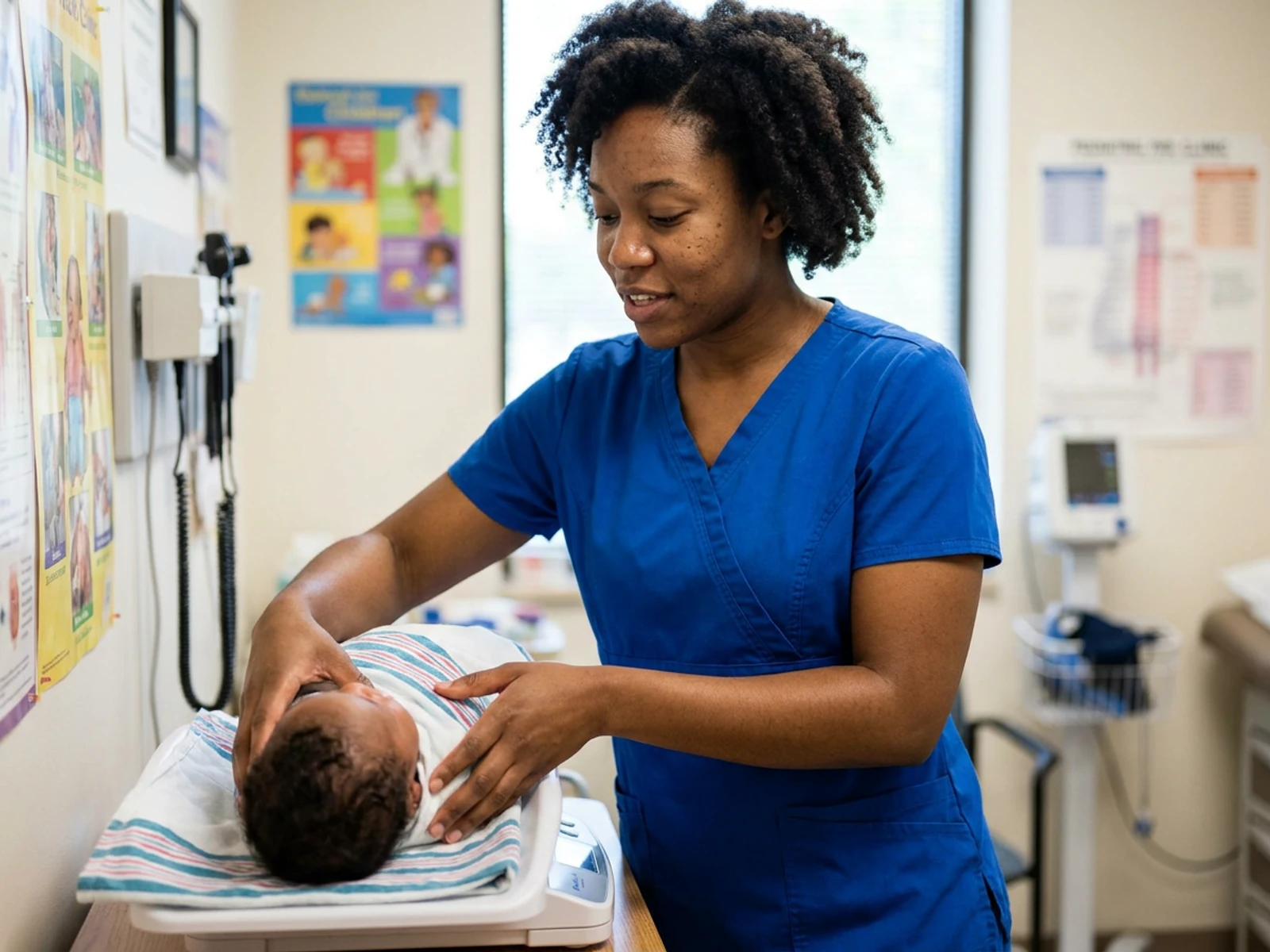
Clinician in a royal blue mock wrap scrub top weighing an infant at a pediatric clinic

Tailored tops for clinic physicians

Physicians in clinics often want a sharper top than standard ward scrubs, and the mock wrap gives that without limiting movement. Runs start around 50 pieces per style, in your practice colors.

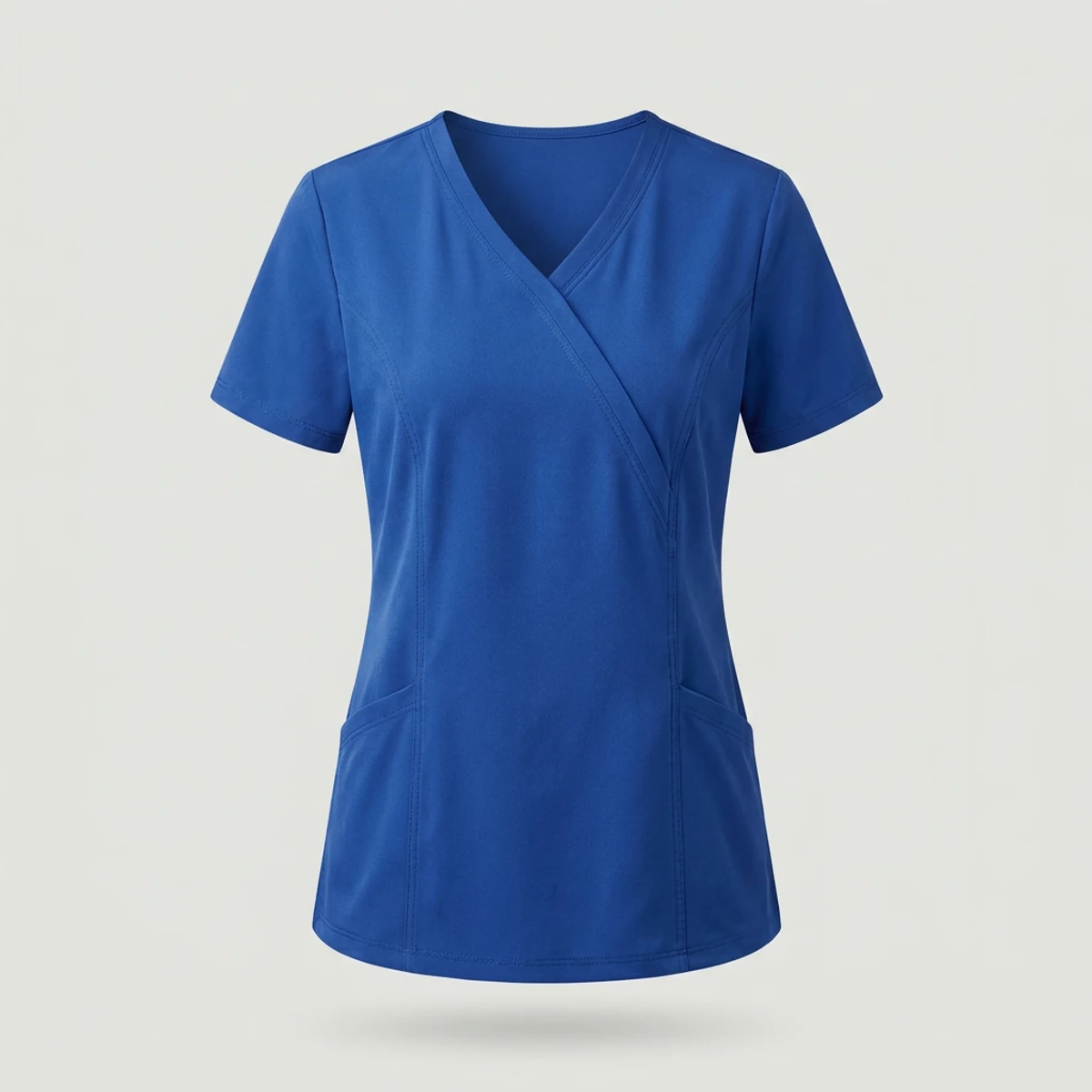
  • Royal blue mock wrap scrub top with crossed front panels and princess seamsRoyal blue mock wrap top
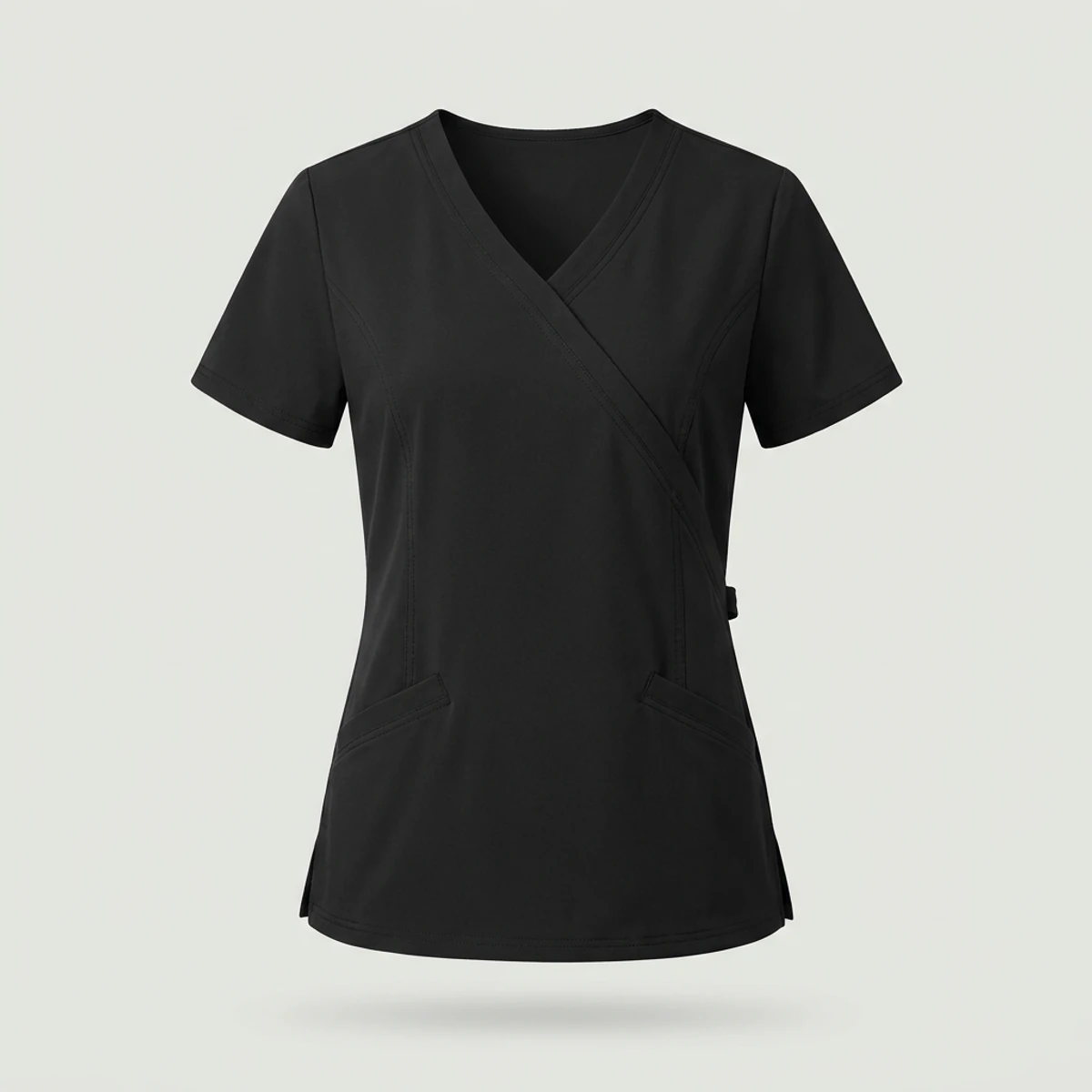
  • Black mock wrap scrub top with side tie detail and angled welt pocketsBlack mock wrap scrub top
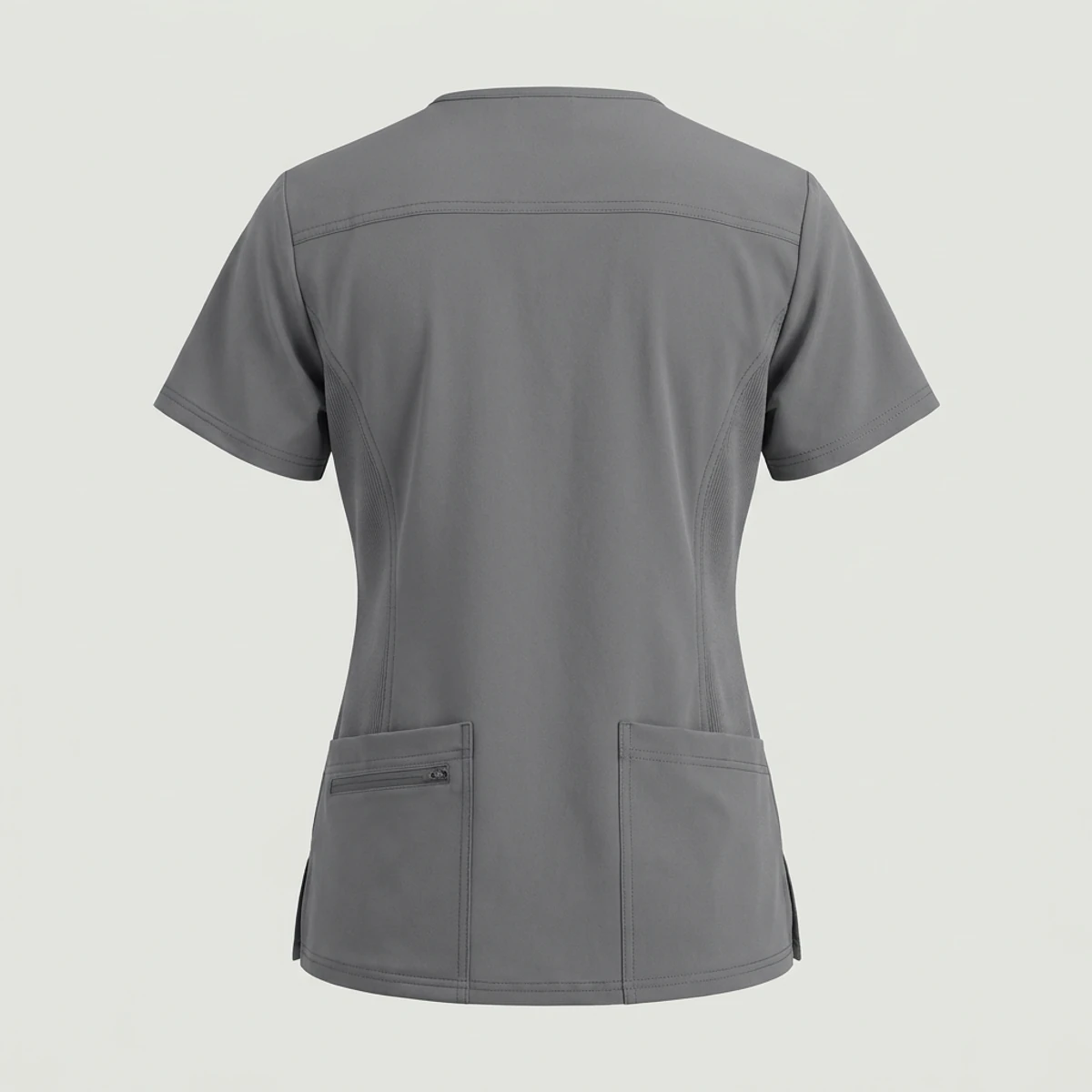
  • Pewter grey tailored mock wrap scrub top with yoke and stretch side panelsPewter grey mock wrap top
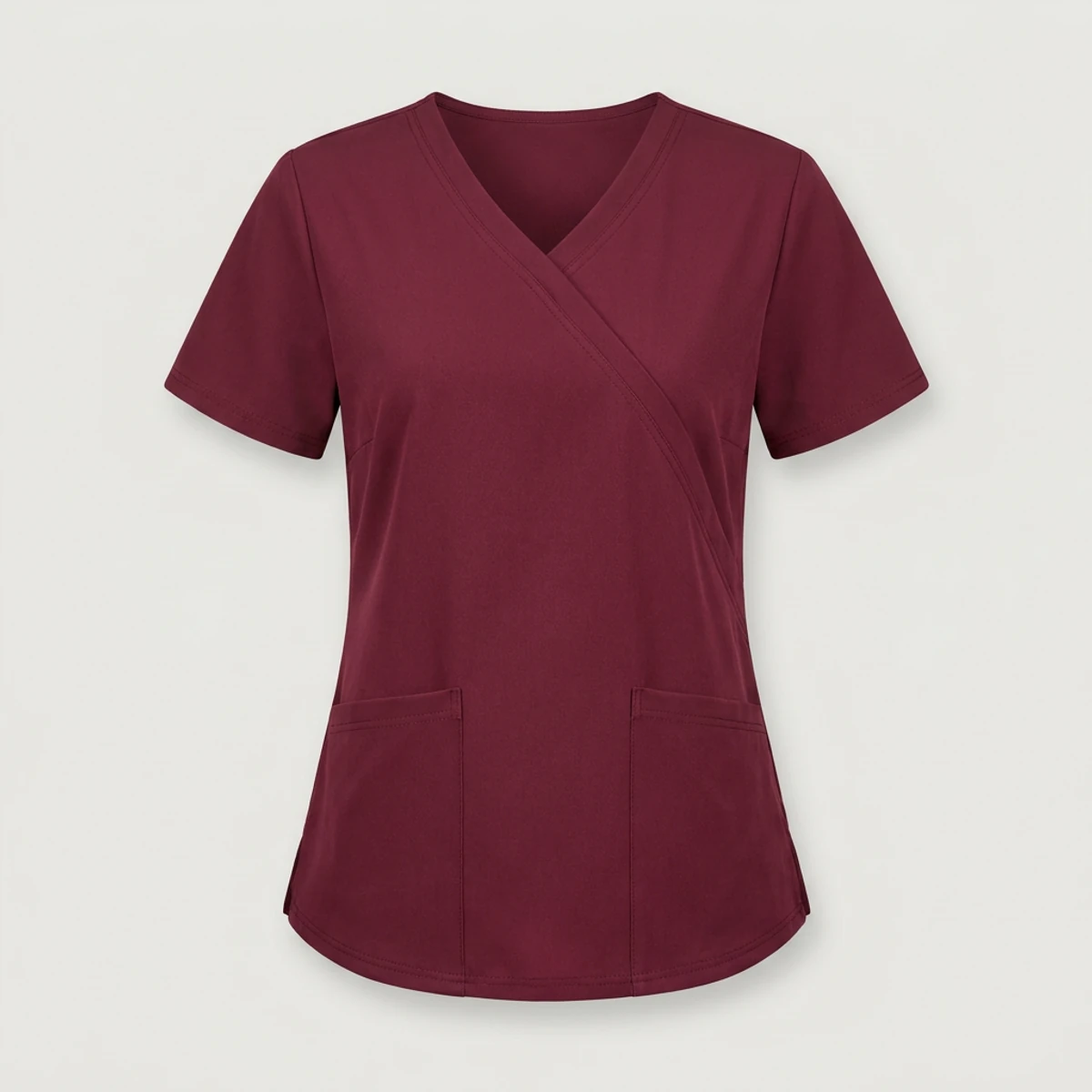
  • Wine red mock wrap scrub top with contrast-stitched patch pockets and short sleevesWine mock wrap scrub top
Quote provider tops
Respiratory therapist in a black zip-front scrub jacket walking through a hospital lobby

Zip-up jackets for hospitalists on the move

Hospitalists crossing between floors need a layer that closes fully and looks tidy in the lobby. Our zip-front jacket takes a small chest logo and is sewn at our LA plant from roughly 50 pieces of a style.

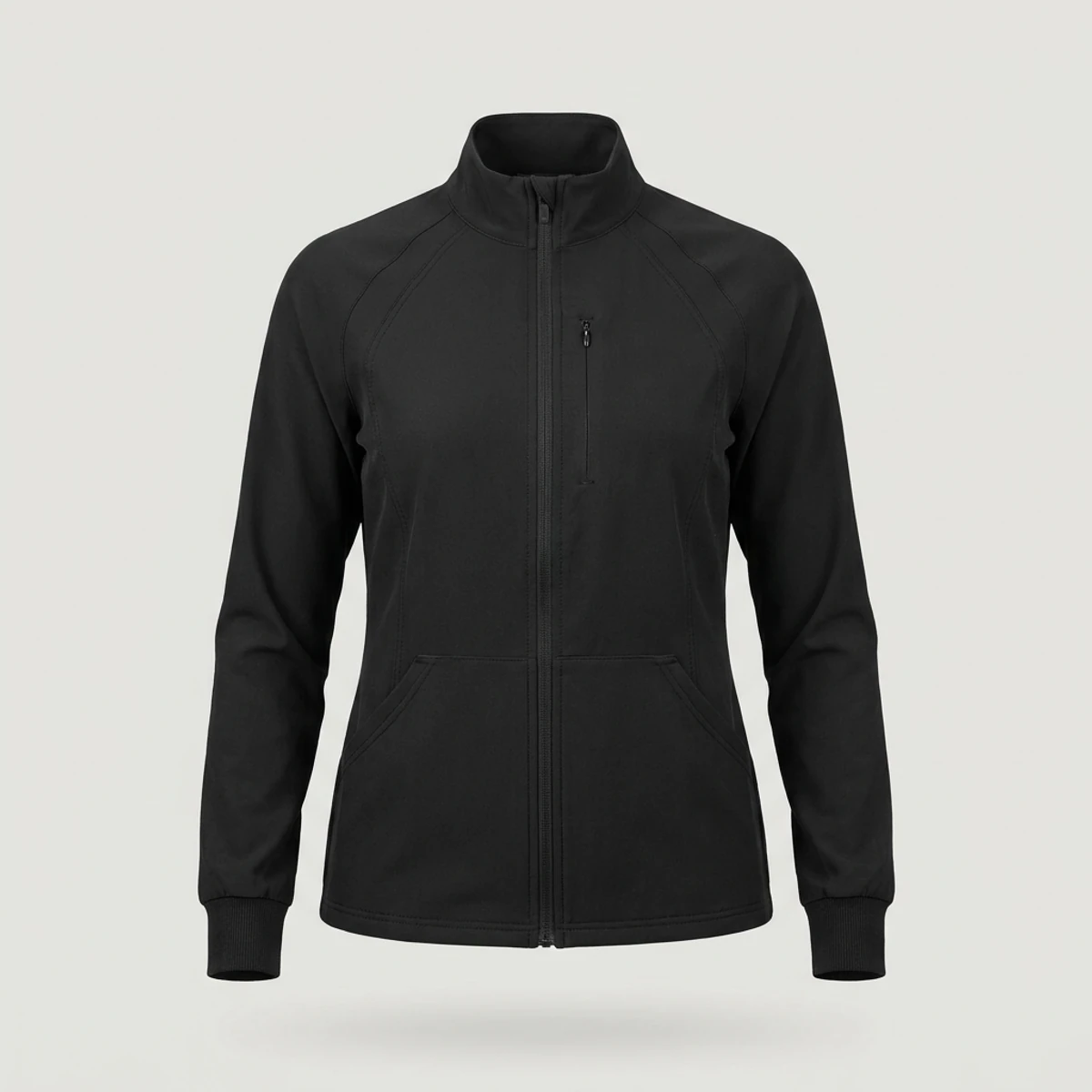
  • Black zip-front scrub jacket with stand collar and zip chest pocketBlack zip-front scrub jacket
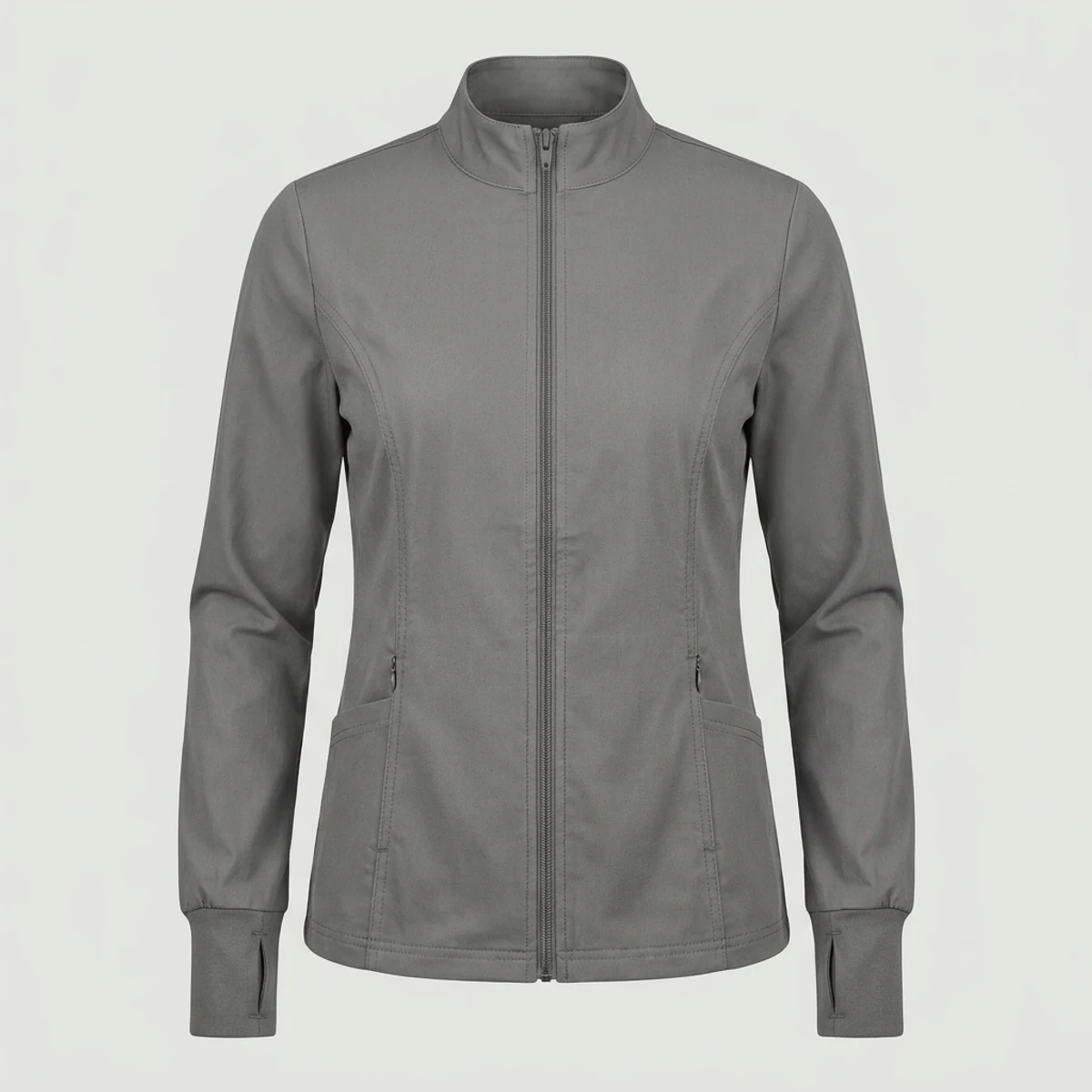
  • Pewter grey women's fitted zip scrub jacket with thumbhole cuffsPewter women's zip jacket
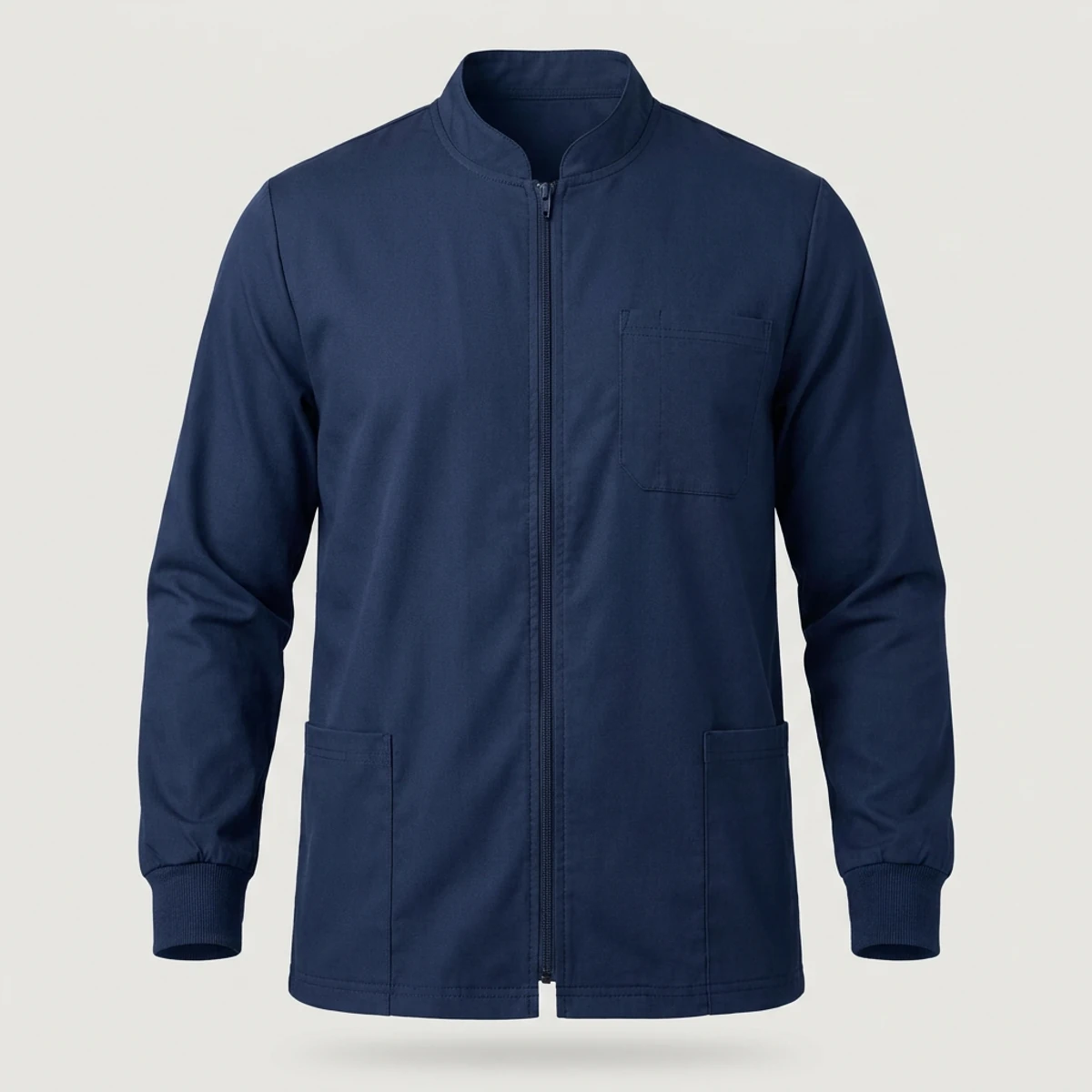
  • Navy men's zip-front scrub jacket with stand collar and side pocketsNavy men's zip jacket
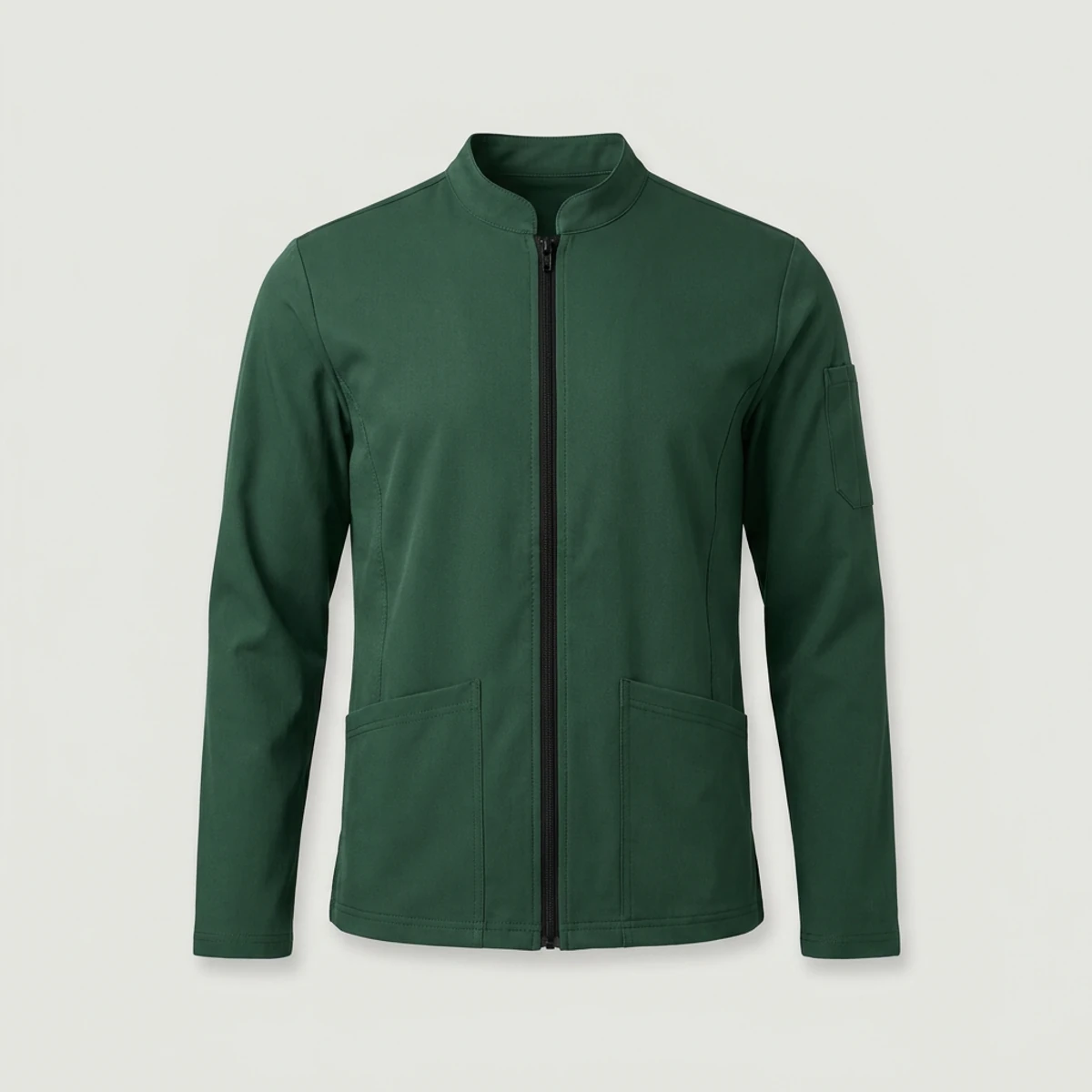
  • Hunter green zip scrub jacket with contrast zipper and sleeve pocketHunter green zip jacket
Quote zip jackets
Physician in a navy quarter-zip scrub sweatshirt reviewing scans at a workstation

Quarter-zip pullovers for reading rooms

Radiologists and specialists in cool reading rooms favor a quarter-zip over scrubs as a smart, warm layer. We make it in navy, black or a group color, with each style starting at about 50 pieces.

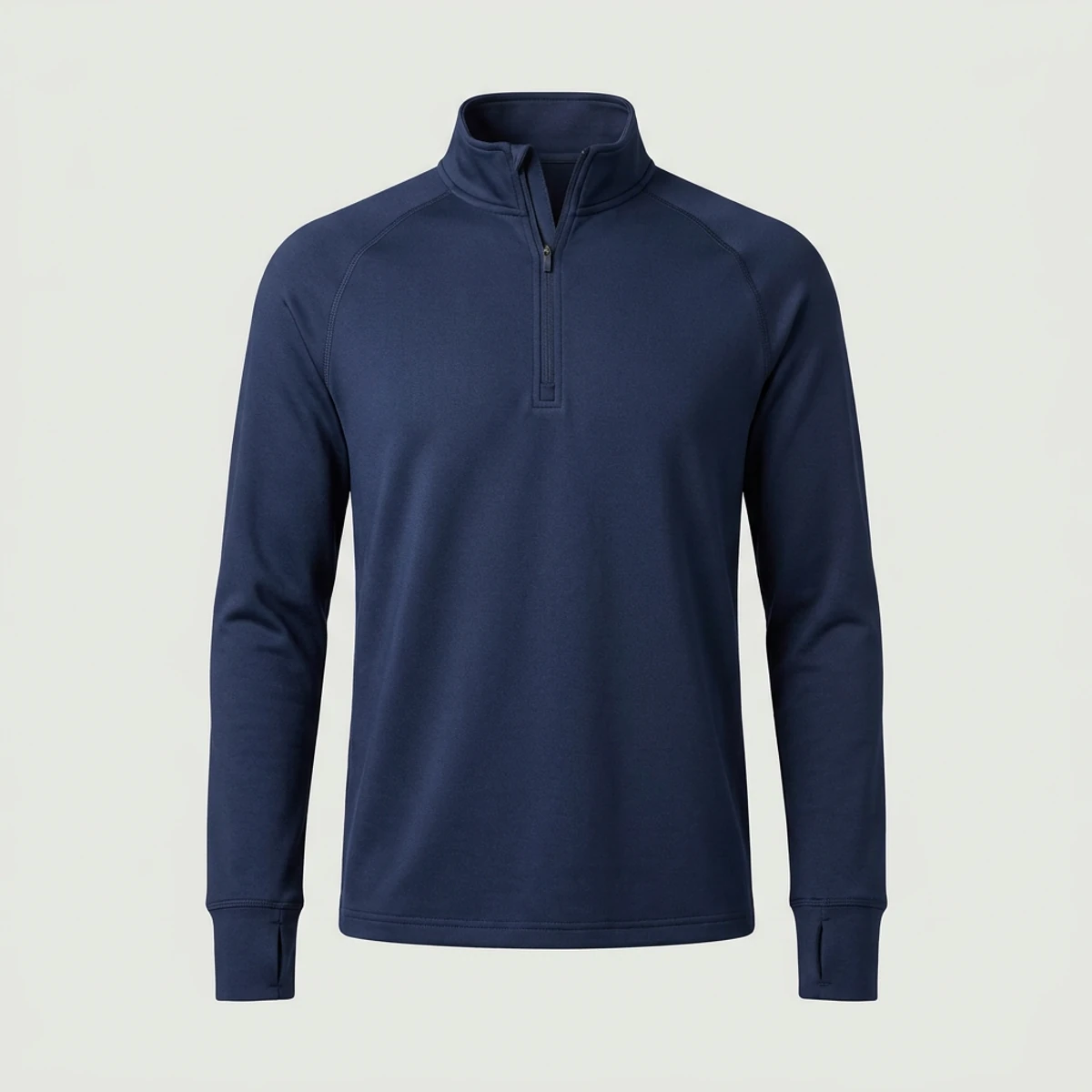
  • Navy quarter-zip scrub sweatshirt with stand collar and thumbhole cuffsNavy quarter-zip sweatshirt
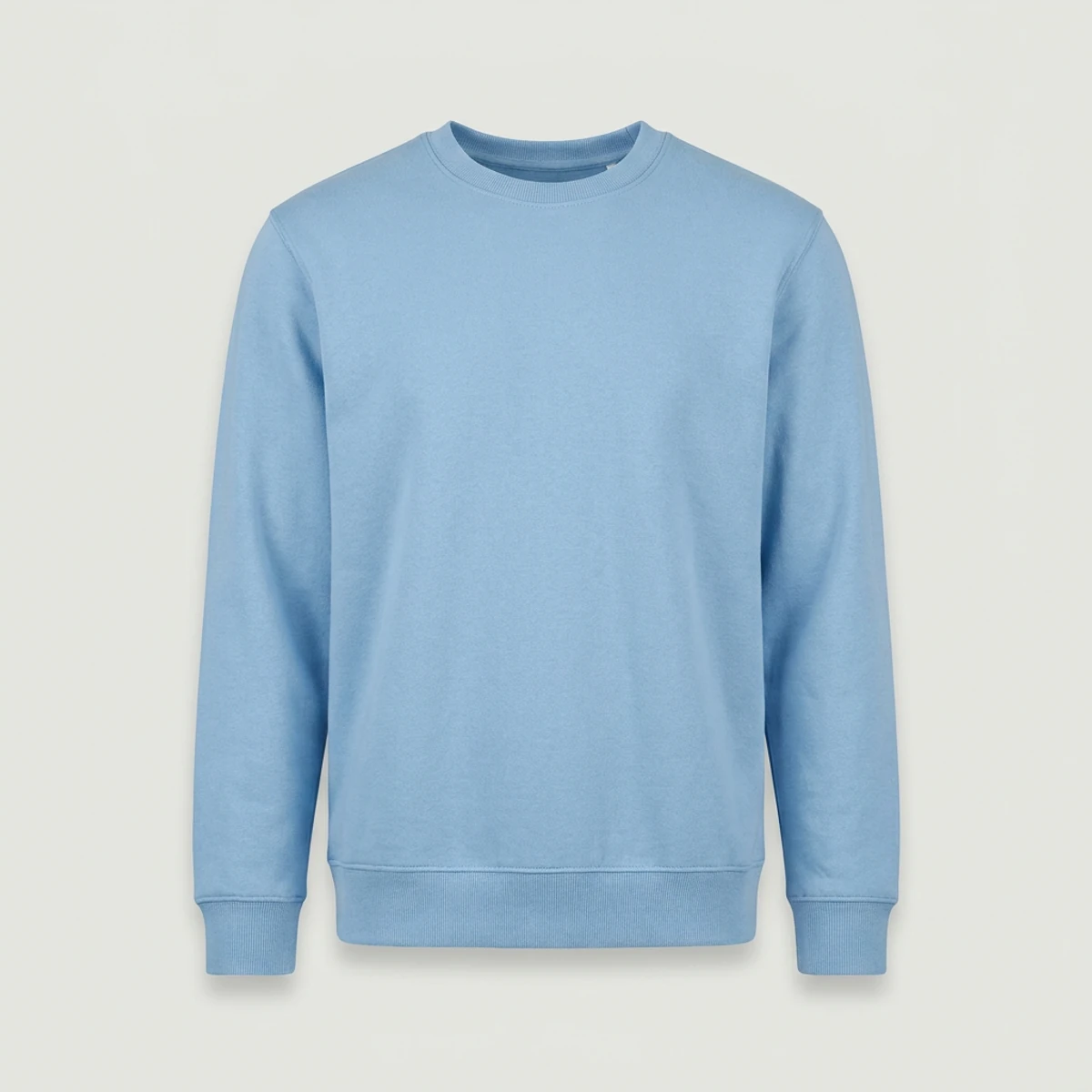
  • Ceil blue crewneck scrub sweatshirt with ribbed collar, cuffs and hemCeil crewneck sweatshirt
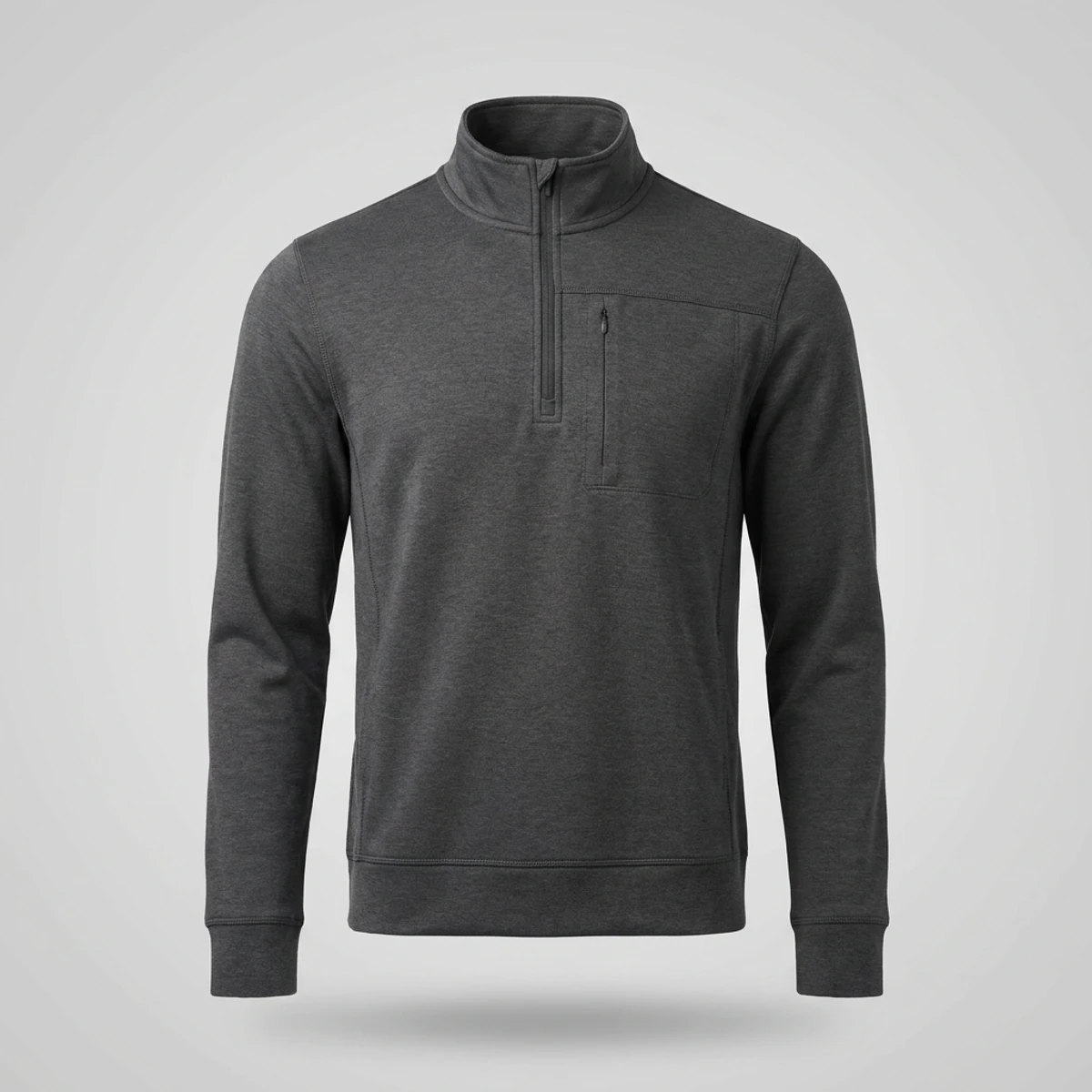
  • Charcoal grey quarter-zip scrub sweatshirt with zip chest pocketCharcoal quarter-zip pullover
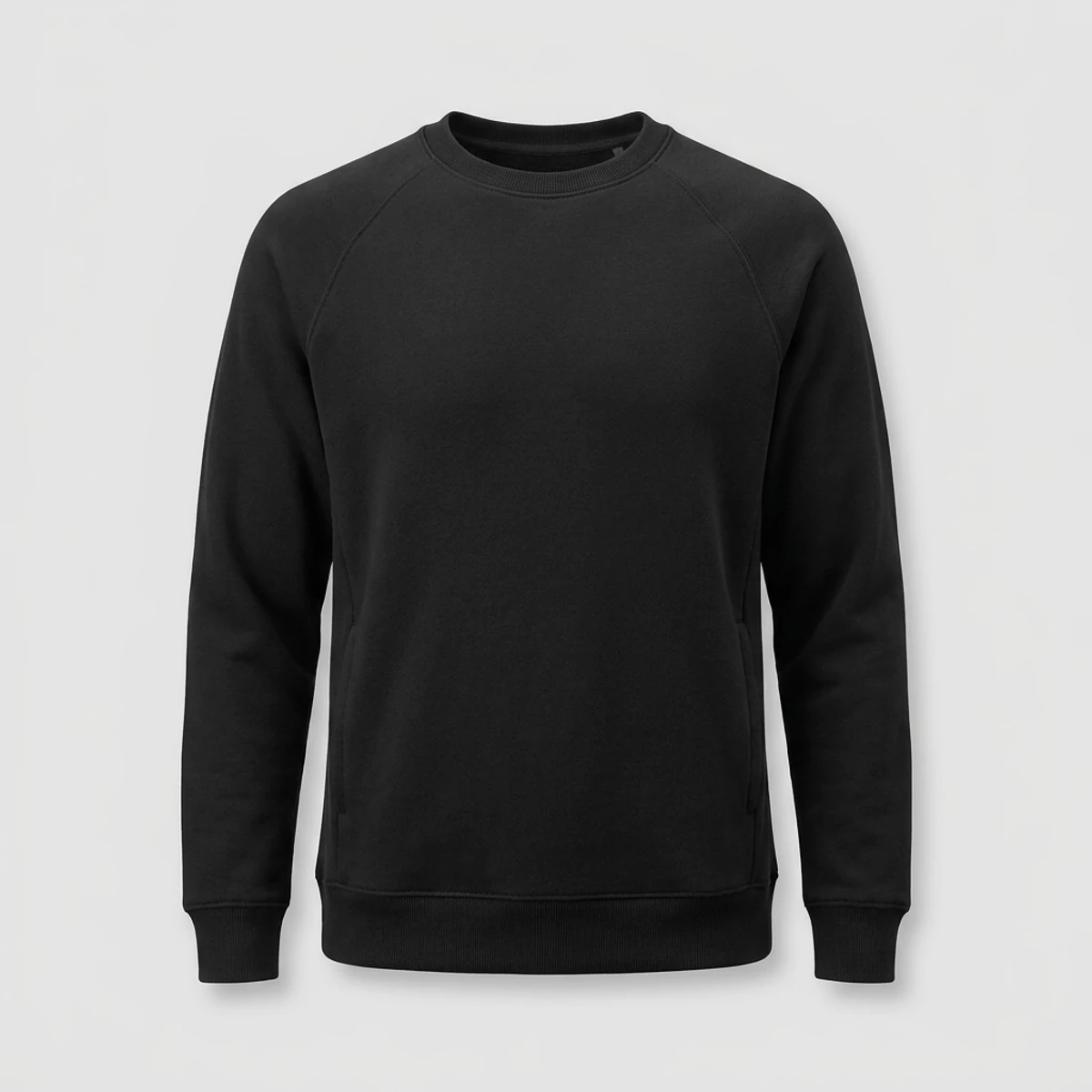
  • Black crewneck scrub sweatshirt with raglan sleeves and side pocketsBlack crewneck sweatshirt
Quote quarter-zips

Customize your scrub tops

Pick the style, fabric and colors, add your logo and names, then attach the design to your quote. We cut and sew it in Los Angeles from 50 pieces per style.

Who buys physician scrubs?

Physician scrubs are usually bought by an organization rather than by individual doctors: physician groups, private practices, urgent care centers, hospital residency programs and medical schools. Each buyer wants the same three things: a professional look, clear identification of providers and garments that hold up through long shifts and frequent washing.

  • Physician groups and private practices

    outfitting providers so every exam room presents the same way.
  • Urgent care and ambulatory centers

    where providers, nurses and medical assistants all wear scrubs and need to be told apart.
  • Hospital medical staff offices and residency programs

    supplying residents and hospitalists.
  • Medical schools and physician assistant (PA) programs

    ordering coats and scrubs for incoming classes.

Doctor scrubs by role

Doctor scrubs vary by role: attending physicians often pair tailored scrubs with a knee-length coat, residents live in scrubs on call, surgeons wear hospital-issued scrubs in the operating room (OR) and students wear shorter coats. Coat length and embroidery are how many hospitals signal rank, with every provider’s degree on the chest.

RoleTypical uniform
Attending physiciansTailored scrubs or business wear plus a long, knee-length lab coat with name and degree
Residents and fellowsScrubs for call and inpatient work, a lab coat with name, degree and program
HospitalistsScrubs with a lab coat or scrub jacket for rounding
Surgeons and anesthesiologistsHospital-issued scrubs in the OR; personal scrubs and a coat in clinic
PAs and nurse practitioners (NPs)Scrubs or business wear with a lab coat showing PA-C or NP
Medical and PA studentsShorter coats with school logo; scrubs for clinical rotations

Example uniform kits by practice type

A physician uniform kit depends on the practice type: primary care often pairs coats with business wear, urgent care puts providers in a distinct scrub color, surgical clinics need procedure-day scrubs and residency programs need call scrubs. The rest of the team usually wears scrubs in a staff color with embroidered titles. Dermatology and plastic surgery practices with an aesthetics suite often dress injectors and aesthetic nurses apart from the clinic; see scrubs for estheticians and aesthetic nurses.

Practice typeProvidersRest of team
Primary care or pediatricsTailored scrubs or business wear, lab coat with name and specialtyScrubs in a staff color with titles
Urgent careScrubs in a provider color, scrub jacket with name and degreeScrubs in a staff color; front desk in a third color
Surgical specialty clinicScrubs for procedure days, long coat for consultsScrubs, warm-up jackets for procedure rooms
Hospitalist or residency programScrubs for call, lab coat with program nameNot included
Medical school or PA programShort coat with school logo; scrubs for rotationsNot included

Tip: Even if providers wear business clothes most days, give them one scrub style in the practice color. It keeps procedure days consistent with the rest of the brand.

What do doctors need from their scrubs?

Scrubs for doctors need a tailored but mobile fit, pockets sized for a phone and stethoscope, a color that sets providers apart and a layer for cold clinics. Physicians wear their uniform in front of patients all day, so the garment has to look sharp in a consult and still move during a procedure.

Fit

A slimmer cut through the body with stretch in the fabric looks sharp and still moves. Offering women’s and men’s patterns across XXS to 5XL, rather than a single unisex cut, makes a real difference for providers who wear scrubs every day; the scrub size chart explains how cuts compare.

Pockets

A chest pocket sized for a phone, a secure pocket for keys or a badge, and pant pockets that do not sag when loaded. Zipped pockets help on call when providers move between floors.

White hip-length consultation lab coat with notched lapel and three pockets

Color

Many practices put providers in a distinct color, often a darker one, so patients can tell the doctor from the rest of the team. There is no industry standard; the healthcare scrubs page explains how hospitals set color codes by role.

Royal blue mock wrap scrub top with crossed front panels and princess seams

Physician lab coats with names, degrees and specialties

Physician lab coats are the most visible part of most doctors’ uniforms, and they usually carry three things: name and degree on the first line, specialty or department on the second and the practice logo on the opposite chest or sleeve. Coats made alongside the scrubs can match trim color, logo and name font across the kit.

Read more

A typical layout reads “Daniel Ortiz, DO” over “Family Medicine”, with the practice logo opposite. Custom lab coats are cut and sewn in the same Los Angeles factory as the scrubs, and the embroidered scrubs service covers thread, placement and laundering details for both garments.

Which fabrics suit physician scrubs and coats?

Physician scrubs and coats suit smooth, stretch-blend fabrics with enough polyester to resist wrinkles and some cotton or rayon for breathability. Providers are seen by patients all day, so appearance after washing matters as much as comfort, and white coats need fabric that tolerates bleach.

NeedWhat to look for
Crisp, professional lookSmooth fabric with enough body to hold a tailored line
Movement during proceduresStretch from spandex in the blend
Wrinkle resistance between washesHigher polyester content
Breathability on long clinic daysBlends with some cotton or rayon
White coats that stay whiteFabric that tolerates bleach, washed separately

Fabric options are confirmed at quote stage; wear-testing two candidates on a few providers before choosing is worth the time. The scrub fabric guide compares the common blends.

How should white coats and provider scrubs be washed?

White coats and provider scrubs should be washed often, whites separately, with bleach only on fabrics labeled for it and embroidery pressed from the back. Coat sleeves and cuffs touch patients and surfaces, yet coats are often washed far less often than scrubs, so a second coat per provider makes regular washing practical.

The SHEA expert guidance on healthcare personnel attire suggests that clinicians who wear white coats have more than one and can launder them conveniently.

  • Use bleach only on fabrics labeled for it

    White poly-cotton coats generally tolerate it; colored coats and some trims may not.
  • Wash whites separately

    so they do not pick up dye from colored scrubs.
  • Iron or press at the temperature the label allows

    , and from the back where there is embroidery.
  • If coats go to a linen service,

    say so at quote stage so fabric, buttons and thread suit hot water and high-heat drying.

Ordering doctor scrubs with a 50-piece minimum

Ordering doctor scrubs works style by style, with about 50 pieces per style; a top and a pant count as separate styles. A physician group usually orders one provider scrub style, one lab coat style with individual names and, where staff are included, a staff scrub style in a different color.

  1. 01

    One provider scrub style

    , ordered so each provider has several sets.
  2. 02

    One lab coat style

    for every provider, with individual names and degrees.
  3. 03

    A staff scrub style

    in a different color, if nurses and medical assistants are in the same program.

Smaller practices sometimes combine providers and staff in one style to meet the minimum. The size and color breakdown within a style, fabric options and current lead times are agreed at quote stage.

What determines the cost of a physician uniform program?

The cost of a physician uniform program depends on fabric, quantity per style, the mix of scrubs and coats, style complexity and how much embroidery each garment carries. Programs are quoted on their actual fabric, artwork and quantities rather than from a price list, so the drivers below show where the cost moves.

Cost driverHow it moves the costHow to keep it in check
FabricPremium stretch blends usually cost more than standard poly-cottonMatch fabric to how coats and scrubs are laundered
Quantity per styleLarger runs spread cutting, setup and sampling across more piecesShare one top style between providers and staff
Garment mixCoats take more fabric and construction than scrub topsDecide who really needs a coat
Style complexityZipped pockets, vents and extra panels add sewing timeKeep features providers use
DecorationStitch count and number of locations add time per pieceOne logo position plus the name block
PersonalizationTwo-line names with degree and specialty add handling per pieceSend one roster in the agreed format
Labels and packagingCustom labels and per-person bundling add componentsStandard finishing for staff uniforms

What should a practice decide before ordering?

A practice should decide five things before ordering: who is included, whether it needs scrubs, coats or both, the name format, the color plan and how garments will be laundered. Settling these first keeps a physician program from stalling at the sample stage, so the sample round is about fit only.

  • Who is included. Providers only, or providers plus nurses and medical assistants? This decides how many styles and colors you need.
  • Scrubs, coats or both. Some practices only need coats; others want scrubs for procedures and call.
  • Name format. Full name with degree, or “Dr.” plus last name? Will specialty appear, and on which garment?
  • Colors. One provider color across all locations, or a color per specialty?
  • Laundering. Home, a linen service or hospital laundry, since it affects fabric and thread.

How do you roll out a physician group program?

Roll out a physician group program by agreeing the kit at leadership level, wear-testing samples with providers of different builds, collecting scrub and coat sizes separately, gathering names in the agreed format and approving a production sample with embroidery on both garments. Distributing by person keeps the launch clean.

  1. 01

    Agree the kit

    for providers and staff at a leadership meeting.
  2. 02

    Wear-test samples

    with several providers of different builds.
  3. 03

    Collect sizes

    for scrubs and coats separately; coat sizes often differ from scrub sizes.
  4. 04

    Collect names

    with degree and specialty.
  5. 05

    Approve the production sample

    with embroidery on both coat and scrubs.
  6. 06

    Distribute by person

    , with spares in common sizes for new starters if volume allows.
Operators sewing scrub tops on rows of industrial sewing machines

Reorders and new providers

Reorders for new providers match the original run because the approved patterns, colors, logo file and name layout stay on record. New physicians join on their own schedule, so batch their names into the next order of the same style and their coat and scrubs will match their colleagues’ down to the embroidery.

Practices that want scrubs under their own brand name, for example to sell to patients or staff, can use the private label scrubs program.

What mistakes do practices make with physician uniforms?

The most common physician uniform mistakes are one coat per provider, names without degrees, inconsistent name formats, ignoring women’s fits and dressing providers while staff stay mismatched. Each is easy to avoid when the kit is planned and costly to correct after coats and scrubs have been embroidered.

  1. One coat per provider

    It means coats go unwashed. Plan at least two.
  2. Names without degrees

    Patients want to know who is the physician. Include MD, DO, PA-C or NP.
  3. Inconsistent name formats

    “Dr. Lee”, “James Lee MD” and “J. Lee” on one team looks careless.
  4. Ignoring women’s fits

    A single unisex coat or scrub pattern fits many providers poorly.
  5. Ordering for providers only

    If staff wear mismatched scrubs, the practice still looks inconsistent.

Ready to order

What to send us for a quote

A complete quote for doctor scrubs and coats needs the headcount by group, the garments and colors for each, coat lengths, your logo and name format, the laundering method and whether you want try-on samples. With that list, a program can be priced and sampled in one round.

  • Number of providers and staff, and which garments each group needs
  • Colors for providers and staff
  • Coat length preference for each group
  • Logo file and the name, degree and specialty format
  • Laundering method: home, linen service or hospital
  • Whether you want try-on samples before sizing

Questions about doctors & physicians

Need something not covered here? Ask our Los Angeles team and we’ll answer with options for your order.

Ask our Los Angeles team

What do doctors wear instead of standard scrubs?

Many physicians wear scrubs with a more tailored cut, often in a darker or distinct color, plus a knee-length lab coat embroidered with their name and degree. Others wear business clothes under a lab coat in clinic and switch to scrubs for procedures, call shifts or the hospital.

Do surgeons need their own scrubs?

Usually not for the operating room. Many hospitals issue and launder their own surgical scrubs, and professional guidance such as AORN's favors facility laundering for OR attire. Surgeons' personal scrubs are typically worn in clinic, on rounds or outside restricted areas, so check your facility's policy.

How should a physician's name appear on a coat or scrub top?

The usual layout is first and last name with degree on the first line, such as 'Anita Shah, MD', and the specialty or department on the second, such as 'Pediatrics'. The practice logo goes on the opposite chest or the sleeve. We confirm font and size at sampling.

Can a small practice meet the 50-piece minimum?

Often, yes. Ten providers with five tops each already reaches 50 in one style. Some practices put providers and staff in the same top style to reach the minimum, then separate roles with embroidered titles. We agree the size and color breakdown within a style at quote stage.

Do you make white coats for medical school ceremonies?

Yes. Schools and programs order coats in volume with the school logo on the chest or sleeve. Students traditionally receive shorter coats than attending physicians. Each student's name can be added, or coats can be supplied with logo only for later personalization.

Doctors & PhysiciansCut & sewn in Los Angeles · from 50 pieces per styleRequest samplesGet a quote