
Industries · Los Angeles factory

Custom Uniforms for Electricians

Electrician uniforms have to do two jobs: present your company professionally on every service call and fit inside the arc flash PPE program your crews work under. Custom Uniform Factory makes branded electrician work clothes in its own Los Angeles factory, including arc-rated options for energized work, with a minimum order of about 50 pieces per style.

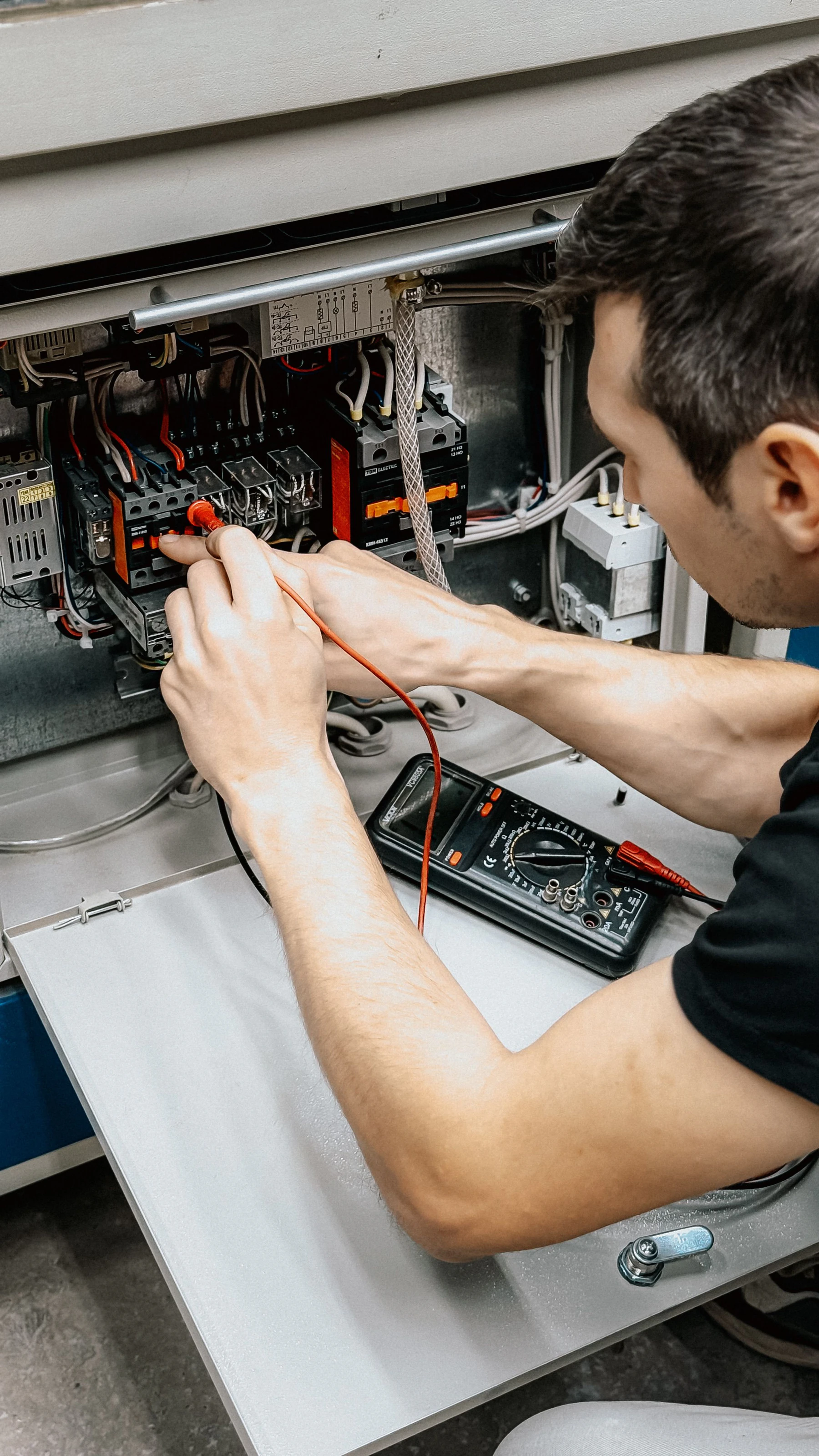
Electrician testing wiring in an open electrical control panel with a digital multimeter
Minimum order
About 50 pieces per style
Production
Cut & sewn in Los Angeles, imported fabric
Garments
Work shirts, work pants, coveralls, jackets
Arc-rated options
Fabric and arc rating confirmed at quote stage

Electricians by style

16 styles in 4 families · each made to order in your fabric, color and branding from 50 pieces.

Customize your uniformsYour fabric, colors, pockets and branding
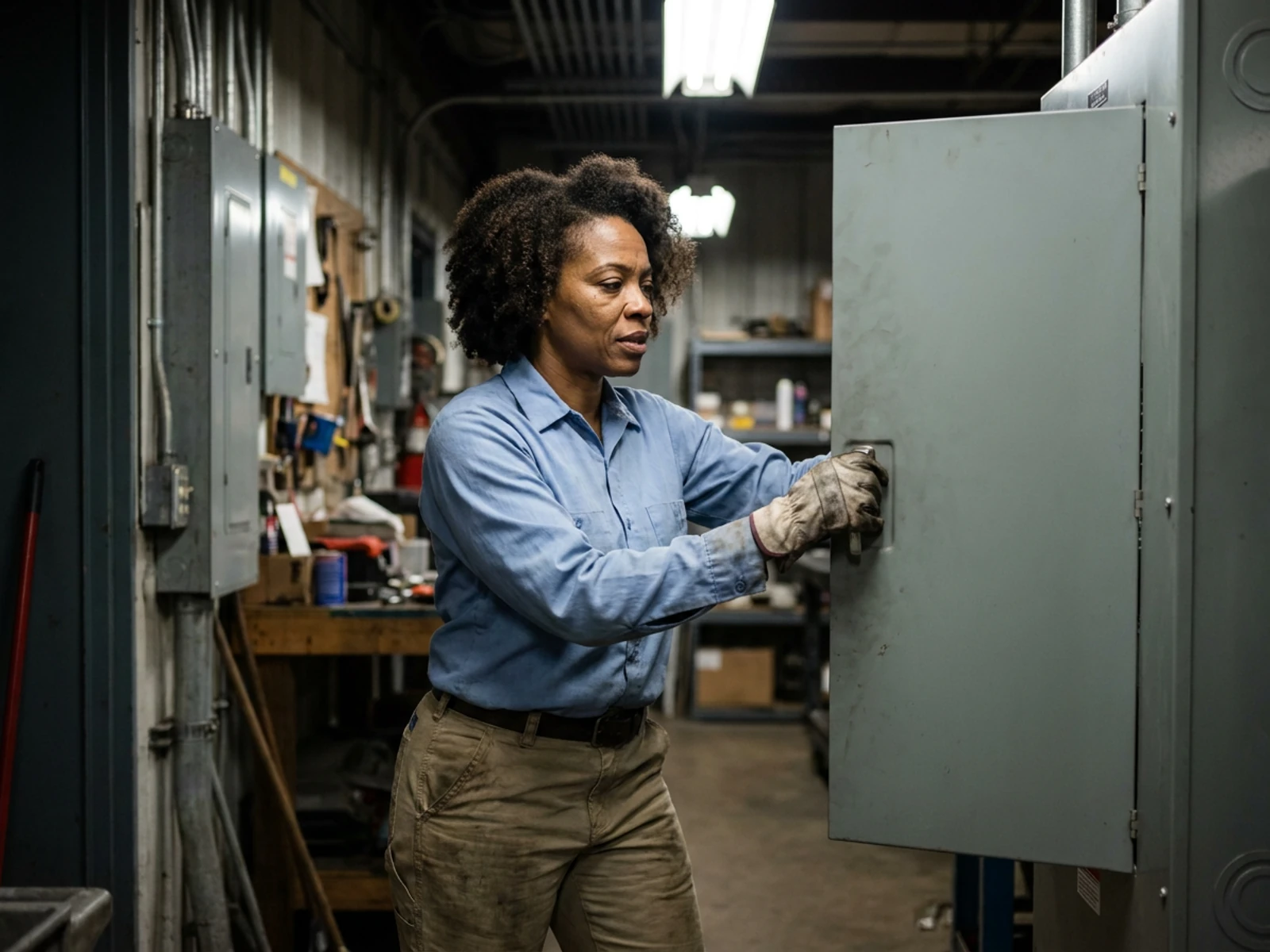
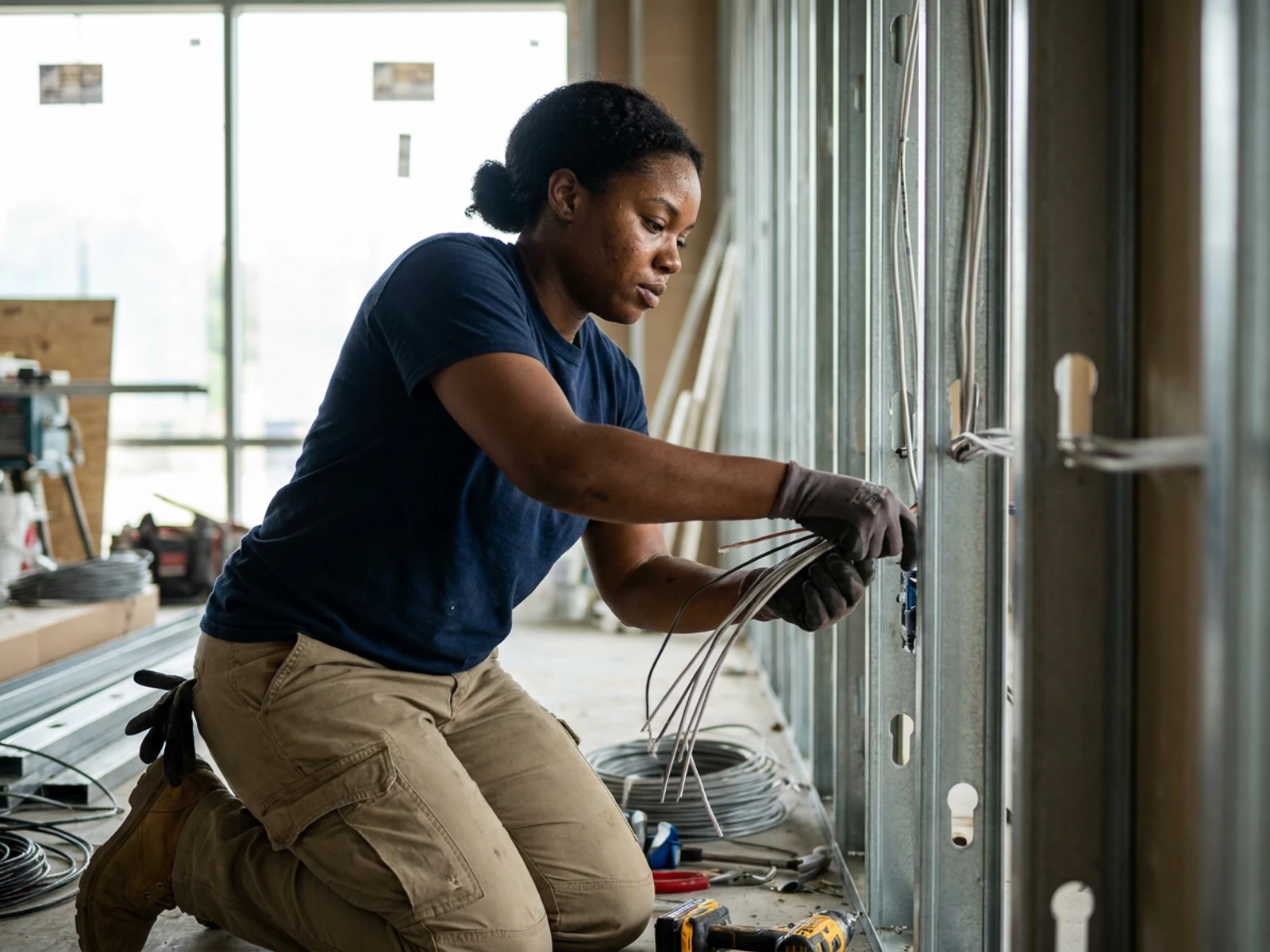
Electrician in khaki flame-resistant work pants opening an electrical panel

Flame-resistant pants for panel work

Electricians opening panels need lower-body coverage in flame-resistant fabric that still bends at the knee. We sew these in Los Angeles from about 50 pieces per style, with tool pockets where you want them.

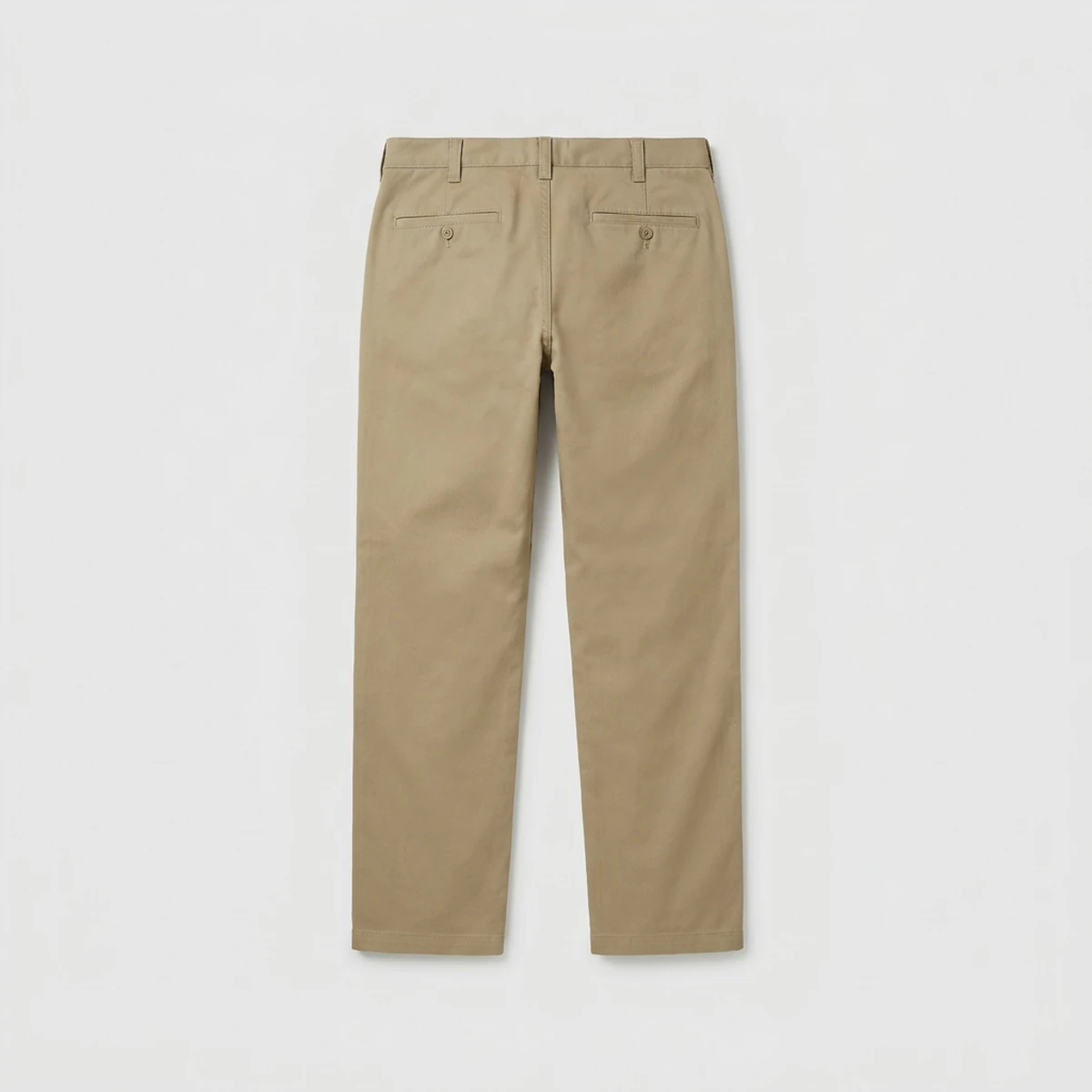
  • Khaki flame-resistant uniform work pants with slant pocketsKhaki FR work pants
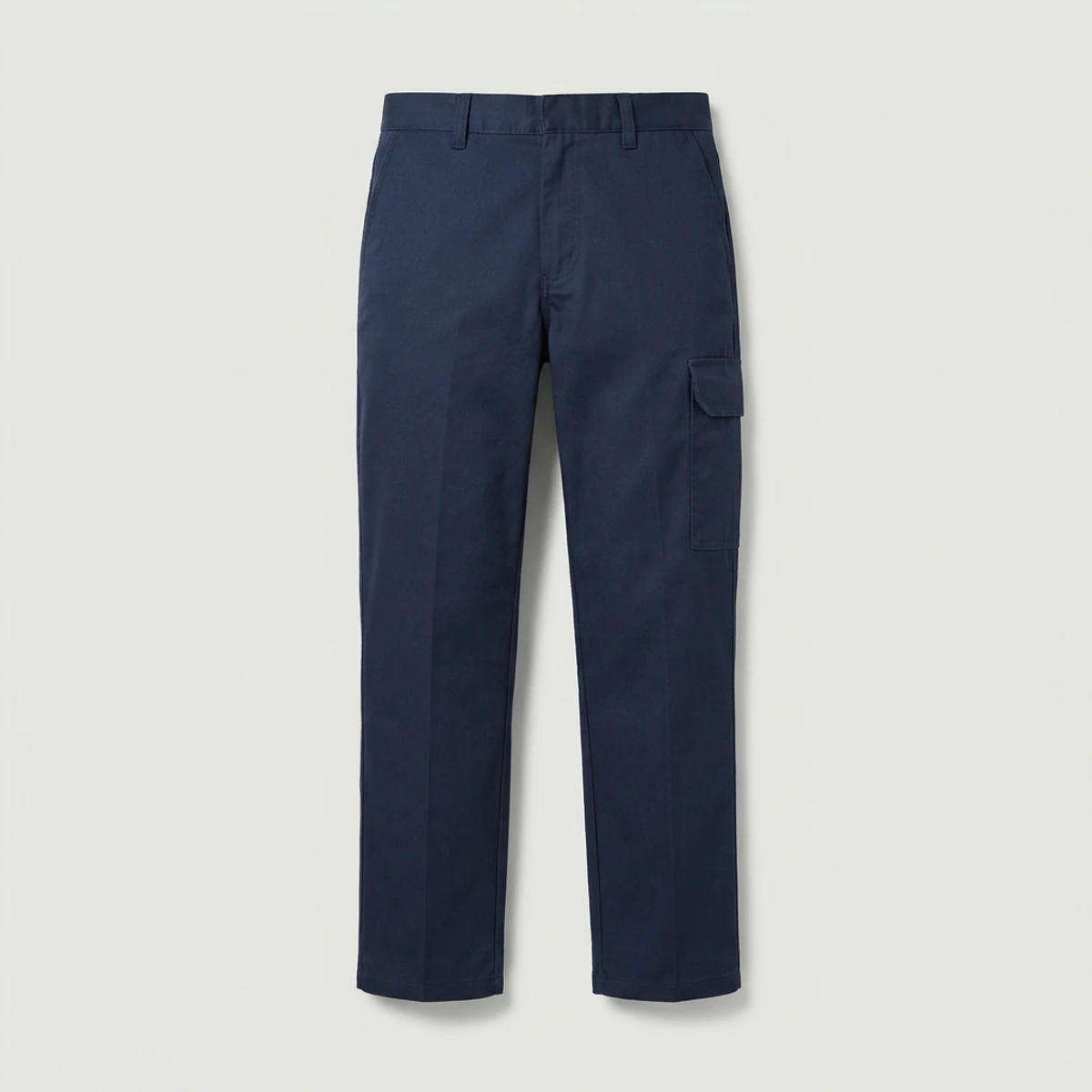
  • Navy flame-resistant work pants with cargo pocket and straight legNavy FR work pants
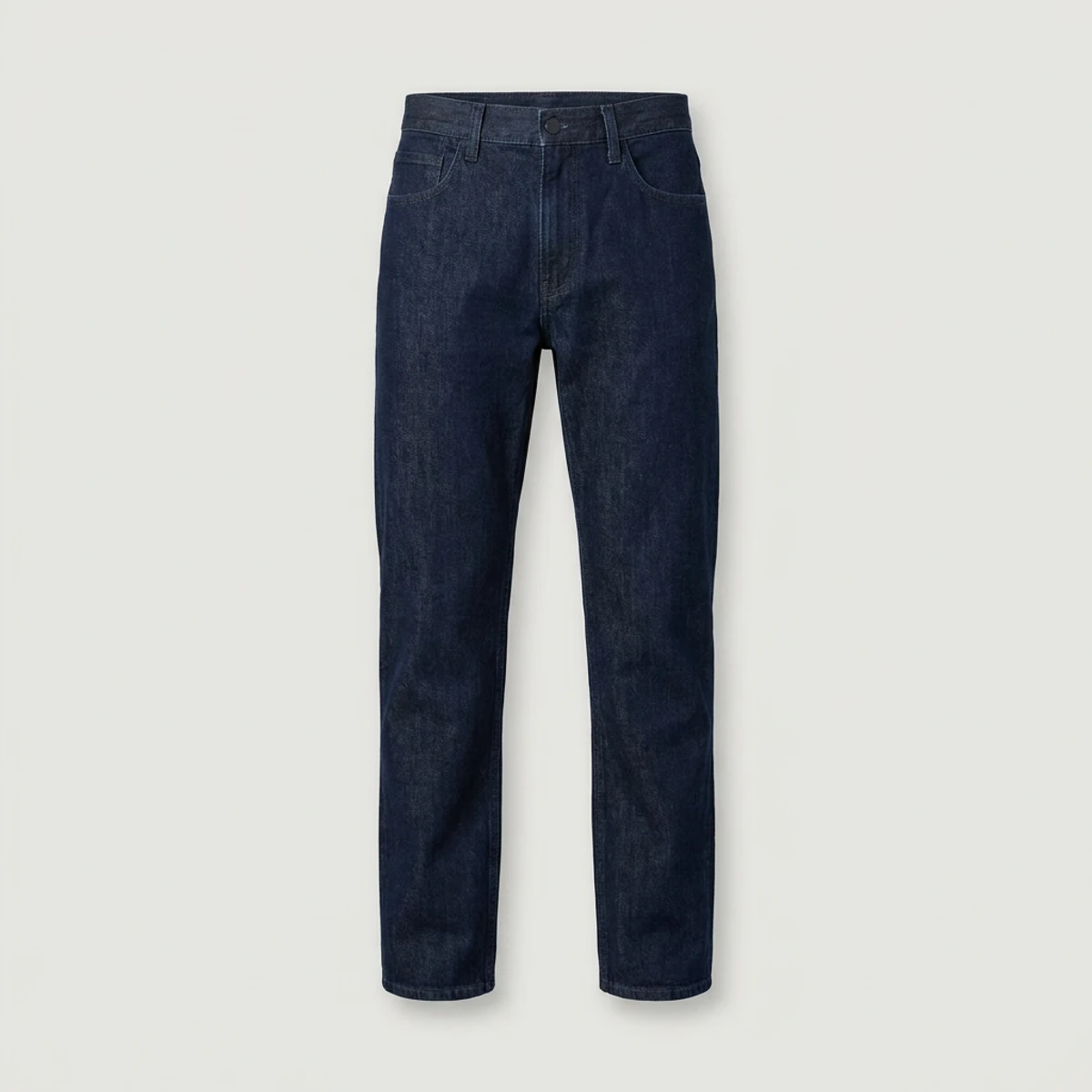
  • Indigo flame-resistant five-pocket work jeans with straight legIndigo FR work jeans
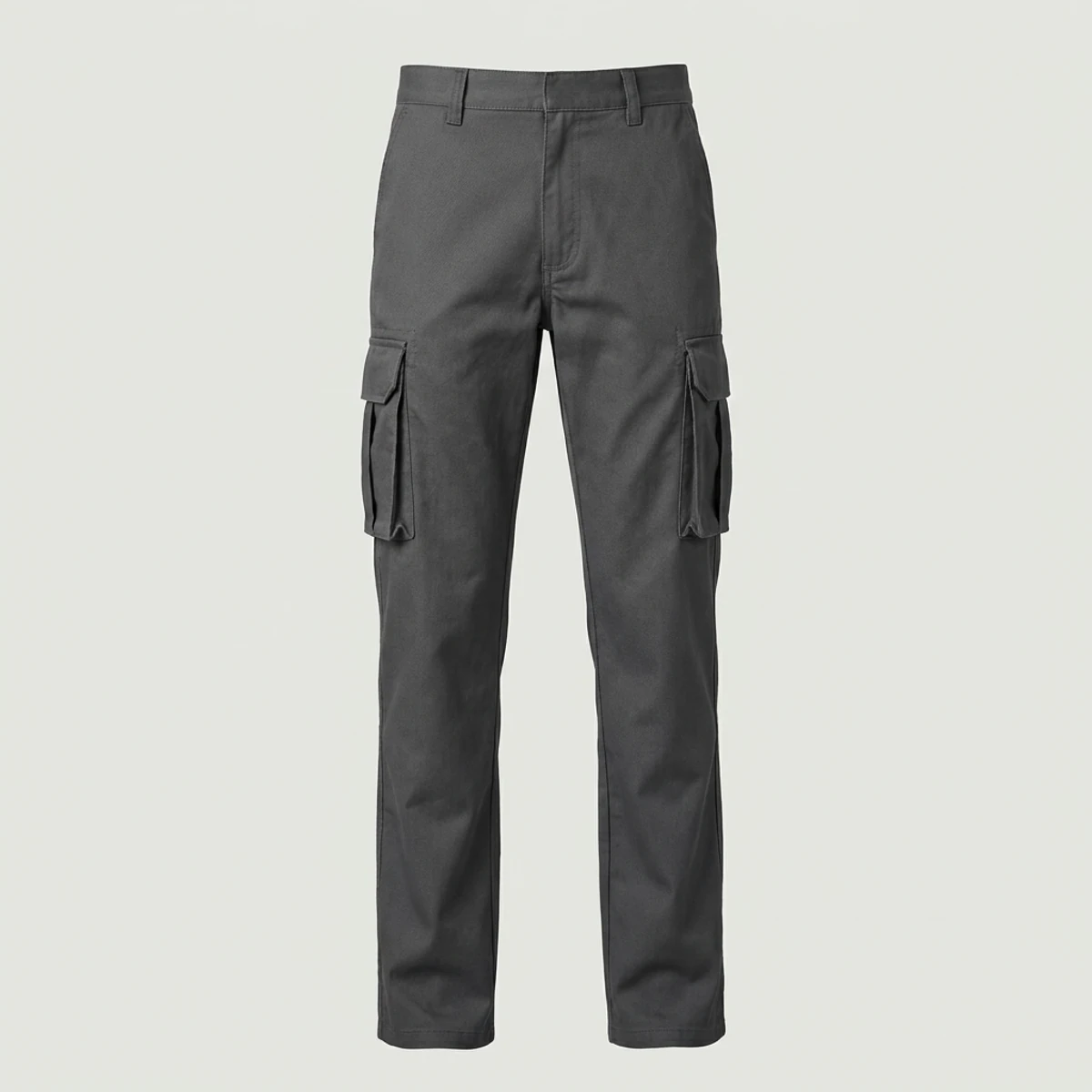
  • Charcoal grey flame-resistant cargo pants with bellows thigh pocketsGrey FR cargo pants
Quote FR pants
Refinery operator in a navy flame-resistant work shirt checking a pressure gauge

FR work shirts with a company patch

A button-front FR shirt can carry the contractor's logo as long as the decoration suits the fabric. We plan that with you and produce from roughly 50 pieces of a style.

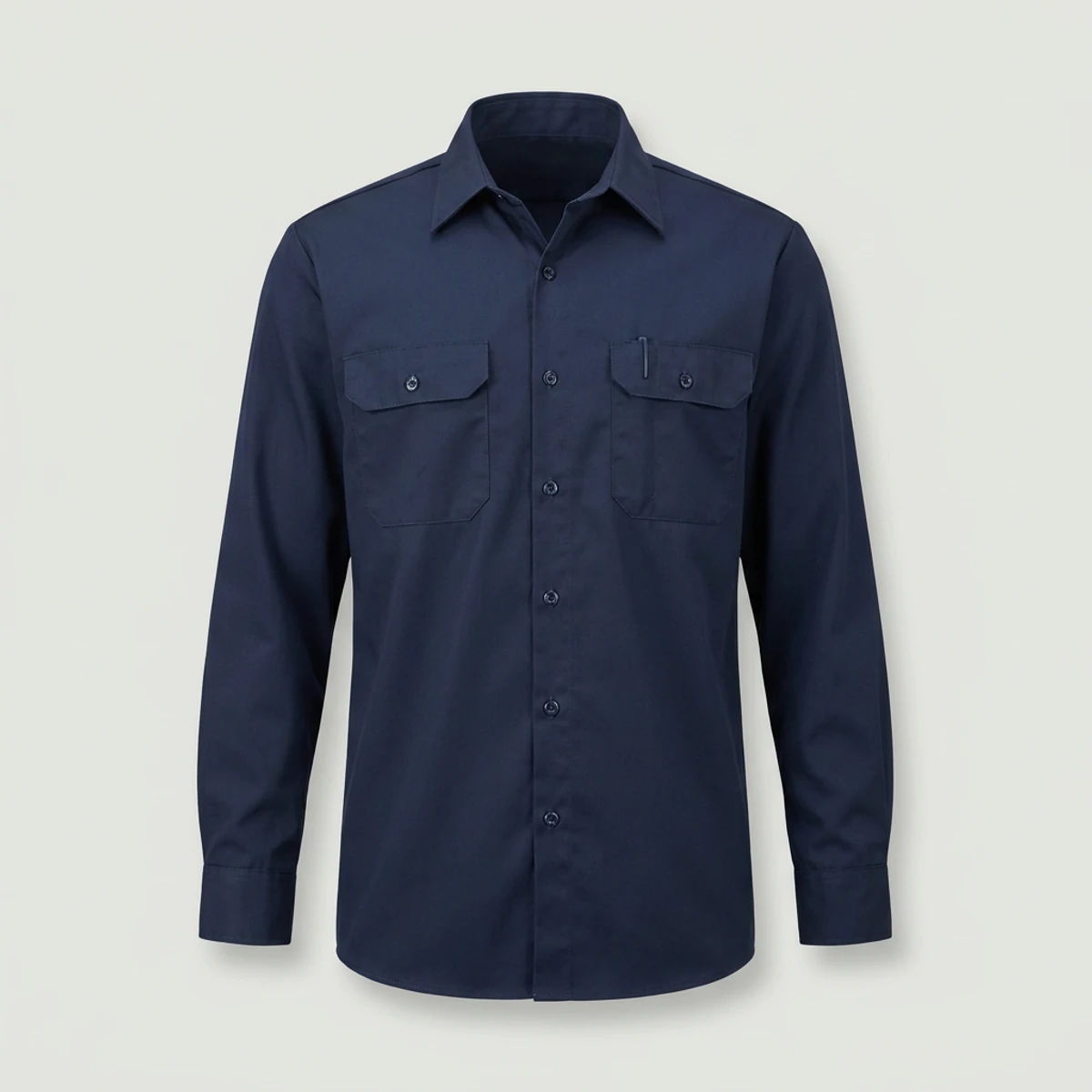
  • Navy flame-resistant button-front work shirt with flap chest pocketsNavy FR work shirt
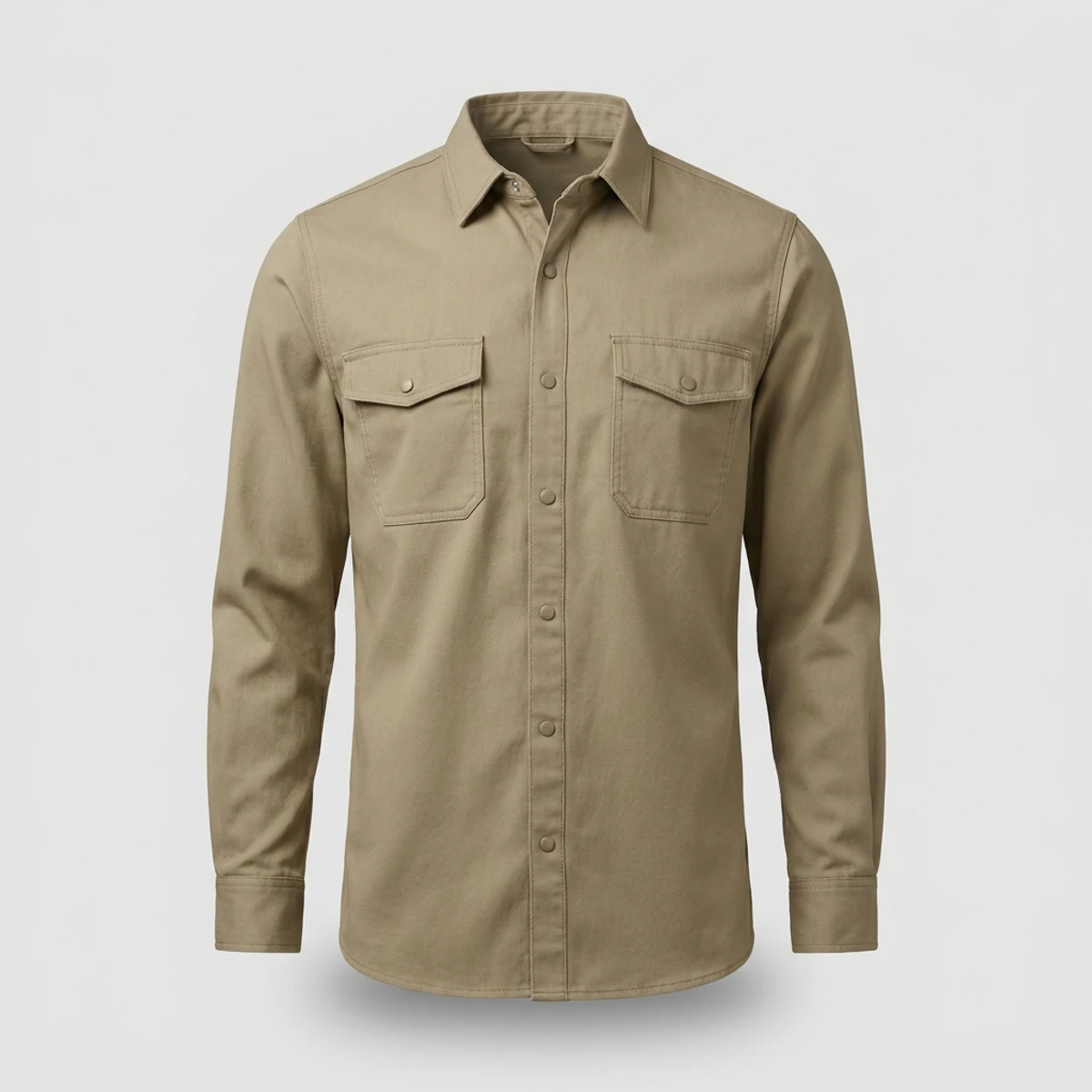
  • Khaki flame-resistant work shirt with snap front and two chest pocketsKhaki FR work shirt
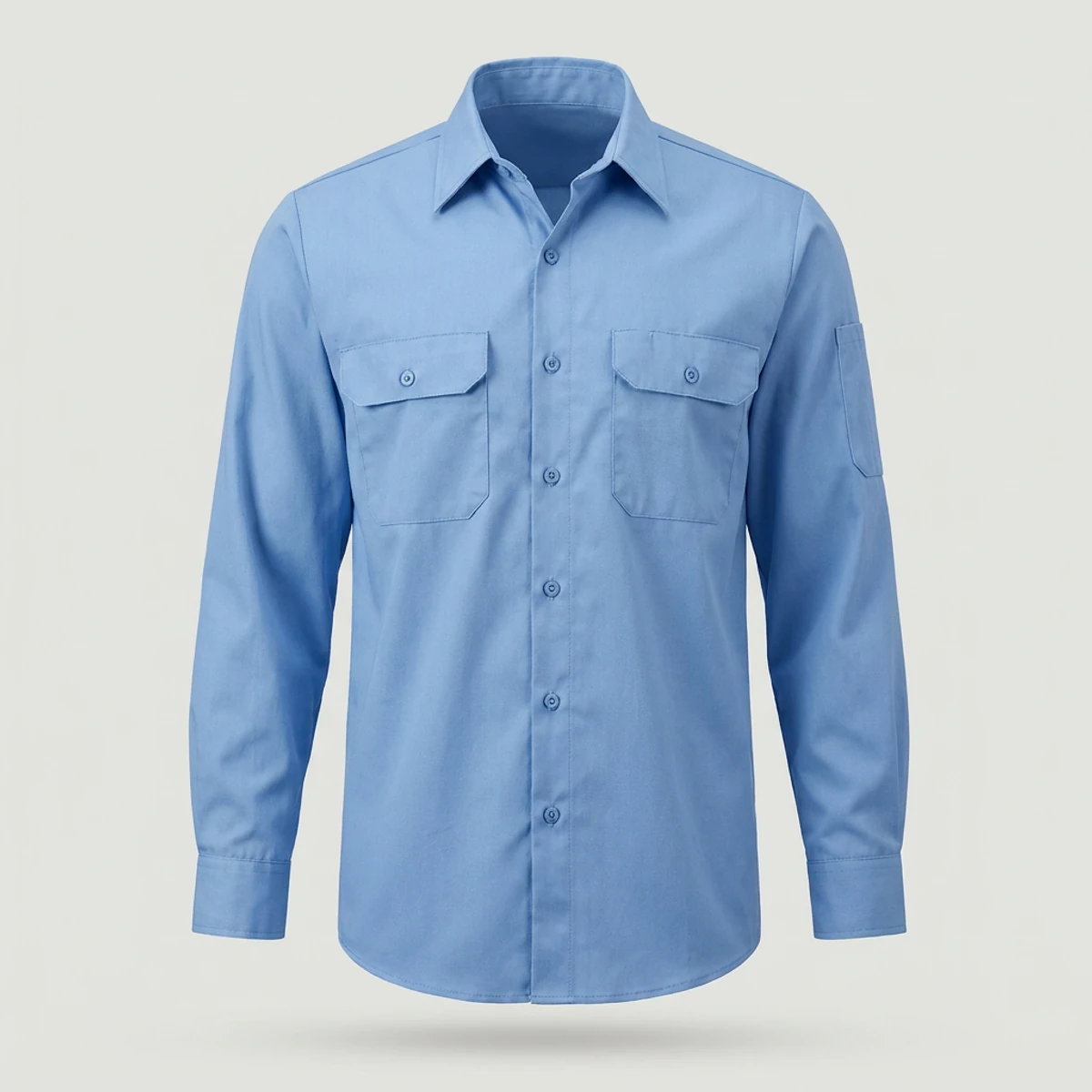
  • Light blue arc-rated work shirt with button front and pen pocketLight blue FR shirt
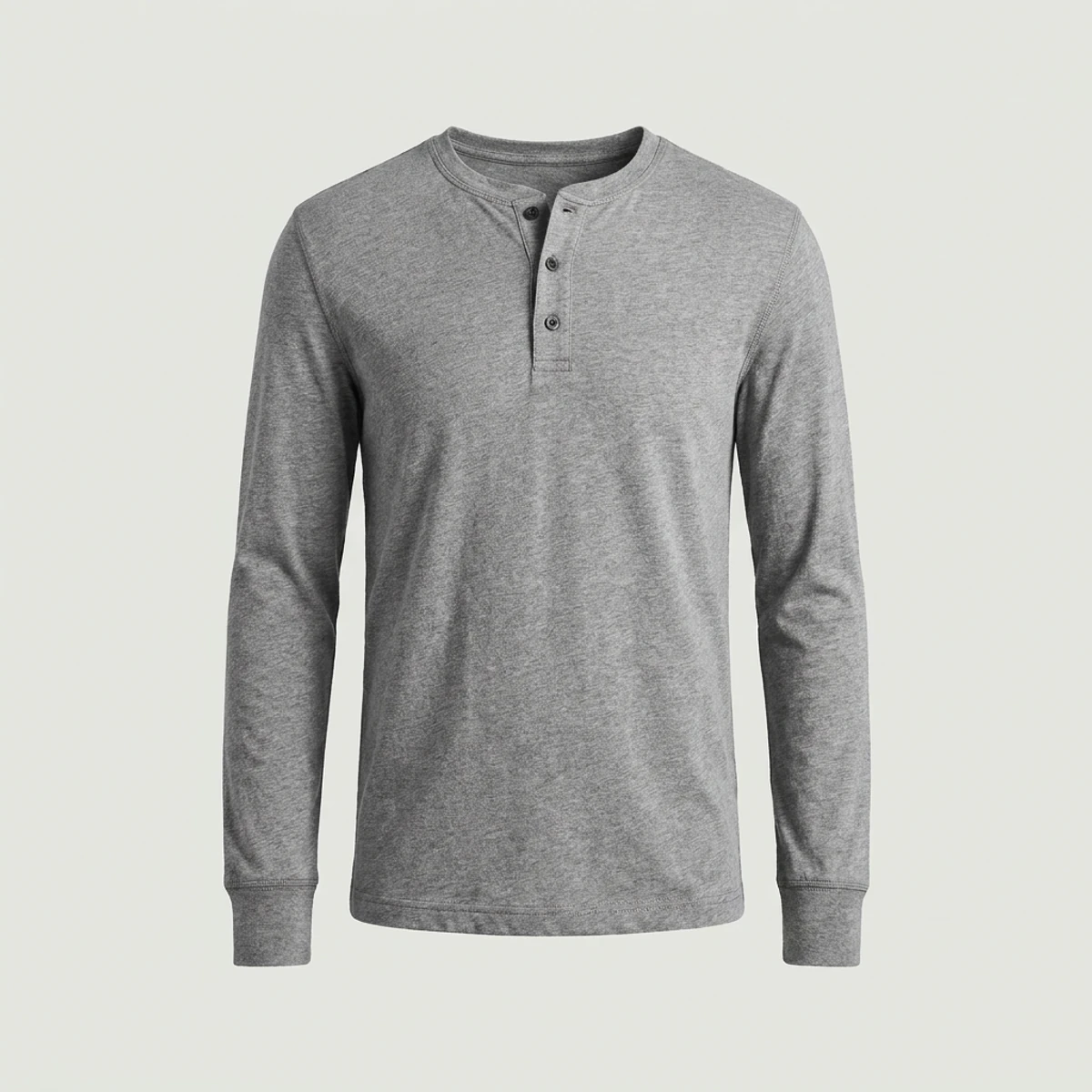
  • Heather grey flame-resistant henley knit shirt with three-button placketGrey FR henley
Quote FR shirts
Electrician in khaki women's-cut work pants pulling wire on a job site

Women's-cut pants for apprentices and journeywomen

Women in the trade have long made do with men's sizes; a women's cut corrects the rise and hip for climbing and pulling wire. These are made to order in runs from around 50 pieces.

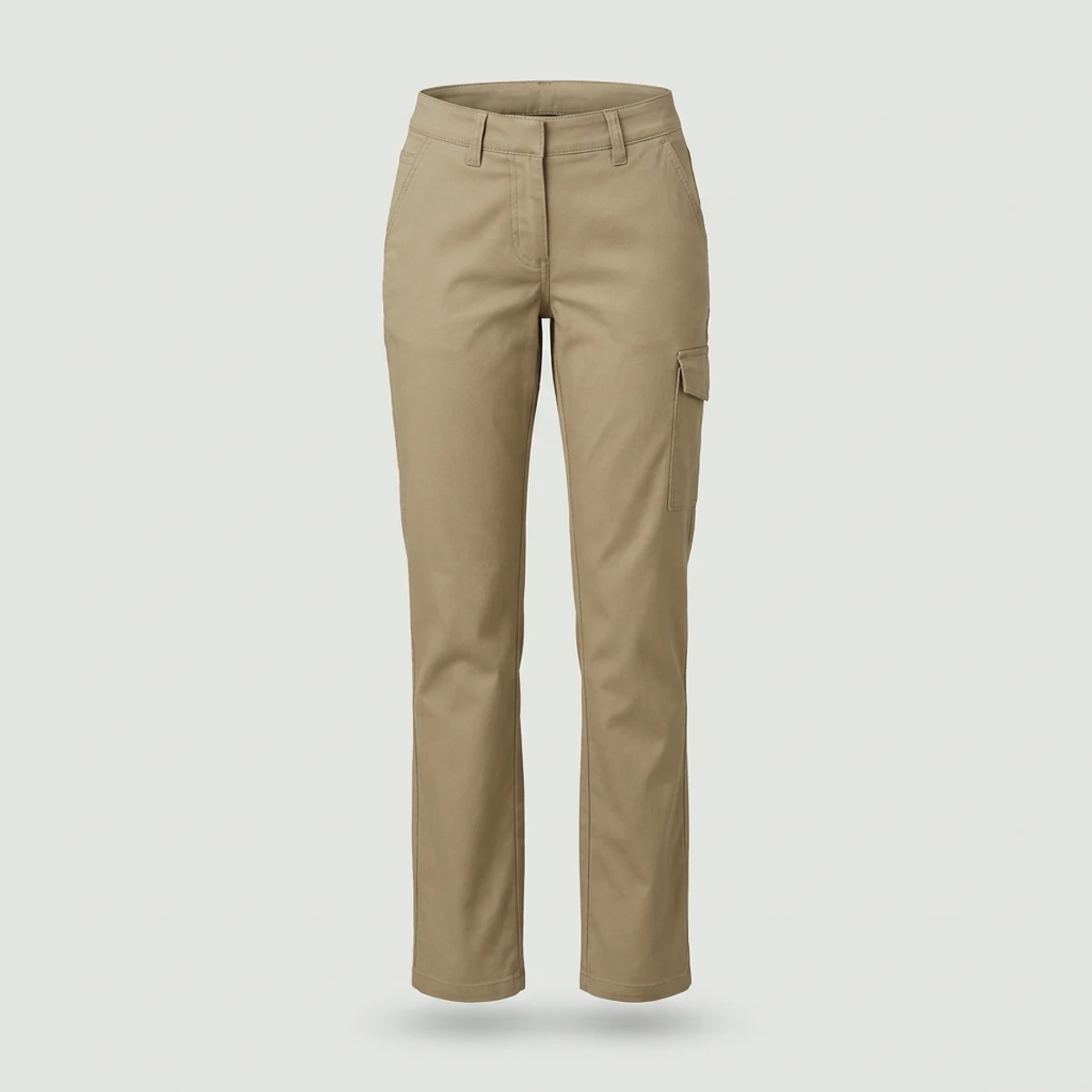
  • Khaki women's-cut work pants with contoured waist and cargo pocketKhaki women's work pants
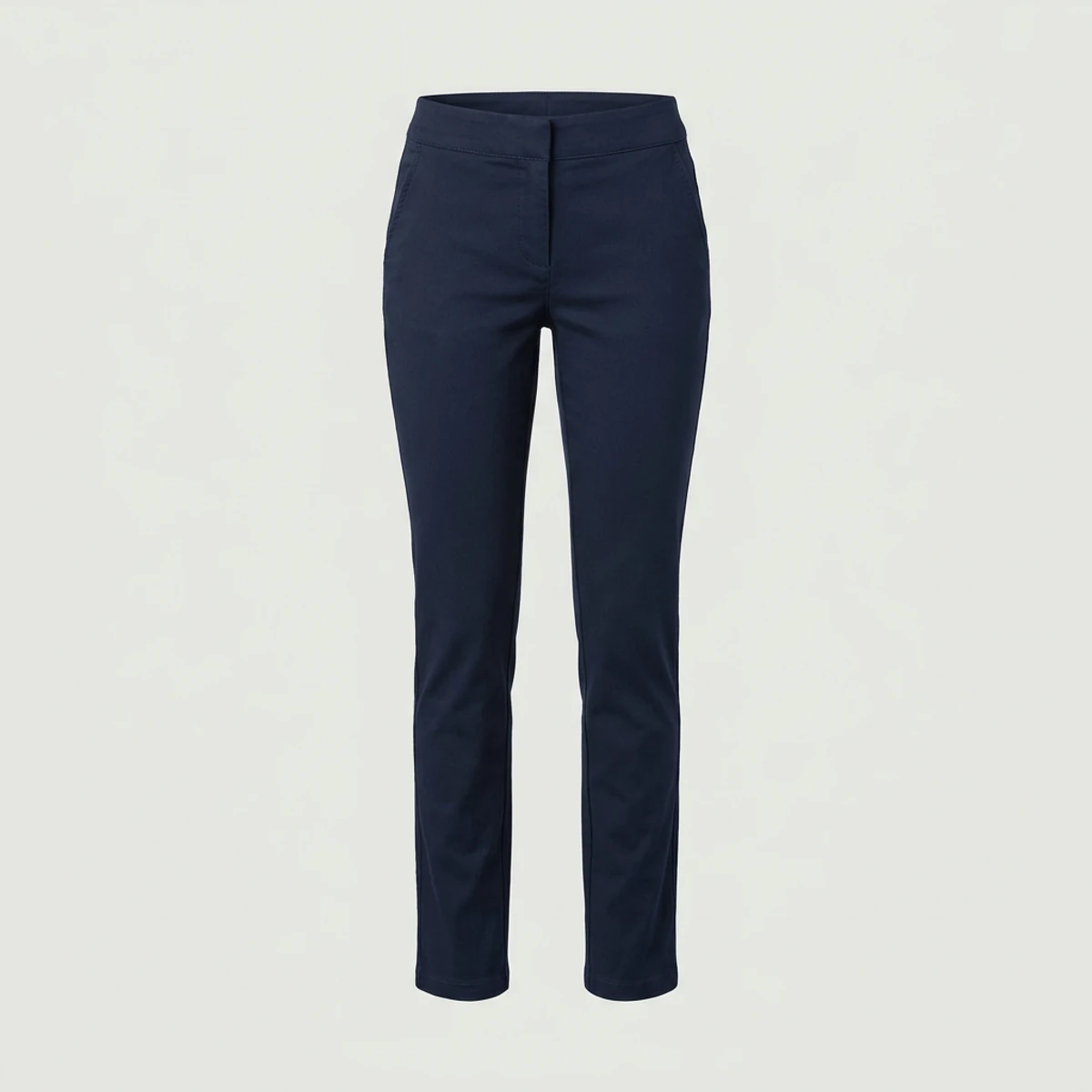
  • Navy women's flat-front work pants with stretch and slim legNavy women's work pants
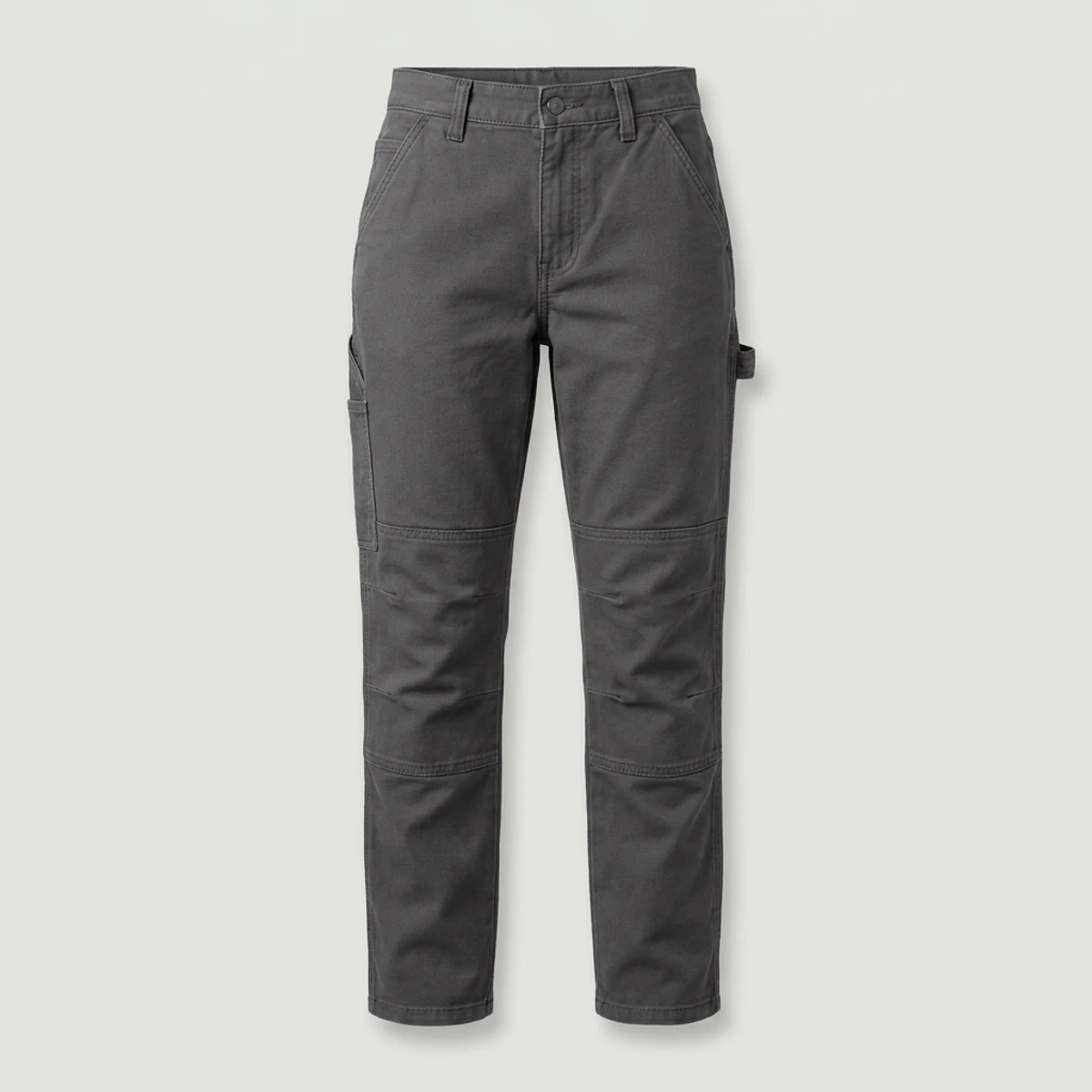
  • Charcoal women's utility work pants with double knees and hammer loopCharcoal women's utility pants
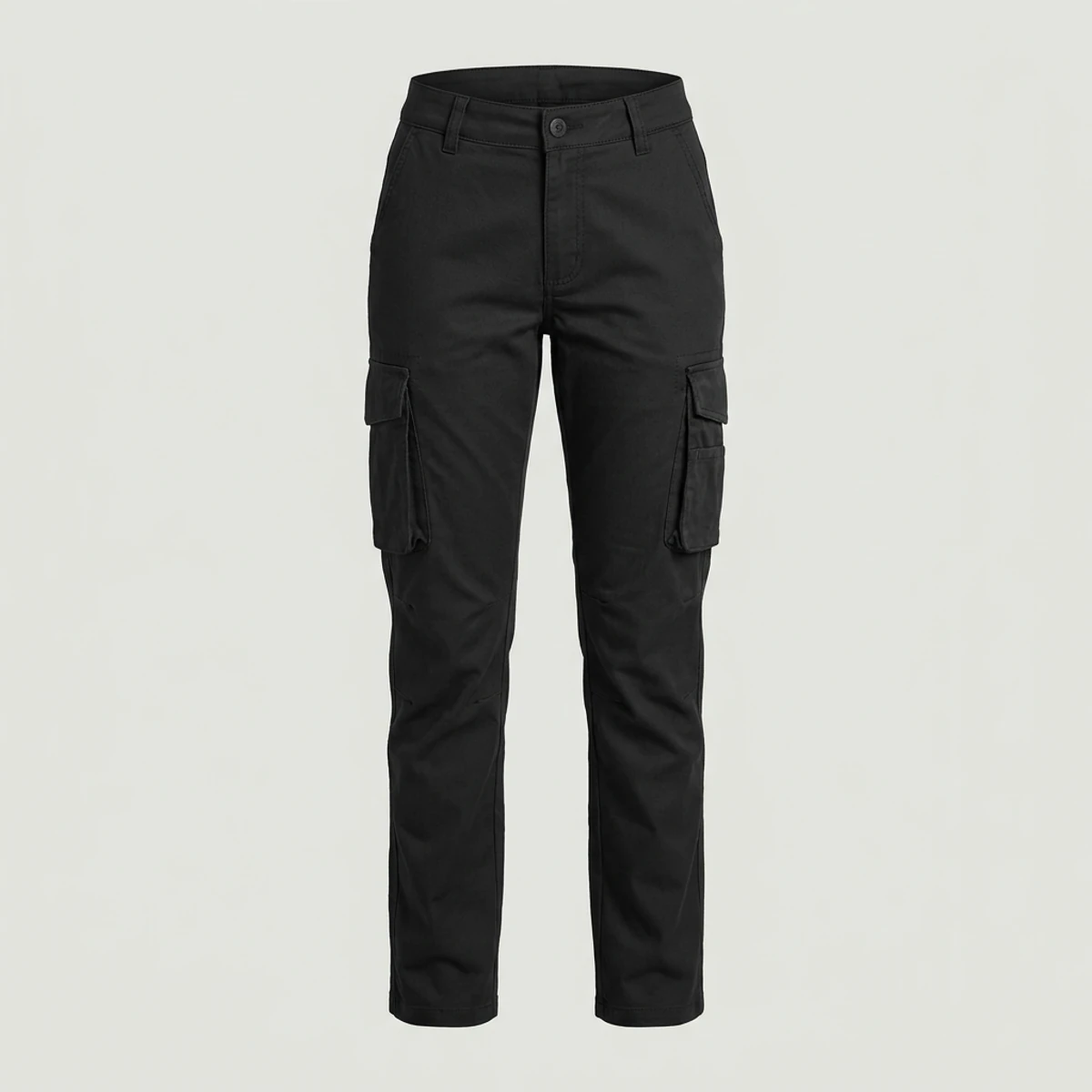
  • Black women's cargo work pants with contoured waist and gussetBlack women's cargo pants
Quote women's fit
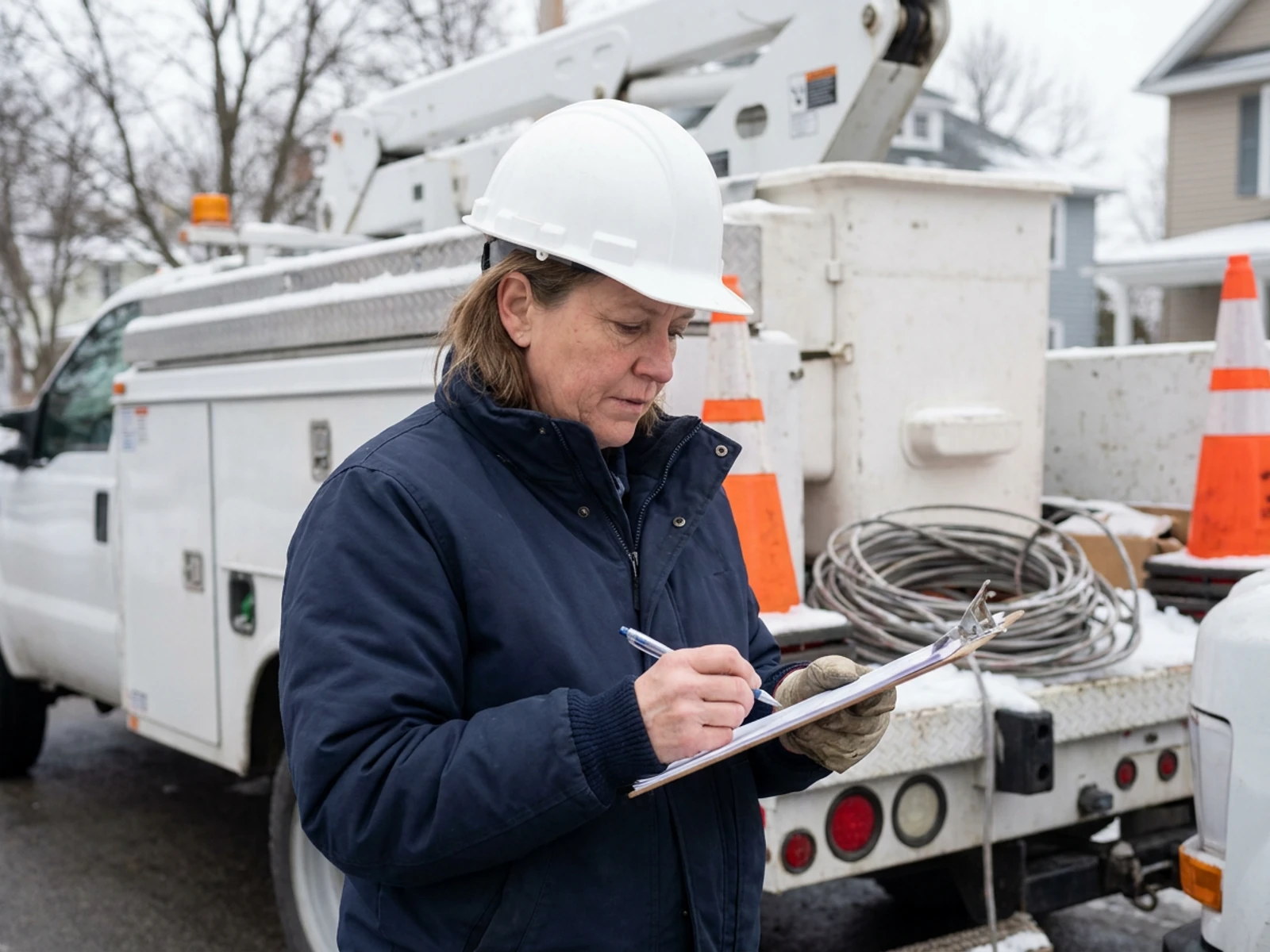
Utility lineworker in a navy flame-resistant jacket reviewing plans beside a bucket truck

Flame-resistant jackets for line and utility crews

Outdoor electrical crews need a top layer that keeps flame resistance consistent from the inside out. We produce these jackets in LA from about 50 pieces each, branded on chest and back.

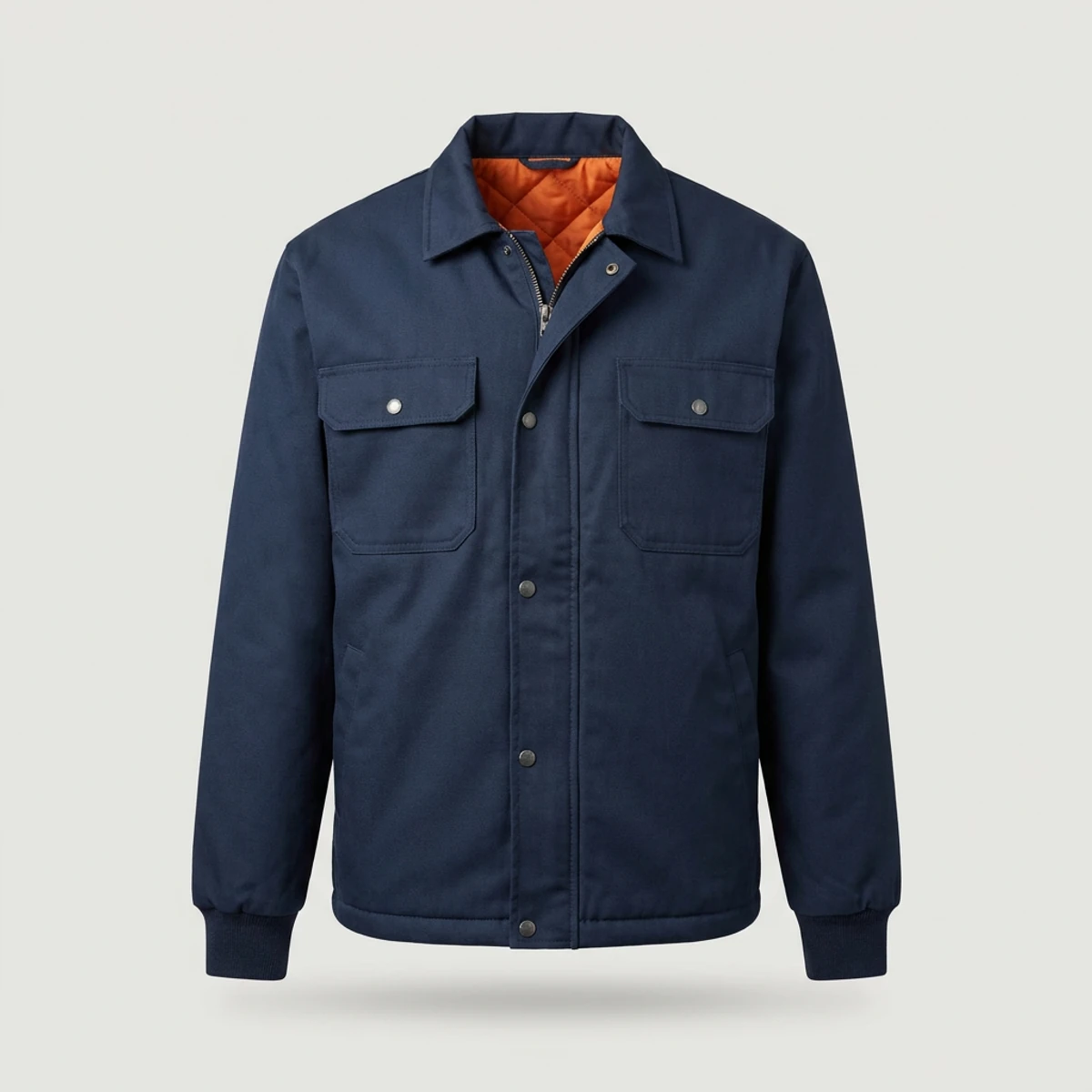
  • Navy flame-resistant work jacket with quilted lining and zip frontNavy FR work jacket
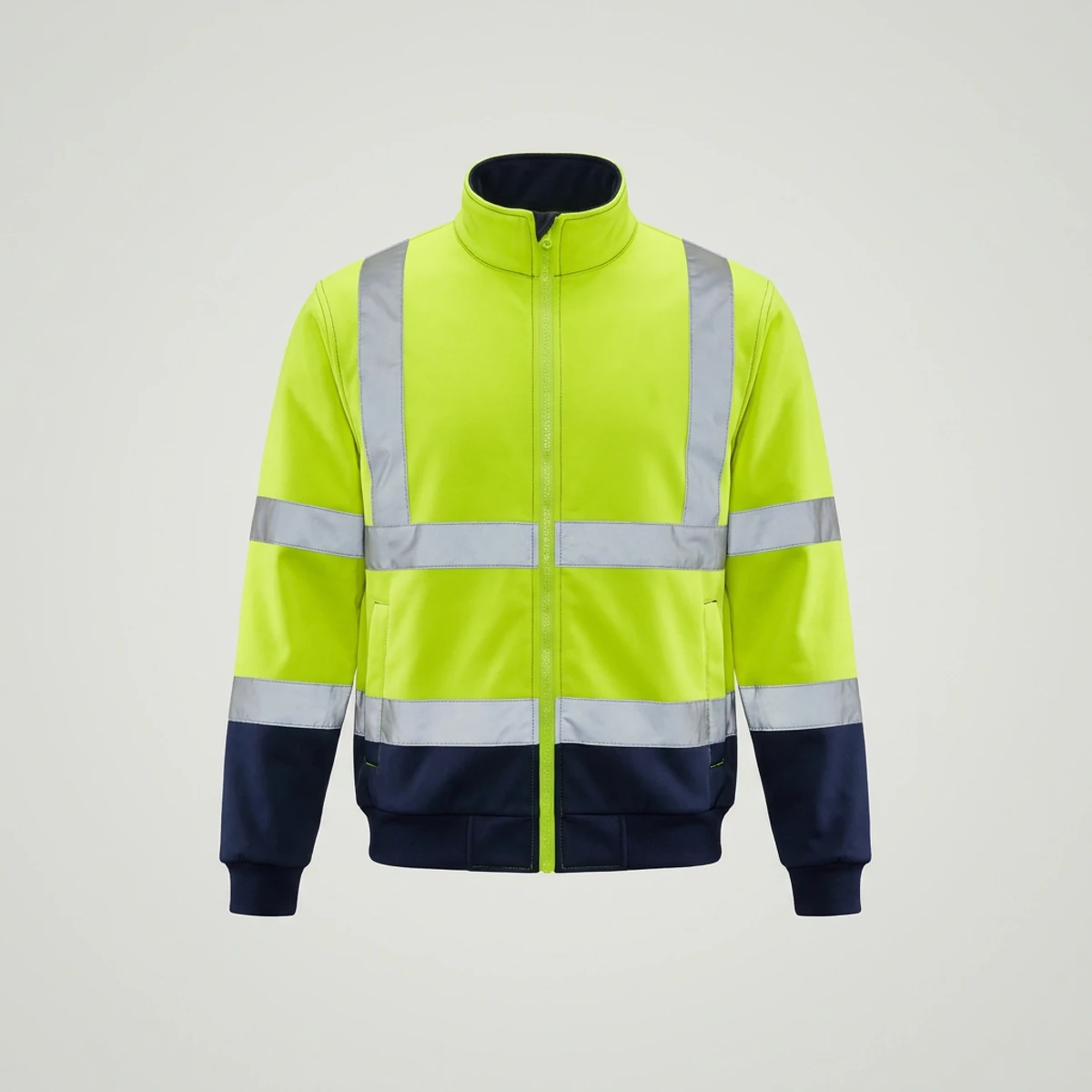
  • Yellow-green hi-vis flame-resistant jacket with navy trim and reflective bandsYellow hi-vis FR jacket
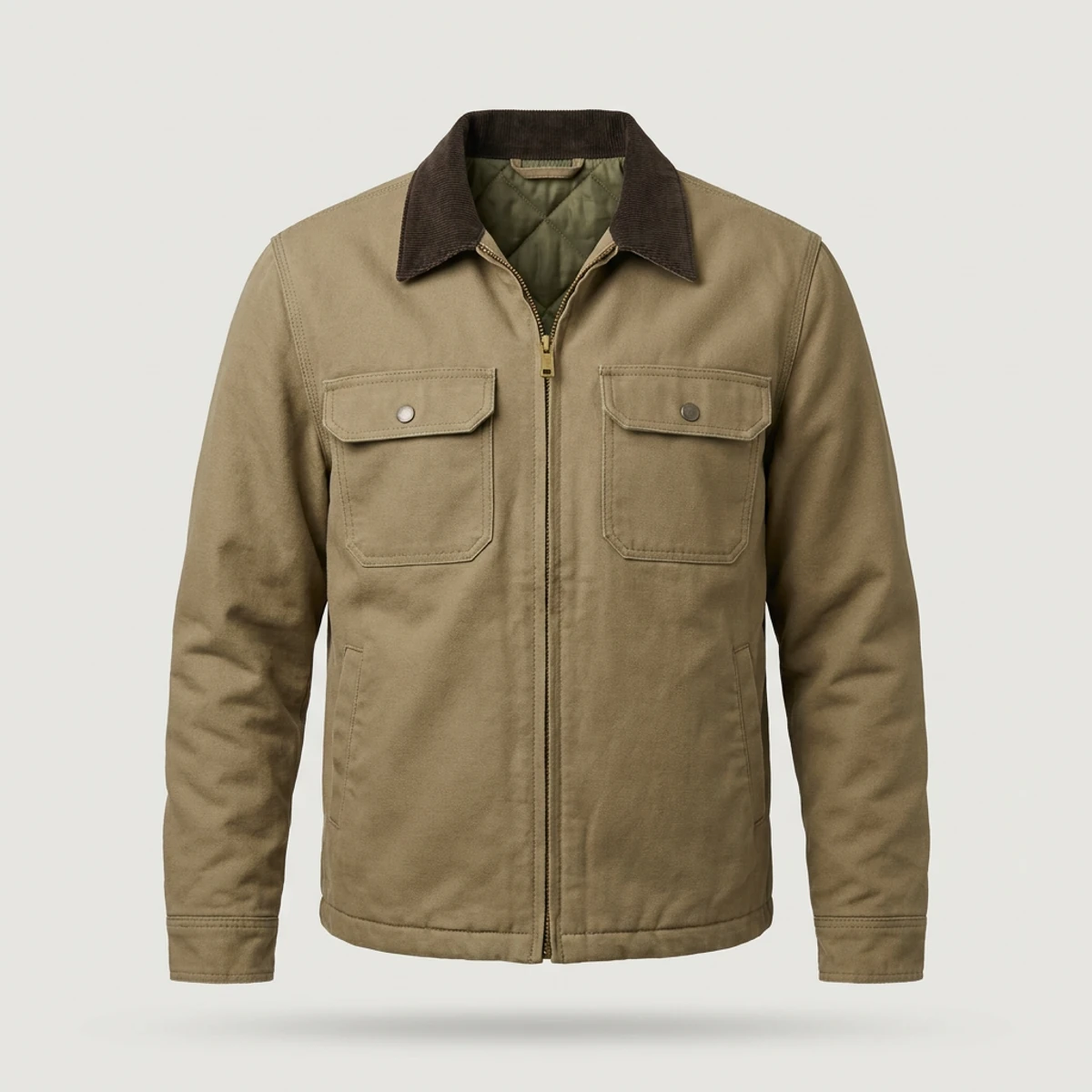
  • Khaki flame-resistant duck work jacket with corduroy collarKhaki FR duck jacket
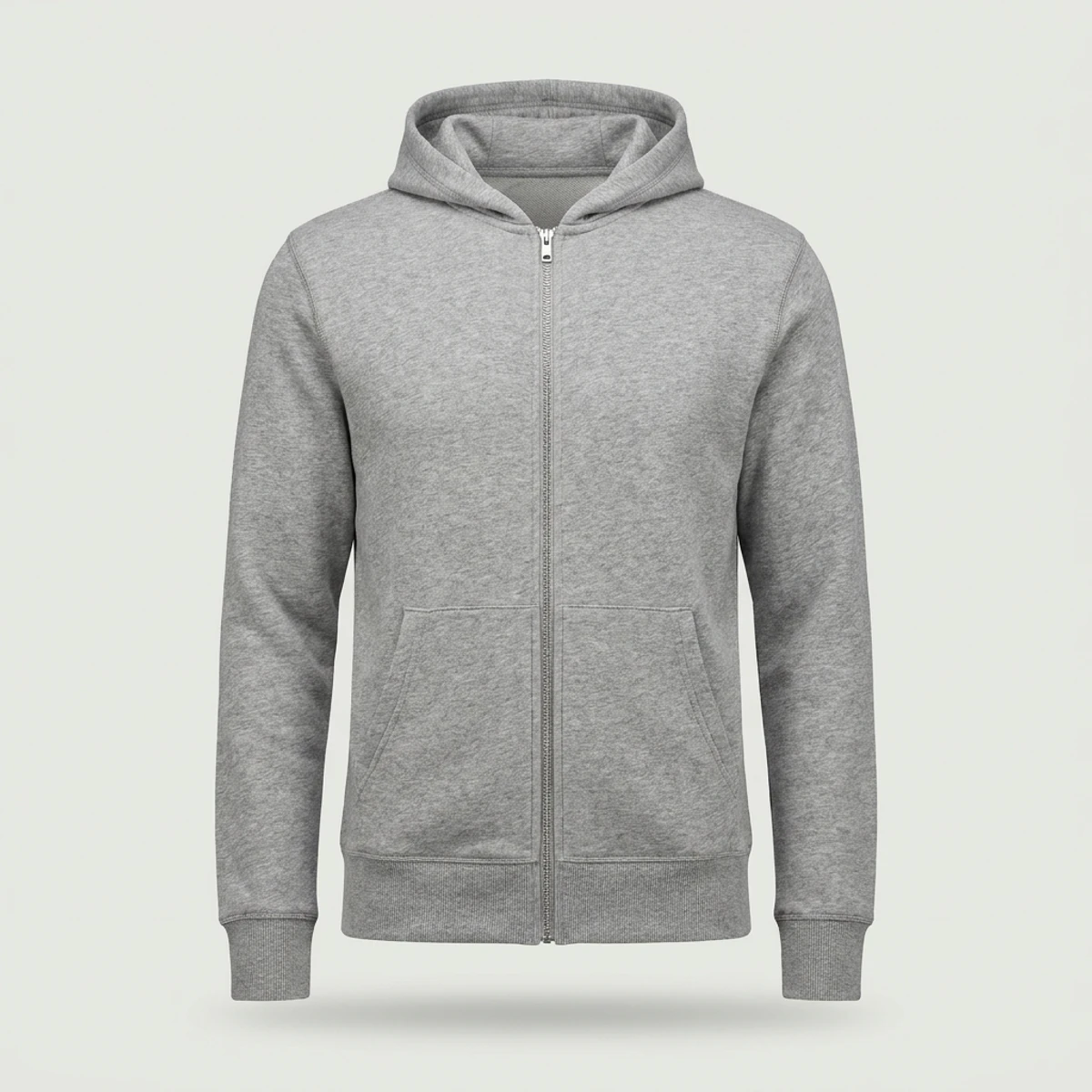
  • Heather grey flame-resistant full-zip hoodie with knit cuffsGrey FR zip hoodie
Quote FR outerwear

Customize your FR shirts

Pick the style, fabric and colors, add your logo and names, then attach the design to your quote. We cut and sew it in Los Angeles from 50 pieces per style.

Khaki flame-resistant uniform work pants with slant pockets

What should electrician uniforms do?

Electrician uniforms should protect crews to the level of the work, survive job sites and laundering, and show customers which company is at the door. For some electrical tasks the clothing is regulated personal protective equipment (PPE), not just a branded garment, which sets this trade apart from most others we supply.

A practical program covers three things:

  • Protection that matches the work. Arc-rated garments where crews may be exposed to an arc flash hazard, and non-melting fabrics everywhere else.
  • Durability for real job sites. Reinforced seams, pockets sized for meters and drivers, and fabrics that survive frequent laundering.
  • A recognizable look. One color palette and logo across service vans, residential calls and commercial sites.

When does NFPA 70E require arc-rated clothing?

NFPA 70E, the Standard for Electrical Safety in the Workplace, requires arc-rated clothing for workers inside the arc flash boundary where the employer’s risk assessment finds an arc flash hazard. That boundary is the distance at which incident energy falls to 1.2 cal/cm², the level linked to the onset of a second-degree burn.

An arc flash is a release of energy from an electrical fault through the air, and ordinary clothing can ignite or melt onto the skin. The Occupational Safety and Health Administration (OSHA) does not adopt NFPA 70E word for word, but its electrical safety-related work practice rules (29 CFR 1910.335) require protective equipment suited to the work, and NFPA 70E is widely used to meet them. Line and utility contractors also work under 29 CFR 1910.269, which requires arc-rated clothing at least equal to the estimated incident energy whenever that estimate exceeds 2.0 cal/cm². Our NFPA 70E guide explains the standard in more depth.

Employers select PPE with either an incident energy analysis or the PPE category method. Under the category method, each task carries a minimum clothing arc rating:

PPE categoryMinimum arc ratingTypical clothing (simplified)
14 cal/cm²Arc-rated long-sleeve shirt and pants, or arc-rated coverall
28 cal/cm²Arc-rated long-sleeve shirt and pants, or arc-rated coverall
325 cal/cm²Arc flash suit system selected to meet the required rating
440 cal/cm²Arc flash suit system selected to meet the required rating

Categories 1 and 2 are where everyday work shirts and pants matter; many contractors standardize on daily wear rated at or above Category 2. Treat this table as a planning summary and work from the current edition of NFPA 70E and your own risk assessment.

Navy flame-resistant button-front work shirt with flap chest pockets

What can electricians wear under arc-rated clothing?

Electricians should wear non-melting layers under arc-rated clothing: NFPA 70E does not permit meltable synthetics such as polyester or nylon next to the skin unless the layer is itself arc-rated. A synthetic gym shirt under a compliant work shirt can melt in an arc flash and cause the burn the outer layer was meant to prevent.

Read more

Write the rule into your uniform policy, and include undershirts and base layers in the program if crews tend to bring their own. Cotton or arc-rated base layers in the company color keep the look consistent under an open collar.

Khaki women's-cut work pants with contoured waist and cargo pocket

Arc-rated vs. flame-resistant electrician work clothes

Electrician work clothes for energized tasks should be specified by arc rating, not by the label “FR” alone. Flame-resistant (FR) fabric resists ignition and self-extinguishes; arc-rated (AR) fabric has also been tested for arc flash and carries a rating in cal/cm², shown as ATPV or EBT. All arc-rated fabrics are flame resistant, but not every FR fabric is arc-rated. Electricians working inside refineries or on wellsites may need garments rated for both arc flash and flash fire; see FR clothing for oil and gas crews.

Read more

In the US, arc-rated apparel fabric is commonly specified to ASTM F1506. When you request a quote for FR clothing, give us the PPE category or minimum arc rating and which garments must be arc-rated. We confirm the fabric, its rating and its labeling at quote stage, so your safety lead signs off documentation rather than a claim.

Electrician uniforms by role

An electrician uniform program should be split by exposure, because not everyone in an electrical contracting business works near energized equipment. A role-based plan avoids buying arc-rated garments for staff who never approach a live panel, and avoids under-protecting those who do. Use the table as a starting point, then check it against your risk assessment. Line crews on utility transmission and distribution work fall under OSHA 1910.269; see FR clothing for linemen and utility crews.

RoleTypical exposureUniform pieces
Service electricianTroubleshooting, panel changes, energized testingArc-rated shirt and pants as daily wear, arc-rated jacket for winter
Journeyman, commercialMixed new work and tie-insArc-rated shirt and pants, or AR shirt with standard pants where the assessment allows
ApprenticeRough-in, pulling wire, supervised energized tasksSame AR spec as the crew they work with
Foreman or project managerSite walks, occasional energized verificationAR collared shirt in a distinct color
Estimator or salesCustomer visits, no energized workStandard branded shirt in the same colors
Warehouse and driversMaterial handlingDurable standard shirt and work pants

Tip: Put apprentices in the same arc-rated spec as their journeyman. An apprentice is often the person standing closest to the panel.

Which fabrics and features suit electrician work clothes?

The right fabric for electrician work clothes depends on whether the garment is PPE. Arc-rated fabrics, either FR-treated cotton-rich twills or inherently FR blends, suit energized work; standard cotton-rich twill suits non-energized roles because it does not melt. Polyester-heavy performance fabrics belong only with staff who never work near energized equipment.

Fabric typeArc-rated?StrengthsWatch-outs
FR-treated cotton or cotton-rich twillYes, when tested and labeledFamiliar feel, common for daily wearProtection relies on correct laundering
Inherent FR blendsYes, when tested and labeledFR property is in the fiberFeel and color range vary by fabric
Standard cotton-rich twillNoDoes not melt, good for non-energized workCan ignite; not PPE
Polyester-heavy performance blendsNoLight, quick-dryingCan melt; keep away from energized and hot work

Features electricians use: a meter or phone pocket on the leg, pen and tester slots on the sleeve, reinforced knees for crawlspaces and attics, a gusseted crotch for ladder work, and a shirt tail long enough to stay tucked when reaching overhead. On arc-rated garments, closures, thread and trims must also suit the arc-rated spec, which we confirm per style. For dirty service work, an arc-rated coverall can replace the shirt-and-pant set.

Navy flame-resistant work jacket with quilted lining and zip front

Branding electrical contractor uniforms

Electrical contractor uniforms usually carry a left-chest logo, the company name or license line across the back, and an optional name, so a customer knows who is in their home before anyone speaks. Our custom embroidery and printing service handles all three on standard garments, decorated in the same factory that sews them.

On arc-rated garments, decoration is part of the safety spec. Thread, backing and heat-applied materials must not compromise flame resistance, so decoration materials and placement are agreed for each arc-rated style before production. A supply house that wants a line under its own name can use our private label service for custom labels, tags and packaging.

Tip: Keep arc-rated and non-rated shirts visibly different, for example by color or a sleeve mark, so a supervisor can see at a glance who is dressed for energized work.

What determines the cost of custom electrician uniforms?

The cost of a custom electrician uniform program depends mainly on how much of it must be arc-rated, the quantity per style, the features on each garment and the decoration. No prices are listed here, because every order is quoted on its actual fabric, rating, artwork and quantity.

Cost driverHow it moves the unit priceHow to keep it in check
Fabric and arc ratingArc-rated fabrics usually cost more than standard twill, and higher ratings tend to cost more againRate garments to the PPE category the work needs, by role
Quantity per styleLarger runs spread cutting, setup and sampling across more piecesShare one shirt and one pant style across crews
Style complexityMeter pockets, gussets and reinforced knees add sewing timeKeep the features technicians actually use
DecorationFR-compatible thread and materials, stitch count and number of locations add costOne chest logo plus one back mark
PersonalizationIndividual names add handling for every pieceSend one clean name list with sizes
Labels and packagingCustom labels and individual bagging add componentsUse standard finishing for staff uniforms

How to roll out an electrician uniform program

An electrician uniform program rolls out best in six moves, starting from the risk assessment rather than the catalog. The assessment sets which roles need arc-rated garments and at what rating; everything after that, from counting styles to approving a sample, follows from that one decision.

  1. 01

    Start from the risk assessment

    Get the PPE category or incident energy figures from your safety lead before choosing garments.
  2. 02

    Map roles to tiers

    Use the role table to decide who gets arc-rated daily wear and who gets standard branded workwear.
  3. 03

    Set the issue per person

    Decide how many shirts and pants each person receives so there is always a clean set while others are in the wash.
  4. 04

    Count by style, not by person

    Our minimum is about 50 pieces per style, with sizes mixed in the run; a small group can share a larger group’s style.
  5. 05

    Approve a sample

    Check fit, pocket layout, decoration and the arc rating label before the full run.
  6. 06

    Collect sizes early

    and issue garments with a care sheet.
Operators sewing scrub tops on rows of industrial sewing machines

Reorders and new-hire planning

Reorders of electrician uniforms match the first run when the approved spec stays on file: fabric, arc rating, color, decoration and labels. Electrical contractors hire in waves around large projects, so a small buffer of shirts and pants in the most common sizes means a new hire is outfitted on day one instead of waiting for production.

Read more

Replace arc-rated garments that are torn, worn thin or contaminated rather than patching them with non-rated material. Ask us for current lead times when you plan a reorder around a project start.

How should arc-rated workwear be washed?

Arc-rated workwear should be washed exactly as its care label says, usually without chlorine bleach, fabric softener or starch, and with oil and grease removed, because contaminants can burn and reduce protection. Who does the washing also matters: OSHA treats laundering as part of keeping the PPE effective.

Read more

OSHA stated in a 2015 interpretation letter on laundering FR and arc-rated clothing that home laundering is allowed if the employer trains employees in proper laundering and inspects the clothing regularly; otherwise the employer is responsible for laundering it. Our guide on how to wash FR clothing covers the practical steps.

Common mistakes to avoid

Most electrician uniform mistakes come from treating arc-rated clothing like ordinary workwear: buying it without a stated rating, mixing it with meltable layers or decorating it after delivery. Each one can quietly undo the protection a contractor paid for, and each is easy to prevent when the uniform spec is written down.

  1. Buying “FR” shirts without a stated arc rating.
  2. Issuing arc-rated shirts with standard polyester pants, or allowing meltable undershirts.
  3. Adding heat-applied patches or standard trims to arc-rated garments after delivery.
  4. Ordering too few sets per person, so crews wear dirty or damaged AR clothing.
  5. Treating every role the same and paying for arc-rated garments the office never needs.

Ready to order

What to send us for a quote

A complete electrician uniform quote needs your roles, the arc rating each garment must meet, sizes and artwork. The more of this list arrives with the first message, the faster the order can be priced and a sample planned. Contractors in related trades, such as HVAC companies, can quote both programs together.

  • Logo files (vector preferred) and brand colors.
  • Headcount by role and garment list for each role.
  • The PPE category or minimum arc rating for arc-rated items.
  • Sizes per person, or an estimated size spread.
  • Decoration wanted: chest logo, back print, names.
  • Whether you need your own labels for private label.

Questions about electricians

Need something not covered here? Ask our Los Angeles team and we’ll answer with options for your order.

Ask our Los Angeles team

Do electricians have to wear FR or arc-rated clothing every day?

Not for all work. NFPA 70E requires arc-rated clothing when a worker is exposed to an arc flash hazard, which is set by the employer's risk assessment. Many contractors still issue arc-rated daily wear so technicians are covered when a task turns energized. Work that never involves exposure to energized equipment can use standard non-melting work clothes.

What arc rating do electrician work shirts need?

It depends on the task. Under the NFPA 70E PPE category method, Category 1 calls for a minimum arc rating of 4 cal/cm² and Category 2 for 8 cal/cm². If your program uses an incident energy analysis, the clothing rating must meet or exceed the calculated incident energy at the working distance. Your safety lead should set the target before we quote.

Can you embroider our logo on arc-rated shirts?

Yes, but decoration on arc-rated garments needs care. Thread, backing and any patch material must not undermine the garment's protection, so we confirm decoration materials and placement for each arc-rated style at quote stage rather than using our standard embroidery setup by default.

What is the minimum order for electrician uniforms?

About 50 pieces per style. A contractor with a small crew can order one shirt style and one pant style in mixed sizes, then reorder the same approved spec as the team grows. Ask us for current lead times when you request a quote.

Can apprentices and office staff wear the same uniform?

They can share the same colors and logo, but they do not need the same fabric. Many contractors run two tiers: arc-rated shirts for field staff who may work near energized equipment, and standard branded shirts for estimators, dispatch and warehouse staff, all under one look.

ElectriciansCut & sewn in Los Angeles · from 50 pieces per styleRequest samplesGet a quote