Guide · 9 min read
What Are Scrubs? Meaning, History and Who Wears Them
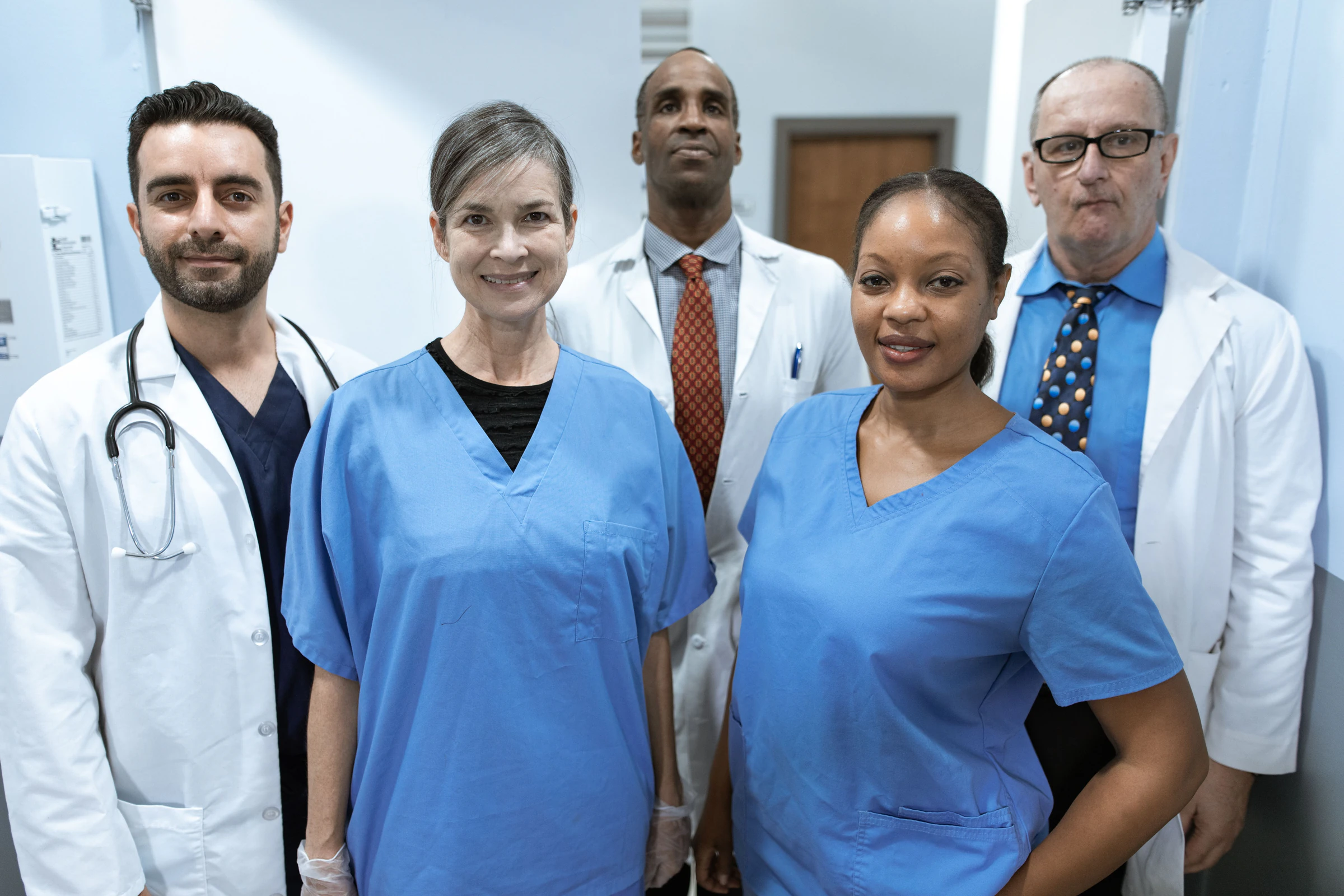
Scrubs are simple, durable work garments, usually a short-sleeve top and drawstring or elastic-waist pants, worn by surgeons, nurses, dentists, veterinary teams and other healthcare workers. They are called scrubs because they were first worn in the 'scrubbed', sterile environment of the operating room, where surgeons scrub their hands and forearms before surgery. Today they are the everyday uniform of most clinical workplaces because they are easy to launder, comfortable for long shifts and cheap to replace.
What are scrubs? A one-line definition
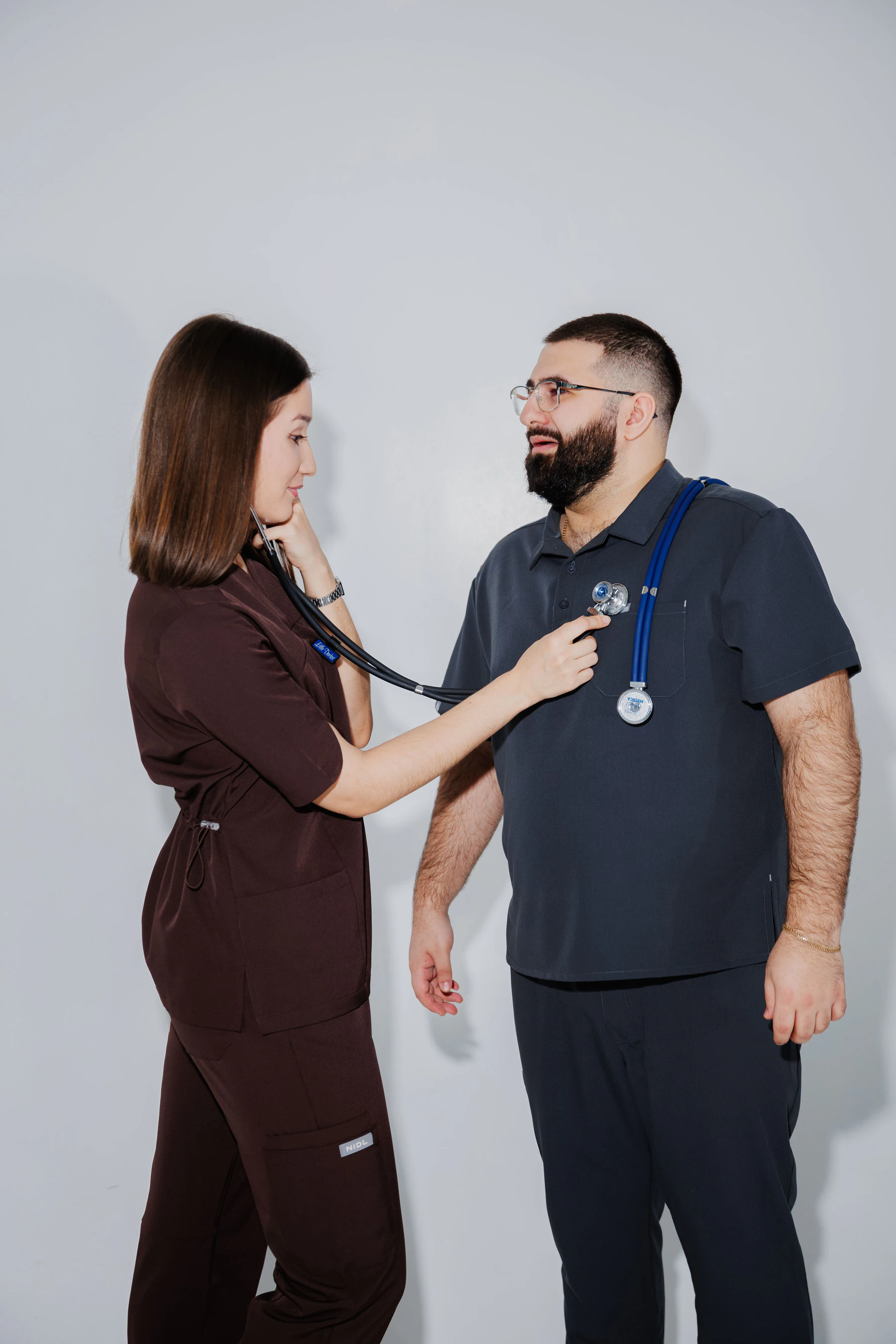
Scrubs are loose-fitting, easy-care work clothes designed to be worn in clinical settings and laundered often. A standard set has two pieces: a top, typically with a V-neck and short sleeves, and pants with a drawstring or elastic waist. Most styles add chest, side or cargo pockets for pens, scissors, phones and badges.
The design goals have stayed the same for decades: comfort through long shifts, freedom to bend and reach, fabric that survives repeated hot washes, and a low enough cost that a stained or contaminated set can simply be replaced. That combination is why scrubs, rather than street clothes or tailored uniforms, became the default for clinical work.
Scrubs meaning: where the word comes from
The word “scrubs” is short for the clothing worn in a “scrubbed” environment. Before an operation, surgeons and surgical staff perform a surgical scrub, a timed hand and forearm wash, and then work inside a sterile field. The plain cotton garments they wore underneath their sterile gowns were known first as “surgical greens” and, by the 1970s, simply as scrubs, according to the Wikipedia history of scrubs.
In everyday speech the meaning has broadened. “Scrubs” now refers to any top-and-pant medical uniform in that style, worn anywhere from an intensive care unit to a dental chair or a dog grooming room.
Why are they called scrubs? A short history
Surgical clothing changed as medicine learned how infection spreads. The broad timeline below draws on the Royal College of Surgeons of England’s history of surgical dress and Columbia Surgery’s history of medical dress.
| Period | What surgeons wore | Why it changed |
|---|---|---|
| Before the late 1800s | Dark frock coats, often unwashed, sometimes with a butcher’s apron | Germ theory and antisepsis were not yet accepted |
| Late 1800s to early 1900s | Clean white gowns over street clothes | Asepsis: the goal became keeping germs out of the wound entirely |
| After World War I and the 1918 flu | White gowns with caps, masks and rubber gloves | Wider adoption of barrier protection |
| 1940s | A standardized surgical uniform | Stricter aseptic routines became normal practice |
| 1950s to 1960s | Most hospitals switch from white to shades of green, later also blue | White glared under surgical lights and caused eye strain; green gave contrast and hid blood |
| 1970s | The modern two-piece, unisex cotton or poly-cotton set, called “scrubs” | The style spread beyond the operating room |
Two details from that history still shape scrubs today. First, color: green and blue remain common in surgery because of the eye-strain and contrast reasons that drove the original switch. Second, construction: the simple, unisex, two-piece pattern was chosen so garments could be issued in volume, washed at high temperatures and fitted to anyone. Modern scrubs have kept the practicality but added shaping, stretch and more pockets.
What are scrubs for?
Scrubs do several jobs at once, and knowing them helps you choose the right style or fabric.
- Protecting personal clothing. Body fluids, medications and cleaning chemicals end up on the scrubs, not on the wearer’s own clothes.
- Easy laundering. Scrubs are built to be washed frequently, often at high temperatures. Durable fabrics and simple construction keep them in shape through repeated cycles.
- Comfort and movement. Clinical work involves lifting, bending, kneeling and long hours on foot. Relaxed cuts, stretch fabrics and soft waistbands matter here.
- Identification. Many hospitals assign scrub colors to departments or roles so patients and colleagues can tell who is who. Embroidered names, titles and logos do the same job for smaller practices.
- A professional, unified look. A matching set reads as “clinical team” in a way mixed personal clothing does not.
Scrubs are not personal protective equipment in themselves. Where a task involves exposure to blood or infectious material, employers provide PPE such as gowns, gloves and face protection under the OSHA Bloodborne Pathogens Standard (29 CFR 1910.1030), and scrubs are worn underneath.
The parts of a scrub set
Most scrub programs are built from a handful of garment types. Each has its own page in our scrubs catalog, but here is how they fit together:
| Garment | What it is | Typical features |
|---|---|---|
| Top | The main upper garment | V-neck or mock-wrap neckline, 2 to 5 pockets, badge loop, side vents |
| Pants | The lower half of the set | Drawstring or elastic waist, straight, jogger or wide-leg cut, cargo pockets |
| Underscrub | A fitted knit layer worn under the top | Long or short sleeves, moisture-wicking stretch knit |
| Scrub jacket | A light outer layer for warmth between tasks | Snap or zip front, knit cuffs, pockets |
| Lab coat | A longer coat worn over scrubs | Notched collar, multiple pockets, embroidery-friendly chest |
Tip: When comparing scrub sets, look at the top and pants as separate garments. Many people wear different sizes on top and bottom, and most manufacturers sell and size them separately.
Fitted knit underscrubs became popular because they add warmth and coverage without the bulk of a sweater, and they can be laundered with the rest of the set. For pants, the main style split today is between classic straight legs and joggers with an elastic cuff.
Scrubs vs other medical clothing
People often use “scrubs” loosely for any medical clothing. The garments below do different jobs:
| Garment | Worn by | Purpose | Laundered or disposable |
|---|---|---|---|
| Scrubs | Most clinical and support staff | Everyday base uniform, protects personal clothing | Laundered, by the facility or the wearer |
| Surgical gown | Surgical team during procedures | Sterile barrier over scrubs in the sterile field | Single-use or reprocessed under controlled conditions |
| Isolation gown | Staff caring for patients on precautions | Barrier PPE over scrubs | Usually single-use, some reusable |
| Lab coat | Physicians, pharmacists, lab staff | Professional outer layer, pockets, identification | Laundered |
| Underscrub | Staff wanting warmth or arm coverage | Fitted base layer under a scrub top | Laundered |
The practical difference for a buyer: scrubs and lab coats are uniform purchases you can design, brand and reorder; gowns are medical devices or PPE bought from medical suppliers.
Modern scrub styles
The two-piece set from the 1970s has split into many styles. The most common choices today:
| Element | Common options | Who tends to choose it |
|---|---|---|
| Top neckline | V-neck, mock-wrap, crew, mandarin collar | V-neck for classic programs; mock-wrap and mandarin for a more tailored look |
| Top fit | Unisex straight, women’s shaped, men’s athletic | Unisex for simple sizing; shaped fits for comfort and appearance |
| Pant leg | Straight, jogger (elastic cuff), wide-leg, flare | Joggers for active roles; straight leg for traditional programs |
| Waistband | Drawstring, elastic, yoga-style knit, combination | Combination waists for adjustability across a team |
| Pockets | Chest, side, cargo, utility loops | Nurses and techs who carry tools want more pockets |
| Fabric | Poly-cotton, poly-rayon-spandex, poly-spandex | Depends on laundering and comfort priorities |
Who wears scrubs?
Scrubs began in surgery but are now standard across healthcare and beyond:
- Hospitals and clinics: nurses, physicians, surgical technologists, CNAs, medical assistants and many support staff. Our healthcare scrubs page covers hospital and nursing programs.
- Dental practices: dentists, hygienists and assistants, often in coordinated practice colors.
- Veterinary clinics: vets, vet techs and groomers, where durable, washable clothing is essential.
- Allied health and wellness: physical therapy, med spas, labs, pharmacies and home health.
- Outside healthcare: salons, spas, some food businesses, cleaning crews and schools that train healthcare students.
The common thread is work where clothing gets dirty or contaminated and must be washed often, and where a simple, recognizable uniform helps.
What are scrubs made of?
Scrubs are made almost entirely from four fibers, used alone or blended:
- Cotton: soft and breathable, absorbs moisture, but wrinkles and can shrink.
- Polyester: strong, quick-drying, colorfast and wrinkle-resistant; the backbone of most blends.
- Rayon: a soft, smooth regenerated cellulose fiber that adds drape and comfort.
- Spandex (elastane): a small percentage adds stretch and recovery.
Traditional hospital scrubs were cotton or poly-cotton. Many modern “performance” scrubs blend polyester and rayon with a few percent of spandex for a softer hand and four-way movement. The trade-offs, including antimicrobial finishes and laundering, are covered in our scrub fabric guide.
Scrub colors and what they signal
There is no national color code for scrubs in the United States. Color choices are made by each employer. Common patterns include:
- Surgical teams: green, blue and ceil (light) blue, for the historical eye-strain and contrast reasons above.
- Department or role coding: some hospitals assign one color to nursing, another to therapy, another to support staff, which Wikipedia’s scrubs article also notes.
- Brand colors: private practices often match scrubs to their logo, then add the logo by embroidery.
If you are setting up a color-coded program, plan it before ordering. Changing a color later means replacing every set in that department.
How organizations buy scrubs
Individuals usually buy scrubs at retail. Organizations have more options:
- Stock blanks bought in bulk, then decorated. Fast and simple when off-the-shelf styles fit the team.
- Embroidered or printed scrubs, where a logo, name or department is added to each piece. See embroidered scrubs for how logo placement and digitizing work.
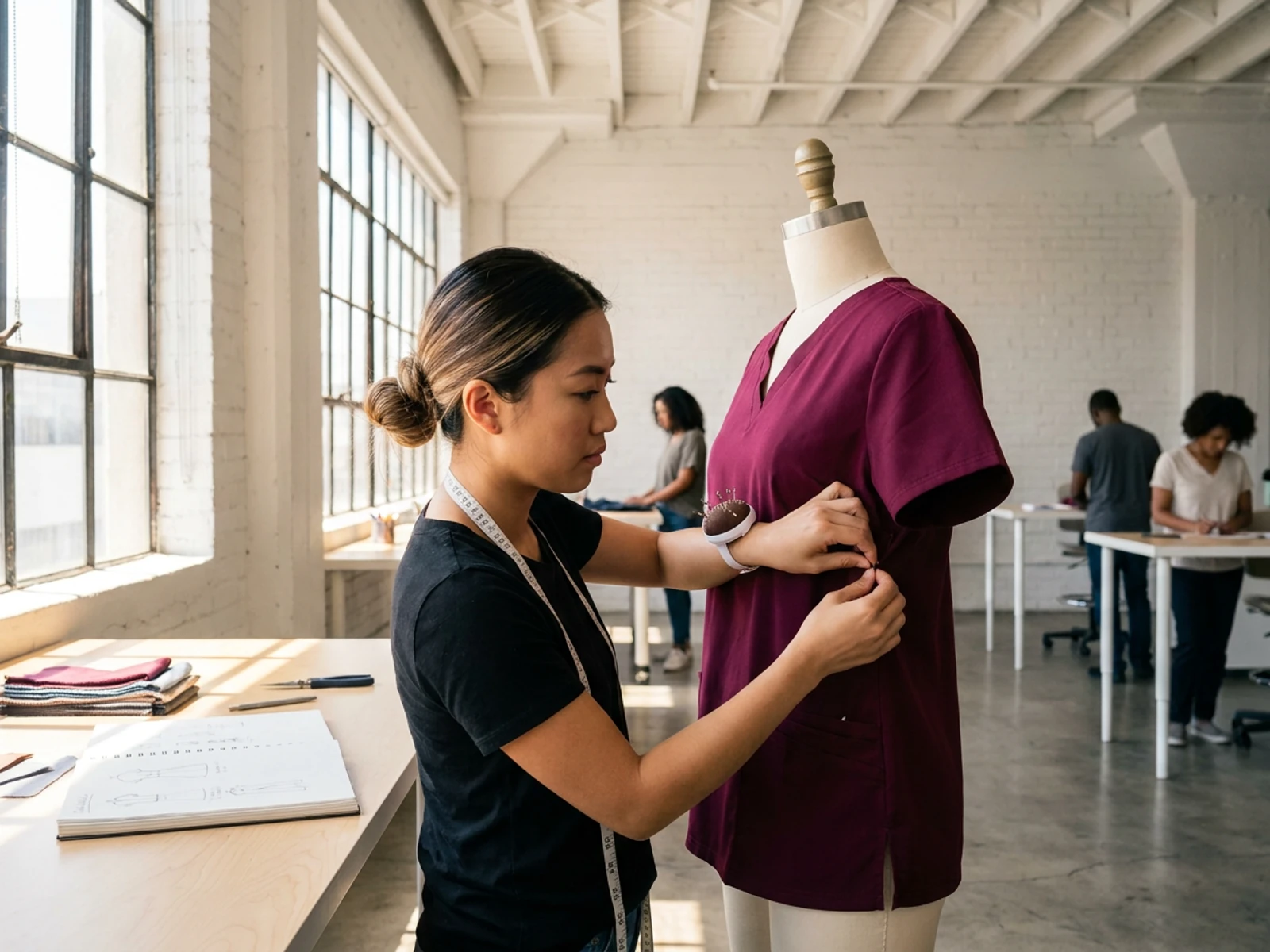
- Custom or private label scrubs, where the fabric, fit, color and labels are made to your specification. This is how hospital systems standardize uniforms and how new scrub brands launch their own lines.
As a manufacturer with our own factory in Los Angeles, we produce all three, with a minimum of about 50 pieces per style, so even a single clinic can order scrubs made for its team rather than adapting a retail style.
Checklist: choosing scrubs for a team
Before you request quotes, settle these points with the people who will wear the scrubs:
- Roles and environments: who wears them, and how messy, hot or active is the work?
- Laundering: facility laundry, a uniform service or home washing? This drives the fabric choice.
- Colors: one color for everyone, colors by department, or your brand color?
- Styles and fits: which neckline, leg style and cuts (unisex, women’s, men’s)?
- Identification: logo, name, title or department, and where it goes.
- Sizing: collect sizes with a size run or chart before ordering; see our scrub size chart.
- Quantities and replacements: sets per person, plus spares for new hires.
Tip: Ask two or three staff members to wear-test sample sets for a full week of shifts and washes before you approve a style for everyone. Problems with pockets, waistbands and fabric show up quickly in real use.
Common mistakes when buying scrubs
- Choosing on looks alone. A fabric that looks great on day one may pill, fade or lose its stretch after a few weeks of hot washes.
- Ignoring the laundry process. Stretch fabrics and industrial laundering are not always a good match.
- One cut for everyone. Unisex-only programs often leave part of the team uncomfortable.
- Skipping samples. Photos and size charts cannot show how a garment moves when someone kneels or reaches.
- Forgetting reorders. If the style or color is discontinued, new hires will not match. Producing your own style avoids that.
Key takeaways
- Scrubs are a two-piece, easy-care top and pant uniform worn mainly in healthcare.
- The name comes from the “scrubbed” sterile environment of the operating room; the garments were first called surgical greens.
- Surgical clothing moved from frock coats to white gowns to green and blue scrubs between the late 1800s and the 1960s, and the modern scrub set took shape in the 1970s.
- Scrubs are worn under PPE, not instead of it.
- Today they come in many fits, fabrics and colors, and organizations can buy them as blanks, decorated or fully custom.
Frequently asked questions
Why are they called scrubs?
The garments were first called 'surgical greens' and were later shortened to 'scrubs' because they were worn in the scrubbed, sterile setting of the operating room. 'Scrubbing in' refers to the surgical hand and forearm wash staff perform before an operation. By the 1970s the name had spread from the operating room to the clinic floor.
What is the difference between scrubs and a surgical gown?
Scrubs are the base layer a clinician wears all shift. A surgical gown is a sterile garment put on over scrubs immediately before a procedure and removed afterwards. Scrubs protect your own clothes and are laundered; sterile gowns protect the sterile field and are either single-use or reprocessed under controlled conditions.
Why are scrubs usually green or blue?
Operating rooms switched from white to green and blue during the mid-twentieth century because white reflected the bright surgical lights and caused eye strain, while green and blue gave visual contrast and made blood less conspicuous. Many hospitals now use a wider palette and assign colors to departments or roles.
Can people outside healthcare wear scrubs?
Yes. Veterinary clinics, dental offices, med spas, salons, labs and some food and cleaning businesses use scrubs because they are inexpensive, practical and easy to wash. Many teams add a logo or name by embroidery so the scrubs work as a branded uniform.
What are scrubs made of?
Most scrubs are made from cotton, polyester, rayon and spandex, alone or in blends. Poly-cotton is the classic hard-wearing choice; modern stretch scrubs typically blend polyester and rayon with a small amount of spandex. Our scrub fabric guide compares each option in detail.
Need garments made?
Custom Uniform Factory cuts and sews scrubs and workwear in Los Angeles from 50 pieces per style, with your logo or label. Get a quote or request samples.