Snap-front
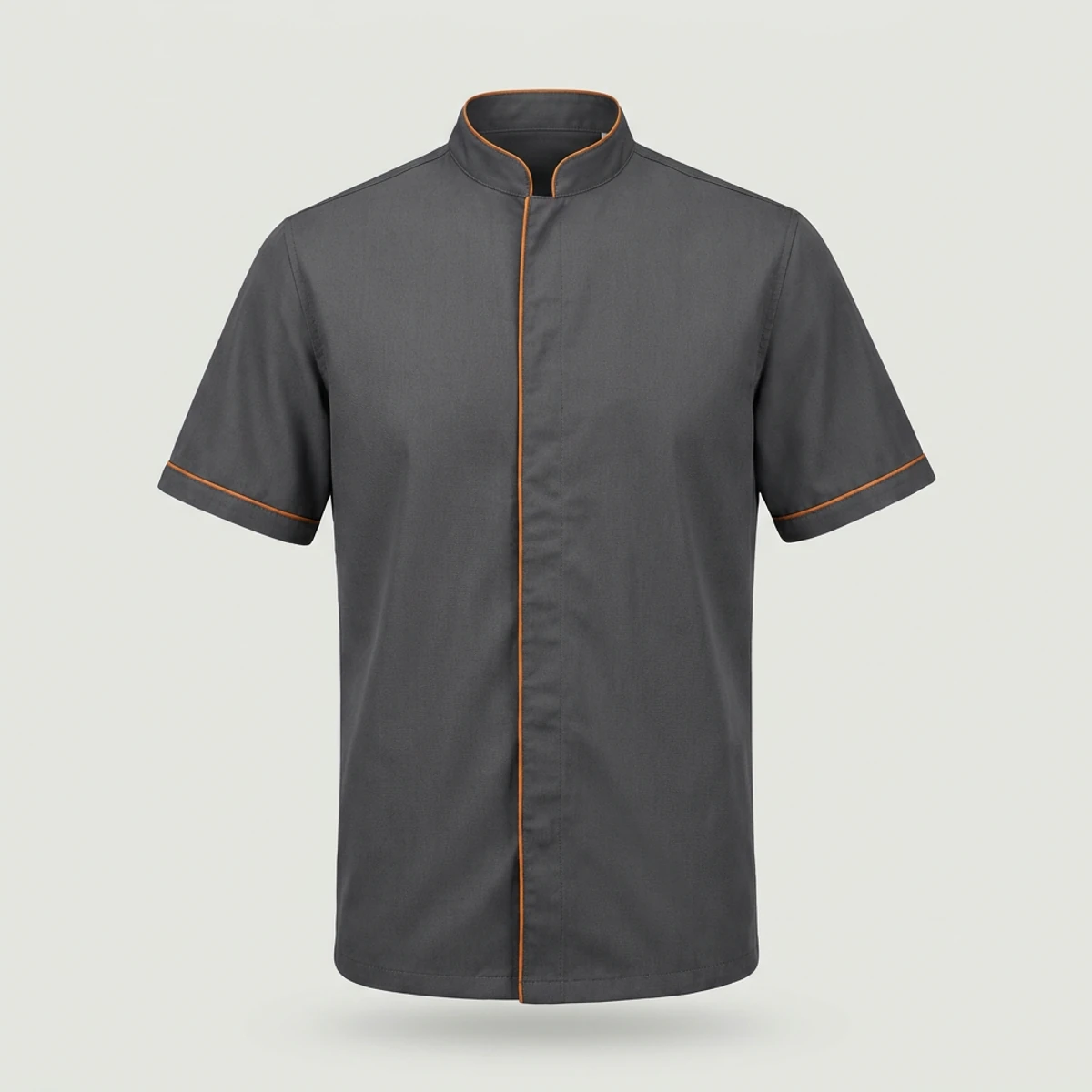
The workhorse of busy lines. A stand collar keeps the chef look, snaps open in a second if a cook gets too hot, and short sleeves stay out of food and off hot pans.
Workwear · Los Angeles factory
A chef shirt is a lighter alternative to the traditional chef coat: a single-layer woven or knit shirt, often short-sleeved with snaps or buttons, that keeps cooks cooler on hot lines while still looking like a kitchen uniform. Custom Uniform Factory makes these shirts for restaurants, bakeries, caterers and chef wear brands in its Los Angeles factory from imported fabric, embroidered with your logo or sewn under your own label, from about 50 pieces per style.
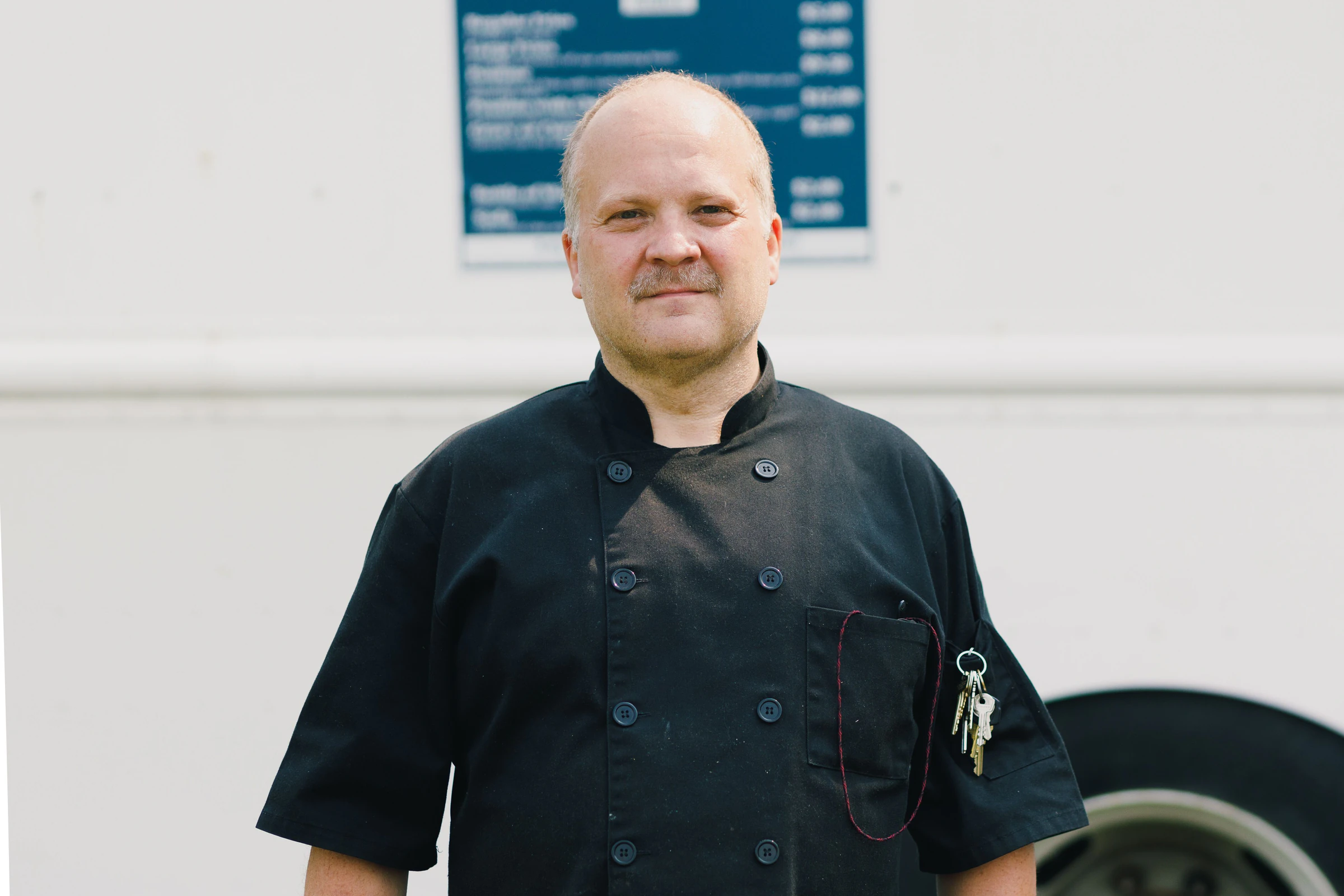
12 styles in 3 families · each made to order in your fabric, color and branding from 50 pieces.
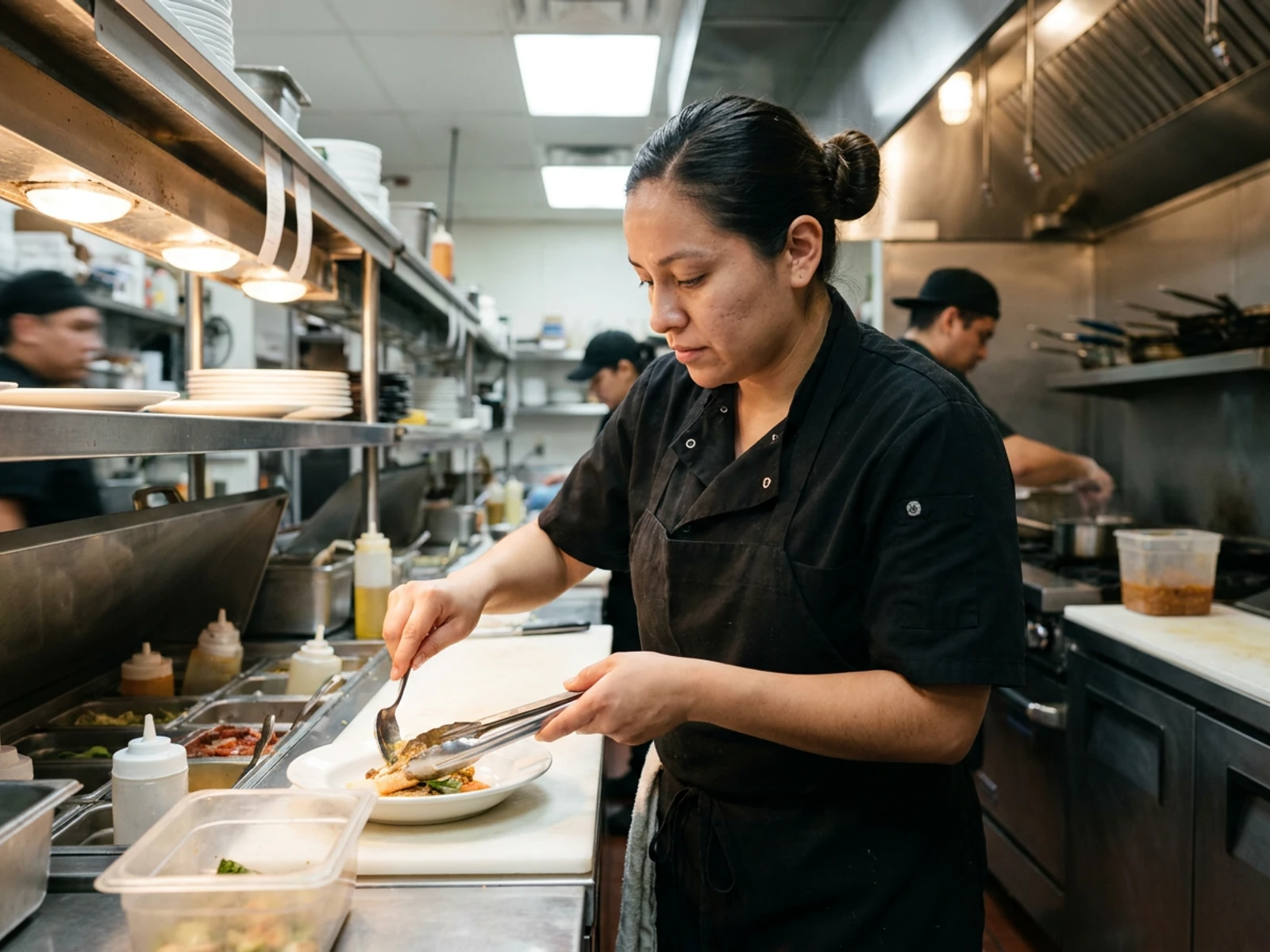
A stand collar, a snap front that opens in a second and short sleeves that stay out of food make this the everyday shirt for busy lines. We make it in black, white or brand colors, with contrast piping or snaps and your logo embroidered on the chest.
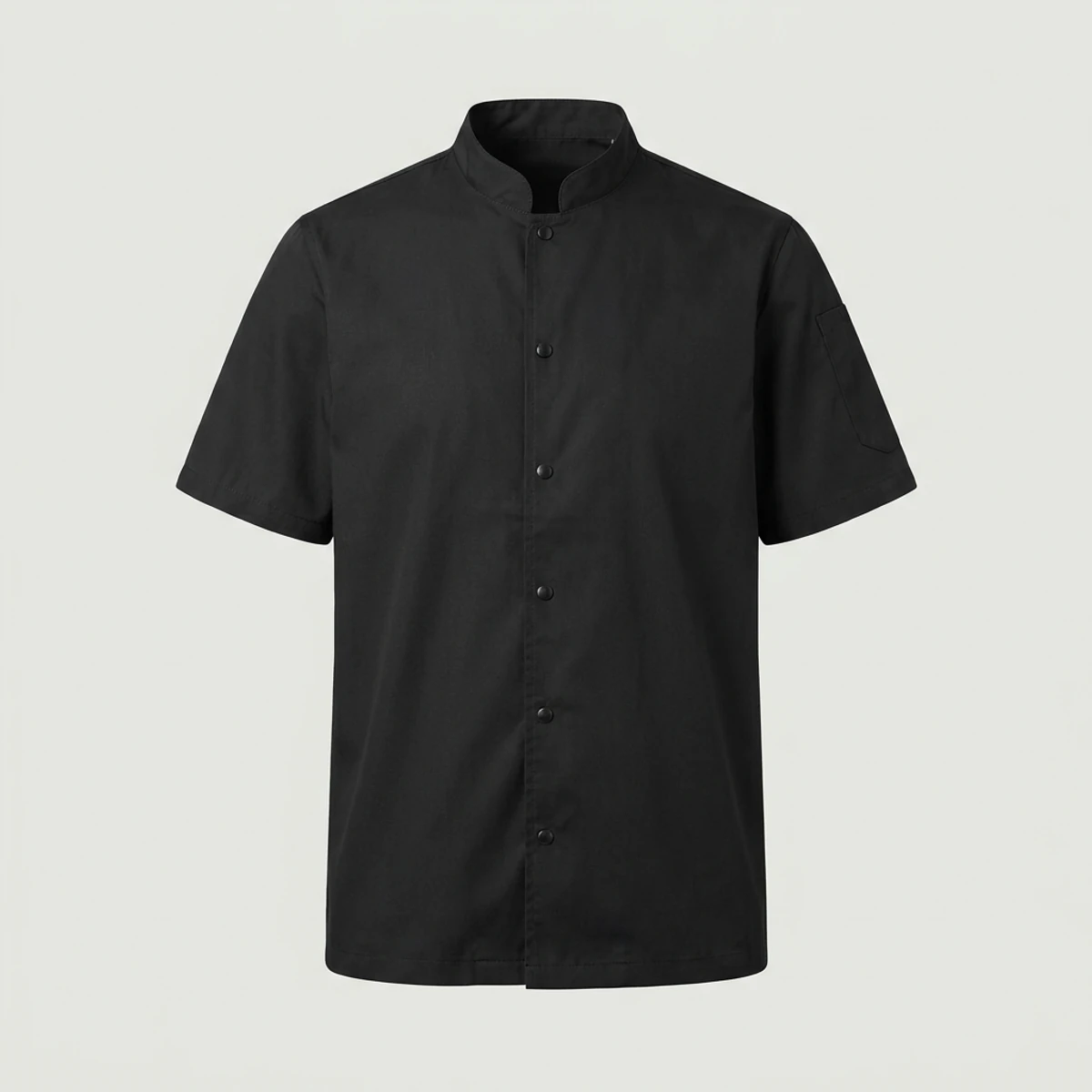
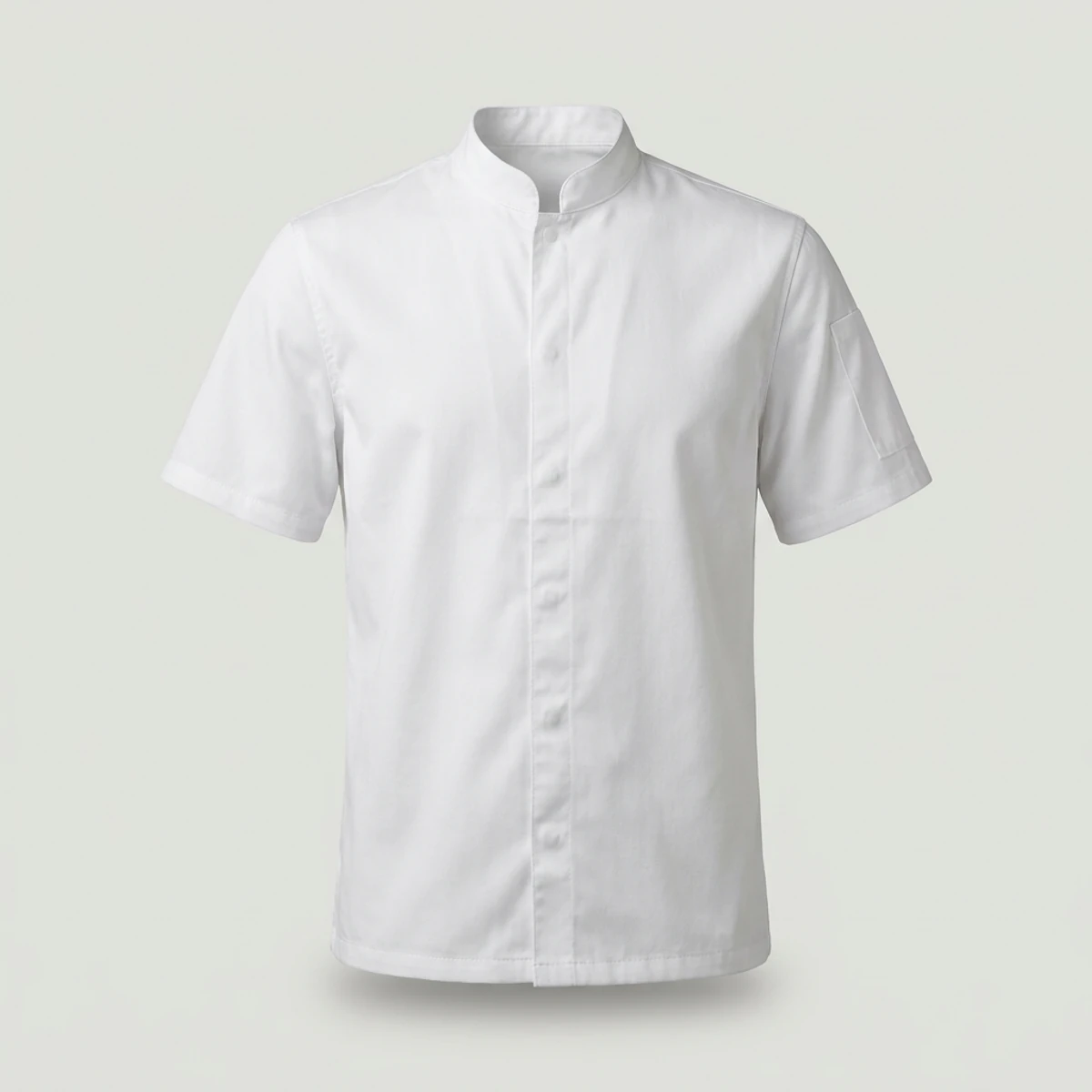
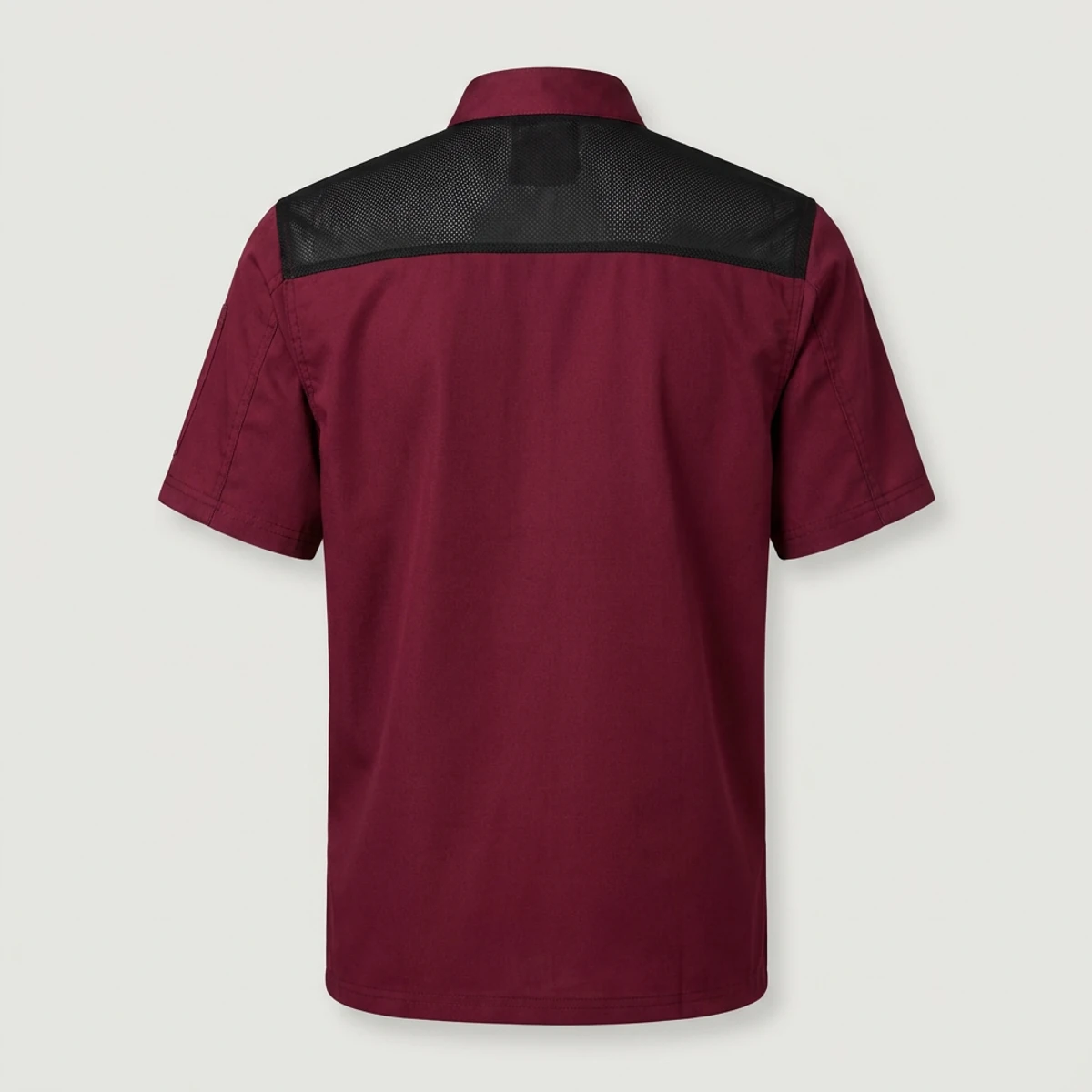
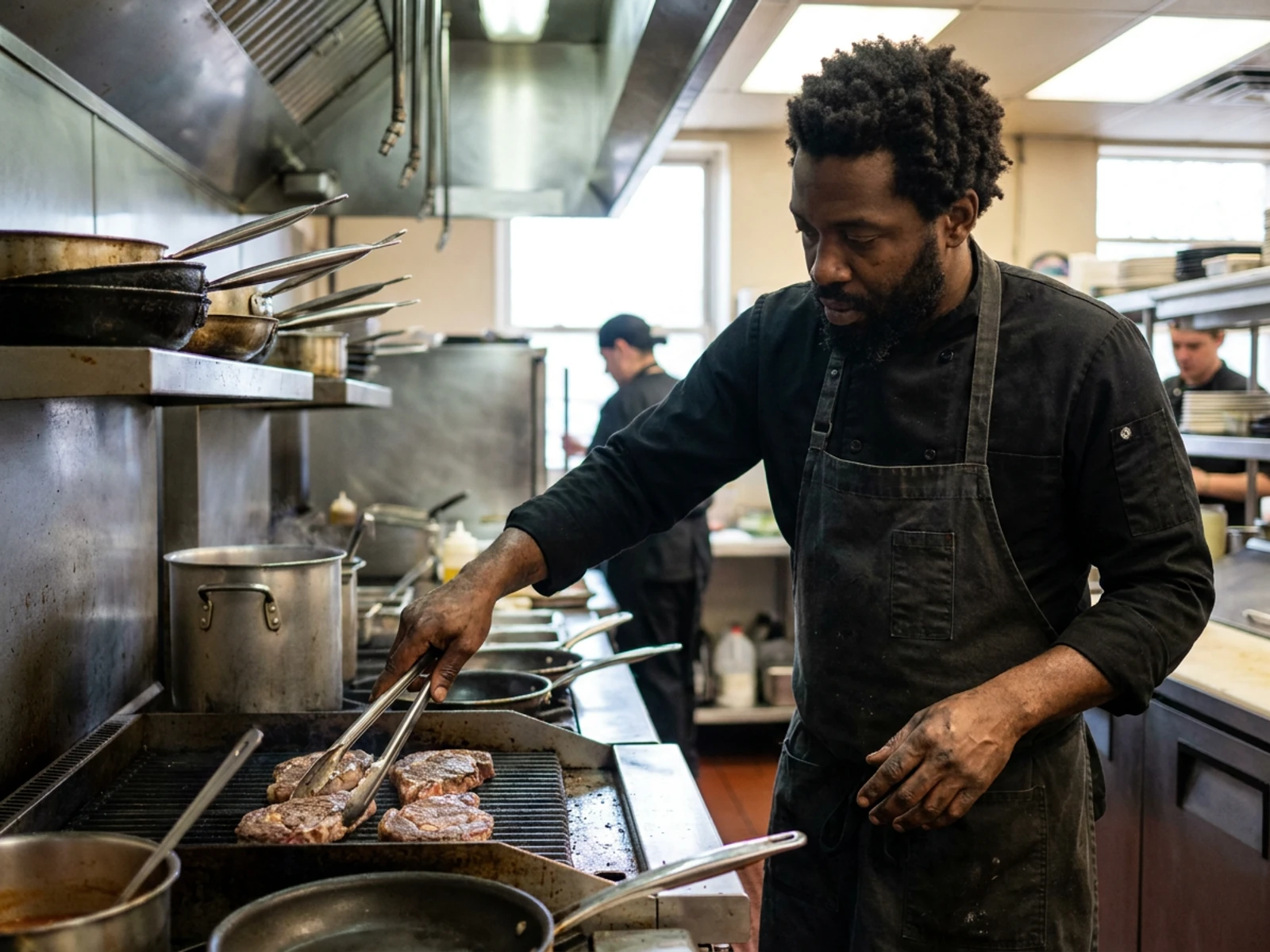
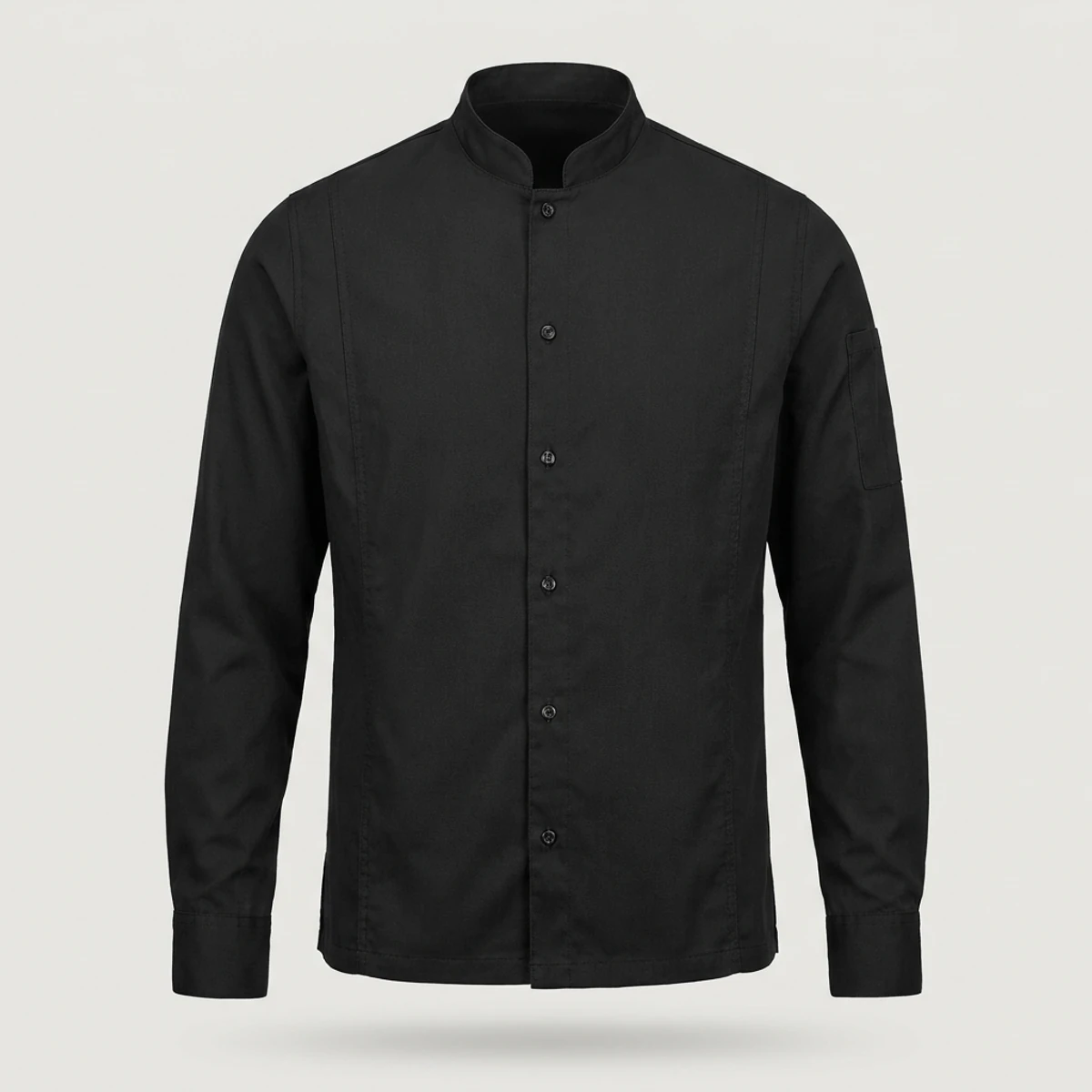
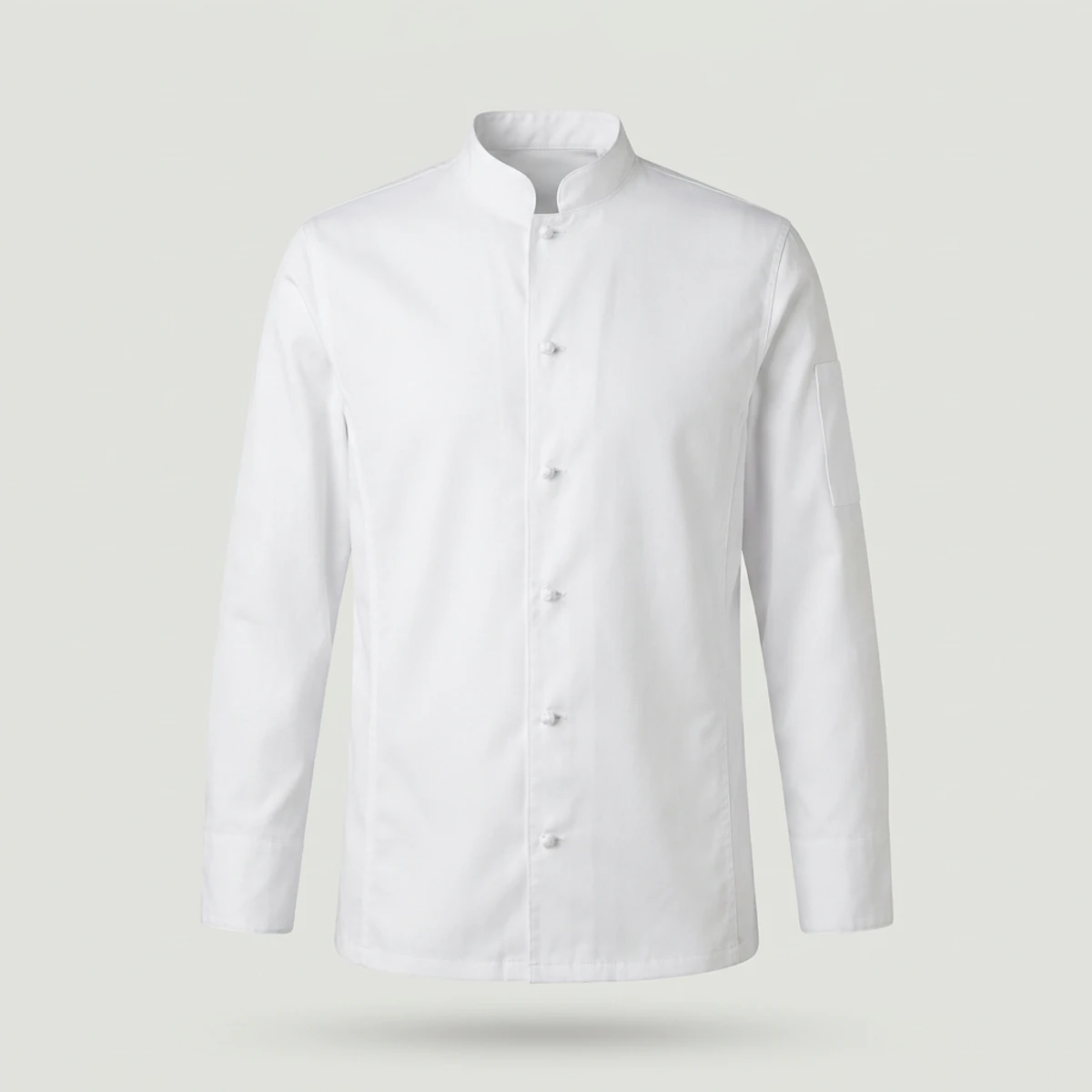
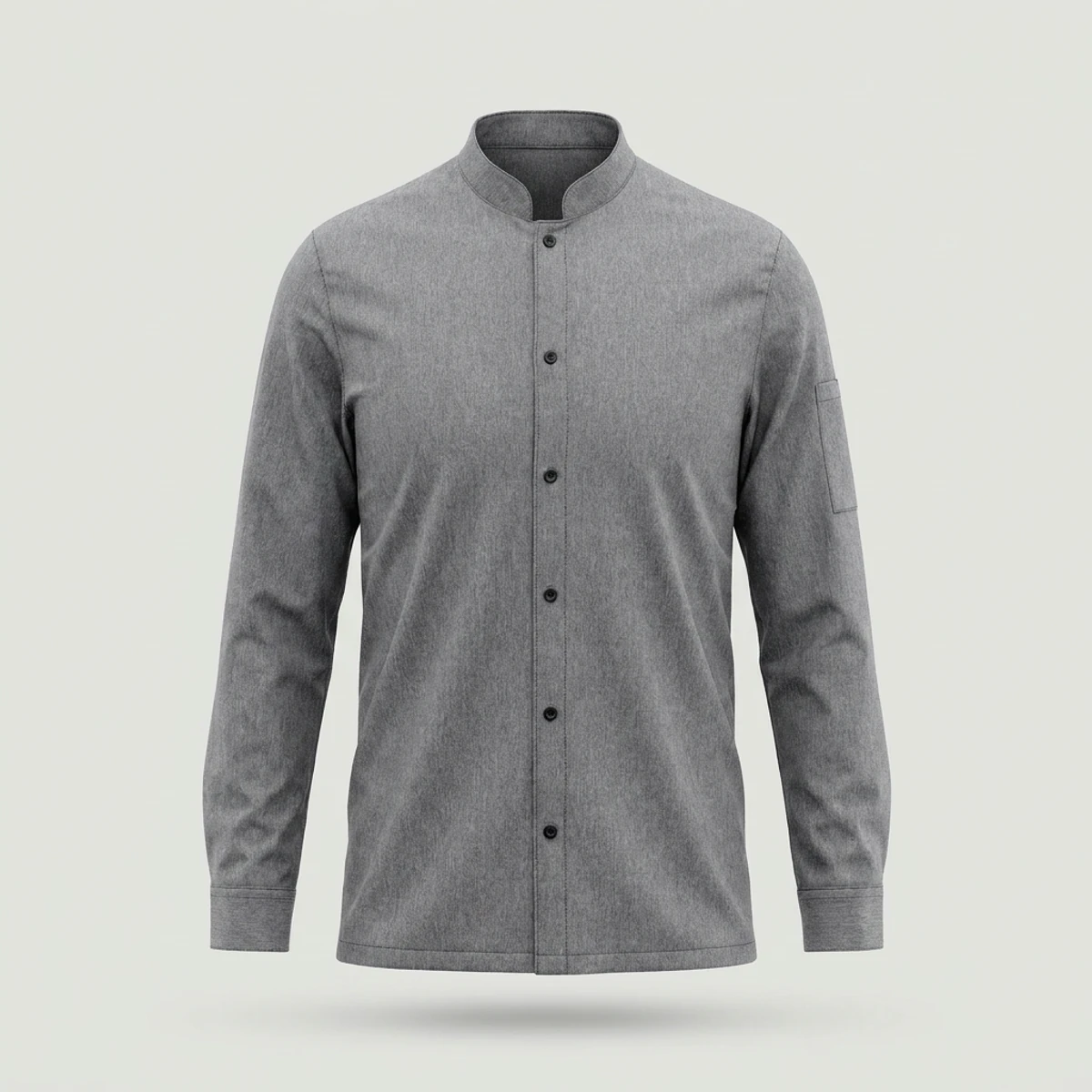
Grill, fry and sauté cooks need forearm cover without the weight of a double-breasted coat. A long-sleeve woven chef shirt in a breathable blend does both, with roll-up sleeves, a thermometer pocket and cloth or plastic buttons that survive hot washes.
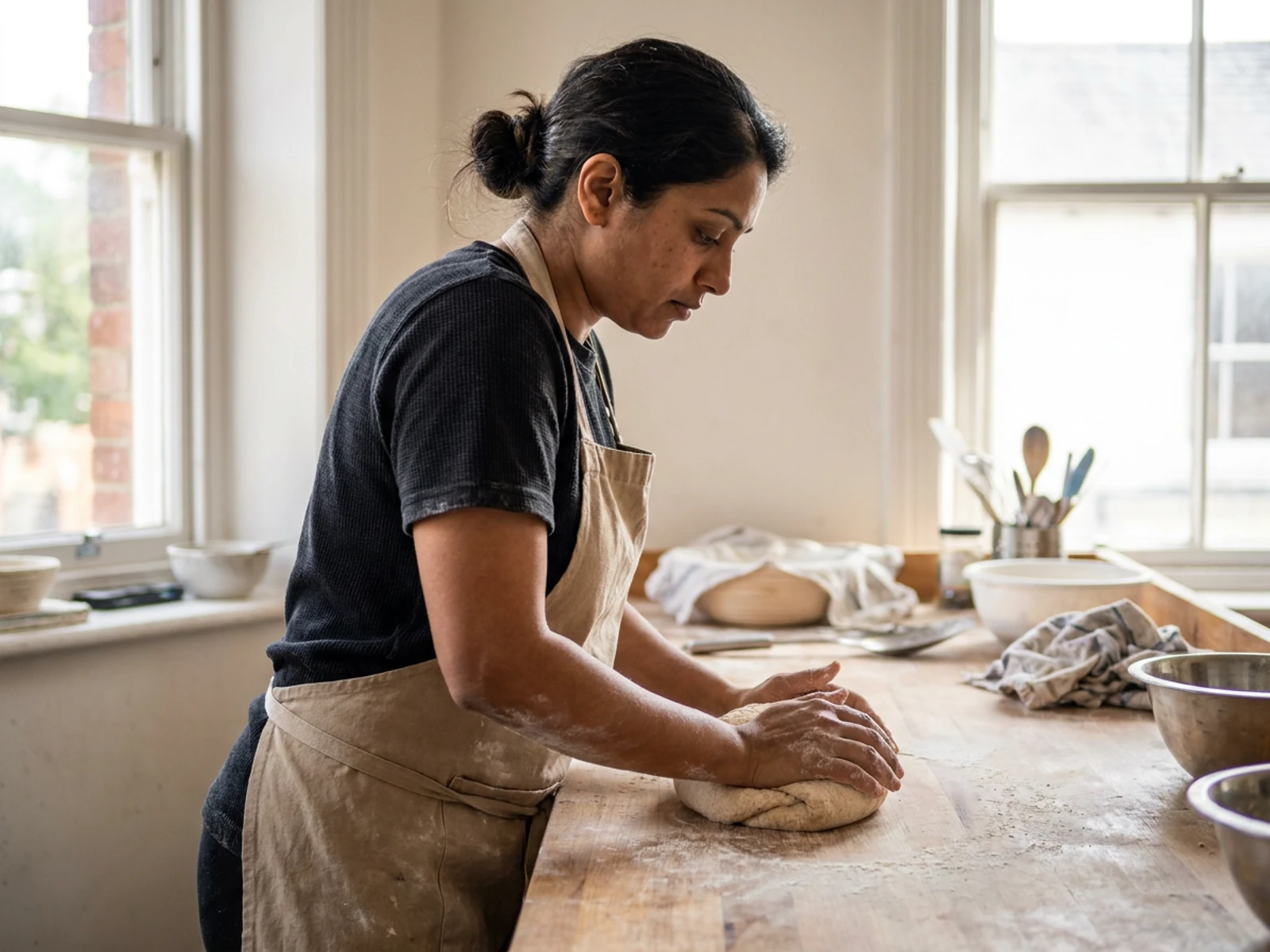
Bakeries, food trucks, coffee bars and open kitchens often want something more relaxed than a woven shirt. Heavier knit chef tees and polos move with the body, and a camp-collar utility cook shirt gives prep and dish teams a clean, durable uniform.
Pick the style, fabric and colors, add your logo and names, then attach the design to your quote. We cut and sew it in Los Angeles from 50 pieces per style.
A chef shirt sits between a T-shirt and a full chef coat: single-layer, lighter and quicker to put on, but still clearly a kitchen uniform. “Cook shirt” usually means a plainer camp-collar work shirt for line and prep cooks, while the coat stays the choice for formal service and executive chefs.
| Chef coat | Chef shirt | Cook or utility shirt | |
|---|---|---|---|
| Construction | Double- or single-breasted, two layers on the chest | Single layer, snap or button front | Single layer, button front, camp or spread collar |
| Weight | Heaviest | Light to medium | Light |
| Collar | Stand (mandarin) collar | Stand collar or none | Open collar |
| Best for | Executive chefs, formal service | Line cooks, bakers, open kitchens | Prep, dish, food trucks, quick-service |
| Protection from splatter | Highest | Medium | Lower |
If your executive chef wants a classic double-breasted coat, our custom chef coats and chef pants page covers that garment. The rest of this page is about the lighter shirts most of your kitchen wears every shift.
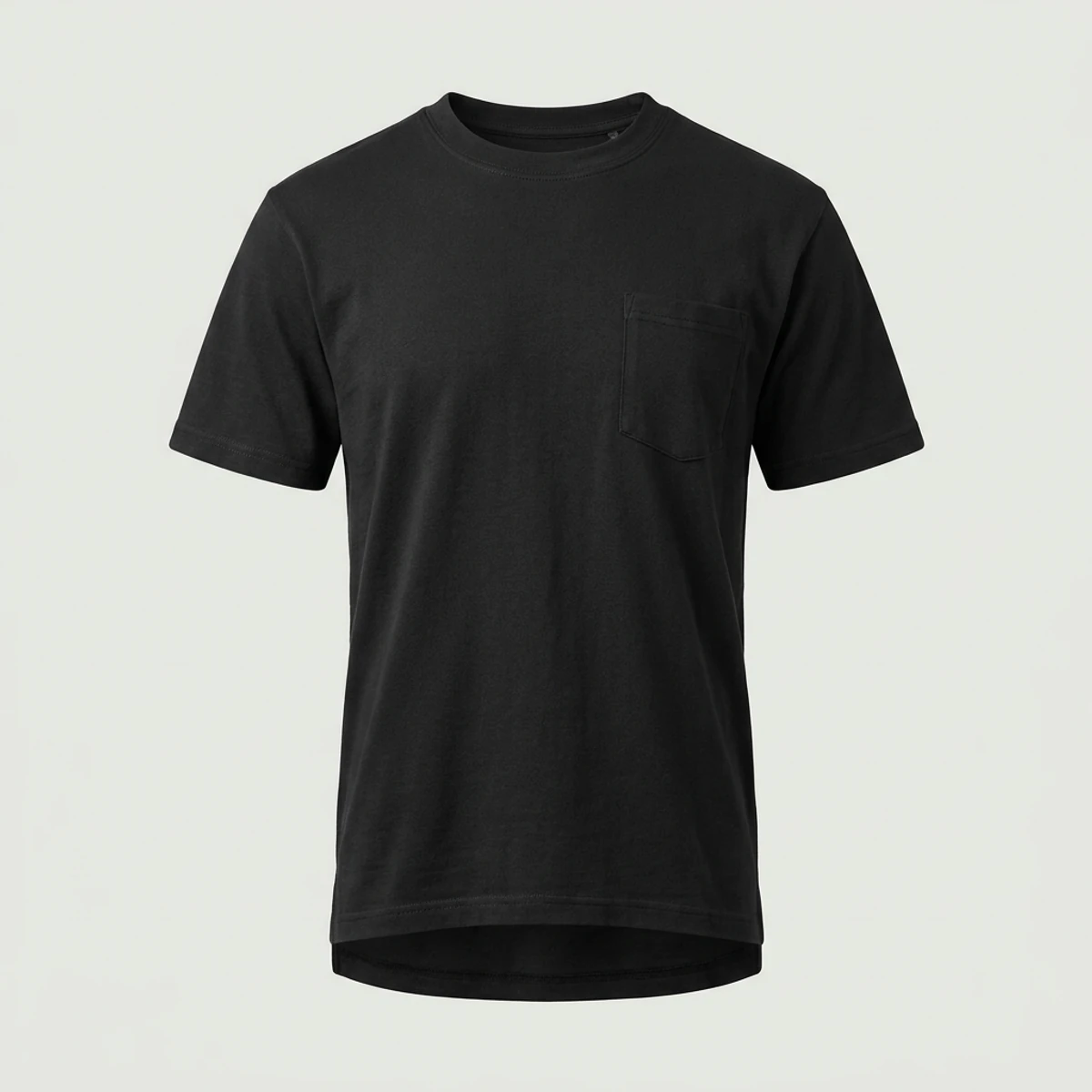
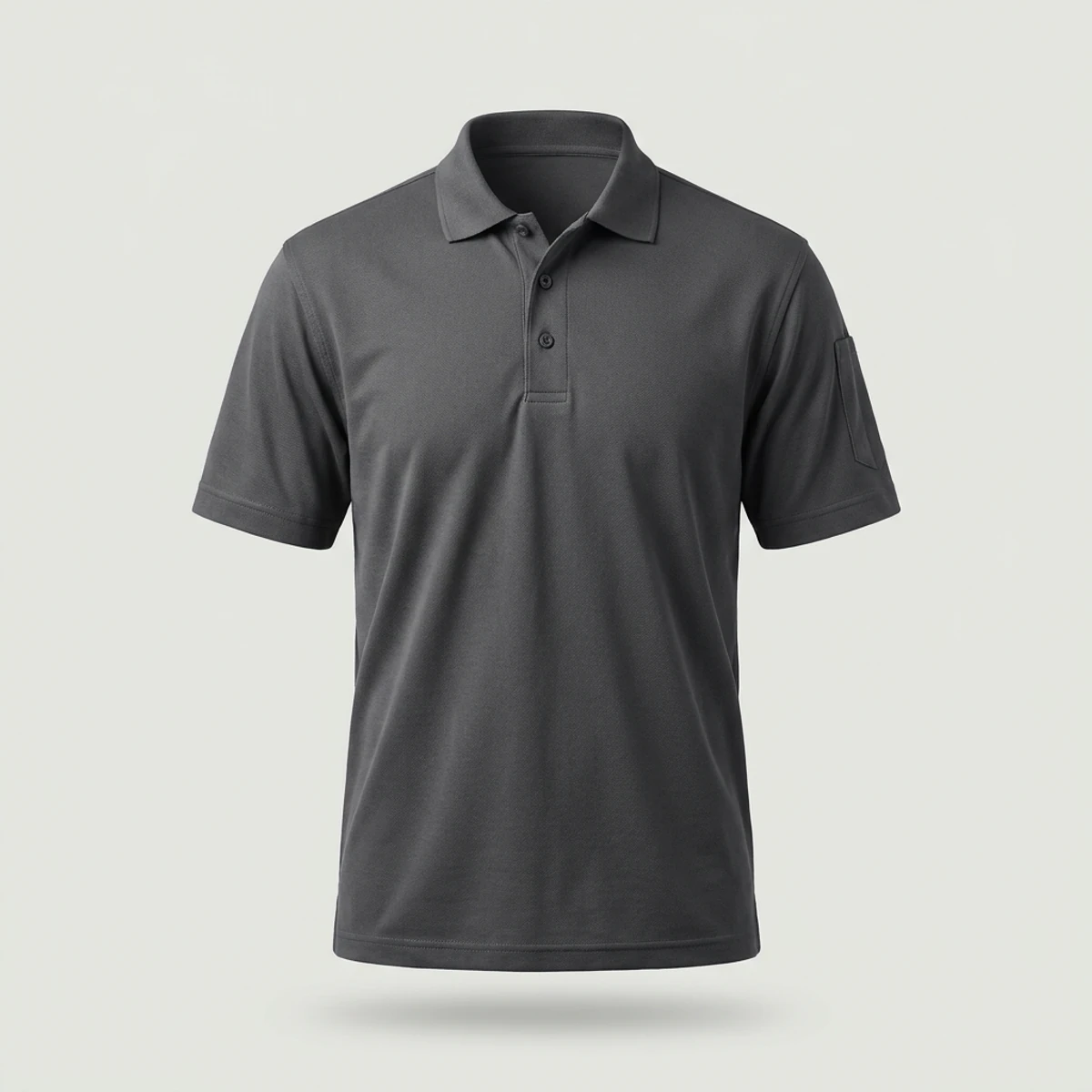
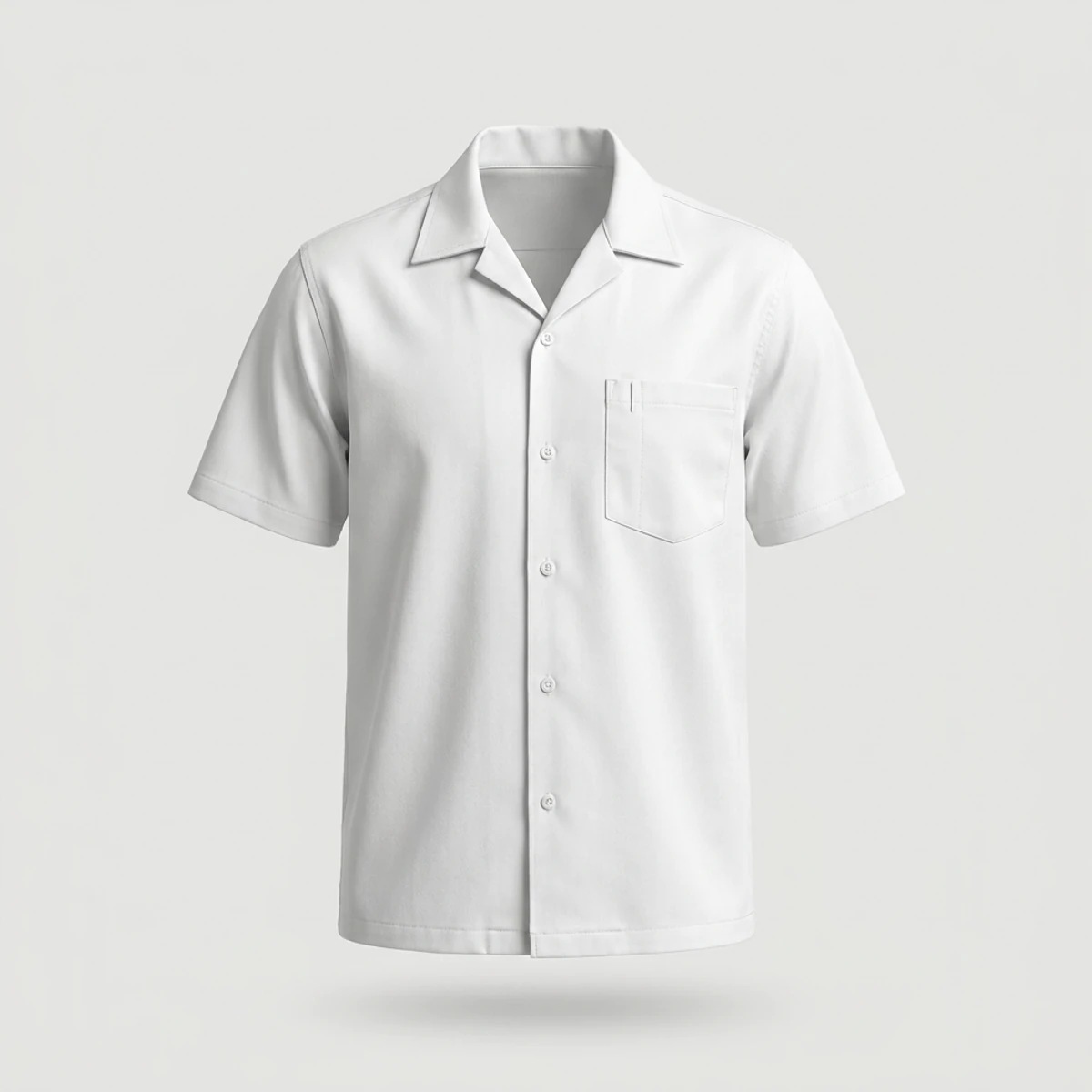
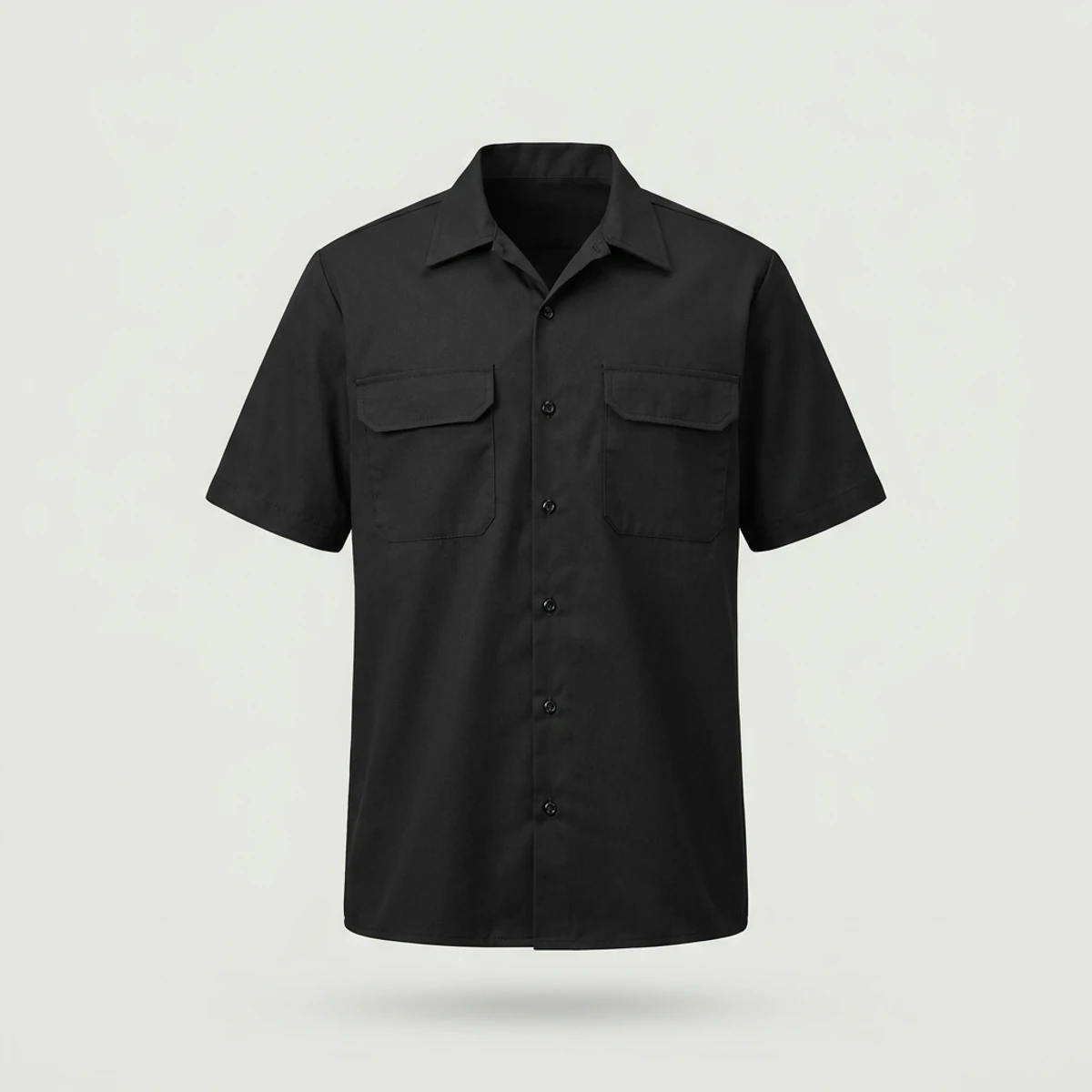
Four kitchen shirt styles cover nearly every station: a short-sleeve snap-front, a button-front woven, a knit tee or polo, and a utility cook shirt. Each can be made in your fabric and color with your logo, and kitchens often combine two of them, such as snap-fronts for the line and knit tees for pastry.
The workhorse of busy lines. A stand collar keeps the chef look, snaps open in a second if a cook gets too hot, and short sleeves stay out of food and off hot pans.
A more polished woven shirt with plastic or cloth knot buttons, in short or long sleeves. Long sleeves protect forearms at the grill and fryer and still feel lighter than a coat.
A heavier T-shirt or polo in a kitchen-ready knit, often in black. Knits move with the body and suit pastry, bakeries, coffee bars and open kitchens where cooks are part of the room’s look.
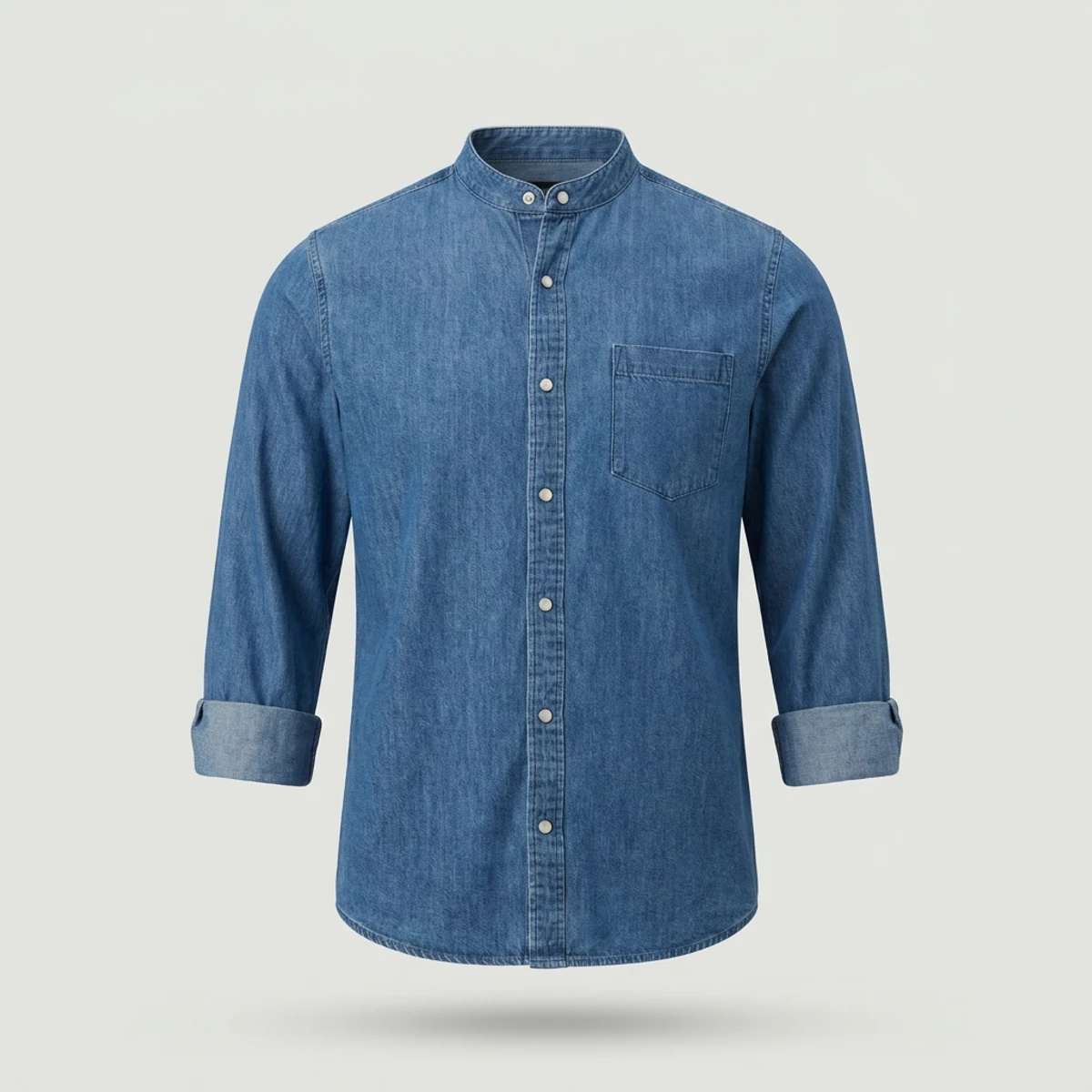
A camp-collar or spread-collar work shirt with a chest pocket for a thermometer and pen, for prep cooks, dishwashers, food trucks and commissaries that want a durable uniform at a lower decoration cost.
A chef shirt short sleeve style keeps cuffs out of food and runs cooler, while a long-sleeve version protects forearms from splatter, steam and oven racks. Sleeve length is a safety decision as much as a style choice, so match it to the station rather than to the season alone.
Each sleeve length is its own style for the minimum of about 50 pieces, so smaller kitchens usually choose one length for everyone.
A cotton chef shirt is the most comfortable near heat because cotton breathes and absorbs sweat, but a poly-cotton blend holds its color and shape longer under a linen service. Stretch wovens suit cooks who reach and lift all shift, and knits suit tees and polos.
| Fabric | How it feels on the line | Laundering | Good for |
|---|---|---|---|
| Cotton | Breathable, soft, absorbs sweat | Wrinkles; may shrink if dried hot | Open kitchens, bakeries, chef-driven brands |
| Poly-cotton blend | Slightly less breathable, more durable | Holds color and shape through frequent hot washes | High-volume kitchens, linen services |
| Stretch woven (with spandex) | Moves with the body | Dry at lower heat to protect stretch | Cooks who reach, bend and lift all shift |
| Knit (jersey or piqué) | Light, flexible, casual | Can pill on harsh wash cycles | Tees, polos, front-of-house shirts |
Our fabric guide explains how cotton, polyester and spandex behave; the same trade-offs apply in a kitchen. We confirm the fabrics available for each style at quote stage.
A black chef shirt hides stains and suits open kitchens and food trucks; a white one looks classic in pastry and fine dining but shows every mark; brand colors tie the kitchen to the dining room. Color decides how a shirt looks at hour nine, not only at the start of service.
A men’s chef shirt usually needs room across the shoulders and enough body length to stay tucked or over the apron string when bending, while many cooks prefer a shaped women’s cut with a shorter sleeve and less bulk at the hem. One boxy cut rarely fits a whole kitchen.
We can develop both cuts in the same fabric and color so the line matches. Collect sizes from the team before ordering and keep a few common sizes back for new hires.
Tip: Wear-test the sample through a full dinner service, not a five-minute try-on. Heat, sweat and an apron strap over the shoulder show problems a fitting room never will.
At the grill, fry and sauté stations cooks need long sleeves; prep, pastry and cold stations are better in short sleeves or knits; open kitchens and caterers want a brand-color shirt that looks like a uniform in front of guests. Most kitchens settle on one or two styles, then use color or embroidery to show roles.
| Role or setting | What usually works | Why |
|---|---|---|
| Grill, fry and sauté cooks | Long-sleeve woven shirt, breathable blend | Covers forearms from splatter and steam |
| Prep and cold stations | Short-sleeve snap-front or utility cook shirt | Cool, easy to change, sleeves out of the way |
| Pastry and bakery | Short-sleeve shirt or knit tee in white or a light color | Light, clean look; flour shows less on light colors |
| Open kitchens and chef’s counters | Black or brand-color shirt with tonal embroidery | Matches the dining room and hides marks during service |
| Food trucks and quick-service | Knit tee, polo or utility shirt | Durable, simple, low decoration cost |
| Catering and events | Snap-front shirt in a brand color | Looks like a uniform at the client’s venue, packs easily |
Hotel and catering kitchens often run several outlets from one program: one shirt style across outlets, with outlet names on the sleeve. Our hotel uniforms page covers those multi-outlet programs.
Chef shirts are usually branded with embroidery, because thread survives hot, frequent washing better than most prints. The standard layout is a logo on the left chest, a cook’s name or title on the right chest and sometimes a small mark on the sleeve, kept proportionate so light fabric does not pucker.
Our custom logo embroidery service covers thread colors, sizing and placement. Chef wear brands can have their own labels and hang tags sewn in through our private label clothing program. Shirts are rarely ordered alone: pair them with logo aprons in matching colors, and see our restaurant uniforms page to plan front and back of house together.
Kitchen shirts last longest when stains are treated before they set, shirts are washed at the temperature the care label allows, and blends are dried at moderate heat. Grease responds to a degreasing pre-treatment rather than extra heat, and chlorine bleach should stay off colors and embroidery unless the label permits it.
Wash knit tees inside out to keep the surface smooth. Care instructions go on every label, including private label orders, so cooks who take shirts home know how to wash them.
The cost of custom chef shirts depends on the fabric, the quantity per style, the shirt’s construction, the decoration, any personalization and the labels and packaging. No prices appear here, because every order is quoted on its actual fabric, artwork and quantity.
| Cost driver | How it moves the unit price | How to keep it in check |
|---|---|---|
| Fabric | Stretch wovens, premium cotton and performance knits usually cost more than standard poly-cotton | Choose fabric for kitchen heat and laundering |
| Quantity per style | Larger runs spread cutting, setup and sampling across more shirts | One style and one sleeve length where possible |
| Construction | Snaps, knot buttons, mesh panels, piping and extra pockets add sewing time | Keep the details cooks use |
| Decoration | Stitch count, thread colors and number of locations add time per shirt | One chest logo, sized to the fabric weight |
| Personalization | Individual names add handling for every piece | Send one clean name list with sizes |
| Labels and packaging | Custom neck labels, hang tags and individual bagging add components | Standard finishing for staff uniforms |
Kitchen shirts are ordered in five steps: brief, style and fabric choice, sample approval, production and reorder. The sample is stitched with your logo in place, so fit, placement and thread colors are checked on a real shirt before the full run is cut.
Ask us for current lead times when you request a quote.
Ready to order
A complete quote for kitchen shirts needs roles and headcount, the shirt style, sleeve length and color, sizes, laundering method, logo files and your opening date. Sending all of it at once lets us price the order accurately and tell you whether a new sample is needed.
The most common mistakes are short sleeves at the grill, fabric chosen for a photo shoot, ignoring the linen service, too few shirts per cook and oversized logos on light fabric. Each is cheap to fix at the brief stage and expensive after a full run.
Kitchens with an assessed open-flame hazard should look at flame-resistant clothing instead of standard cotton or blends.
Need something not covered here? Ask our Los Angeles team and we’ll answer with options for your order.
Ask our Los Angeles teamYes. We can cut shirts, coats and aprons from the same fabric color and use the same logo artwork and thread colors, so an executive chef in a coat and a line cook in a shirt still look like one team. Each garment is its own style for the 50-piece minimum.
Usually, yes. A single layer of lighter fabric, short sleeves and mesh or vented panels release heat faster than a double-breasted coat. The trade-off is less protection for forearms and chest from splatter, so grill and fry cooks often prefer a long-sleeve shirt in a breathable fabric.
Yes. The usual placement is the left chest, with a cook's name on the right chest and sometimes a small mark on the sleeve. Embroidery survives hot, frequent washing better than most prints. On lightweight shirts we keep logos proportionate so the fabric does not pucker.
About 50 pieces per style. A short-sleeve and a long-sleeve version of the same shirt count as separate styles. We confirm how sizes and colors can be split within the minimum when we quote, so send your team's size spread with your brief.
No, not unless they are made from certified flame-resistant fabric. Standard cotton and poly-cotton kitchen shirts are not protective equipment, and polyester-rich fabrics can melt near open flame. If your safety program has identified an open-flame hazard, talk to us about FR options before ordering.
Yes. We can develop a shaped women's cut alongside a men's shirt in the same fabric and color, so the whole kitchen matches. Each cut is its own style for the minimum, and we confirm size ranges at quote stage.
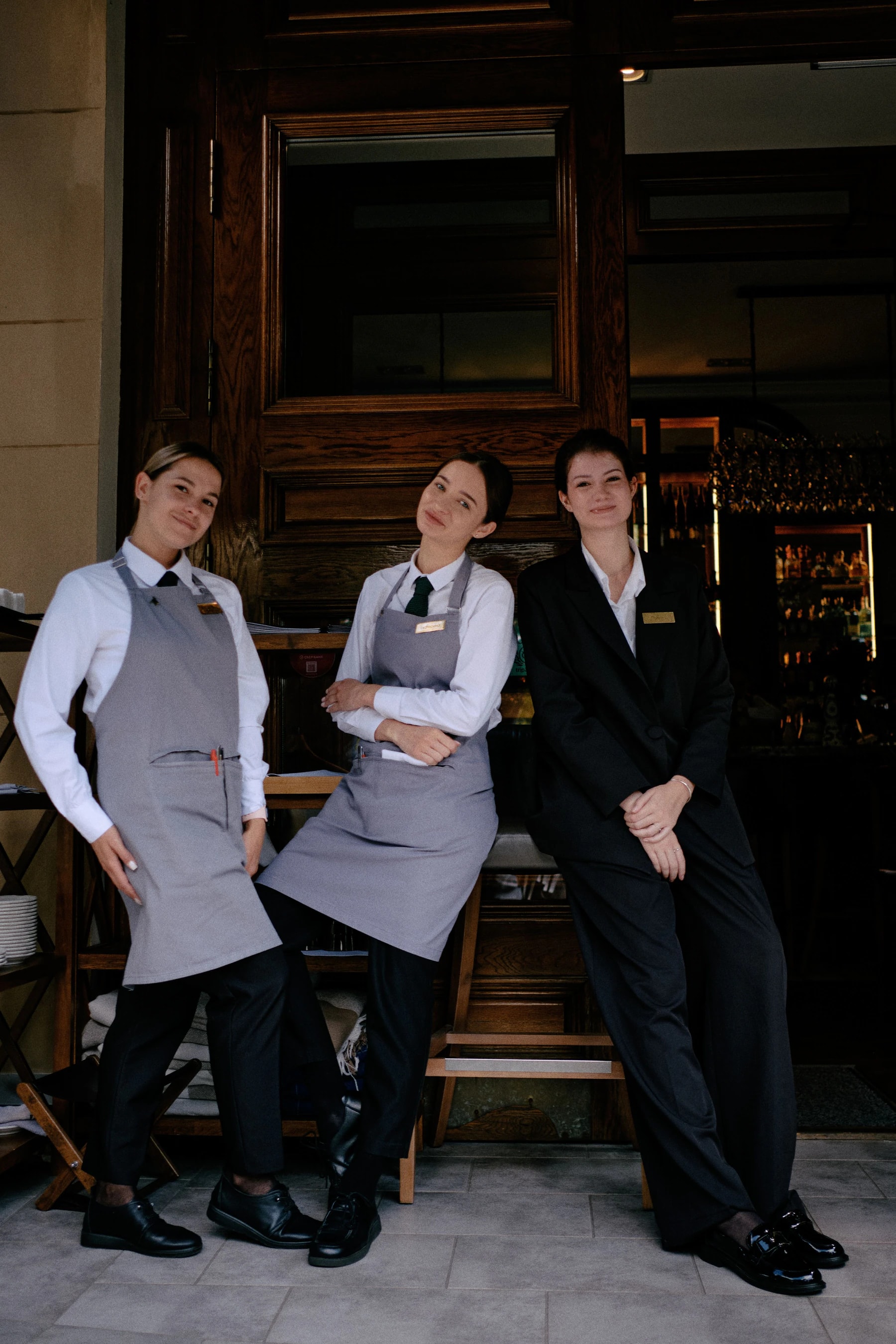
Restaurant uniforms for back-of-house and front-of-house staff, from chef wear to server aprons, cut and sewn in Los Angeles from 50 pieces per style.
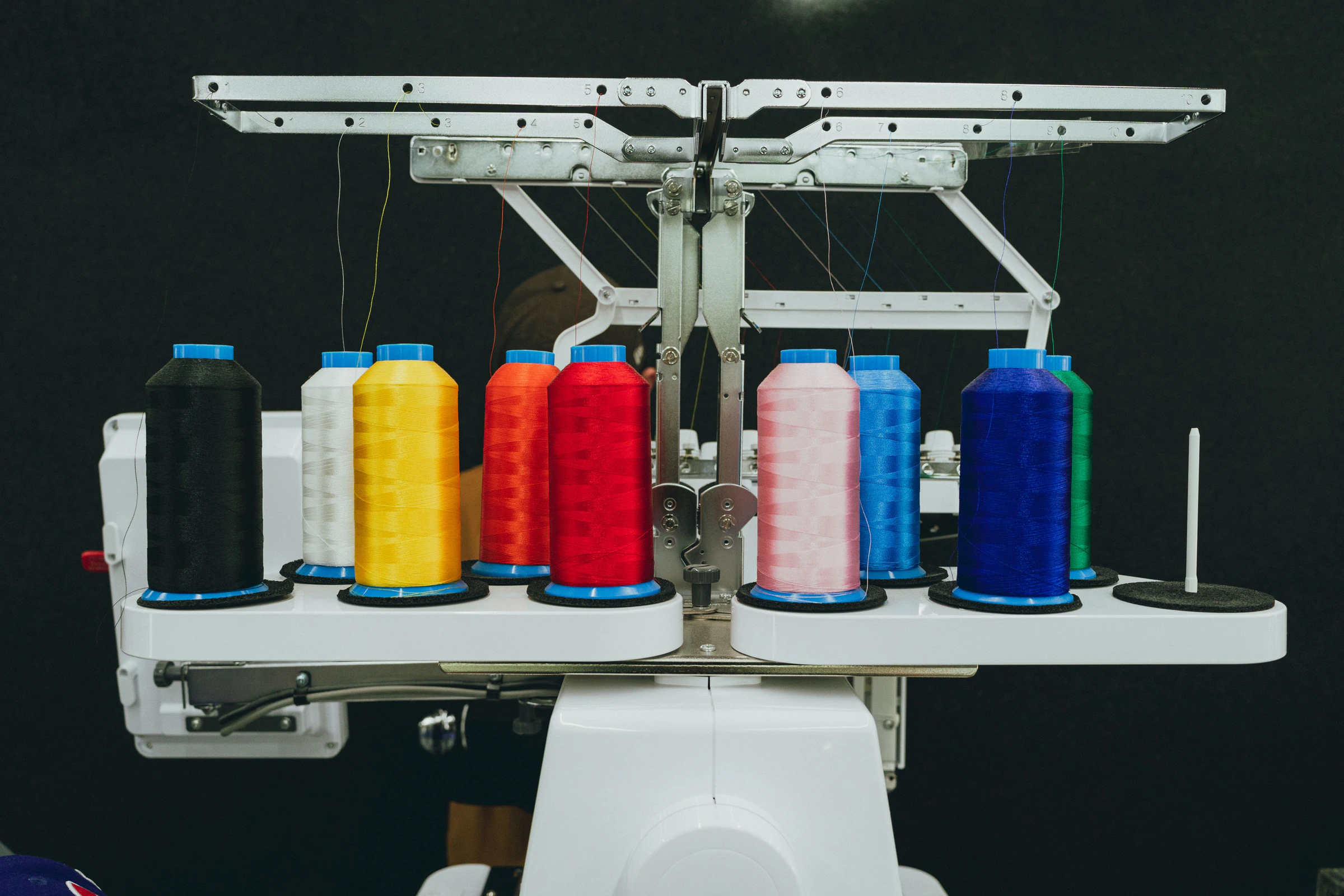
Logo embroidery, screen printing, transfers and patches across workwear, with advice on which method suits each garment, fabric and order size.
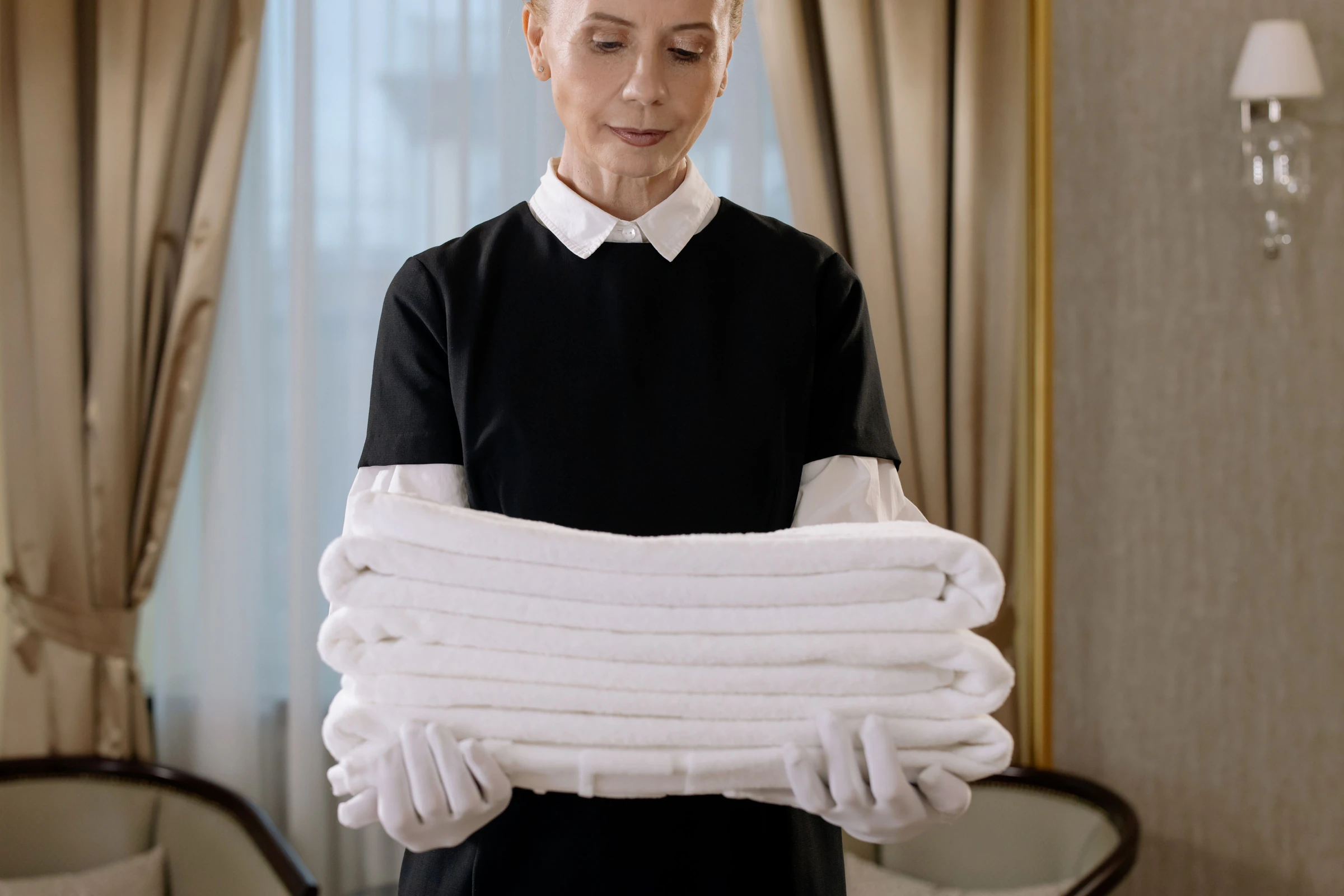
Department-by-department hotel uniforms, from housekeeping tunics to front desk and engineering wear, sewn in Los Angeles from 50 pieces per style.
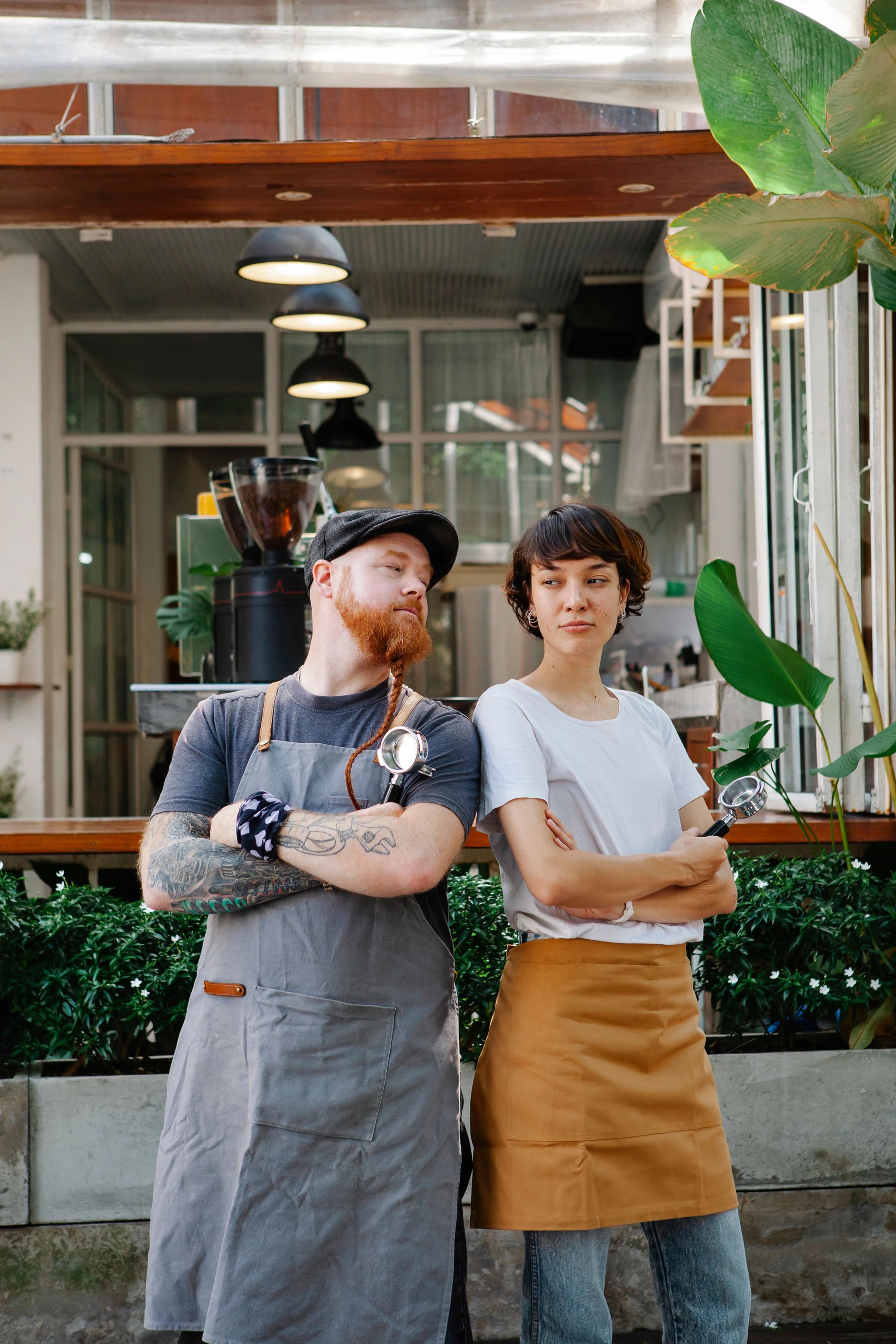
Bib, waist and cross-back aprons with your logo for restaurants, cafés, salons and retail, cut and sewn in Los Angeles from 50 pieces per style.
High-visibility vests, shirts, jackets and pants for road, site and warehouse crews, designed around ANSI/ISEA 107 and cut and sewn in Los Angeles.