Closure
A front zipper is standard. A two-way zipper lets wearers open the bottom for comfort when seated or driving. Concealed snaps or buttons avoid scratching paint on customer vehicles, and a storm flap over the zipper keeps out dust and rain.
Workwear · Los Angeles factory
Coveralls are one-piece work suits that cover the body from collar to ankle, protecting clothing and skin from grease, dust, paint and abrasion. Custom Uniform Factory cuts and sews work coveralls from imported fabric in its own Los Angeles factory for auto shops, plants, warehouses and field crews, customized with your logo, colors and features from about 50 pieces per style.
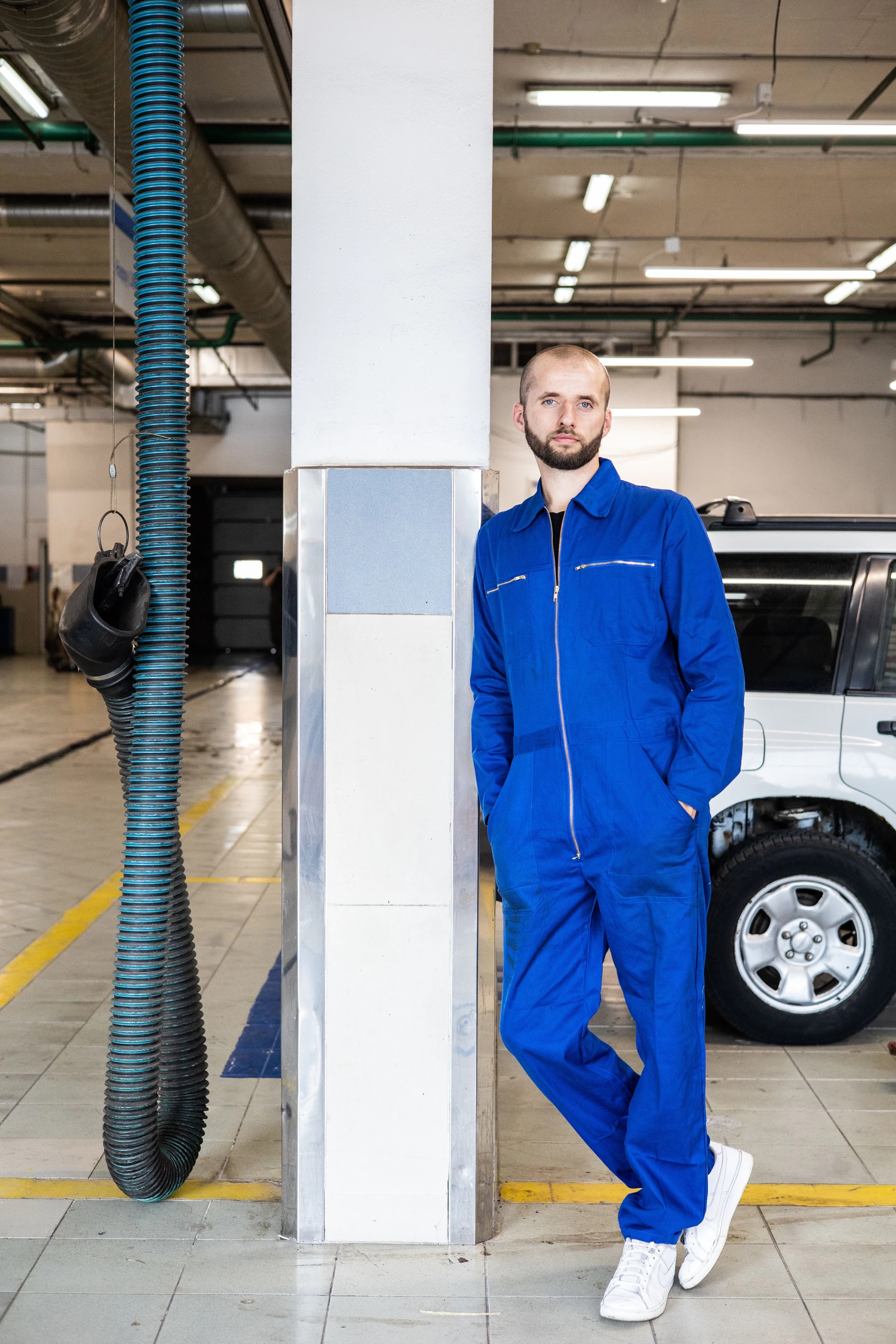
12 styles in 3 families · each made to order in your fabric, color and branding from 50 pieces.
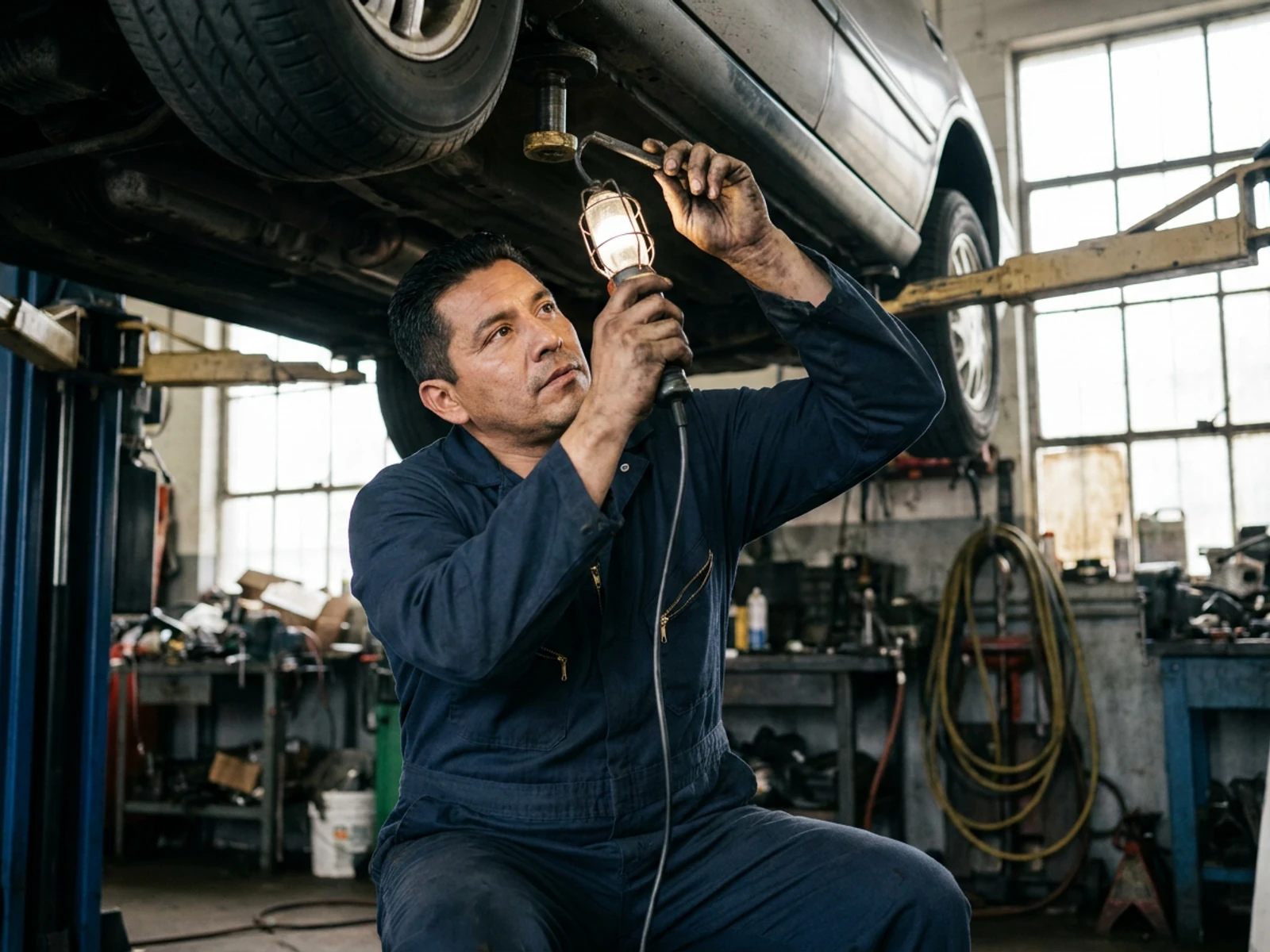
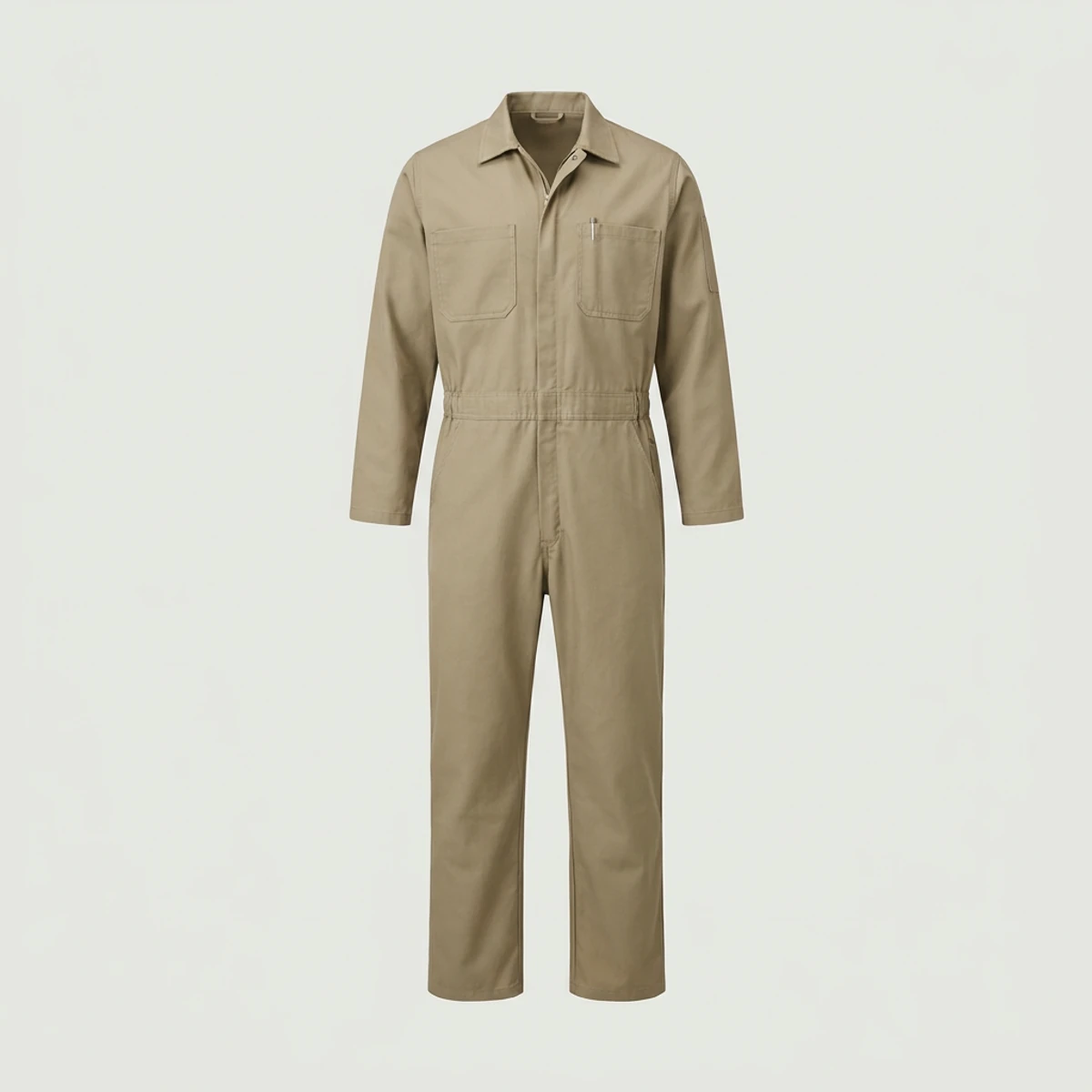
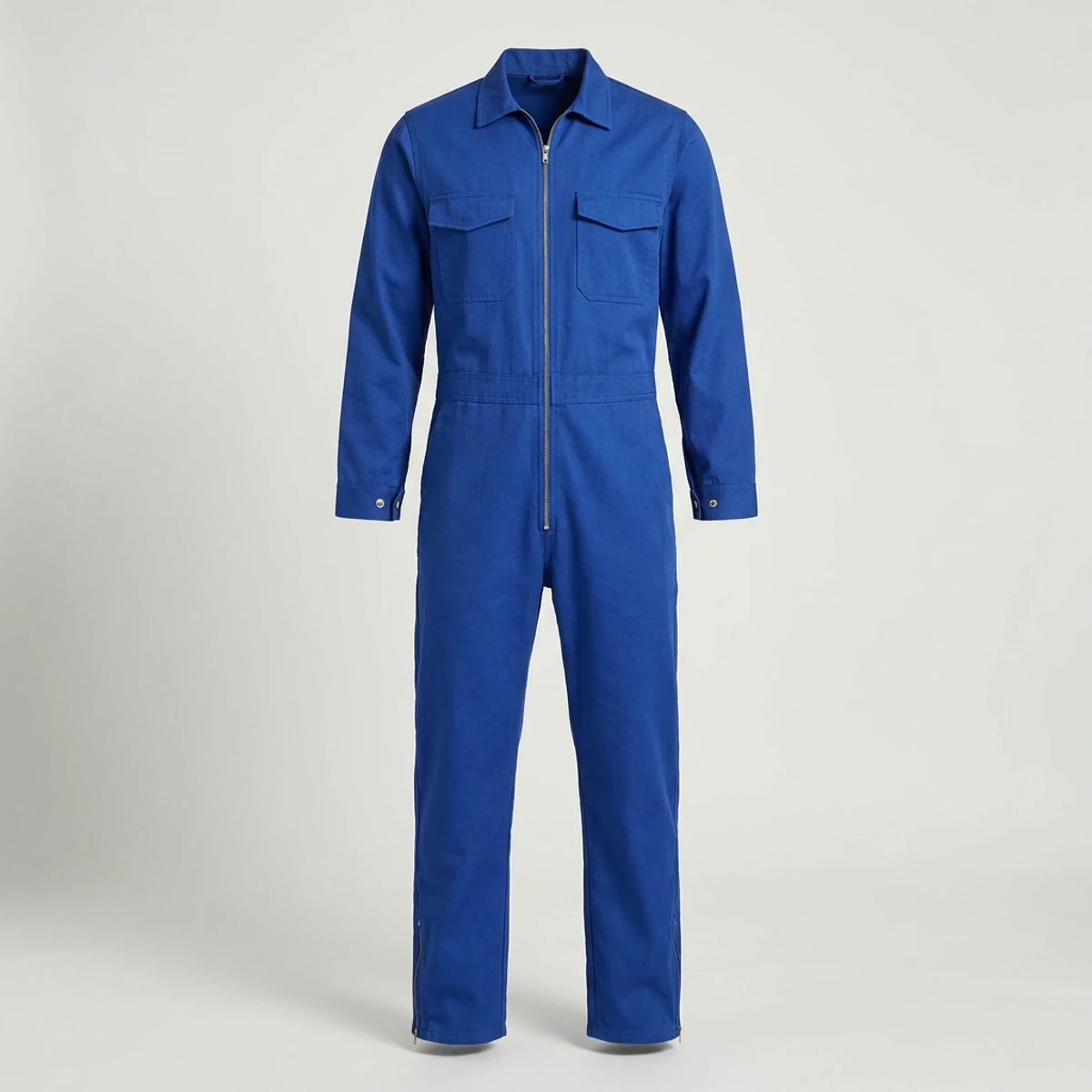
Poly-cotton twill is the everyday choice for auto technicians, plant staff and maintenance crews who launder coveralls often. We set the closure, action back and pocket layout to each role, so work coveralls fit the job instead of the catalog.
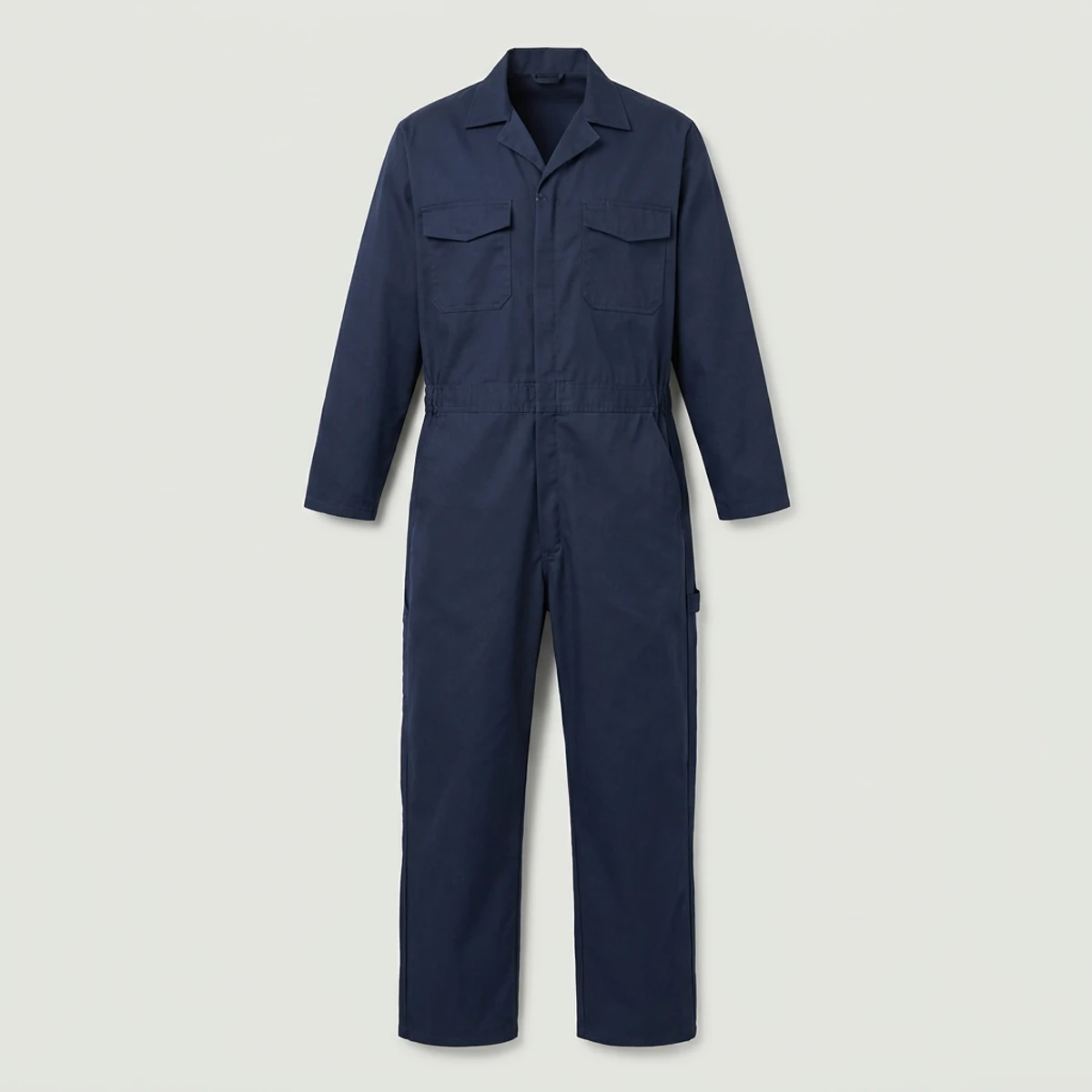
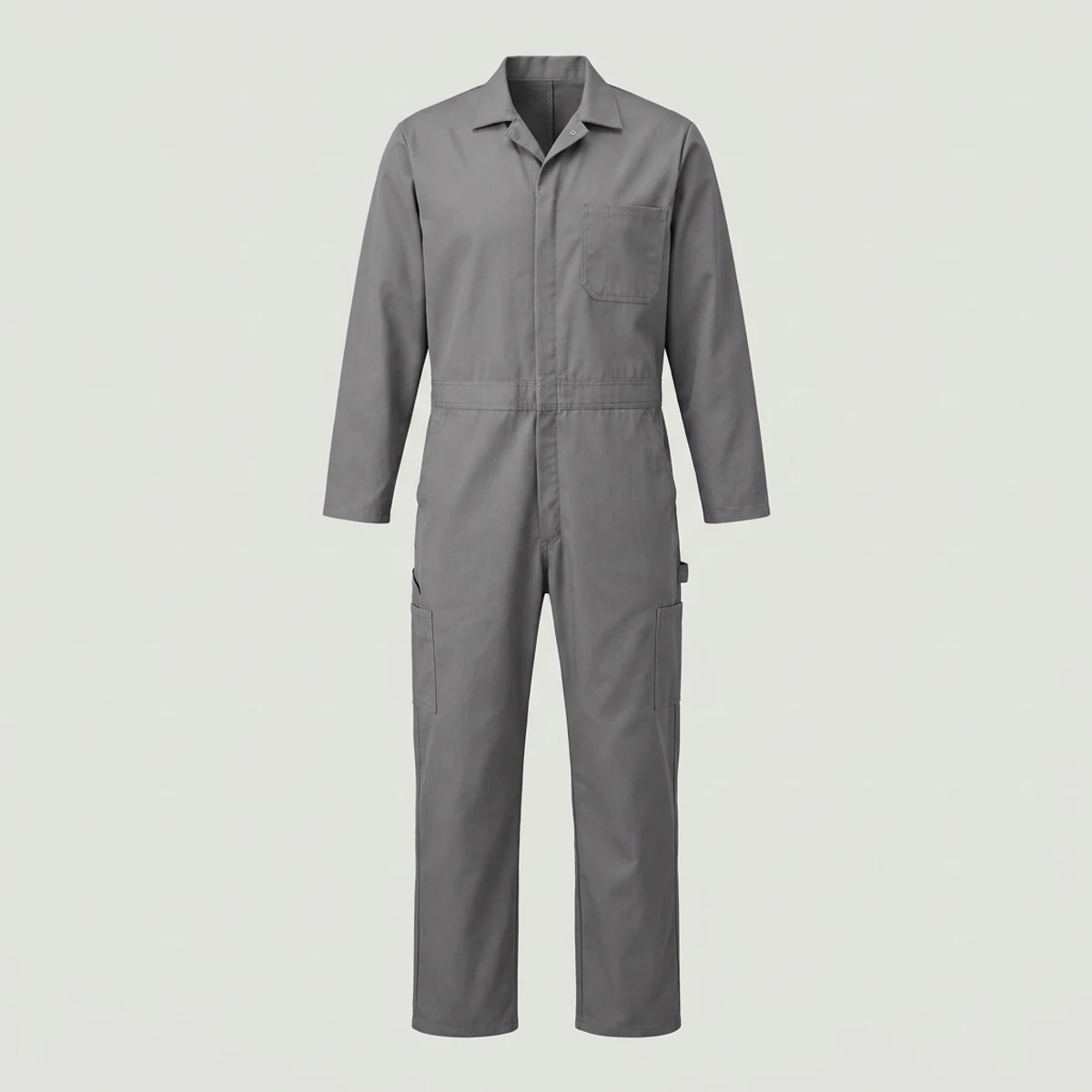
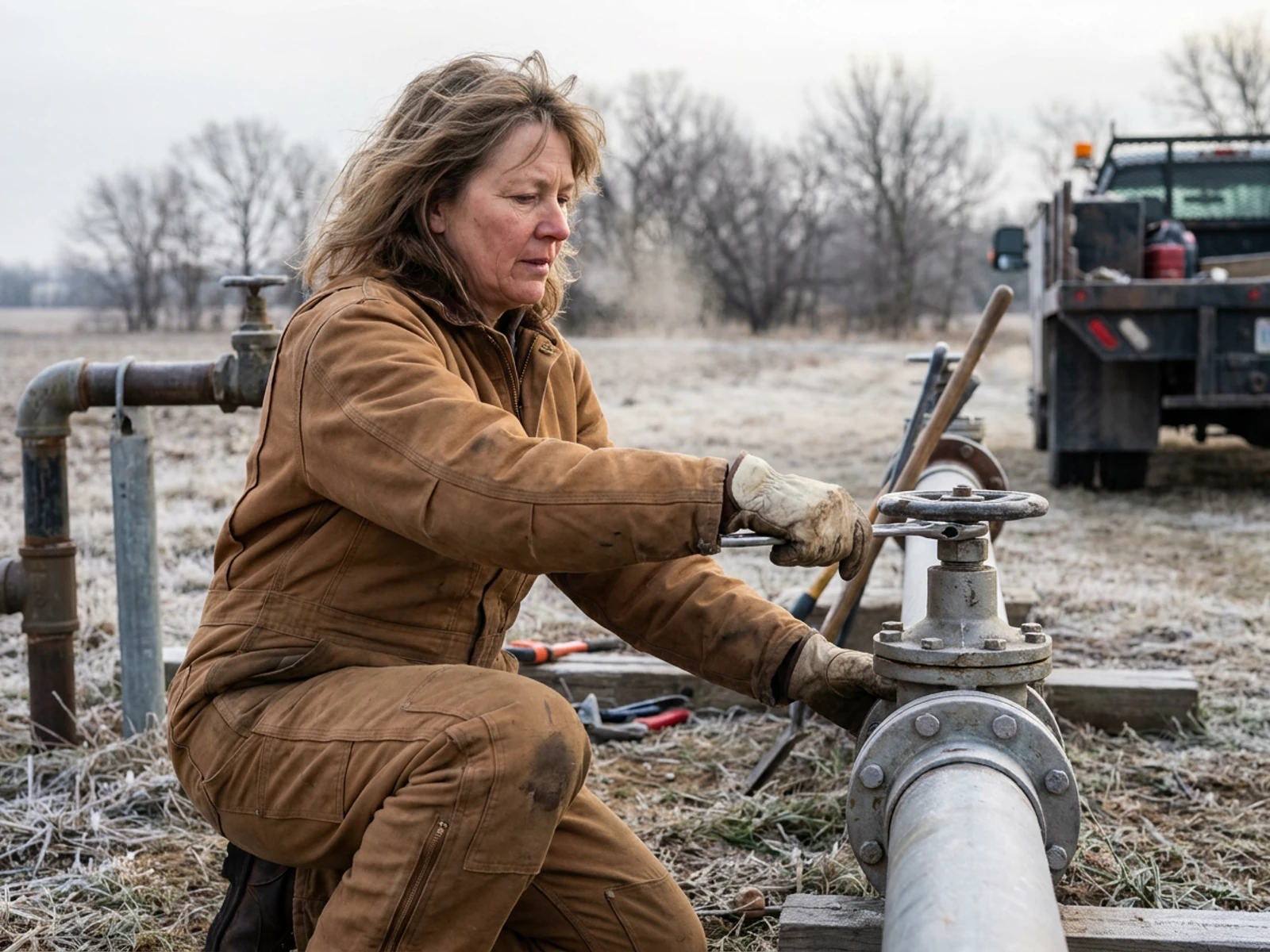
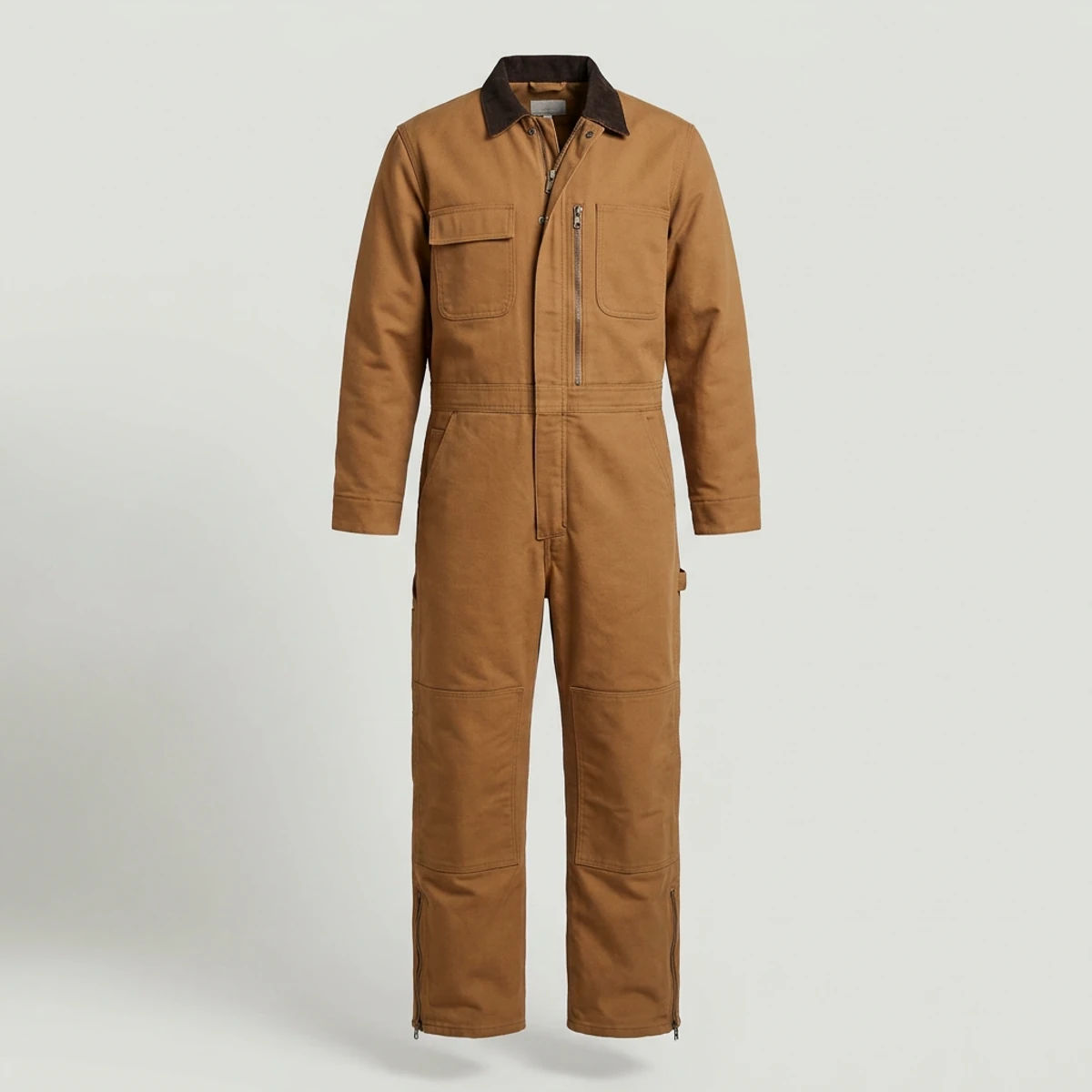
Field service, utility and agricultural crews need heavier cotton duck or canvas with reinforced knees and leg zippers that pull on over boots. For winter outdoor work we line or insulate the suit as a separate style.
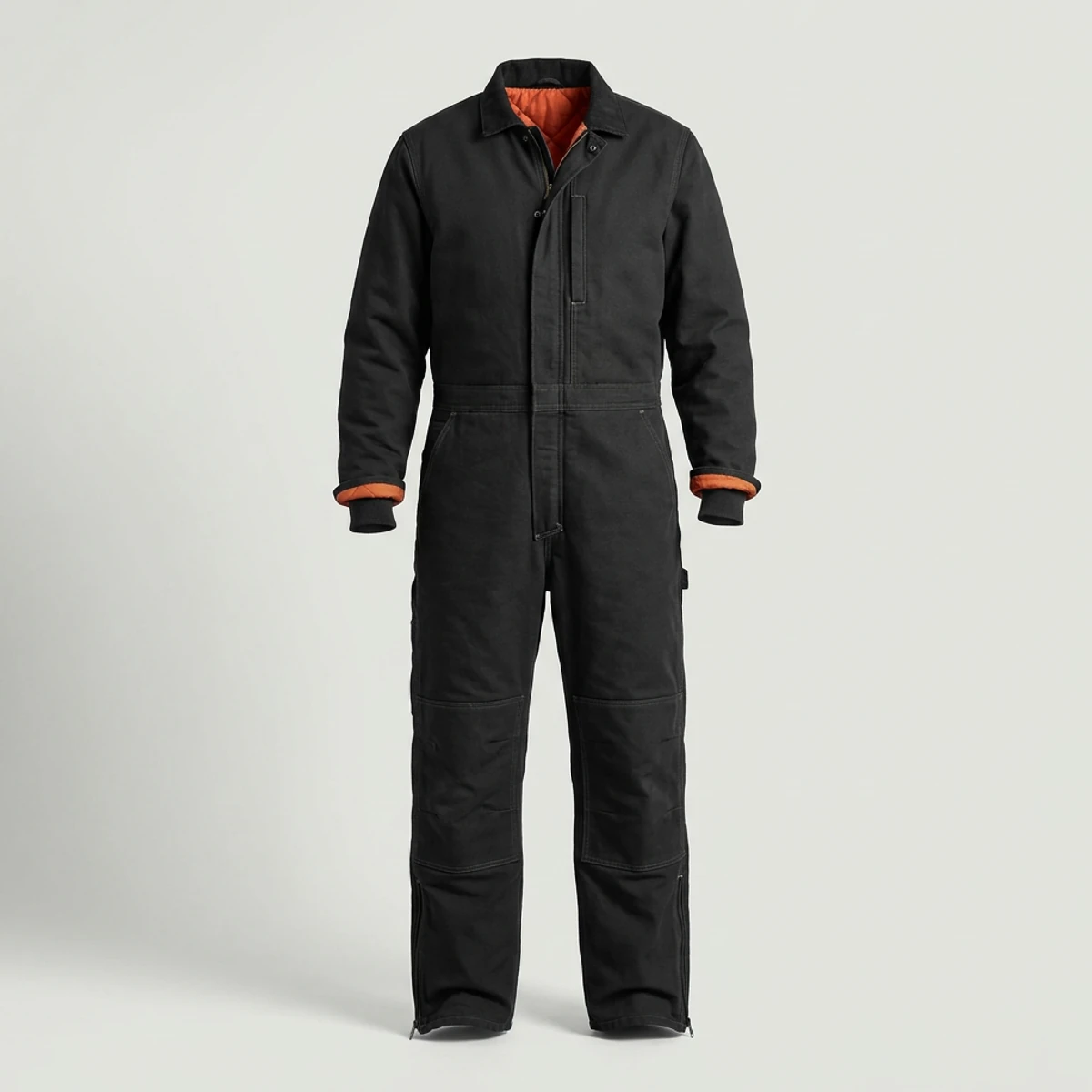
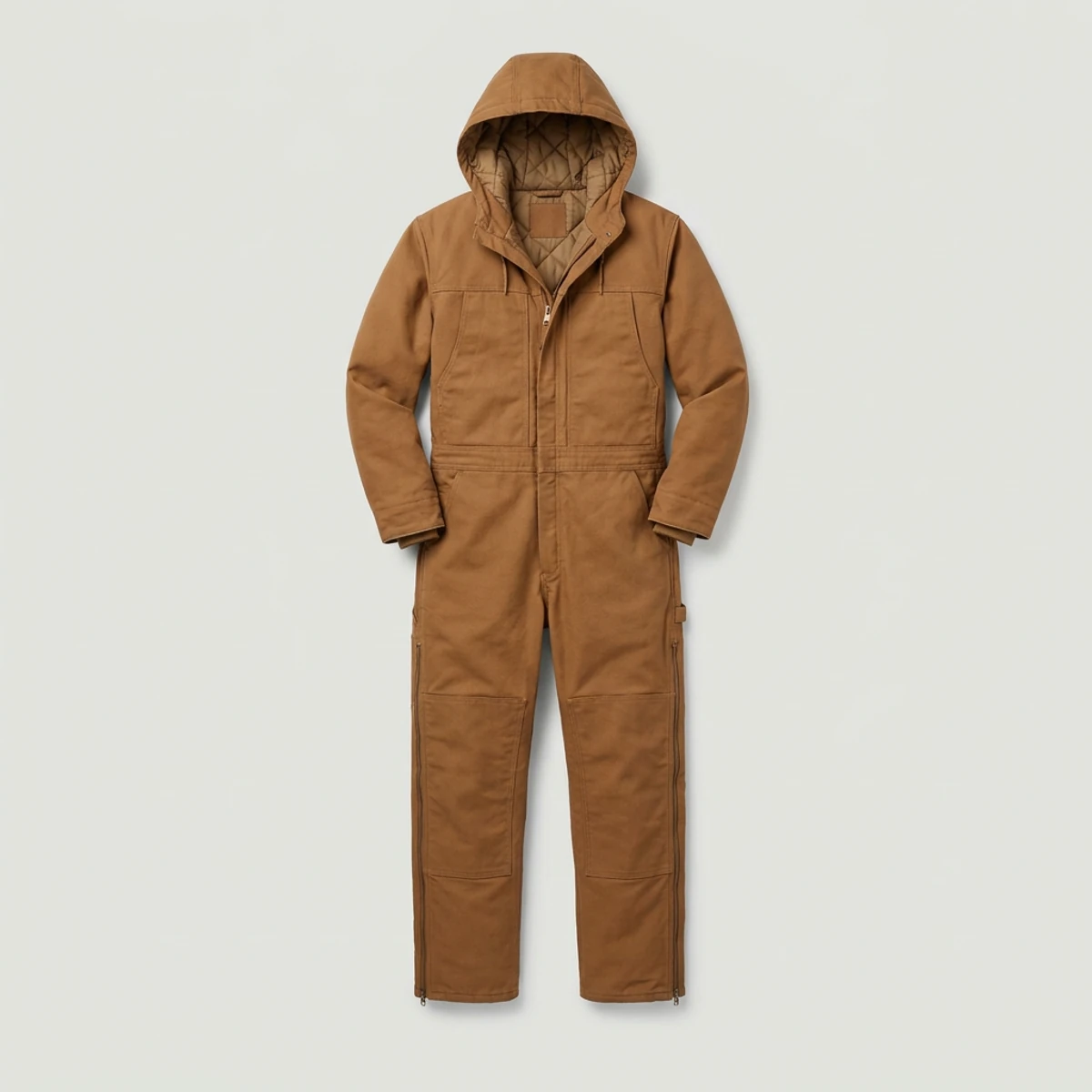
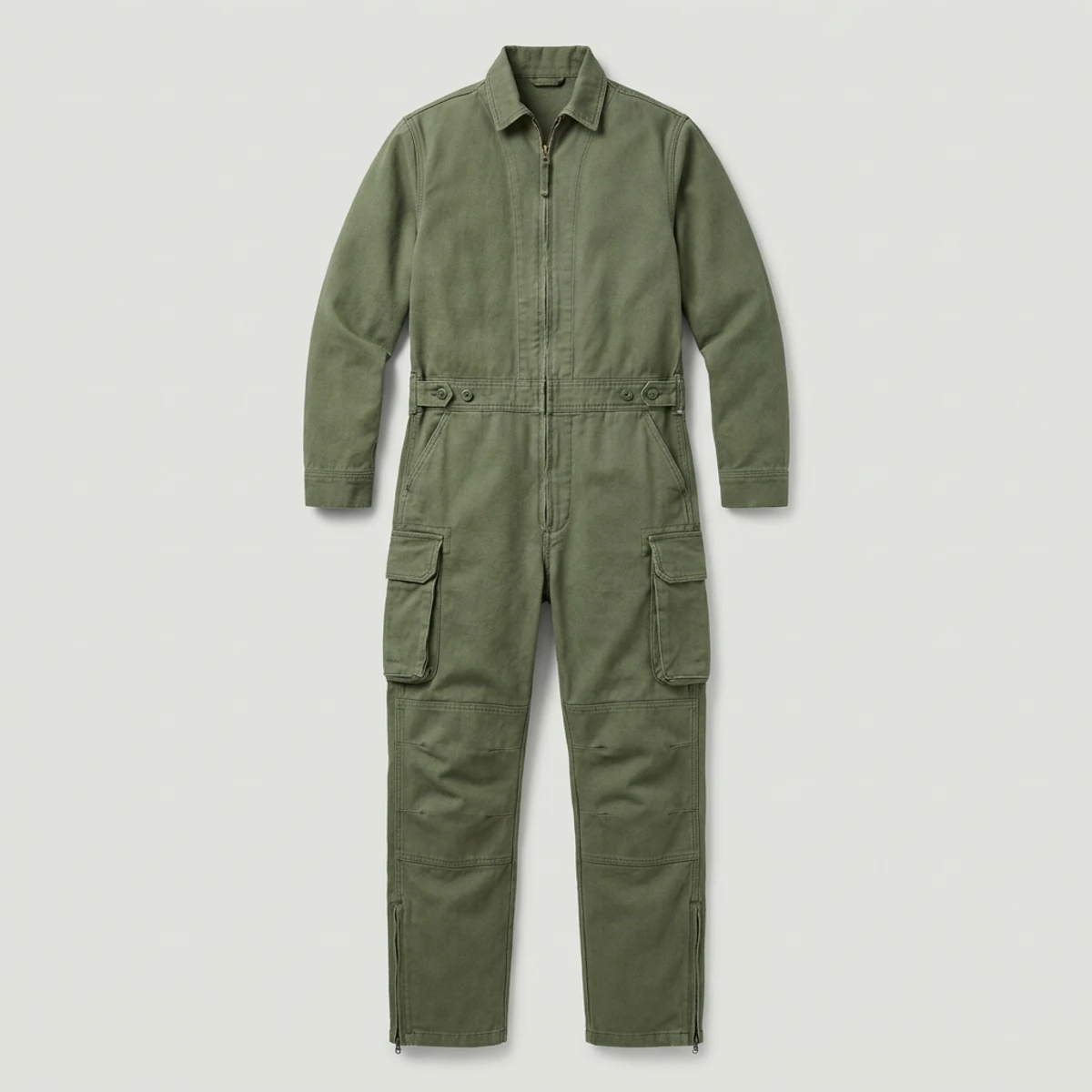
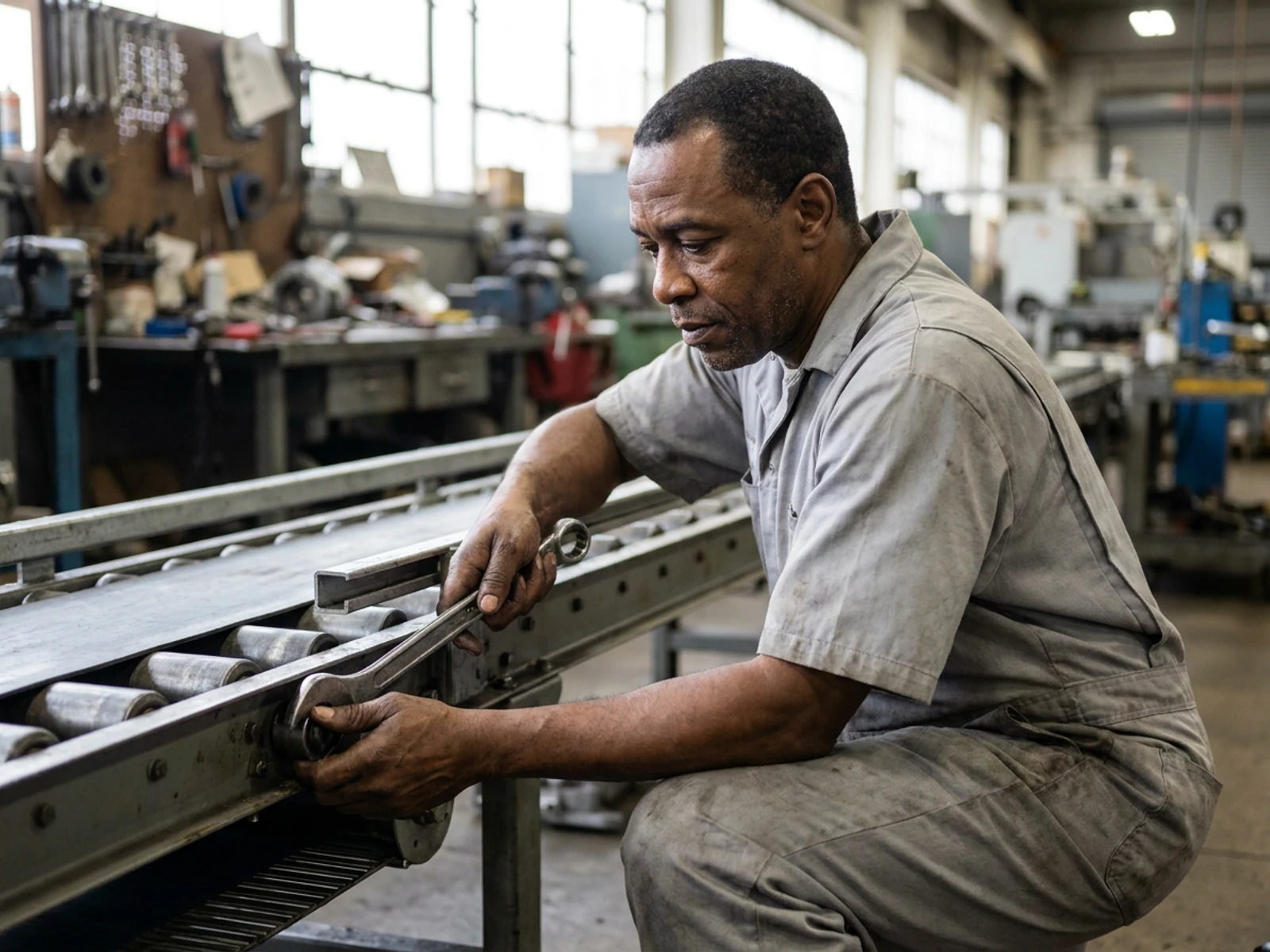
Hot shops and summer crews ask for short-sleeve coveralls, while paint, spray and food processing teams want light colors that show soiling and fewer external pockets. Each variation counts as its own style toward the 50-piece minimum.
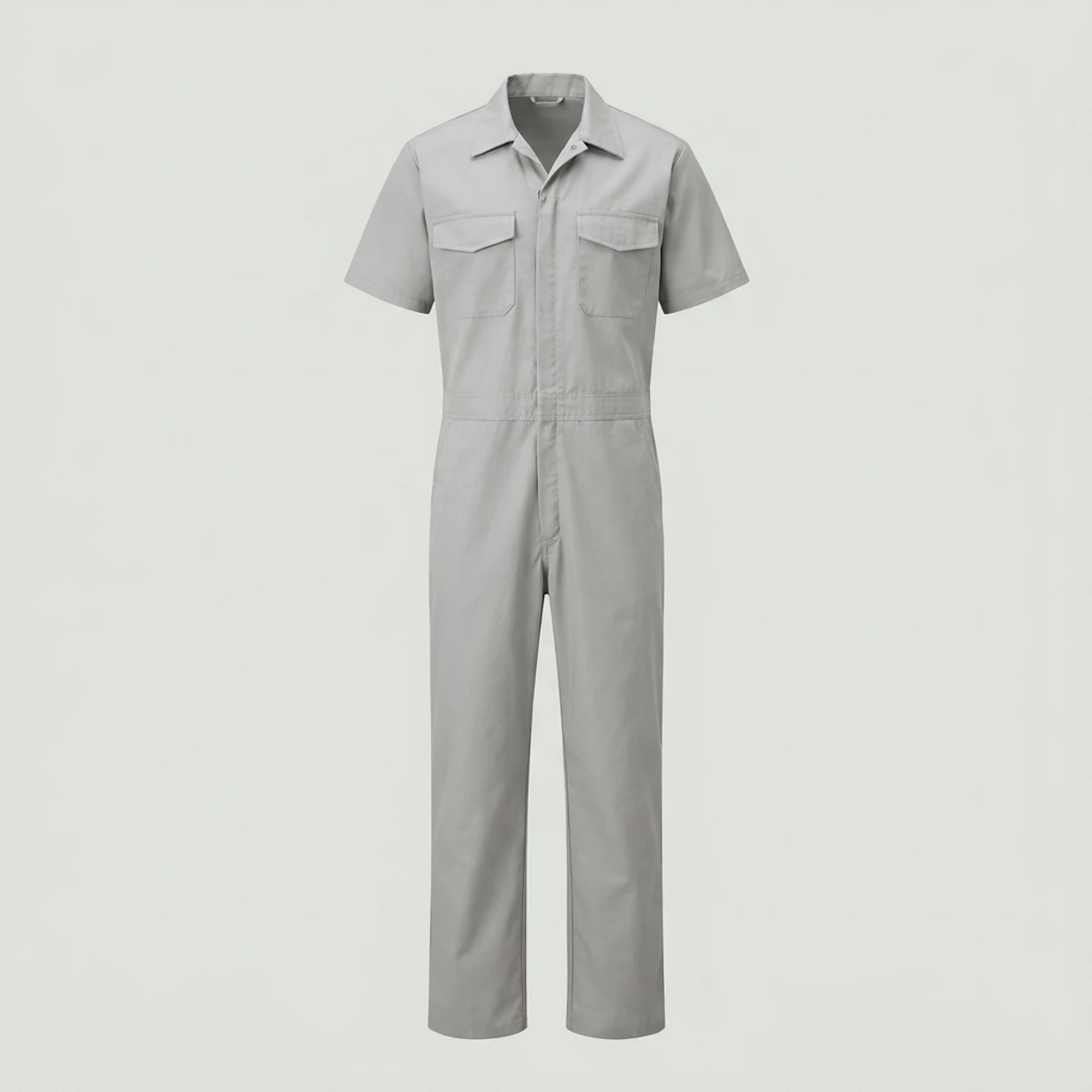
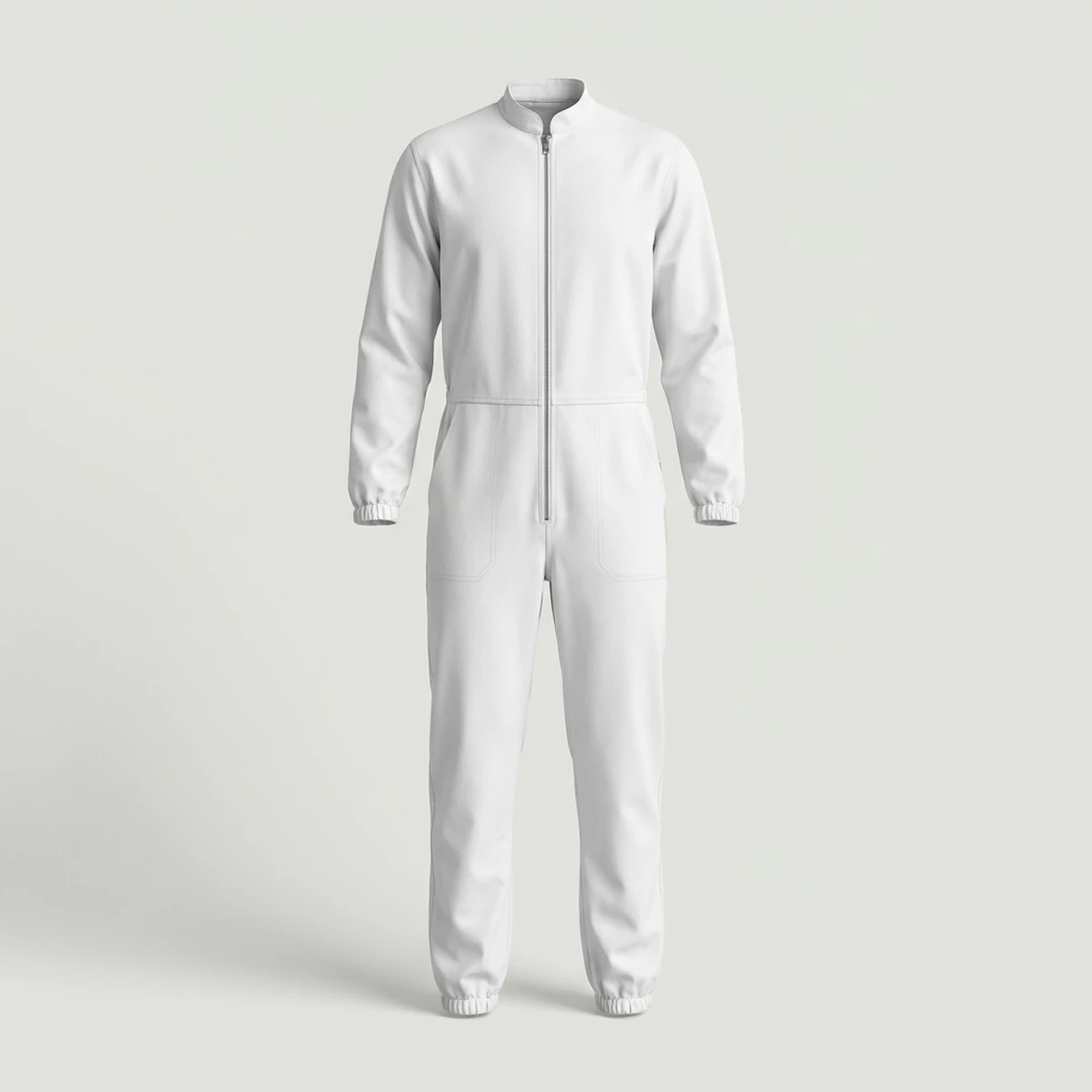
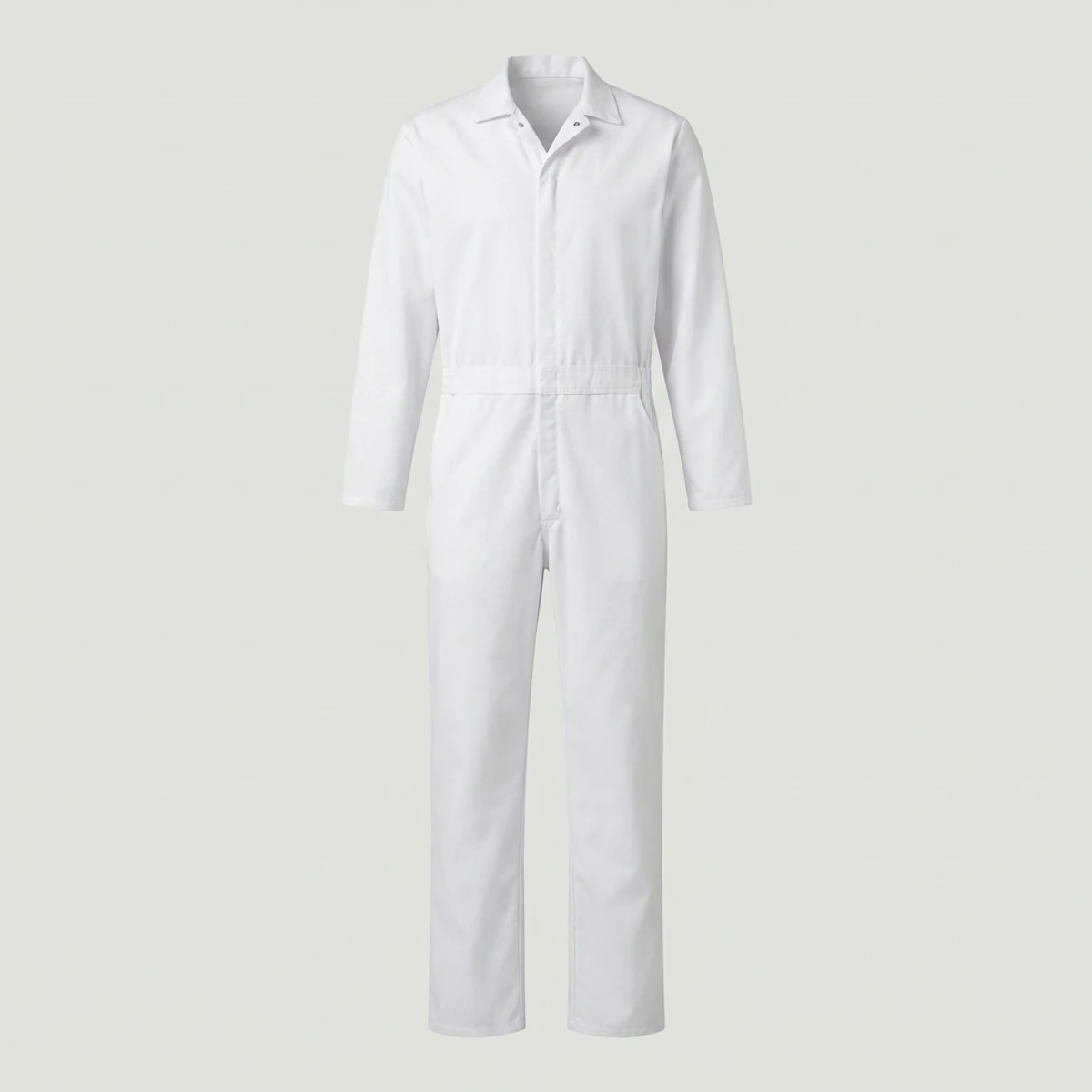
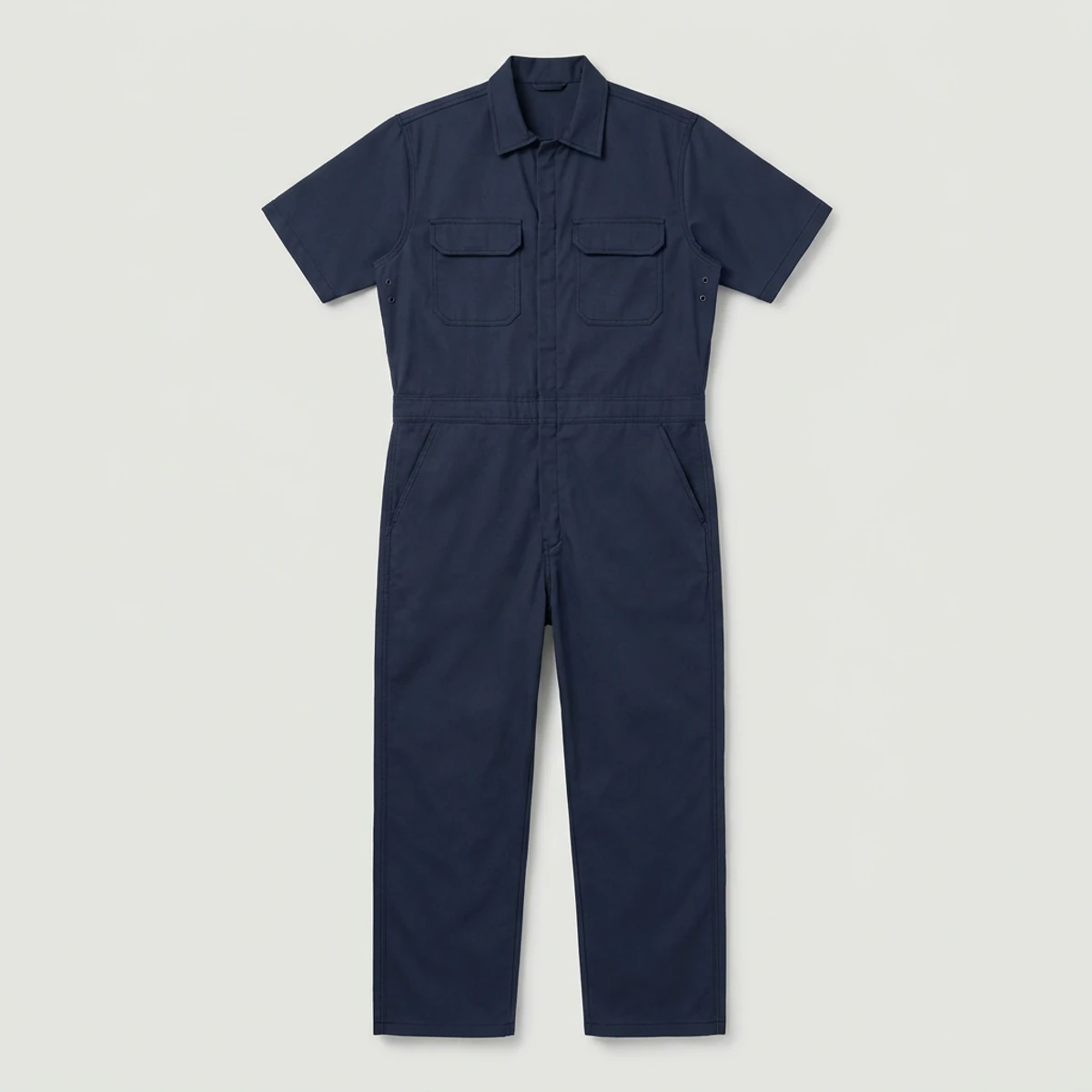
Pick the style, fabric and colors, add your logo and names, then attach the design to your quote. We cut and sew it in Los Angeles from 50 pieces per style.
Work coveralls suit any job where grease, dust, paint or dirt would ruin ordinary clothing: auto and fleet shops, plants and warehouses, spray crews, utilities, agriculture and food processing. One layer covers everything from collar to cuffs, so the clothes underneath stay clean and the crew looks uniform from the first day.
Each trade needs work coveralls built around its own mess and movement. Technicians need room to reach under vehicles, spray crews need fewer places for paint to collect, and field crews need tougher fabric and boot-friendly legs. The table is a starting point for a multi-role program.
| Role | Suggested setup | Why |
|---|---|---|
| Auto and fleet technicians | Poly-cotton, action back, concealed front closure, rag and tool pockets | Reaching under vehicles; no scratching paintwork |
| Plant and maintenance staff | Poly-cotton, two-way zipper, chest pocket with pen slot | Easy to wear all shift and launder often |
| Paint and spray crews | Light color, elastic cuffs, minimal pockets | Overspray coverage; fewer places for paint to collect |
| Field service and utilities | Cotton twill or canvas, leg zippers, reinforced knees | Outdoor dirt, kneeling, stepping in over boots |
| Agriculture | Heavy cotton twill or canvas, plenty of pockets | Abrasion, weather and long days |
| Food processing | Light color, snap or zip front, no external chest pockets | Soiling shows clearly; fewer items fall from pockets |
Tip: For food and pharmaceutical settings, ask your safety lead whether external pockets above the waist are allowed. Many sites ban them so pens and phones cannot fall into product.
Custom coveralls should be specified in four areas: the front closure, the sleeves and back, the pockets, and the legs and knees. Each choice follows the work. A suit for under-vehicle work needs different details from one for a spray booth, and getting these right matters more to wearers than the logo.
A front zipper is standard. A two-way zipper lets wearers open the bottom for comfort when seated or driving. Concealed snaps or buttons avoid scratching paint on customer vehicles, and a storm flap over the zipper keeps out dust and rain.
An action back, with pleats across the shoulder blades, gives room to reach overhead. Snap or elastic cuffs keep sleeves out of moving parts, and elastic waist sides hold the suit close without a belt. A stand collar sits cleaner under a jacket than a point collar.
Chest, hip, rear, tool and pencil pockets are all options, plus pass-through openings that reach the pants pockets underneath. Fit only the pockets the crew will use: extra pockets add sewing time and trap paint, dust or food debris.
A double knee adds a second layer for kneeling work. Side leg zippers let wearers step in without removing boots, which field crews value at the end of a muddy day. Send a coverall you already like and we will match or improve it.
The best coverall fabric depends on laundering and abrasion. Poly-cotton twill is the uniform-program standard because it resists stains and survives industrial washing. Cotton twill is cooler. Cotton duck or canvas resists abrasion best. Certified flame-resistant fabric is only for flash fire or arc flash hazards.
| Fabric | Comfort | Durability | Laundering | Best for |
|---|---|---|---|---|
| Poly-cotton twill | Smooth, moderate breathability | Good; resists wrinkles and stains | Handles frequent and industrial washing; holds color | Shops, plants, uniform programs |
| Cotton twill | Most breathable, soft | Good | Can shrink and fade more | Hot climates, indoor work |
| Cotton duck or canvas | Heavy, breaks in over time | Highest abrasion resistance | Slow to dry | Field crews, agriculture, winter suits |
| FR fabric (certified) | Depends on the fabric | Depends on the fabric | Follow FR care rules strictly | Flash fire or arc flash hazards only |
We confirm the fabrics and weights available for your order at quote stage.
Flame-resistant coveralls are required only where workers face flash fire or arc flash hazards, and ordinary poly-cotton suits are not flame resistant. Garments for those hazards must be made from FR (flame-resistant) fabric and certified to the standard the site’s hazard assessment names, because regular blends can melt or ignite.
For flash fire, the reference is NFPA 2112, the standard on flame-resistant clothing for protection against short-duration thermal exposures from the National Fire Protection Association (NFPA). For electrical work, arc-rated clothing is selected under NFPA 70E, the standard for electrical safety in the workplace. Our guides to NFPA 2112 certified clothing and NFPA 70E arc flash categories explain both, and the FR clothing page covers FR garments in general. Logos on FR garments also need FR-compatible thread and patches, so mention the hazard before you send artwork.
Branded coveralls carry a logo on the left chest, the wearer’s name on the right chest and, often, the company name across the back. A one-piece suit is a large, visible branding surface, so customers and site managers identify the crew at a glance.
| Placement | Typical content | Method |
|---|---|---|
| Left chest | Company logo | Embroidery or embroidered patch |
| Right chest | Wearer’s name | Name patch or direct embroidery |
| Full back | Company name, phone or website | Large print or embroidery |
| Sleeve | Department, role or a flag | Embroidery or patch |
Our logo embroidery and printing team adds logos and names as part of the order, so suits arrive ready to wear.
Custom coveralls are also sold under other companies’ names. Workwear brands, farm and ranch retailers and industrial distributors order them with their own woven label, care label, hang tags and retail or warehouse packaging, and every route starts with a sample to check fit, stitching and finishing.
Our private label clothing program covers labels and packaging, and distributors who decorate locally can buy plain suits through wholesale uniforms.
Tip: If you sell coveralls at retail, offer a tall length in the most popular chest sizes. Torso length is the most common reason customers return a one-piece suit.
Coverall options for hot weather include short sleeves, lighter twill and vented backs; cold-weather crews ask for canvas suits with lining or insulation. Each seasonal variation counts as its own style with its own minimum of about 50 pieces, so many programs start with one year-round suit.
A one-piece suit is the right uniform when full-body protection matters more than heat and convenience. Coveralls protect the most but are warmer and must come off entirely for breaks. Bib overalls and separate shirts and pants are cooler and easier to change.
Bib overalls in denim or canvas are covered on our denim workwear page, and our guide on the difference between coveralls and overalls compares coverage, comfort and use cases.
Most crews order coveralls for men first, because the classic one-piece suit is cut on a male frame: straight through the hip, longer in the torso, with the zipper running from crotch to collar. Men’s work coveralls are usually sized by chest, with regular and tall lengths.
Women on the same crew are better served by a women’s cut than by a smaller men’s size. A women’s pattern adds hip room, a shorter rise and a shorter torso, so the suit does not pull at the crotch when the wearer squats. Tell us the split; we confirm at quote stage how the cuts count toward the minimum and the size range for each.
Coveralls for a team are sized by chest measurement and height, not shirt size, because one garment must fit the chest, torso length and inseam at once. Torso length is the most common fit problem, so taller wearers often need tall lengths, and cold-weather crews layering underneath may need a size up.
The cost of custom coveralls depends on the fabric, the quantity per style, how many features the suit carries, the decoration and personalization, and any custom labels or packaging. Each order is quoted on its actual fabric, features and artwork, so no price list is published.
| Cost driver | How it moves the unit price | How to keep it in check |
|---|---|---|
| Fabric | Canvas and certified FR fabrics usually cost more than poly-cotton twill | Choose FR only where the hazard assessment requires it |
| Quantity per style | Larger runs spread cutting, setup and sampling across more suits | Keep one year-round style before adding seasonal versions |
| Style complexity | Action backs, two-way and leg zippers and extra pockets add sewing time | Specify the features the crew actually uses |
| Decoration | Large back prints and multiple embroidery locations add time per suit | One chest logo plus a back print covers most programs |
| Personalization | Individual name patches or names add handling for every piece | Send one clean name list matched to sizes |
| Labels and packaging | Custom woven labels, hang tags and individual folding add components | Use standard finishing for crew uniforms |
Ready to order
A complete coverall quote needs the type of work and any hazards, the quantity per style, sizes, features, fabric, color, logo files and a name list. The more of this list arrives with the first message, the faster the run can be priced and the sooner a sample can be cut.
A coverall order runs in six stages: brief, quote, sample, approval, production and delivery. New designs are sampled so the crew can kneel, reach and climb in a real suit before the full run of about 50 pieces per style is cut and sewn.
Example: an auto shop with 12 technicians wants four suits each (48). Adding two spares in the most common size brings the order to 50 pieces of one style, each with the technician’s name on the right chest. Ask us for current lead times when you request a quote.
The most common coverall ordering mistakes are sizing by shirt size, assuming any suit is flame resistant, adding pockets nobody uses and approving a sample without a kneel test. Each one is cheap to catch at the brief or sample stage and expensive to fix after a full run.
Coveralls last longest when zippers are closed before washing, grease and oil are pre-treated, and the care label is followed for water and dryer heat. Poly-cotton suits handle home and industrial laundering well; flame-resistant coveralls need the FR fabric maker’s care instructions, without bleach or fabric softener.
Replace any suit with torn seams, broken closures or holes, since damaged coveralls no longer protect the clothing and skin underneath.
Need something not covered here? Ask our Los Angeles team and we’ll answer with options for your order.
Ask our Los Angeles teamCoveralls cover the whole body, including arms and torso, in one piece. Overalls are bib-front pants with shoulder straps, worn over a shirt. The one-piece suit gives more protection from grease and dust; overalls are cooler and easier to put on and take off. Our guide compares them in detail.
An action back is a set of pleats or gussets across the shoulder blades that opens when the wearer reaches forward or overhead. It stops the suit from pulling at the shoulders and riding up at the crotch, which suits mechanics, electricians and anyone working with raised arms.
About 50 pieces per style. A style is one design in one fabric and color, spread across sizes. Name patches or embroidered names can usually be personalized per suit within the same order, so a shop with 20 technicians can give each person a personalized set; confirm personalization when you request a quote.
Flame-resistant coveralls must be made from FR fabric and certified to the standard your site requires, such as NFPA 2112 for flash fire or arc-rated for NFPA 70E work. Regular poly-cotton suits are not flame resistant. Ask us about FR options and certification for your hazard before ordering.
Coveralls can be matched to a company color when you send a Pantone reference or a physical swatch. The shade is checked on the sample before production, and the approved sample becomes the reference for reorders, so suits bought next year match the crew's existing ones. Very bright or unusual colors depend on fabric availability, confirmed at quote stage.
Shops that launder in-house usually issue three to five suits per person, so one is worn, one is in the wash and spares cover messy days. Programs using a weekly laundry service often need more to cover the pickup cycle. Tell us your laundry setup and we will help size the order.
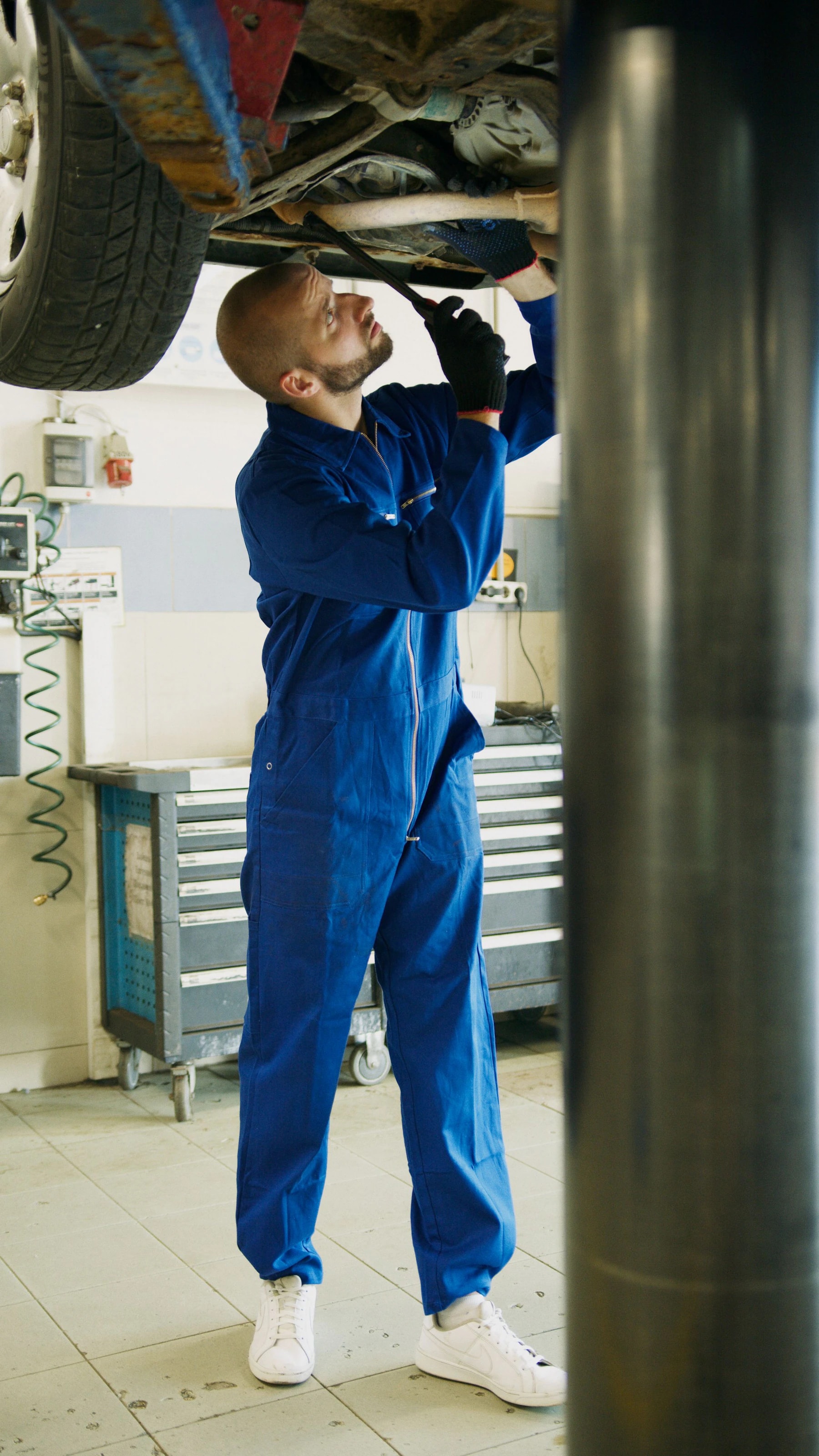
Durable mechanic uniforms in stain-hiding colors, from work pants to coveralls, branded with your shop logo and cut and sewn in Los Angeles from 50 pieces per style.
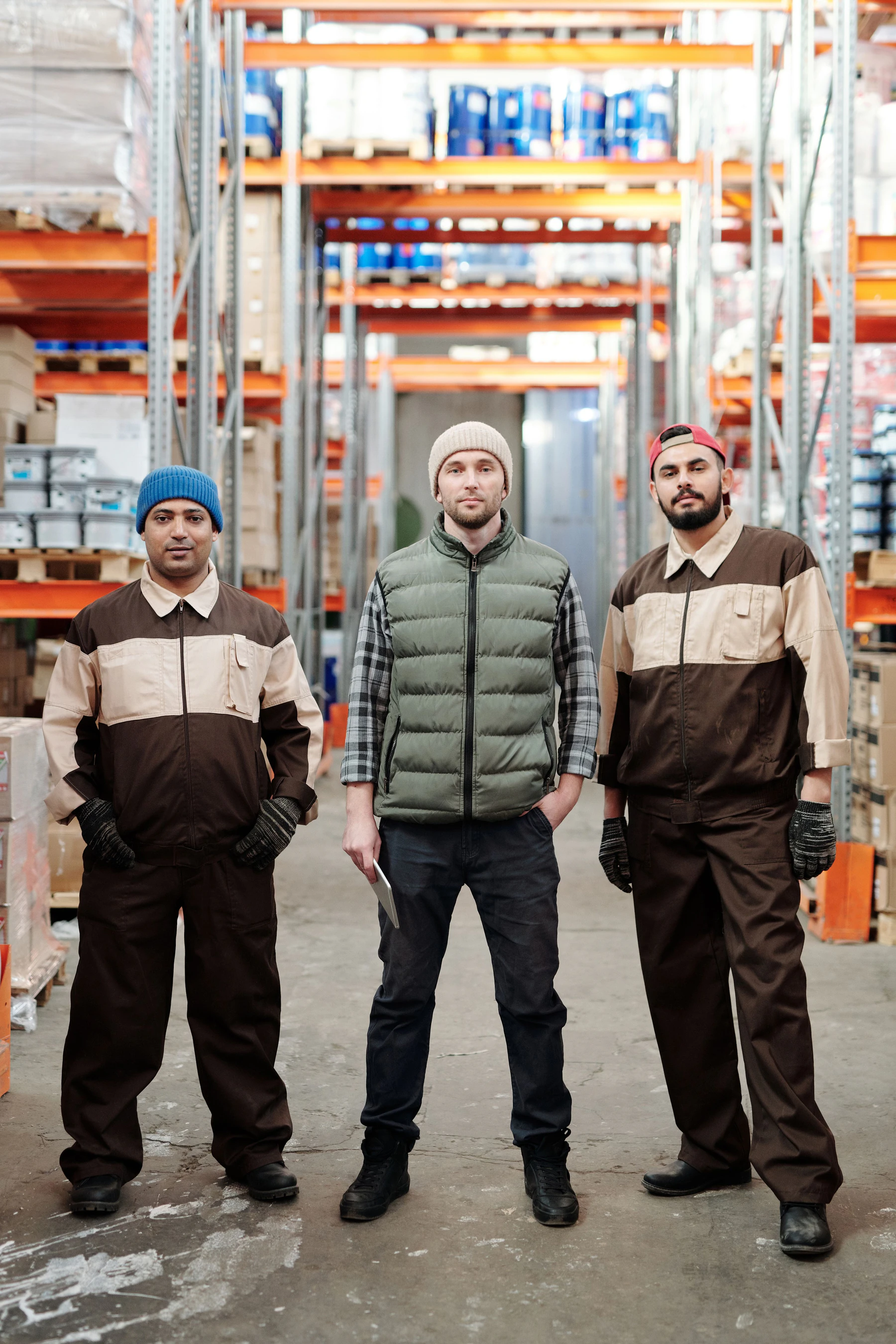
Durable branded shirts, pants and high-visibility vests for warehouses, distribution centers and logistics teams, cut and sewn in Los Angeles from 50 pieces per style.
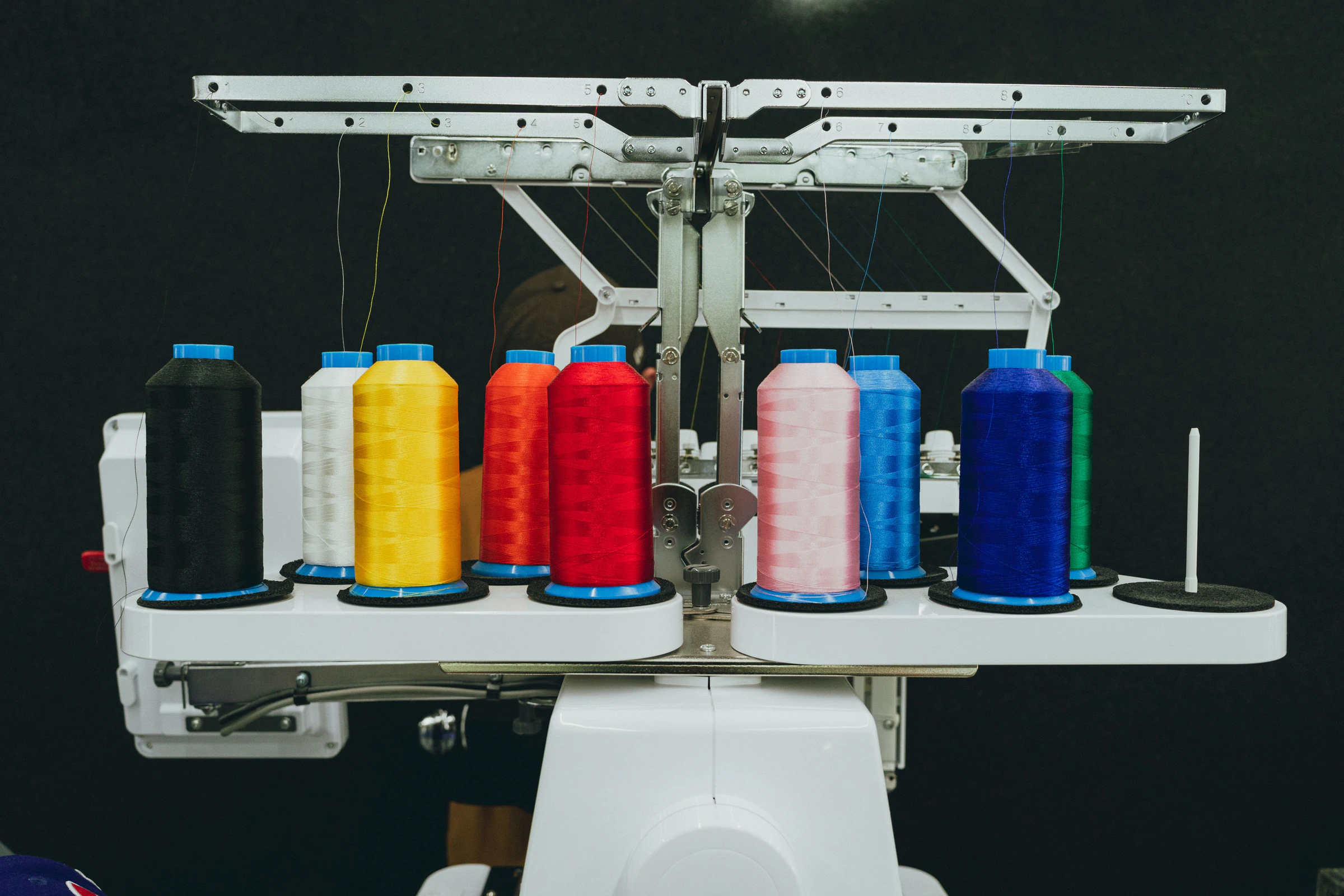
Logo embroidery, screen printing, transfers and patches across workwear, with advice on which method suits each garment, fabric and order size.
The practical difference between coveralls and bib overalls, how each works with FR and hi-vis requirements, and how to choose the right one for each trade.
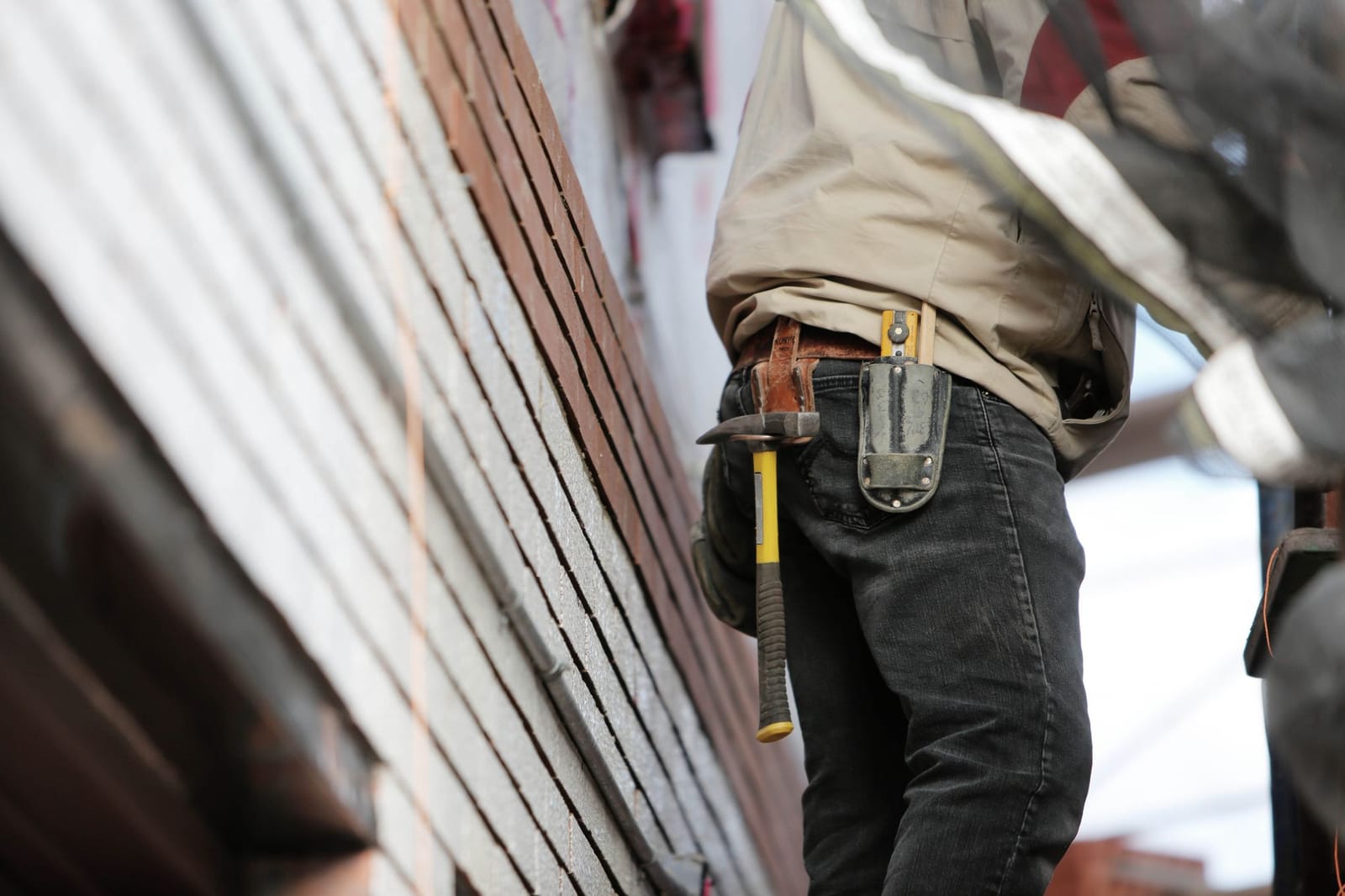
Industrial, cargo and utility work pants in your fit, fabric and color, cut and sewn in Los Angeles from about 50 pieces per style.

Work pants on a women's pattern, with the right rise, hip room and usable pockets, sewn in Los Angeles for crews and brands from about 50 pieces per style.