Industries · Los Angeles factory

Custom Vet Scrubs for Your Clinic

Vet scrubs are the scrub tops and pants worn by veterinarians, vet techs, assistants and kennel staff, and a good set is built to shed pet hair, survive claws and kneeling, and launder hot. Custom Uniform Factory makes vet scrubs and the jackets, lab coats and coveralls that go with them for small-animal clinics, emergency and specialty hospitals and mobile practices, cut and sewn in its Los Angeles factory from imported fabric and embroidered with your logo and each person's name, from about 50 pieces per style.

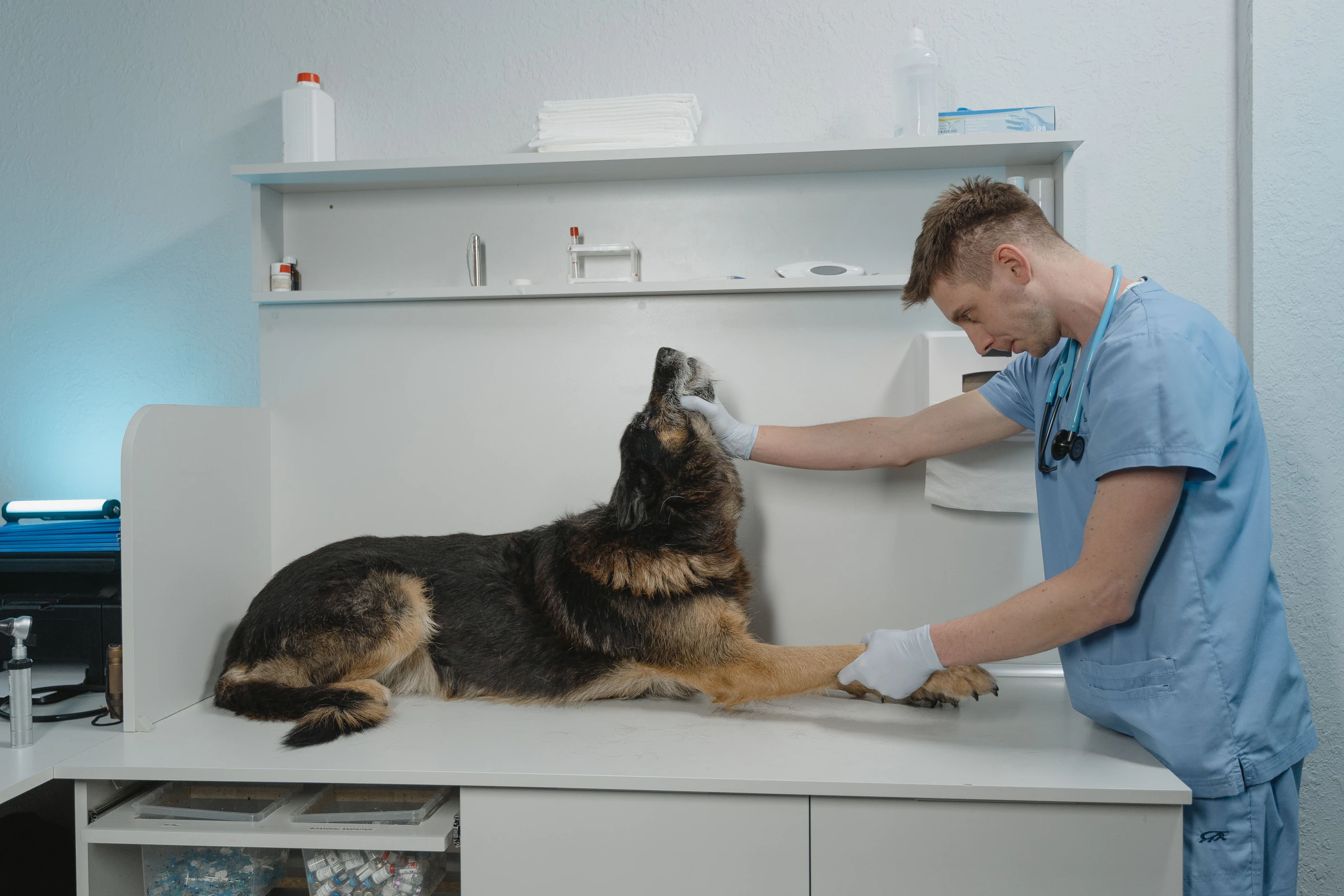
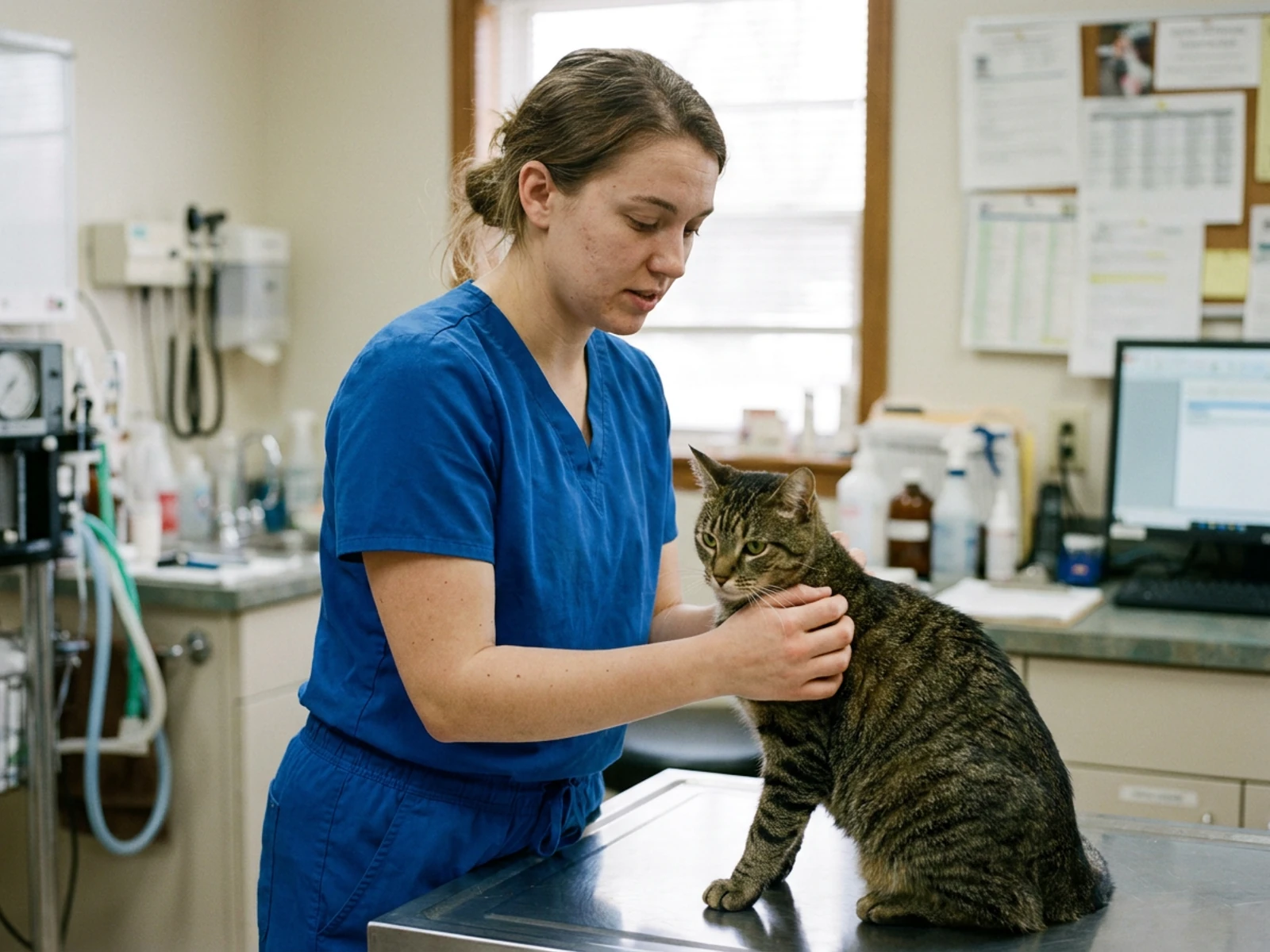
Veterinarian in blue scrubs examining a calm German Shepherd on an exam table in a clinic
Minimum order
About 50 pieces per style
Production
Cut & sewn in Los Angeles, imported fabric
Scrub sizes
XXS to 5XL
Garments
Scrub tops and pants, jackets, lab coats, hoodies, coveralls

Veterinary by style

16 styles in 4 families · each made to order in your fabric, color and branding from 50 pieces.

Customize your uniformsYour fabric, colors, pockets and branding
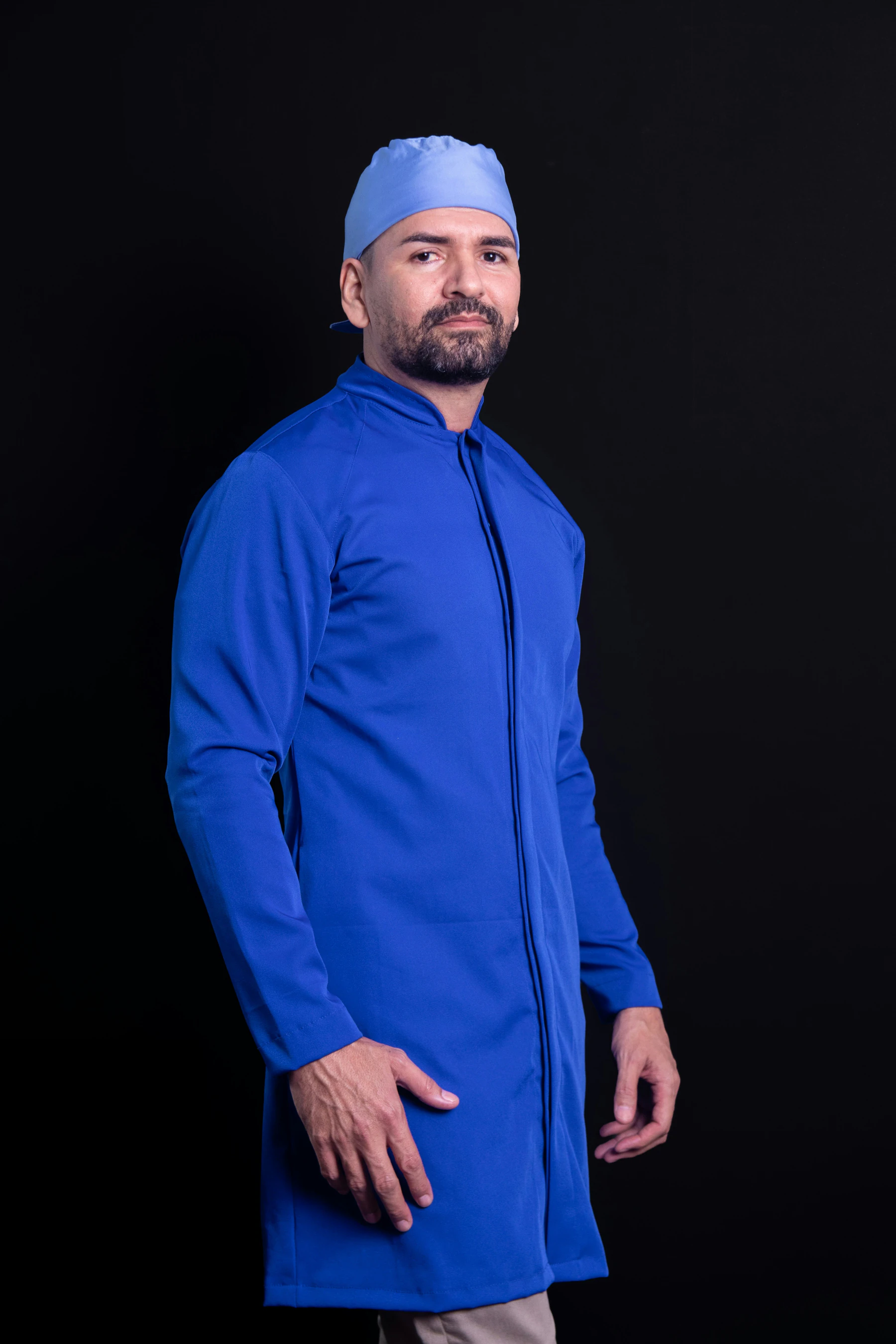
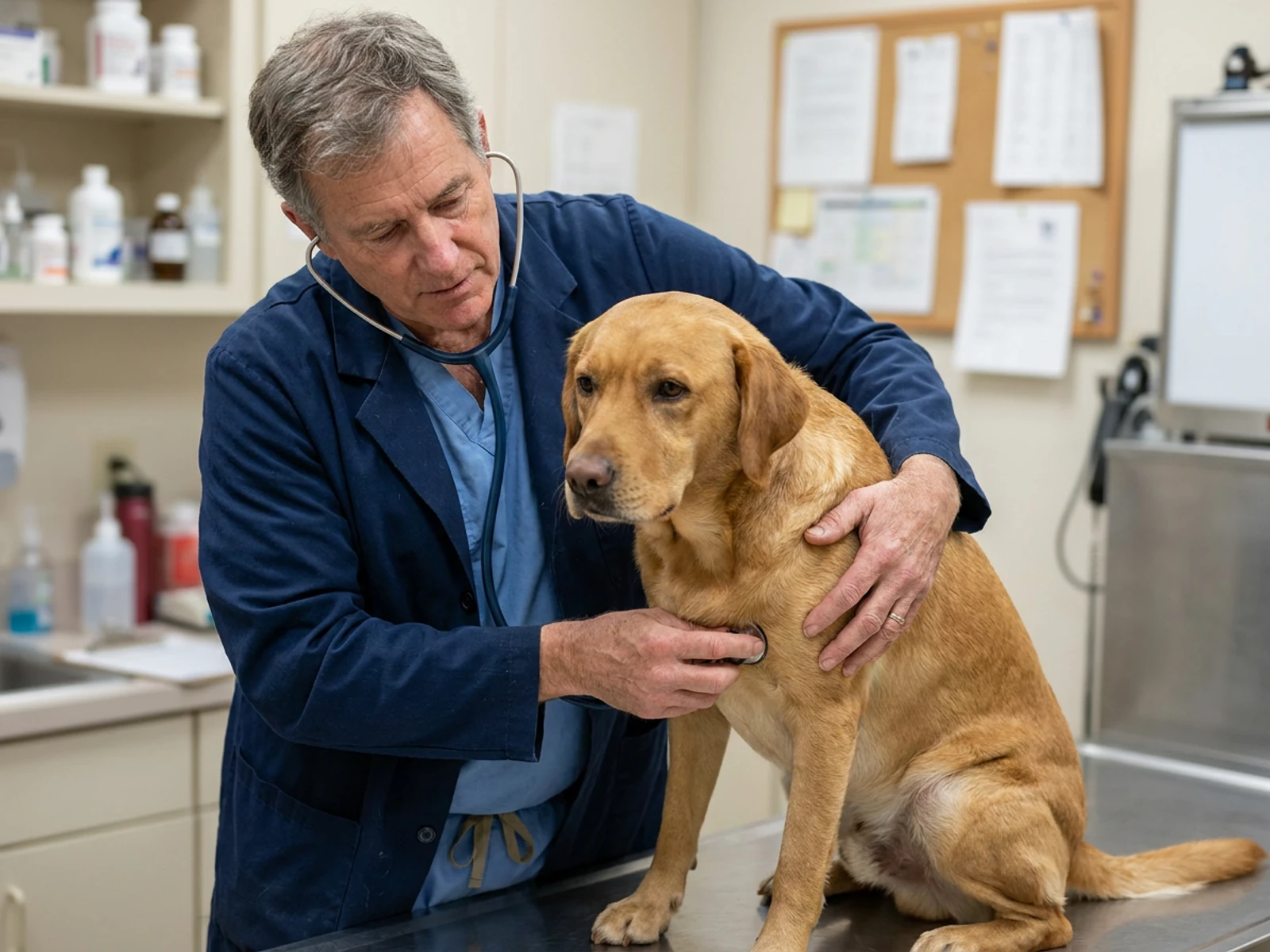
Veterinarian in a navy consultation lab coat examining a dog on an exam table

A colored coat hides hair and stains far better than white, which is why many veterinarians choose navy. We add the clinic logo and doctor name and sew each coat in LA from about 50 pieces per style.

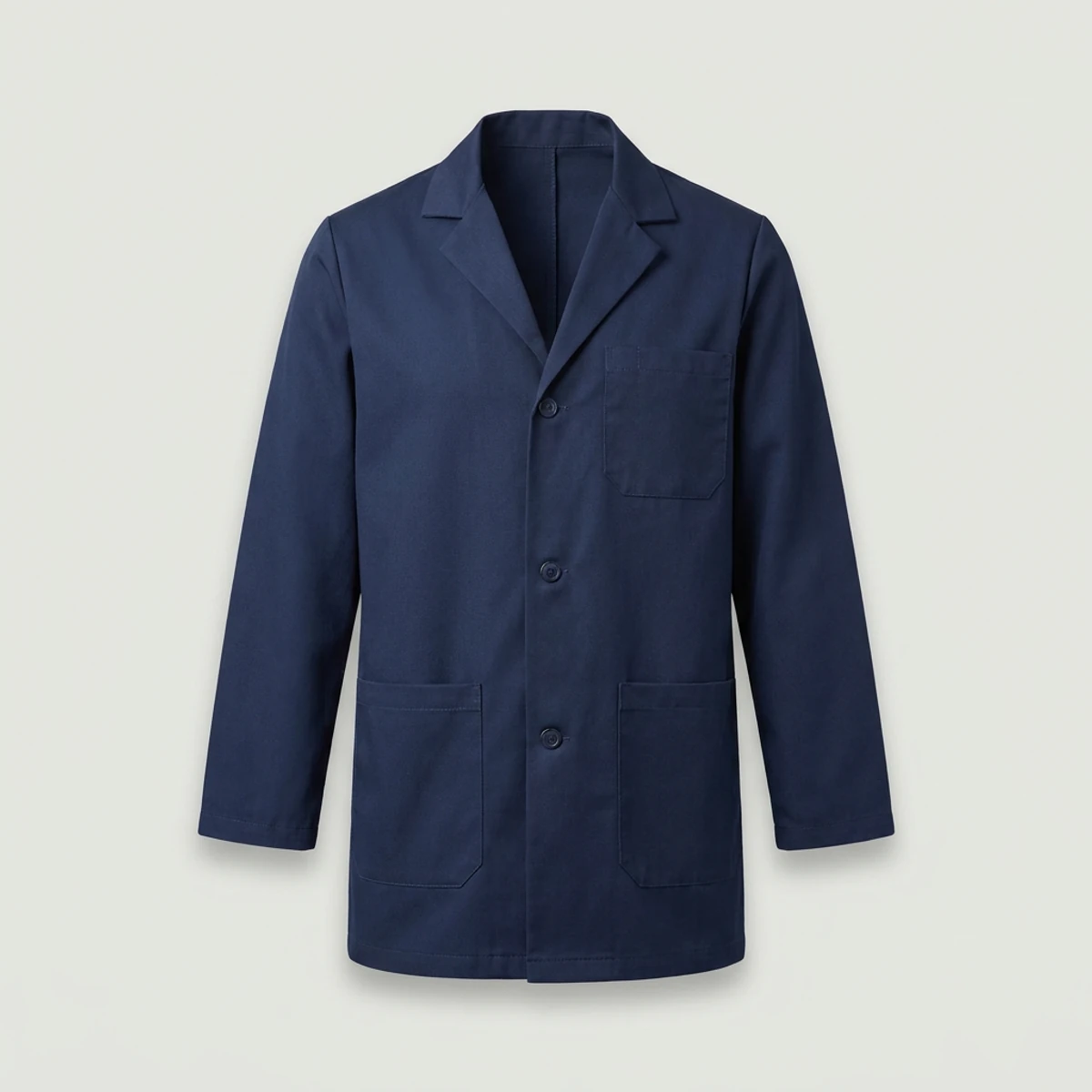
  • Navy blue consultation lab coat with notched lapel and three pocketsNavy consultation lab coat
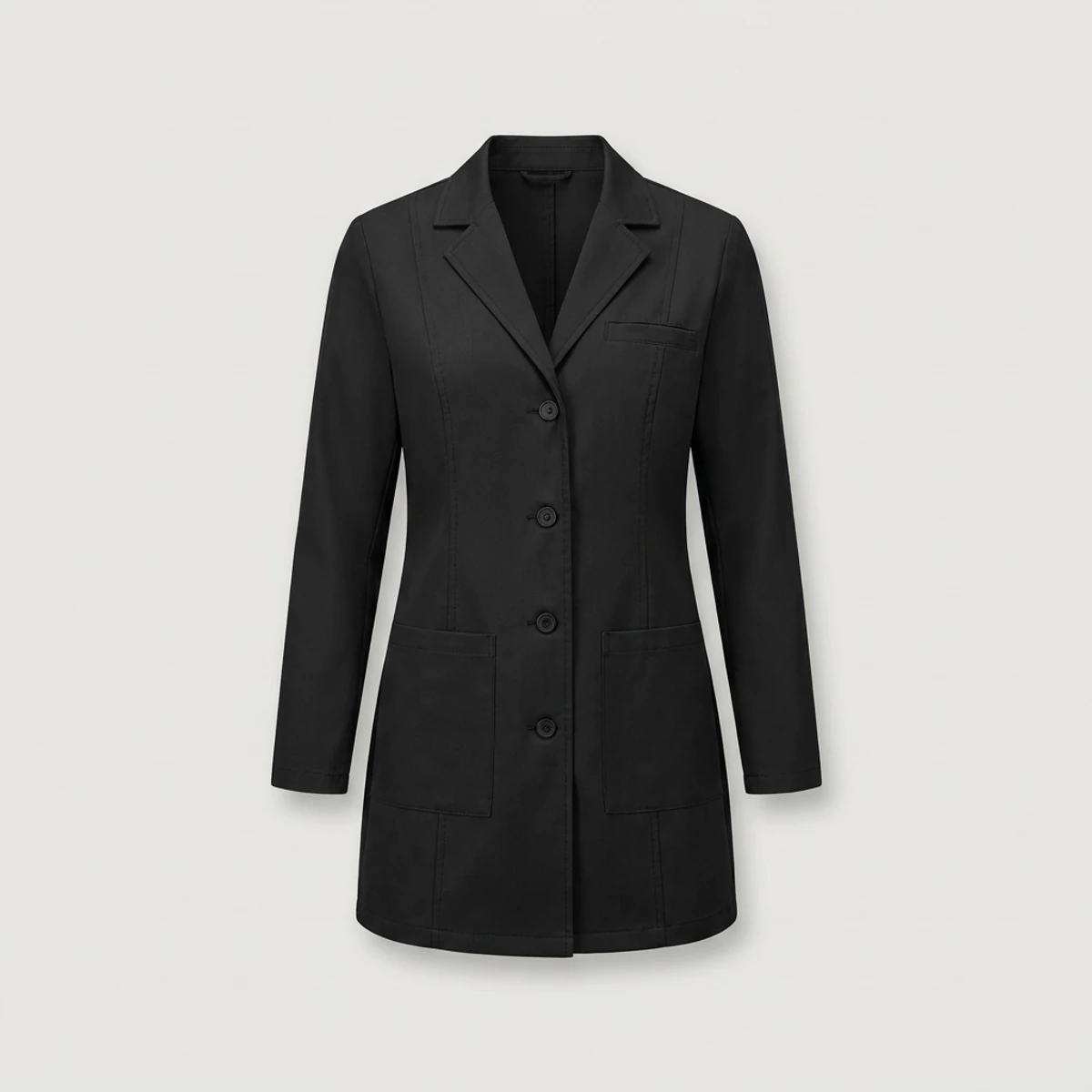
  • Black women's fitted lab coat with princess seams and mid-thigh lengthBlack women's lab coat
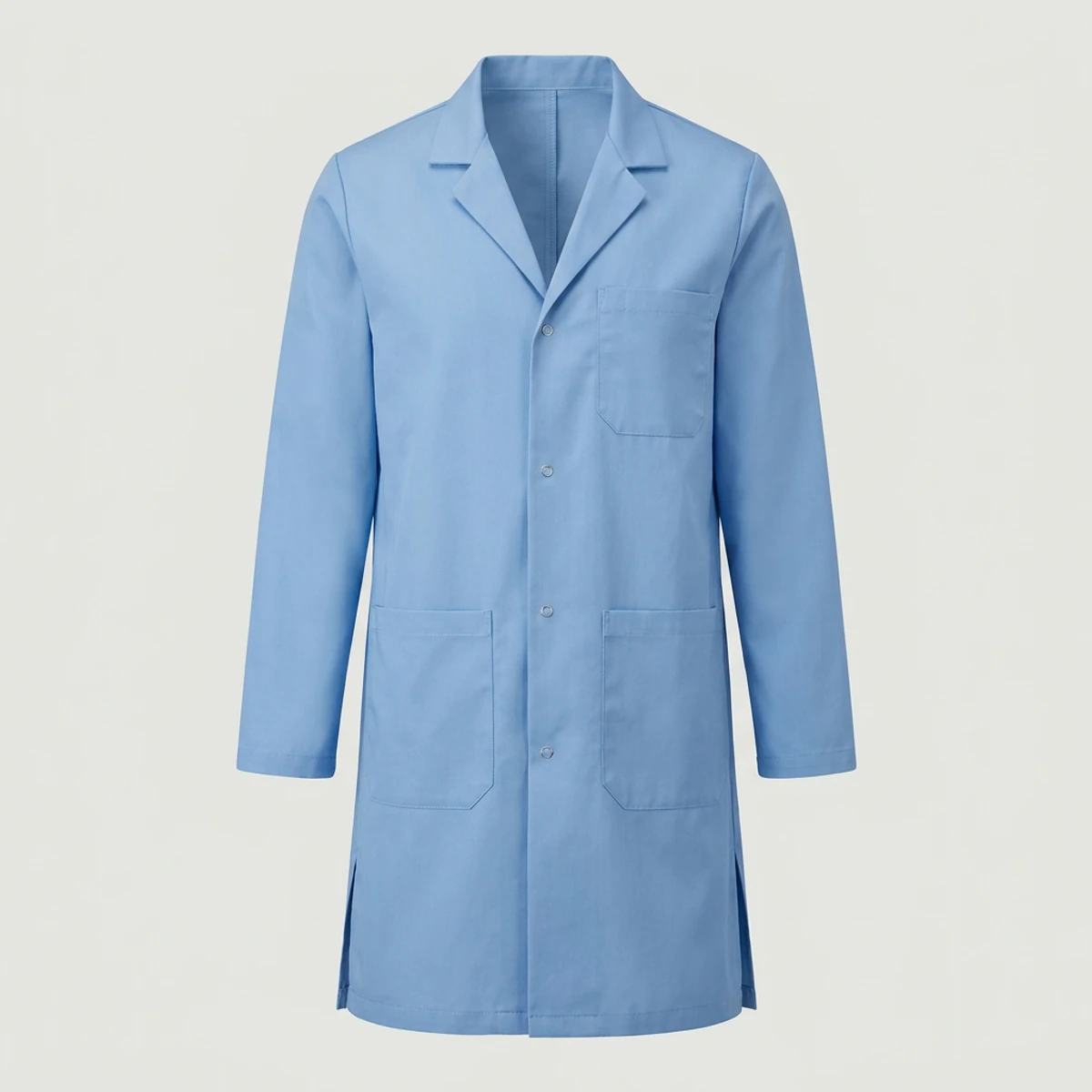
  • Ceil blue mid-thigh lab coat with snap front and side slitsCeil blue lab coat
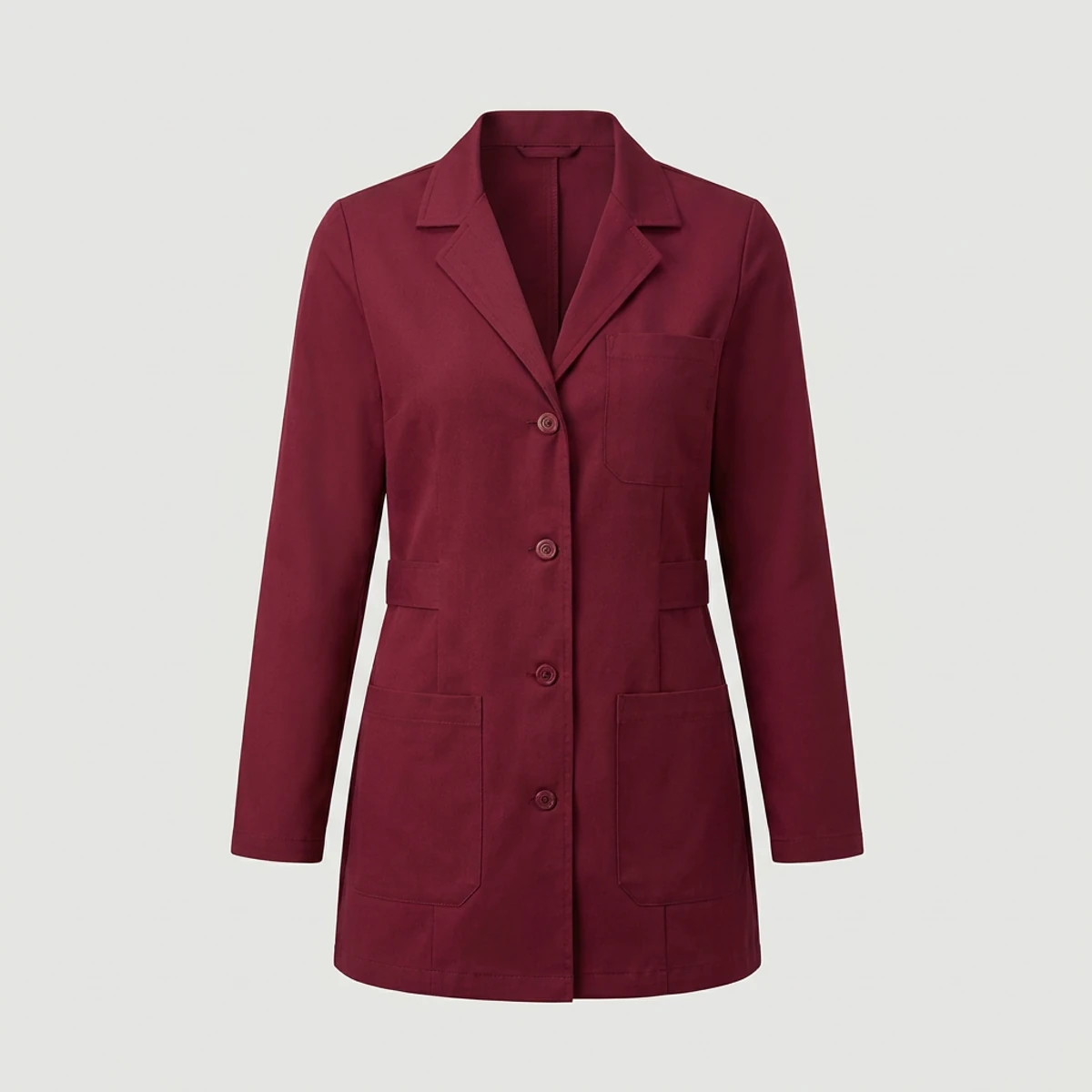
  • Wine colored women's consultation lab coat with back belt and patch pocketsWine women's lab coat
Quote vet coats
Vet tech in a royal blue V-neck scrub jumpsuit holding a cat at a veterinary clinic

One-piece scrubs for animal handling

A jumpsuit leaves no gap at the waist for a squirming patient to grab, and it stays put when a tech crouches to hold a cat. Runs start at roughly 50 pieces of each style, in the color plan you set.

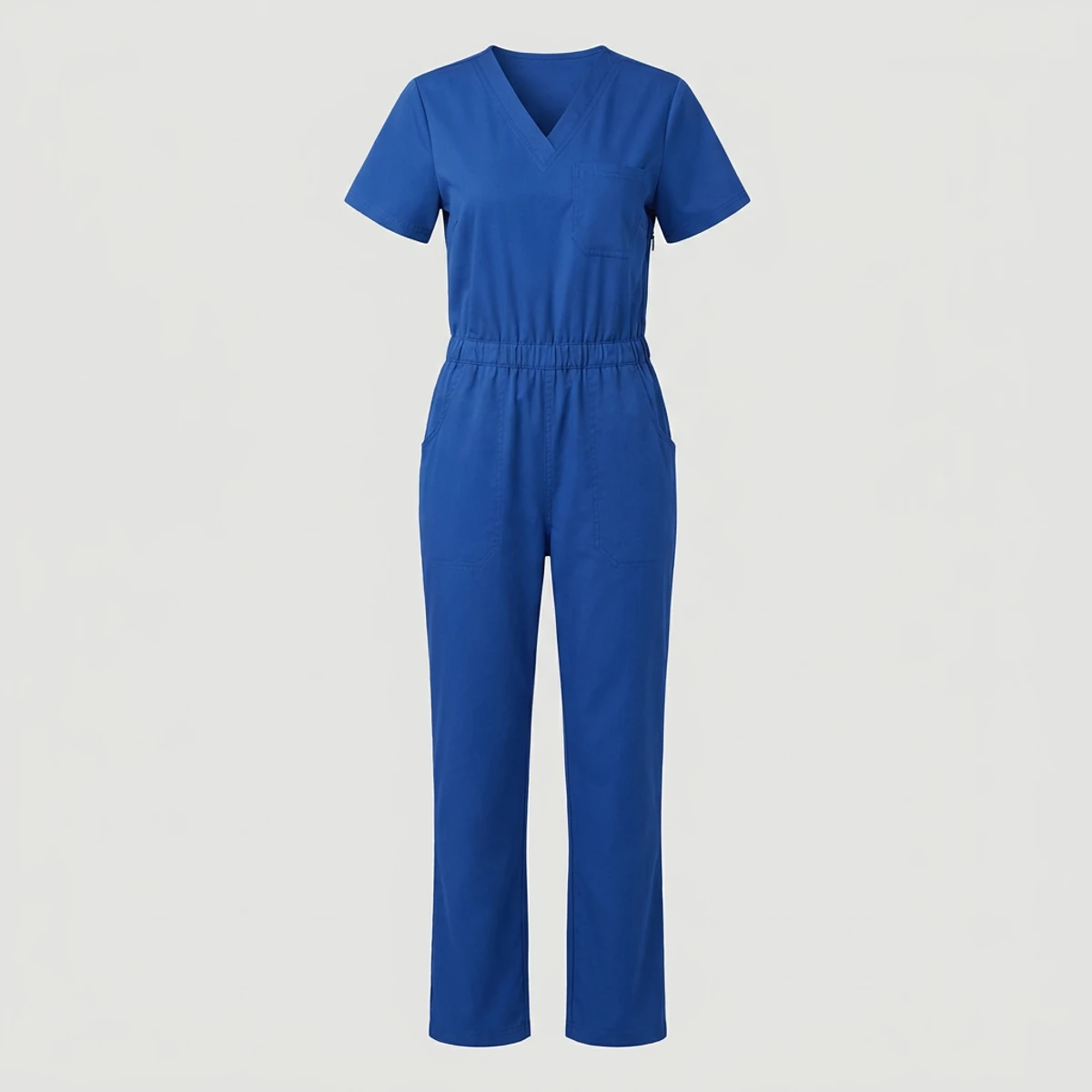
  • Royal blue V-neck scrub jumpsuit with straight legs and chest pocketRoyal blue V-neck jumpsuit
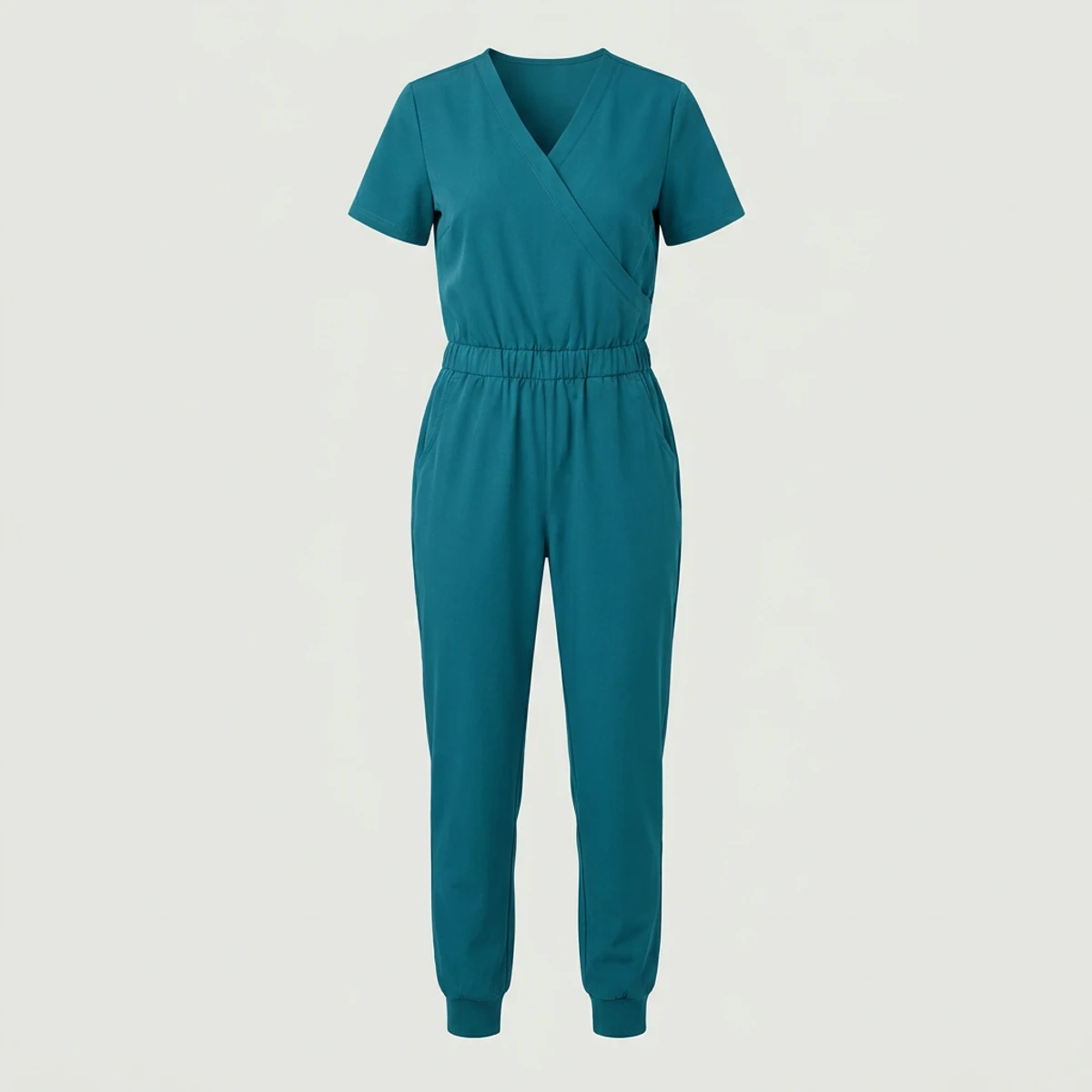
  • Teal mock wrap scrub jumpsuit with crossed bodice and jogger legsTeal mock wrap jumpsuit
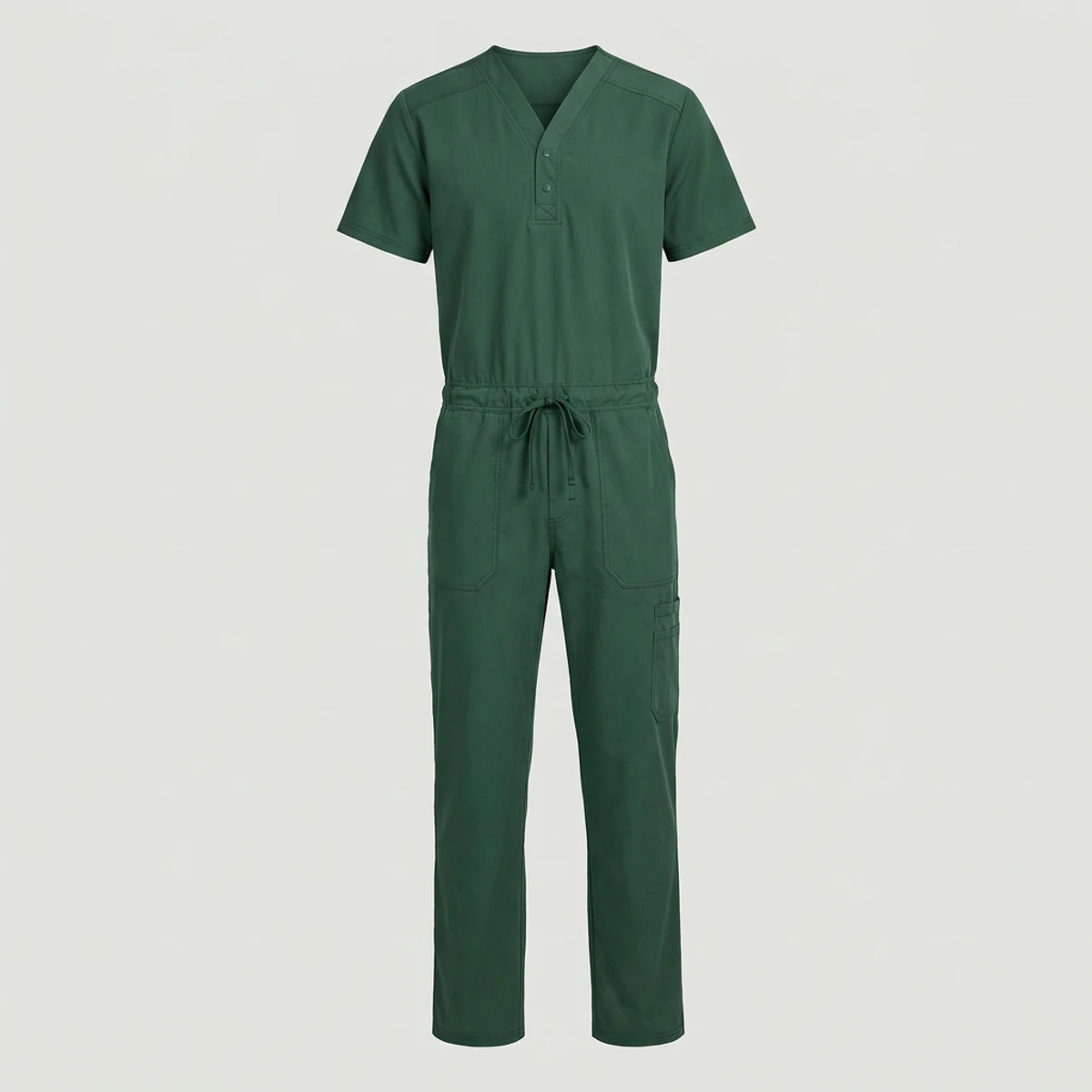
  • Hunter green men's V-neck scrub jumpsuit with roomy back yokeHunter green men's jumpsuit
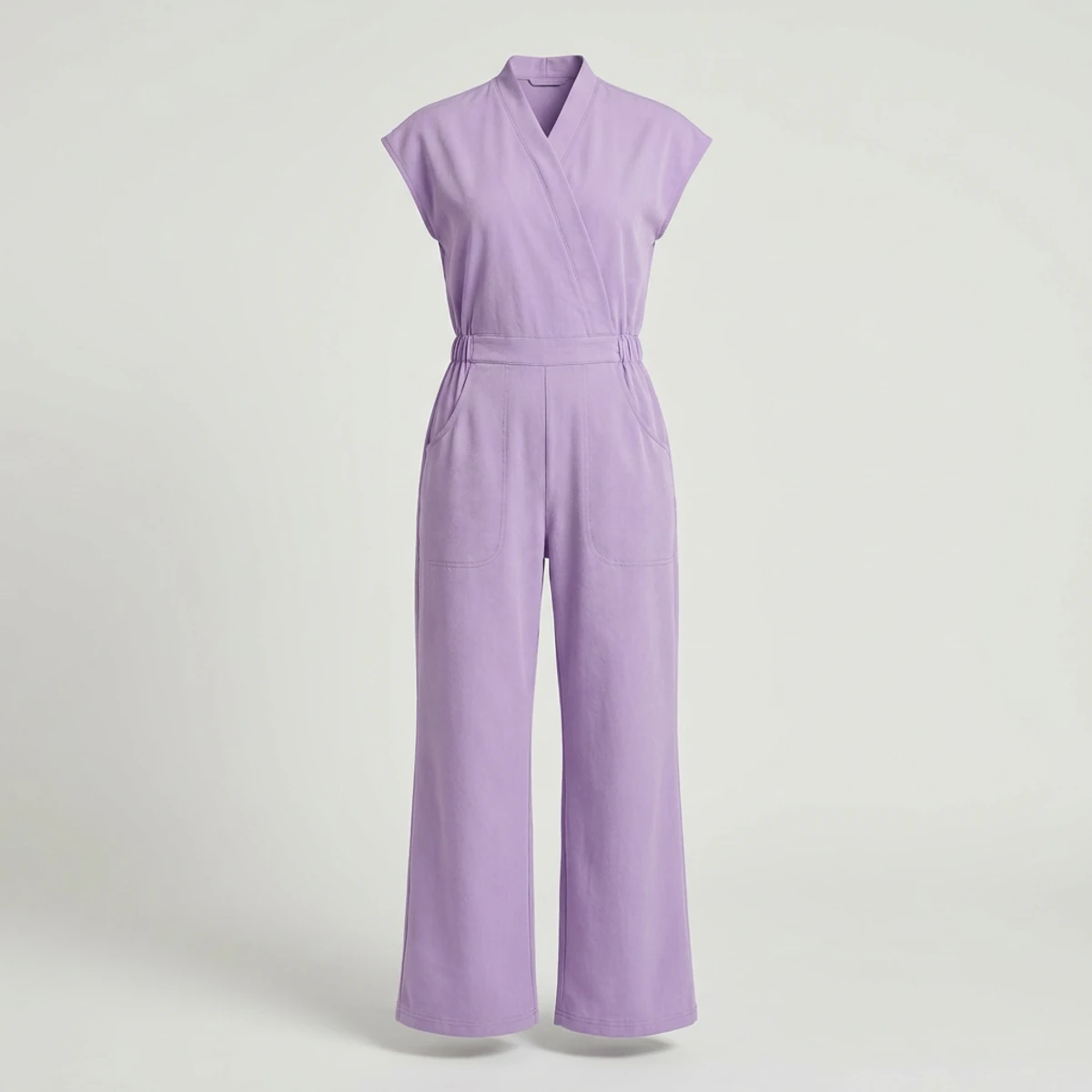
  • Lavender mock wrap scrub jumpsuit with cap sleeves and wide legsLavender mock wrap jumpsuit
Quote jumpsuits
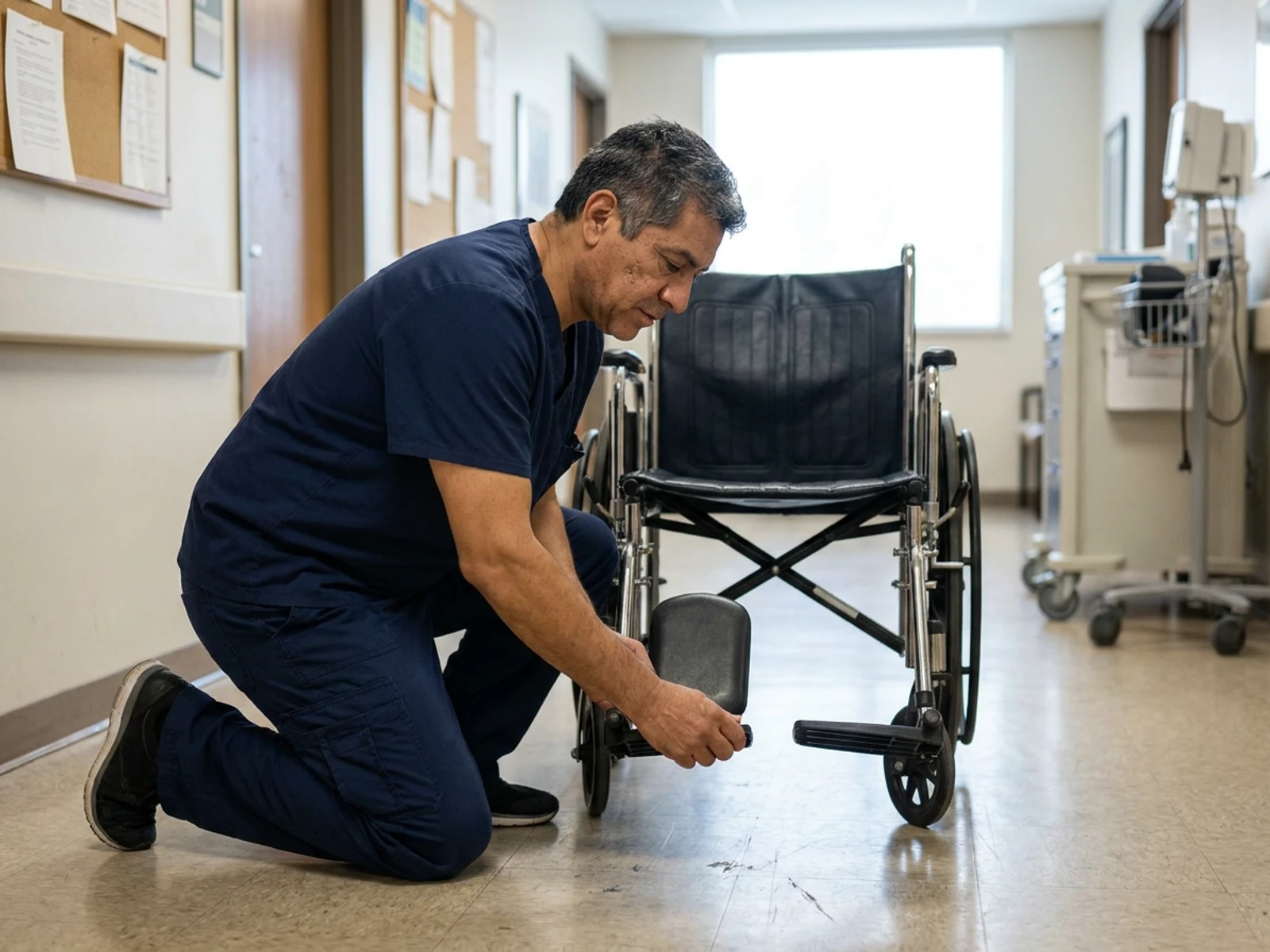
Healthcare worker in navy cargo scrub pants kneeling to check a wheelchair in a clinic

Pocketed pants for kennel and treatment

Vet techs carry treats, leads, thermometers and a phone, so deep cargo pockets earn their place. We make them in a hard-wearing twill at our Los Angeles factory, from about 50 pieces a style.

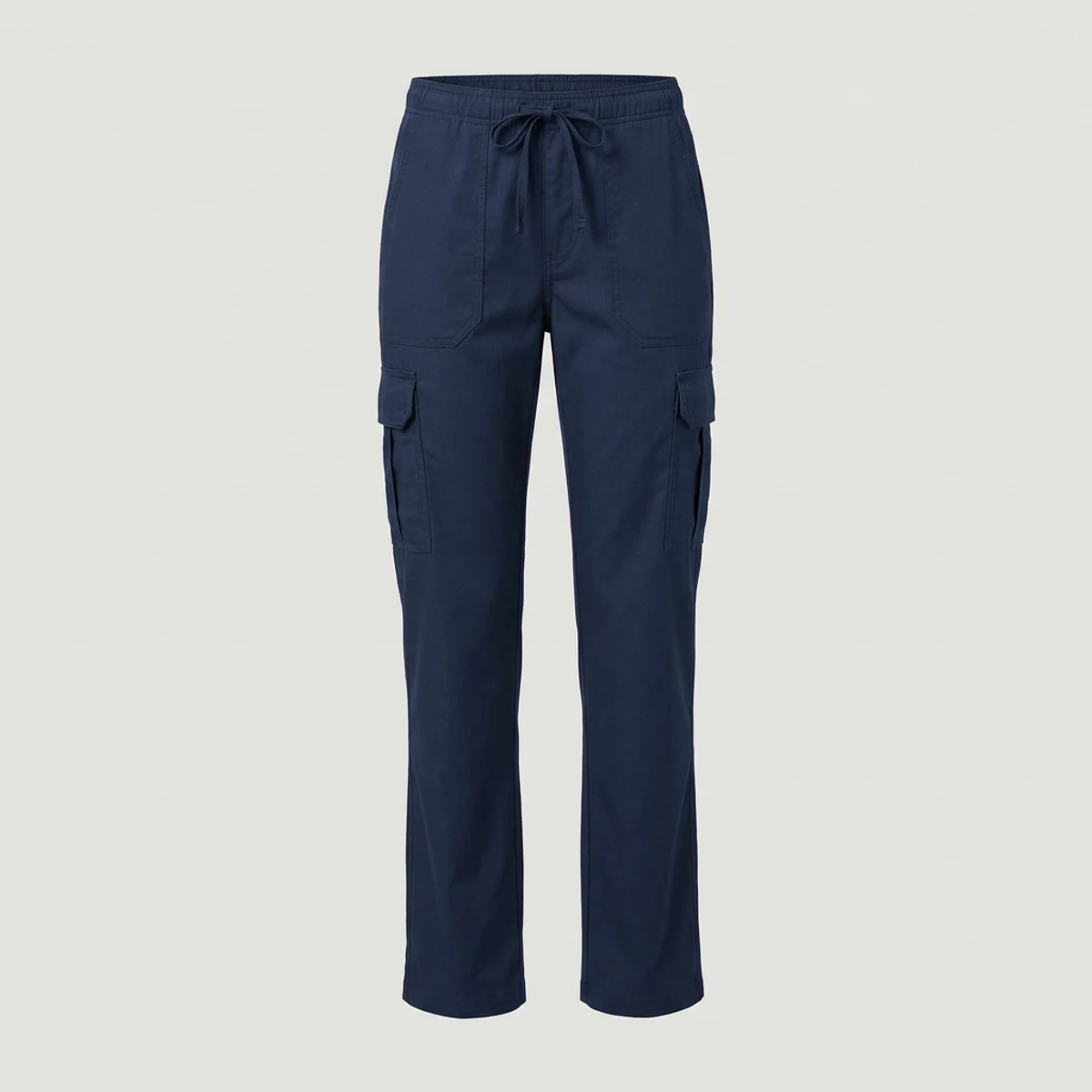
  • Navy cargo scrub pants with bellows thigh pockets and drawstring waistNavy cargo scrub pants
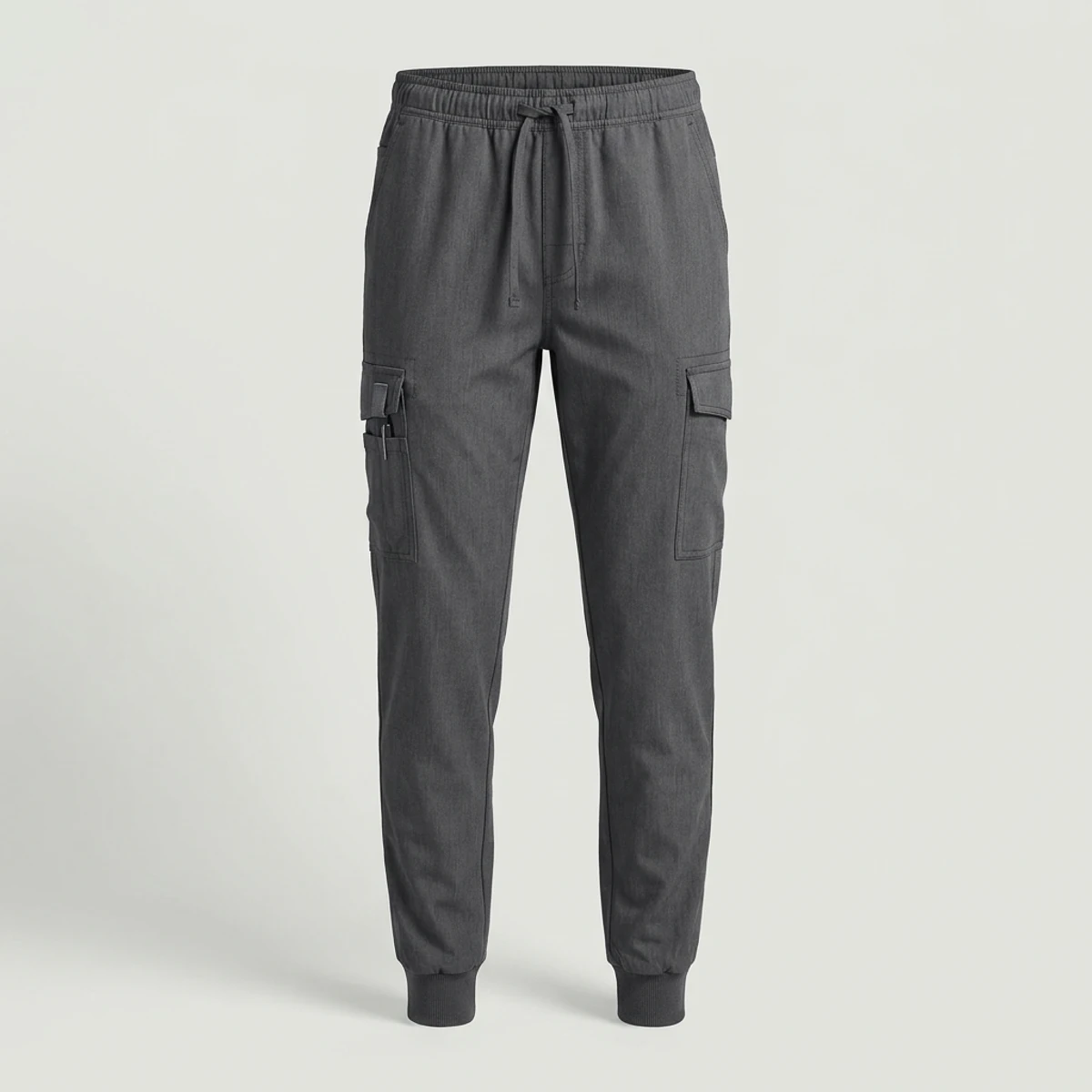
  • Charcoal grey cargo jogger scrub pants with knit cuffs and utility loopsCharcoal cargo jogger pants
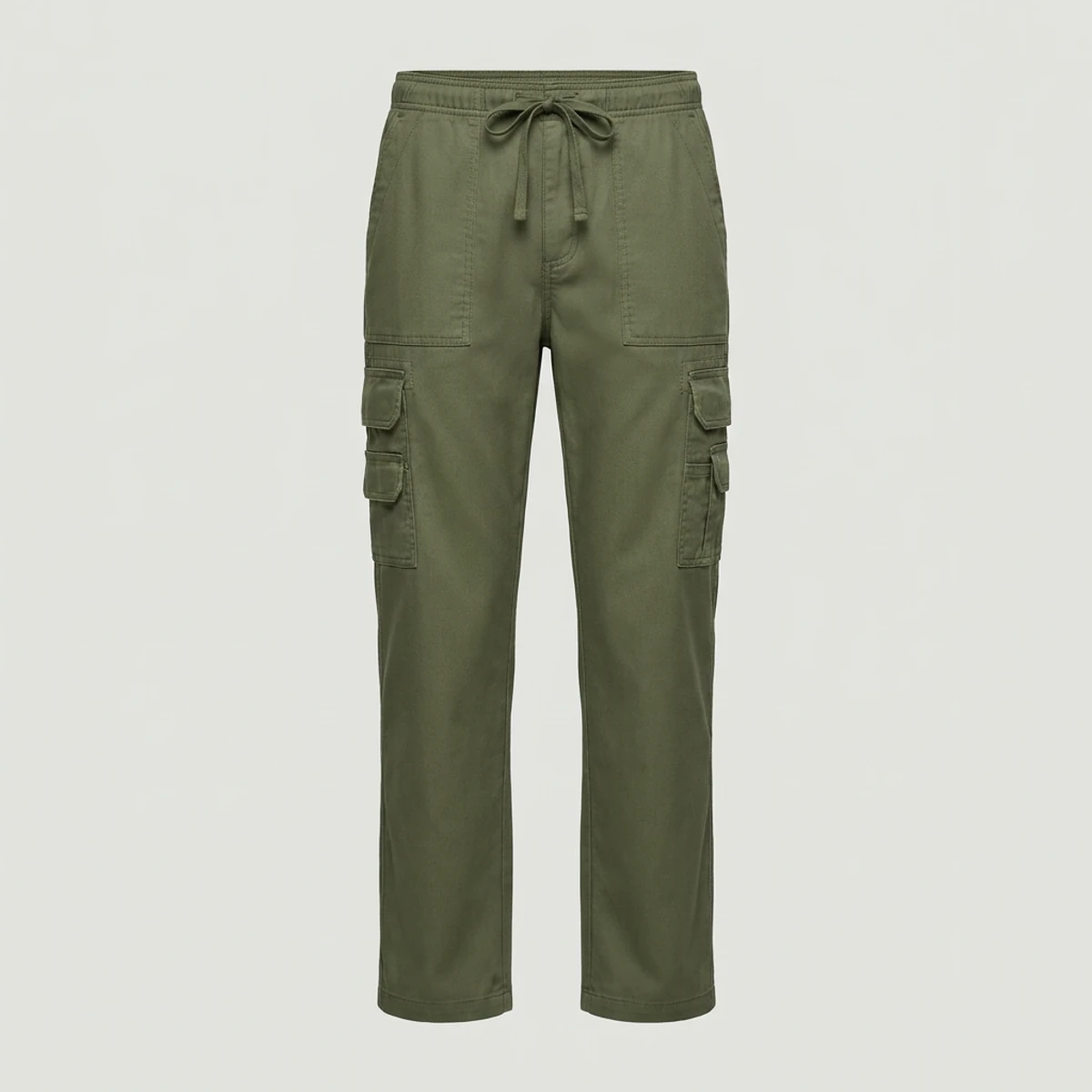
  • Olive green cargo scrub pants with multiple thigh pockets and straight legOlive cargo scrub pants
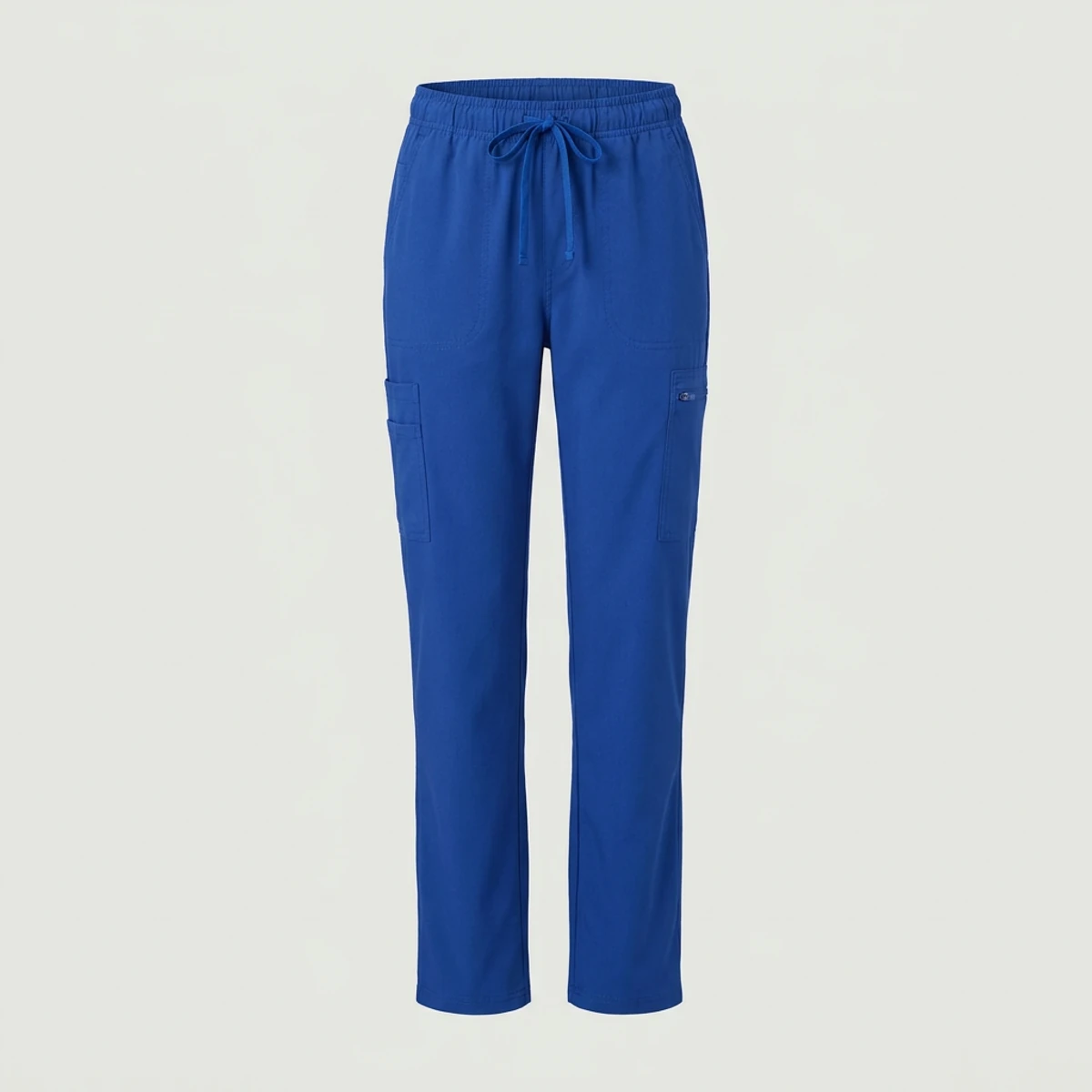
  • Royal blue cargo scrub pants with zip thigh pocket and back pocketsRoyal blue cargo scrub pants
Quote cargo pants
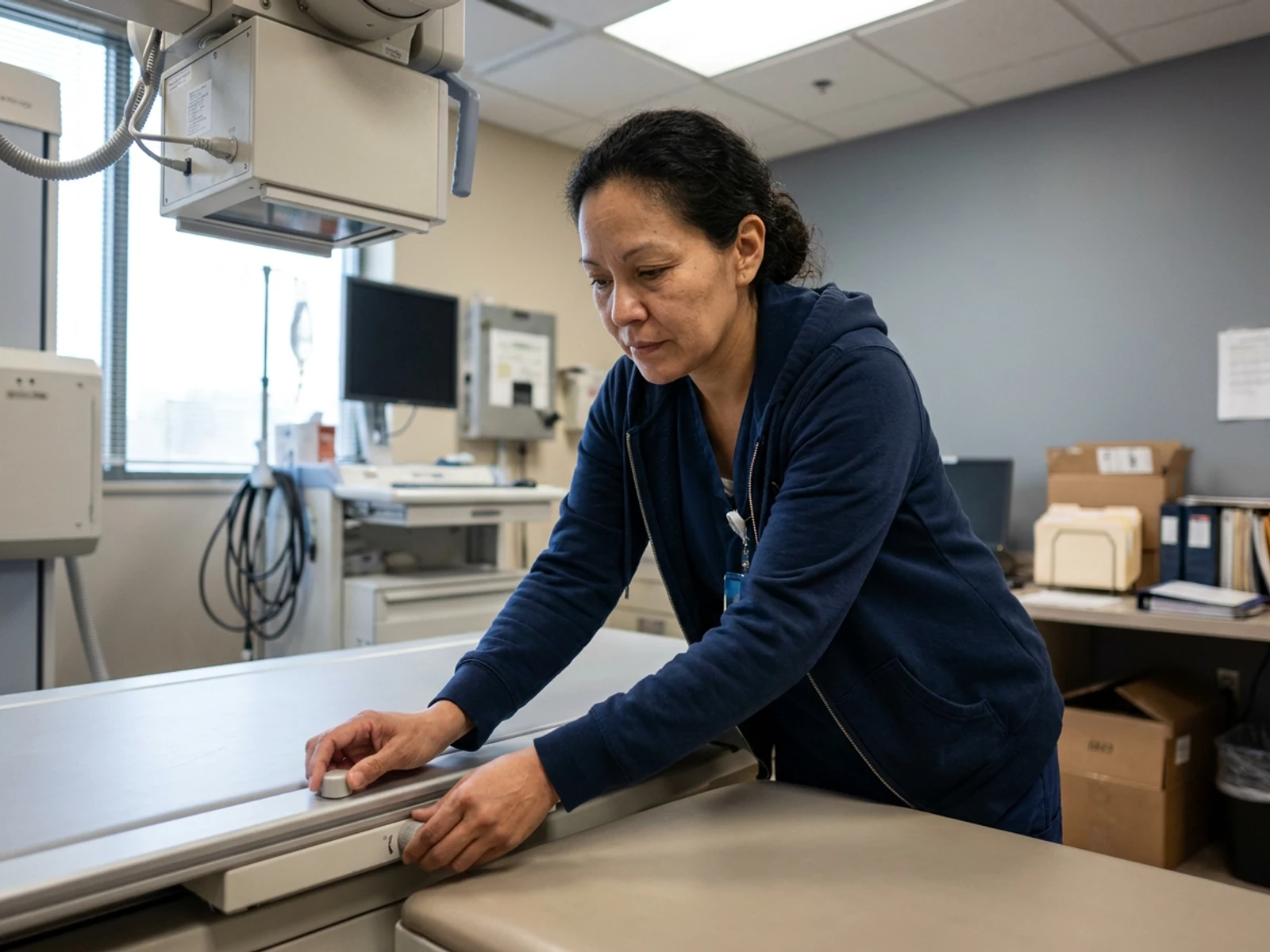
Radiology tech in a navy full-zip scrub hoodie setting up an imaging room

Full-zip layers for imaging and surgery prep

Imaging rooms and recovery areas run cold, and a full-zip hoodie comes off fast when hands are needed. It is made to order with your clinic branding once a style reaches around 50 pieces.

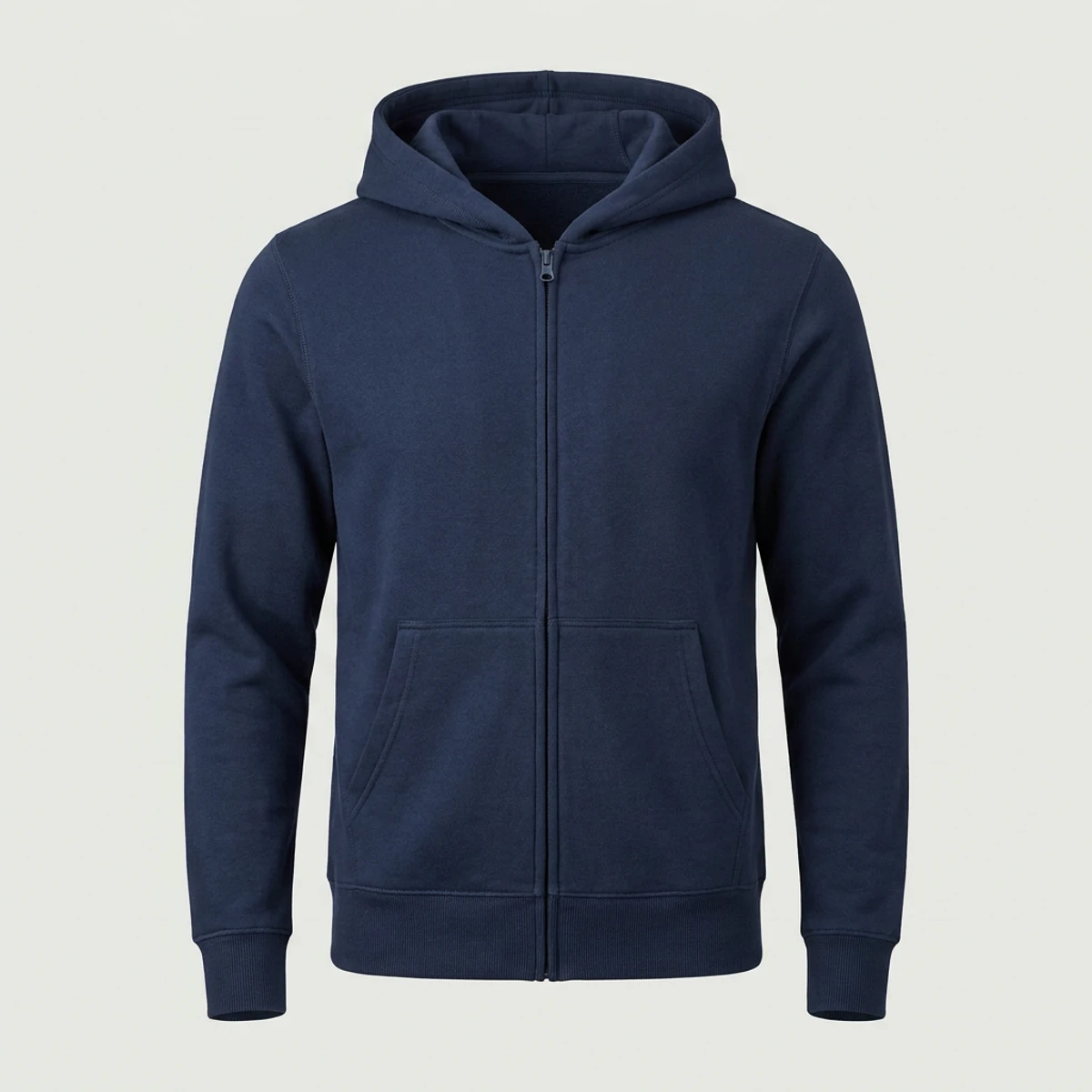
  • Navy full-zip scrub hoodie with lined hood and split kangaroo pocketsNavy full-zip scrub hoodie
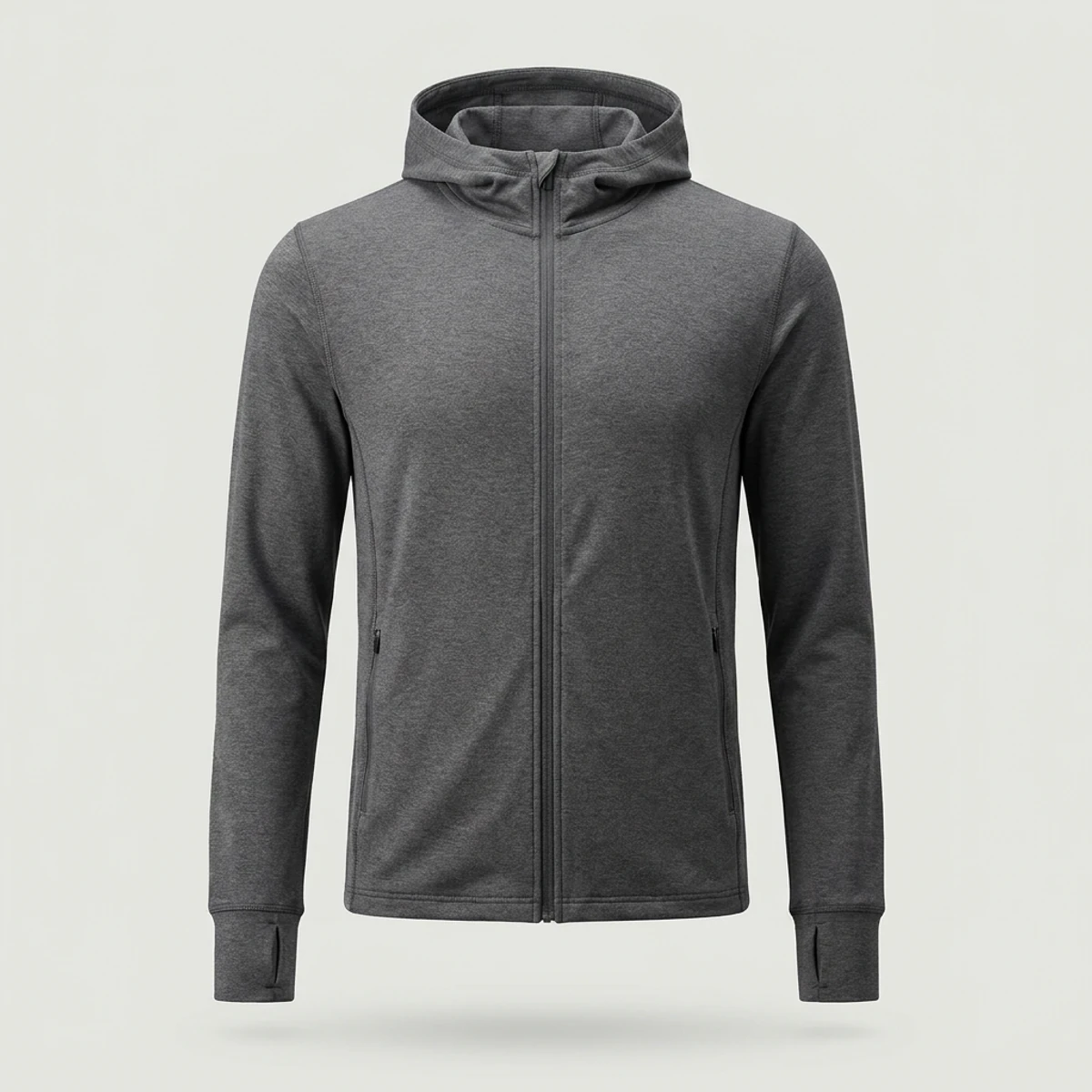
  • Charcoal grey full-zip medical hoodie with thumbhole cuffs and zip pocketsCharcoal full-zip hoodie
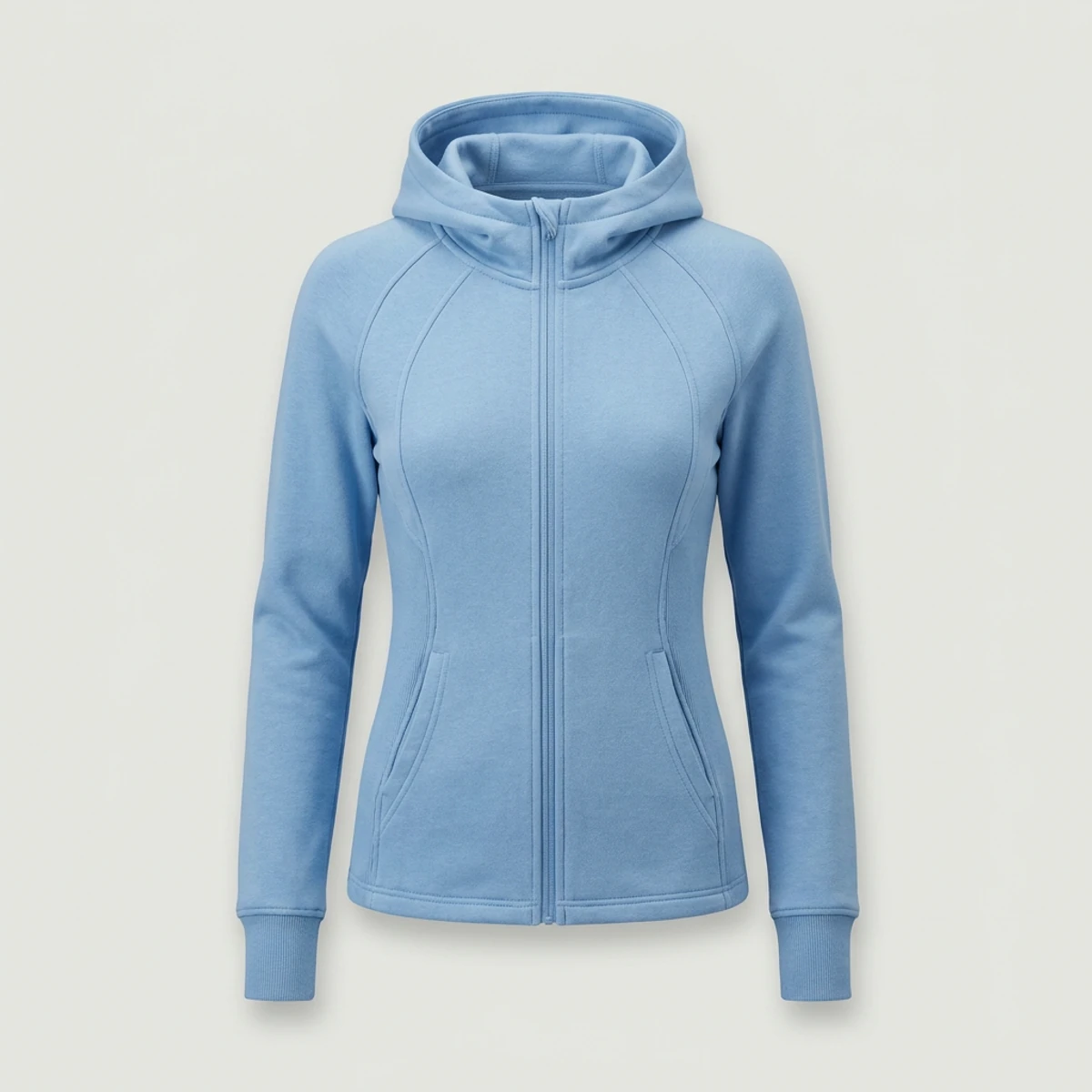
  • Ceil blue women's fitted full-zip scrub hoodie with side panelsCeil women's zip hoodie
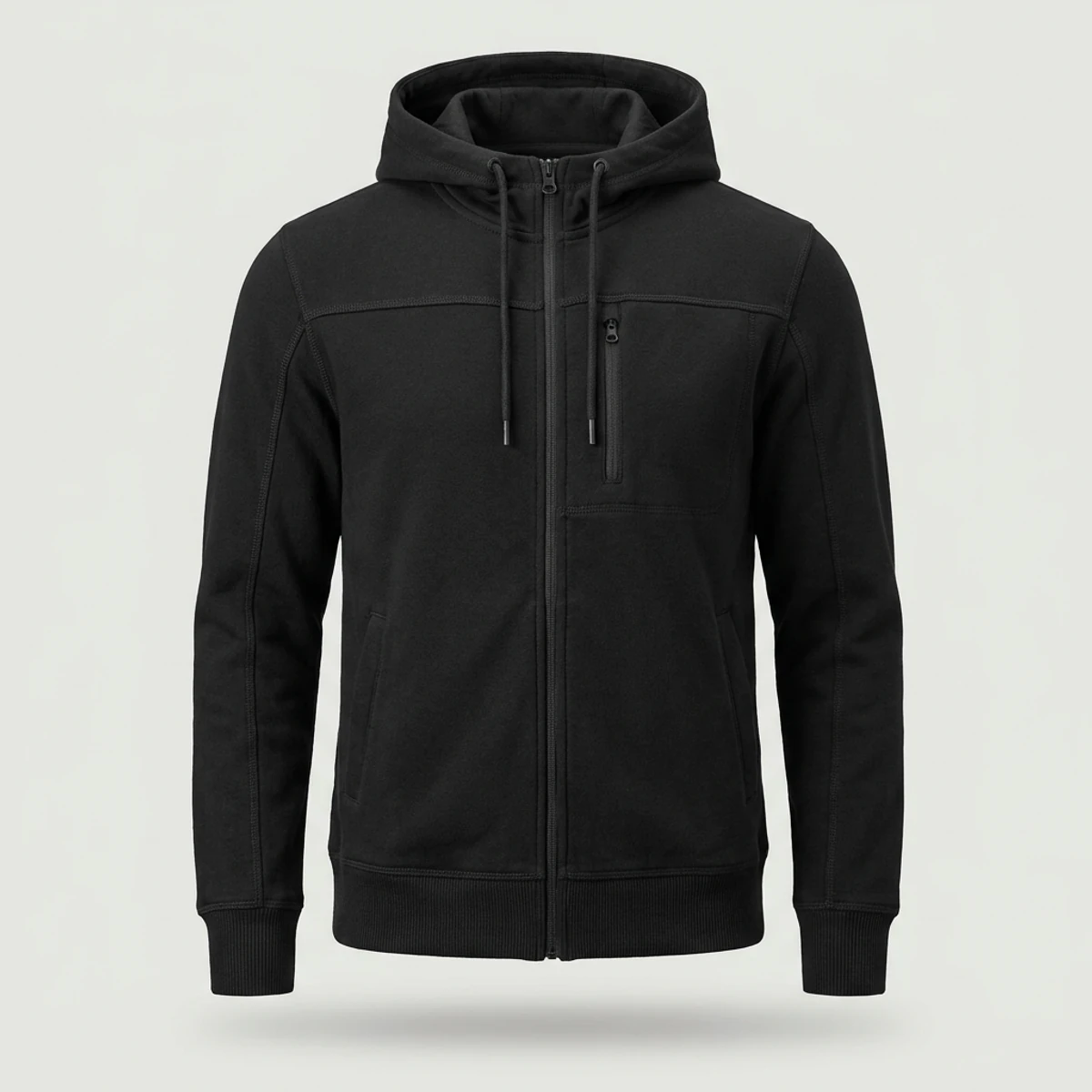
  • Black full-zip scrub hoodie with chest badge pocket and rib cuffsBlack full-zip hoodie
Quote zip hoodies

Customize your scrub tops

Pick the style, fabric and colors, add your logo and names, then attach the design to your quote. We cut and sew it in Los Angeles from 50 pieces per style.

Who wears what in a veterinary practice?

A veterinary practice dresses each role differently: veterinarians wear scrubs with a coat for consults, credentialed technicians wear vet tech scrubs in a technician color, kennel staff need dark, rugged garments, groomers need hair-shedding tops and client service wears a branded front-desk color. Embroidered credentials tell clients who is who.

RoleTypical apparelWhat matters most
Veterinarians (DVM, VMD)Scrubs with a lab coat or jacket for consultsProfessional look in the exam room, mobility for surgery prep
Credentialed vet techs (LVT, RVT, CVT)Vet tech scrubs in the technician colorRestraint, anesthesia monitoring, radiology, dental cleanings
Veterinary assistantsScrubs in an assistant colorPockets, durability, easy laundering
Kennel and boarding attendantsDark, rugged scrubs or work pants and a logo topWet, dirty work and constant washing
GroomersHair-shedding tops, often with water-resistant fabricsHair release above all
Receptionists and client serviceScrubs or coordinated tops in a front-desk colorBranded, approachable look
Practice managersJacket or coat over business wear or scrubsIdentification without clinical gear

Technician titles differ by state (licensed, registered or certified veterinary technician), so embroider whichever your team holds.

Veterinary apparel by practice type

Veterinary apparel needs change with the practice type: general clinics need scrub sets by role and a shared layer, emergency hospitals need durable scrubs for overnight shifts, shelters and boarding need rugged easy-care garments, and mobile and large-animal vets need coveralls and workwear rather than clinic scrubs.

Practice typeWhat the team usually needs
General small-animal practiceScrub sets by role, a shared jacket, lab coats for vets
Emergency and specialty hospitalsDurable scrubs for long overnight shifts, warm layers, clear role titles
Shelters and rescuesRugged, easy-care scrubs or work pants and logo tops
Boarding and daycareDark, durable tops and pants; hoodies for outdoor play yards
Grooming salonsHair-shedding, water-resistant tops
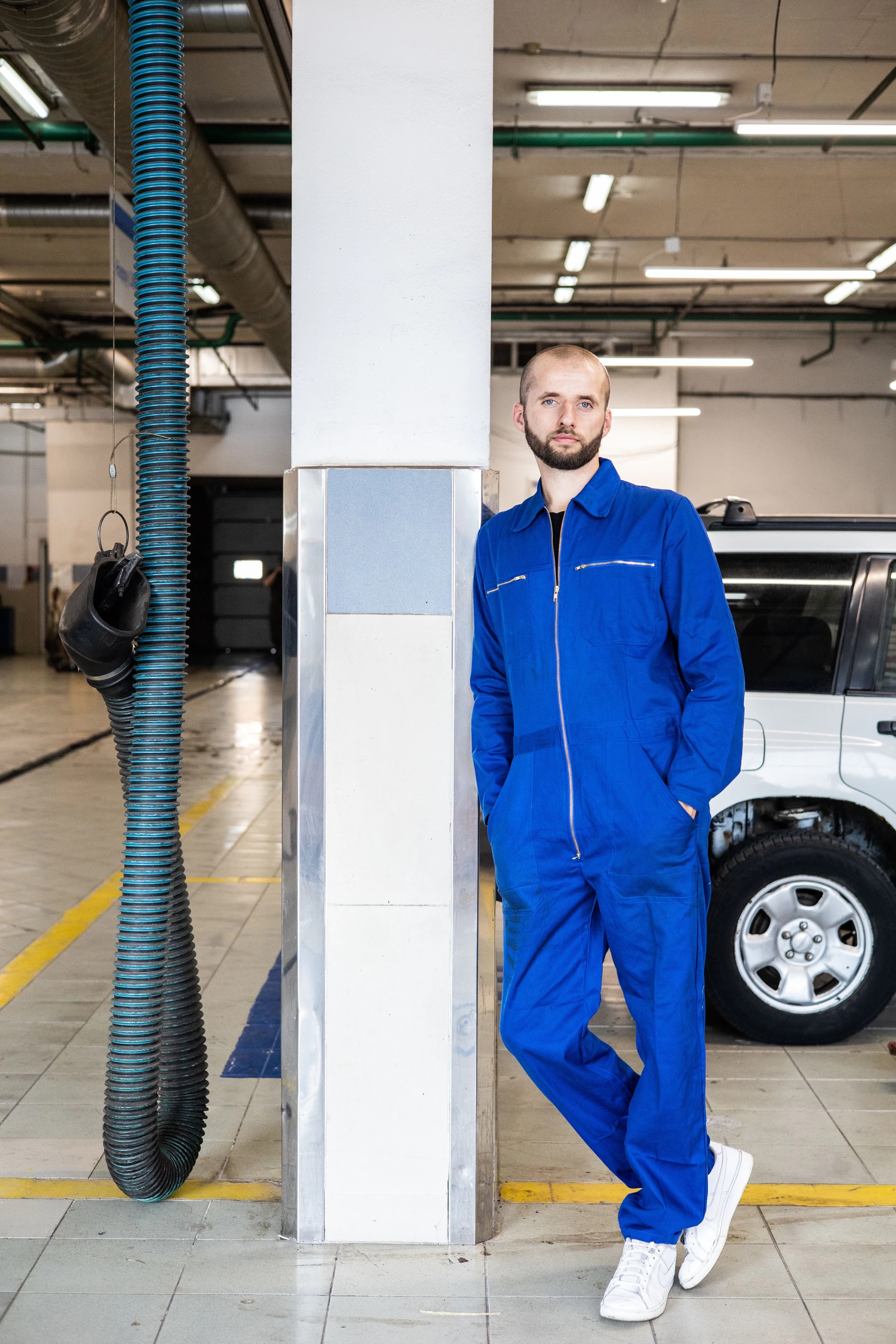
Mobile, equine and large-animalCoveralls and durable workwear with the practice logo

Field vets work in barns and pastures, so coveralls with the practice logo protect clothes on farm calls, while durable work pants and a branded top suit mobile small-animal services. A mixed practice can order clinic scrubs for the hospital team and coveralls for ambulatory vets, each as its own style.

What do veterinary scrubs have to survive?

Veterinary scrubs have to survive pet hair, claws and teeth, constant kneeling on floors and daily fluids followed by hot laundering. Vet scrubs take more abuse than almost any other medical uniform, so fabric weave, seam strength and color matter more than they would in a human clinic.

Pet hair

Fur clings to brushed and textured fabrics. Smooth, tightly woven fabric with a higher polyester content lets hair brush or roll off, and anti-static finishes reduce cling. This is the most common complaint vet teams have about generic scrubs.

Claws and teeth

A tight weave resists snags and punctures better than a loose one. Reinforced seams at stress points help when staff restrain a large dog.

Navy blue consultation lab coat with notched lapel and three pockets

Kneeling

Techs spend a lot of time on their knees. Durable fabric at the knee and enough room to crouch keep scrub pants from wearing through early.

Fluids

Blood, urine and vomit are daily events. Fluid-resistant finishes help spills bead off and darker colors hide what remains, but fluid resistance is not a barrier: protective gowns are still right for heavily contaminated procedures. Colorfast fabric and polyester embroidery thread hold up best to hot washing with disinfectant additives. The OSHA Bloodborne Pathogens Standard covers human blood, not animal blood, so veterinary practices set protective clothing under the general OSHA personal protective equipment rule, 29 CFR 1910.132 and their own hazard assessment.

Fabric options for vet scrubs

Fabric options for vet scrubs range from smooth polyester-spandex, which releases hair and stains best, to 100% cotton, which feels soft but holds hair and absorbs fluids. For most clinical vet teams, a smooth polyester-spandex or a stretch poly blend is the practical starting point; the table compares the general characteristics of common blends.

Fabric typePet hairStretchStains and fluidsFeel
Polyester-spandex, smooth weaveReleases hair wellGoodReleases most stains; dries fastSmooth, slightly technical
Polyester-rayon-spandexModerateGoodGood with a fluid-resistant finishSoft, drapey
Polyester-cottonModerateLow unless spandex is addedGood; tolerates hot washingFamiliar, breathable
100% cottonHolds hairLowAbsorbs fluids and stainsSoft, breathable, wrinkles
Brushed or peached finishesHolds hairVariesVariesVery soft

Specific fabrics available are confirmed at quote stage. Groomers benefit most from the smoothest, most hair-shedding fabric, and the scrub fabric guide explains weaves and blends in more depth.

Tip: Test hair release the practical way: wear a sample through a shift with your patients, then see how much comes off with a lint roller and a wash.

Royal blue V-neck scrub jumpsuit with straight legs and chest pocket

How do you choose colors for a vet team?

Choose vet team colors by looking at the coats of the patients you see most: mid-tones such as gray, heather, teal, wine or medium blue hide both hair and stains best. Very dark scrubs show light fur, very light scrubs show dark fur and every stain, so extremes rarely work in a busy clinic.

Read more
  • Very dark scrubs (black, navy) hide stains but show light fur from cats, labs and goldens.
  • Very light scrubs show dark fur and every stain.
  • Mid-tones tend to hide both.

A clinic that handles many white and cream coats should avoid black. Order samples in two or three shades and wear them through a real shift before choosing.

Navy cargo scrub pants with bellows thigh pockets and drawstring waist

Vet tech scrubs: sizing, pockets and knees

Vet tech scrubs should be sized after staff have worn samples, with top and pant sizes recorded separately and pant length checked carefully. Too-long pants get wet on kennel floors and too-short pants ride up when kneeling. Pockets need to hold a slip lead, treats, a thermometer, bandage scissors and a phone.

Read more

Sizes run from XXS to 5XL. Useful pocket features on scrubs for vet techs include deep side pockets on scrub tops, a cargo pocket on pants large enough for a rolled slip lead, and a loop for clipping scissors or a badge. Keep embroidery off pockets staff actually use.

Knees take the most wear on veterinary technician scrubs, because techs kneel to restrain, place catheters and comfort patients on the floor. A durable, tightly woven fabric at the knee and a cut with room to crouch are the baseline. Veterinary scrubs with knee pads use an internal pocket at the knee that holds a removable foam pad; it can be specified as a custom feature at quote stage.

What makes the best vet tech scrubs is less a brand than a checklist: hair-releasing fabric, reinforced knees, pockets sized for a slip lead and a mid-tone color. Scrubs for vet assistants usually follow the same pattern in a different color, so clients can tell the roles apart, and the embroidered credential does the rest.

Navy full-zip scrub hoodie with lined hood and split kangaroo pockets

Layers, radiology and colder areas

Layers matter in veterinary work because treatment rooms and surgery are kept cool while kennels are warm, and techs move between them all day. A scrub jacket or scrub hoodie with the clinic logo is the usual answer, so staff stop covering the uniform with their own sweatshirts.

In radiology, lead aprons and thyroid shields go over scrubs, so slimmer tops without bulky chest pockets sit more comfortably underneath.

What determines the cost of a veterinary uniform program?

The cost of a veterinary uniform program depends on fabric, quantity per style, how many styles the clinic and field teams need, garment complexity, decoration and personalization. Each program is quoted on its actual fabric, artwork and quantities, so the table shows which decisions move the cost rather than listing prices.

Cost driverHow it moves the costHow to keep it in check
FabricSmooth performance and stretch blends usually cost more than standard poly-cottonPay for hair release where it matters most
Quantity per styleLarger runs spread cutting, setup and sampling across more piecesSeparate roles by color or title, not by cut
Number of stylesCoveralls, hoodies and coats are each their own runShare one layer across the whole team
Style complexityCargo pockets, loops and reinforcement add sewing timeKeep the features techs use
DecorationStitch count, thread colors and number of locations add time per pieceOne logo plus one name line
PersonalizationNames and credentials add handling per pieceSend one roster in a single format

Ordering vet scrubs with a 50-piece minimum

Ordering vet scrubs works at about 50 pieces per style, where a style is one garment design in one fabric. A typical clinic orders one top and one pant style, a shared jacket or hoodie, lab coats for veterinarians and embroidery from a roster. Samples come first so the team can test hair release, fit and laundering.

  1. 01

    One top style and one pant style

    , with technicians, assistants and kennel staff separated by color or embroidered title. The size and color breakdown within a style is agreed at quote stage.
  2. 02

    A jacket or hoodie style

    for layering, often in a neutral color shared by everyone.
  3. 03

    Lab coats

    for veterinarians who wear them in consults.
  4. 04

    Embroidery

    clinic logo plus a roster of names and credentials, handled by the embroidered scrubs service.

Fabric options and current lead times are confirmed at quote stage.

How should vet apparel be laundered?

Vet apparel should be washed hot and often, separately from personal clothing, after removing as much hair as possible, and ideally by a clinic laundry or service rather than at home. Home laundering carries hair, odor and contamination from animal fluids out of the practice.

The Compendium of Veterinary Standard Precautions for Zoonotic Disease Prevention, published by the National Association of State Public Health Veterinarians and endorsed by the AVMA (American Veterinary Medical Association), covers protective outerwear and its laundering in its model infection control plan.

  • Remove hair before washing

    A lint roller or a quick low-heat tumble stops fur from clogging the machine and redepositing.
  • Wash hot and dry fully

    to deal with odor and contamination from animal fluids.
  • Wash clinic apparel separately

    from personal clothing.
  • Choose colorfast fabric

    if you use disinfecting laundry additives.

How do you roll out a new clinic uniform?

Roll out a new clinic uniform by choosing styles by role plus one shared layer, wear-testing samples through real shifts with a hair-release and wash test, collecting sizes and the credential list, approving a production sample and setting a reorder rhythm for new hires and worn kennel garments.

  1. 01
    Choose styles by role and a shared layer.
  2. 02
    Wear-test samples through real shifts, including a hair-release and wash test.
  3. 03
    Collect sizes and the name and credential list.
  4. 04
    Approve the production sample with embroidery.
  5. 05
    Produce, with each person’s set bundled by name.
  6. 06
    Set a reorder schedule for new hires and worn-out kennel garments.

Veterinary groups with many hospitals benefit from one standard kit: approved patterns, colors and logo placements stay on record, so a tech who transfers between hospitals wears the same uniform in both.

What mistakes do clinics make with veterinary uniforms?

The most common veterinary uniform mistakes are soft brushed fabrics that hold every hair, black scrubs in practices that see light-coated animals, no warm layer, the same garments for kennel and clinic staff and leaving credentials off. Each is easy to avoid during sampling.

  1. Choosing soft, brushed fabrics

    They feel great and hold every hair.
  2. Black for a practice that sees many light-coated animals

    Fur shows instantly.
  3. No layer

    Cold treatment areas lead staff to wear their own hoodies over the uniform.
  4. Same scrubs for kennel and clinic staff

    Kennel work wears garments out faster; a more rugged style or a separate reorder rhythm helps.
  5. Credentials left off

    Clients cannot tell a credentialed tech from an assistant without them.

Ready to order

What to send us for a quote

A complete quote for veterinary apparel needs the roles and headcount by location, the garments and color per role, your logo and name format, how apparel is laundered and whether a field team needs coveralls. With that in the first message, a program can be priced and sampled quickly.

  • Roles and headcount, by location
  • Garments per role and the color for each
  • Logo file and the name and credential format
  • How apparel is laundered
  • Any field or large-animal team needing coveralls

Questions about veterinary

Need something not covered here? Ask our Los Angeles team and we’ll answer with options for your order.

Ask our Los Angeles team

Which fabric sheds pet hair best?

Smooth, tightly woven fabrics with a high polyester content release hair more easily than brushed or textured cotton, because fur has less to grip. Anti-static finishes help further. Softer, brushed fabrics feel nice but hold hair. We recommend testing a sample with a lint roller and a wash before committing a whole clinic.

Are vet scrubs different from human medical scrubs?

The garment is similar, but priorities differ. Vet teams kneel on floors, restrain animals and deal with hair, claws and bodily fluids, so abrasion resistance, hair release and dark, stain-hiding colors matter more. Pockets are used for slip leads, treats and thermometers rather than shears and pens.

What should kennel and boarding staff wear?

Kennel attendants do the wettest, dirtiest work: cleaning runs, bathing and walking dogs. Durable scrubs in a dark color, or work pants and a logo top, hold up better than lightweight clinic scrubs. Many clinics give kennel staff a separate color from technicians.

Do large-animal and mobile vets wear scrubs?

Some do, but most field and large-animal vets wear coveralls or durable workwear because they work in barns, mud and weather. A coverall with the practice logo keeps a professional look on a farm call. We make coveralls as well as scrubs.

Can we add each team member's name and credentials?

Yes. Names and credentials such as 'Sam Rivera, LVT' or 'Dr. Ellis, DVM' are embroidered on the chest, with the clinic logo on the opposite side or the sleeve. Clients often cannot tell a technician from an assistant, and the embroidered credential helps.

VeterinaryCut & sewn in Los Angeles · from 50 pieces per styleRequest samplesGet a quote